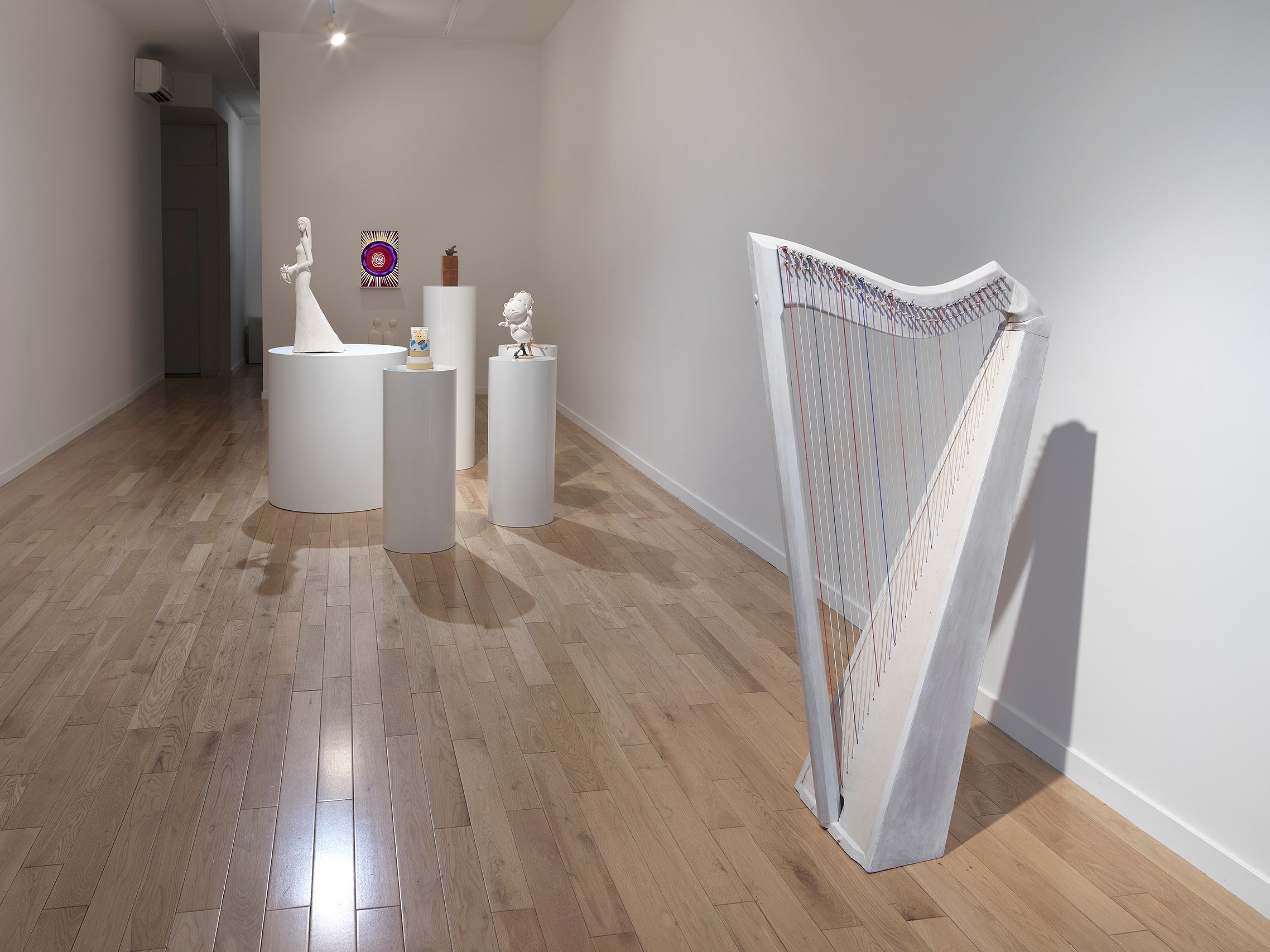
Chapter NY
Tribeca, New York, NY
60 Walker Street
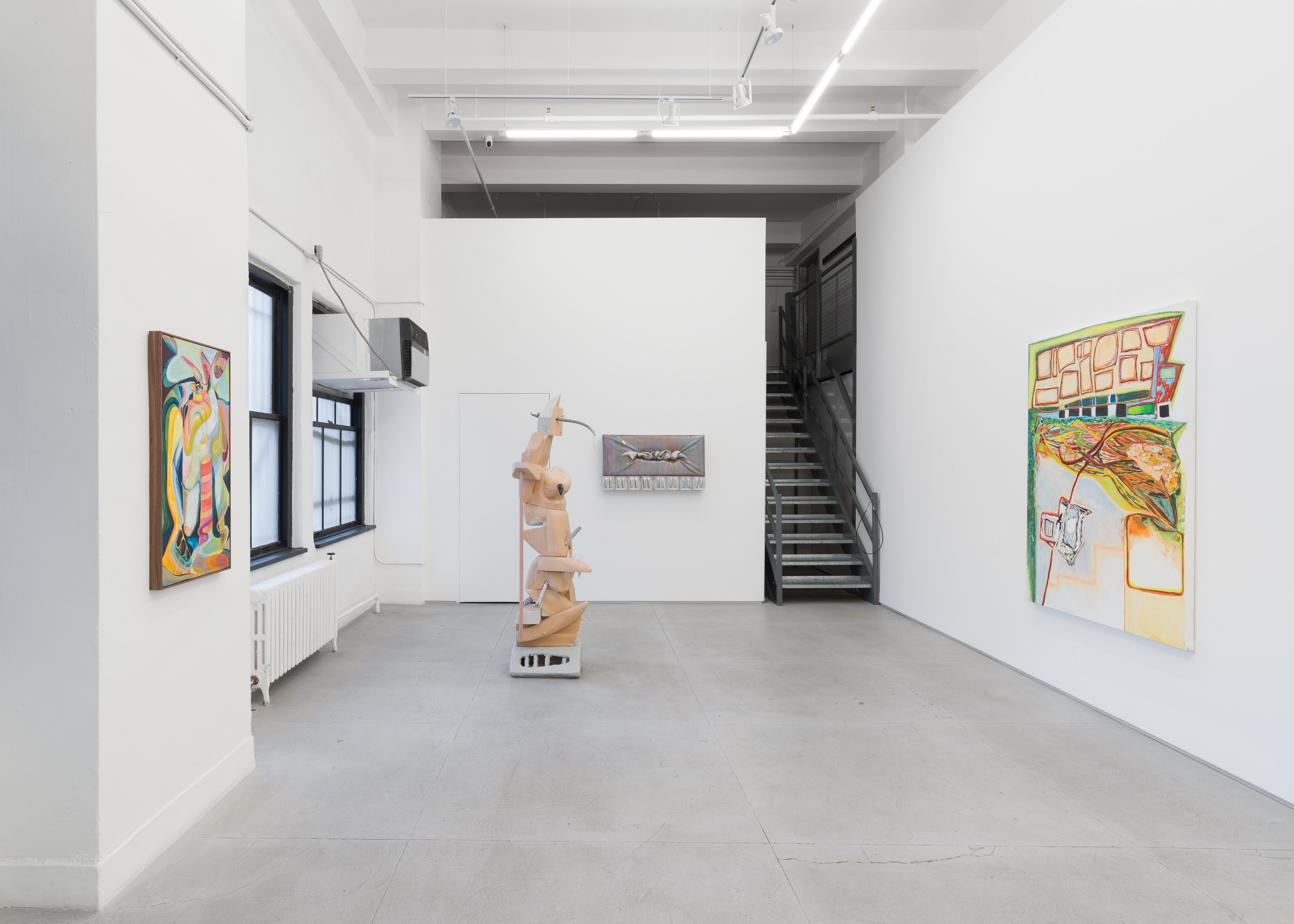
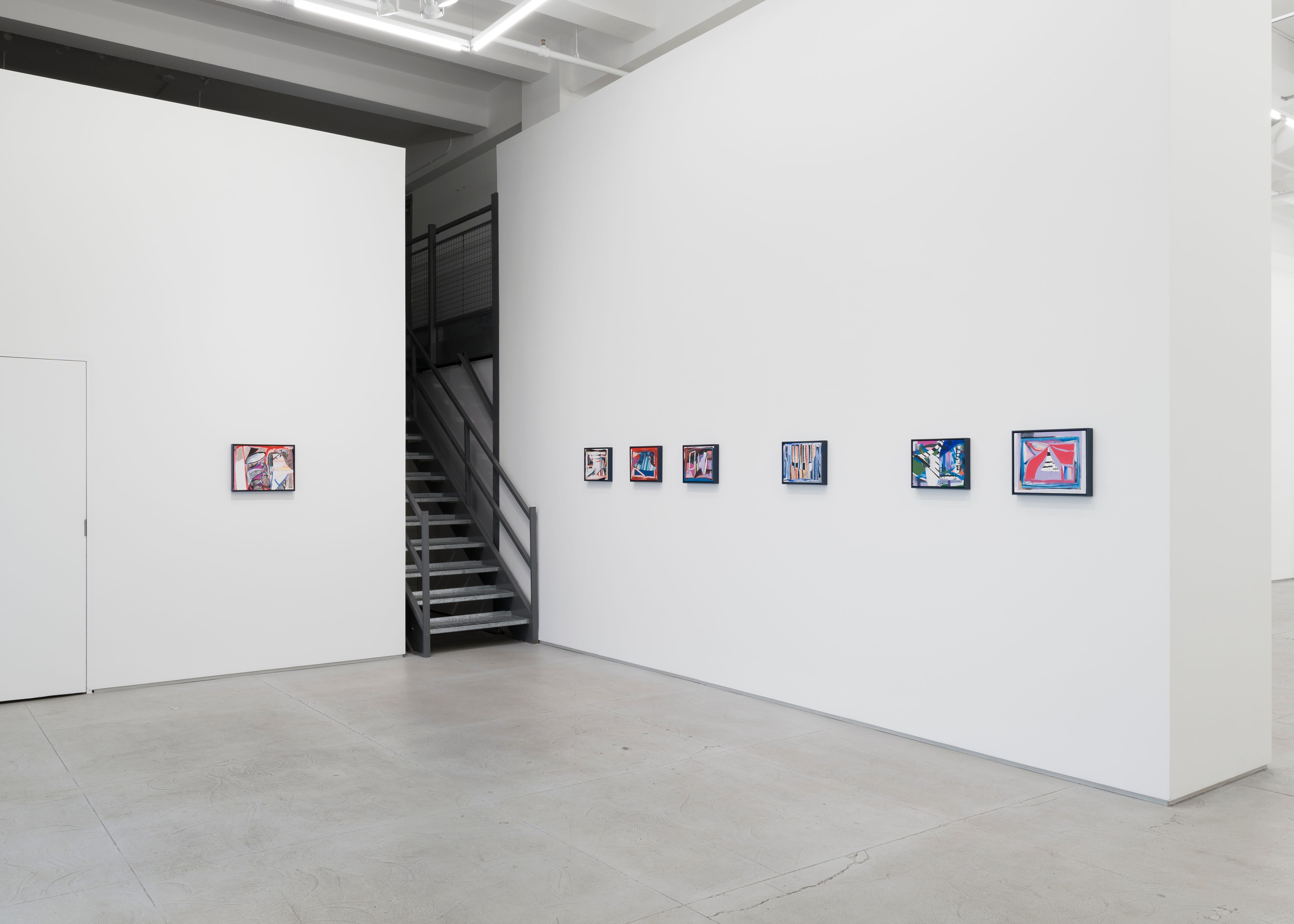
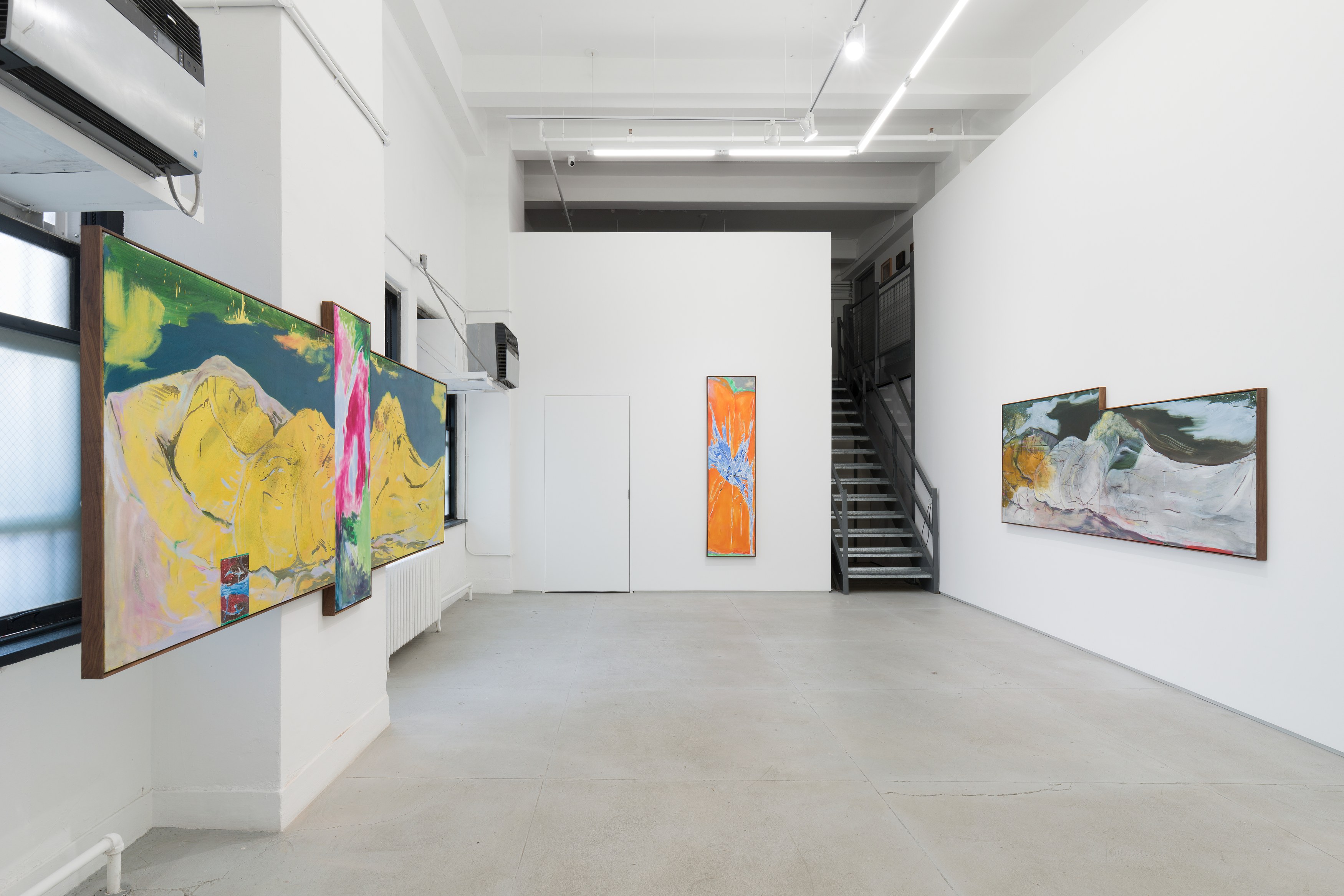
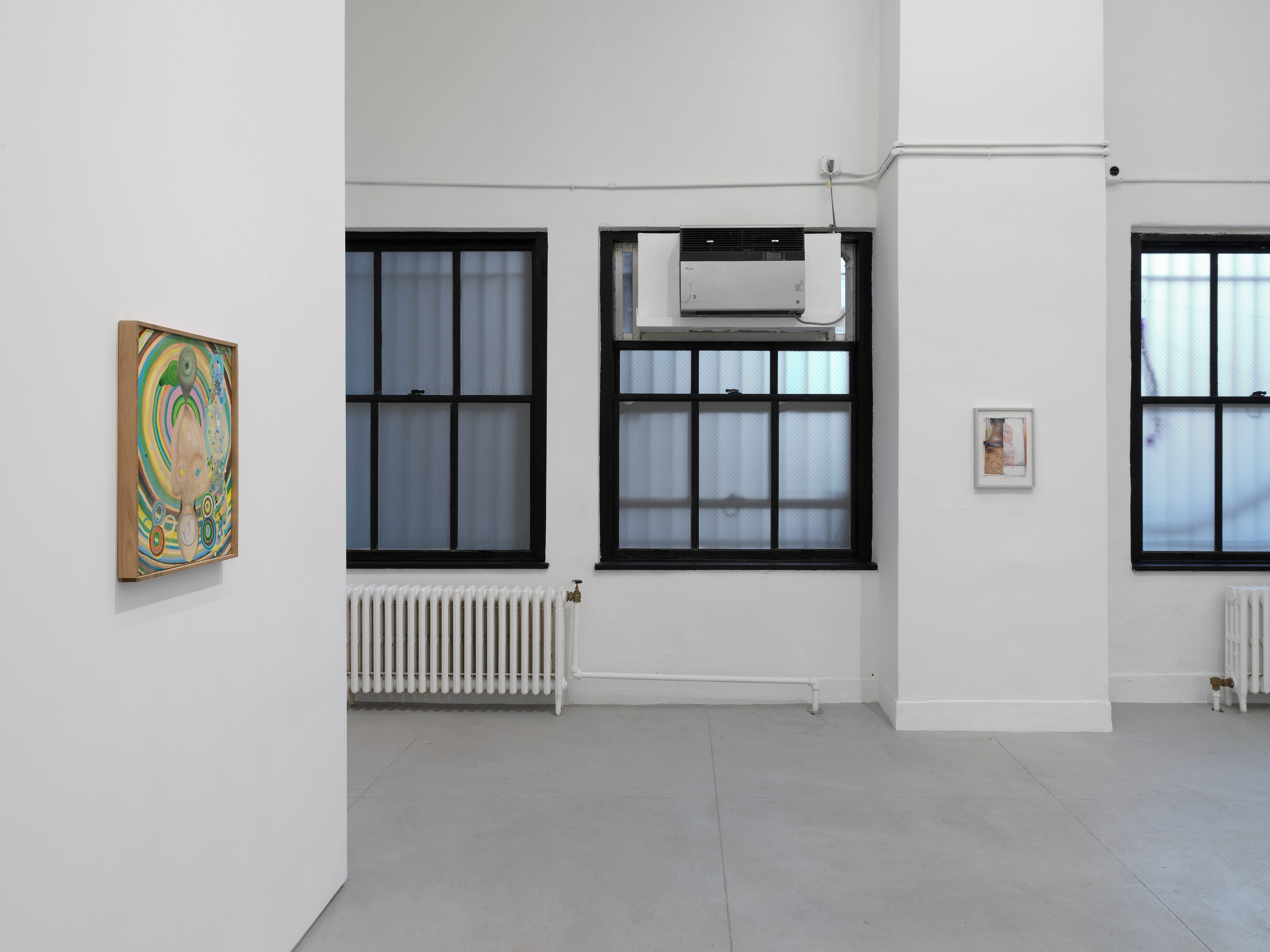
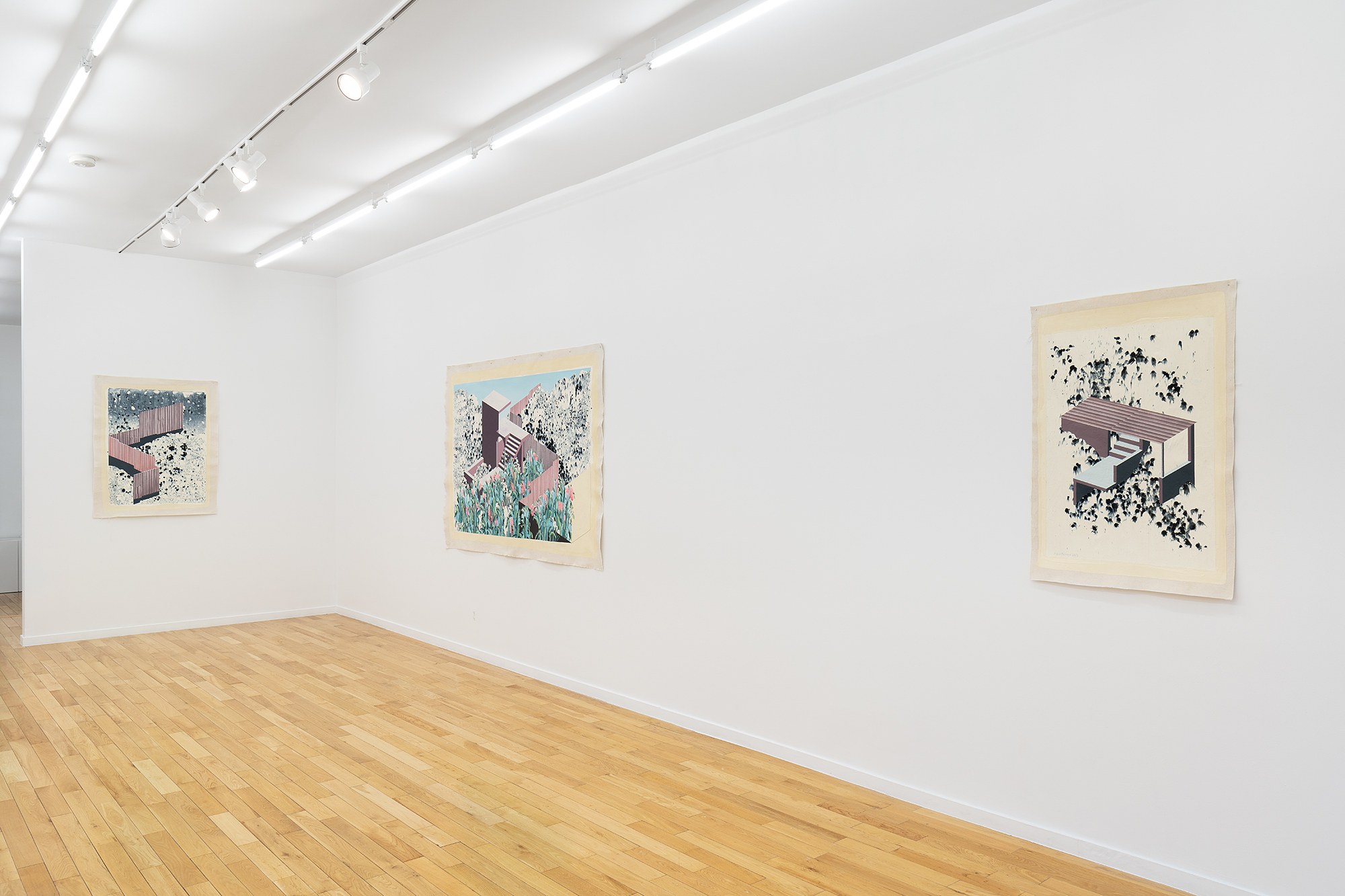
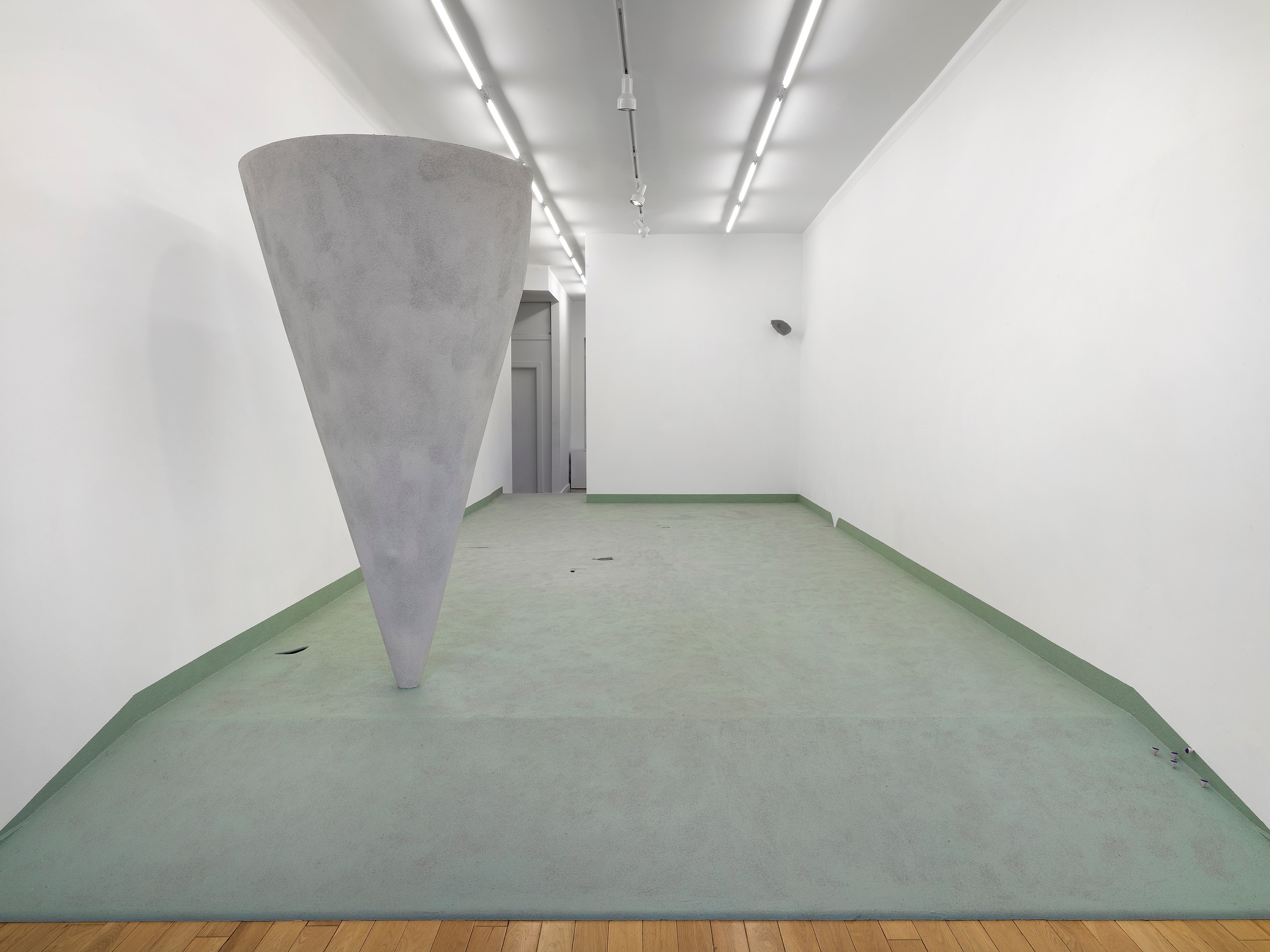
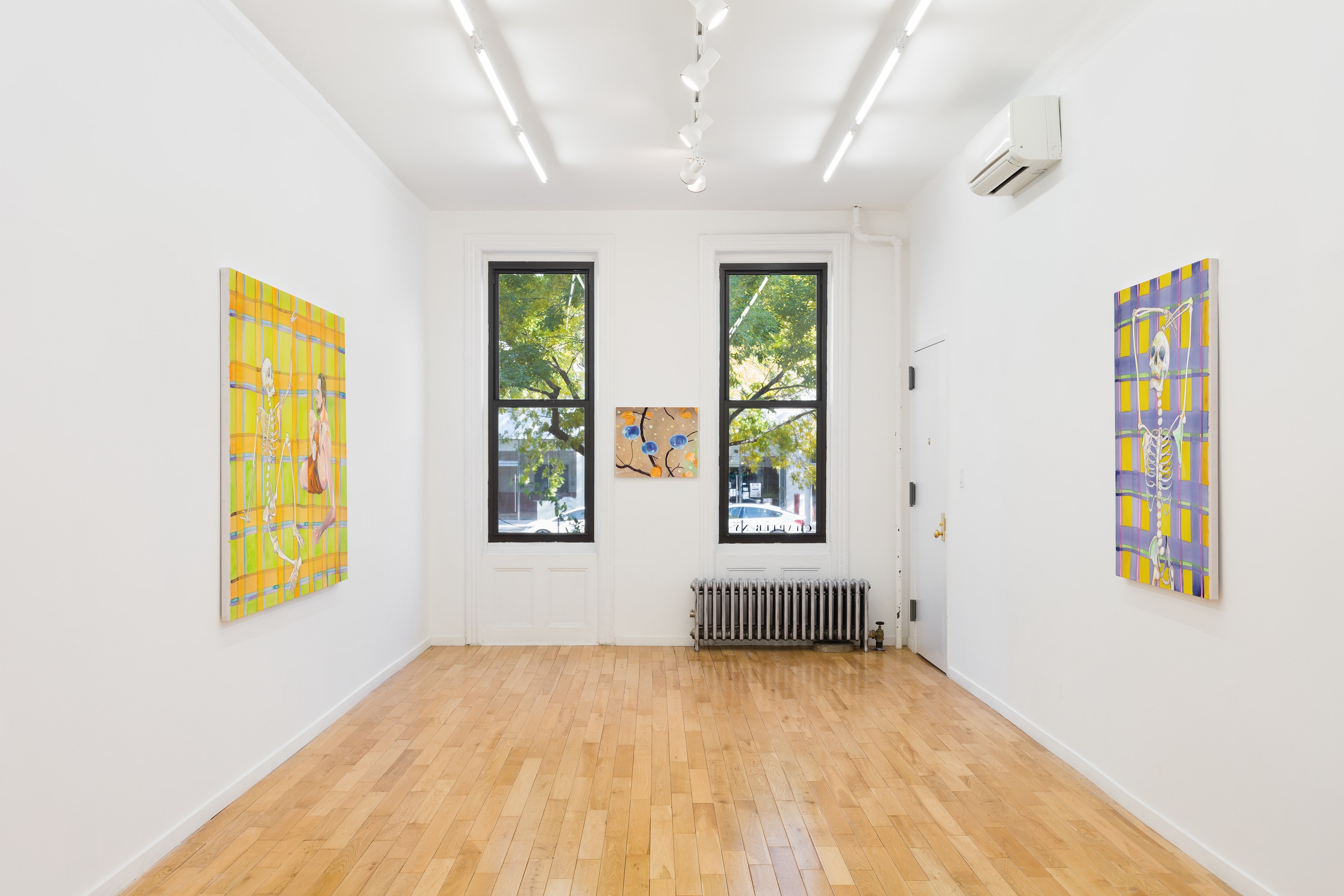
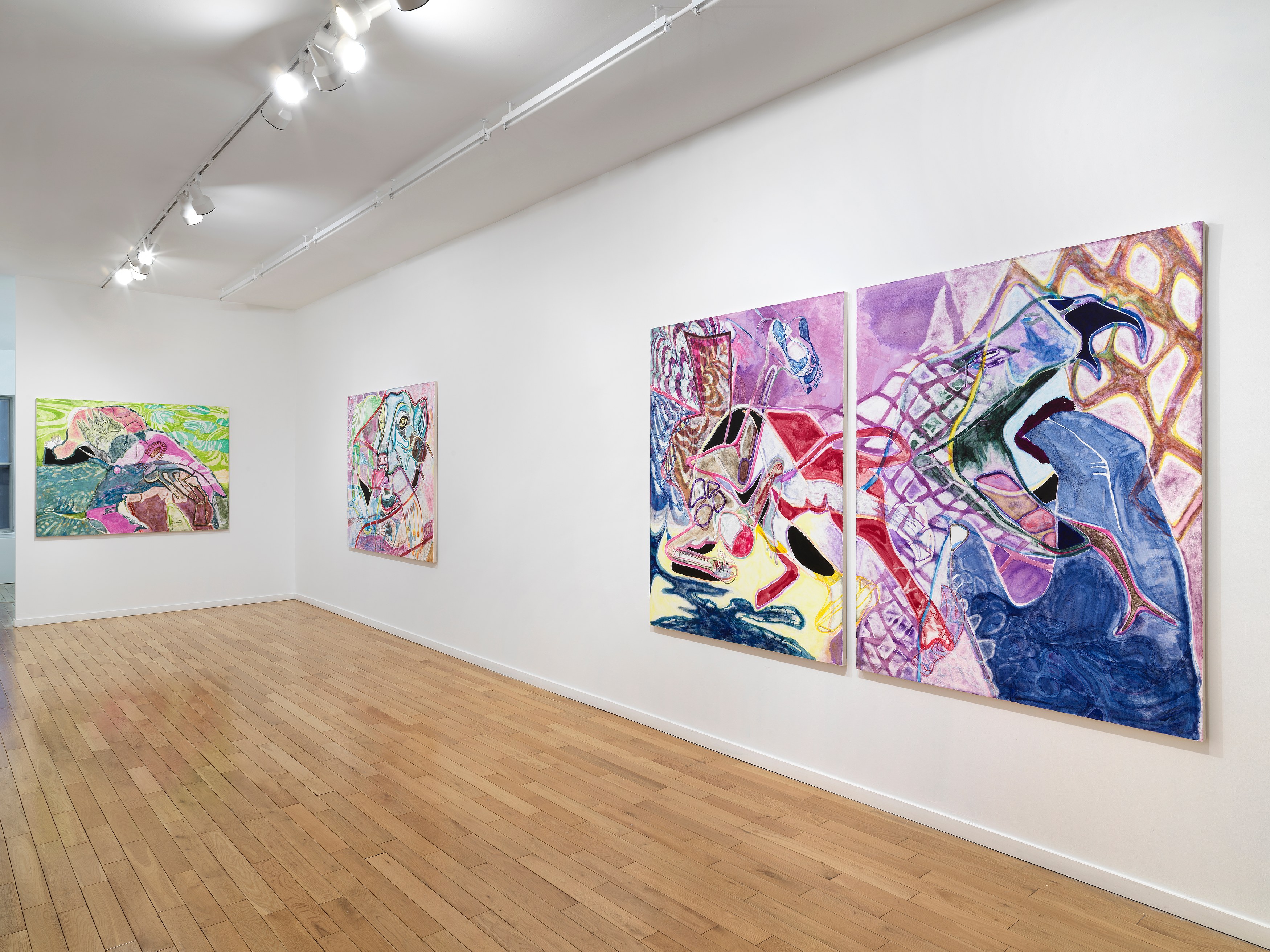
Founded by Nicole Russo in 2013, Chapter NY is committed to supporting artists at various phases in their careers by encouraging ongoing artistic exploration and providing instrumental curatorial support. Now located in a Tribeca space designed by acclaimed architecture firm Bureau V, the gallery works closely with individual artists to realize tightly envisioned exhibitions across various mediums including installation, sculpture, ceramics, video, drawing, painting, and photography. Represented artists have recently exhibited at the Whitney Museum, ICA Miami, LACMA, MoMA, and the Venice Biennale.
Sign in to save this gallery, log a visit, or add a show to a shared list.
Exhibitions
- Transcendent
Tourmaline
Jun 12 – Aug 1
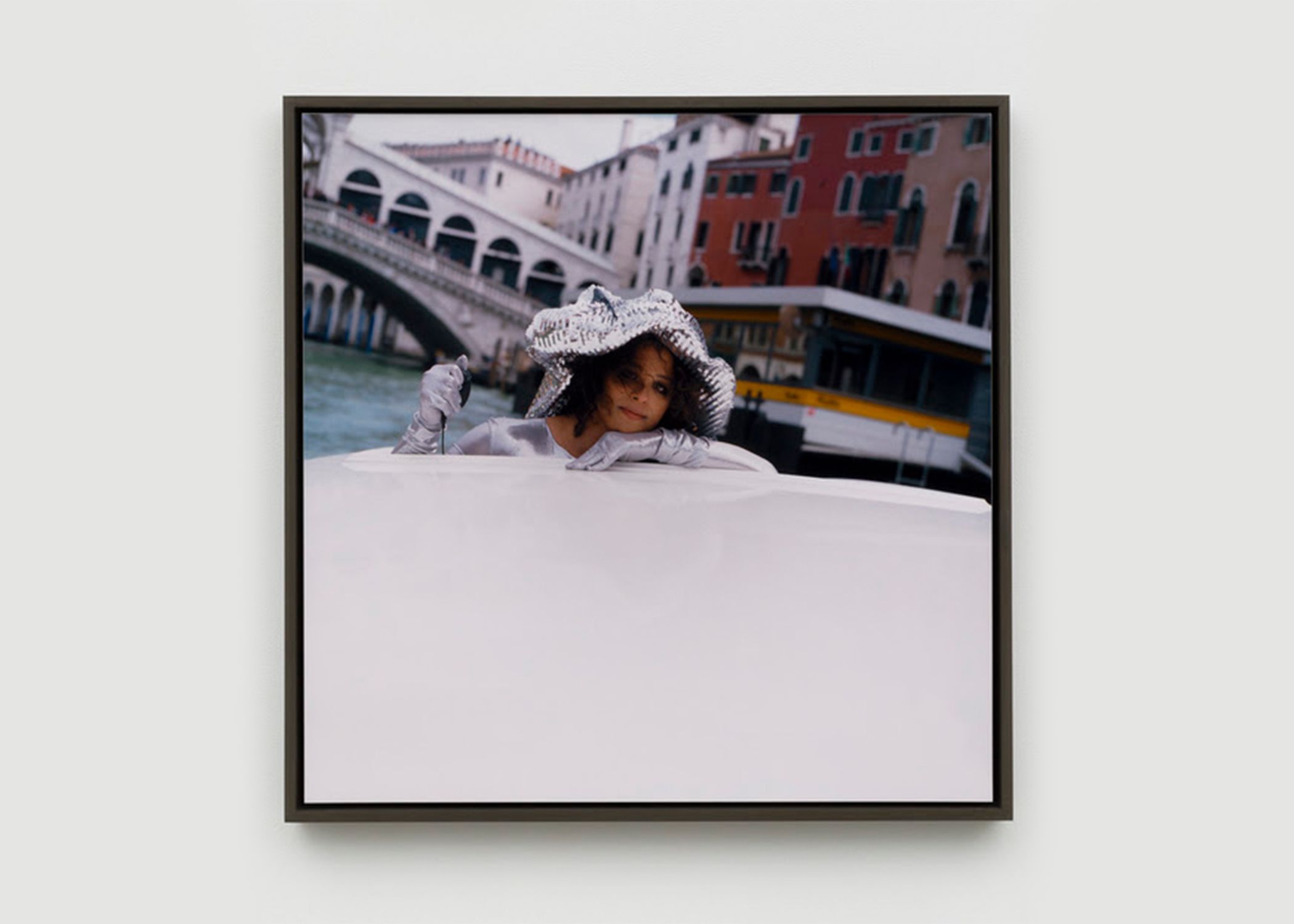
Chapter NY is honored to present Transcendent Tourmaline’s second solo exhibition with the gallery. The Miami-based artist presents a new body of photographs alongside a short film that continues her longstanding engagement with the memory and political imagination of Marsha P. Johnson (1945–1992), one of the most vital figures of the LGBTQ rights movement of the 1960s and 70s. Drawing from personal archives and her own image-making practice, Tourmaline approaches history as a life force reactivated through beauty, collective remembrance, and human presence. A luminous series of cinematic self-portraits, staged within the canals of Venice, anchors the exhibition. Central to these works is the memory of the “Marsha P. Johnson Cruise,” during which Johnson gathered friends aboard the Staten Island Ferry and invited them, if only briefly, to orient themselves toward pleasure and possibility while gazing toward the Statue of Liberty. In Transcendent, Tourmaline reimagines that gesture as an ecstatic passage through Venice by water taxi, turning luxury and introspection into a quietly radical act. Produced as silver gelatin and dye sublimation prints, the photographs exist fluidly between devotional portraiture, fashion imagery, and historical document. A radiant Tourmaline appears at once iconic and deeply corporeal: adorned in sequins, silver fabrics, and star-patterned garments styled by collaborator Claire Sullivan, she emerges as both coy Lady Liberty and sunlit apparition, channeling Johnson’s infectious spirit and carrying forward her proverbial torch. This sensibility extends into a series of photographs made atop the roof of the Peggy Guggenheim Collection. Shot from the vantage point of a historic portrait of Guggenheim herself, Tourmaline is framed against Venice’s ancient architecture: sites of beauty and cultural prestige shaped by histories of empire and uneven access to freedom. Revisiting Guggenheim’s legacy, Tourmaline embraces pleasure and glamour as modes of freedom that Johnson radically expanded in relation to trans life. The artist has described these works as emerging from a “receptive mode,” where sensuality and self-fashioning become rigorous aesthetic and political practices. Often pictured with the camera remote visible in her hand, Tourmaline foregrounds the constructed nature of the image, treating fantasy not as escapism but as a deliberate strategy of survival and self-definition. The exhibition’s accompanying film, A Flower That Lives Forever (2025), returns to Johnson’s narrative through archival footage of interwoven with an interview featuring her friend, the recently departed artist Augusto Machado. Filmed decades later at the site of the original Staten Island “Cruise,” Machado recounts the gathering while Tourmaline’s Venice images drift into view, collapsing temporal distance into something intimate and dreamlike. Ferry railings, flowers, sunlight, and passing skylines dissolve into footage of Johnson laughing, performing, marching, and moving through daily life. Across both the photographs and the film, water becomes a recurring site of renewal: transforming spaces historically associated with surveillance and restricted transit into environments where beauty, friendship, pleasure, and joy operate as forms of resistance. Tourmaline (b. 1983, Roxbury, MA) lives and works in Miami, FL. She received her BA from Columbia University in 2006. Tourmaline has had solo exhibitions at The Australian Centre for Contemporary Art, Melbourne, AU; Carpenter Center for the Visual Arts, Boston, MA; MASP, Sao Paolo, BR; Kunsthalle Brandhorst, Munich; MUDAM, Luxembourg; and Chapter NY, New York. Her work was included in the 2024 Whitney Biennial and the 59th International Art Exhibition of La Biennale di Venezia as well as notable group exhibitions at the Barnes Foundation, Philadelphia, PA; Cultuurcentrum Strombeek, Grimbergen, BE; Louisiana Museum of Modern Art, Humlebaek, DK; South London Gallery, London; Mass MoCA, North Adams; the Tate Modern, London; the J. Paul Getty Museum, Los Angeles; the Metropolitan Museum of Art, New York; Los Angeles County Museum of Art, Los Angeles; the Museum of Modern Art, New York; the 7th Athens Biennale 2021 Eclipse, Athens; the Brooklyn Museum, Brooklyn; The Bronx Museum of the Arts, Bronx; MoMA PS1, Long Island City; The High Line, New York; The Kitchen, New York; BFI Flare, London; Portland Art Museum, Portland, OR; Aspen Museum of Art, Aspen, CO; BAM Cinematek, Brooklyn; The New Museum, New York; the Whitney Museum of American Art, New York; MOCA, Los Angeles; the Studio Museum in Harlem, New York; and the Museum of Contemporary Art Chicago. Tourmaline’s work is included in the permanent collections of MUDAM, Luxembourg; Brooklyn Museum, Brooklyn; J. Paul Getty Museum, Los Angeles; Los Angeles County Museum of Art, Los Angeles; The Metropolitan Museum of Art, New York; Museum of Modern Art, New York; National Gallery of Victoria, Melbourne; The Studio Museum in Harlem, New York; Tate Modern, London; and the Whitney Museum of American Art, New York.
On view
Jesse Darling, Nina Kintsurashvili, Fatine-Violette SabiriJesse Darling, Nina Kintsurashvili, Fatine-Violette Sabiri
Jun 12 – Aug 1
Chapter NY is pleased to present a three-person exhibition with Jesse Darling, Nina Kintsurashvili, and Fatine-Violette Sabiri. The exhibition brings together works in which ordinary images and objects function as emotionally charged archives. Be it the recent past or the past informing the present, ancient history or history unfolding in real time, these works hold memories that often appear fragmented, depleted, and altered, or partially obscured. Spanning photography, painting, and sculpture, each work carries a trace of the recorded moment as unfixed and perpetually incomplete. This sense of instability is the underlying force of Nina Kintsurashvili’s paintings, where jagged forms and thick, painterly gestures suggest fragments of landscape, ruins, or shadowed figures without fully disclosing a clear image. Growing up in post-Soviet Tbilisi, the New York-based artist’s access to art often came indirectly through second-hand books, reproductions, and obscured printed material circulating through Bukinist networks rather than through institutions or firsthand encounter. Nukriani centers around a large dark form outlined in deep blue atop a buildup of marks in pale yellows, coral, and icy blues. Earlier layers remain visible beneath the next, giving the surface the feeling of something still shifting while being viewed—a suggestion that histories are malleable, retold and reconsidered, an archeological record subject to interpretation. Fatine-Violette Sabiri’s photographs constitute an archive of everyday life and her community drawing from memories of growing up in Morocco and her current home in Montreal. These intimate images carry the language of a casual snapshot, unstaged, yet deeply intentional through personal records and a miscellany of collected objects: a clay vase made by a friend cast in magic hour light, a self-portrait taken from her cousin’s bed who had recently passed, in which her absence becomes a character in the room, or the clutter of her studio desk with small paper piles and photos pinned to the wall, sculptures in progress leaning on the floor. Sabiri’s memories, just like the spaces depicted, feel lived-in, holding a moment or person, rather than “capturing” an image. Another work consists of a handwritten love letter the artist wrote but never sent—“failed aspirations for a potential future,” in her words,—attached to a framed photograph of a worn tiled floor, a view from her childhood apartment in Casablanca, to which the artist makes pilgrimage whenever she returns home, simply to sit at the closed door. The impossibility of completely arresting time, or the feeling of a time lost, or a potential future out of reach, also figures into the work of London-based artist Jesse Darling. The artist’s multi-disciplinary practice considers how bodily subjects are initially formed and continuously reformed through sociopolitical influences, drawing on his own experience and the inherent vulnerability of being human. Here, exuberant bouquets of flowers are enclosed within a glass vitrine, as if a museological display, an intentionally literal play on nature morte in three dimensions. Left to slowly decay over time, the bright petals bend and dry out, darkening and collapsing against the glass walls of the display case, the artist encapsulates the futility of preservation by arresting ephemerality itself as a material condition. Some things simply can’t be preserved as time never stills. Jesse Darling (b. 1981, Oxford, UK) lives and works in UK. He received his MFA from the Slade School of Fine Art at University College, London, and his BA from Central Saint Martins, University of the Arts London. Darling was awarded the 2023 Turner Prize for his solo exhibition Enclosures, which was on view at Towner Eastbourne, UK, from September 2023 – April 2024. Darling has also had solo exhibitions at Oude Kerk, Amsterdam, NL; Palais de Tokyo, Paris, FR; Camden Arts Centre, London; Modern Art Oxford in Oxford; the Tate Britain, London; Galerie Sultana, Paris; Triangle France, Marseille; Chapter NY, New York; and, Arcadia Missa, London. His work was included in the 58th International Art Exhibition, La Biennale di Venezia, Venice, and other group exhibitions at the Schirn Kunsthalle Frankfurt, Frankfurt; The Drawing Center, New York; Chapter NY, New York; Museum MMK für Moderne Kunst, Frankfurt; Swiss Institute, New York; Neu Gallerie, Berlin; Museum Ludwig, Cologne; Salts, Basel; Vitrine, London; Biennale d’Art Contemporain, Rennes, FR; and Galerie Sultana, Paris; among others. Nina Kintsurashvili (b. 1992, Tbilisi, Georgia) lives and works in Brooklyn, New York. An interdisciplinary artist and painter, she earned her BFA in painting from Tbilisi State Academy of Arts in 2014 and her MFA in Sculpture & Intermedia from the University of Iowa in 2014 as a Fulbright Foreign Student. Kintsurashvili’s works have been exhibited at Polina Berlin Gallery, New York, NY; Konsthall C, Stockholm, SW; Gallery Artbeat, Tbilisi, GE; Svaneti Museum of History and Ethnography, Mestia, GE; Public Space One, Iowa City, IA; Kunstraum Lakeside, Klagenfurt, AT; LC Queisser, Tbilisi, GE; Ortegay Gasset Projects, New York, NY; and Tatjana Pieters, Ghent, BE, among others. Fatine-Violette Sabiri (b. 1994, Casablanca, Morocco) holds a BFA in Studio Arts with a Minor in Film Studies from Concordia University. Her work has been exhibited internationally in solo and group shows at Galerie Eli Kerr, Montreal; Pangée, Montreal; Romance, Pittsburg; Afternoon Projects, Vancouver; Patel Brown, Montreal, Espace Maurice, Montreal; Joys, Toronto; Joe Project, Montreal; Le 18, Marrakesh; Jedna Dva Trì Gallery, Prague; and Soon.tw, Montreal, among others. In 2025, Sabiri received an Explore and Create grant from the Canada Council for the Arts. She was awarded the Pierre Ayot Award in 2024, and her work was acquired by the National Gallery of Canada. Her second publication, Kiss Landing, was released by Éditions VU in 2024.
 PastBig Dance
Mary Stephenson
Apr 24 – May 31
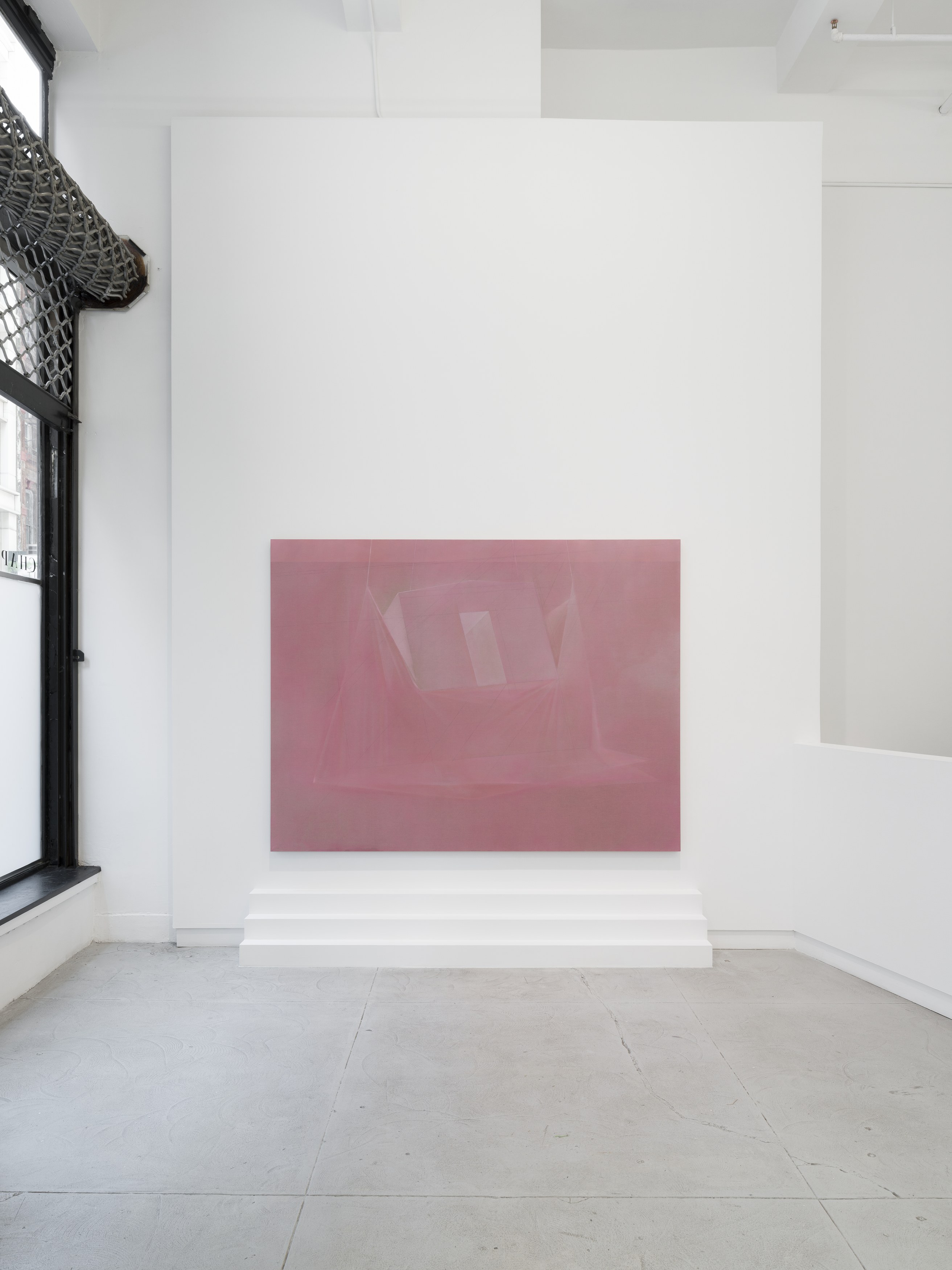
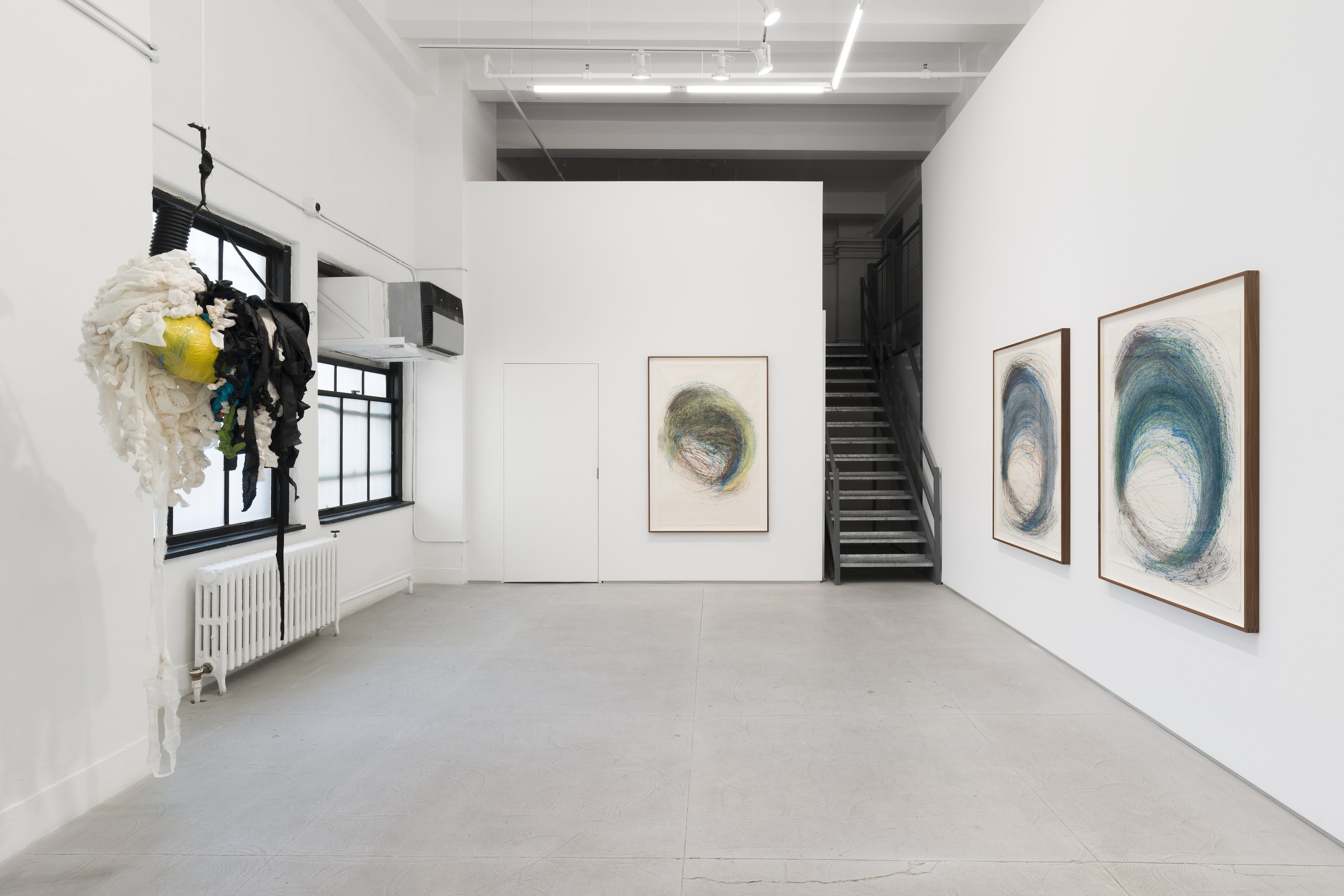
Chapter NY is thrilled to present Mary Stephenson’s second exhibition with the gallery. The centerpiece of Mary Stephenson’s exhibition Big Dance is a painting of the same name: commanding in scale, yet more enveloping than confrontational. Characterized by diffuse, glowing fields in washy, sage-green paint, the image depicts a vacant labyrinthine corridor. Here, doorways open to nowhere and a choreography of rectangles that tilt and hover at unstable angles, like floorboards of thought in formation. As such, the painting is both a structural and pictorial passageway into the exhibition, where Stephenson builds images from an understanding of perception as inherently cerebral and somatic. For the artist, what is seen and what is unseen—but materially felt—forms the scaffolding for memory and meaning. What emerges is less a depiction than a condition of an image, and a sense of “being” in the world, recalling filmic projection as much as painterly surface. Though no human figure is present, Stephenson’s canvases are decidedly bodily, operating as a skin or membrane. This entry point is less abstract than it first appears. Treated with a rabbit-skin glaze, her surfaces are designed to allow oil paint to seep and pool. Paint stains the ground rather than resting on it; color and light absorb at different paces; edges soften or harden; forms advance and recede. The result is an uneven monochrome where the image appears to be submerged or rising from within. While her paintings might initially read as photographic, the process is distinctly filmic. As she paints, Stephenson imagines a large film light positioned just over her shoulder, directing the painting’s flow of luminescence. to produce not the optical illusion of movement, but its sensation: images pausing, replaying, zooming, and moving in rhythm with the passage of time. In turn, quasi-still lifes of objects like Peter Pan shirt collars, books, and vessels arrive in medias res, their forms smeared or partially disintegrating. If still life is nature morte, these smaller works capture the futility of trying to control feeling, or time, in half-articulated memories. In this way, Stephenson’s work contests nostalgia as a singular register, embracing instead more conflicted emotions: desire for something new, and a kind of mourning for the failed satisfaction of something that was never fully delivered. The soft blush-pink New House holds these tensions in a bare-bones-drawn home protruding from a tent-like structure. Caught between emergence and dissolution, its “rose-colored lens” is present but lifted, the image shrouded in a forlorn effect. Chalk underdrawings remain visible—ghosted lines mapping earlier iterations, lingering as failed “graveyard marking” but also tentatively hoping for a better form to arise. These aren’t dreamscapes or depictions of the unconscious. In their ties to historical surrealism, Stephenson’s renderings might recall the stage-like architectures of Giorgio de Chirico or Kay Sage’s austere cityscapes. But where the former was theatrical, and the latter nightmarish, Stephenson’s moments of stillness and animation register as intimately human: points of pressure or intimacy. If painting carries a thought from one side to another, from sensation to memory and from self to world, it does so not by constructing a bridge, but by entering the water and finding a way through. Not a performance, but a dance. Mary Stephenson (b. 1989, London, UK) lives and works in London. She graduated from the Royal Academy Schools, London in 2023 and the Glasgow School of Art in 2011. Stephenson has had solo exhibitions at White Cube, Paris; Maureen Paley, London; Chapter NY, New York; Massimo De Carlo, Paris; Linseed Projects, Shanghai; and Incubator, London. Her work has been included in group exhibitions at White Columns, New York; Jeremy Scholar, London; Rose Easton, London; Michael Werner Gallery, London; and Ginny on Frederick, London, among others. Her work has been acquired by the Loewe Art Collection, Madrid, H+ Museum, Suzhou, and the Government Art Collection, London.
 PastIndex
Nnena Kalu
Apr 24 – May 31
Side Room Arcadia Missa is pleased to present Index, Nnena Kalu’s first solo presentation in the US, hosted by Chapter NY. Comprising selected works on paper from 2018, the exhibition highlights Kalu’s early Vortex Drawings and traces the development of her practice. Here, colour emerges as kinetic and intuitive, amplifying the sense of motion across her works. Index becomes a catalogue of movement, gesture as language and marks as a record of time, as well as a mapping of Kalu’s extensive body of work. As American philosopher Charles Sanders Peirce described, an index, when read as a system of communication, is produced or caused by actual contact with an object.[1] This framework emphasises intrinsic or durational processes, where marks record the movement of the body over time, rather than depicting an external subject. The series of Vortex Drawings is built from systematic repetition of marks and gestures, capturing experience through Kalu’s motion, action, and presence, rather than mere representation or illustration. In this way, Kalu’s lines create meaning through emotion and physicality. The drawings contain a polarity, pulling the viewer in whilst also pushing them away. They articulate movement and release, yet hold structure and order. Much like the gesture-driven paintings typically attributed to Abstract Expressionists, Kalu values embodied mark-making rather than depiction. Her repeated lines accumulate into terrains that can feel rhythmic and sustained, behaving like an indexical script without semantic obligation. Her lines thicken into masses that can take on interest in weight and balance, embracing repetition as generative. Kalu’s gestures could be read as an external expression of the internal, free from symbolic citation. The weight near the top of the works, such as Vortex Drawing 50 and Vortex Drawing 51, translates the pressure of Kalu’s arm before it yields to gravity. This shift from pressure to lightness makes the body’s movements legible. Across Kalu’s practice, drawings and sculptural works, colour becomes a kinetic force moving alongside the line. Although seemingly direct, upon closer inspection, the colours in Kalu’s works are layered mosaics. Reds, greens, pinks and blues drift, overlap, and cluster until form emerges. They register as sensory events that are felt before interpreted, giving access to the subconscious. Index is a two-part exhibition at Arcadia Missa, London and Arcadia Missa, hosted by Chapter NY, New York. Nnena Kalu (b. 1966, Glasgow, UK) lives and works in London, UK. Her practice is rooted in two-dimensional works, sculptures and installations. Recent solo and group exhibitions include We Contain Multitudes, Dundee Contemporary Arts, Dundee, UK (2026); Turner Prize 2025, Cartwright Hall Art Gallery, Bradford, UK (2025); Creations of Care, Kunsthall Stavanger, Stavanger, NO (2025); Nnena Kalu, Arcadia Missa, London, UK (2024); Conversations, Walker Art Gallery, Liverpool, UK (2024); Manifesta 15 Barcelona Metropolitana, Barcelona, ES (2024); Infinite Drawing, Deptford X, London, UK (2022); Studio Voltaire elsewhere, London, UK (2020); Wrapping, Humber Street Gallery, East Yorkshire, UK (2019). Kalu’s works are a part of the Tate Collection (UK), Arts Council Collection (UK) and SMAK (BE). Kalu is the winner of the Turner Prize 2025. 1 - Charles Sanders Peirce, ‘Icon, Index, Symbol’, in Charles Sanders Peirce, Collected Papers. Vol. II: Elements of Logic, Cambridge, Massachusetts, 1960, pp.159ff; Charles Sanders Peirce, ‘Logic as Semiotic: The Theory of Signs’, in Justus Buchler (ed.) The Philosophy of Peirce: Selected Writings, New York, 1940, pp.98–119.
 PastRiver, River
Yutaka Nozawa
Mar 6 – Apr 19
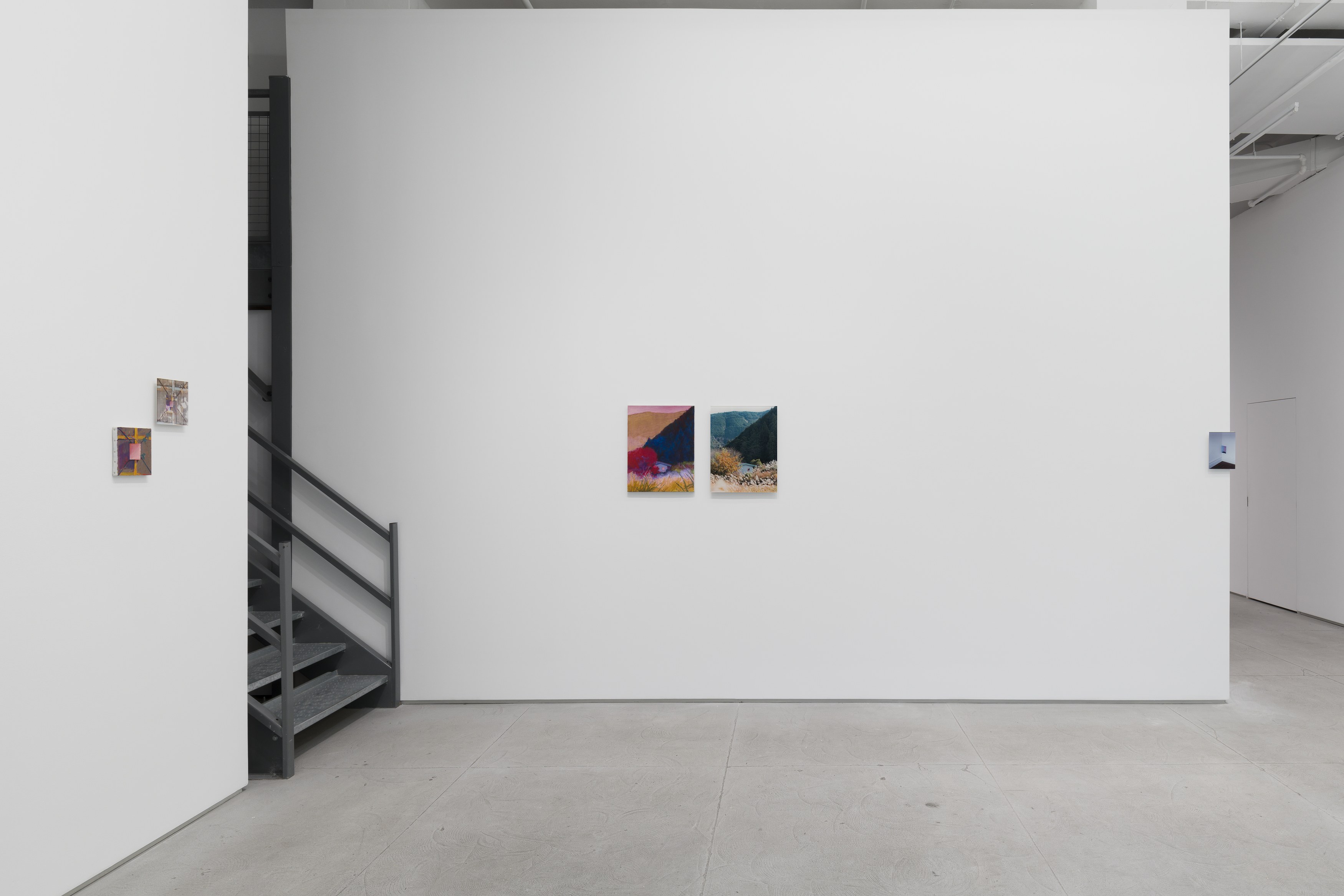
Side Room Chapter NY is pleased to present Yutaka Nozawa’s first solo exhibition in the New York. Yutaka Nozawa’s practice transforms ordinary objects and spaces with minimal, almost matter-of-fact gestures to produce an uncanny, often dreamlike effect. This exhibition presents a series of diptychs, each pairing a small photograph with a painting of equal size, which take the object of a canvas itself as primary subject. Deeply engrained in histories of photography and painting—and in how each medium’s tools and techniques have shaped the way we see and perceive reality—these works offer a cunning “bait-and-switch." Each begins with a staged photograph of a blank canvas hanging in a seemingly anonymous yet specific location, whether in the artist’s studio in Shizuoka, Japan, the gallery in New York, or outdoors among built and natural forms. Nozawa paints the canvas and its surroundings with studied nuance, then returns to the original site to re-photograph the finished painting in situ. The diptych presented in the gallery pairs the hand-painted canvas with its re-photographed image, creating a poetic and deadpan interplay. The works tease with a one-liner nod to modernism’s favorite subject and tempt ironic repetition, but they offer a radically concise gesture that multiplies threefold: from photo to painting and back again, with poetry and subtle wit that distills the complexity of perception. Light and color are central to this experience. Pale greens drift toward pinks or blues in subtle shifts that never fully settle. These sunset hues are bordered by graphic silhouettes and architectural edges, recalling the precision of Josef Albers’s color studies, Monet’s iridescent serial Haystacks, or the glow of a backlit screen. Against the velocity and dissociation of contemporary media, Nozawa’s works compress and extend the act of seeing, inviting viewers to slow down and register both painterly touch and photographic mediation as our composite mode of perception. In turn, the works’ compressed narrative of painting’s evolution (internally and relative to the photograph), is not a matter of nihilistic irony or moral hierarchy between mediums but a humble meditation on their entanglement and perpetual incompletion: the world of images exists as both material and apparition, both constructed and undeniably real. All of painting’s tropes of a more “real” reality are coyly referenced: perspectival rendering’s “window onto the outside world” doubles as the self-reflexive modernist grid; the grid is the rectangle; the rectangle is the canvas as painting’s defining support; the canvas is an ordinary object that can be endlessly copied. Rules of “truthful” representation, in other words, might constantly be shifting, but the artist’s attention and agency are enduring. Nozawa’s process gives us proof: the work’s “original” is the form of the blank canvas and the image of it, never seen by the viewer, but always embedded in his methodical translation. The exhibition concludes with the video Moon (2026), in which a canvas floats on a river, gently nudged by drifting kumquat fruits. At one point, a kumquat touches the corner of the canvas, subtly alters its course, and flows out of frame. Its sensibility rhymes with the diptychs, which remind that painting and photography are both technologies for recording what can never be fully held. In his hands, “still life” is both the genre and a coy play on words, articulating a desire to attend to the fleeting, however possible in a moment when speed dominates. Yutaka Nozawa (b. 1983, Shizuoka, JP) has received his MFA from Tokyo National University of Fine Arts and Music (2011), his European Master of Contemporary Photography degree from Istituto Europeo di Design Madrid (2014), and his BFA from Tokyo Zokei University (2008). Solo presentations include Chapter NY, New York, NY; Kayokoyuki, Tokyo, JP; void+, Tokyo, JP; Hirado Dutch Traiding Post, Nagasaki, JP; Intercambiador Acart, Madrid, ES; among others. Select group exhibitions include Chapter NY, New York, NY; Sadie Coles HQ, London, UK; Galería Santa Fe, Bogotá, CO; The University Art Museum, Tokyo, JP; and Shizuoka Prefectural Museum of Art, Shizuoka, JP.
 PastRoving Wire
Rosha Yaghmai
Mar 6 – Apr 19
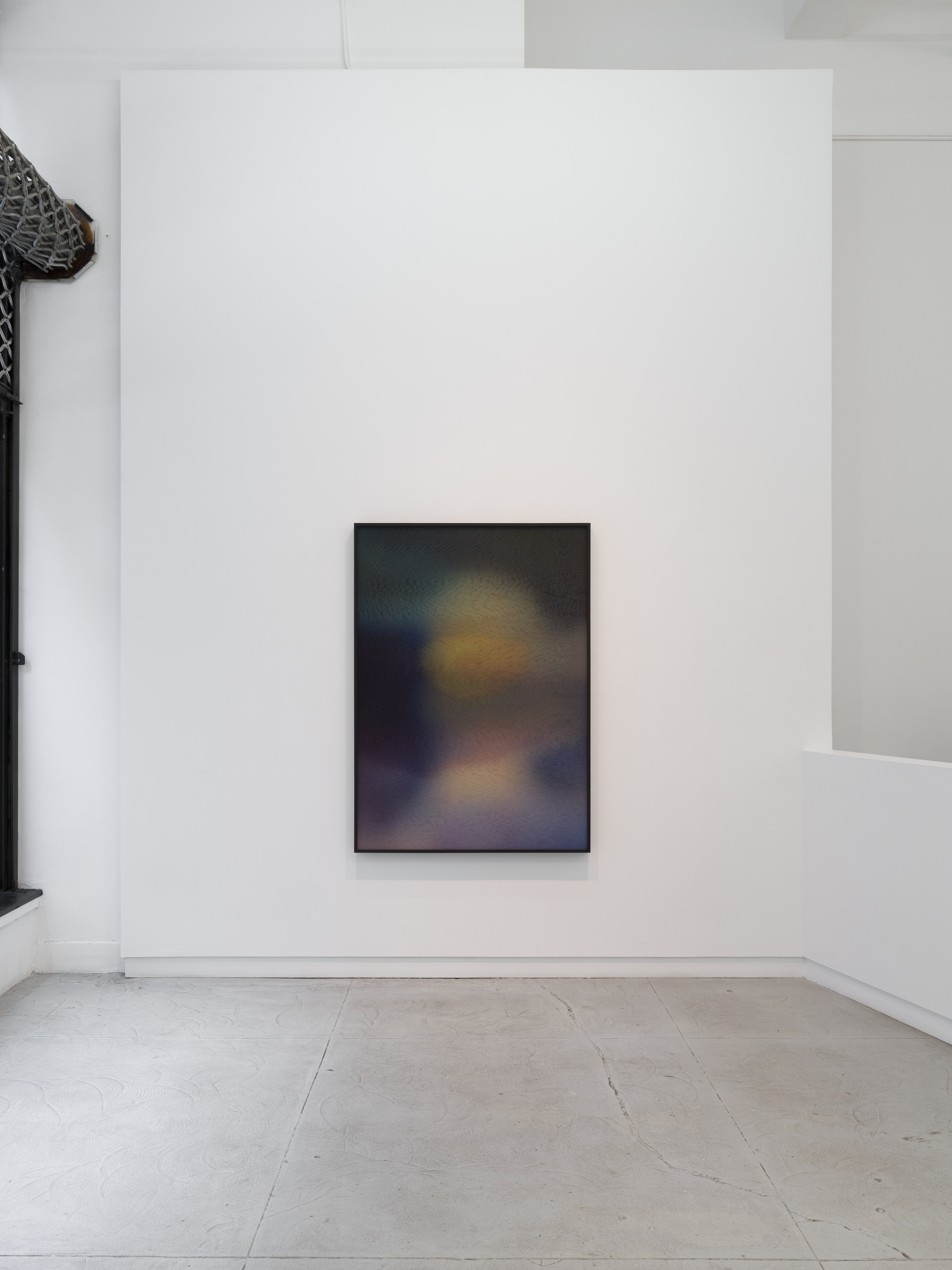
Chapter NY is thrilled to present Rosha Yaghmai’s first solo exhibition with the gallery. In Roving Wire, Los Angeles–based artist Rosha Yaghmai presents sand-cast sculptures and layered organza paintings amid a porous “forest” of frosted totems—a landscape both cosmic and internal, beyond any specific geography or narrative. Installed across the gallery’s floor and walls, her forms appear partly terrestrial, like petrified trunks and monumental bones rising from the ground, and partly ethereal, like currents of light and dust crystallized into long tubes, or energy rising through the spine, linking body, perception, and history in an almost-mythic register. Landscape in Yaghmai’s work is a psychophysical condition: at once vastly external and intimate, remembered and invented, accruing in the body over time with primordial and ancestral imprints that cannot be consciously accessed but which our bodies somatically hold. The exhibition’s scale likewise oscillates between micro and macro, supposing a bird’s eye view of looking above terrain and simultaneously floating within a field of electrified forms and stimuli and frequencies. Her objects and images take the mutability of scale and site as a starting point, even as their frameworks for thought exist outside fixed geography or clock-time. Yaghmai’s objects evoke what appears behind closed eyes and beyond archival record. Harnessing processes of abstraction that occur both within the earth (through heat, compression, and pressure) and the mind’s own tectonics (learning, assuming, remembering, forgetting), the resulting works glisten like flashes of miniature tide pools, or unsettled matter, forming and dissolving at the edge of recognition. Sculptures such as Postcard and her paintings, titled Afterimages (2026) carry the aura of places known to her directly but also impossible for her to know. Cast in recycled aluminum, the sculptures are formed by pouring molten metal into molds from which wax, foam, and other transient materials have been burned out, leaving voids that render absence as durable, present form. Molten yet ethereal, untethered yet rooted, they resist the framing of diasporic movement as tragedy, nostalgia, or resilience. Absence becomes crusty mass and reconfigured surface, another life she might live in a parallel dimension. Her paintings operate through a related logic of accumulation and removal. Yaghmai works in sheer textiles sprayed with color fields and atmospheric “plumes,” or with auras of absent information digitally extracted from images of symbolic Persian miniatures. By obscuring the narrative iconography of these tiny, ancient paintings —Yaghmai shifts the focus away from heritage toward the flickering presence of how ancestral thought-forms and earthly forces are perceived peripherally and passed down almost vibrationally: through molecules and frequencies illegible to the human eye and Enlightenment rationality. If myth and metrics enter, they do so obliquely. In Zoroastrian cosmology, a river of molten silver once covered the earth, transforming it into a metallic shell; the liquid aluminum here echoes that cyclical transformation, remaking unstable matter into durable form. Yet the gesture is neither apocalyptic nor redemptive. It is part of an ongoing origin story, among many origin stories that are read and told, but not really felt. Yaghmai’s work is absorbed through the body, through intuition, through what cannot be fully accessed or explained. Each object becomes a momentary origin, caught between emergence and dissolution, between looking down at terrain to make sense of it by controlling it, and allowing ourselves to float and merge within it, existing as something murky and luminous, infinitesimal and miraculous. Rosha Yaghmai (b. 1978 Santa Monica, CA, USA) lives and works in Los Angeles. She received an MFA from California institute of the Arts in 2007 and her BFA from the School of Visual Arts, New York in 2001. Solo and two person exhibitions include: The Wattis Institute, San Francisco, CA; Marlborough Contemporary, New York, NY; Cleopatra’s, Brooklyn, NY; Kayne Griffin Corcoran, Los Angeles, CA; Commonwealth & Council, Los Angeles, Selected group shows include: Long Story Short, Museum of Contemporary Art, Los Angeles; Overflow, Afterglow: New Work in Chromatic Figuration, Jewish Museum, New York; Made in LA, Hammer Museum,Los Angeles, CA; The Domestic Plane, The Aldrich Museum of Contemporary Art, Ridgefield, CT; Mad World, Marciano Collection, Los Angeles, CA; Virginia Woolf: An exhibition inspired by her writings, Tate St Ives, Cornwall, UK; The Stand In (Or a Glass Of Milk), Public Fiction Los Angeles, CA; Hot Rock, Transmission Gallery, Glasgow, Scotland. Yaghmai’s work is in the collections of Hammer Museum, Los Angeles; Los Angeles County Museum of Art; Mohn Art Collective: Hammer, LACMA, MOCA (MAC3); Museum of Contemporary Art, Los Angeles; and San Francisco Museum of Modern Art.
 PastJoseph Jones
Joseph Jones
Jan 9 – Feb 22
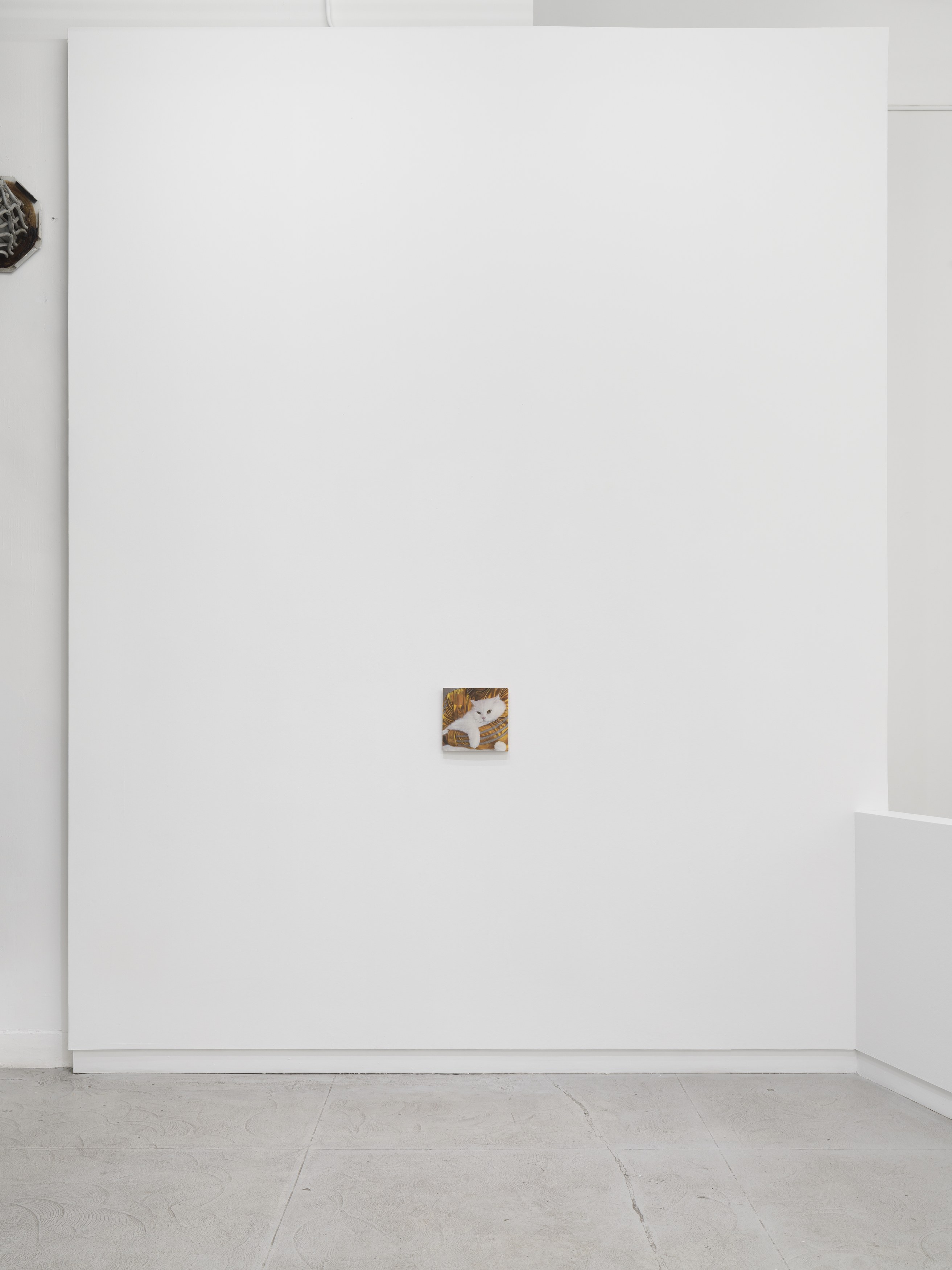
Chapter NY is thrilled to present Joseph Jones’ first exhibition in the United States, featuring a new series of paintings. Joseph Jones’s paintings pulse with stillness. In their intimate scale and meticulous detail, they sit between portraiture and still life, acting both as mirrors of self-reflection and windows onto the nature of contemporary representation in the digital age. Jones constructs his subjects – often cats and flowers – from composites. Jones manipulates their environments and their embellishments much as a pet owner would, transporting these creatures into compositions that he thinks will be interesting to paint. The satin of an Adidas tracksuit burnishes a lustrous backdrop for the subject of Gold cat, whose white velveted fur appears even softer, flatter, in contrast. This is a lesson in both texture and time in painting, as nodded to by the watch. In Jones’s recent series, this is the most a human figure has featured, although they are always present in the life cycle of the image, from creation, to internet circulation to its slowed reproduction and reading as painting. The artist uses a layered technique of priming, painting, and then sanding back to expose the linen weave. The result – seen clearly in Pearl in rainbow light – lends the dual impression of the subject’s vivid presence, and that it has always been there. The colour palette, at once subtle and saturated, implies the dream-like quality of representation. Is the rainbow light surface or image, illusion or material? In suffusing his paintings with an unreal glow, seen also in his works of flowers at peak bloom, Jones emphasises the unlikely surreality of photorealism. Jones selects his subjects as windows onto the nature of painting. They are vehicles to experiment with and master techniques, such as the trompe l’œil corrugated cardboard border of White cat with gemstones, or the creases of a clothed elbow. The artist’s subjects are also mirrors. They might be mirrors of our own reflections, our own affections, and nostalgia. In Rose, the symbol of England is captured mid-bloom, on the precipice of revealing the secrets of its inner form. In Joris-Karl Huysmans’s 1884 novel Against Nature (À Rebours), the reclusive aesthete Des Esseintes retreats into a world of his own artistic creation. As part of this project, he sets precious gemstones into the shell of a tortoise, which, “unable to bear the dazzling splendour imposed upon it,” ultimately dies. Jones embellishes his white cat with gemstones – not precious ones, but plastic stickers mass-manufactured for children. Rather than weighing it down or overwhelming it, the cat appears only minorly perturbed by this intervention. These gems are instead for us, the viewers, and they wink out toward us. They interrupt the soft blankness of the cat’s fur, and the black depth of the box, and, in doing so, ask what we value and embellish – what we make unnatural, unreal, in our attentions. Jones’s vernacular uses these subjects as diversions, from belief in nature towards our new kind of longing: one governed by the pleasure and sentimentality of images. —Phoebe Cripps Joseph Jones lives and works in Sussex, UK. He graduated from the Royal College of Art London in 2010 and the University of Arts, London in 2008. Jones has had solo exhibitions at Ehrlich Steinberg, Los Angeles; The Artists Room, London; and Roland Ross, Margate. His work has been included in group exhibitions at Overduin & Co, Los Angeles; Workplace, London; and Shophouse, Hong Kong, amongst others.
 PastI Want to Love with No Fear
Craig Jun Li
Jan 9 – Feb 22
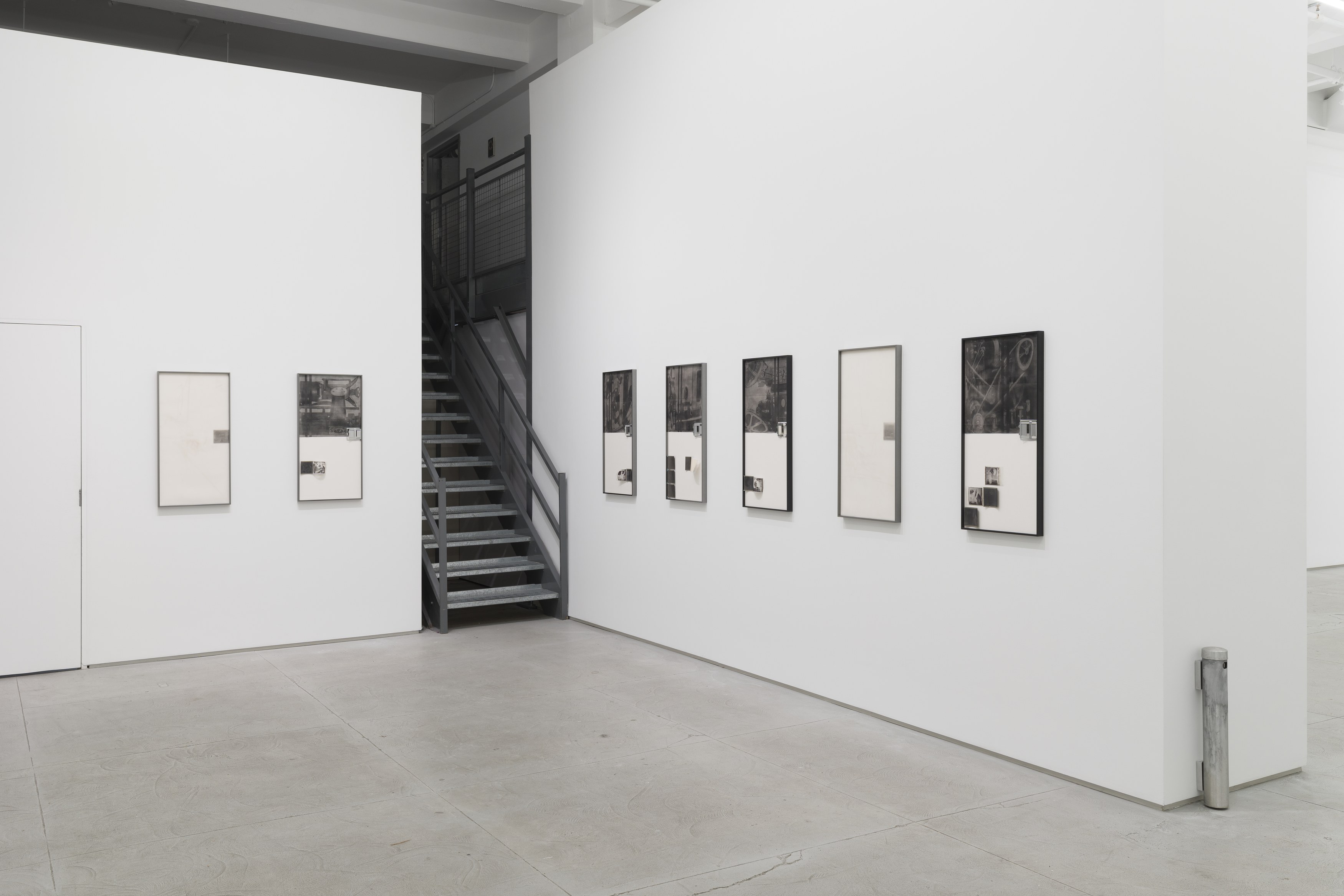
Side Room Chapter NY is thrilled to present I Want to Love with No Fear, Craig Jun Li’s first solo exhibition with the gallery. The exhibition features pictures realized in various materials, objects, and machines. Before there was magic, there was you. You sat in an arm chair and ordered me to kneel. When I looked up, there were cracks of lights reflected in your glasses. They looked gorgeous like low frequencies. I thought about the ancient music my father taught me. A bell rang. It was telling the wrong time. “CJ” Craig Jun Li ( born 1998, China) lives and works in New York City. Li’s work has been shown in solo and group exhibitions, including Galeria Filomena Soares, Lisbon; lower_cavity, Holyoke; KW Institute for Contemporary Art, Berlin; Kurtkubin, CDMX; Systema, Marseille; François Ghebaly, LA & New York; Taon, Ivey-sur-Seine; Romance, Pittsburgh; Chris Andrews, Montréal; Rainrain, New York; September Sessions, Stockholm; hatred 2, New York; Prairie, Chicago; and Canal Projects, New York, among others. The exhibition was conceived in conjunction with his solo exhibition, If you were there, you’d know, on view at Emmelines, New York, through January 31, 2026. Li operates a nomadic curatorial project, “Benny’s Video,” currently hosted in a studio sublet in Bushwick.
 PastTender
Michaela Bathrick, CFGNY, Magnus Maxine Flowers, Salim Green
Oct 31 – Dec 14
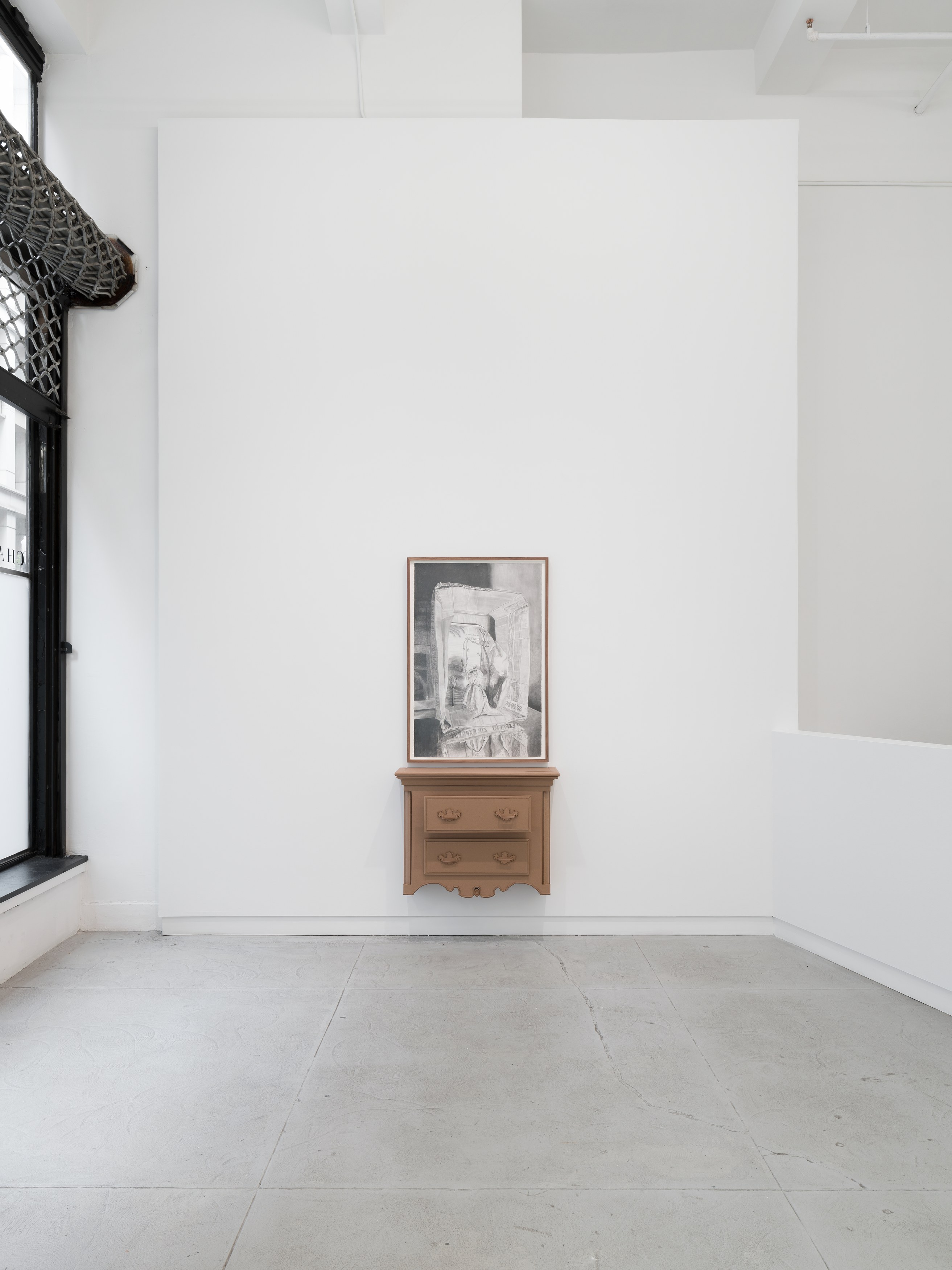
CFGNY Michaela Bathrick Magnus Maxine Flowers Salim Green Rosario Zorraquín Working against conditions of entrenched surveillance and a pervasive atmosphere of publicity, the artists included in Tender create cryptic linguistic forms and rituals of exchange: here, opacity becomes intimacy. Like a hand cupped around a single ear in a crowded room, alternative codes and linguistic forms suggest the possibility of speaking closely, ‘beneath the din’, as the poet Mary Ruefle has described it. Here, language is put in a blender, chopped and screwed, chewed and muddled, occluded in private symbologies, yet in each work there is an effort to communicate afresh. There is a focus on the materiality of languages – alphabets, mouths of tongues and teeth, systems of violent or strange designations – elements that are broken down and reconstituted. There is also a yearning, a drive towards a secondary or alternative way of communicating made on the ruins of archaic systems: an intimate, alternative language that might only be understood by a close-knit group, or even just a single other. Michaela Bathrick creates concrete sculptures of large graphemes, such as letters or numbers, which she pours into handmade cardboard positives. Transforming characters such as the lower-case ‘e’ or the number ‘2’ seen here, into heavy, physical forms, Bathrick’s sculptures suggest alternative ‘use values’ for written characters, as though they were architectural elements or tools, like I-beams or A-frames. The sculptures can only be ‘read’ from the side, where they are presented in repeating series, performing the kind of repetition that loosens a word from its meaning, from the sounds and values that letters and numbers designate. Seen head-on, their forms are suggestive of other objects: fittings, fixtures, furnishings, signs, and architectures. The inky blooms of Rosario Zorraquín’s painting AL (2024) provide light, watery veils over some of the smaller gestures and symbols that the work also contains. The works from this series are akin to a psychic retch, a purge, in which images form out of heedless accumulation, splotches of pigment and defining lines that inch closer to historical depictions of hell from different cultures, to Goya’s capturing of human suffering; they grapple with the more repellent aspects of being human. Her work is also deeply invested in translation and language, stretching its possibilities to remain fiercely and tenderly anti-discursive. Her practice is an ever-revealing process, immersed in contingency and opacity, at the mercy of the change and transformation involved in being-human: the ways of a simultaneously sacred and mundane existence. The collective CFGNY often works with bootlegged objects – faked, copied, improvised, ‘off’ – as a starting point for accessing skewed visions of cultural identity. For a new series, the collective has been creating still life pencil drawings of dollar store “Made in China” homewares, knick-knacks, and toys, rendered by multiple members of the group, who pass them amongst each other over the course of several weeks. Made in conversation with the Dutch still life tradition, the drawings also draw in elements that relate to the VOC (the Dutch East India Company), which carried out devastating colonial business in Asia, sending ‘luxury’ goods back to Europe. The drawings include fragments of an illustrated 17th-century VOC travelogue, which was partly a record and partly an invention created by its publishers and became the basis of Chinoiserie motifs prevalent throughout European and American design culture. The drawings are paired with cardboard sculptures based on objects on display in the American Wing of the Metropolitan Museum of Art, a reminder of the packaging materials that constitute one of the basic materials of contemporary trade and the institutional afterlife of business capital. Salim Green uses strategies of abstraction, evasion, and concealment to work through and play with relational politics. In recent exhibitions like Dark Forest Theory and DFT 2025, he’s considered how speculative social theories can be a generative framework to consider Blackness and survival. As part of a class he was teaching at Wesleyan College, he and his students elected to adopt new names, registering the way that one’s behavior would often change to suit a new alias. Green himself went by Professor Shifty, an avatar that he has recently begun to employ selectively as a proxy to make public appearances and in a recent film. When he found a set of decommissioned name tags featuring the names of Wesleyan professors in the college basement, they began to suggest the possibility of other possible avatars and collaborators. Green’s paintings Fade (my) thy neighbor (2025) and TBA (2025) are made on felt, a ground that furs and fuzzes clear lines or distinctive imagery, creating hazed images and forms. Shifty is to Green what the paintings are to the various reference points and textures that inspire the works: reference a lived experience but conceal and protect their subjectivity and, in turn, open them to further possibilities. Magnus Maxine Flowers has created a longstanding series of paintings in which she blends down the interior pages of a daily newspaper in a food processor, and then pours it onto the publication’s front page, reconstituting it as a sculptural substrate for her paintings. Working with newspapers from dates that hold particular significance to her, she also affixes small everyday mementos to the paintings when they are finished, such as fruit stickers from her daughter’s snacks or wrappers from packs of gum. Drawing on historical constraint methods for painting, these works also summon consumption, digestion, and care, as well as private languages, daily rituals and nonverbal communications that might be shared between a parent and child, or between the artist and herself. CFGNY works in Brooklyn, NY. They have had solo exhibitions at Hot Wheels, London, UK; Contemporary Art Gallery, Vancouver, CA; Hammer Museum, Los Angeles, CA; Japan Society, New York, NY; Bel Ami, Los Angeles, CA; 47 Canal, New York, NY; among others. Their work and performance have been shown in group exhibitions at Chapter NY, New York, NY; The Cooper Hewitt, New York, NY; The Cooper Hewitt, New York, NY; ILY2, Portland, OR; Pratt Manhattan Gallery, New York, NY; Somerset House, London, UK; Asia Art Achieve in America, Brooklyn, NY; Helena Anrather, New York, NY; X Museum, Beijing, CN; RISD Museum, Providence, RI; Kayokoyuki, Tokyo, JP; Emily Harvey Foundation, New York, NY; MoMA PS 1, Queens, NY; among others. CFGNY is composed of Daniel Chew (b. 1998, San Jose, CA), Kirsten Kilponen (b. 1987, Chicago, IL), Ten Izu (b. 1992, Oakland, CA), and Tin Nguyen (b. 1988, Attleboro, MA). Michaela Bathrick (b. 1992 Oakland, CA) is a sculptor living in New York City. Bathrick completed her BA at UCLA in 2015, attended the Whitney Independent Study Program in 2020, and received her MFA from Bard in 2025. In 2024 Bathrick has had solo exhibition at Louis Reed Gallery, New York. In 2026 she will have a solo show at SculptureCenter as part of their In Practice series. Her work has been shown in group exhibitions at Galerie Timonier, New York, NY; Post Times, New York, NY; KDR, Miami, FL; One Trick Pony Gallery, Los Angeles, CA; White Columns, New York, NY; among others. Magnus Maxine Flowers (b. 1985, Juneau, AK) lives and works in Pasadena, CA. She received her BFA from California Institute of the Arts, Valencia, CA in 2013, and is currently pursuing her MFA at University of California, Los Angeles, CA (expected 2027). Flowers has had solo exhibitions at King’s Leap, New York, NY; Sebastian Gladstone, Los Angeles, CA; Stanley’s, Los Angeles, CA; among others. Her work has been shown in group exhibitions at Chapter NY, New York; Silke Lindner, New York, NY; Laurel Gitlen, New York, NY; Michael Benevento, Los Angeles, CA; Night Gallery, New York, NY; David Zwirner, New York, NY; Sebastian Gladstone Hollywood, Los Angeles, CA; among others. Salim Green (b. 1996, Middletown, CT) lives and works between Los Angeles, CA and Middletown, CT, where he is currently the Sullivan Fellow in Art at Wesleyan University. Green earned a BA from Wesleyan University in 2020 and an MFA from the University of California Los Angeles in 2024. Green’s work has been exhibited in solo and group exhibitions at Chapter NY, New York, NY; Société, Berlin, DE; Josh Lilley, London, UK; François Ghebaly, Los Angeles, CA; Room 3557, Los Angeles, CA; SculptureCenter, New York, NY; Bellyman, Los Angeles, CA; Stony Island Arts Bank, Chicago, IL; Fábrica, Mexico City, MX; among others. His work is included in the collections of the Getty Research Institute, The Kinsey Collection and the Tyler School of Art and Architecture, Temple University. Rosario Zorraquín (b. 1984, Buenos Aires, Argentina) lives and works in New York. Zorraquín studied at the Universidad Nacional de Arte, Buenos Aires, ARG and was a Beca Kuitca Scholar at the Universidad Torcuato di Tella, Buenos Aires, ARG. Her work has been exhibited at Hessel Museum of Art, Annandale-On-Hudson, NY; Americas Society, New York, NY; SIC art space, Helsinki, FI; Kurimanzutto Gallery, New York, NY; Kraupa-Tuskany Zeidler Gallery, Berlin, DE; Revolver Gallery, New York, NY; Isla Flotante Gallery, Buenos Aires, ARG; Museo Nacional de Bellas Artes, Buenos Aires, ARG; Museo de Arte Moderno de Buenos Aires, Buenos Aires, ARG. Zorraquín’s work is included in the collection of Museu d'Art Contemporani de Barcelona, Barcelona, SP; Museo de Arte Moderno de Buenos Aires, Buenos Aires, ARG; Taguchi Art Collection, Tokyo, JP; Ama Amoedo Collection, UY; Alma Colectiva, Guadalajara, MX; and Alliuz Collection, Guadalajara, MX.
 PastLoyalty Program
Carolyn Forrester
Oct 31 – Dec 14
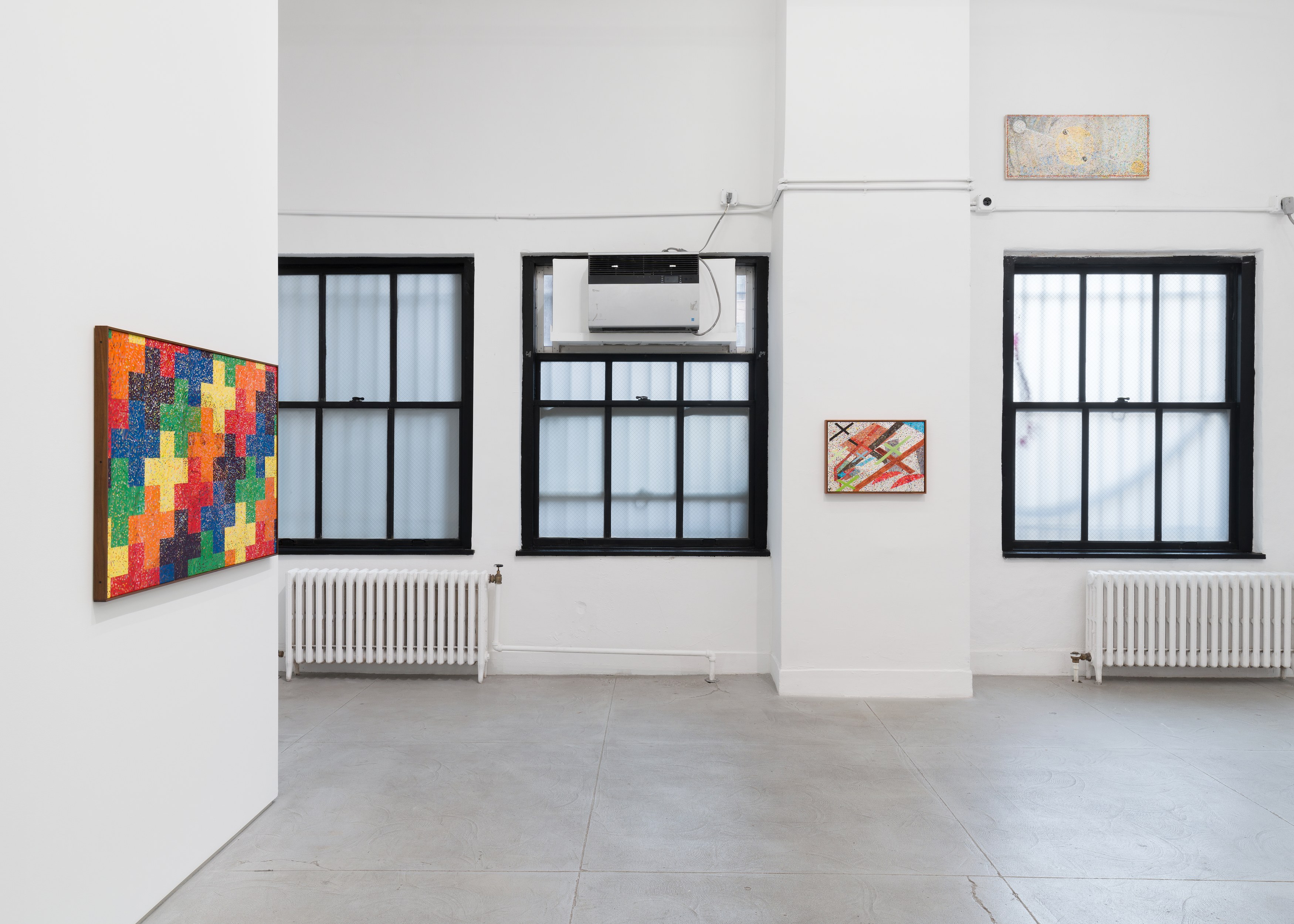
Side Room "Thou art the one who followst me the best. Thou art the one who follows me like a little dog. Thou art the one who did follow me that day. Thou art the one who didst follow me through trials. Thou art the one who follows the law… the text. Thou art the one who follows the mob. Thou art the one who didst follow me. Thou art the one who did follow me. Thou art the one who art. Thou art the one who is." —Jacques Lacan (trans. Russell Grigg), Seminar III: The Psychoses Norbert Wiener, the father of cybernetics, put forward the following thought experiment: imagine a god, traveling in the opposite direction in time, trying to send us a message. “If he drew a square,” Wiener wrote, “the drawing of the square would appear to us as a catastrophe.” Something like this is at work in Carolyn Forrester’s presentation at Chapter, Loyalty Program. Across her practice, Forrester draws from early abstract painting and Dada as an invocation of the dialectical leaps made in the progression of modernism. Today, what was avant garde in Duchamp’s time appears to recede into the past. The works here account for what is left: the medium as a hyper-referential hall of mirrors and abstraction as an apt form for a world captured by financialization. Yet they also produce a remainder, distinct to Forrester: a touch of madness as both anger and frenzy, sound and fury. In many of her paintings, Forrester uses a threadbare and off-kilter pointillism to suggest forms in space. In the body of work on view here, she has built on this practice by flattening her marks and sharpening her canny approach to composition. Her not contains a portion of a 1919 work by Francis Picabia, The Double World, a dry joke of a painting featuring an elliptical figure which, Picabia quipped, somehow represented the formal logic of the Mona Lisa. In Forrester’s interpretation, the figure is rotated and flipped, then doubled, so that the form occludes itself. In doing so, Forrester takes a line drawing of a masterpiece and twists it into a Möbius strip, leaving us lost inside the gag. Forrester shares Picabia’s interest in the way that art and perception are sublated into systems of information, a preoccupation which appears again in Long Arc. The composition is again a citation of a representation, this time of David Diao’s interpretation of Bauhaus from his 2023 work Rietveld’s Berlin Chair Parts Making Bauhaus Profile Logo with Parts Left Over 2. Constellations of marks, seen from a distance, form the contours of a still from Oliver Stone’s 1987 film Wall Street: Charlie Sheen against a mirrored wall, which overlays Diao’s composition like a grid. The work is obliquely labeled by a series of numbers; Forrester copied these from a spectroscopy of a Mondrian, his abstraction reduced to layers of pigments and transfigured into data. Here, alienated from their source, the numbers no longer describe anything real. They add up to nothing, circling the work like a clock counting forwards in time. The black hole at the center of the show is American Express, a painting of captions on a laptop screen. The words are Gordon Gekko’s, as pronounced by Michael Douglas. But there is no speech here, only the transcription of a machine. Set against painterly visual snow, the sentence hovers incomplete. An accusation coheres before breaking down; the sentence both lacks meaning and contains too much. We can presume that the sentence will end, and the words will become what they always were: a pat phrase, a line from a movie. Forrester’s painting captures something strange and startling in the moment just before it escapes. —Will Weatherly Carolyn Forrester (b. 1993 West Point, NY) lives and works in New York. She graduated from Maryland Institute College of Art in 2020 and Yale University in 2015. Forrester has had solo shows at Chapter NY, New York, NY; King’s Leap, New York, NY; Inge, Plainview, NY; and Carlye Packer, Los Angeles, CA. Her work has been included in group shows at Antenna Space, Shanghai, CN; M+B, Los Angeles, CA; and Galerie Nicolas Robert, Montreal, CAN; amongst others. She has been an artist in residence at the Alex Brown Foundation, Byrdcliffe Artist Residency, and the Lower East Side Printshop.
 PastBaby
Rene Matić
Sep 5 – Oct 19
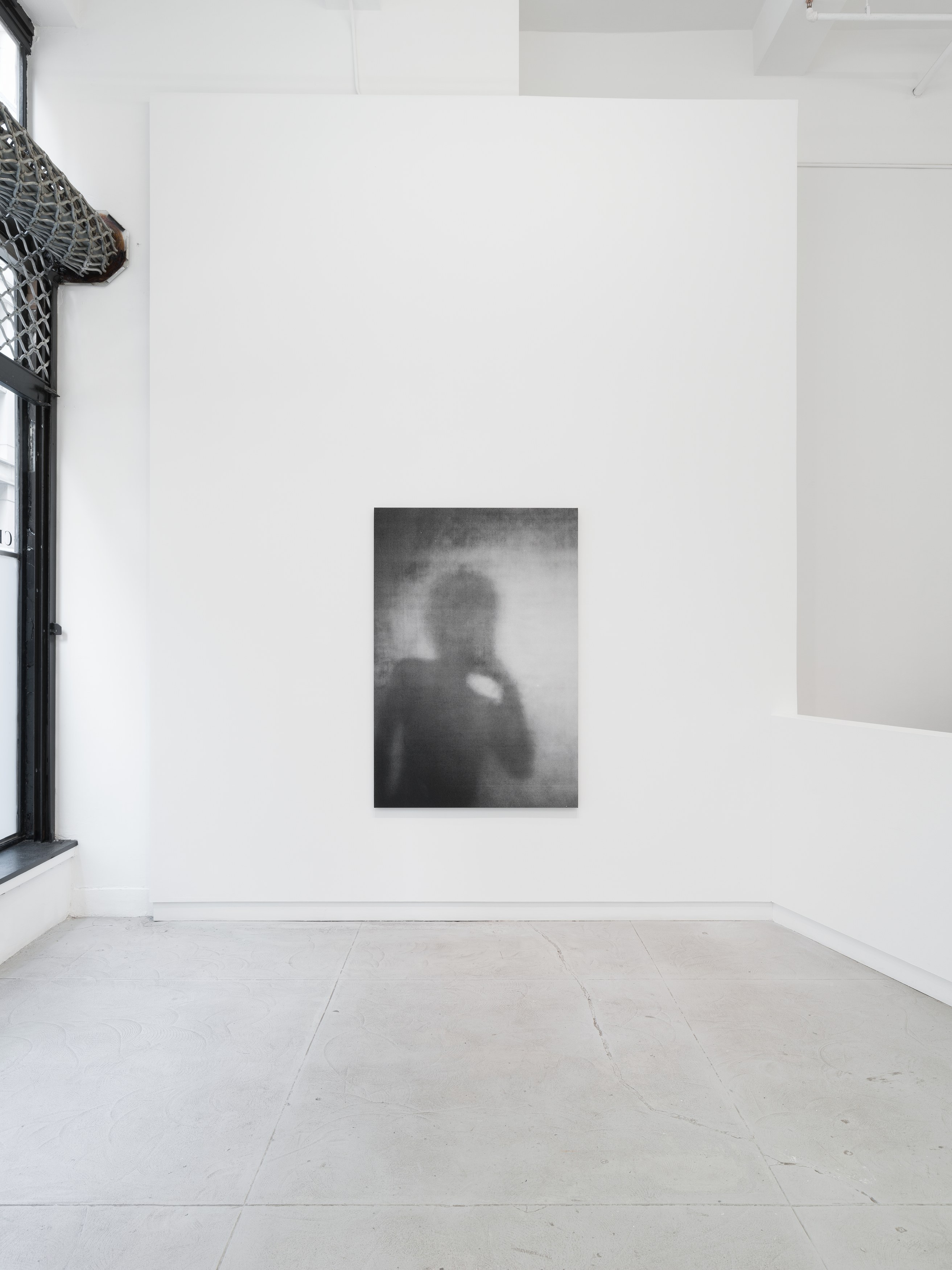
“The truth is the light and light is the truth.” —Ralph Ellison, Invisible Man Chapter NY is excited to present Baby, Rene Matić’s second solo exhibition with the gallery. In a significant shift from their representational photography documenting their community, Matić debuts a new series of silkscreened canvases that push into abstraction for the first time, using their own shadow as subject. This body of work marks a more introspective and symbolic approach to questions of identity, visibility, and care, creating space for the artist to reflect on their personal relationship to both Blackness and whiteness. The title of the exhibition, Baby, stems from something Matić’s mother once told them: as a child, they would refer to their shadow as their “baby”, a gesture of early care and protectiveness. Matić, who was born to a white mother and a Black father, now reconsiders this recollection as a metaphor for self-mothering, particularly in relation to their Blackness. In the shadow, they encounter their Black body for the first time—not as objectified or projected upon, but as something tender, autonomous, and seen. This early act of naming also reveals a perhaps unconscious hyper-awareness of the violence historically and systemically inflicted on bodies like theirs, and the instinctive need for protection and preservation. Matić’s work suggests that within shadow, within opacity, one can mitigate the violence of exposure and prioritize care. Rooted in a continual search for love, Matić’s practice spans photography, sculpture, writing, and sound, often honoring lives and intimacies that exist in the in-between. With Baby, this exploration becomes more vulnerable and self-reflective. Referencing Carl Jung’s concept of “shadow work”—the process of exploring and integrating the unconscious part of the personality that contains repressed instincts—Matić uses their own shadow to confront and care for the parts of themself previously left unexamined. Captured spontaneously with an iPhone, these images mark fleeting moments of recognition in the world: “There I am.” Their shadow becomes a proxy, offering refuge from the gaze often imposed upon racialized and marginalized bodies. Inspired by time spent in the darkroom, where images are created through chemical interactions of light and dark, Matić began to reflect on whiteness and Blackness not only as social constructs, but as alchemical forces. The silkscreen process itself becomes symbolic—black ink scraped across a white surface, echoing the friction and interplay of identity, perception, and self-recognition. The exhibition also draws influence from Andy Warhol’s abstract, silkscreened shadow paintings, Shadows (1978-79), as well as from ongoing discussions around shadow, opacity, and the politics of visibility. Artists such as Glenn Ligon and Kara Walker have reflected on the ambiguity of Warhol’s source imagery and the lasting influence of this body of work. With no visible origin, the shadows invite speculation, granting the absent body or object a kind of protective opacity. For Matić, this opens a visual and conceptual framework through which to explore their full self. The shadow is worth preserving not because it reveals, but because it conceals and protects. It is a body without flesh, yet it confirms the presence of flesh—absence that proves existence. Rene Matić (b. 1997, Peterborough, UK) lives and works in London, UK. Matić have been shortlisted for the Turner Prize 2025, nominated for their recent solo exhibition As Opposed to the Truth at CCA Berlin. The Turner Prize exhibition opens in September 2025 at Cartwright Hall, Bradford, UK. They have also had solo and two-person exhibitions at Kunsthalle Wien, Vienna; Chapter NY, New York; Arcadia Missa, London; Martin Parr Foundation, Bristol; Kunstverein Gartenhaus, Vienna; South London Gallery, London; Studio Voltaire, London; Quench Gallery, Margate; Vitrine Gallery, London; among others. Their work was included in the Coventry Biennial 2023, Coventry and Warwickshire; and group exhibitions at Tate Britain, London, UK; Leslie-Lohman Museum of Art, New York; Two Temple Place, London; The Whitaker Museum & Art Gallery, Rossendale; Herbert Art Gallery & Museum, Coventry; High Art Arles, Arles; Sadie Coles HQ, London, UK; The Walker Art Gallery, Liverpool, UK; Hayward Gallery, London; The Hepworth, Wakefield, UK; bold Tendencies, London; Schlossmuseum, Linz; Saatchi Gallery, London; and Black Cultural Archives, London among others.
 PastPicture a Train
Eloise Hess
Sep 5 – Oct 19
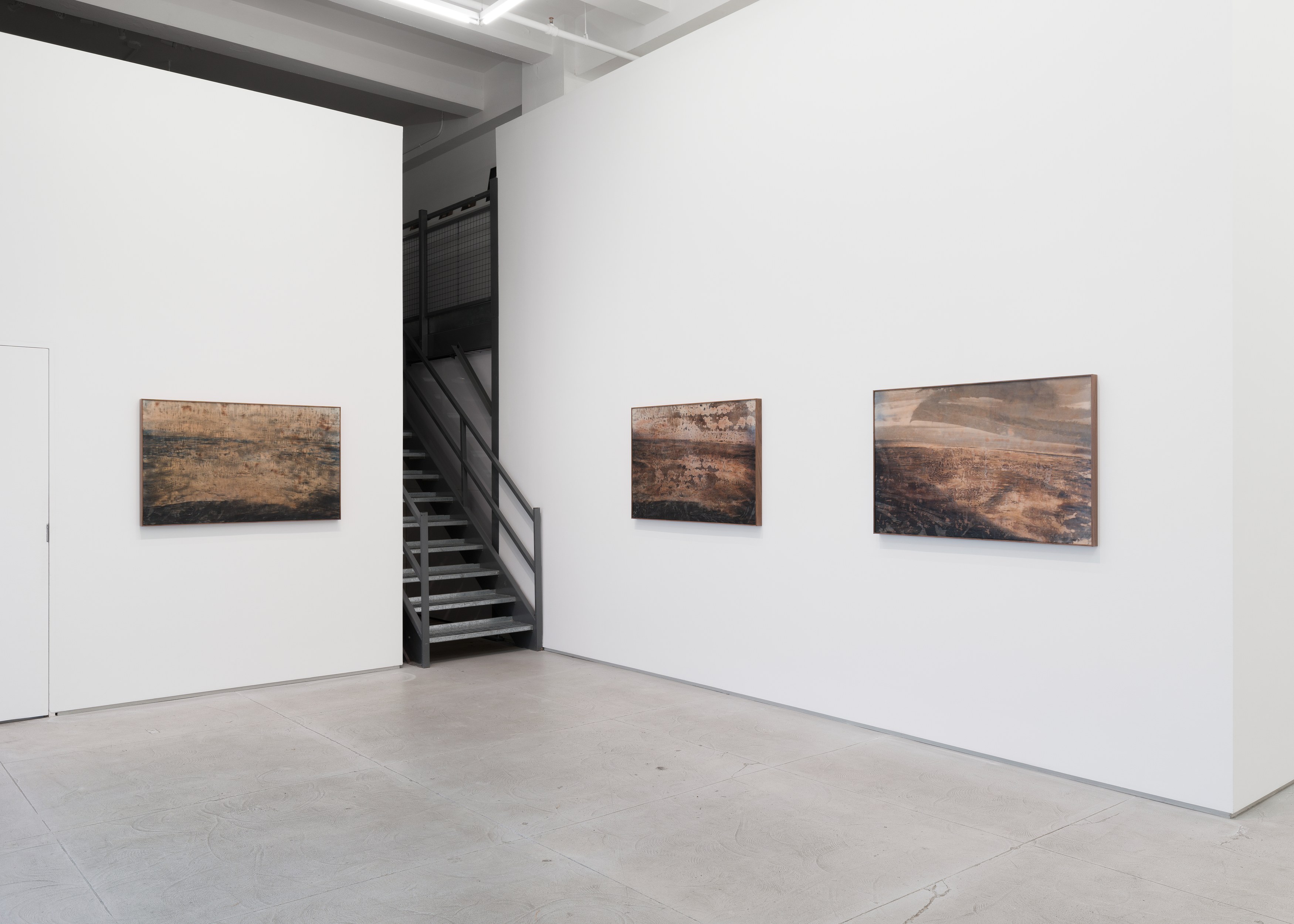
Side Room Chapter NY is pleased to present Picture a Train, the first solo exhibition by Eloise Hess at the gallery. Through a painting practice deeply informed by photography, Eloise Hess explores the conditions of perception and the plasticity of memory. Hess works serially, each series beginning with a set of photographs. Working between photography, printmaking, and encaustic painting, she has developed a distinct material language. Rather than seeking a singular, photographic representation, she instead seeks the variable, internal representation of the photographed experience. Picture a Train begins with a set of photographs taken at Amboy Crater, a dormant volcano in the Mojave Desert, 50 miles northeast of Joshua Tree, California. Hess lived in the area from 2017 to 2020 and visited the crater often but did not take any photographs there during that time. This body of work marks her return, driven by the absence of a photograph and the echo of her earlier encounter. Over the course of a week in April 2025 she returned to the site each day, waiting to take a picture of the train that intermittently crosses the horizon. Seen and heard from the rim of the crater, the train serves as an allegory for the process of photography, waiting for something to pass in front of the lens, and the desire to hold onto it. The paintings included in this exhibition emerge from four of these photographs, taken on a single day. The process of observation, duration, and anticipation is central to both the subject of Hess’s work and its material construction. She prints and transfers each photograph wet, pressing a partial and unrepeatable impression of the photograph onto an absorbent paper. She embeds the print into the encaustic surface and transforms the surface over time; painting, dying, carving, heating, and solidifying her materials to create an image and surface that echoes the terrain of the crater. The encaustic forms a skin-like membrane that holds a record of every touch enclosed within it. These markers of touch become integral to the final image: a merging of the initial, photographic image, and the subsequent, responsive transformation. Here, touch is both a physical act and an emotional response. The paintings evoke this layered contact, at once a specific lived experience and its resonance. Grounded in site and abstracted by time, Picture a Train reflects Hess’s interest in the fragment— what is left, what is held, and what passes from artist, to image, to viewer. Eloise Hess (b. 1995, Los Angeles, CA) received a BA from Bennington College in 2017 and MFA in Painting and Printmaking from Yale University in 2024. She has held solo exhibitions with von ammon, Washington, DC; Matta, Milan; and Helena Anrather, New York. Her work has been included in group exhibitions at The Print Center, Philadelphia; Felix Art Fair, von ammon, Los Angeles; Zero… & Matta, Paris; among others. She has participated in residencies at the Herekeke Arts Center, Lama, NM and High Desert Test Sites, Joshua Tree, CA, where she began this project.
 PastRecorded Syllable
Nova Jiang
Jun 27 – Aug 9
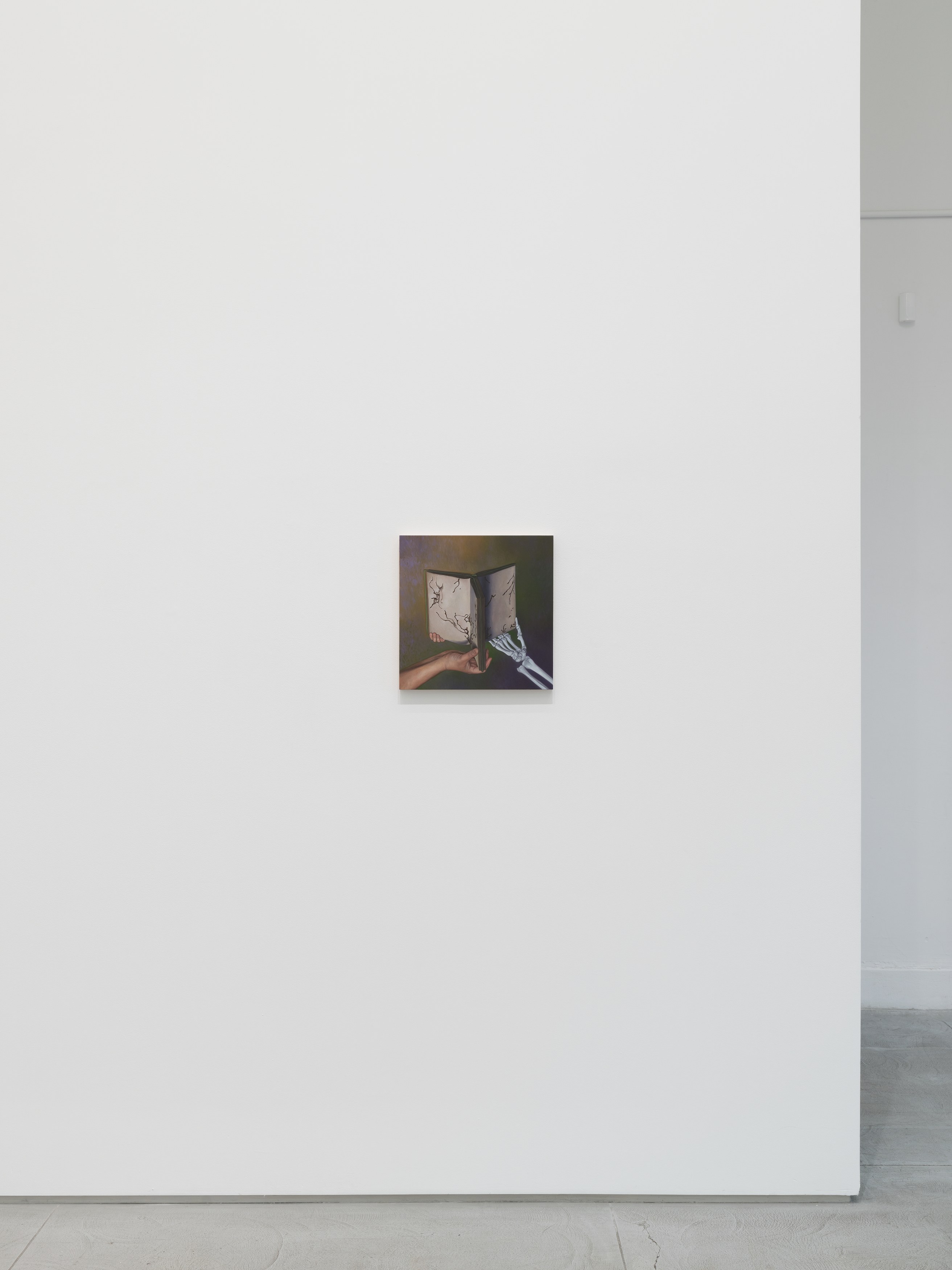
Chapter NY is pleased to present Recorded Syllable, Nova Jiang’s first solo exhibition in the Side Room at the gallery. The exhibition features a new series of intimate, symbol-laden paintings that reflect Jiang’s ongoing exploration of memory, time, and disappearance—both personal and collective. Taking its title from Macbeth’s haunting phrase, “to the last syllable of recorded time,” the exhibition considers the traces we leave behind. Throughout the exhibition, books reappear as enduring metaphors for the passage of time, the accumulation of memory, and a life lived. She draws inspiration from artists like Philip Guston, whose own use of the book as a symbolic object resonates with her interest in the book as a vessel of personal and historical meaning. In Trilogy, three figures—a child, an adult, and a skeleton—share a cyclical narrative embodied by a single book, its surface marked by the tracks of insects. In Words, a book composed of identically crumpled pages becomes a haunting gesture toward the unread books lost to the past, poetically suggesting how some words fail to speak to us across time. Themes of dislocation and legacy surface in Exile, where camellias—native to China and Japan and common in the artist’s Los Angeles neighborhood—appear beside the spectral image of a fractured vase, evoking the fragility of home, memory, and belonging. Her neighborhood was once home to many Japanese Americans after WWII, and in light of the current political climate, Jiang reflects on the ongoing vulnerability of displaced populations. In Silhouette, a skull nestles into the void carved from a book’s interior, surrounded by line drawings of Jiang’s own face. The image suggests a form that is missing and serves as a kind of self-portrait. In Animator, a golden toad automaton perches atop the pages of a flip book. Rather than illustrations, the book is composed of cut-outs that flip over the automaton as it moves, collectively animating the act of the toad swallowing a moth. Jiang is drawn to toads—which appear throughout her oeuvre—in part due to their sensitivity to climate change and their symbolic resonance in Chinese art history. She reminds viewers that while a toad may be reimagined through human artifice, an extinct species is lost forever. Jiang’s practice is steeped in art historical dialogue, from Hans Baldung to Pieter Claesz, and suffused with references to natural systems, literature, and grief. In Recorded Syllable, she considers what it means to record, to mark, and to remember—even as language, species, and selves begin to vanish. Nova Jiang (b. 1985, Dalian, China) lives and works in Los Angeles. She received her BFA from the University of Auckland, Elam School of Fine Arts in 2006 and her MFA from the University of California, Los Angeles in 2009. She has had recent solo exhibitions at Union Pacific, London and Simone Subal, New York. Her work has been included in group exhibitions at Union Pacific, London; Am Schwarzenbergplatz with KOW and LambdaLambdaLambda, Vienna; Simone Subal, New York; Honor Fraser, Los Angeles; and the Los Angeles Municipal Art Gallery, Los Angeles; among others.
 PastSix
Stuart Middleton, Valerio Nicolai, Yutaka Nozawa, Minh Lan Tran, Alix Vernet
Jun 27 – Aug 9
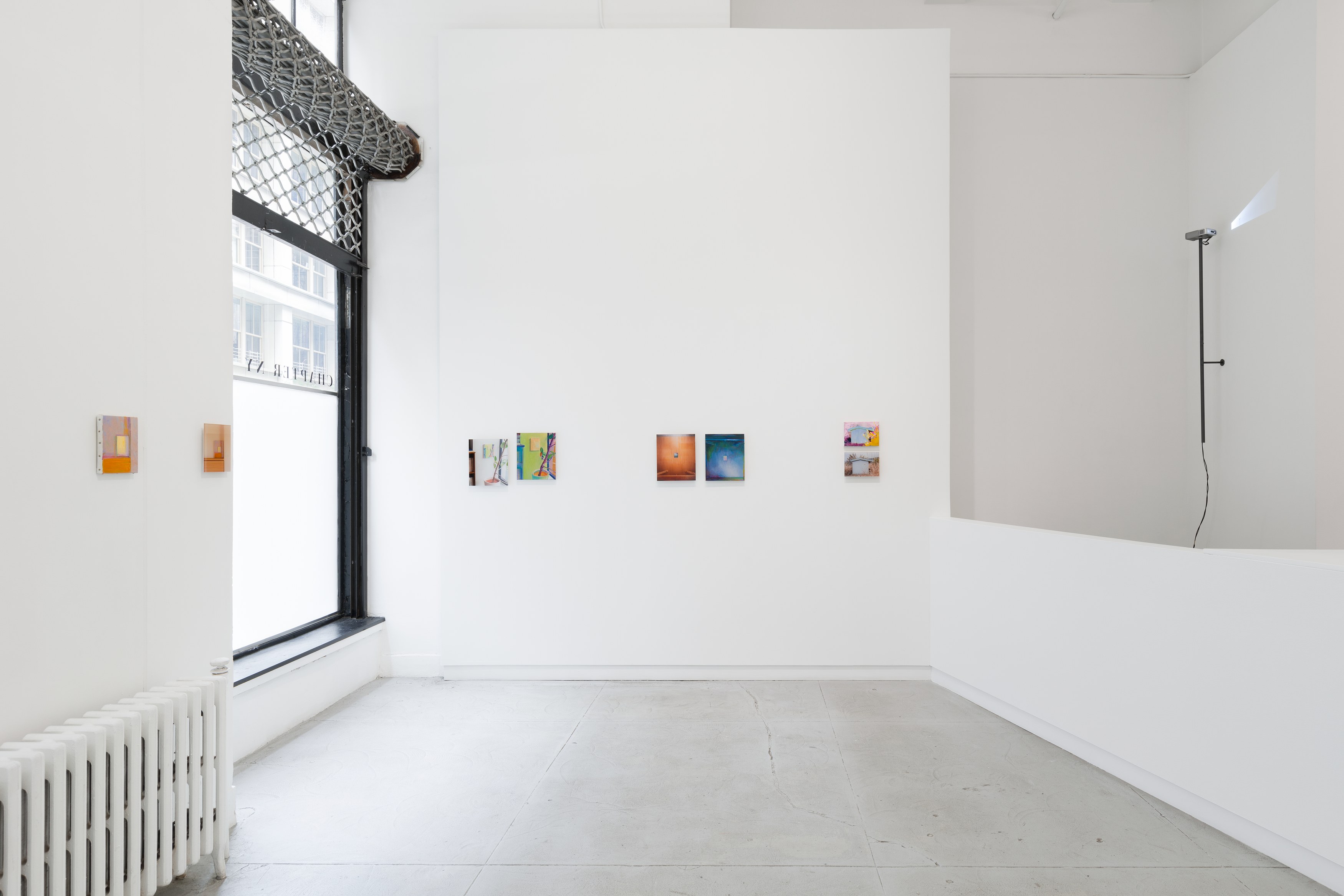
Vicky Colombet, Stuart Middleton, Valerio Nicolai, Yutaka Nozawa, Minh Lan Tran, Alix Vernet Chapter NY is pleased to present Six, a group exhibition featuring works by Vicky Colombet, Stuart Middleton, Valerio Nicolai, Yutaka Nozawa, Minh Lan Tran, and Alix Vernet. The exhibition explores states of perception, embodiment, and transformation. Across painting, sculpture, video, and drawing, the six artists reflect on the act of shaping, whether by human or environmental forces, emphasizing a continual state of becoming. Stuart Middleton’s graphite drawings belong to an ongoing series based on photographs of industrial meat processing machinery. They transform functional mechanisms into imaginary architectures, suggesting everything from Futurist prototypes to science fiction landscapes. Seen from the viewpoint of the processed, the works conjure an uncanny, visceral space—both coldly mechanical and disturbingly organic—extending Middleton’s long-standing inquiry into the abstraction of the body in modern systems of labor, consumption, and control. Abstract paintings by Vicky Colombet embody the artist’s meditative relationship to process and meticulous brushwork. Her atmospheric surfaces evoke elemental forces—breaking ice, dissolving forms, geological drift—suggesting the invisible rhythms and transformations of the natural world. Colombet’s practice emerges from a deep engagement with landscape, natural pigments, and quantum theory, cultivating a vision of abstraction rooted in stillness and flux. In Quantum Gold Fields (2025), she introduces gold pigment into her expanding body of work. With a focus on resistance, ritual, and political embodiment, Minh Lan Tran’s painting embraces language and movement as co-constitutive forces. Drawing from her background in calligraphy, theology, and choreography, Tran composes works that trace physical intensities, with gestures referencing spiritual-political actions—from protest chants to self-immolations—foregrounding embodiment over representation. By shifting perspectives, Yutaka Nozawa quietly disrupts conventional perceptions of time and space. Diptychs from his ongoing Canvas series include one painting depicting a blank canvas installed in an interior space and a second painting of the same canvas painted to portray the setting in which it hangs. These works engage with still life conventions, offering a subtle and humorous meditation on seeing, representation, and the fluidity of perception. Nozawa also includes li (2025), a durational video of a bird resting on top of a post, captured over an extended period of time. Valerio Nicolai’s paintings of imagined structures draw from the visual languages of still life, architecture, and absurdist narrative. Fusing elements of humor and drama, Nicolai’s canvases depict surreal spaces populated by castle-like constructions. His deadpan imagery complicates art historical tropes, embedding allegories of decay, doubt, and regeneration into every constructed scene. These are paintings that wobble between the banal and the eternal, the poetic and the grotesque. For her ongoing series of Heat Exchange Poems, Alix Vernet makes floor and wall-based sculptures with repurposed AC unit condensers. The backs of AC units become surfaces for tactile inscription, bearing found and added marks: scratches, tags, smudges, handprints. These traces function like accidental archives—a body, a prayer, a memory. By staging these altered objects in the gallery, Vernet reanimates the condenser as both a transient summer relic and a fossilized site of urban encounters. Together, the works in Six propose a mutable world in which matter, perception, and form remain open to transformation. In this space of continuous re-making, each artist traces how we are shaped and how we shape in return. Vicky Colombet (b. 1953, Paris, France) lives and works between New York City, the Hudson Valley, and Paris. Colombet has recently held solo exhibitions at Fernberger, Los Angeles, CA; The Elkon Gallery, New York, NY; Galerie Dutko, Paris, FR; Museé Marmottan Monet, Paris, FR; Leonard Hutton Galleries, New York, NY, among others. Her work is included in numerous public and private collections including the Albright-Knox Art Gallery, Buffalo, NY; the Musée Marmottan Monet, Paris, FR; the Museum of Fine Arts, St Petersburg, FL; and the Museum of Fine Arts, Houston, TX. She is the Recipient of the Esther and Adolph Gottlieb Foundation Grant (2001) and the Pollock- Krasner Foundation Grant (2014). Stuart Middleton (b.1987 Crewe, UK) lives and works communally in West Wales. He received his BA in Painting from Camberwell College of Art, London in 2009 and graduated from HBK Städelschule, Frankfurt am Main, Germany in 2016. Middleton has had solo exhibitions at Chapter NY, New York; Carlos/Ishikawa, London; Clementin Seedorf, Cologne; Kunstlerhaus Graz; Tramway, Glasgow; and ICA London, among others. His work has been shown in group exhibitions at Villa Imperiale, Pesaro; National Gallery of Art, Washington, DC; Greene Naftali, New York; Museum MMK für Moderne Kunst, Frankfurt; Kunsthaus Glarus; and Camden Arts Centre, London; among others. Valerio Nicolai (b. 1988, Gorizia, Italy) lives and works in Milan, Italy. He studied at Accademia delle Belle Arti in Venice. Nicolai was awarded the Licini Prize in 2023 and the 2020-21 Pollock-Krasner Foundation grant. He has recently held the solo exhibitions at: Museo Osvaldo Licini, Ascoli Piceno, IT; Campoli Presti, Paris, FR; Clima, Milan, IT; Galeria Madragoa, Lisbon, SP; Las Palmas Project, Lisbon, SP; smART Foundation, Rome, IT. His work has been recently shown in group exhibitions at MAMbo, Bologna, IT; MADRE Museum, Naples, IT; Casa Testori, Milan, IT; MAXXI L’Aquila, L’Aquila, IT; Triennale, Milano, IT; MACTE, Termoli, IT; Fondazione Zimei at Teatro Michetti, Pescara, IT; Fondazione Zimei, Pescara, IT; All Stars, Lausanne, CH; Galeria Madragoa, Lisbon, SP; Palazzo Monti, Brescia, IT; GAM Torino, Turin, IT; Quadriennale Arte 2020, Roma, IT; Spirit Vessel, Espinavessa, SP; Marselleria, Milan, IT; Palazzo Cavour, Turin, IT. Yutaka Nozawa (b. 1983, Shizuoka, Japan) lives and works in Shizuoka, Japan. He received his BFA from Tokyo Zokei University, Tokyo, and his MFA from the Tokyo National University of Fine Arts and Music, Tokyo. He also received his MFA in Photography from IED Madrid. Yutaka has presented his work at: Kayokoyuki, Tokyo, JP; Condo London 2024 at Sadie Coles HQ, London, UK; void+, Tokyo, JP; The University Art Museum, Tokyo, JP; TMMT Art Projects, Tokyo, JP; Utrecht, Tokyo, JP; Intercambiador ACART, Madrid, SP; Galería Santa Fe - La Decanatura, COL; Shizuoka Prefectural Museum of Art, Shizuoka, JP. Minh Lan Tran (b. 1997, Hong Kong) lives and works in Paris, France. She received her MA in Byzantine studies and visual theology from the Courtauld Institute of Art, London (2020) and an MA in Painting from The Royal College of Art, London (2023). She studied Art History at the Ecole du Louvre, Paris and the University of Oxford. Her works have been exhibited at High Art, Seoul, KR; François Ghebaly, Los Angeles, CA; Balice Hertling, Paris, FR; House, Berlin, DE; Sadie Coles HQ, London, UK; the Museum of the Home, London, UK; the Royal College of Art, London, UK; the House of Annetta, London, UK; and the San Mei Gallery, London, UK. Alix Vernet (b. 1997) lives and works in New York City. She received a BA from the University of California, Los Angeles and completed a MFA in Sculpture at Yale. Vernet has had solo exhibitions at Helena Anrather, New York, NY; and group exhibitions at Museion, Bolzano, IT; the Gund Gallery, Kenyon College, Gambier, OH; Jeffrey Deitch, Los Angeles, CA; and Soft Opening, London, UK. Her photographs have been published by Dashwood Books, and she has received critical recognition in Frieze, Texte Zur Kunst, Artforum, and Art in America.
 PastMilk of the Earth
Antonia Kuo
Apr 18 – Jun 15
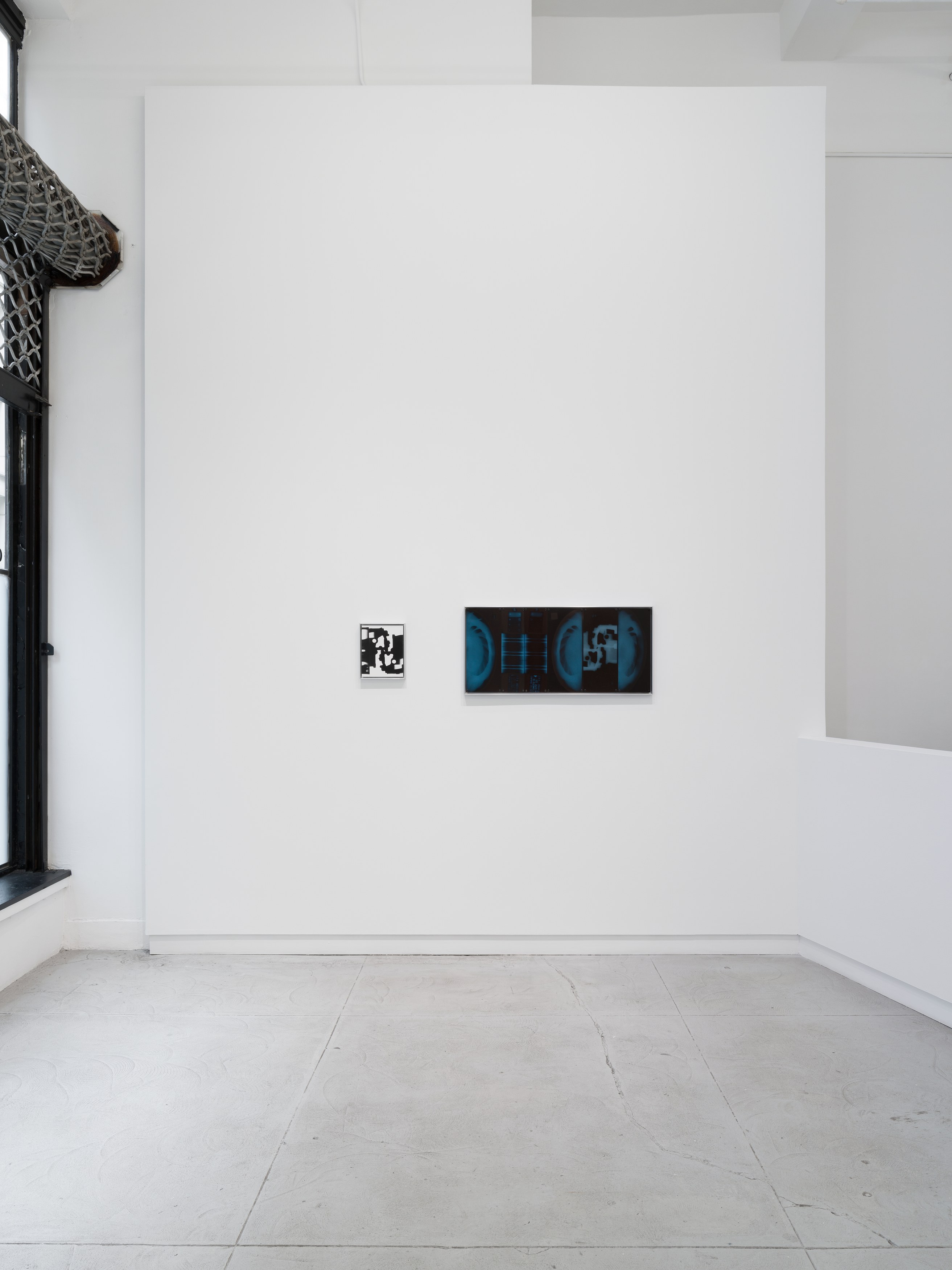
“The successful negotiation Of holes... Is dependent on maintaining A healthy respect For what cannot be seen.” —Pope.L, Hole Theory In Milk of the Earth, Antonia Kuo continues her engagement with personal histories rooted in alchemical transformation, metallurgy, and Chinese painting. She focuses on an ecology of material extraction— extraction of the body and the Earth—wombs, mines, cavities, milk, and metal. This framework brings our attention to the viscous liquidity of milk and ceramic slurry, the act of mining as milking the earth, and the mine as an excavated void, or negative. The site of the negative is a focal point for Kuo, a vital space activated by protean energies. Kuo utilizes photographic and sculptural technologies to convey aspects of these lineages, including chemical paintings on light-sensitive silver gelatin paper, X-ray film and corresponding photograms, video footage from her family foundry, micrographs of metal alloys, ultrasound video she recorded of her fetus, and sculptures referencing the industrial mold making process. In mold making, a “mother mold” is fabricated as an inverse matrix from which multiples are produced. Kuo’s ceramic mold sculptures are hollow, precisely recording an initial wax form that has been vacated, flushed from the ceramic. As a new mother, Kuo is interested in her body as a transformed and emptied vessel, one that has been mined by her infant, both in vitro and on a daily basis. Kuo’s work is inextricable from her relationship with her own Taiwanese artist mother who has a lifelong Chinese painting and calligraphy practice. Kuo uses the lens of Chinese painting to interpret aspects of landscape through embodied memory and engages the concept of emptiness which is pivotal to the Chinese conception of the universe. Emptiness is not inert or vacuous; it is active, dynamic, and connects the visible world to an invisible one. It is the site of continual becoming. From this emptiness over 10 billion years ago, all metallic elements in the universe were forged in stellar processes. Most of the copper in the Milky Way originated in supergiants, the most massive stars in the universe. In this exhibition, copper appears in several different modalities: as a supportive substrate, an electroplated coating, and a selective chemical sensitizer for her painting Pit Mine, producing chalky iron oxide tonalities. Kuo reflects on her family’s roots in the copper mining town of Butte, Montana, a metalworking heritage that inspired her uncles to start their own foundry. Berkeley Pit is a massive open pit mine in the heart of Butte, which Kuo remembers since childhood to be as breathtaking as an earthwork, a radical mile- long excavation of terrain waterlogged by deep burgundy and startling turquoise water containing high levels of heavy metals and toxic chemicals. At the crux of Kuo’s work is a complex ambivalence in relation to toxicity and awe. Kuo is familiar with collaborating with the caustic, unpredictable nature of chemistry, but is transfixed by its extreme transformative capabilities. Her paintings on paper coated with silver halide crystals are sensitive receptors to light and time. While copper was forged over the course of millions of years, silver was created in the flash of an eye during the intensely bright explosive moment of a star’s death. Antonia Kuo (b. 1987, New York, NY) lives and works in New York, NY. She received an MFA from Yale University in 2018, her BFA from School of Fine Arts Boston and Tufts University in 2009, and a one-year certificate from the School of the International Center of Photography in 2013. In 2024 Kuo had a two- person exhibition with Martin Wong at the Frye Art Museum, Seattle. Her work has been exhibited at Metropolitan Museum of Manila, PH; Centre Pompidou, Paris; the Whitney Museum of American Art, New York; Chapter NY, New York; James Cohan, New York; Project Native Informant, London; Jeffrey Deitch, Los Angeles; Moskowitz Bayse, Los Angeles; Jack Barrett Gallery, New York; F, Houston; Chart, New York; Each Modern, Taipei; Mamoth, London; Make Room, Los Angeles; among others. Kuo has performed and screened her work at Pioneer Works, Brooklyn, NY; Knockdown Center, Queens, NY; MoMA PS1, Queens, NY; and the Musee d’art contemporain de Montreal, among others. She has been an artist-in-residence at Mass MoCA, Vermont Studio Center, The Banff Centre, and was a MacDowell Colony Fellow. Kuo’s work is included in the collections of the Whitney Museum of American Art, New York and Centre Pompidou, Paris. In May 2025, Kuo will have a solo exhibition at Adams and Ollman in Portland, OR.
 PastNew Mountains
Joan Nelson
Apr 18 – May 25
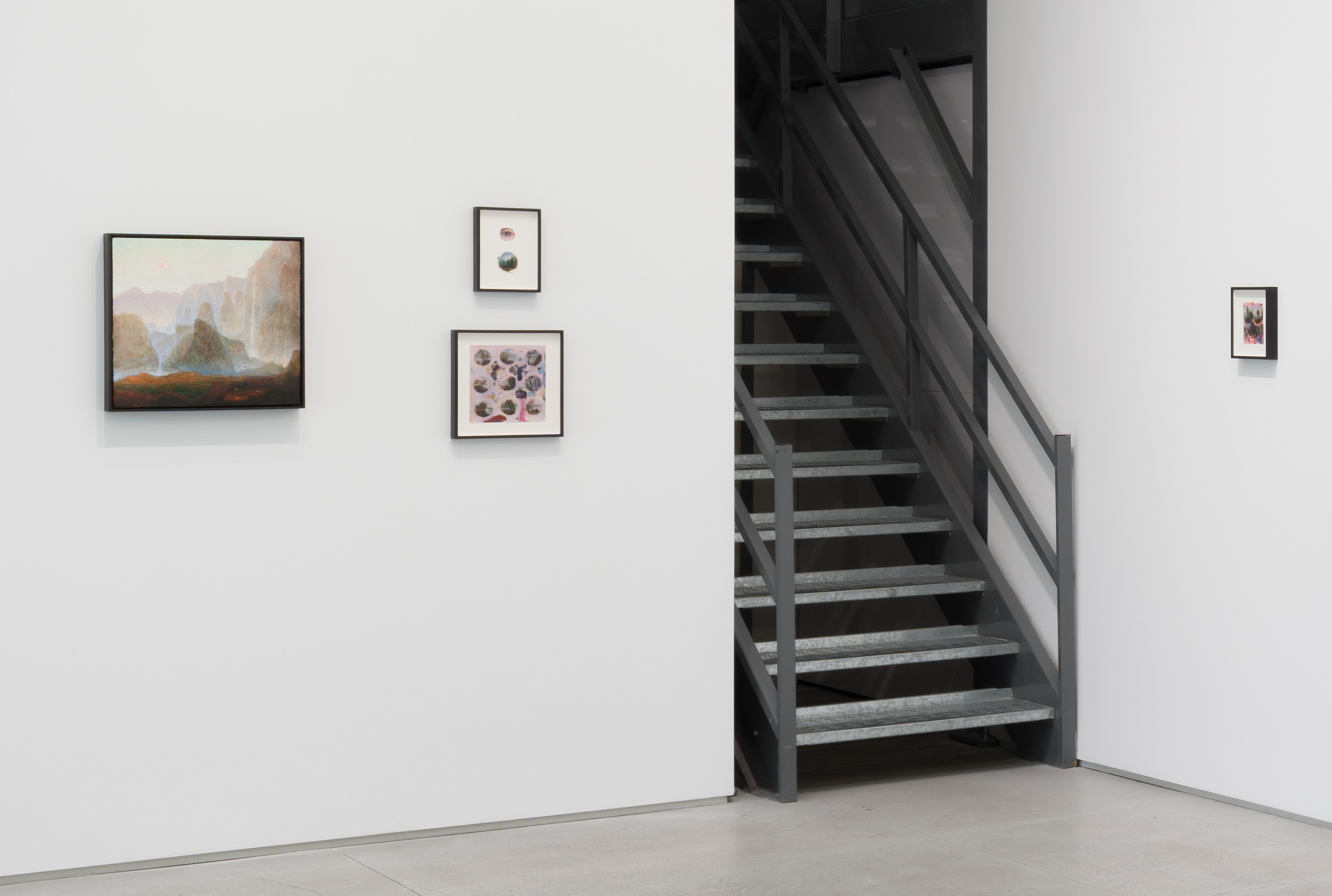
Side Room Adams and Ollman is pleased to present New Mountains, an exhibition of works by Joan Nelson with Chapter NY, the artist’s first solo show in New York in nearly 25 years. The exhibition’s title references a 1986 quote by Ursula K. LeGuin: “…if you’re underneath, if you’re kept down, you break out, you subvert… all the maps change. There are new mountains.”[1] For both LeGuin and Nelson, speaking truth to power can be a seismic event that forges, however glacially, new foundational terrain for change. The exhibition features new paintings alongside a selection of Nelson’s intricate miniatures from 2013-14. Nelson is known for her ongoing exploration of landscape painting rooted in an engagement with feminism, spiritualism, science fiction, and environmentalism since the 1980s. Her works depict fantastical vistas filled with atmospheric and geological phenomena –volcanic explosions, shimmering wetlands, crepuscular rays, ethereal cloudscapes, mist-shrouded mountains, and ancient, entangled trees. Nelson spins these motifs into imagined worlds, utopias that hold true to the word’s literal translation of “no place.” Working within a square format rather than a traditional landscape orientation, she renders her maximally picturesque paintings with a mix of illusionistic detail, stylized mark-making, and painterly abstraction, drawing on historical sources as much as her own speculative visions of the past and the future. Evocative of prehistorical, posthuman or extraterrestrial worlds, the ground in Nelson’s work appears fertile, if always devoid of sentient life. The broad range of pictorial styles and perspectives in Nelson’s work stems from her deep engagement with how landscapes have been represented across time. She references a wide collection of paintings, etchings, exoticized renderings of foreign territories depicted in historical geography books, even amateur travel videos, weaving these varied influences into her work. Particularly generative are the grandiose, imperial visions of Romantic landscape painters like Thomas Moran, Caspar David Friedrich, Thomas Cole, and Albert Bierstadt. Nelson exposes their narratives of conquest and extraction, reframing them from a feminist and ecological lens. Illusions of depth and distance in Nelson’s work often break down upon close looking. Nelson revels in the physicality of her materials, expertly harnessing their transformative possibilities while allowing the agency of pigment, ink, and wax to guide the process. In past works, she has incorporated popular and unconventional media like glitter, crayons, and markers, glass beads, make-up, even spices into encaustic, oil and acrylic grounds, pouring, splattering, scratching and carving on and into their surfaces. In the process of painting, she often lays a substrate flat to allow wax, ink or paint to drip and diffuse across the surface, mirroring the erosion and accumulation of earth itself. Nelson sometimes conjures her imagery from the rivers and peaks that naturally form on a microcosmic scale during the process of establishing her compositions. Included in the exhibition are a series of works on paper depicting miniature landscapes and disembodied eyes arranged in tiny groupings, rows and sometimes stacked pairings—like portals or keyholes, offering glimpses into hidden worlds. Nelson’s engagement with miniatures dates back to the 1980s when, against the backdrop of Postmodernism, she began repainting cropped sections of historic landscape paintings at the exact scale of their reproductions on book pages. The eye acknowledges the implied viewer’s perspective in the landscape painting tradition, as well as ‘lover’s eyes,’ 18th-century mementos that historically depicted the eye or eyes of a spouse, loved one or child. Joan Nelson (b. 1958, California; lives and works in Stamford, NY) has exhibited her work at the Whitney Museum of American Art, New York, NY; Solomon R. Guggenheim Museum, New York, NY; The Fabric Workshop and Museum, Philadelphia, PA; Pennsylvania Academy of the Fine Arts, Philadelphia, PA; Contemporary Arts Museum, Houston, TX; Museum of Art, Rhode Island School of Design, Providence, RI; Walker Art Center, Minneapolis, MN; Modern Art Museum of Fort Worth, TX; Virginia Museum of Fine Arts, Richmond, VA; among many others. Her work is included in the collections of the Museum of Modern Art, Solomon R. Guggenheim Museum, and Whitney Museum of American Art, all New York, NY; Brooklyn Museum, Brooklyn, NY; Los Angeles County Museum of Art, CA; Minneapolis Museum of Art, MN; Hirshhorn Museum and Sculpture Garden in Washington D.C.; Museum of Fine Arts, Boston, MA; Toledo Museum of Art, Toledo, OH; and Archer M. Huntington Art Gallery, University of Texas at Austin, TX. Nelson received her BFA from Washington University, St. Louis, MO. In 2023, she received a Guggenheim Fellowship. 1 - Ursula K. LeGuin, Bryn Mawr College commencement speech, 1986, published in the essay collection Dancing At The Edge of the World: Thoughts on Words, Women, Places, 1989.
 PastVisual Reaffirmation
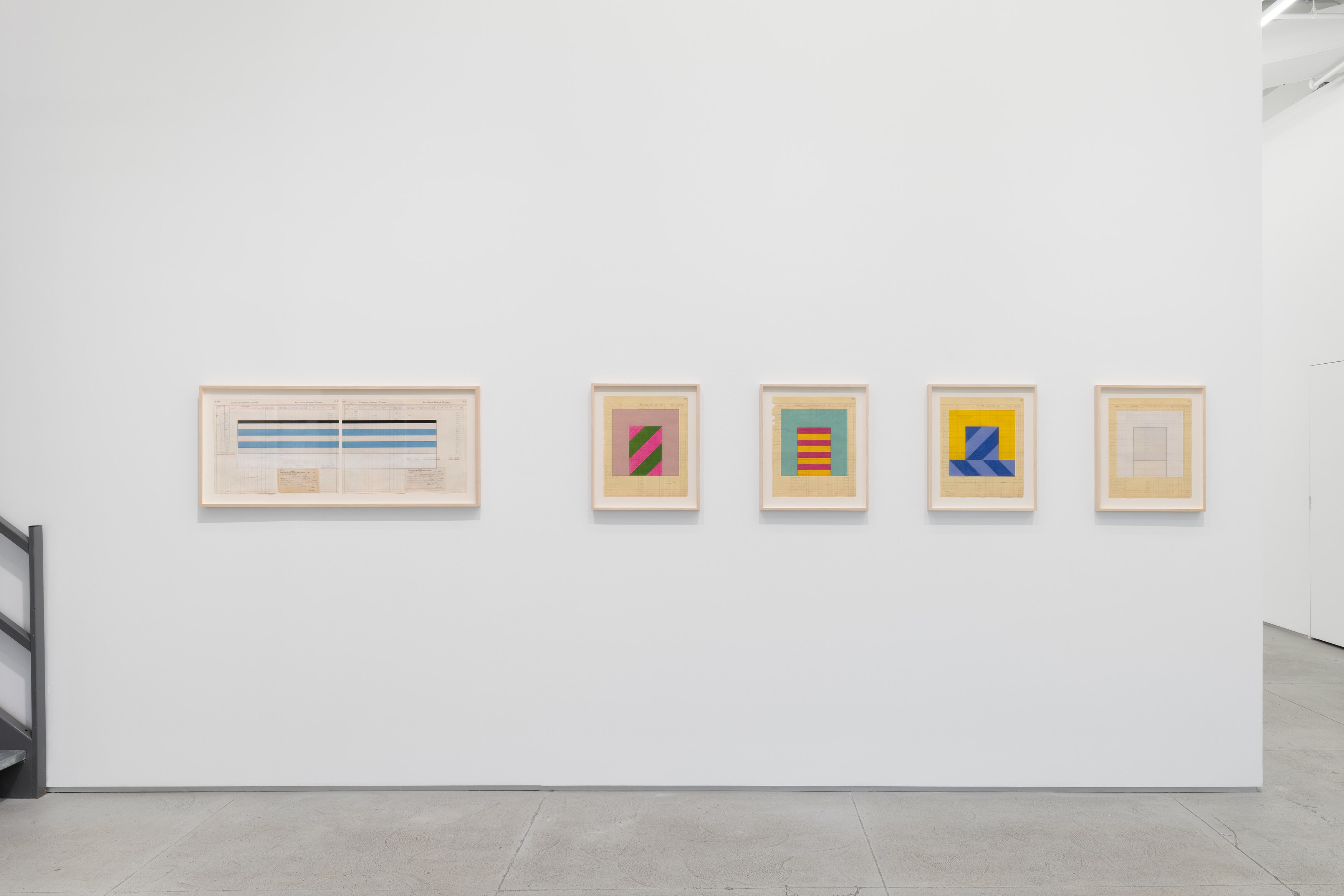
Terran Last Gun
Feb 28 – Apr 13
Side Room Chapter NY is excited to present Terran Last Gun: Visual Reaffirmation, the artist’s first solo exhibition in New York City. The exhibition features a new series of abstract drawings on antique ledger sheets, further expanding this element of Last Gun’s practice. Last Gun considers relationships between color, form, land, and the cosmos, influenced by his own experiences and cultural heritage as a member of the Piikani Nation. His geometric abstractions combine visual references to ancient Indigenous North American culture with a contemporary artistic approach informed by his background in printmaking, painting, and photography. Simultaneously engaging with history, the present, and optimism for the future, his works constantly shift across timelines. Ledger drawings emerged in the late 19th century, primarily created by Plains Indians to document aspects of daily life such as hunting and battle scenes. Artists depicted representational subjects on repurposed paper sourced from accounting ledger books, partly due to its accessibility. Last Gun’s abstract compositions, however, depart from traditional narrative ledger drawings, deriving formal inspiration from the aesthetics of Blackfoot painted lodges, hides, war shirts, and archaeological artifacts throughout Montana and Alberta. The exhibition features two recurring compositions: individual works with square forms symbolizing doorways and diptychs with rectangular forms representing windows. Both doors and windows serve as gateways to new ways of thinking, offering a transportive quality that invites exploration. Last Gun’s individual works expand his ongoing interest in the square form and its symmetry. In these compositions, he fills the squares completely with color, allowing the ledger paper to remain visible through the colored pencil. These doorways reference Blackfoot painted lodges, specifically doorways painted on the back of the lodges, which were often considered spirit doors and positioned to face the sunset. Last Gun’s diptychs, with their extended horizontal orientation, evoke the feeling of landscapes. By combining two separate sheets of paper, he explores the duality and energy created through their connection. Last Gun distinguishes each work through his use of color, exploring both monochromatic and complementary palettes. His practice remains firmly rooted in color theory and color relativity, with a continuous interest in understanding why people are drawn to specific colors. The color wheel plays a central role in the artist’s process, guiding him to select color schemes that create harmony and engage the viewer. In his work Important Ideas Come Into Existence (2025), he focuses solely on various shades of white, investigating the subtlety and depth that can be achieved within a single color. A notable feature of Last Gun’s exhibition is the use of ledger paper dated 1923 and 1924, gifted to the artist by his father and an anonymous donor from Tucson. The dates remain legible within the artist’s work and reference the historical context of those eras of hardship for all Indigenous communities. By using historical paper, he breathes new life into it, reintroducing and emphasizing the history of his people in the broader, mainstream narrative of North America. Terran Last Gun, Saakwaynaamah’kaa (Last Gun), (b. 1989, Browning, Montana) is an enrolled citizen of the Piikani Nation (Blackfeet) of Montana and a visual artist based in Santa Fe, New Mexico. The Piikani are one of four nations that make up the Blackfoot Confederacy, collectively called the Niitsitapi (Real People). Last Gun received his BFA in Museum Studies and AFA in Studio Arts from the Institute of American Indian Arts in 2016. Last Gun has had solo exhibitions at University of Northern Colorado, Greeley; Hockaday Museum of Art, Kalispell, MT; University of Montana Western, Dillon; K Art, Buffalo, NY; Missoula Art Museum, MT; and the IAIA Museum of Contemporary Native Arts, Santa Fe, NM; among others. His work is included in the upcoming 12th International Site Santa Fe and has been exhibited at the Anderson Ranch Arts Center, Snowmass Village, CO; Bates Museum of Art, Lewiston, ME; Newberry Library, Chicago, IL; The 8th Floor, New York, NY; Museum of the Plains Indian, Browning, MT; and Contemporary at Blue Star, San Antonio, TX; among others. His work is included in the collections of several museums across the United States. In 2024, Last Gun was awarded the Biennial Grant by the Louis Comfort Tiffany Foundation.
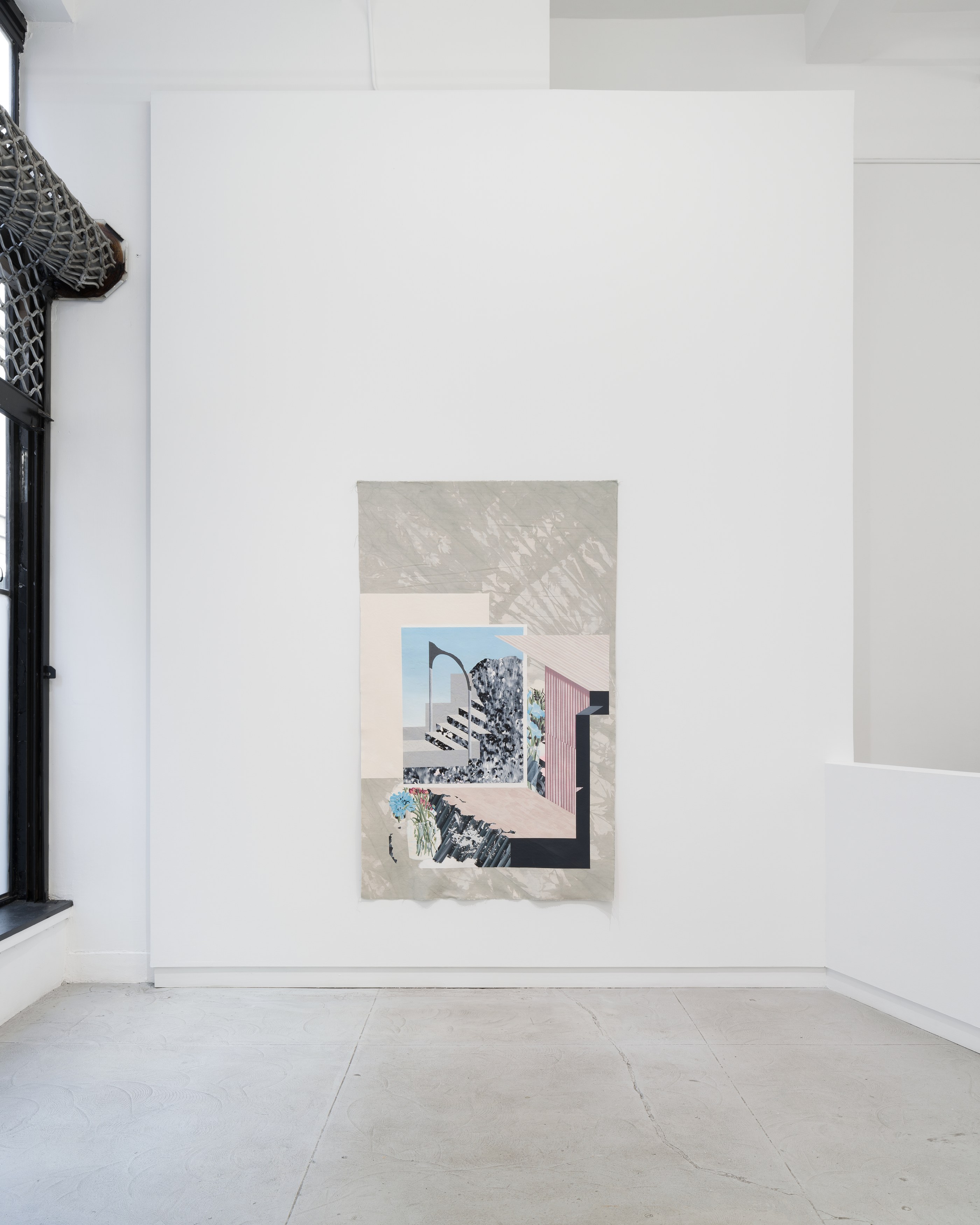 PastEntwined
Asal Peirovi
Feb 28 – Apr 13
Chapter NY is excited to present Entwined, Asal Peirovi’s second solo exhibition with the gallery. Peirovi’s practice explores the ambiguities of myth and imagination. In her mostly unstretched paintings, she interlaces elements of nature and architecture derived from her own personal memories and lived experiences. Her fragmented perspectives and layered forms—including mountains, bridges, vegetation, and architectural structures—allude to the tradition of Persian miniature paintings and present simultaneous narratives that poetically unfold across both time and space. Persian miniatures became a significant genre in Persian art in the 13th century, expanding the art historical tradition of illuminated manuscripts. Unlike Western visual conventions that use one-point or multi-point perspective, these paintings follow a distinct approach. Receding objects are rendered with parallel lines that deliberately omit visual depth. Consequently, the horizon line is often positioned at the top of the image. This method allows artists to depict multiple events within a single frame, a technique known as simultaneity. Drawing on the traditions of her art historical predecessors, Peirovi embraces this multi-dimensional approach in her own work. In Entwined, Peirovi presents a new series of paintings that recollect vague memories of her childhood home in Iran and its surroundings. The title of the exhibition refers to the blurred and entangled images that remain in the artist’s mind but also invokes the way a grapevine wraps itself around fences and structures. Using a tie-dye technique for the first time, Peirovi begins each painting by dyeing her canvases to create an abstract pattern reminiscent of Tash’ir—floral or zoomorphic motifs that form the borders of some Persian paintings. The tie-dyeing process inherently relinquishes full control over the artist’s materials, allowing for a level of spontaneity that aligns with the behavior of nature itself. From these forms, Peirovi creates compositions that interweave architectural structures inspired by Persian-Islamic monuments and her own photographs of modern buildings and objects taken along nearby roads and mountains. The discordance between these lifeless structures and organic rock formations reflects the contrast and contradictions of the artist’s imagination. In The Quince Tree’s Visage (2024), Peirovi’s composition extends beyond the standard rectangle, which in Eastern culture often symbolizes the terrestrial realm. According to some scholars of Eastern art, when artists break or transcend the square or rectangle, it may signify a transition from the material world to the unknown celestial realm. Peirovi’s work operates within this liminal space, leaving room for multiple interpretations. Asal Peirovi (b. 1985, Sari, Mazandaran, Iran) received her BA in Painting from Shahed University in 2009 and her MA in Painting from the University of Art in Tehran in 2014. She has had solo exhibitions at Standard (Oslo), Oslo; Chapter NY, New York; Dastan Gallery, Tehran; and Shirin Art Gallery, Tehran. Her work has been included in group exhibitions at Yavuz Gallery, Redfern, AUS; Standard (Oslo), Oslo; Assar Art Gallery, Tehran; The Edinburgh Festival, Edinburgh; among others.
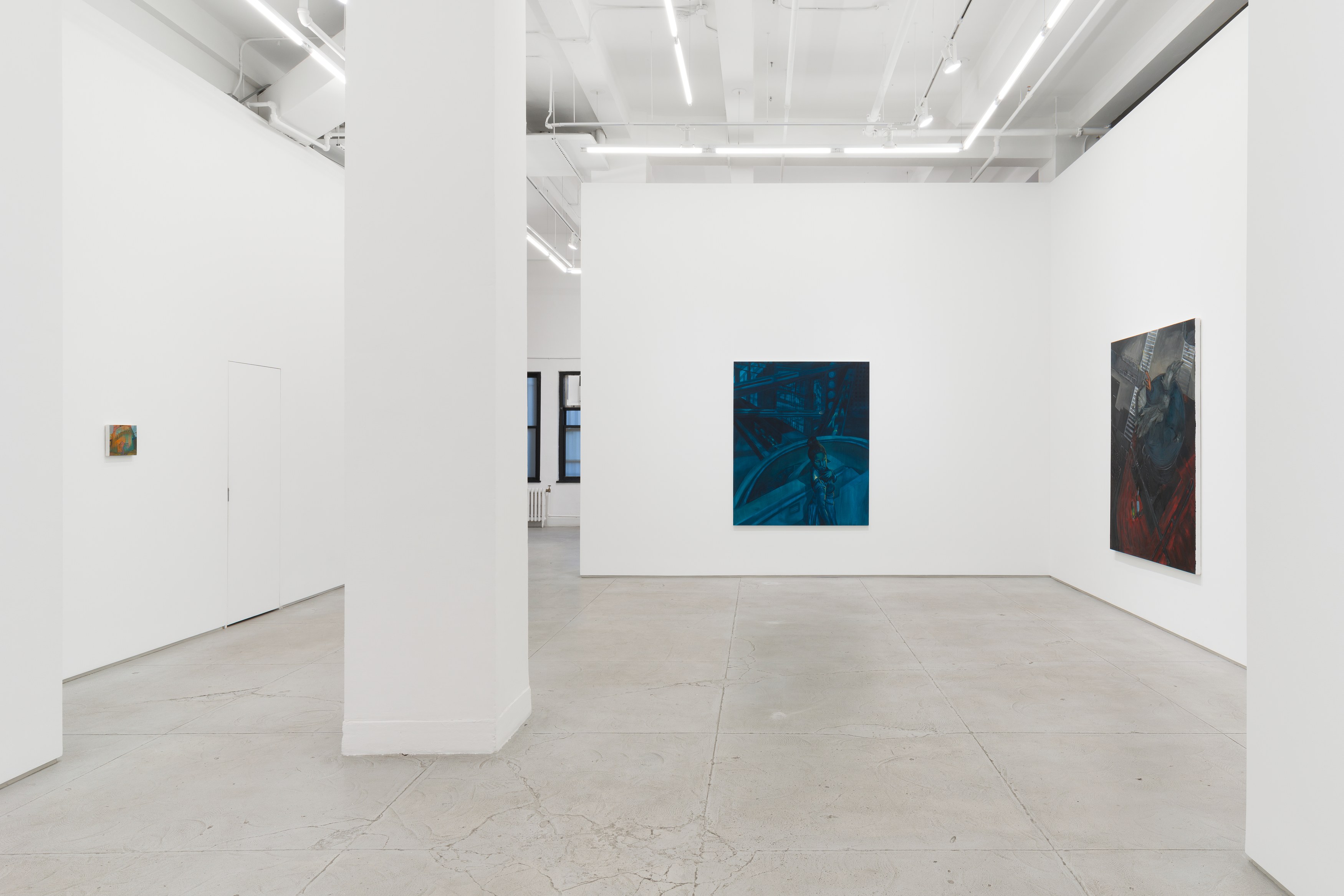 Past41 Floors
Cheyenne Julien
Jan 10 – Feb 23
Chapter NY is excited to present 41 Floors, a solo exhibition of paintings by Cheyenne Julien. Through portraits, landscapes and still lifes, Julien's practice centers around architectural spaces, revealing the power of built environments to dictate racial perception. The artist's most recent body of work draws inspiration from famed architect Paul Rudolph and his richly imaginative drawings that offer an idealistic vision of architecture's potential to positively impact and guide urban renewal. In the early 1970s Rudolph designed Tracey Towers in the Bronx, the only subsidized housing project of his career. An apartment within one of these two Brutalist skyscrapers later became Julien's childhood home. The striking presence of Tracey Towers remain both a predominant part of the Bronx skyline and a reoccurring subject in Julien's work. For her exhibition at Chapter, Julien focuses on the outdoor spaces in and around Tracey Towers that were part of Rudolph's original vision to foster community engagement within the building complex. Many of these courtyards and gardens were never realized in the final construction, but Julien copied and redrew elements of the architect's drawings to channel his specific viewpoint, merging his perspective with her own gestures and lived experience. In one painting a reclining female figure lies over subway cars in the adjacent trainyard, originally intended to become a platform for townhomes and recreational facilities. Julien adopts Rudolph's creative spirit in her own work, envisioning a limitless and futuristic architecture; but unlike Rudolph, Julien reveals the darker realities learned from living within one of these visionary projects ultimately riddled with inefficiencies and oppressive features. Julien's resulting paintings hold greater depth than her earlier works, with more expansive and layered spaces. Contrasting artificial and natural light sources emphasize the complexity of these stacked urban environments. Stark beams of light cast from glowing windows and distant headlights penetrate Julien's compositions, either suggesting a possible divine presence or invoking the paranoia of a surveilled state of being. Julien emphasizes the interdependency of bodies and these contexts by merging building materials such as brick, metal, and concrete with her imagined figurative subjects. Although directly referencing Tracey Towers, Julien's paintings dislocate the viewer from identifiable space and time, instead favoring a world in which body and architecture become inextricably intertwined.
Past
18Stuart Middleton
Oct 25 – Dec 21
1. Three generations of the same sunflower specimen grown in the UK, cut and dried (including root and a flower-head bearing seeds) threaded aluminum bar & connecting hardware, piano wire, stainless steel eye bolts, steel fixings. Time begins with the clock face - a circle subdivided, like land, into plots. Segments. Hours, minutes, seconds. Some early inventors of clocks experimented by tracking the movements of flowers, sunflowers were popular subjects because of their habit of ‘turning their heads to follow the sun’. Productivity, yield, return: economic metaphors originating with the organic. Growth is measured nationally and economically but also in physical, emotional and even spiritual ways. Growing up is to progress isn’t it? I had the idea on a depressing day in the garden last autumn (or fall, as you might say). The only things left standing in the gloom were the empty fruit nets and cages, stakes, canes and other rotten supports. I thought they could be made to say something about family; protection and restriction. ‘Support structures’ and safety nets. I wanted to use growth as a process. To experience some of the jeopardy familiar to agriculture. I nurtured these sunflowers anxiously, looking at the seedlings in the cold frame thinking ‘is this my show?’. I worried about the weather; first for growing, sunlight hours, rain, wind. Then for drying; humidity, airflow, rodents, inevitably fungus. Finally, shipping; Plant Passports, seed sovereignty and seizure. The timeline of an exhibition seems brief, rushed in comparison to growing seasons. Suddenly a year isn’t long enough. The season also dictates how healthy and productive the crop is. Thick stalks could indicate a wet spring, a sunny summer. The weather echoes down the line. Which could be lyrics in a country song.[1] Native to North America, the sunflower seeds traveled with the bison across the plains lodged in their thick wooly coats. So this has been a few years in the making. So what? ‘Rejecting the drive for newness’ I said on the gallery tour which I thought sounded quite clever, but maybe, understanding more how limited my resources might be, it’s just getting harder than ever to throw things away. So much art is made quickly, with plastic, produced factory-like, on demand. The compulsion to repeat, to reproduce. The self sowing of plants. Biological growth and the calendar. Body-clocks. ‘No heartbeat’ I wrote in my notebook with a simple pencil heart around it in the center of the page. I learnt the term ‘disenfranchised grief’ to describe sadness we are not allowed to express publicly such as miscarriages, pets or celebrity death. Repetition in relation to a certain model of family. And then maybe an ending. A break. The clock stopping, its spring released. 2. Clock parts, museum case linings (cotton, vegetable dye) monofilament line, mounted on wooden panels. The carriage clock was a traditional gift from employers to retiring or long-serving staff. However, in modern times, with changing work patterns and desires, this is much less the case. It feels like a form of Stockholm syndrome, to cherish a time-piece. I imagined exploded clocks laid out like an anatomical dissection. Or maybe vivisection is more accurate - the process of cutting up something living. When you pull the clock spring out of the cylinder, the tension curls out, hissing like a small animal. It is very relaxing to disassemble a clock. You take it from a compact, ticking instrument to a box of loose parts. To disassemble a factory clock feels like resistance, like the luddites taking their hammers, smashing the means of production. It’s called a ‘teardown’ in online jargon. You can watch videos of various things being torn down, mostly consumer electronics; iPhones, kettles. I think it models a desire to tear down bigger, less graspable mechanisms. To have power over them, to see what is inside. The past touches the future. A touch from outer space. Making ends meet.[2] What are you grinding for?[4] Like it’s so special to have a job anyway. A confusing shame around the visibility of work-life as an artist. In the mortuary the students inspect the condition of their cadaver’s body and ask each other what they think he did for work: ‘A farmer or a builder, maybe? Consider the size of his trapezius.’[3] The clock parts are mounted on Ultra-V, a conservation grade textile produced in Europe for lining museum cases. It is coloured with vegetable dyes that are acid free, chemically stable and suitable for co-existence with fragile artifacts. After 21 consecutive days at work, unwrapping and re-wrapping cases, I wake up in the night with my fingers pinched tight, gripping the bed sheets as if they were fabric to be stretched. When I rip the fabric off each panel I stuff it manically into a bin bag and hide it under the trestles to take home. At break I said something careless about ‘my real life’. The site manager said “You think this isn’t your real life? You think this isn’t your real job don’t you?” He said “my job is to throw your work in the bin at the end of the exhibition.” Everyone laughed, including me. When I unpacked the material in the gallery last week, I saw my pencil marks, the holes from mounted objects. Time collapses. Like when you find an old receipt for something. Art is just one activity, made in the spaces between other things. On your lunch break, on the train home, after other activities are finished, more productive ones. 1 - Deborah Evans Price: Matthew West Shares the Bittersweet Inspiration for New Song ‘18 Summers’ Woman’s World 25.04.24 2 - Laura Langer on WhatsApp 2024 3 - Nik Geene, Frankfurt am Main 2016 4 - Naomi Pearce, residency notes, Teaching Mortuary, Dundee, Scotland 2019
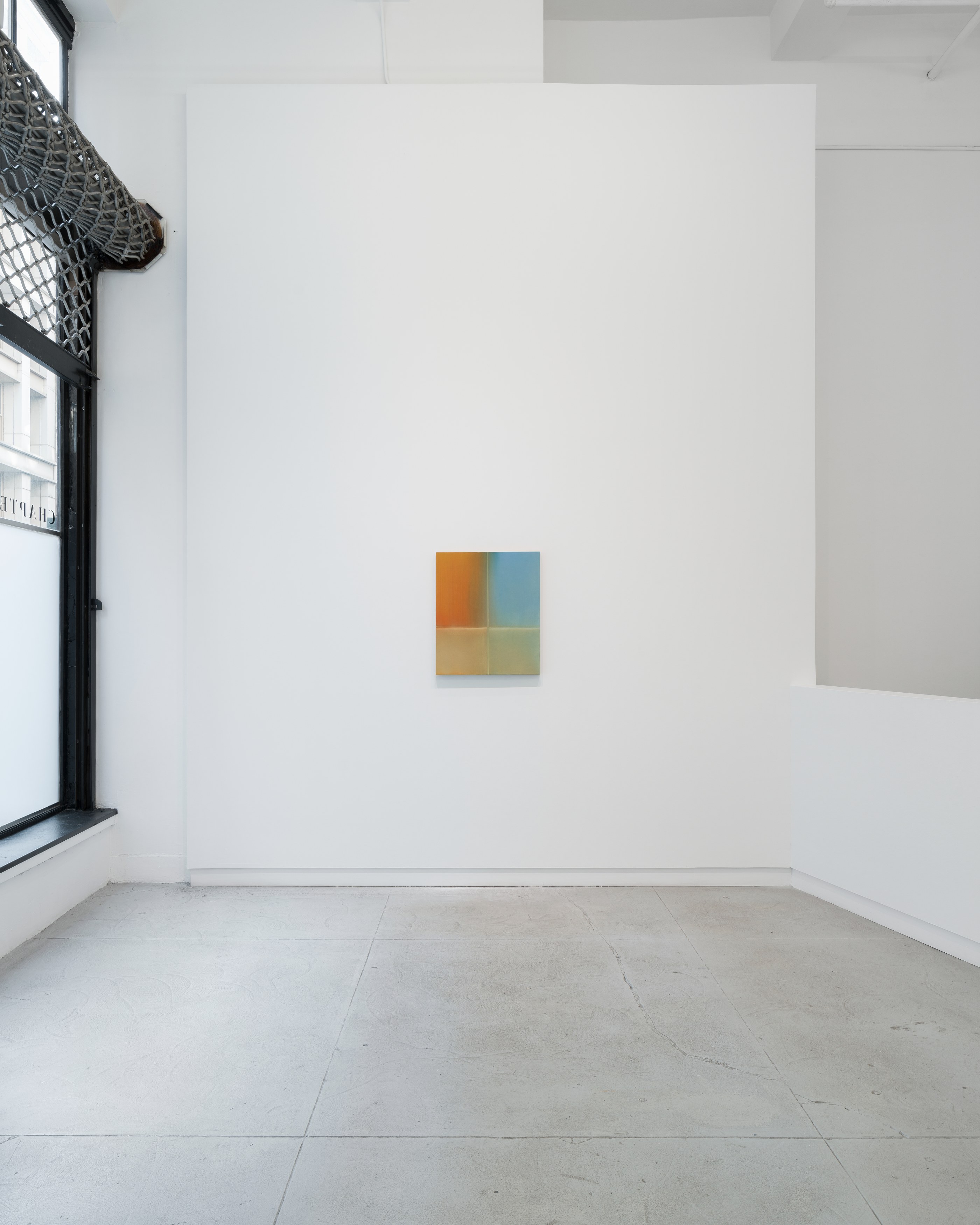 PastHeart Throbs
Mary Stephenson
Sep 6 – Oct 13
Chapter NY is thrilled to present Heart Throbs, Mary Stephenson’s first exhibition in the United States featuring a new series of paintings. Giving physical structure to memory, Stephenson builds spaces that hold visual remnants of the unconscious mind. She approaches her canvases as fertile surfaces with the potential to recreate an emotion or bodily sensation. Stephenson applies thin layers of brightly colored paint that seep and recede into her canvases before revealing a final image. Minute gestures—such as a small slit, a fine thread, or a sliver of light—provides entry points into these highly-saturated surfaces, inviting viewers to look closer. Inanimate objects assume a central role within Stephenson’s world, expanding and contracting within vast, yet barely populated fields of vision that offer room for movement and exploration. Within these liminal spaces, Stephenson plays with scale, shifting between colossal structures and miniscule forms that dislodge her viewer from any logical sense of space and instead encourage an introspective spatial awareness. In Heart Throbs, Stephenson delves deeper into the connections that tether one’s interior self to the external world. Diffuse edges or sharp lines provide routes into, or out of, Stephenson’s paintings and suggest a desire for connection and sense of belonging. Within her cinematic settings, Stephenson considers the intimacy of loneliness and tests how to fill a space without anyone there. The visual building blocks that populate Stephenson’s otherwise uninhabited planes, give shape to the memories barely beyond recollection that inform our individual experiences. The artist describes them as cathartic playgrounds, offering pathways to a feeling. Mary Stephenson (b. 1989 London, UK) lives and works in London. She graduated from the Royal Academy Schools, London in 2023 and the Glasgow School of Art in 2011. Stephenson has had solo exhibitions at Massimo De Carlo, Paris; Linseed Projects, Shanghai; and Incubator, London. Her work has been included in group exhibitions at Jeremy Scholar, London; Rose Easton, London; Michael Werner Gallery, London; and Ginny on Frederick, London; among others. Her work has been acquired by the Loewe Art Collection, Madrid and the Government Art Collection, London.
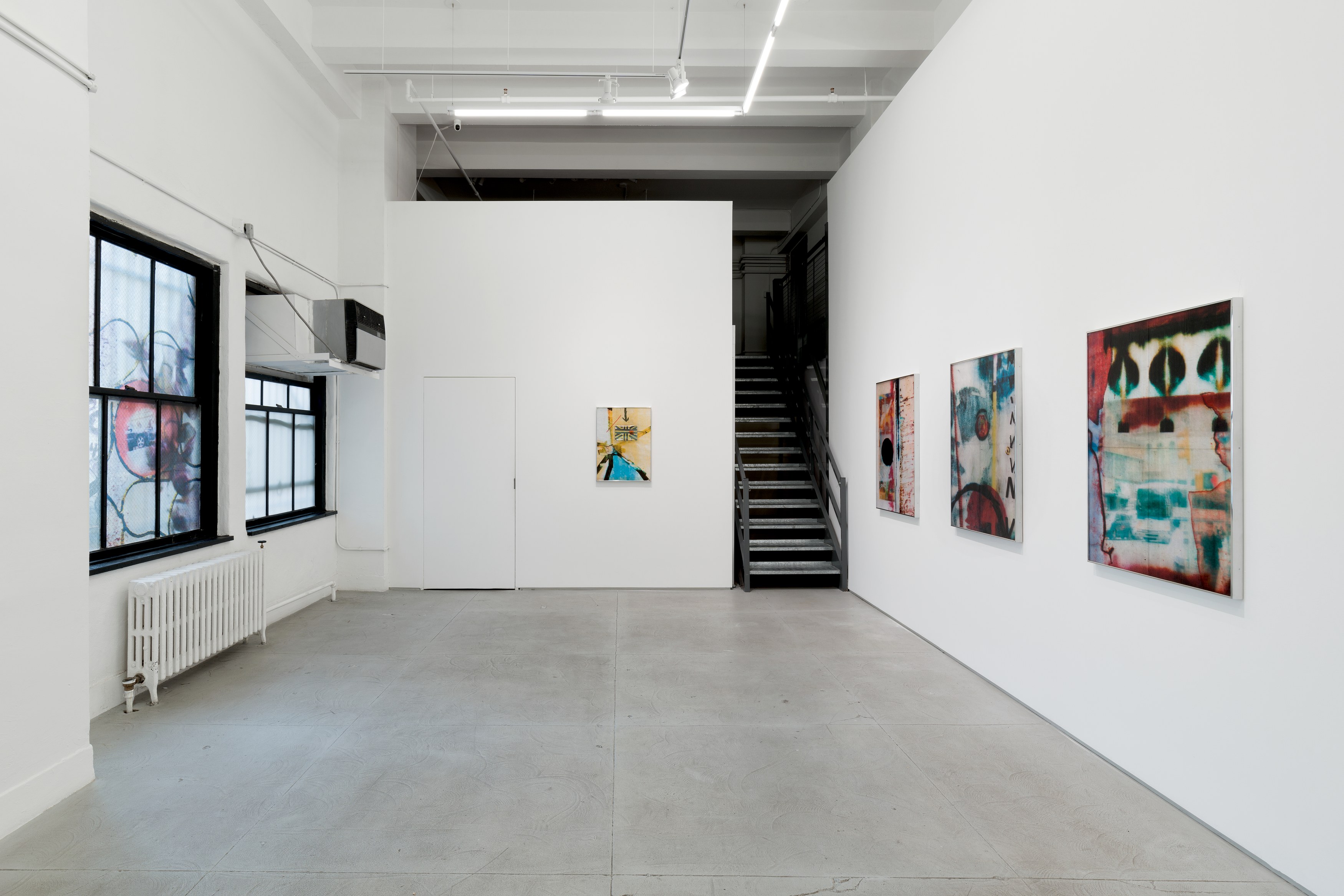 PastSouvenirs and Substitutions
Sofia Sinibaldi
Sep 6 – Oct 13
Chapter NY is excited to present Souvenirs and Substitutions, Sofia Sinibaldi’s first solo exhibition with the gallery. Synthesizing images through an additive process, Sinibaldi combines direct photography and scans to create a multiplicity of interrelated forms. During her commutes in New York City, she captures images with either a camera or a portable flatbed scanner that she applies directly against various surfaces. Her imperfect process of scanning three-dimensional objects prompts the loss of information, a distortion that causes the artist’s subjects to dissolve into abstraction. Like a distant memory, dream, or hallucination, they appear only vaguely discernable, grasped through feeling more than understanding. For Souvenirs and Substitutions and her recent ongoing body of work, Sinibaldi prints her photographs and scans on tissue paper. Always on the verge of falling apart, this fragile membrane-like material gives body to her digital images, which she manually layers, turns, and reconfigures on a lightbox before arriving at a final multi-layered composition. Sinibaldi builds palpable surface tension by actively moving and directing the placement of her forms through multiple iterations. Inevitable tears and creases become another example of mark making that further reveal the wear of her hands-on method of mixing imagery. This visual condensation and suspension of imagery untethers her source material from its derived context, shedding preexisting narrative associations so that its contours become painterly gestures. Stemming from the real world, Sinibaldi’s works elicit the interconnectivity of objects and motifs that exist within her surroundings. Manipulated through tactile engagement and filtered through her imagination, they hold the projection of an idea without a specific message. Sinibaldi provokes her audience to bring their own associations to her deconstructed montages that continually oscillate between legibility and abstraction. Not just about what is registered, but suggestive of that which is lost, her overlapping and bleeding forms leave the impression of afterimages stained into our minds. Sofia Sinibaldi (b. 1992, Guatemala City) lives and works in New York. She received her BFA from San Francisco Art Institute in 2016. Sinibaldi has had solo exhibitions at Inge, Plainview, NY; Jack Hanley Gallery, New York; Interstate Projects, New York; and Y2K Gallery, San Francisco. Her work has been included in group and two-person exhibitions at Jack Hanley Gallery, New York; Pio Pico, Los Angeles; Gern en Regalia, New York; and Red Zone, Los Angeles; among others.
 PastLocked From the Inside
Sylvie Hayes-Wallace
May 10 – Jun 16
Side Room Chapter NY is excited to present Sylvie Hayes-Wallace’s solo exhibition, Locked From the Inside. The exhibition includes three artworks installed around the periphery and thresholds of the space in a site-specific installation. Driven by a desire to map her inner self onto the spaces and structures of her surroundings, Hayes-Wallace explores the architecture of self. She mimics aspects of her own interiority in external space and form, often using the measurements of her own body as a guiding parameter. Her works evolve from memories, layering personal ephemera and familiar materials at various densities that correspond to her own psychological weight and its levels of inscrutability. The artist combines these delicate, often intimately-scaled materials with an overt sense of precarity. Whether in the form of cages, curtains, or collage, her sculptural compositions all convey elements of portraiture without direct representation, probing the question: how does one make a self-portrait without showing oneself? The title of the exhibition, Locked From the Inside, emphasizes a sense of claustrophobia and containment felt throughout the work in the show. Almost imperceptible at first, a delicate curtain of steel wire and obsessively hand-cut orange peels spans the windows of the gallery. Reminiscent of beaded curtains that might adorn the doorframe of a girl’s bedroom, Hayes-Wallace’s Security similarly performs a false sense of privacy, ineffectually shielding the viewer from the outside world while symbolically enclosing the exhibition space. Caryatid (Self-Portrait) furthers this element of confinement with three wall-mounted cages that reflect the proportions of the artist’s head and two feet. Installed to match her own height, the work references ancient Greek columns in the shape of women’s bodies. Inspired by their wet drapery, Hayes-Wallace lines each cage with tulle, a stereotypically feminine material intended to veil the female figure while accentuating her skin and nakedness. The translucent tulle within Hayes-Wallace’s cages both reveal and conceal the void spaces they hold. Forming an architectural skin at the entrance/exit of Hayes-Wallace’s exhibition, My Interiority (My Dictator) compiles collaged ephemera on two walls in a vertical orientation that doubles as a second, nonfunctional column. As teen girls decorate their spaces with collaged images as an outlet of self-expression, the artist charts numerous cultural references that comprise her own sense of self. She lays bare the contents of her inner mind, creating a spatialization of the fragmented experience of the interior. Hayes-Wallace’s works cling to the periphery of the gallery, reiterating the enclosure of the space. Confined within the show but crowding the exterior walls and thresholds, the works mimic how one’s internal self inhabits one’s physical body—trapped but permeating the exterior world in traces and fragments. Sylvie Hayes-Wallace (b. 1994, Cincinnati, Ohio) lives and works in New York, NY. She received her BFA from The School of the Art Institute of Chicago in 2017. She has had solo and two-person exhibitions at In Extenso, Clermont-Ferrand, France; A.D. Gallery, New York; Bad Water, Knoxville; Interstate Projects, Brooklyn; and New Works, Chicago; among others. Her work has been included in group exhibitions at Chapter NY, New York; Simone Subal Gallery, New York; King’s Leap Fine Arts, New York; Annex de Odelon, Ridgewood; MX Gallery, New York; and Frontera 115, Mexico City; among others. Hayes-Wallace will have a solo exhibition at Silke Linder, New York, opening September 2024.
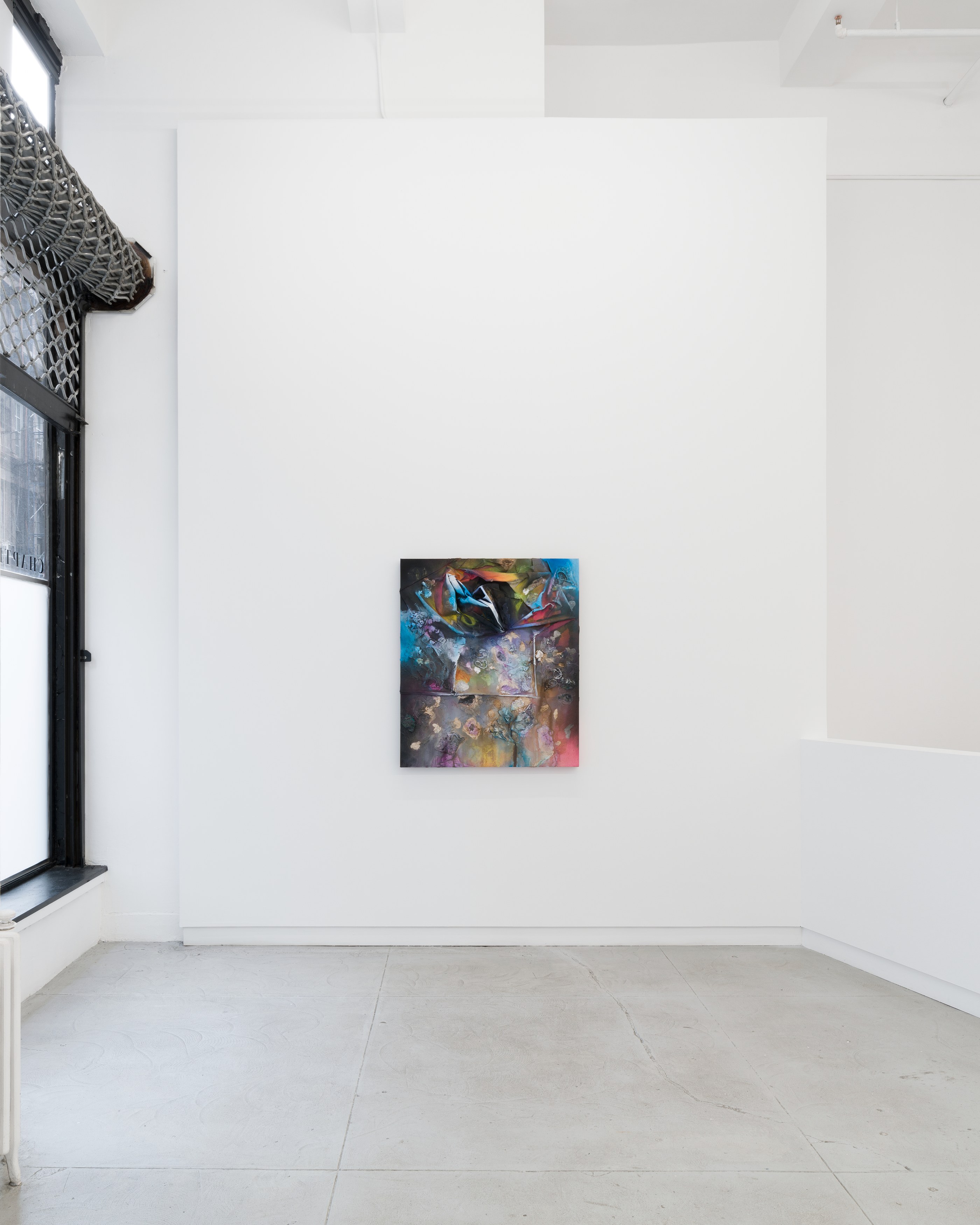 PastDial/Irving/Martinez
Thornton Dial, Kahlil Robert Irving, Leslie Martinez
May 10 – Jun 16
Thornton Dial Kahlil Robert Irving Leslie Martinez Chapter NY is pleased to present an exhibition by three artists who each explore the notion of embeddedness. They recombine found and replicated objects tied to personal and cultural histories, dislodging them from ingrained associations to allow space for reflection and imagination. Often incorporating detritus within their mixed-media compositions, their work fosters new life from discarded materials, which—once molded and reconfigured—suggest resilience and regeneration with broader symbolic significance. The surfaces of Martinez’s abstract paintings recall scorched topographies or the mineral formations that form the strata of earth’s time. Their new work stems from an ongoing interest in naturally occurring materials that have existed in this world long before human laws and prejudices. For this exhibition, Martinez combines three paintings to form a towering stack resembling a cross section of the earth. Layers of vibrant color and texture emerge from within their compositions, as if newly excavated gems and minerals. Their defamiliarized materials function as structures of transformation, achieving a resilient beauty that holds the promise of futurity. Irving’s interest extends beyond the natural world, with an almost archeological approach to the surfaces and materials prevalent throughout our built environment. Irving’s sculptures comprise handmade stoneware tiles that reimagine the asphalt used to make city streets, an often-overlooked urban topography. Also reminiscent of ancient Greek mosaic floors, his sculptures contain reimagined historical objects and replicated, enameled fragments of urban detritus. These discarded artifacts—particularly those that are left to accumulate in some neighborhoods more than others—offer evidence of sustained hierarchies and aspects of societal oppression part of everyday life. Dial also manipulated manmade materials from his surroundings, particularly those with which he had direct contact. His practice was one of resourcefulness, creating from what was available and recontextualizing those objects as a way of rewriting history. In his late work, The Rich Man’s House (Tsunamis Don’t Discriminate), Dial combines discarded furniture and various domestic items to convey a universal experience of loss—but with the destruction caused by a massive flood comes the possibility of a new beginning. Thornton Dial (b. 1928, Emelle, Alabama; d. 2016, McCalla, Alabama) has had numerous solo exhibitions at museums and institutions across the United States. Dial’s work is included in the permanent collections of the American Folk Art Museum, New York; Brooklyn Museum, Brooklyn; Dallas Museum of Art, Dallas; de Young Museum, San Francisco; Hirshhorn Museum and Sculpture Garden, Washington, D.C.; Metropolitan Museum of Art, New York; Museum of Contemporary Art, Los Angeles; Museum of Fine Arts, Boston; Museum of Modern Art, New York; National Gallery of Art, Washington D.C.; Pérez Art Museum, Miami; Smithsonian National Museum of African American History & Culture, Washington D.C.; Whitney Museum of American Art, New York; among others. Kahlil Robert Irving (b. 1992, San Diego, California) lives and works in Saint Louis, Missouri. He received an MFA from Washington University Saint Louis in 2017 and a BFA from Kansas City Art Institute in 2015. Irving has had solo exhibitions at the Walker Art Center, Minneapolis; Museum of Modern Art, New York; and Contemporary Art Museum Saint Louis, among others. Irving’s work is included in the permanent collections of the Kansas City Art Institute, Kansas City; Nerman Museum of Contemporary Art, Overland Park; Carnegie Museum of Art, Pittsburgh; RISD Museum, Providence; Riga Porcelain Museum, Latvia; Foundation for Contemporary Ceramic Art, Kecskemet, Hungary; and Whitney Museum of American Art, New York. Leslie Martinez (b. 1985, McAllen, Texas) lives and works in Dallas, Texas. They received an MFA from Yale University in 2018 and a BFA from The Cooper Union in 2008. Martinez has had solo exhibitions at MoMA PS1, Queens; Blaffer Art Museum, Houston; Commonwealth and Council, Los Angeles; and And Now, Dallas. Martinez’s work is included in the permanent collections of the Dallas Museum of Art; High Museum of Art, Atlanta; Los Angeles County Museum of Art, Los Angeles; Pérez Art Museum Miami; Speed Art Museum, Louisville; and Whitney Museum of American Art, New York.
Past
Yesterday'sMilano Chow
Apr 5 – May 5
Chapter NY is excited to present Yesterday’s, Milano Chow’s third solo exhibition with the gallery. Chow’s intricate drawings combine graphite renderings and collaged photo transfers to create imaginary sites. Inspired by the patchwork architectural styles of her native Los Angeles, Chow embraces the city’s unabashed use of imitation and revivalism. Neoclassical, faux-Italian, and Spanish-revival facades and features coexist to create a disorienting sense of era. Chow uses ornament from these disparate periods as shorthand for a past time. She punctures her surreal compositions with framing elements such as windows or doors that suggest pictures within pictures. Within these void spaces, objects and figures emerge and recede, as if fading in and out of recollection. The exhibition title comes from a defunct 1980’s restaurant in the Westwood district of Los Angeles. The business’ former location at 1056 Westwood Blvd. is now a vacant storefront. Milano Chow (b. 1987, Los Angeles, California) lives and works in Los Angeles, CA. She received her BA from Barnard College in 2009 and attended the Skowhegan School of Painting and Sculpture in 2013. She has had solo exhibitions at Chapter NY, New York; The Aldrich Contemporary Art Museum in Ridgefield, CT; Bel Ami, Los Angeles; Adams and Ollman, Portland, OR; and Mary Mary Gallery, Glasgow; among others. Her work has been included in the Whitney Biennial 2019 at the Whitney Museum of American Art, New York, and other group exhibitions at Jeffery Deitch, New York, NY, and Los Angeles, CA; Chapter NY, New York; Venus Over Manhattan, New York; Standard (Oslo), Oslo; Aspen Art Museum, Aspen; The Drawing Center, New York; Crystal Bridges Museum of American Art, Bentonville, AR; and the Drawing Room, London, & Modern Art Oxford, Oxford; among others. Her work is included in the permanent collections of the Whitney Museum of American Art, New York and the Museum of Contemporary Art, Los Angeles.
Past
Please Please MeJanine Iversen
Apr 5 – May 5
Side Room "The bus driver’s windshield is a painting in the rain. I have been watching the wipers beating left, right, left, right, smearing red and purple and green against the night. I know it’s an impossible painting because as soon as the brush hits those colors, they turn to brown. I have been driving all night, my thumb counting the ribs on the steering wheel, over and over. I know it’s an impossible painting because I am staring straight at the road and giving into astigmatism, not really seeing anything. I am completely focused on my thumb’s task, its blindness. I have been waiting at this intersection, the cars blurring past, and all of a sudden, I have to cross the street. I know it’s an impossible painting because the lights stuttered, green, yellow, red, in three directions at once, and I have never understood why pedestrians need icons of themselves to cross the street when drivers get pure color. There is a leak in two of my tires. It is silly, to try to measure their slow flattening with the eye instead of cutting to the chase, pressing the gauge to the valve and watching the needle rev up and flutter. There is something about the roundness of the gauge and the tire and the wheel, the way that you think you can feel deflation in a sharp turn, the way that you slide quarters on a track to turn on a hose to make these circles more perfect." "Janine Iversen knows that these are impossible paintings, but she starts them anyways. They have to do with the gulf between feeling and facture, not only in the uncomfortable misregistration between eye and hand, but also the productive distance of the refraction back to the viewer. There are vortices sweeping across their surfaces like weather. There are coy openings, portholes, pupils constricting. It is not that Iversen’s paintings just look back at you, but that they disassemble the musculature of looking, so that the movement of a wrist is like the focusing of a sight, and the just-there borders in the paint are like the clinking of billiards or the ticking of a timepiece. They tempt you toward recognition, but up close each winking gesture deflects back into the paint. The ovals become nostrils, then thumbprints, thumbing their nose, jeering mouths with eyebrows, things that chew on vision. What is undeniable is the speed that these canvases are worked on in the studio—how they are rotated, retouched, and obliterated. The speed that you can see in the frayed end of a brushstroke, like the engine’s kick that you feel in your toes. The paintings are small and large. They are each finished for a moment. They get at perception in bursts that reward those willing to see with the force that they require." —Louis Block Janine Iversen (b. 1981, Cleveland, Ohio) lives and works in Upstate New York. She earned a BFA in painting from the School of Visual Arts, New York in 2009. Recent exhibitions include a two-person exhibition with Peter Shear at Clearing, New York (2024), and solo exhibitions at David Petersen Gallery, Minneapolis (2023) and Marvin Gardens, Ridgewood, NY (2021). Iversen’s work has also been included in group exhibitions at David Petersen Gallery, Minneapolis (2023), Sarah Brooke Gallery, Los Angeles (2021), and Left Field Gallery, Los Osos, CA (2022).
Past
My Pussy's a Giant ComputerAnn Greene Kelly
Mar 1 – Mar 31
Chapter NY is thrilled to present Ann Greene Kelly’s third solo exhibition with the gallery. My Pussy’s A Giant Computer includes new sculptures and drawings that engage materials and subjects sourced from the artist’s immediate surroundings. Distinctly not abstract, each work contains recognizable objects that hold their own meaning and language. Those layers of association saturate and shift within the works as they are filtered through varied materials, labor, and compulsions. Ann Greene Kelly (b. 1988, New York, New York) lives and works in New York, New York. She received her BFA from the Maryland Institute College of Art, MD in 2010. She has had solo exhibitions at the Institute of Contemporary Art, Los Angeles; Chapter NY, New York; Michael Benevento, Los Angeles; Paul Soto, Brussels; And Now, Dallas; and White Columns, New York. Her work was included in the 2021 New Museum Triennial and Made in LA 2020: A Version at the Hammer Museum, Los Angeles and The Huntington, San Marino, CA. Her work has also been included in group exhibitions at Matthew Brown, Los Angeles; François Ghebaly, Los Angeles; Paul Soto, Los Angeles: Galleria Zero, Milan; White Flag Projects, St. Louis; David Zwirner, New York; Maisterravalbeuna, Madrid; and Stems Gallery, Brussels; among others. She is included in the collections of The AKG Buffalo, Berkely Art Museum, Hammer Museum, and the Museum of Contemporary Art, Los Angeles.
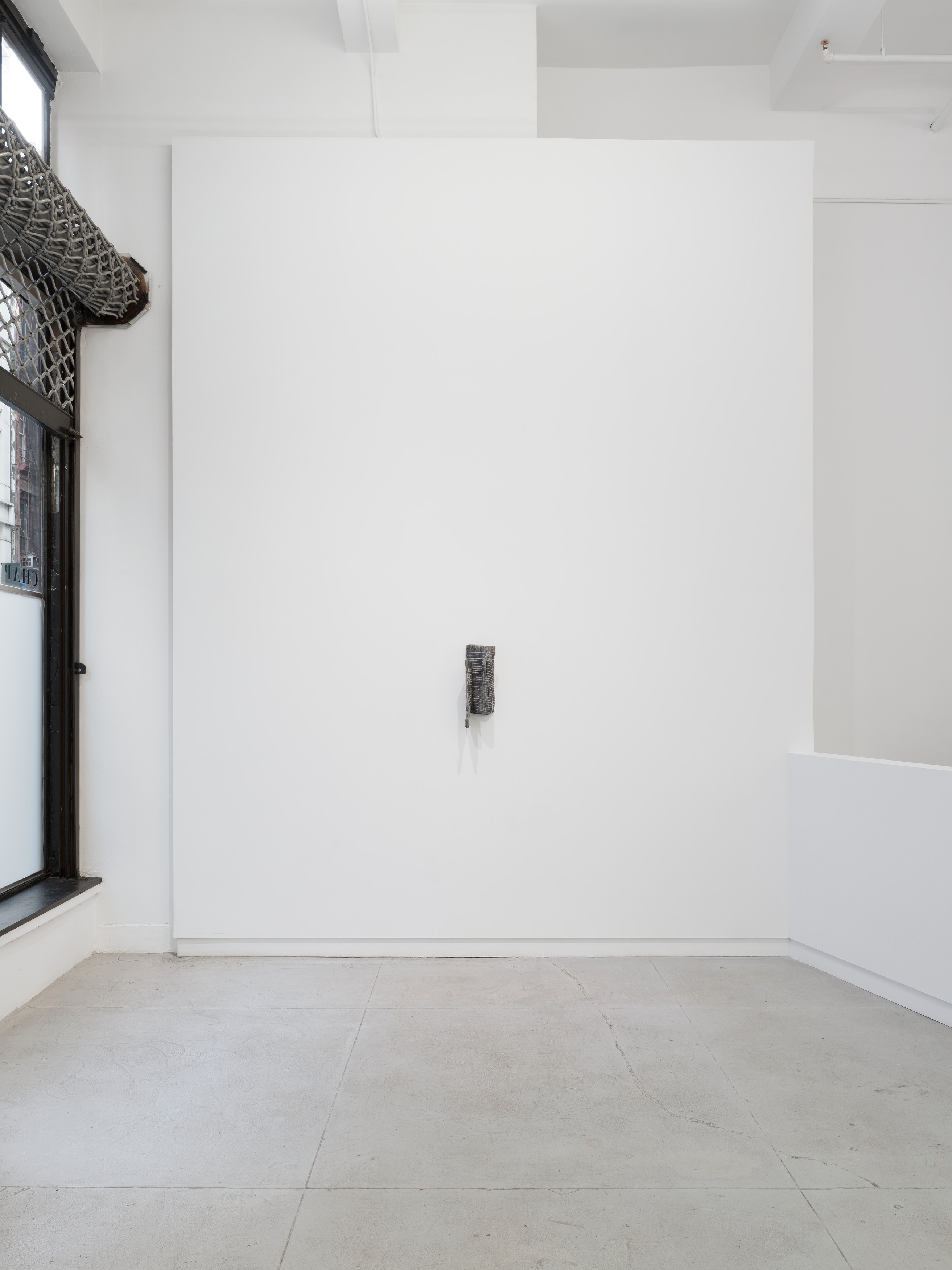 PastMisshape
Ann Greene Kelly
Mar 1 – Mar 31
Side Room Willa Nasatir Erin Jane Nelson Douglas Rieger Carrie Rudd Chapter NY is excited to present Misshape, a group exhibition of abstract paintings and sculptures four artists. Each artist deconstructs their subjects through various material processes that convey tactile evidence of their own lived experiences. They break down references to mechanical and everyday objects, literature, and the natural world, transforming them into anthropomorphic compositions with uncanny bodily presences. Willa Nasatir (b. 1990, Los Angeles, CA) lives and works in New York. She received her BFA from Cooper Union in 2012. She has had solo exhibitions at the Whitney Museum of American Art, New York; the Albright-Knox Art Gallery, Buffalo; Chapter NY, New York; Ghebaly Gallery, Los Angeles; Gaylord Apartments, Los Angeles; and White Columns, New York, among others. Her work has also been included in exhibitions at the New Museum, New York; Hester, New York; David Zwirner, New York; Del Vaz Projects, Los Angeles; Company Gallery, New York; and Drei, Cologne, among others. Erin Jane Nelson (b. 1989, Neenah, WI) lives and works in Atlanta. She received her BFA from The Cooper Union in 2011. She has had solo exhibitions at the Museum of Contemporary Art of Georgia, Atlanta; Chapter NY, New York; Document, Chicago; and the Atlanta Contemporary Art Center, Atlanta, among others. Her work has been included in exhibitions at the New Museum, New York; the Moss Art Center, Virginia Tech; the Whitney Museum of American Art, New York; the Aspen Art Museum, Aspen; the Fries Museum in Leeuwarden, NLD; and La Galerie, centre d’art contemporain, Noisy-le-Sec, among others. In May 2024, her work will be included in an exhibition at the Carnegie Museum of Art, Pittsburgh. Douglas Rieger (b. 1984, Pittsburgh PA) lives and works in New York. He received his MFA from Yale in 2016 and BFA from Virginia Commonwealth University in 2008. Rieger’s work has been exhibited at Capsule Shanghai (Shanghai, China), Helena Anrather Gallery (New York, NY), Thierry Goldberg Gallery (New York, NY), 67 Ludlow Gallery (New York, NY), New Discretions (New york, NY) and Fahrenheit (Madrid, Spain). His works has been featured in Bomb Magazine, Art in America, Artforum, Artsy, The New Yorker and FAD Magazine. Carrie Rudd (b. 1994, Hastings on Hudson, NY) lives and works in New York. She received her MFA from Hunter College in 2021. Her work has been included in exhibitions Polina Berlin Gallery, New York; Hunter College, New York; Hauser & Wirth, New York; and the Wellin Museum of Art, Clinton, NY.
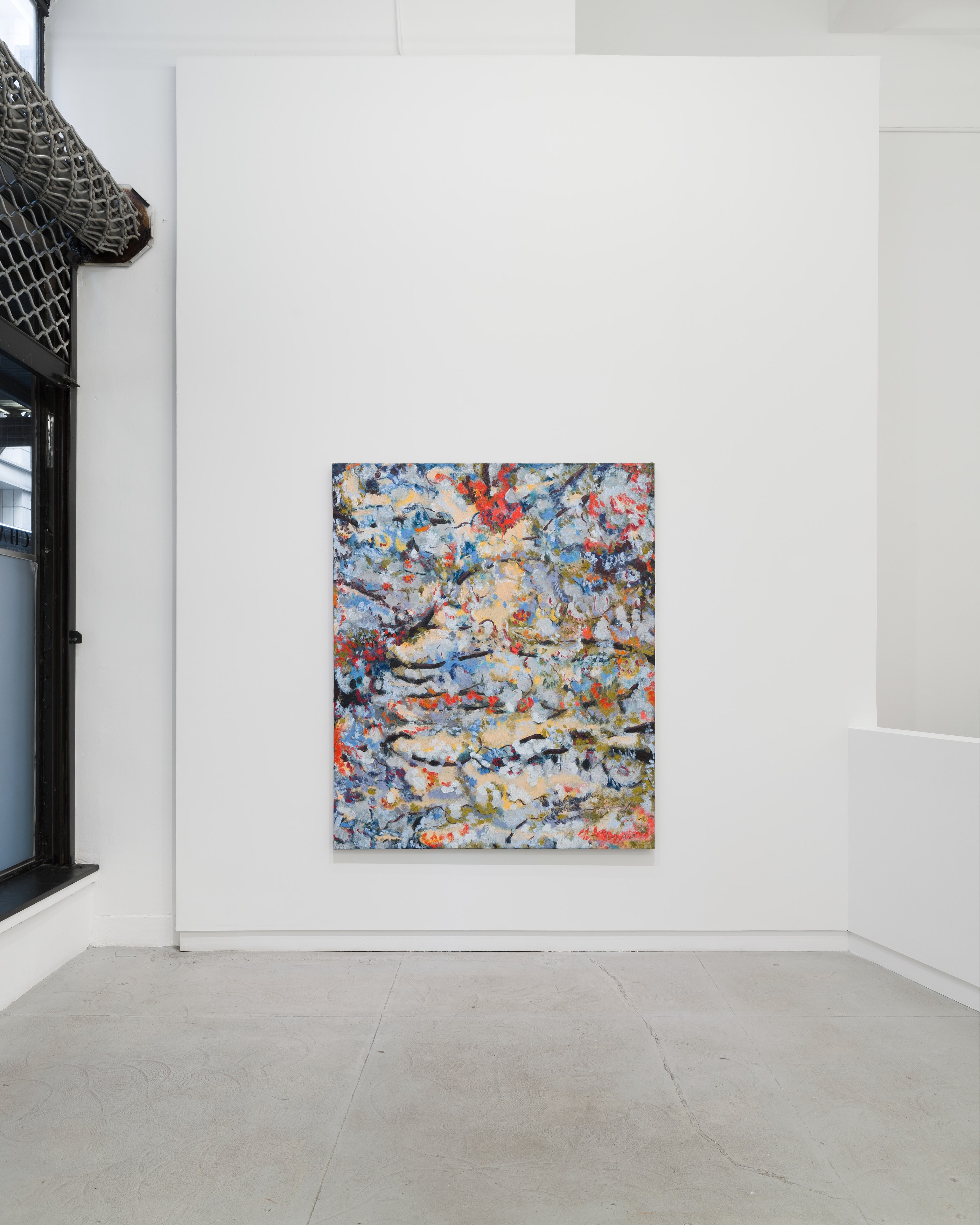 PastDrop Scene
Kathryn Kerr, Jin Han Lee, Yu Nishimura
Jan 5 – Feb 18
Kathryn Kerr Jin Han Lee Jacob Littlejohn Yu Nishimura So Young Park Drop Scene brings together five painters who pursue narrative proposals with simultaneous, superimposed, and often divergent actions in the space of a single picture plane. Meaning, search, action, and pleasure occur with adjacent intentions and effects, as with a theatrical scrim in which atmosphere or storyline plays out before an audience, while a different tableau or scenario is occurring off stage. The exhibition includes new paintings made specifically for exhibition by an international group of artists, including: Jin Han Lee (b. 1982, Seoul, South Korea), Kathryn Kerr (b. 1984, Los Angeles, USA), Jacob Littlejohn (b. 1995, Edinburgh, Scotland), Yu Nishimura (b. 1982, Kanagawa, JP), and So Young Park (1976, Seoul, South Korea). Drop Scene is organized by New York based advisor and curator Augusto Arbizo, of Schwartzman& | S& Projects. Jin Han Lee (b. 1982, Seoul, South Korea) lives and works between Seoul, South Korea, and London, United Kingdom. She received her PHD in painting from Slade School of Fine Art, and MFA from Goldsmith’s College. Recent group shows include Union Pacific, London and BB&M, Seoul. Lee’s solo exhibitions include Gallery ISU; Together Together; and Nook Gallery – all in Seoul. Her work is included in the collections of Hyundai Capital, Seoul; Sarabande Foundation, London; and National Museum of Modern and Contemporary Art, Art Bank, South Korea. Kathryn Kerr (b. 1984, Los Angeles, California) lives and works in New York, NY. She received her MFA in painting and printmaking from Yale School of Art in 2018. She has had solo exhibitions at And Now, Dallas; Lomex, New York; Papa Projects, St. Paul; and Essex Flowers, New York. Group exhibitions include Night Gallery, Los Angeles; Magenta Plains, New York; and Galerie Lisa Kanlhofer, Vienna. In Spring 2024, Kerr will have an exhibition with Antonia Kuo and Leslie Martinez at Project Native Informant, London. Yu Nishimura (b. 1982, Kanagawa, Japan) lives and works in Tokyo, Japan. He received his BFA in painting from Tama Art University in 2004. He has had solo exhibitions at Galerie Crèvecœr, Paris; Kayokoyuki, Tokyo; David Radziszewski, Warsaw; Echigo-Tsumari Art Field, Tōkamachi; Le Quai, Monaco; Kanazawa 21st Century Museum of Contemporary Art, JP; and Kiyosu City Haruhi Art Museum, Aichi; among others. Group exhibitions include Blum & Poe, Los Angeles; The Warehouse, Dallas, TX; Tomio Koyama Gallery, Tokyo; and Braunsfelder, Cologne; among others. His work is included in the collections of Musee d’Art Moderne de Paris, France; MWoods Museum, Beijing; and Kanazawa 21 st Century Museum, Japan. So Young Park (b. 1971, Seoul, South Korea) lives and works in Seoul, South Korea. She received her BFA from University of the Arts, Berlin in 2009. She has had solo exhibitions at Til Richter Museum, Buggenhagen; P21, Seoul; PS Salubia, Seoul; Hapjeong District, Seoul; and Gallery E105; among others. Group exhibitions include Simone Subal, New York; Aram Art Museum, Ilsan; frontviews, Berlin; and Uferhallen, Berlin; among others. Her work is included in the collections of the National Museum of Modern and Contemporary Art, Art Bank, Korea; and the ESMoA Museum, California. Jacob Littlejohn (b. 1995, Edinburgh, Scotland) lives and works in New York, NY. He received his BFA in painting and printmaking from The Glasgow School of Art in 2018 and is currently an MFA candidate at Hunter College, New York. He has had solo exhibitions at Half Gallery, New York; The Rafiki Gallery, Edinburgh; and Arusha Gallery, Edinburgh. Group exhibitions include Pippy Houldsworth, London; 526 N Western Avenue, Los Angeles; Kutlesa Gallery, Switzerland; and The Biscuit Factory, Edinburgh; among others.
Past
ChromazonesPatrick Berran
Jan 5 – Feb 18
Side Room Chapter NY is excited to present a new body of work by Patrick Berran for his fourth solo exhibition with the gallery. Collage reveals a physical decision, one that disrupts the existing content of a picture plane, conceals elements of what came before, and asserts its own physicality. Berran combines paper and canvas, turning to various drawing materials and techniques to expand the materiality of his surfaces. His earlier paintings conveyed texture through layers of painted and silkscreened patterns, but for this show, Berran interrupts the inherent smoothness of his previous works and plays with the dichotomous convergence of implied and actual texture. The incorporation of paper on his painted surfaces nods to earlier stages of Berran’s practice in which he creates patterns that resembled static noise by repeatedly photocopying pages of his own sketchbooks. Beginning as line drawings derived from the artist’s memory or objects in his surroundings, his source imagery evolves into abstract form through a serial process. Although less prominent than before, fragments of his distilled drawings punctuate each painting. Vibrant blues reverberate throughout Berran’s recent paintings in translucent swaths, transferred patterns, or drawn lines. His expanded palette of deep reds and purples suggest the rising and setting sun, a shift following his move from New York City to the Outer Banks where he experiences natural light and color with greater immediacy. All horizontally arranged, his paintings hint at layered landscapes but never reveal any recognizable sense of space, veering always in favor of abstraction. Flirting with the art historical legacy of modernist abstraction, Berran interweaves and repeats formal elements, namely stripes, bleeding stains, and characteristic layered shapes, intuitively carving out paths within and around them. He allows his forms to disappear beyond the edges of the canvas and emphasizes the tension of his cropped edges with hand-made artist frames that pictorially bind his densely concentrated compositions. Imperfectly made, they reassert the artist’s hand with a decisive gesture.
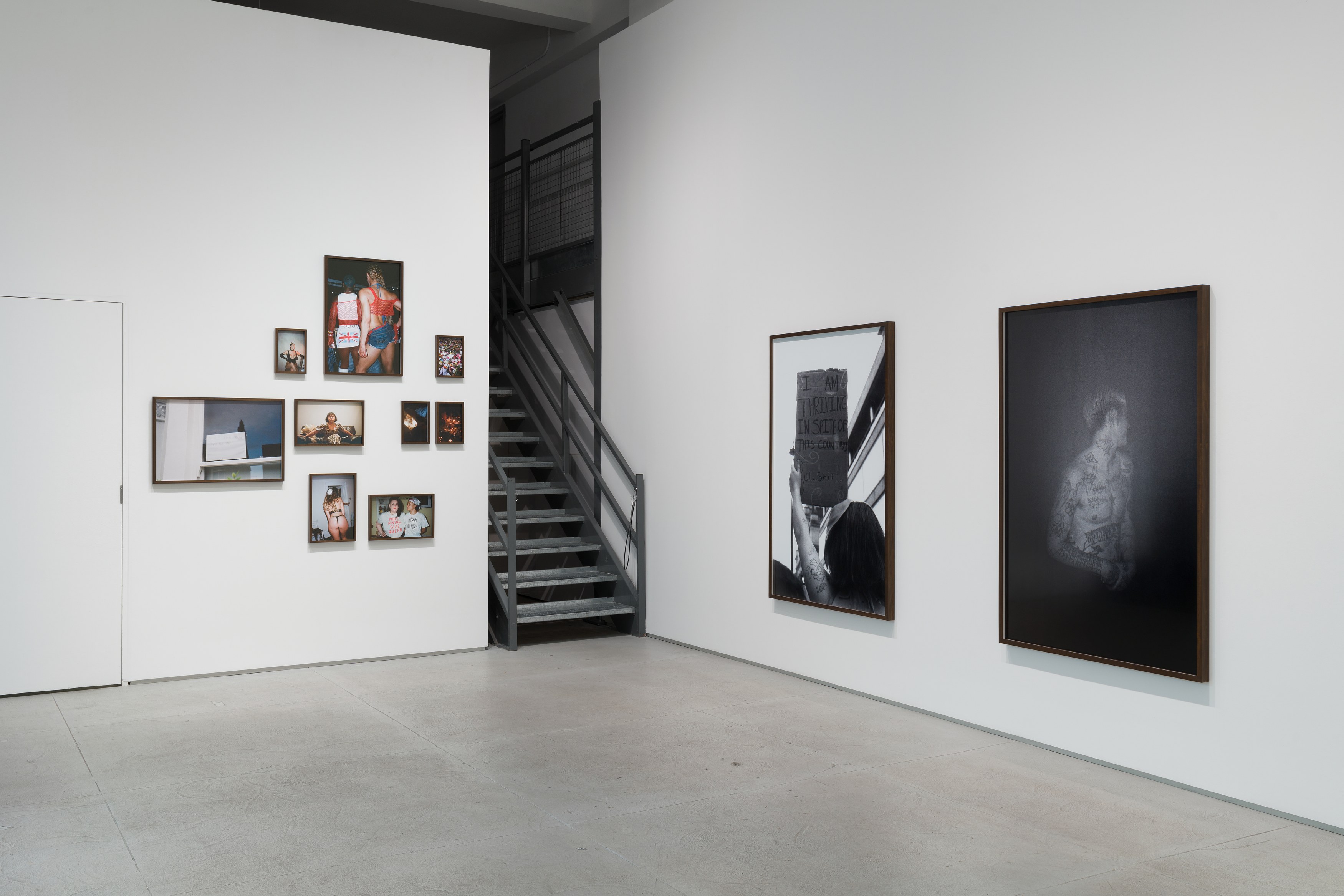 PastKiss Them From Me
Rene Matić
Oct 27 – Dec 10
Side Room Chapter NY is thrilled to present kiss them from me, Rene Matić’s first solo exhibition in New York. Departing from a conclusion, this show marks the final iteration of flags for countries that don’t exist but bodies that do, a series of photographs documenting six years amongst the tender lives that populate Matić’s universe and the persistence of perpetual love in unrequited places. Distilling moments that pinball between the intimate, extroverted, and societal, each still image pulses and radiates—amassing a velocity that will propel forth even as the artist releases the photographs to a personal past tense. Candles flickering in mourning for Brianna Ghey’s murder, friends draped in mesh at Glastonbury, blanketed bouquets honouring Queen Elizabeth II’s passing, a poster at UK Trans Pride inscribed with the declaration “I am thriving in spite of...,” camera flashes illuminating Matić’s wife clad in latex; these pictures are smoldering stars that insist they will not fade as they were captured at their brightest moment. Framed alongside Matić’s handwritten notes and crowned with a white flag reading “In Sickness” on one face and “In Health” on the other, they reflect on this chapter of their life from the edge of glory—accepting the grief, messiness, and labyrinthine truths that will clear new spaces for love to grow. Asserting their presence while acknowledging their absence, a solitary self portrait faces the constellation of images and writing on the opposing gallery wall. Their first untitled work, Matić’s eyes are in soft-focus, a gesture of not yet reaching clarity about what is behind and ahead. In a practice driven by asking why, the artist takes a moment of pause, considering how a fixed series will evolve once filtered through emotion, dimension, and time. Though a receding galaxy, kiss them from me emanates with care, depicting a love that will not diminish, but instead metamorphose between its eulogy and infinity. Rene Matić (b. 1997, Peterborough) lives and works in London. They have had solo and two-person exhibitions at Arcadia Missa, London; Kunstverein Gartenhaus, Vienna; South London Gallery, London; Studio Voltaire, London; Quench Gallery, Margate; Vitrine Gallery, London; among others. Their work has been included in group exhibitions at Studio/chapple, London; The Whitaker Museum & Art Gallery, Rossendale; Herbert Art Gallery & Museum, Coventry; High Art Arles, Arles; Sadie Coles HQ, London, UK; bold Tendencies, London; Kunsthall Stavanger; Schlossmuseum, Linz; and Saatchi Gallery, London; among others. Their work is currently on view in a group exhibition, Dreaming of Home, at the Leslie- Lohman Museum of Art, New York through January 7, 2024.
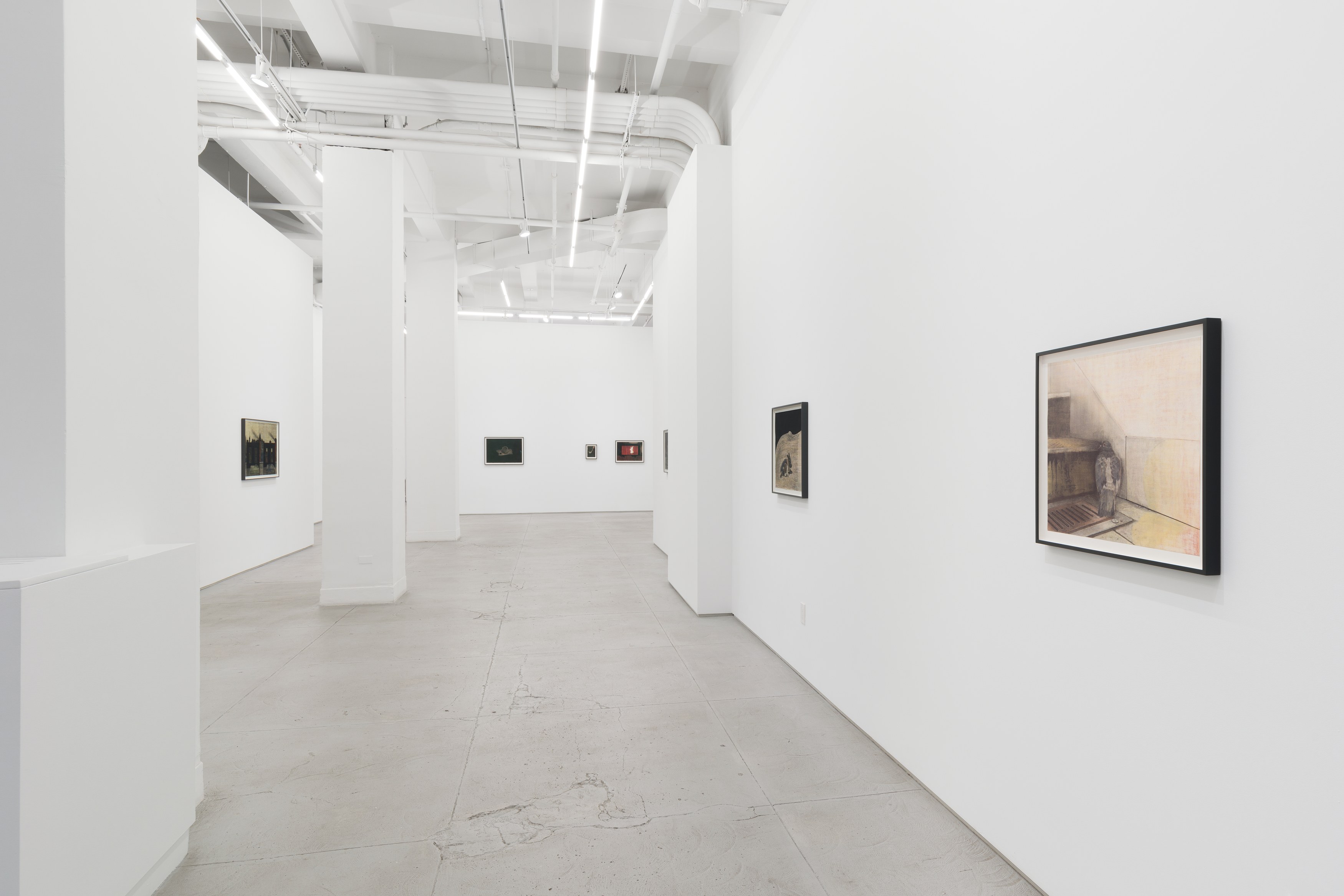 PastManhattan
Christopher Culver
Oct 27 – Dec 10
Chapter NY is excited to present, Manhattan, Christopher Culver's second solo exhibition with the gallery. The work of Christopher Culver stems from an ongoing search for images that reveal traces of human presence. First captured in photographic snapshots, his subjects expose psychological qualities felt within waning American contexts. He renders the architecture of intimate relationships, or lack thereof, that exist within spaces of urban estrangement. In his works on paper, Culver portrays vacant cityscapes, forgotten still lifes and domestic spaces, through an almost sculptural drawing process. Layers of charcoal and pastel are built up and erased, embedding lost fragments of text and imagery within them. The resulting grainy surfaces enhance the filmic quality of his darkly veiled compositions and imply a sense of degradation. With a forensic sensibility, Culver repeats hissubjects across multiple works, heightening their mysterious significance, as if distilled from a larger, unspecified narrative. In Manhattan, Culver continues to uncover imagery in his surroundings. Through animals, objects, and spaces observed mostly inside or near his apartment and studio, he conveys subtle moments of empathy and human connection. He introduces pigeons as a new recurring figure within his otherwise scarcely inhabited compositions, pairing them with synthetic plush bunnies. Culver’s subjects, inanimate or not, convey a human-like spirit with a disarming capacity for affection and closeness. Christopher Culver (b. 1985 Miami, Florida) lives and works in New York. He received his MFA from The University of Texas at Austin in 2013 where he studied at the School of Fine Arts and School of Architecture. Culver has had solo exhibitions at Chapter NY, New York; The Meeting, New York; A.D., New York; Redling Fine Arts, Los Angeles; Yautepec, Mexico City; and Queen’s Nails Annex, San Francisco. His work has been included in group exhibitions at Crèvecoeur, Paris; Michael Benevento, Los Angeles; Collaborations, Copenhagen, DNK; Echo, Cologne, DEU; Downs & Ross, New York; Et al. etc., San Francisco; Lomex, New York; and Page Gallery, New York, among others. Culver has an upcoming solo exhibition at Michael Benevento, Los Angeles in February 2024.
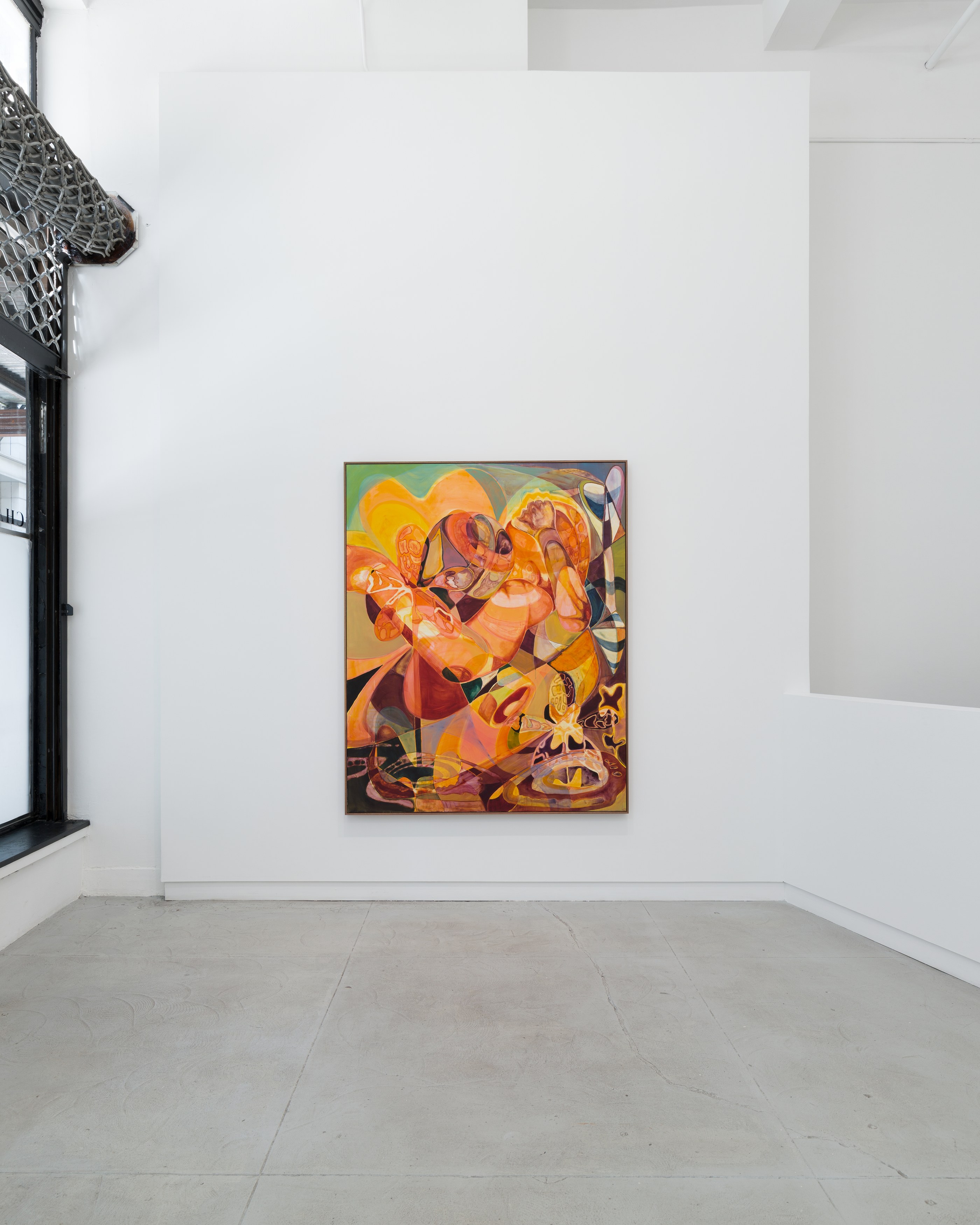 PastWilla Nasatir
Willa Nasatir
Sep 8 – Oct 22
Chapter NY is excited to present Willa Nasatir’s third solo exhibition with the gallery, featuring a new selection of paintings and photographs. Nasatir’s practice investigates varied approaches to imaging. In both her paintings and photographs the artist transforms everyday objects to the point of the surreal, collecting and accumulating her subjects before distorting and abstracting their forms through various analog, drawing, and painting processes. Her work dislodges bodies and objects from ingrained associations and preexisting meaning, allowing them to merge into hybrid forms with porous edges. Fragmented compositions suggest both psychoanalytic and psychedelic perspectives, engaging Nasatir’s own subconscious associations. Through abstracted form, she plays with dualities of meaning and proposes an unraveling of perceived boundaries as they relate to gender and power. Informed by her background in photography, Nasatir creates paintings that intentionally evoke the translucency and flatness of photographic images. In the exhibition, embedded visual keys connect the paintings and photographs, further collapsing the relationship between mediums in Nasatir’s practice. Her work exists within a continuum, each one woven in and out of itself in perpetual circulation. Willa Nasatir (b. 1990, Los Angeles, California) lives and works in New York, NY. She received her BFA from Cooper Union in 2012. She has had solo exhibitions at the Whitney Museum of American Art, New York; the Albright-Knox Art Gallery, Buffalo; Ghebaly Gallery, Los Angeles; Gaylord Apartments, Los Angeles; Chapter NY, New York; and the White Room at White Columns, New York. Her work has also been included in exhibitions at Parker Gallery, Los Angeles; the New Museum, New York; Hester, New York; David Zwirner, New York; Del Vaz Projects, Los Angeles; Company Gallery, New York; and Drei, Cologne, among others.
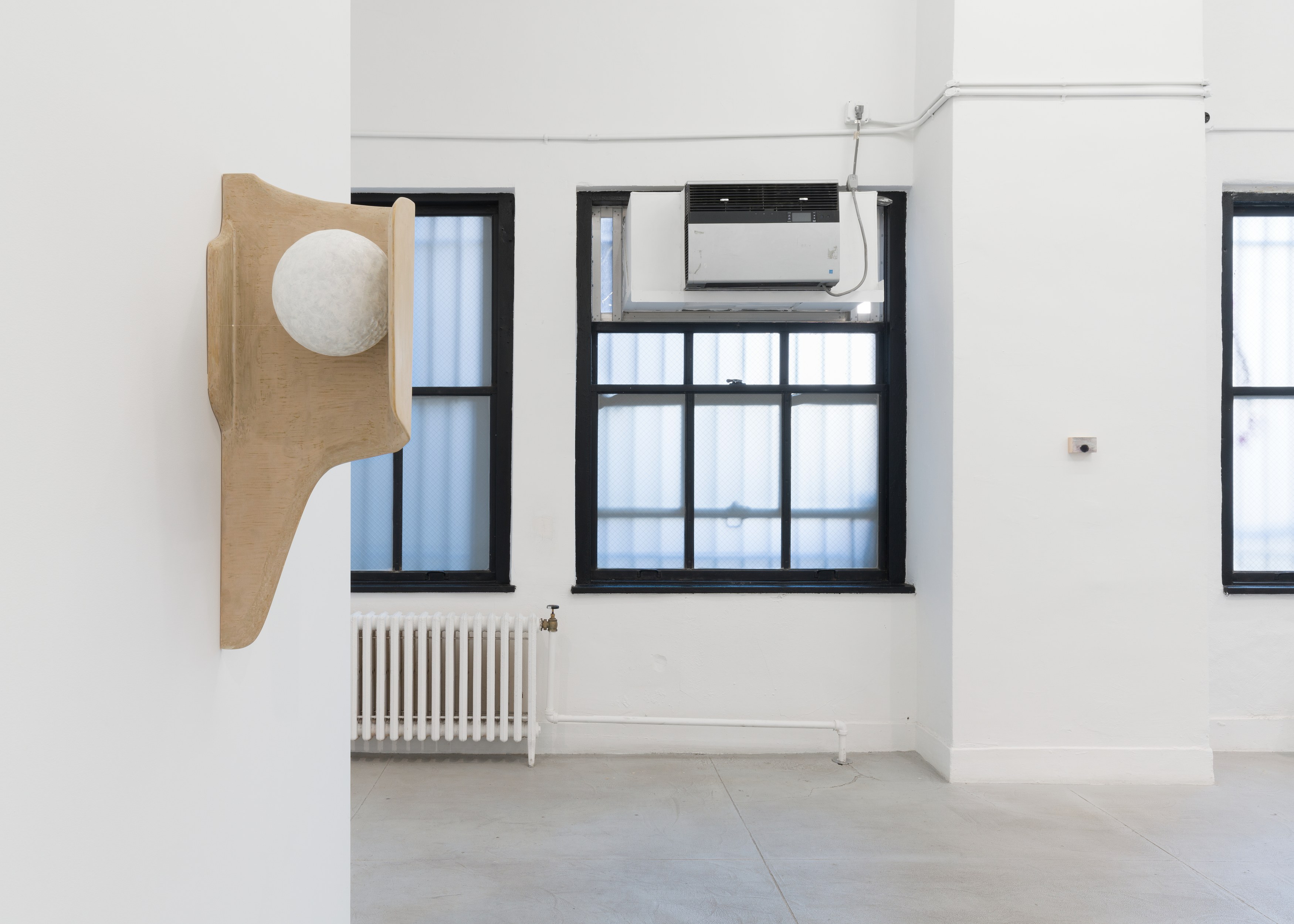 PastStella Zhong
Stella Zhong
Sep 8 – Oct 22
Side Room Chapter NY is excited to present Stella Zhong’s second solo exhibition at the gallery, and first exhibition of paintings. Zhong’s work suspends existential uncertainty and humor. Through large-scale installation, sculpture, video, and painting, she builds vastly empty spaces punctured by barely visible, nonconforming objects in the periphery—highly idiosyncratic worlds that disorient authority. Immersed in physics and nonhuman elements, her work uses obscurity and lack of reference as the condition to observe strength in smallness, latent life, and moments where alienation and intimacy converge. Like her sculptural work, Zhong’s paintings display vantage points calibrated to both cosmic and microscopic scales. Spheres, desolate corners, grains of rice, buttons, cliffs, and reflective filaments are subjects that she repeatedly and almost obsessively paints into her characteristic muted environments, as if inside a particle or above the atmosphere. Visualizing incongruent spatial relationships is integral to Zhong’s practice, in which she experiments particularly through painting. In this exhibition, the constellation of new works refract Zhong’s personal lens of global shifts and entanglements, and turn to humble yet tactile connections. In one painting, a monumental sphere gravitates towards a minuscule mote to exchange shadows; in others, entities of decidedly different dimensions intersect in a soft, playful touch. The objects foregrounded here are at once potent, helpless, and isolated, but never quite alone. Stella Zhong (b. 1993, Shenzhen, China) lives and works in New York, NY. She holds a BFA in Glass from Rhode Island School of Design and an MFA from Yale University. Selected solo exhibitions include Chapter NY, New York; Fanta-MLN, Milan; Adams and Ollman, Portland, OR; and Guan Shan Yue Art Museum, Shenzhen. Zhong has exhibited internationally at SculptureCenter, Queens, NY; The Aldrich Contemporary Art Museum, Ridgefield, CT; Galerie Marguo, Paris; in lieu, Los Angeles, CA; Peana, Mexico City; Mana Contemporary, Jersey City; HUA International, Beijing; M 2 3, New York; and more. Her work has been reviewed on ArtAsiaPacific, Mousse Magazine, Texte zur Kunst, The New York Times, Art in America, among others.
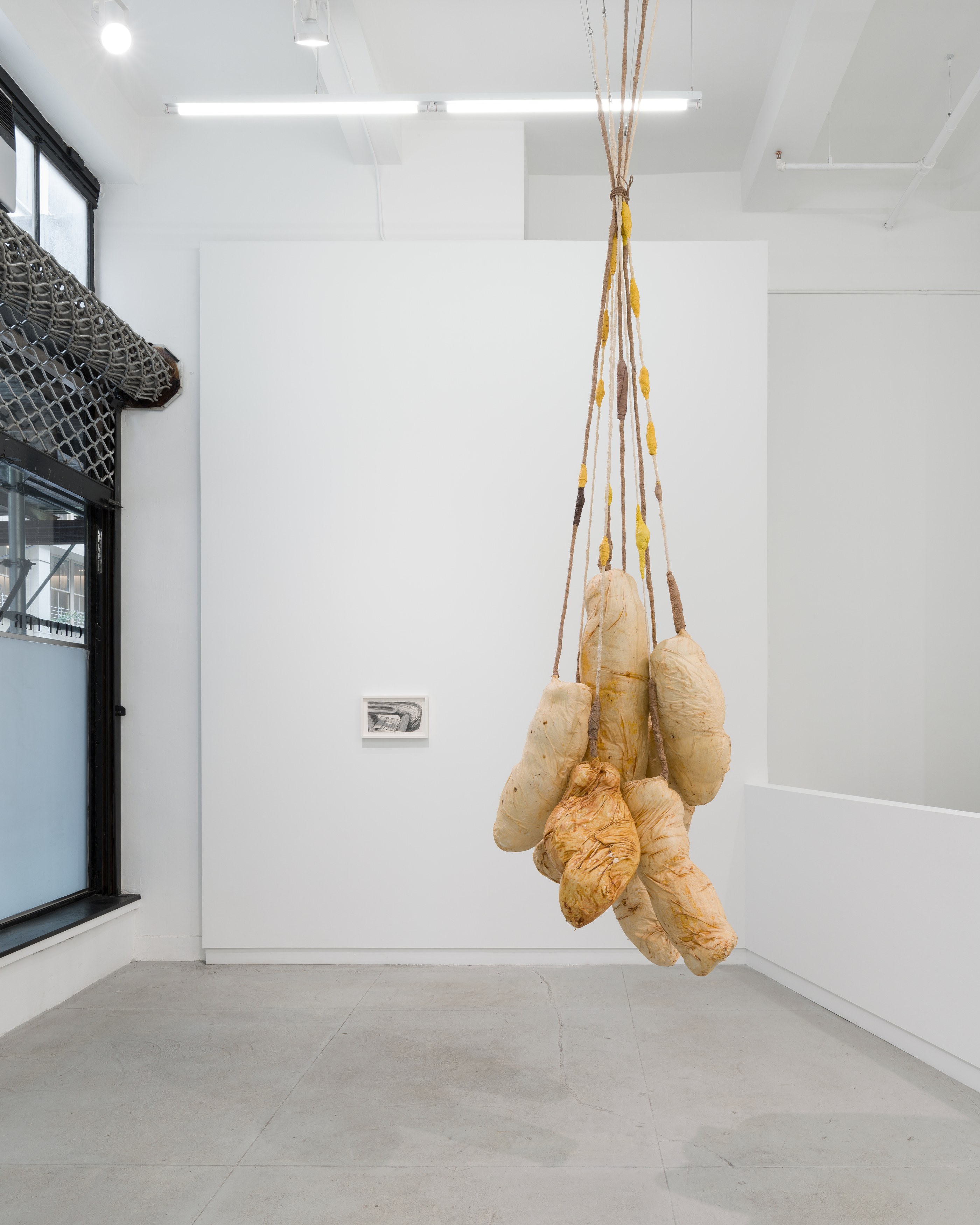 PastNo Title
cameron clayborn, Adam Gordon, Sylvie Hayes-Wallace, Lee Lozano, Sam Moyer, Dala Nasser, Ang Ziqi Zhang
Jun 23 – Aug 5
Cameron Clayborn, Adam Gordon, Sylvie Hayes-Wallace, Lee Lozano, Sam Moyer, Dala Nasser, Ang Ziqi Zhang Chapter NY is pleased to present a group exhibition including drawings by seven artists. The exhibition considers Lozano’s early practice—in particular, her drive to seek and define form—as a jumping off point and inspiration to the living artists in the exhibition. Two drawings from her early tool series center functional implements as bodily and erotically charged subjects. With great emphasis on process, each artist in the exhibition explores the capacity and potential of the creative act. They work within self-assigned rules and parameters to guide their artmaking and recontextualize objects and structures from their physical environments. Set within a wall, Gordon constructs a small-scale installation that reveals an improbable space just beyond grasp. Across all mediums, his work visualizes deeply uncanny spaces, training our attention towards the subtle ambiguities of human existence. In contrast to Gordon’s embedded work, Hayes-Wallace presents wall-mounted cages scaled to the size of her own head. Her precarious constructions interweave everyday materials and ephemera that reveal fragments of her interior self. Both Hayes-Wallace and Moyer reference the accumulation of time in their work. Hayes-Wallace includes a calendar in one of her sculptures that reveals her own ritualistic patterns. Moyer photographs the erosion and degradation of man-made constructions by natural forces. In a new series, she captures images of eroded sea walls that have devolved into free-formed shapes and lost their protective function. They exist as sculptural collaborations between the human hands that made them and the forces of nature that have been breaking them down. Framed in the same concrete aggregate material, they represent the history of lost forms. Nasser, too, addresses the intermingling and deterioration of the human and nonhuman, but from a historical and ecological perspective that reveals the effects of colonial erasure. Using landscape as medium, Nasser dyes her wall-based fabric works with Cochineal. With branches and bark sourced from her grandparents’ village, she layers rubbings within her compositions that point to her own history and hold many traces of being. Clayborn’s practice similarly pulls from personal history and lived experience, creating multivalent sculptures that are tender and intimate, abject and erotic. In dialogue with the artist’s performance practice, their sculptures convey a bodily presence of implied motion. These recent works, created under tight time constraints, embrace an element of intuitive spontaneity. With a more slowed-down approach, Ziqi Zhang’s paintings evolve incrementally through carefully considered gestures and looping forms. Unusually proportioned panels constrain and inspire her abstract imagery that seeks to capture the artist’s personal subjectivity. Cameron Clayborn (b. 1992, Memphis, Tennessee) lives and works in New Haven, CT. They have had solo exhibitions at Hamburger Bahnhof, Berlin; Simone Subal Gallery, New York; and Boyfriends, Chicago; among others. Their work is included in the collections of the Hamburger Bahnhof Museum, Berlin; the Los Angeles County Museum of Art, Los Angeles; and the Studio Museum in Harlem, New York. This year, Clayborn will be included in an upcoming group exhibition at the Los Angeles County Museum of Art, Los Angeles. Adam Gordon (b. 1986, St. Paul, Minnesota) lives and works in Jersey City, New Jersey. He received his MFA from Yale University in 2011. He has had solo exhibitions at Chapter NY, New York; Gandt, Queens; Project Native Informant, London; Galleria Zero, Milan; and The Power Station, Dallas. His work has been included in group exhibitions at the Whitney Museum of American Art, New York; Kunsthalle Wien, Vienna; Andrew Kreps, New York; High Art, Paris; National Exemplar, New York; and Night Gallery, Los Angeles. His work is included in the collections of the Tang Teaching Museum, Skidmore College, Saratoga Springs, NY and the Whitney Museum of American Art, New York. Sylvie Hayes-Wallace (b. 1994, Cincinnati, Ohio) lives and works in New York, NY. She received her BFA from The School of the Art Institute of Chicago in 2017. She has had solo and two-person exhibitions at A.D. Gallery, New York; Bad Water, Knoxville; Interstate Projects, Brooklyn; and New Works, Chicago; among others. Her work has been included in group exhibitions at Chapter NY, New York; Simone Subal Gallery, New York; King’s Leap Fine Arts, New York; Annex de Odelon, Ridgewood; MX Gallery, New York; and Frontera 115, Mexico City; among others. Lee Lozano (b. 1930, Newark, NJ) lived and worked in New York before retreating from the art world and moving to Dallas, TX where she died in 1999. Her work has been exhibited extensively around the world. She has had notable solo exhibitions at institutions including Museo Nacional Centro de Arte Reina Sofía, Madrid; Moderna Museet, Stockholm; Kunsthalle Basel, Basel; MoMA PS1, Long Island City, NY; Wadsworth Atheneum, Hartford, CT; and Whitney Museum of American Art, New York, among others. Sam Moyer (b. 1983, Chicago, Illinois) lives and works in Brooklyn, NY. She received her MFA from Yale School of Art in 2007. She has had solo exhibitions at Rodolphe Janssen, Brussels; Kayne Griffin, Los Angeles; Sean Kelly, New York; 56 Henry Gallery, New York; Joan Los Angeles, Los Angeles; Société, Berlin; Galerie Tom Christoffersen, Copenhagen; and Rachel Uffner Gallery, New York; among others. Her work is included in the collections of the Aïshti Foundation, Beirut; the Davis Museum, Wellesley College, Wellesley; the Louis Vuitton Foundation, Paris; the Moody Center for the Arts, Rice University, Houston; the Morgan Library, New York; the Museum of Modern Art, New York; the Whitney Museum of American Art, New York; and the Yale University Art Gallery, New Haven; among others. Dala Nasser (b. 1990, Tyre, Lebanon) lives and works in Beiruit, Lebanon. She received her MFA in painting and printmaking from Yale School of Art in 2021. She has had solo exhibitions at Kölnischer Kunstverein, Cologne, Germany; V.O Curations, London; and Deborah Schamoni, Munich. Her work has been included in group exhibitions at Sharjah Biennial 15, Sharjah, UAE; Musée d’Art de Joliette, Quebec; Carnegie Museum of Art, Pittsburgh; Antenna Space, Shanghai; Shahin Zarinbal, Berlin; Centre Pompidou, Paris; Yale School of Art, New Haven; Lyes & King, New York; Beirut Art Center, Beirut; and François Ghebaly Gallery, Los Angeles; among others. Ang Ziqi Zhang (b. 1994, Brampton, Ontario) lives and works in New Haven, CT and Brooklyn, NY. Zhang received their MFA in painting and printmaking from Yale School of Art in May 2023. They have had solo and two-person exhibitions at Iowa, Brooklyn; LVL3, Chicago; and Produce Model Gallery, Chicago. Their work has been included in group exhibitions at YveYang Gallery, New York; Jan Kaps Gallery, Köln, Germany; Apparatus Projects, Chicago; Yale School of Art, New Haven; Good Weather Gallery, Chicago; Night Club Gallery, Minneapolis; Logan Center Exhibitions, Chicago; Each Modern, Taipei; and Fonda, Leipzig, Germany; among others.
Past
CloserCara Benedetto
May 12 – Jun 11
Side Room Chapter NY is thrilled to present, Closer, Cara Benedetto’s third solo exhibition with the gallery. Her immersive installation features a series of dye-sublimation prints, a PowerPoint video, a large-scale wall vinyl, velvet stanchion ropes, and a collection of printed ephemera including xeroxes, lithographs, and printed silk handkerchiefs. Benedetto's multimedia practice examines the creation of value and its ingrained structures. Through printmaking, writing, performance, pedagogy, and video, Benedetto embraces the poetics of contradiction through pluralism. Her work layers gendered language with content from popular media that embody ideologies of progress that prevent femme-identifying subjects from voicing their true wants. Formally trained as a printmaker, Benedetto emphasizes the hierarchy of different forms of print media and embraces the physicality of the medium as a metaphor for the fragility of our present moment. Her images and text together reveal the alienating effects of patriarchal capitalism and present complex voices that are open and multivalent. She creates interruptions as a form of resistance, finding optimism, gentle understanding, and empathic vision. In Closer, Benedetto centers white women, specifically femme-identifying celebrities, as false arbiters of progress and unknowing accomplices in the subjugation of vulnerable populations. At odds with the allegedly subversive or abject characters they frequently represent in film and TV, the celebrity relishes their status awarded to them by the oppressive, dominant culture that they serve. A series of prints combine images of actors winning awards—such as Olivia Colman, Frances McDormand, and Phoebe Waller-Bridge, among others—with poetic, fictional testimonies of people ‘coming to’. Examples of ‘coming to’ include waking from a night terror or gaining consciousness. Benedetto embellishes these printed image and textual collages with Prismacolor and sharpie, mimicking an obsessive ‘fangirl’ aesthetic. The women depicted in the images, with open mouths and languid eyes, embody extreme examples of achievement. The accompanying text, however, articulates a world where being awake, gaining consciousness, or living life under the strictures of power feels like a loss—where living is equated with mourning. People often say they dream of winning an award. Winning lives inside of our unconscious minds yet remains largely unattainable. Closer extends Benedetto’s ongoing Against Coming series, where coming, arriving, or winning in phallocentric terms is continually thwarted. The artist uses obfuscation as a gesture to break apart these ascendent and unavoidably elitist aspirations to make space for collective reimaginings of a culture built with love. Cara Benedetto (b.1979, Wausau, Wisconsin) lives and works in Richmond, VA. She received her MFA from Columbia University in 2009. Benedetto has had solo and two-person exhibitions at Chapter NY, New York; Night Gallery, Los Angeles; Michael Jon Gallery, Detroit; Art Metropole, Toronto; and Young Art Gallery, Los Angeles; among others. Her work has been included in group exhibitions at Kunsthalle Wien, Vienna; the Hite Art Institute, Louisville; The Pit, Los Angeles; The Blueproject Foundation, Barcelona; The Jewish Museum, New York; Art in General, New York; Cooper Cole, Toronto; and the Museum of Modern Art, Warsaw; among others. Benedetto is an associate professor in print media at Virginia Commonwealth University. Benedetto is the author of two experimental romance novels, The Coming of Age and Burning Blue, and is the editor of Contemporary Print Handbook, published with Halmos. In 2020, Benedetto published her first collection of short stories, Origin of Love and Other Tales of Degradation.
Past
RiversPaul Heyer
May 12 – Jun 11
Rivers started as a dream. I was coming out of a year of wild nightmares and wanted to make a show that felt more alive than my dreams. And I wanted to make paintings that would engage a younger version of myself who fell in love with painting in eighth grade. Back then I loved massive paintings that could be stage sets and insisted on their own POV and invented space. And I loved little paintings that whispered secrets too. Both approaches promised freedom. Every mark registered a code that spun out fractally to create not just a world, but new selves for the artist, viewer, and thirteen-year-old me. I wanted this show to celebrate how painting underscores the porosity of ourselves, and to show how real and imagined worlds slip into each other. It’s also a love letter to my boyfriend, Rivers, who teaches me to see art differently. Rivers marks the first time I have shown abstractions since maybe 2010, though I’ve been using silver lamé for a while. Like us, the fabric is fragile and tough, futuristic and pathetic—all at the same time. It acts as a non-color more than a white ground, refusing to participate in the action of the brush marks. Instead, it incorporates the color of our world, dissolving the “fourth wall.” The painted world and the lived world mix together, questioning what is real and what is not. It’s sexy and unstable. These paintings live in flux, born of a queer perspective, meandering, layering, and dancing back onto themselves. Like a river. I paint sunflowers, our friendliest bloom, as both regeneration and death. A portrait of a nude figure deciding where to walk is both intimate and monumental. According to the River Continuum Concept, a watercourse is an open system in constant interaction with the bank, changing as it moves. These works investigate the ways paintings do that too. Intentionally or not, all modes of aesthetic and technological production are tools to code out new realities. How do we seize agency in deciding what kinds of demi-god we become? What dream are we building? These paintings ask those questions too, just as painting always has. —Paul Heyer Paul Heyer (b.1982, Olympia Fields, Illinois) lives and works in Chicago, IL. He received his MFA in painting from Columbia University in 2009. Heyer has had solo exhibitions at Chapter NY, New York; Night Gallery, Los Angeles; Soccer Club Club, Chicago; Mickey, Chicago; and the Museum of Contemporary Art, Chicago; among others. His work has also been included in group exhibitions at the Museum of Contemporary Art, Chicago; Manarat Saadivat, Abu Dhabi, UAE.; Perrotin, New York; Paul Soto, Los Angeles; Andrea Rosen Gallery, New York; Shane Campbell Gallery, Chicago; Rodeo Gallery, London; Young Art, Los Angeles; 356 Mission, Los Angeles; and Rachel Uffner Gallery, New York (2012); among others.
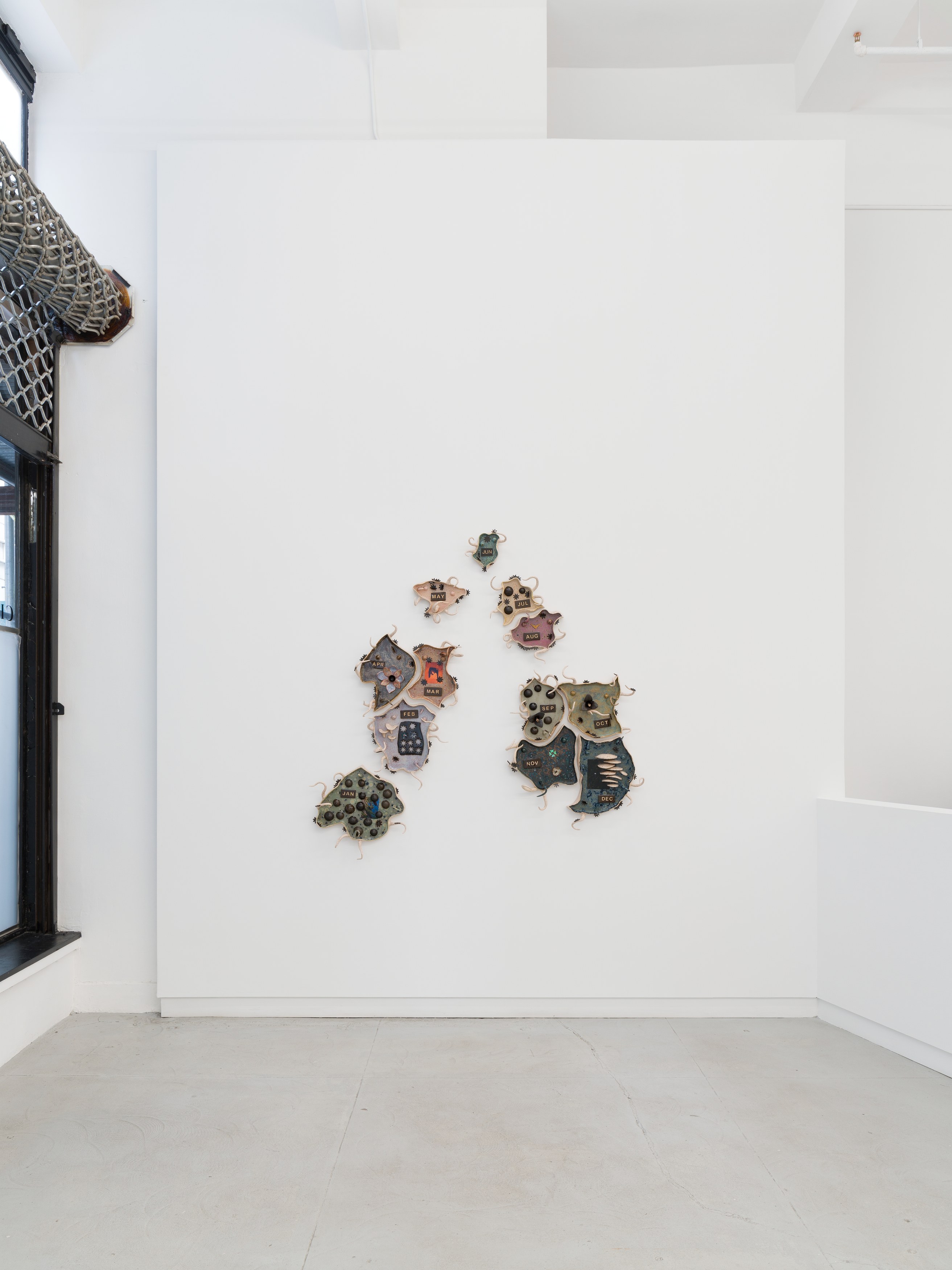 PastSublunary
Erin Jane Nelson
Mar 31 – May 7
Chapter NY is excited to present, Sublunary, Erin Jane Nelson’s second solo exhibition with the gallery, featuring a new body of work centered around the Okefenokee swamp, including quilted silks, ceramic wall works, and ceramic sculpture. Nelson’s practice unfolds serially, with each project delving into new conceptual frameworks as far ranging as regional histories of the Southern barrier islands, formative personal relationships, spirituality as a process of mourning and healing, and science fiction narratives. Her multimedia works—including silks, hand-crafted quilts, panels, and ceramics—all stem from photographic source material that the artist intuitively merges and collages together. For her newest series, Nelson explores the Okefenokee swamp in a remote area along the Georgia-Florida border, allowing the landscape to guide her formal choices and seep into the content of her work. Prevalent in the American South, wetlands play an important role in protecting and preserving the natural world by absorbing excess water and repurposing harmful chemicals. Despite their valuable ecological contributions, nearly half of U.S. wetlands have been eradicated and continue to be threatened. Throughout history swamps have also carried negative associations with witches, monsters, concealment, and decay. Nelson harnesses these connotations as well as the site’s resilience to explore its generative potential. The title of the exhibition, Sublunary, is a term that points to the terrestrial world, that which is situated below the moon, the mundane. Nelson, however, reclaims the sublunary realm as a site of higher possibilities, one that stems from interconnectivity and regeneration, and reveals the expansive, healing potential of the non-human world. Enacting an ephemeral performance over several visits to the swamp, the artist photographed various life forms, created self-portraits, made drawings, and placed her ceramics along the water. The shapes of her compositions stem from these observed visual references and her glazes emphasize the wetness of the environment and its varied textures. Throughout the swamp, the blackwater reflects its surroundings with unsettling clarity, blurring boundaries and eliminating any hard edges. The artist channels the subsuming quality of this murky space to speculatively explore the intermingling between her body and the swamp itself. Erin Jane Nelson (b. 1989, Neenah, Wisconsin) lives and works in Atlanta, Georgia. In 2011 she received her BFA from The Cooper Union. She has had solo exhibitions at the Museum of Contemporary Art of Georgia, Atlanta; Chapter NY, New York; Document, Chicago; and the Atlanta Contemporary Art Center, Atlanta; among others. Her work was included in the 2021 New Museum Triennial and has been included in group exhibitions at the Whitney Museum of American Art, New York; the Aspen Art Museum, Aspen; the Fries Museum in Leeuwarden, NLD; La Galerie, centre d’art contemporain, Noisy-le-Sec; Deli Gallery, Brooklyn; Van Doren Waxter, New York; and the Pinakothek der Moderne, Munich.
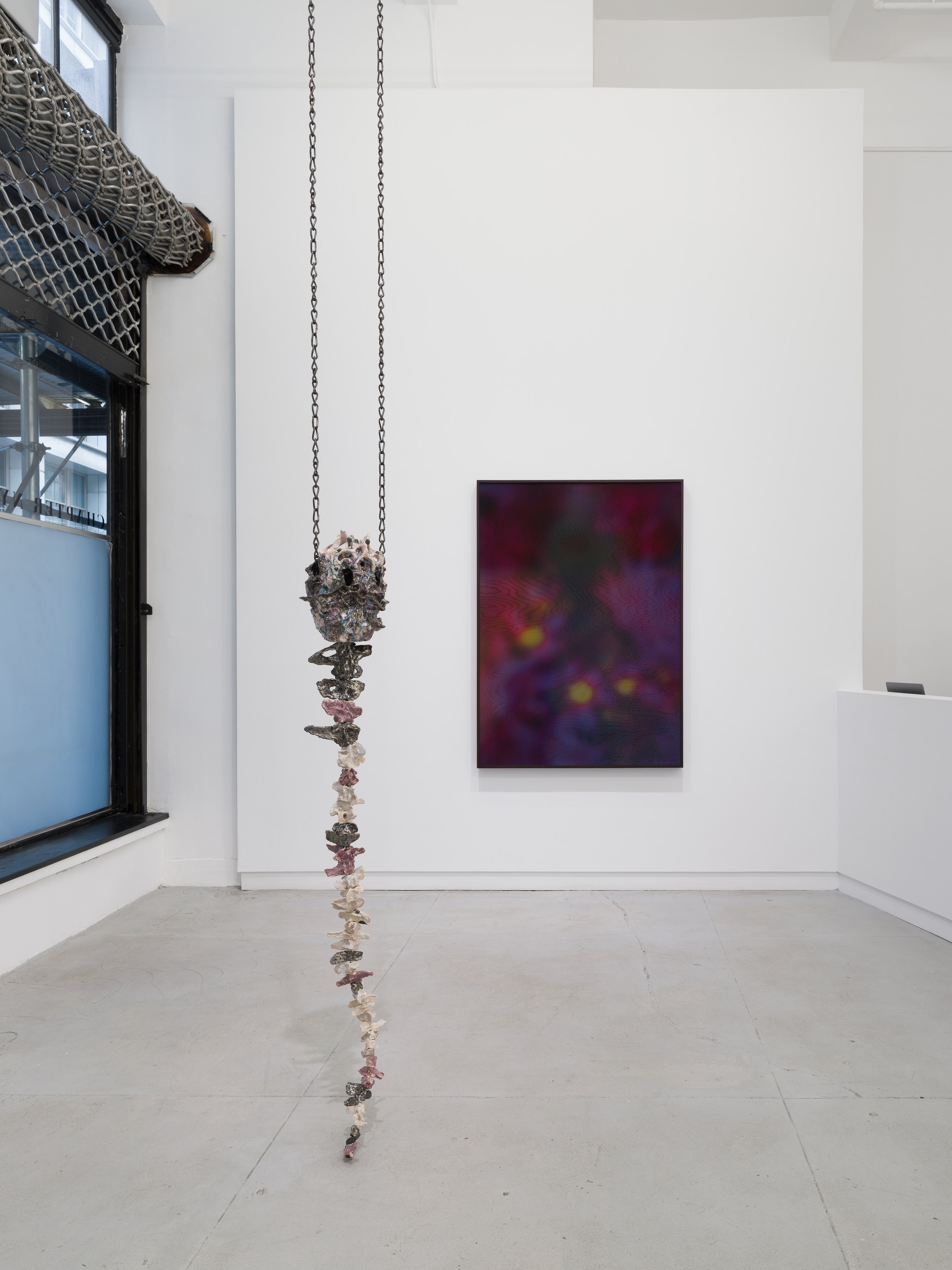 PastBody without Organs
Samuel Guerrero, Maren Karlson, Heidi Lau, Rosha Yaghmai, Stella Zhong
Feb 24 – Mar 25
Past
Make Me Mulch!Olivia van Kuiken
Feb 24 – Mar 26
Side Room Chapter NY is thrilled to present, Make Me Mulch!, Olivia van Kuiken’s first solo exhibition with the gallery, featuring a new series of paintings. Oliva van Kuiken merges abstract and representational subjects to upend traditional notions of legibility. She considers the meaning of accuracy as it pertains to visual representation: what is needed to create an identifiable image and what are its associations? She avoids narrative conventions and instead, begins each piece with a formally derived structure or logic guided by a preexisting work. The artist creates a series of sketches, engaging an intuitive and frenetic drawing practice that informs her paintings on canvas. Enlarging small scribbling forms into sinuous, stretching shapes, she parodies the gesture itself and questions mythic status of the artist’s hand. The title of van Kuiken’s exhibition, Make Me Mulch!, follows New York’s recent legalization of the composting of human bodies after death – a process that aptly mimics the breaking down of the artist’s female subjects within her abstract compositions. Stripped of the personhood that portraiture strives to capture, van Kuiken’s figures serve as symbols of ideas rather than real people. Often inspired by surrealist literary sources, van Kuiken embraces the irrational and absurd. Her diptych installed across two walls in the exhibition space, stems from Unica Zürn 1968 novella about childbirth, Trumpets of Jericho, in which a burdensome uncle births a daughter through his ear. Van Kuiken’s painting pictures two heads sharing a single ear pieced together by a constellation of “pixels”. Imprecisely hand painted, her geometric pixel-like shapes defy the reproducibility enabled by mechanical processes while also referencing technology’s integration into the language of painting. Her fractured image diminishes the possibility of assigning the role of muse or subject, instead urging their presence as abstract paintings despite any recognizable forms. The central painting in the exhibition, Zig Zag Girl (Hodler, Woman on her Deathbed), is based on Ferdinand Hodler’s 1876 painting of a woman on her deathbed. [1] Van Kuiken removes the subject from her intended context, fragmenting her body across three panels and enmeshing her contours within an abstracted landscape. The title of van Kuiken’s painting also references a famous magical illusion in which a magician appears to saw a woman’s body into three parts. In her painting, the artist wittily reenacts this butchering of the female subject. She pits these two examples of female subjectivity against each other to playfully obliterate the well-ingrained constructs that ascribe their meaning. Olivia van Kuiken (b. 1997, Chicago, IL) lives and works in Brooklyn, NY. She received a BFA from Cooper Union, New York, NY in 2019. She recently had her first solo exhibition, She clock, Me clock, We clock at King’s Leap, New York, NY. Her work has been included in group exhibitions at Chateau Shatto, Los Angeles, LA; Chapter NY, New York, NY; and Shoot the Lobster Gallery, New York, NY. 1 - Ferdinand Hodler, Bildnis einer Toten, 1876, Oil on canvas. Collection of Museum zu Allerheiligen Schaffhausen.
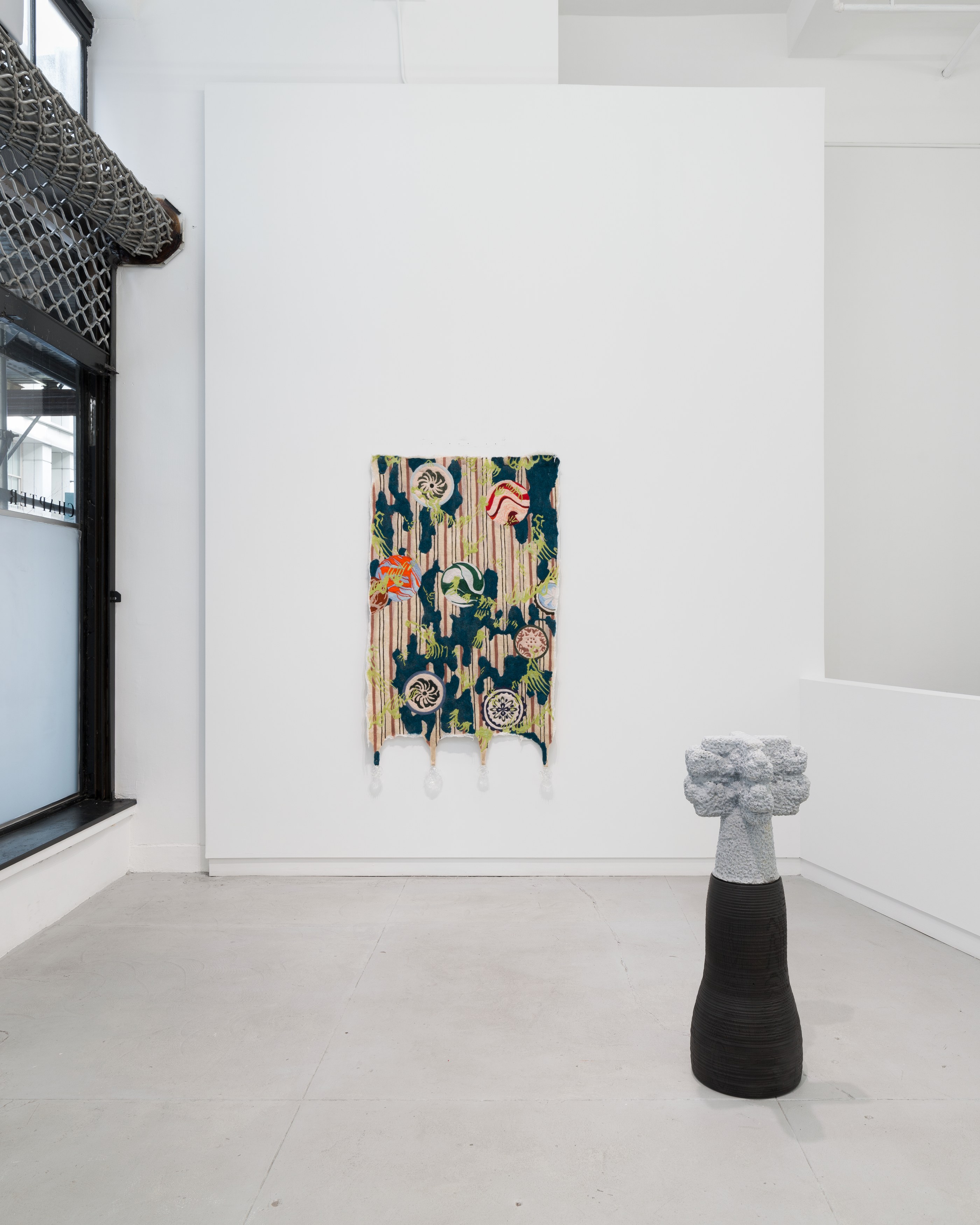 PastBody Without Organs
Antonia Kuo, Pauline Shaw
Feb 24 – Mar 26
Samuel Guerrero Maren Karlson Heidi Lau Rosha Yaghmai Stella Zhong Curated by Alison Dillulio "When you have given [Man] a body without organs you will have relieved him of all his automatisms and rewarded him with his real freedom." —Antonin Artaud, To Have Done with the Judgment of God: An Approximation in English Chapter NY is excited to present, Body Without Organs. Beyond habitual or constraining organizational structures—bodily or otherwise—there lies a limitless unknown. All the artists in this exhibition adapt and deconstruct the familiar, investigating subjects that depart from representational conventions. Navigating the liminal space between reality and imagination, their works reveal objects and beings not yet seen. Both Guerrero and Lau merge elements of ancient history with conditions of contemporary existence. Guerrero’s practice considers human kind’s longstanding preoccupation with transcendence, stemming from Pre-Columbian spiritual practices to present-day fitness regimens. They consider the human body’s relationship to machines and the use of modern science and technology to push beyond natural physical limits. His subjects succumb to divine forces that inspire hope for something more. Lau similarly channels spiritualty, interweaving mythic histories to build fictional narratives that dislocate her work from the linearity of time. Inspired by The Classic of Mountains and Seas, a Chinese text from 4th Century BCE that chronicles mythic geography and creatures, her ceramic sculptures propose the possibility of a non-hierarchical, post-human world in which hybrid creatures and lush vegetation occupy a genderless and generative terrain. Simultaneously engaging a cultural history while eschewing its identity-based significations, Yaghmai’s paintings confound the viewer with an other-worldly, kaleidoscopic layering of moiré patterning. She inverts, enlarges, and distorts images from historical Persian miniatures, enacting a formal othering that speaks to her own experience as an American with Iranian heritage. She removes all narrative structures to create elusively microscopic or bodily compositions that suggest the presence of embedded meaning just beyond grasp. The haziness of Yaghmai’s work carries into Karlson’s enigmatic paintings that merge the bodily with the mechanical. Her densely wound, conglomerate forms serve as portals between inner and outer worlds. Her most recent paintings reference man-made objects that the artist observed in a polluted river near her family’s home in Germany. Like Karlson’s paintings, the river embodies the convergence of the man-made and the organic—itself a passageway, or transportive space that mimics bodily function, but one that is punctured by industrial processes. Like Karlson, Zhong constructs unrecognizable convergences inspired by everyday forms and experiences. Her paintings and sculptures are less concerned with bodily sensations, but instead finds energy among unlikely objects with incongruent spatial relationships. She imbues inanimate objects with agency and presence, creating a feeling of otherness and anonymity that pushes against notions of power and identity. Zhong crafts a speculative future where inanimate objects roam freely through open space. Together these artists remind us of our intimate proximity to an ever-present unknown, either incomprehensible or lost to the limits of human perception and memory. They merge inorganic and natural forms with personal and cultural histories to deconstruct learned categorizations and methodical ways of separating and processing information. The alluring quality of their work draws us in, pulling us a little bit closer to an ethereal threshold or void space, allowing us to imagine a limitless world and offering an invitation rather than a warning. Samuel Guerrero (b. 1997, Mexico City, Mexico) lives and works in Mexico City. He received his BFA from Centro Nacional de las Artes, Mexico City. Recent solo exhibitions include Liste, presented by Lodos, Basel (2022); Destino vas muy rápido, Lodos, Mexico City (2021); Observatorio, Ladrón galería, Mexico City (2021); Flor del valle with Sterling Hedges, Rudimento, Quito (2020); and Samuel Guerrero, Antes de Cristo, Mexico City (2019). Maren Karlson (b. 1988, Rostock, Germany) lives and works in Los Angeles, where she is currently completing an MFA in Painting at UCLA. Recent solo and two-person exhibitions include: Cypher, Soft Opening, London (2022); Nodulara, Ashley, Berlin (2021); Counsel, with Kira Scerbin;, Springsteen, Baltimore (2021); Petal’s Path, in lieu, Los Angeles (2020); Rats dream about the places they want to explore, 427 gallery, Riga (2019); Hear the lizards listening, with Claude Eigan, Mélange Gallery, Cologne (2019); and Happy Dark, Interstate Projects, New York (2017). Heidi Lau (b. 1987, Macau, China) lives and works in New York. She received a BS from New York University in 2008. Recent solo and two-person exhibitions include Gardens as Cosmic Terrains, Green-Wood Cemetery, Brooklyn (2022); Empire Recast, Grand Lisboa Palace, Macau, China (2021); Spirit Vessels, Matthew Brown, Los Angeles (2020); Blood Echoes, AALA Gallery, Los Angeles (2019); The Sentinels, with Rachel Frank, Geary, New York (2018); The Primordial Molder, The Bronx Museum of the Arts, New York (2017); and Third Rome, Deli Gallery, New York (2016). Rosha Yaghmai (b. 1978 Santa Monica, CA) lives and works in Los Angeles. She received an MFA from California institute of the Arts in 2007 and her BFA from the School of Visual Arts, New York in 2001. Recent solo and two person exhibitions include Miraclegrow, The Wattis Institute, San Francisco (2019); Postcards & Pipes, Marlborough Contemporary, New York (2017); Night Walker, Cleopatra’s, Brooklyn (2016); Easy Journey to other planets, Kayne Griffin Corcoran, Los Angeles (2015); Waxworks, Weiss Berlin, Berlin (2016); and Volitionaries, Commonwealth & Council, Los Angeles (2013). Stella Zhong (b. 1993, Shenzhen, China) lives and works in New York, NY. She received an MFA in Sculpture from Yale University in 2021 and a BFA in Glass from Rhode Island School of Design in 2015. Recent solo exhibitions include (of an object) Synchronized Loss, Adams and Ollman, Portland, OR (2022); Fig. 2 Plot, Fanta-MLN, Milan (2022); comet with a tail, Chapter NY, New York (2021); nigh, Peninsula Art Space, Brooklyn (2016); Unnameable, Weybosset Gallery, Providence (2015); and Zhong Diming, Guan Shanyue Art Museum, Shenzhen (2004).
Past
Antonia Kuo & Pauline ShawAntonia Kuo & Pauline Shaw
Jan 6 – Feb 19
Chapter NY is excited to present a multimedia, two-person exhibition with Antonia Kuo and Pauline Shaw, both exhibiting at the gallery for the first time. Kuo presents photochemical paintings in aluminum frames and ceramic sculptures paired with wood and steel support structures. Shaw presents felted wool tapestries—some suspended from the ceiling—and glass sculptures on bronze posts. Both artists cull source imagery from personal histories, considering their own generational lineage and familial influences. Kuo incorporates photographs and formal elements largely inspired by industrial materials and machine parts from a metal casting foundry operated by her father’s side of her family. She combines these more rugged elements with imagined natural forms influenced by her Taiwanese mother’s painting practice in the style of traditional Chinese ink paintings. Growing up mixed race and queerto a Buddhist mother and atheist, ex-Roman Catholic priest turned psychoanalyst father has encouraged Kuo to eschew definitive categories in her work and in herself. In merging these discordant, yet personally familiar, formal influences, she evokes an intensity in her imagery that underlines doubt but retains a reverent attitude toward the chaos and beauty of “natural” phenomena, energies, and matter. As a first generation Taiwanese American, Shaw attempts to reconcile the fragments of her personal memory by supplementing them with imagery borrowed from scientific, cultural, and natural histories. The work conjures domestic space and the feeling of home, safety, caretaking, and nostalgia. Throughout her felted work, Shaw combines source imagery derived from textiles found in various institutional collections, Chinese paper cutting, and patterns from other craft-based techniques, such as lace and marble-making. Shaw is drawn to symbols that convey luck and prosperity that have bolstered spiritual belief systems and notions of upward mobility. Together, Kuo and Shaw’s wall works set forth densely layered compositions that both selectively reveal and obscure elements of their wide-ranging subjects. Kuo uses masking techniques to manipulate photographic imagery and painterly actions on light-sensitive silver gelatin paper, layering and complicating her source material through an iterative process. Through wet and needle felting processes, Shaw combines wool with silk, bamboo, and viscose to create abstract sculptural tapestries. Building her compositions one layer at a time, she embeds representational elements such as skeletons and birds within patterned surroundings. Both artists compose fragmentary compositions that conjure a formal synergy that destabilizes their representational reference materials. Their sculptures similarly evade immediate legibility. Kuo’s sculptures mimic the forms of machine parts, molded in wax, dipped in a ceramic slurry and silica sand, and then fired. In their current state, they could serve as molds for investment casting, but their playful forms resist any functional end. Instead, like her photographic works, they are recordings of forms that are lost, obscured, and only partially remembered. In Nightlight, Shaw reimagines personal domestic items including zodiac charms, and miniatures of her and her mother’s childhood beds, reconstructed from memory and suspended in glass orbs that rest atop bronze cast bed posts. Within Streetlight Shaw presents a game of marbles tethered to lava rocks that create a fictional archeological looking site, reminding the viewer to approach all the works in the exhibition as traces of lived experience, either directly recorded, or filtered through dreams, memory, and lived experience. Antonia Kuo (b. 1987, New York, NY) lives and worksin New York. She received an MFA from Yale University in 2018, a BFA from School of Fine Arts Boston and Tufts University in 2009, and a one-year certificate from the School of the International Center of Photography in 2013. Her work has been exhibited at Chart, New York (2022); Each Modern, Taipei (2022); Mamoth, London (2022); Make Room, Los Angeles (2021); Centre Pompidou, Paris (2020); Rubber Factory, New York (2018); and the Whitney Museum of American Art, New York (2016). She has been an artist-in-residence at Mass MoCA (2018), Vermont Studio Center (2016), The Banff Centre (2015), and was a MacDowell Colony Fellow (2014), among others. Kuo’s work is included in the collections of the Whitney Museum of American Art, New York and Centre Pompidou, Paris. Pauline Shaw (b. 1988, Kirkland, WA) lives and works in New York. She received an MFA from Columbia University in 2019 and a BFA from Rhode Island School of Design in 2011. Her work has been exhibited at Friends Indeed, San Francisco (2022); Downs and Ross, New York (2022); in lieu, Los Angeles (2021, 2019); The Shed, New York (2021); Spurs Gallery, Beijing (2021); Half Gallery, New York (2020); Institute of Contemporary Arts Singapore (2019); Almine Rech, Paris (2019); Gagosian, Park & 75th, New York (2019); and The Jewish Museum, New York (2018), among others. Shaw has been an artist-in-residence at ISCP, New York (2020) and France Los Angeles Residency Exchange Program (2014).
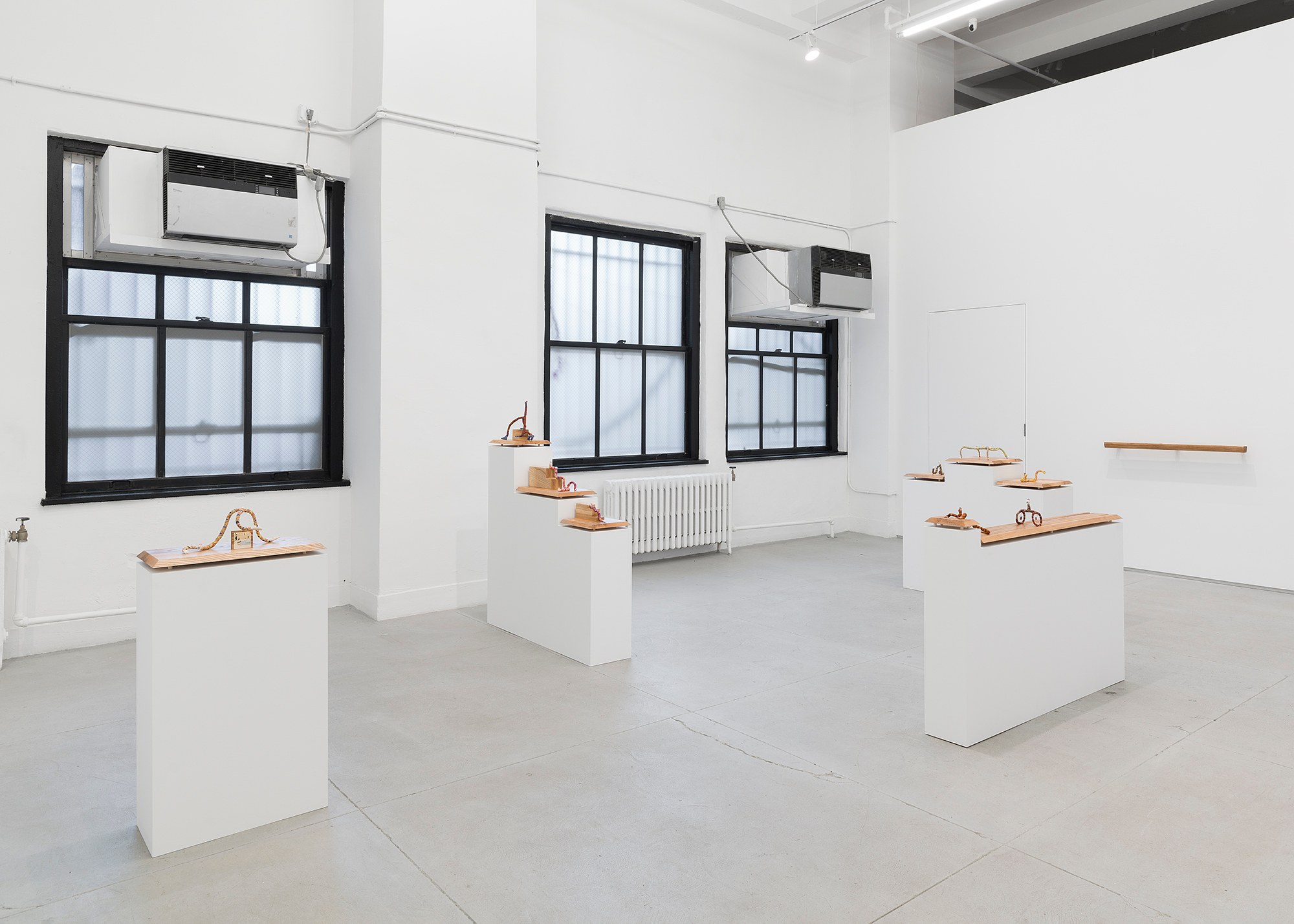 PastSick Joke
Em Kettner
Oct 14 – Dec 11
Side Room Chapter NY is excited to present Sick Joke, Em Kettner’s first solo exhibition with the gallery, featuring a new series of miniature, figurative sculptures and small-scale paintings on glazed tile. Kettner’s practice celebrates the power of mutual dependence, both in her subject matter and chosen materials. By referencing familiar moments of physical fragility and mutual support, she revises problematic stereotypes about the disability community and illuminates instead what makes each figure desirable, funny, and powerful. Assembled from separate or broken porcelain limbs, Kettner’s spindly sculptures approximate human forms—twisted and stretched to merge with their surroundings. She weaves costume coverings from cotton and silk thread to cover, embellish, and bind their delicate surfaces. Returning to motifs such as the hybrid body and the bedridden body, her figures intertwine in erotic and assistive gestures, knitted to each other and their furniture supports. Her paintings on small tiles expand the narrative of her sculpted characters, depicting imagined origin stories and future scenes from their fictive lives. She embeds these tiles within various surfaces, allowing them to combine with the architectural features that reinforce them. The tongue-in-cheek title of the exhibition, Sick Joke, embraces the thematic intermingling between comedic performance, medical procedures, and accessibility policies present in Kettner’s new body of work. The artist designed a grouping of pedestals scaled to accommodate and prioritize viewing from a seated position or shorter stature. Their varied, multi-layer surfaces aid Kettner’s sculptures in moments of implied movement upward, forward, and downward. In The Eternal Worm, a slithering figure embarks up steps that cave to gently support its undulating body. An accompanying railing— typically a utilitarian device—serves to display her painted tiles in a linear formation that encourages sequential, serial viewing. The subjects of these miniature paintings suggest the potential theatricality of clinical spaces, drawing connections between bodies that elect to entertain, perform, and jest and those who are put on display for medical study. The small scale of Kettner’s work alludes to votive objects that were historically placed on altars by the devout as pleas for relief from pain, illness, or deformity. Kettner, however, insists that nothing is too sacred to be comical, or to be shared. She invites her viewers to peer into her works with intimate proximity by moving their bodies along railings or adjusting themselves to observe the intricate geometric pattering of her woven forms presented at a low height. She rewards those who feel compelled to slow down and look closely. Em Kettner (b. 1988, Philadelphia, PA) lives and works in Richmond, CA. She received her MFA from the School of the Art Institute of Chicago in 2014 and her BFA from The University of the Arts, Philadelphia in 2011. Kettner has had solo exhibitions at François Ghebaly, Los Angeles, CA; Specialist, Seattle, WA; Goldfinch, Chicago, IL; and Harpy, Rutherford, NJ. She is the recipient of the Wynn Newhouse Award, the MIUSA Women’s Institute on Leadership and Disability, an SAIC Teaching Fellowship, and the 2019- 2020 AAC Diversity and Leadership Fellowship. Her work has been reviewed in Artforum, Art in America, Contemporary Art Review LA (CARLA), Hyperallergic, and Sixty Inches From Center, among others. Her work is in the public collections of the Museum of Fine Arts, Boston, MA, the DePaul Art Museum,Chicago, IL and the Joan Flasch Artist’s Book Collection, Chicago, IL. Kettner is represented by François Ghebaly, Los Angeles, CA, and New York, NY and Goldfinch, Chicago, IL.
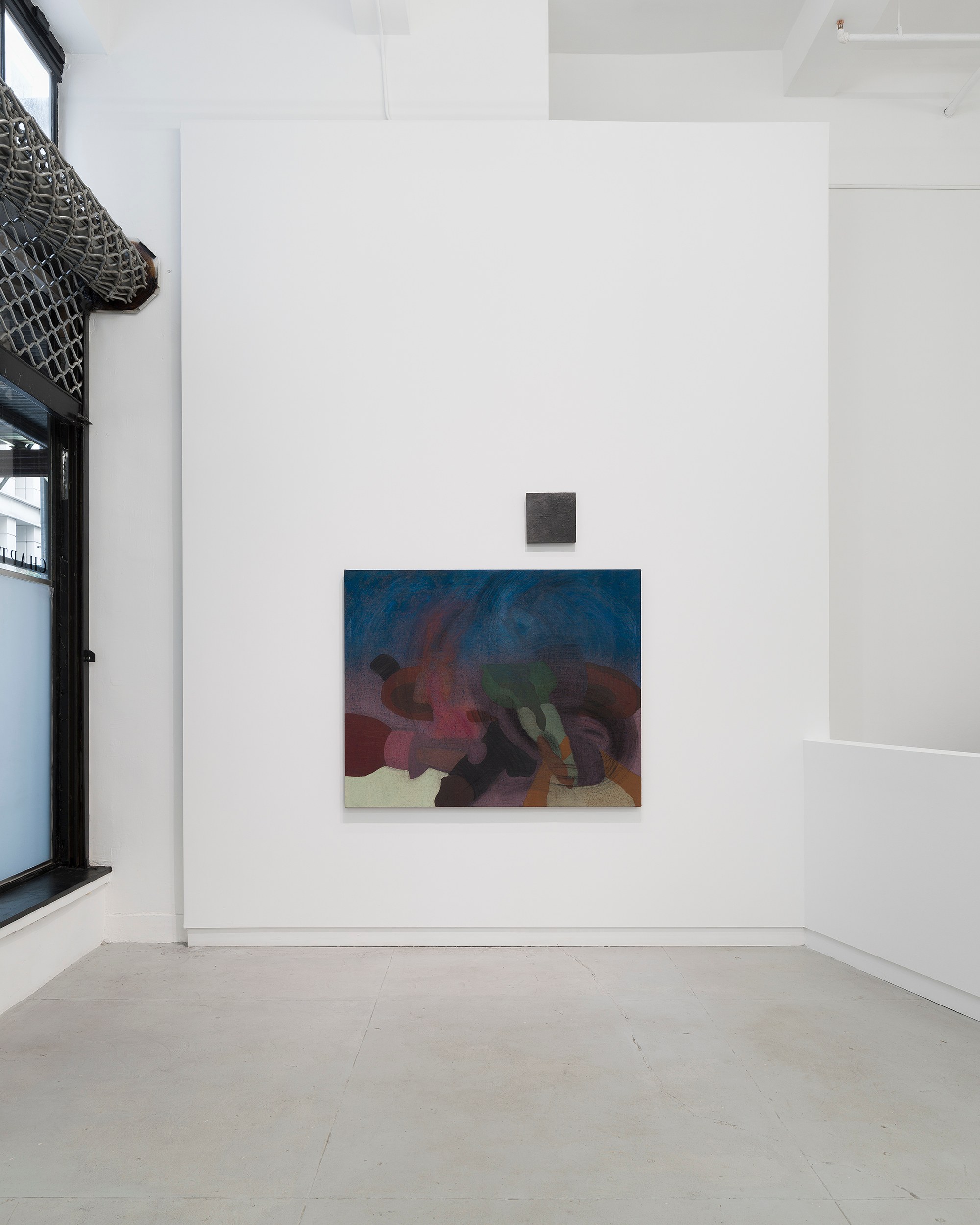 PastImage as a Burden, Death as a Womb
Kaveri Raina
Oct 14 – Dec 11
Chapter NY is excited to present Image as a Burden, Death as a Womb, Kaveri Raina’s first solo exhibition with the gallery, featuring a new series of paintings and drawings. Guided by her material choices and formal subjects, Raina establishes parameters for moments of confluence and resistance throughout her practice. Her abstract compositions, derived from reoccurring forms that she creates while drawing, emerge as triumphant and monumental. Applying graphite to paper with great pressure and repetition, she builds dense vessel-like forms and abstract figures, which she refers to as image inventions. She carries these shapes and drawing materials into her paintings, in which she combines acrylic, oil stick, pastel, charcoal, and graphite—forcefully applying these mediums to rough and unprimed burlap surfaces that resist saturation. Raina sources inspiration from Rani Lakshmibai, the former Queen of Jhansi and a symbol of powerful resistance in India. A leading figure in the Indian Rebellion of 1857, she died in battle while leading her army to defend her city. In tandem, Raina habitually reflects on the 2012 gang rape and murder of Jyoti Singh in Delhi, which sparked public protests, received widespread international media coverage, and was commonly referred to as the Nirbhaya case —Nirbhaya meaning the “fearless”. Contemplating the unfathomable struggle and sacrifice of these two women allows Raina to consider the questions: what happens when given an opportunity to resist? The artist’s raw, burlap surfaces provide sites for artistic battle, both physical and internal. They bare vestiges of aggression or slow rage built and contained within their frames. Her faint, fugitive materials, such as charcoal and graphite, require vigorous application in numerous layers—often both to the front and back of her surface—to balance the solidity of her painted acrylic shapes. The compositions also reflect the frustrations of this arduous process. In Full of Revolt, Blue Blue Blue, Raina’s central vessel erupts, reverberating outward from the tightly woven seam at the center of the composition. Bifurcated by this stitched linear element, the composition performs a doubling, which reappears in various iterations across the exhibition. Always supported by the presence of another and perpetually in-flux, none of Raina’s forms exist in isolation. The nature of their dependency, however, is not inherently harmonious. Two paintings in the exhibition each include two discreet elements: a stretched burlap painting and an accompanying small wooden panel covered in graphite, installed above it. The hovering presence of the panels, despite their comparably diminutive scale, exudes more weight than the paintings themselves. Together, they mimic the feeling that one is never truly alone, always tied to one’s shadow or surveilled by someone or something unknown. Kaveri Raina (b. 1990, New Delhi, India) lives and works in Brooklyn, NY. She received an MFA from the School of the Art Institute of Chicago a BFA from Maryland Institute College of Art. Select solo and group exhibitions include image as a burden, death as a womb (2022), Chapter NY, New York, NY; Heft (2022), Patron, Chicago, IL; E/Merge: Art of the Indian Diaspora (2021), National Indo-American Museum, Lombard, IL; Partings, Swaying to the Moon (2020), PATRON, Chicago, IL; No Lacks, Me And My Shadow (2020), M+B Gallery, Los Angeles, CA; A Space for Monsters (2021), Twelve Gates Arts, Philadelphia, PA; Hildur Ásgeirsdóttir Jónsson and Kaveri Raina (2020), Abattoir Gallery, Cleveland, OH; Linger to Gaze (2019), Annarumma Gallery, Naples, Italy; Linger Still (2019), Assembly Room, New York, NY; Here or There (2019), Paolo Arao, Rata Projects, New York, NY; Sarah.Canright / Kaveri.Raina (2019), Permanent Collection/Co-Lab Projects, Austin, TX; spaceless (2019), Deli Gallery, Brooklyn, NY; Paint School (2019), Shandaken Projects, Klaus von Nichtssagend, New York, NY; garcia, raina, shore, tossin (2019) at Luhring Augustine, New York; Pleasure at a Distance (2018), Irvine Fine Arts Center, Irvine, CA. Raina has received several fellowships and awards including the James Nelson Raymond Fellowship, the Ox-bow Residency Award, and the Skowhegan School of Painting & Sculpture Fellowship Award.
Past
High-RiseCheyenne Julien
Sep 9 – Oct 9
Side Room Chapter NY is excited to present, High-Rise, Cheyenne Julien’s second solo exhibition with the gallery, which will debut a series of equally scaled drawings depicting elevator scenes. Julien’s practice explores cultural and collective histories reflected through her own lived experiences. Often derived from memory, Julien’s paintings and drawings portray intimate subjects inspired by her closest relationships and life in New York City. Her work highlights the interdependency of bodies and their contexts, asserting the power of built environments to dictate racial perception. For High-Rise, Julien focuses on the elevator as a site for communities to converge and interact. The artist grew up in a high-rise apartment building in the Bronx where elevators played a central role in her daily life. Due to a lack of maintenance, they were regularly out of service, both inconveniencing the building’s residents and accentuating their importance. Her work spotlights these often overlooked, yet highly frequented spaces, reimagining the brief encounters that bring people together within them. The title of the exhibition references J. G. Ballard’s 1975 novel, High-Rise, which examines class divisions within a luxury skyscraper, centering elevators as a site where tensions appear. Julien’s elevators enclose a wide range of interpersonal dynamics within their claustrophobic interiors. Romantic partners lean affectionately into one another, parents intuitively wrap arms around their children, individual passengers peer into their cellphone screens, and in one scene, white passengers cower away from a black woman with her dog. Julien’s narrative vignettes extend beyond the passengers, focusing on the architectural settings and inanimate objects that impact their daily experience. Historically, the advent of elevators facilitated a cultural progression towards a lifestyle of convenience and comfort. They have played a crucial role in the trajectory of urban development, allowing cities to expand vertically to greater heights. In Julien’s works, the upward ascent of her passengers metaphorically enacts a form of racial uplift. She emphasizes glimmering light throughout her compositions—particularly reflected in the metallic surfaces of the elevators—to suggest the proximity of a divine presence. Julien, however, tempers this optimism by casting sharp beams of light onto her subjects and settings. Their shapes mimic searchlights and maintain an eerie sense of surveillance that grounds her scenes in the darker side of reality. Cheyenne Julien (b. 1994, Bronx, New York) lives and works in the Bronx, NY. She received her BFA in Painting at the Rhode Island School of Design in 2016. She has had solo and two-person exhibitions at Chapter NY, New York; Smart Objects, Los Angeles; and Water McBeer, New York. Julien’s work has also been included in group exhibitions at Hotel Europe, Zurich; Carl Freedman Gallery, Kent, GBR; Anton Kern Gallery, New York; the Schlossmuseum, Linz, AUR; The Jewish Museum, New York; Gladstone Gallery, New York; Public Art Fund, New York; the American Academy of Arts and Letters, New York; The Harvey Gantt Center, Charlotte, NC; Mitchell-Innes and Nash, New York; Museum of Modern Art, Warsaw; Gavin Brown’s Enterprise/Unclebrother, Hancock, NY; Karma, New York; Loyal Gallery, Stockholm; and White Cube Bermondsey, London. Julien’s work is included in the collections of the Hirshhorn Museum, Washington D.C.; Institute of Contemporary Art, Miami; RISD Museum, Providence; University of New Hampshire Museum of Art, Durham, NH; and the Whitney Museum of American Art, New York.
Past
Elective AffinitiesSep 9 – Oct 9
Mariel Capanna, Hwi Hahm, Molly Rose Lieberman, Nickola Pottinger, Amy Stober, Coco Young, Olivia van Kuiken, Justin Chance, Elizabeth Tibbetts, Gerald Euhon Sheffield II "One night … I awoke in a room in which a cage and the bird sleeping in it had been placed. A magnificent error caused me to see an egg in the cage instead of the bird. I then grasped a new and astonishing poetic secret, because the shock I experienced had been provoked precisely by the affinity of the two objects, the cage and the egg, whereas I used to provoke this shock by causing the encounter of unrelated objects." [1] —René Magritte The title of the exhibition, Elective Affinities, originates from an 18th century scientific term describing the merging of disparate chemical compounds. The phrase took on greater metaphoric meaning in Johann Wolfgang von Goethes’ 1809 novel of the same name, in which Goethe applied the theory to unlikely romantic partners. In 1932, it appeared again in the title of a painting by René Magritte that prominently features a large egg inside of a birdcage. The subject of the painting came to Magritte in a momentary hallucination and prompted his realization of the poetic value in pairing two related objects despite their immediate incoherence. Chapter NY presents a group exhibition featuring artworks made within the past year that express an elective affinity to one another. Although the works in the exhibition display a wide range of mediums and subjects, they are latently connected through the artists’ shared experience of the present moment. The artists concurrently delve into their own memories and dreams to imagine new forms and subjects. Some allow literary and filmic refences to guide their practices, while others repurpose everyday materials and objects to build unusual surfaces. Together, their works showcase the predilections of a moment in time, notably synergistic despite their formal and conceptual disparity. 1 - Quoted in Paquet, Marcel, Magritte. Cologne, Germany: Taschen (2006), p. 26.
Past
The Depression of BelgiumAdam Gordon
Jul 5 – Aug 20
Adam Gordon (b. 1986, St. Paul, Minnesota) lives and works in Jersey City, NJ. He has had solo exhibitions at Gandt, Astoria; Zero..., Milan; Chapter NY, New York; The Power Station, Dallas; Hunter/Whitfield, London; and Night Gallery, Los Angeles. Gordon’s work has been included in group exhibitions at Kunsthalle Wien, Vienna; Project Native Informant, London; New Gallerie, Paris; Andrew Kreps, New York; National Exemplar, New York; and Boates Fine Arts, São Paulo. His work is currently on view in the Whitney Biennial 2022: Quiet as It’s Kept at The Whitney Museum of America Art, New York through September 5, 2022. He has upcoming solo exhibitions at Zero..., Paris in 2022 and Project Native Informant, London in 2023.
Past
Cabeza de mangoDalton Gata
May 13 – Jun 19
Chapter NY is thrilled to present Cabeza de mango, Dalton Gata’s second solo exhibition at the gallery. In his newest series of paintings, Gata expands his characteristic fantastical world, devoting most of his canvases to portraits of male figures. Although their strikingly chiseled features appear distinctly masculine, they merge with animal and insect forms to create unrecognizable hybrid species. Through elements such as stylized hairdos, bulging muscles, and exaggerated facial expressions, Gata explores the vast spectrum of appearances, continuing to celebrate the beauty in diversity. For Cabeza de mango, Gata presents various types of mangoes in different stages. He associates mangoes—his absolute favorite fruit—with childhood memories growing up on a fruit farm in Cuba. He does not discriminate against those that are already rotten or those that have not yet ripened, prominently presenting each mango with a sense of individuality in the company of his imagined characters. In The forgotten banquet, Gata displays an array of mangoes on a lavishly draped table within a vast landscape, evoking a sense of grandeur and nostalgia. Reimagined throughout the exhibition, Gata’s serenely vacant landscapes provide ample space for his subjects to roam free and express themselves. Dalton Gata (b. 1977, Santiago de Cuba, Cuba) lives and works in Coamo, Puerto Rico. He graduated in 2005 from the Escuela de Diseño Altos del Chavón in Santo Domingo with a BFA in Fashion Design. He has had solo exhibitions at Galería Agustina Ferreyra, San Juan; Institute of Contemporary Art, Miami; Peres Projects, Berlin; Sunday Painter, London; Chapter NY, New York; Galería Agustina Ferreyra, Mexico City; and Embajada, San Juan; among others. His work has been included in group exhibitions at Clima Gallery, Milan; Kurimanzutto, Mexico City; Rachel Uffner Gallery, New York; and Embajada, San Juan.
Past
Ancient GlossKelsey Isaacs
May 13 – Jun 19
Side Room Chapter NY is excited to present Ancient Gloss, Kelsey Isaacs’ first solo exhibition featuring a new series of paintings. In Ancient Gloss, Isaacs manufactures imagery through a multistep process that begins with collaging rhinestones onto plastic photo album covers. She dramatically lights and photographs these reflective stages before remaking them in oil paint, recasting her mundane source material as fantastical fetish objects. Collaged together and replicated in her work, her subjects create formal relationships and distinct geometric compositions that assume a new identity. In line with art historical trompe l’oeil techniques, Isaacs manipulates representational imagery within a shallow space that both emphasizes and plays within the limitations of a two-dimensional plane. She builds slick surfaces with considerable attention to detail while allowing subtle imperfections to reveal the painting’s own materiality, visually recording its own history as an object. Her forms draw the viewer in, but, upon closer viewing, traces of the artist’s hand unravel the artifice of their creation. Isaacs develops each painting sequentially, using repetition to push her subject matter through multiple controlled iterations. With subtle cropping shifts and lighting variations, she disorients their perspective, pushing her works closer towards abstraction. Through these multiple interventions, the paintings become removed from their original sources and take on a logic of their own. In pink&black6, the surface of a garishly pink album cover reflects a hazy portrait of the artist and a friend as they stage and photograph the album in her studio. Isaacs collapses the gleaming reflection of background lights and glittering rhinestones onto a glossy painted surface, rendering reflection within a reflective painted surface. The result is irresistibly, and unsettlingly, alluring. Kelsey Isaacs (b. 1994, Los Angeles, CA) lives and works in New York, NY. She received her BFA in painting from the Rhode Island School of Design, Providence, RI in 2016. Her work has been exhibited at Bungalow Earth, New York; Harkawik, New York; and King’s Leap, New York.
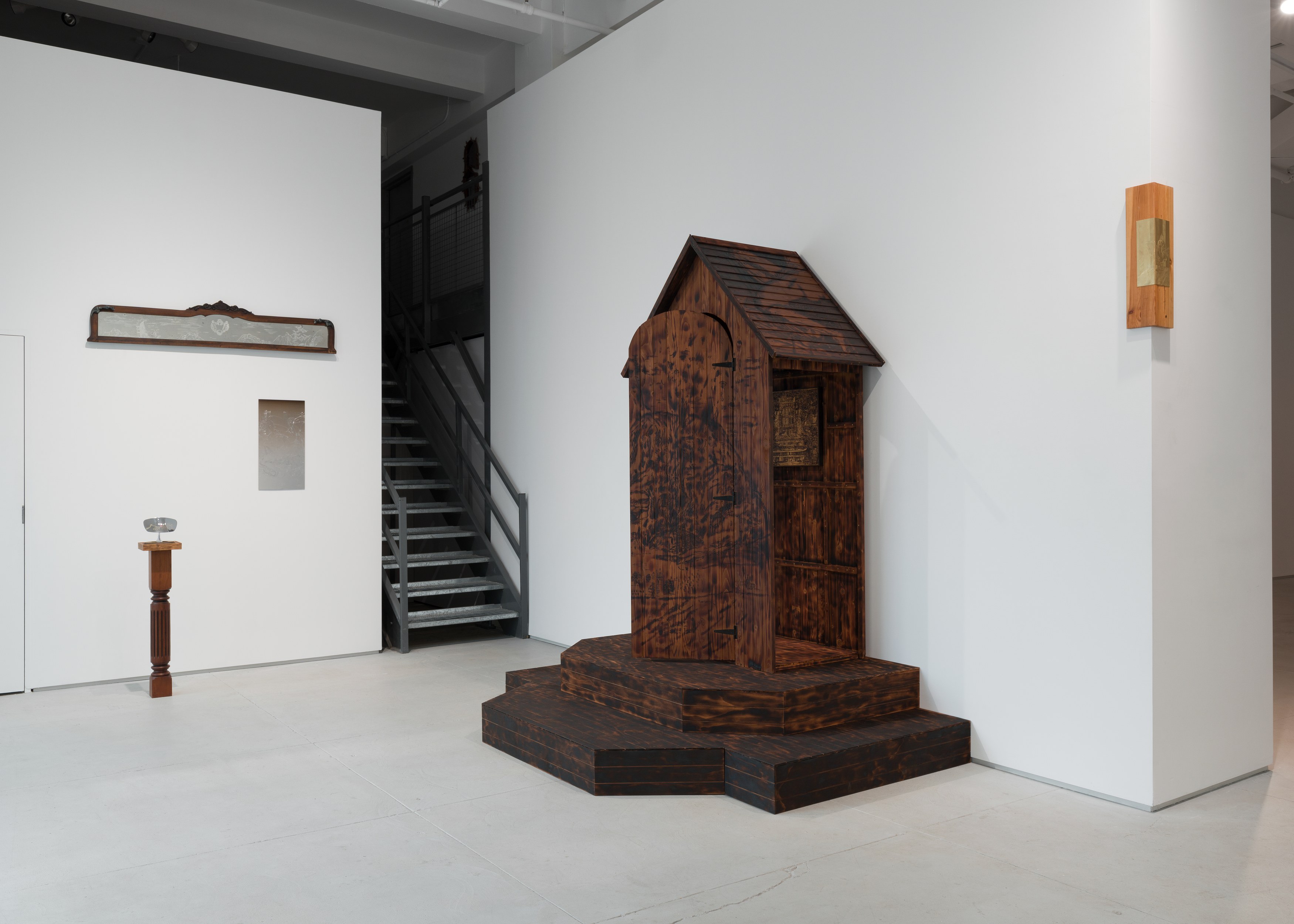 PastThe Temple of Sleep
Cole Lu
Mar 25 – May 8
Side Room "My body is everywhere: the bomb which destroys my house also damages my body insofar as the house was already an indication of my body." —Jean-Paul Sartre [1] Chapter NY is excited to present The Temple of Sleep, Cole Lu’s first exhibition with the gallery. Combining literary and historical reference with autobiographical experiences, Lu's practice builds new mythologies that carry echoes of trauma, transformation and regeneration. Lu questions the theistic concept of creatio ex nihilo (creation out of nothingness), proposing a more complicated interspersal of time and human existence. Presented as a compilation of gestures or a collection of brief anecdotes, Lu's work unfolds serially, following invented characters through a parallel world of his creation. Each exhibition or body of work reveals another element, broadening his narrative to incorporate new sites and characters. He (re)invents, (re)names, and (re)writes his subjects, composing each work with an elaborate fragmented title – a literary device that further subverts conventional linear narratives and amplifies his poetic vision. The Temple of Sleep expands the saga of Geryon, a character derived from Ancient Greek mythology who Lu reimagines as an autobiographical figure. The anchor of the exhibition is an imagined temple on the moon – a site of hypnosis where memory is lost and healing may occur, a place for death and rebirth. Geryon visits this temple on his journey to the moon and reencounters an older, other, version of himself, someone he had killed through the process of forgetting. The pain and trauma of this confrontation is echoed in the pyrographic drawing of an erupting volcano burned into the surface of the structure. A framed work on the back wall of the temple, pictures two beckoning astronauts flanking an archway that bears the inscription: “Eros shook my mind like a mountain wind falling on oak trees.” Throughout the exhibition sculptures and wall works depict scenes and relics from Geryon’s time on the moon. Together they present recollections from a fractured memory and visualize a new emerging identity. Cole Lu (b. 1984, Taipei, Taiwan) lives and works in Brooklyn, NY. His work has been exhibited at Company Gallery; New York; Nir Altman, Munich; The Drawing Center, New York; the Institute of Contemporary Art, Philadelphia; the Contemporary Art Museum, St. Louis; La Casa Encendida, Madrid; and the Pulitzer Arts Foundation, St. Louis, among others. His writing has appeared in Coffee House Press, Minneapolis; Wonder, New York; and The Seventh Wave, New York. His publication Smells Like Content (Endless Editions, 2015) is in the artists' book collection of the Museum of Modern Art Library, New York. 1 - Jean-Paul Sartre, Being and Nothingness, translated by Hazel E. Barnes (New York: Washington Square Press, 1993), 323-5.
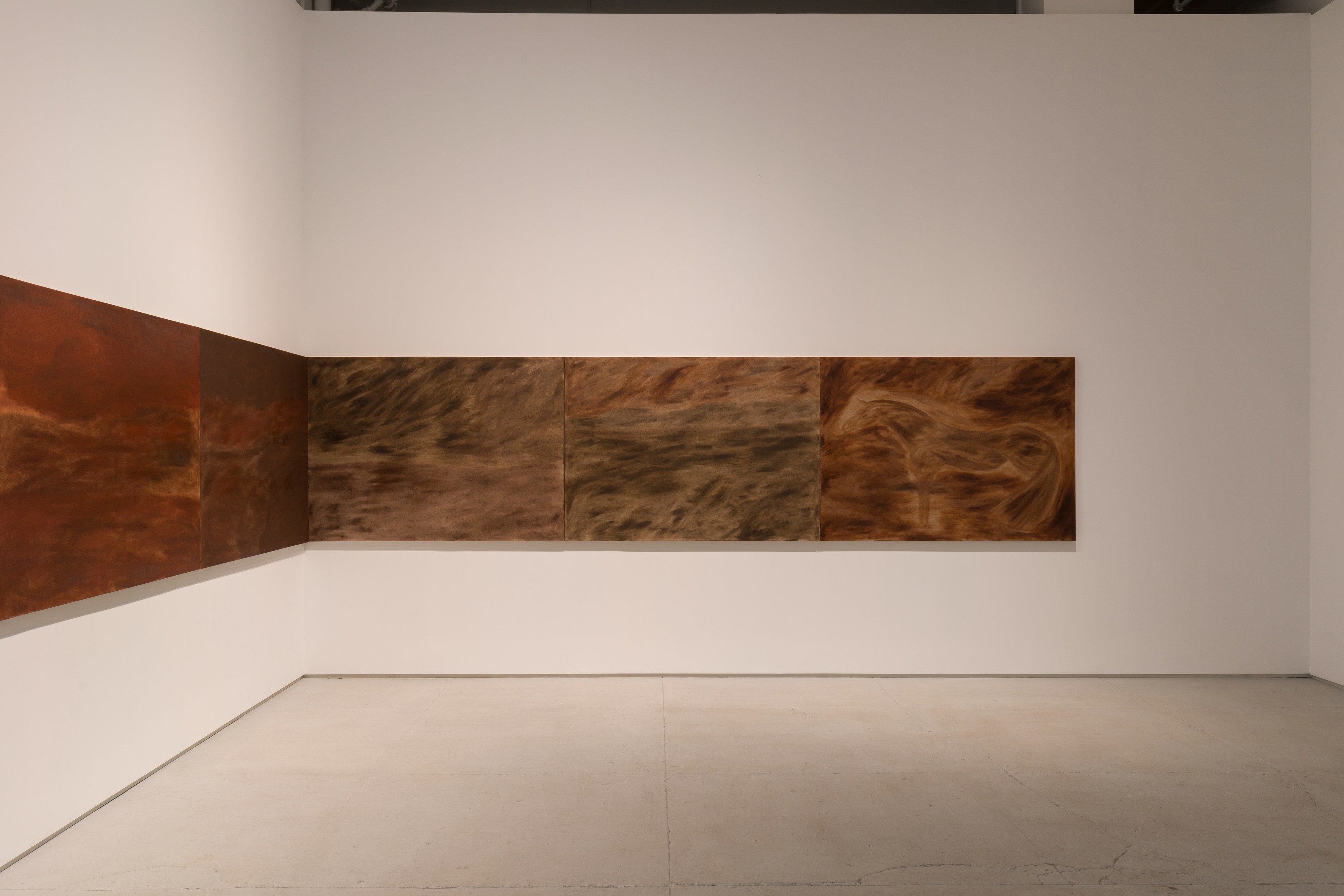 PastThe Solemn and Dignified Burial Befitting My Beloved for All Seasons
Dominique Knowles
Mar 25 – May 8
"When I talk about pictures in my mind I am talking, quite specifically, about images that shimmer around the edges... The picture tells you how to arrange the words and the arrangement of the words tells you, or tells me, what’s going on in the picture" —Joan Didion [1] Chapter NY is excited to present The Solemn and Dignified Burial Befitting My Beloved for All Seasons, Dominique Knowles’ first solo exhibition with the gallery. The exhibition will feature a suite of related and equally scaled paintings throughout the exhibition space. Knowles’ paintings conjure the emotion, shared glances, mutual care, and loss experienced during a lifetime of caring for an animal companion. The immediacy of the paint presents the often rapid transition of death despite a lifetime of labored prevention. Warm ochre tones, pigments that embody the melding of being with soil, harken to memory eternal — like the first visions of animals painted across caves. When viewed together the works appear united, as if carefully selected from a larger vision. At this scale, the works are positioned towards intimacy rather than monument as experienced in Knowles’ life size murals. Glimpses of recognizable forms disappear into the background of the paintings, suspending hazy figures in the space between memory and reality. This act of dissolving embodies the intimacy of rider with horse, writer with words, or body with earth. Often let go without the honor of a memorial, Knowles’ paintings express the care of reliving an animal’s death. Depicting a memory instead of narrative, the works offer a ceremony by the artist and viewers who experience each work. The works honor lost companions by extracting their shimmering forms from the latent mind, letting them also rest in front of the artist’s eyes. —Kate Sierzputowski Dominique Knowles (b. 1996, The Bahamas) based in Chicago, IL and Paris, FR. He received both his MFA in Painting and BFA in 2017 from The School of the Art Institute of Chicago. Recent exhibitions include White Columns, New York, NY; Misako and Rosen, Tokyo, JP; KINDL, Berlin, DE; Institut Findlandais, Helsinki, FI; Andrew Kreps Gallery, New York, NY; Vdrome, Milan, IT; Galerie Layr, Vienna, AT; Sperling, Munich, DE; Four Flags at Chicago Manuel Style, Chicago, IL; Soccer Club Club, Chicago, IL; The Green Gallery East, Milwaukee, WI; The National Art Gallery of The Bahamas; Nassau, Bahamas; Popop Studios, Nassau, Bahamas; The Bahamas International Film Festival, Nassau, Bahamas; The Trinidad and Tobago Film Festival, Medulla Gallery, Port of Spain, Trinidad and Tobago,WI; 14°N 61°W, Martinique; Halle 14, Leipzig, DE; Elmhurst Art Museum, Elmhurst, IL; The Packing Plant, Nashville, TN; and Julius Caesar, Chicago, IL. Knowles has participated in a residency at The Suburban, Milwaukee, WI. Knowles is featured in publications such as Artforum, Frieze, Spike, The Chicago Tribune, Süddeutsche Zeitung, FAZ, Garage Magazine, Contemporary Art Daily, Art Viewer, Bad at Sports, Arc Magazine, Arts of the Working Class, Parnass, Kuba Paris, Blank Canvas, Das Kunstmagazin, The Seen Journal and The Poor Farm Press. 1 - Joan Didion, “Why I Write” in Let Me Tell You What I Mean (New York: Knopf, 2021), 49-51.
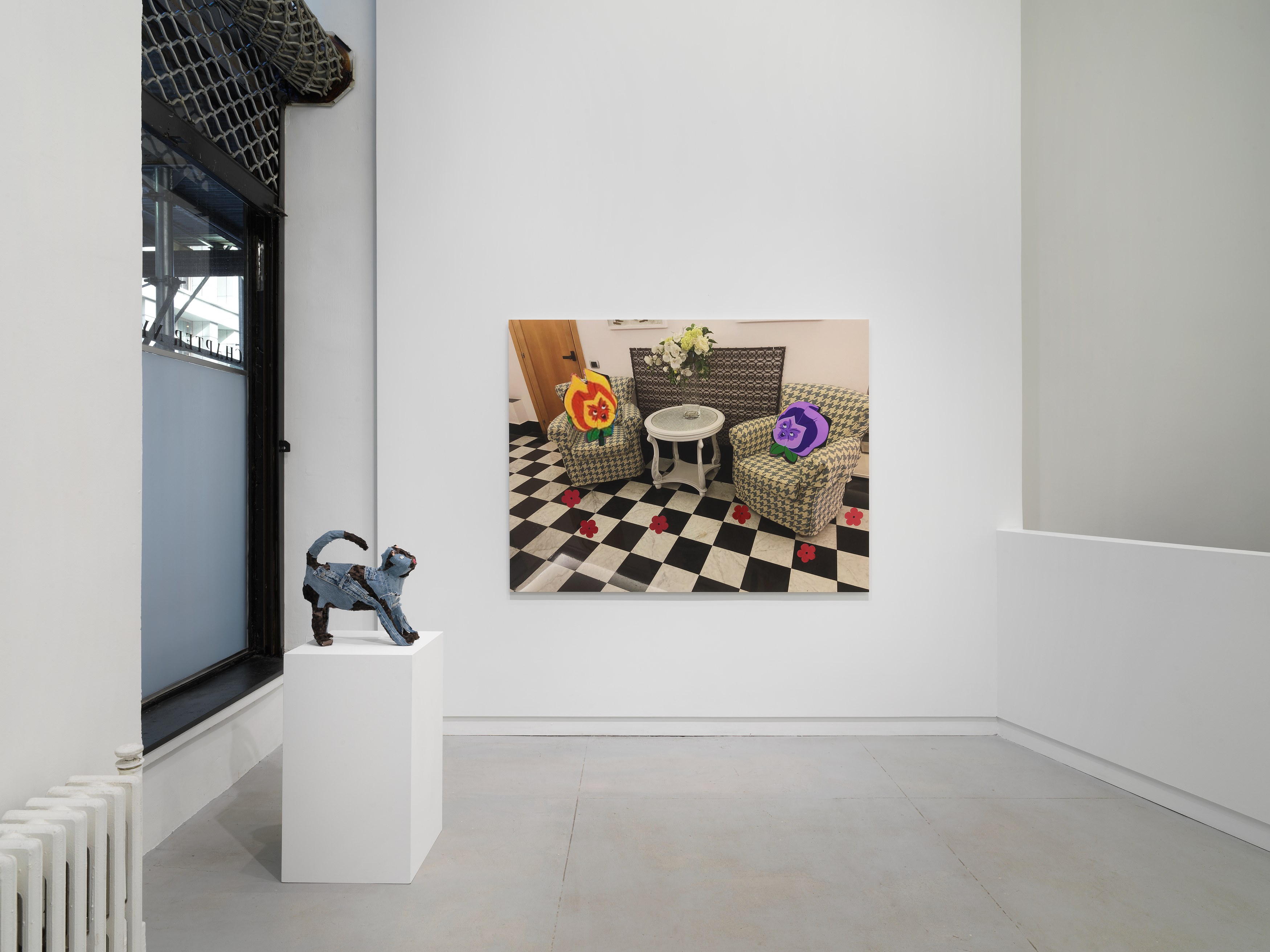 PastNo Rest For The Wicked
Gina Fischli
Feb 11 – Mar 20
Chapter NY is excited to present No Rest For The Wicked, Gina Fischli’s first solo exhibition with the gallery. The exhibition features sculptures and large-scale collaged works depicting city animals and pets such as dogs, cats, rats, or birds. Rooted in her early studies of stage design, Fischli’s practice engages familiar mechanisms of sculpture and space with alternative processes of production, often using craft-related techniques and unusual materials. She transforms her banal subjects—including wine glasses, household furniture, and birthday cakes—into objects of desire with her own characteristic tongue-in-cheek humor. For her exhibition at Chapter, Fischli plays with representations of animals and their role as placeholders for human traits and experiences. This body of work grew from an earlier unrealized project of window displays inspired by dioramas at the Museum of Natural History in New York. Interrupted by the pandemic, Fischli instead found herself trapped indoors surrounded by pillows and plush surfaces within her own domestic diorama, viewable to the outside world through exterior windows and computer screens. She started to create animal sculptures that felt more human-like—constructed and dressed in clothing and household materials—resting on hand-made cushions. As her work continued to evolve and the dissociative effects of isolation compounded, the artist’s sense of self began to diminish. Unlike the idealized portrayals of fantastical animals in diorama displays, Fischli’s creatures are those that we cohabitate and interact with. Her resulting sculptures greet visitors at the front of the gallery in a deceitfully playful manner. Progressing through the exhibition space, they become increasingly deconstructed, abstract, and menacing. In Fischli’s collaged works she brings the animals together into confined spaces reminiscent of hotel lobbies. Crowded together, the species may begin to imagine collaborative plans or revolutions filled with conspiratorial potential. Gina Fischli (b. 1989, Zurich) lives and works in Zurich, Switzerland. She received her MFA from the Royal Academy of Art, London in 2018 and her BFA from the University of Fine Arts Hamburg in 2015. She has had previous solo exhibitions at Soft Opening, London; Sandy Brown, Berlin; Neuer Essener Kunstverein, Essen; 303 Gallery, New York; Sundy, London; Delf, Vienna; and Forde, Geneva. Her work has been included in group exhibitions at Chapter NY, New York; Aspen Art Museum, Aspen; suns works, Zurich; Sentiment, Zurich; Stalla Madulain, Engadin; Mamoth Gallery, London; Geneva Biennale: Sculpture Park, Parc des Eaus-Vives, Geneva; Galerie Noah Klink, Berlin; Fri Art, Fribourg; Weiss Falk, Basel; Kunstverein Harburger Bahnhof, Hamburg; Royal Academy, London; and Swiss Institute, New York, NY; among others.
Past
Caleb Jamel Brown & Kira ScerbinCaleb Jamel Brown & Kira Scerbin
Feb 11 – Mar 20
Side Room This show is a meditation on the strange discipline it takes to make icky objects. Ickiness is a space that exists before abjection, before repulsion, before horror but a space that can only come after attraction. On British reality dating shows, for example, there’s the inevitability of a recently infatuated couple “getting the ick” after a brief stint of dating. While the material connotations of “icky” as in “unpleasantly sticky” are instructive for looking at the work in this show, it’s also the spiritual texture of ickiness—the way a kid saying “I feel icky” sounds drippy. And I use the word “discipline” because it is unexpectedly hard to resist the urge to push something that is kind of beautiful just a little too far into the realm of the ick. Likewise, it’s difficult to take a work that is veering into the horrifying and abject and stopping to let it live in the purgatory of “just icky.” The gestures towards stickiness—as in objects sticking together in a mad combination of plastic paint and thread in Caleb Jamel Brown’s work, or as in bodies and images smearing and sticking together in Kira Scerbin’s paintings—define these artists' ways of working. Brown’s recent collages come out of an interest in quilting, while denying the comforting softness and nostalgia of entangled fabric. Instead, his quilts bind satin to plastic, thread to photograph, exuberant splurges and stains into elaborate tapestries. There are obscured photographs the artist has taken of friends, inscrutable bits of text, shreds of old clothes, rubbings, holes; they are porous, over-touched, and by extension, erotic. Scerbin’s paintings share this erotic impulse, but accessed through imagery rather than material. Her figures are often weirded and dark, but without malevolence, their bodies resting somewhere between human and specter. These are humanoid creatures in orgasmic splendor, both demonstrating and celebrating the queasiness of having a body—impulses, fears, love, and all. Together, I hope their work can make an argument for the icky, proving that unpleasant stickiness is the gooey necessary stuff of life and longing. —Erin Jane Nelson Caleb Jamel Brown (b. 1993, Atlanta, Georgia) lives and works in Atlanta, Georgia. He received his BFA from Valdosta State University in Valdosta, GA in 2016. Brown has had solo and two-person exhibitions at Camayuhs, Atlanta; Mint, Atlanta; Plough Gallery, Tifton, GA; and the Mast, Atlanta; among others. His work has been included in group exhibitions at Below Grand, New York; Tiger Strikes Asteroid, Greenville, SC; Westobou Gallery, Augusta, GA; Praise Shadows Art Gallery, Brookline, MA; and Mint, Atlanta; among others. Kira Scerbin (b. 1991, Cleveland, Ohio) lives and works in Chicago, Illinois. She received her BFA from the School of the Art Institute of Chicago in 2014. Scerbin has had solo and two-person exhibitions at Final Hot Desert, White Pocket, AZ; Et al., San Francisco; Springsteen, Baltimore; Twin, Chicago; Catbox Contemporary, Queens; Prairie, Chicago; and at King’s Leap, Brooklyn; among others. Her work has been included in group exhibitions at Interstate Projects, Brooklyn; In Lieu, Los Angeles; New Works & Horses Two, Chicago; Phil Gallery, Los Angeles; and Species, Atlanta; among others.
Past
La fille aux cheveux de linMichelle Rawlings
Jan 7 – Feb 6
Chapter NY is excited to present La fille aux cheveux de lin, Michelle Rawlings’ first solo exhibition with the gallery. The exhibition will feature recent figurative and abstract paintings paired together for the first time. Rawlings’ practice is inspired by collections of images, both art historical and contemporary. Her figurative paintings are conceived as portraits of images rather than portraits of people—not painted from life but derived from fashion photography and familiar representations of women found in contemporary media. For her exhibition at Chapter NY, Rawlings’ modestly scaled works convey an intentional naivety, a tenderness that evokes empathy for distant subjects. Although this recent body of work exists in dialogue with Impressionist painters such as Berthe Morisot and Mary Cassatt, Rawlings’ paintings do not represent moments of social intimacy. Her paintings of found images posit a greater level of remove, emphasizing the anonymity of unknown subjects at once recognizable and mysteriously aloof. In contrast, Rawlings’ grid-like abstractions reference the ubiquity of the formal grid throughout art history. She was first inspired by Paul Klee’s, Affliction (1934), a portrait of a figure against a gridded background. For Rawlings, the repetition of this painting process has become compulsive—a way to explore color while offering an impressionistic counterpart to elaborate the tonal context of her figurative works. Paired with her figurative paintings derived from digital sources, her grids feel like zoomed in views of pixels. They suggest the potential of a representational image beyond visual perception. The title of her exhibition, La fille aux cheveux de lin, is also the title of a musical composition by Claude Debussy from 1910, a light and improvisational prelude from an era referenced within Rawlings’ newest body of work. The playfulness and delicate quality of the song is carried throughout the artist’s paintings, which she created for this exhibition as a specific grouping and multipart composition of combined images. Michelle Rawlings (b. 1980, Dallas, TX) lives and works in Santa Fe, NM. She received her MFA from the Rhode Island School of Design in 2012. Rawlings has had recent solo exhibitions at And Now, Dallas, TX; Night Gallery, Los Angeles, CA; Shane Campbell Gallery, Chicago, IL; and Raster, Warsaw, POL. Her work has been included in group exhibitions at The Rachofsky Warehouse, Dallas, TX; And Now, Dallas, TX; The Power Station, Dallas, TX; Misako & Rosen, Tokyo, JPN; Galleri Rostrum, Malmö, SWE; KoncertKirken, Copenhagen, DNK; and the Dallas Contemporary, Dallas, TX; among others.
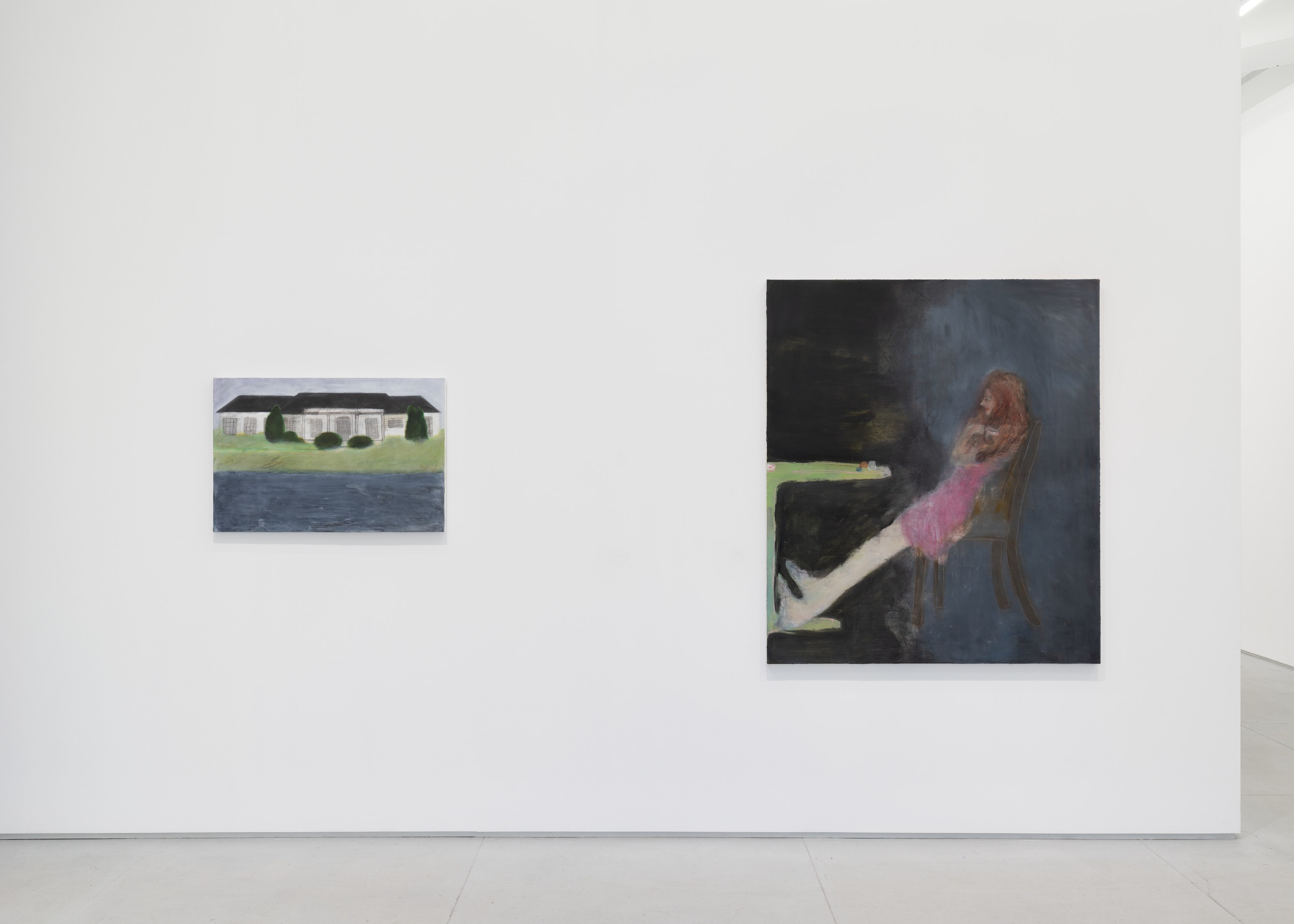 PastSee You in the Funny Papers
Emma Schwartz
Nov 5 – Dec 18
Side Room Chapter NY is excited to present See You in the Funny Papers, Emma Schwartz’s first solo exhibition. The exhibition includes a selection of recent paintings. Schwartz’s practice reflects upon experiences of introversion, revealing isolated figures and solitary structures through hazy and textured surfaces. Each painting is built up with many layers of material, including oil paint, pastel, charcoal, and graphite applied with rags, knives, and erasers. Schwartz redraws and repaints her compositions allowing them to unfold spontaneously, with their histories—sometimes visible, sometimes hidden—embedded within their accumulated layers. Forms and figures emerge not only from painted line, but from the crevices of her low relief surfaces. Melancholic and spooky images suggest the beginnings of narrative threads that unfold loosely across each work. The compositions often posit metaphorical threshold, such as the transition to sleep, the loss of hair, exterior facades, and interior domestic spaces. At once specific and recognizable, but also vague and uncertain, Schwartz’s paintings navigate the thin membrane that separates the familiar from the unfamiliar. The title of Schwartz’s exhibition—See You in the Funny Papers—is an idiom that refers to newspaper comic strips and is used as a facetious farewell suggesting that the person being addressed is laughable or odd. Conceived as a pleasantry with a cruel undertone, the idiom echoes an American proclivity for concealment. Her paintings in the exhibition feature reoccurring subjects, including ranch homes based on buildings from the artist’s hometown in the suburbs of Nashville, Tennessee and female figures that vaguely evolve from the artist herself. The ghost-like dwellings serve as containers, or spaces of entrapment, with historically fraught architectures that emanate a disquieting energy. Conversely, her female figures bleed into their amorphous surroundings, loosening the boundaries between their conscious, preconscious, and subconscious selves. In still waters run deep, wasps—an unlikely good omen—swarm an inexplicable drain. Emma Schwartz (b. 1992, Toronto, Canada) lives and works between Brooklyn, NY and Queens, NY. Schwartz has been included in recent group exhibitions at Circle Contemporary, Chicago, IL; False Flag, Queens, NY; Y2K, New York, NY; The Hole, New York, NY; and Duplex, New York, NY; among others. In 2019 she received the Helen Frankenthaler Foundation Venice Award.
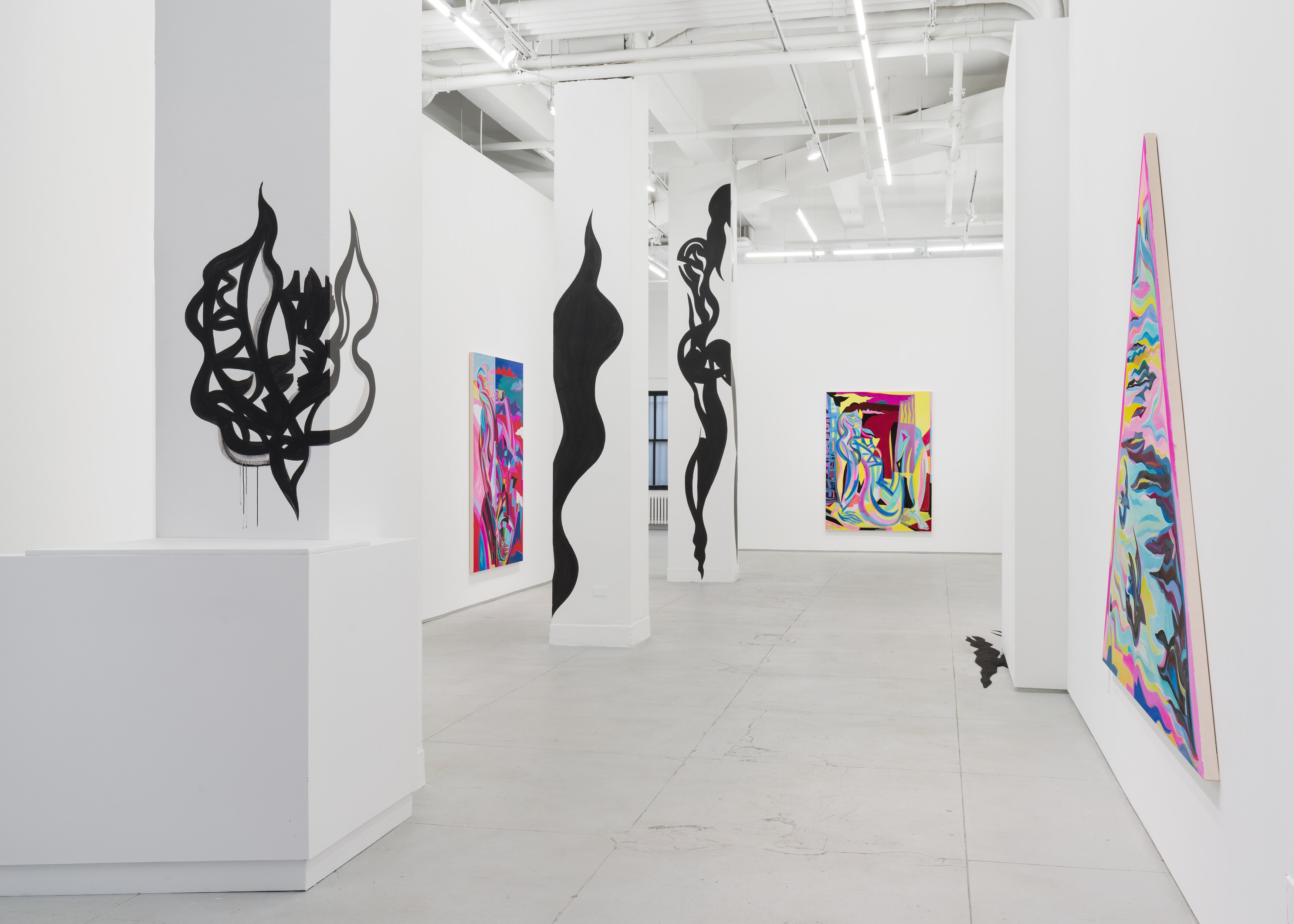 PastPsychic Nerve
Mira Dancy
Nov 5 – Dec 18
Chapter NY is excited to present Psychic Nerve, Mira Dancy’s third exhibition with the gallery and first at 60 Walker Street. Derived from personal and intuitive sources, Dancy’s practice engages and recalibrates expressions of the female body. Across multiple mediums—painting, mural, drawing, and neon— the artist builds densely layered compositions from which her mythic figures emerge. For Psychic Nerve, Dancy presents a new series of paintings that meditate upon a continually expanding sense of self. Following the artist’s move from New York City to the mountains outside of Los Angeles, a changed landscape permeates this newest body of work. Her splintered forms and figures no longer tether to jagged and imposing architecture; instead, they combine with light and air visualized through super-chroma prismatic patterning that reverberates and emanates outward. Each painting is conceived from the vantage point of another painting, as if the paintings themselves could see—or feel—their companions. They serve as doors or passageways, building sequentially and concurrently in conversation with one another and invoking a pervasive sense of interconnectivity. Dancy echoes this sensation in the articulation of her female figures who bask in their collective visibility. Together, all the works in the exhibition inhabit an exact moment of jolting experience and shared thought. They radiate an electric glow of self-realization into the external world. Mira Dancy (b. 1979) lives and works in Los Angeles, CA. She received her MFA in painting from Columbia University. She has had recent solo exhibitions at Galería Agustina Ferreyra, Mexico City, MX; Joan, Los Angeles, CA; Lumber Room, Portland, OR; Yuz Foundation, Shanghai, CN; Chapter NY, New York, NY; Night Gallery, Los Angeles, CA; and Galerie Hussenot, Paris, FR. Her work has been included in group exhibitions at The Fed Galleries, Kendall College of Art and Design of Ferris State University, Grand Rapids, MI; Galleria Monica De Cardenes, Zouz, CH; König Gallerie, Berlin, DE; Simone Subal Gallery, New York, NY; MoMA PS1, Long Island City, NY; and the Rubell Family Collection, Miami, FL; among others.
Past
3.0Sep 10 – Oct 24
Sam Anderson, Cara Benedetto, Patrick Berran, Milano Chow, Mira Dancy, Jesse Darling, Dalton Gata, Adam Gordon, Paul Heyer, Cheyenne Julien, Ann Greene Kelly, Willa Nasatir, Erin Jane Nelson, Tourmaline, Stella Zhong Chapter NY is proud to present 3.0, the first exhibition at 60 Walker Street. We are thrilled to open the doors of our third location and new home in Tribeca. The exhibition features new works by all of the gallery artists to reflect upon and celebrate the gallery’s story from 2013 to the present. Each artist’s practice has shaped Chapter’s history, contributing to a diverse gallery program as it continues to grow. Sam Anderson (b. 1982) lives and works in New York, NY. Her 2013 solo exhibition, Flowers and Money, at Chapter NY was the gallery’s first exhibition. She recently had a solo exhibition, I Never Loved Your Mind, at Tanya Leighton, Berlin. Cara Benedetto (b. 1979) lives and works in Richmond, VA. Benedetto first exhibited at the gallery in 2014. She recently released her third literary work, a collection of short stories titled Origin of Love and Other Tales of Degradation, published by Night Gallery. Patrick Berran (b. 1980) lives and works in the Outer Banks of North Carolina. Berran first exhibited at the gallery in 2014. His work was recently included in a group exhibition at Reynolds Gallery, Richmond, VA. Milano Chow (b. 1987) lives and works in Los Angeles, CA. Chow first exhibited at the gallery in 2015. She will have her first institutional solo exhibition, Prima Facie, at the Aldrich Contemporary Art Museum, Ridegfield, CT in January 2022. Mira Dancy (b. 1979) lives and works in Los Angeles, CA. Dancy first exhibited at the gallery in 2015. Her work was recently included in Sunburst, in collaboration with Night Gallery, at Various Small Fires, Seoul, KR in July 2021. Additionally, she will have a solo exhibition at Chapter NY in November 2021. Jesse Darling (b. 1981) lives and works in Berlin, DE. Darling first exhibited at the gallery in 2018. They will be included in an upcoming group exhibition at Museum MMK für Moderne Kunst, Frankfurt, DE in September 2021. Dalton Gata (b. 1977) lives and works in Puerto Rico. Gata first exhibited at the gallery in 2019. His first institutional solo exhibition, The Way We’ll Be, is currently on view at the Institute of Contemporary Art, Miami, FL through November 2021. In Fall 2021, he will have solo exhibition at Galería Agustina Ferreyra, San Juan, Puerto Rico. Adam Gordon (b. 1986) lives and works in Jersey City, NJ. Gordon first exhibited at the gallery in 2016. He recently presented an installation, Bald Woman, at Project Native Informant, London, UK in March 2021. Paul Heyer (b. 1982) lives and works in Chicago, IL. Heyer first exhibited at the gallery in 2014. He will have a solo exhibition at Night Gallery, Los Angeles, CA in November 2021. Cheyenne Julien (b. 1994) lives and works in Brooklyn, NY. Julien first exhibited at the gallery in 2018. Her work has recently been acquired by the Hirschhorn Museum, Washington, D.C. and the Institute of Contemporary Art, Miami, FL. Ann Greene Kelly (b. 1988) lives and works in Los Angeles, CA. Kelly first exhibited at the gallery in 2017. She recently had her first institutional solo exhibition at the Institute of Contemporary Art, Los Angeles in 2020. Her work will be included in the upcoming 2021 Triennial: Soft Water Hard Stone at the New Museum, New York in Fall 2021. Her work has also recently been acquired by the Hammer Museum, Los Angeles and the Museum of Contemporary Art, Los Angeles. Willa Nasatir (b. 1990) lives and works in New York, NY. Nasatir first exhibited at the gallery in 2016. Her work will be included in a group exhibition at Mazzoli Gallery, Modena, IT in Fall 2021. Erin Jane Nelson (b. 1989) lives and works in Atlanta, GA. Nelson first exhibited at the gallery in 2020. Her solo exhibition, One Entanglement Under Clouds, is currently on view at the Museum of Contemporary Art, Atlanta, GA through October 2021. Her work is included in Making Knowing, Craft in Art, 1950-2019 at the Whitney Museum of American At, New York through February 2022. Her work will also be included in the upcoming 2021 Triennial: Soft Water Hard Stone at the New Museum, New York in Fall 2021. Tourmaline (b. 1983) lives and works in New York, NY. Tourmaline first exhibited at the gallery in 2020. Her work is currently included in The Slipstream: Reflection, Resilience, and Resistance in the Art of Our Time at the Brooklyn Museum, Brooklyn, NY and in Born in Flames: Feminist Futures at the Bronx Museum, Bronx, NY. Her work will be included in 52 Artists: Revisiting a Feminist Milestone at the Aldrich Contemporary Art Museum, Ridegfield, CT in June 2022. Additionally, Tourmaline’s work has recently been acquired by the J. Paul Getty Museum, Los Angeles, CA.
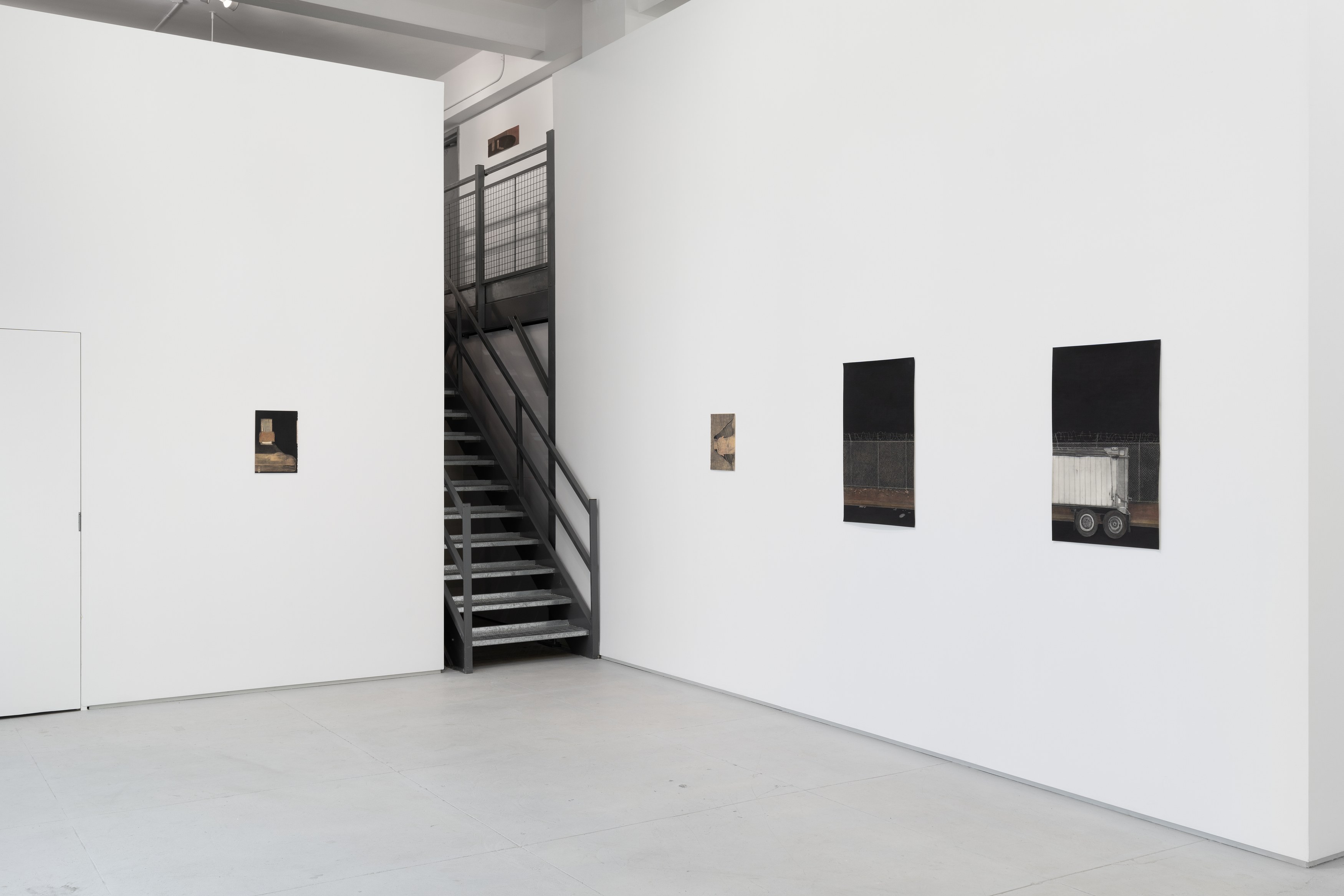 PastChristopher Culver
Christopher Culver
Sep 10 – Oct 24
Side Room O Fantasma Marx is not necessarily known for being a theorist of visual culture, but he was the first to uncover how capitalist society distorts our vision. He said that the dominant ideology produces an inverted image of social life “as in a camera obscura” and that commodity fetishism makes relations between people appear as though they are relations between things. Despite the advancement of visualization technologies, this warped way of seeing remains uncorrected. We have not pierced the world of shadows and it is in this world where Christopher Culver’s drawings reside. The works confront us with occluded images – phantom images that, for the most part, are scrubbed of human beings, but that still bear their traces. They constitute a laggard mode of documentation, less nostalgic than evidentiary, like one of those detectives from the movies who trails a genius psychopath and is repeatedly outwitted, arriving at the scene of the crime too late, in the wake of another grisly murder. Veiled in darkness, the features of this vacant terrain only become legible in the twilight zone between work and rest, when your gears are still turning and sleep evades you. The drawings are based on snapshots that Culver took himself, though the camera also seems to exert its own pull, trawling for human subjects like a voyeur. Hanging unframed in the gallery, they relate back to process of enlarging, cropping, and cutting that occurs in the studio. And without protective glazing, the drawings inevitably collect dust through osmosis with the surrounding environment, which parallels how Culver’s meticulous application of charcoal and dry pastel slowly embeds the paper with pigment and gives it a moldy, bituminous finish. Reification has been thought of in terms of opacity because it effaces and obscures relations between people. It could also be considered a form of (re)animation that saps life from humans and transmutes it into inanimate objects. Instead of Marx’s turning table, the box fan is the commodity that often comes alive in Culver’s drawings, such as when two fans sit atop a windowsill and their cords are seen tangled in a cute embrace. The effect of this doubling heightens our tendency to anthropomorphize. One also gets the sense that life goes on without us. In a different drawing, a flock of geese waddle along a road to nowhere. With the passage of time, more and more of us will be made into migrants as we are set adrift by capital’s vortex, and so the geese become mascots of this unmooring. Sentenced to a life of movement, they appear content to rest in puddles of mud. —Matthew Grumbach Christopher Culver (b. 1985 Miami, FL) lives and works in New York. He received his MFA from The University of Texas at Austin in 2013 where he studied at the School of Fine Arts and School of Architecture. Culver has had solo exhibitions at The Meeting, New York; A.D., New York; Redling Fine Arts, Los Angeles; Yautepec, Mexico City; and Queen’s Nails Annex, San Francisco. His work has been included in group exhibitions at Downs & Ross, New York; Et al. etc., San Francisco; Lomex, New York; and Page Gallery, New York, among others.