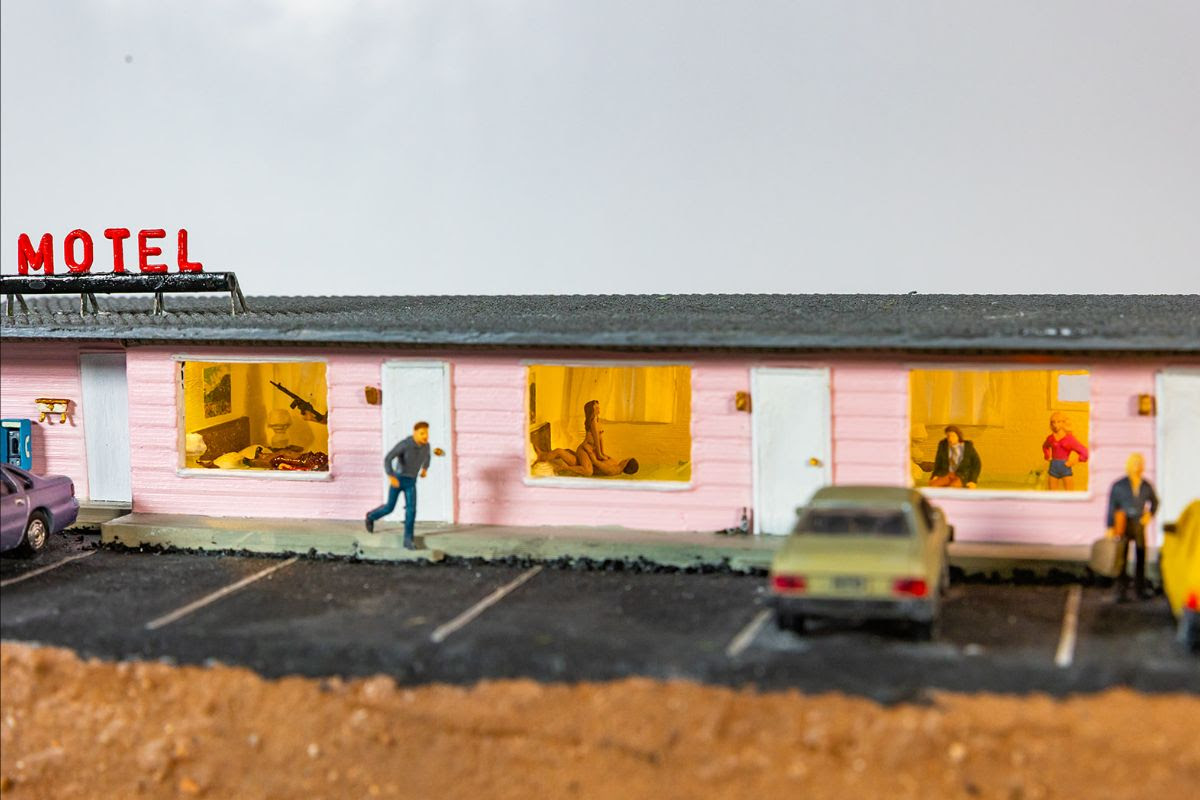
Hashimoto Contemporary
Chinatown, Downtown, NY
54 Ludlow St
Sign in to save this gallery, log a visit, or add a show to a shared list.
Exhibitions
- In the Middle of Things
Adrian Kay Wong
Jun 13 – Jul 12
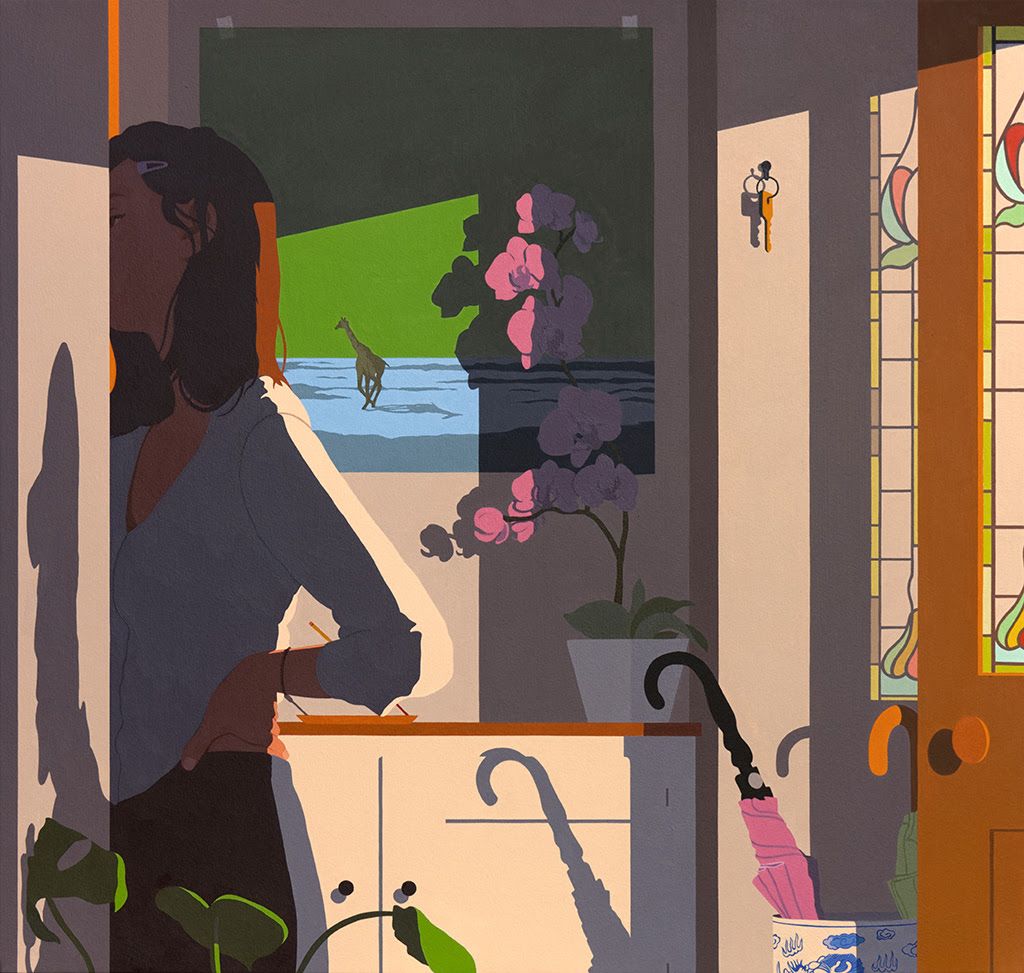
Hashimoto Contemporary is pleased to present In the Middle of Things, a solo exhibition by Los Angeles-based artist Adrian Kay Wong. Characterized by domestic interiors, motifs from daily life, and casts of light and shadow, his paintings balance an exchange of abstraction and representation, surface and depth, and organic and geometric form.
 PastUntethered
Erin Armstrong
Apr 11 – May 3
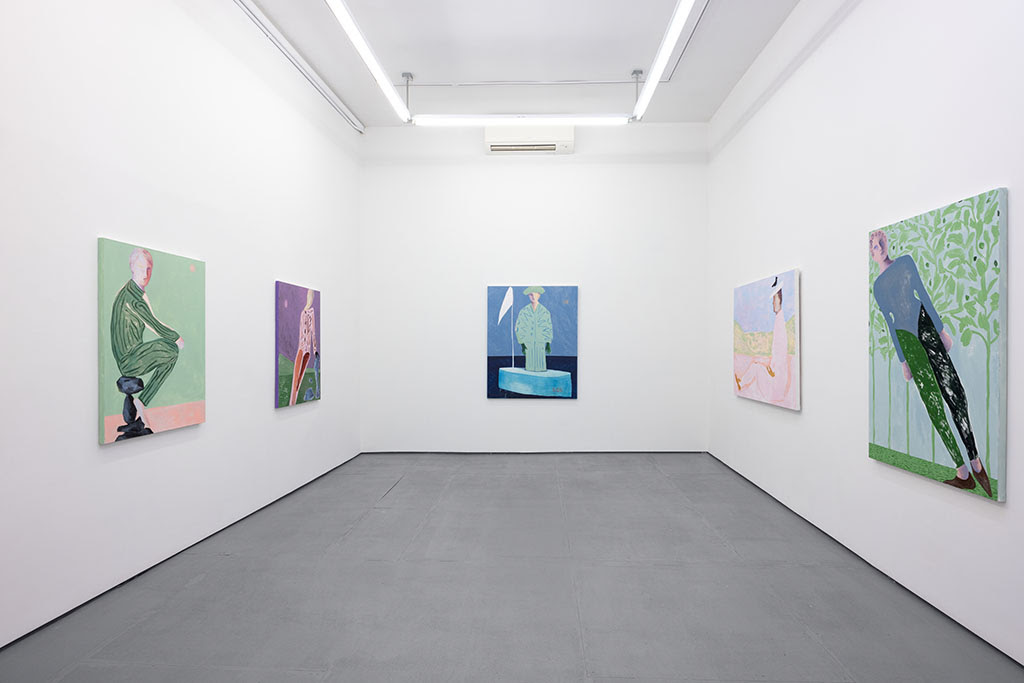
Hashimoto Contemporary is pleased to present Untethered, a solo exhibition by Toronto-based artist Erin Armstrong. In her inaugural NYC solo exhibition, the artist presents a series of paintings and drawings that explore the quiet, disorienting experience of feeling unmoored; physically, emotionally, and psychologically. Across the exhibition, solitary figures drift through expansive, elemental landscapes: seated on eroding rocks, suspended mid-fall against dense trees, or floating alone at sea. Emerging from a sense of instability, Armstrong's paintings capture the feeling of having drifted from shore. Rather than depicting moments of overt catastrophe, the works linger in the charged stillness before or after impact, waiting for something to shift. Water becomes both setting and metaphor. To be alone at sea is to feel scale, exposure, and uncertainty all at once. Armstrong's figures are not overwhelmed by their surrounding environment, but instead exist in close relation to it. The result is a body of work that feels both intimate and expansive, grounded in tension yet open-ended in its narrative. Together, the works in Untethered inhabit a contemplative space between land and water, presence and disappearance, control and surrender. Armstrong invites viewers to consider what it means to remain both conscious and human within a moment that feels increasingly unstable.
 PastAfter the Dinner Party
Nicholas Bono Kennedy
Mar 14 – Apr 5
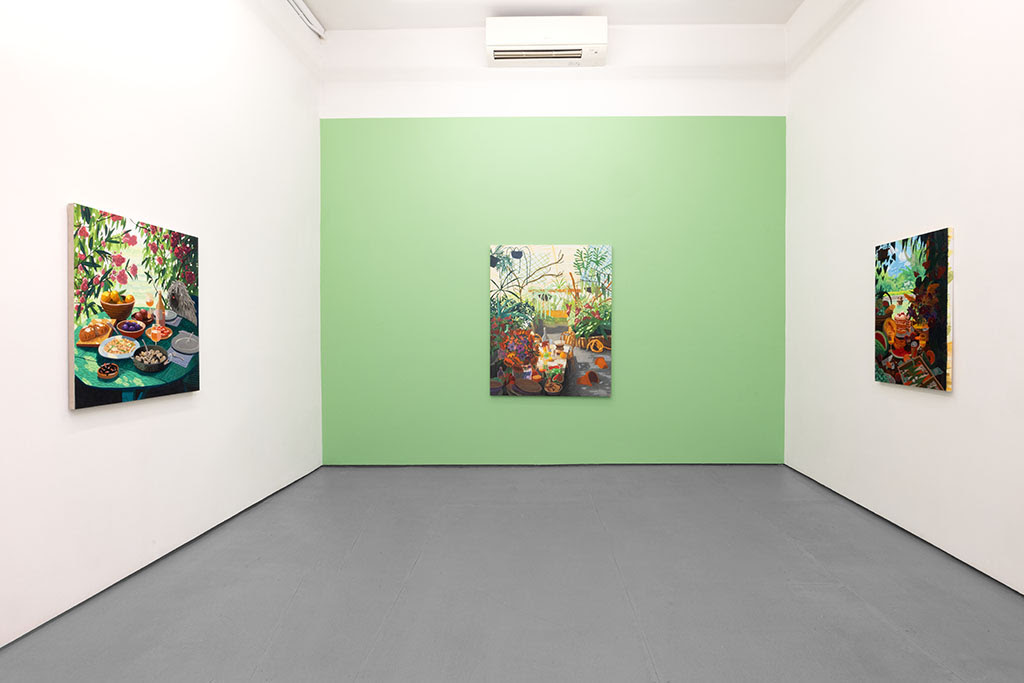
Hashimoto Contemporary is pleased to present After the Dinner Party, a solo exhibition by Los Angeles-based artist Nicholas Bono Kennedy. In his inaugural NYC solo exhibition, the artist continues his ongoing exploration of connection and community in the modern world. In his previous solo exhibition, Dinner Party While The World Burns (2024), the artist grappled with the tension between making vibrant, joyful paintings while living in a world that can often feel heavy and overwhelming. In After the Dinner Party, the artist shifts from the intensity of the gathering itself to the quieter emotional space that follows. During his research for this exhibition, Kennedy discovered the work of German physiologist Ewald Hering, a 19th-century theorist who developed Opponent Process Theory, a proposal that we perceive color in opposing pairs, with one activating as the other recedes. In the 20th century, psychologist Richard Solomon expanded the theory to explain emotional responses, suggesting that intense feelings are often followed by their opposite as the brain works to restore balance. For Kennedy, this intersection between color and emotion feels deeply personal. The quiet sadness that can follow a joyful gathering, a strange combination of gratitude paired with hollowness. It’s these memories that informed the heart of this latest body of work. Divided into two dominant complementary color groups, red and green, the works are installed in two separate rooms. Moving from one space to the other heightens the visual experience, echoing the emotional shift. The works are filled with intimate details: burned-down candles, untouched fruit, fallen glasses, oversized bouquets with no one left to admire them. There is warmth in the paintings, but also a stillness which reflects the complexity of connection. Kennedy invites viewers to linger in that in-between space: the moment after laughter fades, when memory and emotion begin to overlap, creating a deeply relatable meditation on community, perception, and the subtle rhythms of being human.
 PastOn Paper
Feb 21 – Mar 8
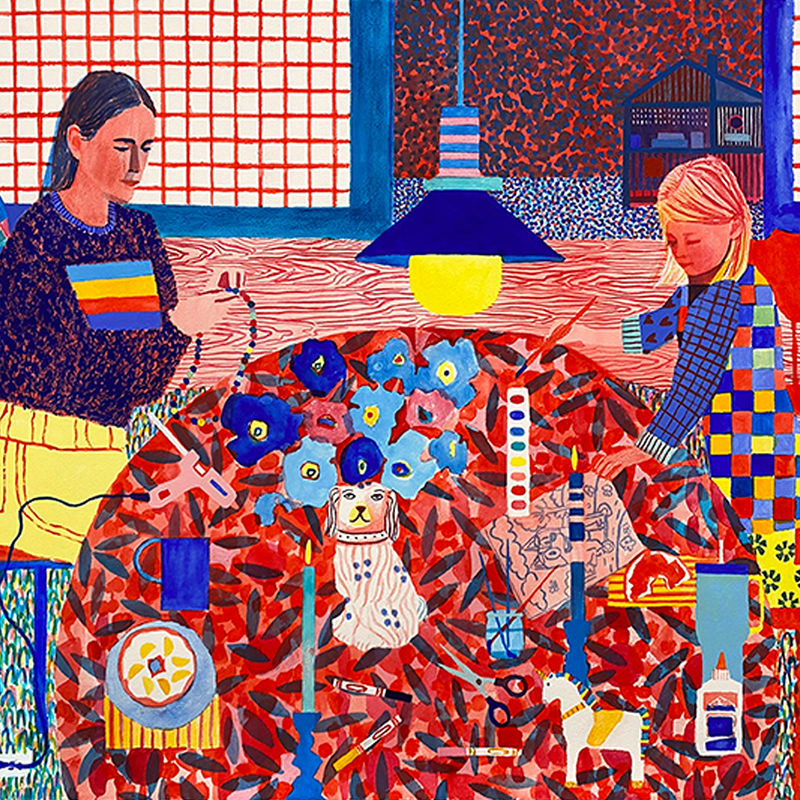
Scott Albrecht, Laura Burke, Camila Buxeda, Chiaozza, Genevieve Cohn, Ryan Travis Christian, Gregory Euclide, Liz Flores, Dan Gluibizzi, Catherine Haggarty, Rachel Hayden, Johanna Tagada Hoffbeck, Seonna Hong, Cody Hudson, Celia Jacobs, Jeff Ladouceur, Amelie Mancini, Marbie, Kara Rose Marshall, Christopher Martin, Stacey Rozich, Andrew Schoultz, Francisco Diaz Scotto, Polly Shindler, Elizabeth King Stanton, Kristin Texeira, Melody Tuttle, Andrew Watch Hashimoto Contemporary is pleased to present On Paper, a group exhibition focusing on artists working on or with paper. The exhibition highlights a diverse range of approaches, from intricate drawings and hand-cut works to experimental printmaking and sculptural constructions, celebrating paper as both a medium and a conceptual framework within contemporary art
 PastMaybe You Know the Place
Sara Hagale
Feb 21 – Mar 8
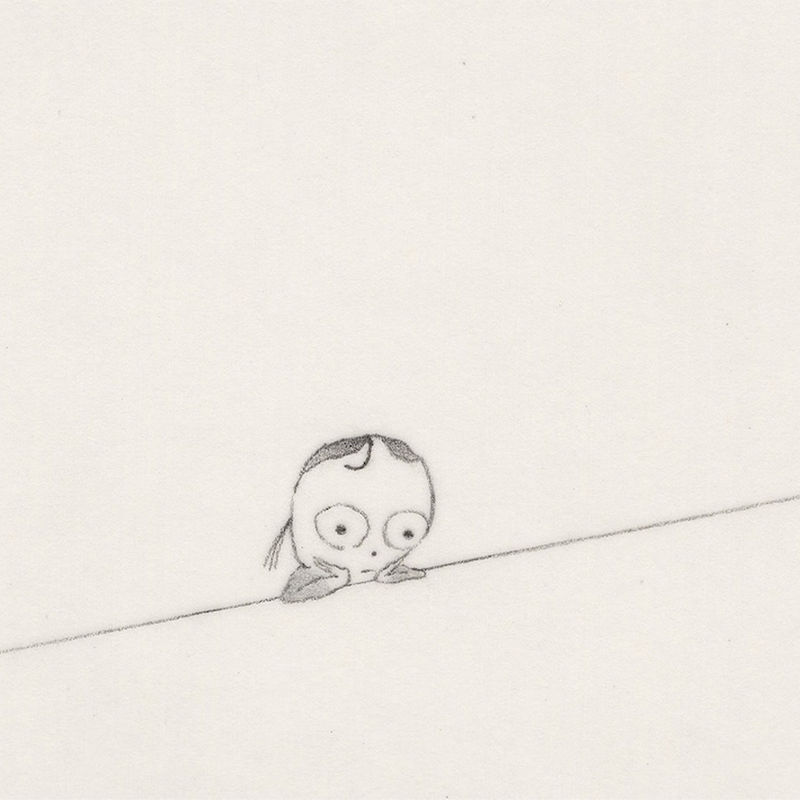
Hashimoto Contemporary is pleased to present Maybe You Know The Place, a solo exhibition by Huntsville, Alabama-based artist Sara Hagale. In her debut solo exhibition, the artist invites viewers into a world that is at once delicate, humorous and deeply reflective. The artist works primarily in pencil on paper, creating intimate, small-scale drawings that invite close and contemplative viewing. Through subtle mark-making, she captures fleeting moments of human experience with remarkable restraint. Her intentionally minimal composition, which are often composed of only a few lines, carry a quiet emotional weight, where nuance emerges through simplicity.
Past
The Invisible Dog Goes For a WalkJan 17 – Feb 8
2Fik, Doug Adesko, Vanessa Belli, Meriem Bennani, Gabe Benzur, Liz Burrow, Chong Gon Byun, Simon Courchel, André Da Loba, Adam Dalva, Christopher Daniels, Danielle Durchslag, Mahka Eslami, Finnegan Shannon, Ryan Frank, Divya Gadangi, Camille de Galbert, Ellen Grossman, Nemo Hoffman, Oliver Jeffers, Kiya Kim, Alan Kleinberg, Steven & William Ladd, Jonathan Michaud Perez, Stephen Morrison, Anne Mourier, Prune Nourry, Keun Young Park, Mac Premo, Naji Raji, Aaron Ruff, Alana Salguero, Sayeh Sarfaraz, David Shrobe, Alexandria Smith, R Justin Stewart, Anita Sto, Nicolas Touron, Ian Trask, Peter Treiber Jr., Nick Vaughan & Jake Margolin, Kevin Waldron, Susan Weinthaler Hashimoto Contemporary is pleased to present The Invisible Dog Goes for a Walk, a group exhibition featuring artists and the collection of The Invisible Dog, co-curated by Lucien Zayan, founder-director of The Invisible Dog and Risa Shoup. "Ideas don't belong to a place. They are never rooted, only found, and belong only to the mind that's willing to see and embrace them. Now that the invisible Dog has closed its doors on Bergen Street, and it has decided to go for a long walk, many of the artists have been reminded the important lesson of anyone who moves away from their childhood home; that a house is just bricks and mortar, but home is memories in the mind and the continuation of living breathing family wherever they may be. It is an idea. In the early days of The Invisible Dog, when the building still felt like a secret--raw floors, dusty ceilings and shifting light, a small group of us were trying to understand what we were becoming together. Over the years, more artists arrived. Some stayed, some circled through, some left pieces of themselves in the rooms we shared. Slowly, what began as a space became a community, and what felt temporary became something lasting. Now, as The Invisible Dog steps into a new life without a fixed place, we gather together again with an exhibition that brings this wide and layered family back into one moment. It gathers the artists who kept studios there (some still do), the ones who drifted in and out of its realm, and the ones whose work remains part of its permanent collection--all the threads that wove the place into what it was, all curated and within the orbit of Lucien, whose idea gave birth to the place that is no longer fixed. Presented by Lucien Zayan at Hashimoto Contemporary, this show is not a farewell to the building we once called home. It is a recognition that the true center of The Invisible Dog -the heart of the place -was never the place at all. It was the people. It was the noticing. It was the sharing. It was an idea that kept moving, even when we didn't realize we were moving with it. This exhibition is a map drawn from memory. It is a reunion of wanderers. It is a tribute to the new nomadic existence of a legacy stretching its legs. In the words of another wandering dog "Maybe tomorrow I'll wanna settle down, until tomorrow, I'll just keep movin' round." —Oliver Jeffers
Past
Cognitive DissonanceSeonna Hong
Dec 13 – Jan 11
Hashimoto Contemporary is pleased to present Cognitive Dissonance, a solo exhibition by Los Angeles-based artist Seonna Hong. In her latest solo exhibition, the artist's deeply introspective work functions as both visual journal and emotional terrain, tracing the patterns of contemporary life through abstraction, landscape, and gesture. Viewing painting as a map of her internal experience, the artist embeds emotion into the landscapes themselves within the striations of the sky, jagged rock and shifting atmospheres. Figures appear as anchors or witnesses: sometimes they represent the artist, sometimes no one particular person at all. The works in Cognitive Dissonance emerge from a period of heightened cognitive and emotional tension shaped by political unrest in the U.S., global conflict, environmental catastrophe, and the persistence of connection, tenderness, and daily ritual. The exhibition moves between capturing a sense of urgency and restraint. Hong throws, scrapes, and pushes paint in moments of overwhelm, then slows into thin, delicate "quilted" washes applied with meditative precision. The artist draws a parallel to bojagi, the Korean textile tradition that pieces fragments into functional abstraction, an act of both rupture and repair. Scale operates as another emotional register: large works capture physical intensity, while smaller paintings return to the immediacy of her early studies on hardware store paint chips. Cognitive Dissonance holds the contradictions of our present day moment: chaos and quiet, grief and compassion, the spectacular and the mundane. It is a record of trying to remain human, engaged, and honest as the world feels simultaneously too much and yet also not enough.
Past
Jaunt ReduxDec 13 – Jan 4
Linnea Andersson, Matthew Craven, Genevieve Cohn, Charlie Edmiston, Liz Flores, Nate Harris, David Heo, Cody Hudson, Tellas, Andrew Watch Hashimoto Contemporary presents Jaunt Redux, a group exhibition curated by The Jaunt featuring unique prints individually hand embellished by their respective artists.
- No imagePastCognitive Dissonance
Seonna Hong
Dec 13 – Jan 11
Hashimoto Contemporary is pleased to present Cognitive Dissonance, a solo exhibition by Los Angeles-based artist Seonna Hong. In her latest solo exhibition, the artist's deeply introspective work functions as both visual journal and emotional terrain, tracing the patterns of contemporary life through abstraction, landscape, and gesture. Viewing painting as a map of her internal experience, the artist embeds emotion into the landscapes themselves within the striations of the sky, jagged rock and shifting atmospheres. Figures appear as anchors or witnesses: sometimes they represent the artist, sometimes no one particular person at all. The works in Cognitive Dissonance emerge from a period of heightened cognitive and emotional tension shaped by political unrest in the U.S., global conflict, environmental catastrophe, and the persistence of connection, tenderness, and daily ritual. The exhibition moves between capturing a sense of urgency and restraint. Hong throws, scrapes, and pushes paint in moments of overwhelm, then slows into thin, delicate "quilted" washes applied with meditative precision. The artist draws a parallel to bojagi, the Korean textile tradition that pieces fragments into functional abstraction, an act of both rupture and repair. Scale operates as another emotional register: large works capture physical intensity, while smaller paintings return to the immediacy of her early studies on hardware store paint chips. Cognitive Dissonance holds the contradictions of our present day moment: chaos and quiet, grief and compassion, the spectacular and the mundane. It is a record of trying to remain human, engaged, and honest as the world feels simultaneously too much and yet also not enough. Join us for the opening of Cognitive Dissonance on Saturday, December 13th with a reception from 6pm - 8pm. The artist will be in attendance. In conjunction with the exhibition, we will be releasing a new limited edition print, first available exclusively in person at the opening followed by an online release at a later date.
Past
The Light That Passes Through UsCarlos Rodriguez
Oct 11 – Nov 2
Hashimoto Contemporary is pleased to present The Light That Passes Through Us, a solo exhibition by Mexico City-based artist Carlos Rodriguez. The title of the exhibition, The Light That Passes Through Us, references William Irwin Thompson's essay Time Falling Bodies Take to Light, where reflections on myth, sexuality, and imagination are explored as cultural forces that continue to form and shape our present. Drawing references from Mexican Muralism, Jared French, William Blake, the Greek frescoes, and Mesoamerican sculptures, the artists creates connections to the past while simultaneously opening dialogues to the present. Rodriguez first built his visual language through instinct, born from explicit albeit tender imagery. Through these early explorations, the artist discovered how desire, eros, could be a powerful catalyst and conversation. Reflecting on the weight of censorship surrounding the male body, and the lack of inclusive representation, Rodriguez's work expands upon our cultural dialogue, ultimately opening new interpretations and narratives of our shared histories and identities. Formally, the artist's practice is rooted in the constant exploration of the body. The male figure becomes both monumental and fragile. Not simply inhabiting the canvas, they expand to fill it completely, testing the limits of their own containment. The desert often appears as a recurring theme, as a place of solitude and revelation. Within these landscapes, flowers appear as seeds of transformation, birds as messengers. The Light That Passes Through Us proposes a visual mysticism which is both personal and collective, where fragments of myth, eroticism and memory are transformed into a shared legacy.
Past
Acts of ObservationRachel Gregor
Sep 6 – Sep 28
Hashimoto Contemporary is pleased to present Acts of Observation, a new body of work by Kansas City-based artist Rachel Gregor. Focusing on the artist’s practice of working on paper, these new paintings spotlight a quieter, more meditative part of her practice: painting from direct observation. Known for her layered and narrative based figuration that blends observation, memory and fantasy, Gregor works with the immediacy of gouache, recording potted plants, figurines and self-portraits. The self-portraits are often painted in front of larger, narrative-based works in progress, creating layers and connecting the various parts of her practice. These works are sites of play, discovery and experimentation, a space where instinct surfaces, later to be folded back into more ambitious compositions. Gregor strives for visual and emotional honestly, in an attempt to build a more poetic and meditative practice. Through these exercises in mindfulness the composition gives way to intuition, the act of looking becoming its own reward. The images hover between still life, theater and confession, capturing the feeling of being present. In Acts of Observation, the artist brings together a selection of this rogue and integral work so this aspect of her studio practice can be highlighted on its own terms.
Past
Analog ConditionsAngela Burson
Sep 6 – Sep 28
Hashimoto Contemporary is pleased to present Analog Conditions, a solo exhibition by Savannah-based artist Angela Burson. In this body of work, Burson explores the liminal spaces between memory and the present, weaving together autobiographical fragments, cultural references and personal reflection. For Analog Conditions, the artist explores the concept of analog conditions: constructed scenarios that mimic a lived experience. By blending the idea with analog devices such as typewriters and watches, the artist anchors her work in recognizable and tangible world. Burson’s practice is rooted in the interplay of figuration and object-hood. Her figures, typically depicted headless or cropped, are found carrying belongings that carry the weight of symbolism: suitcases, shoes, cat carriers and books are meticulously rendered, proportions askew, recalling the Surrealist movement. Like diary entries reimagined on canvas, the work remains deeply personal. The suitcase, which first emerged in the artist’s work in 2012 as a liberating symbol of emotional baggage, re-emerges as part of a broader visual narrative of movement. A kitten adopted mid-painting, the rediscovery of a Pee Wee Herman doll once thought lost, a pair of vintage shoes acquired from an estate sale, Burson’s paintings embrace accident, humor and chance, creating what she calls “artificially created situations to mimic real world circumstances”. The artist’s intent is not to predict behavior, but rather to question the existential meaning of it all.
Past
Dear MomentsDanym Kwon
Aug 9 – Aug 31
Hashimoto Contemporary is pleased to present Dear Moments, a solo exhibition by Korean-American artist Danym Kwon. For her latest solo exhibition, Kwon offers a tender and introspective body of work shaped by the emotional landscapes of home, motherhood and migration. After over a decade in California, the artist returned to her native Seoul in 2022, only to realize how deeply the Bay Area had shaped her sense of place and belonging. Through painting and a new series of sculpture, Kwon explores the quiet, fleeting moments that fill everyday life. The focal point of the exhibition is a large-scale triptych depicting a towering stack of folded laundry, each intricately illustrated with scenes of domestic life. From quiet walks to playful moments, these tender routines layer like memories accumulated over the years, evoking life's sense of impermanence. Two additional diptych paintings mimic the structure of Minhwa folding screens, blending elements of Korean tradition with Kwon's own personal narrative. Complimenting the paintings are a new series of small, wooden sculptures. These scenes that appear to have been plucked straight from the artist's canvases, transforming into tangible snapshots of moments and memory. Dear Moments invites viewers to linger, reflect and rediscover grace in the everyday. "I may never have had a place to stay forever. But wherever we were together became a home. These works are my way of holding onto that - of cherishing the moments that pass too quickly." —Danym Kwon
Past
Back to SchoolGiorgiko
Aug 9 – Aug 31
Hashimoto Contemporary is pleased to present Back to School, a solo exhibition by Los Angeles-based artist duo Giorgiko. In Back to School, Giorgiko offers a series of eight new oil paintings that reflect on the childhood experience of school through a lens that is both nostalgic and perceptive. Drawing inspiration from their twin sons' experiences entering school life, as well as their own memories growing up, the artists revisit everyday moments filled with innocence, awkwardness, longing, play, and quiet humor. Students scramble in a game of dodgeball. A child patiently waits for a parent after school. Another gets dressed up in an itchy outfit chosen by their parents for picture day. These fleeting scenes tap into the universal experiences of childhood and the early struggles to find one's place in the world. With a mix of playfulness and compassion, Giorgiko paints these familiar tensions with warmth and tenderness. "We drew inspiration from our own children's experiences and revisited personal memories to create these works. We hope this show brings nostalgia and takes viewers 'back to school' - reminding them of a time of smallness and innocence." —Giorgiko
Past
Left UnsaidJun 21 – Jul 27
Tania Alvarez, Sabrina Bockler, Allie Gattor, Rachel Gregor, Zoe Hawk, Nicholas Bono Kennedy, Thérèse Mulgrew, Cait Porter, Zack Rosebrugh, Sara Suppan, Natalie Terenzini, Angela Fang Zirbes, Jesse Zuo Hashimoto Contemporary is pleased to present Left Unsaid, a group exhibition highlighting thirteen artists who capture elements of impermanence in their work. Contemplating the transient nature of individual and collective experiences, Left Unsaid draws attention to the fleeting, often overlooked moments in life that can take on new meaning through memory, reflection or distance. Participating artists reveal how impermanence does not erase significance, but instead reshapes it. In honoring the ephemeral, these works suggest that even the quietest moments have the ability to echo far beyond their origin.
Past
Assembled LandsGregory Euclide
May 17 – Jun 15
Hashimoto Contemporary is pleased to present Assembled Lands, a solo exhibition by Minnesota River Valley-artist Gregory Euclide. In Assembled Lands, Euclide explores ideas surrounding nature and the human experience. The artist’s mixed media assemblages resemble landscape paintings but defy categorization. These non-traditional observations of nature are collaged from original photographs, paintings, drawings, Cyanotype, cut paper as well as natural organic materials Euclide forages from the prairie. The artist tears and layers these elements to build a new pictorial space which more accurately resembles the way he takes in the land. When spending time in nature, the artist looks not only at the whole, but also the elements which make up the landscape - individual trees, the colors and textures of leaves and bark. By breaking down the whole to reveal the sum of the parts, each fresh glance reveals a unique moment full of textures, shapes and colors. Euclide invites us to explore worlds where he blends the real and imagined, objects, and materials to evoke feelings of nostalgia, question the reality of the present moment, and provide a look toward the future.
Past
The Moon UnderwaterMadeleine Tonzi
May 17 – Jun 15
Hashimoto Contemporary is pleased to present The Moon Underwater, a solo exhibition by Los Angeles-based artist Madeleine Tonzi. The show is Tonzi's fourth solo exhibition at Hashimoto Contemporary.
Past
Amuse-BoucheApr 19 – May 11
Erin Armstrong, Katie Berka, Sabrina Bockler, Christopher Burk, Camila Buxeda, CHIAOZZA, Gina M. Contreras, Matthew Craven, Jen Dwyer, Mary Finlayson, Liz Flores, Abigail Goldman, Rachel Gregor, Sara Hagale, David Heo, Nicholas Bono Kennedy, Dan Lam, Gabe Langholtz, So Youn Lee, Megan Ellen MacDonald, Madi, Stephen Morrison, Pat Perry, Rachel Strum, Sara Suppan, Shannon Taylor, Kristin Texeira, Andrew Watch Hashimoto Contemporary is pleased to present Amuse-Bouche, a group exhibition focused on the small scale. Featuring over 80 works from 28 artists, the exhibition pays homage to the unpretentious simplicity of scale, with all of the artworks measuring under 12 inches. Taking various styles and approaches, these works foster an immediate sense of intimacy, intrinsically drawing the viewer in closer. Abigail Goldman's Trad Wife wall sculpture depicts what happens when a spouse is pushed to their limits in her signature miniature 1:87 scale. Megan Ellen MacDonald's Deflated captures the aftermath of a party, with a deflated balloon front and center, partially finished cocktail and bottle of spilled aspirin in the background. Pat Perry's Hill Study illustrates a quiet snowy landscape, with a small hopeful rainbow visible off to the horizon. Sara Suppan's New Shirt shows a crisp white shirt with an unfortunate pen stain at the pocket, a humorous reminder that life isn't perfect, no matter how much we may want it to be.
Past
House & GhostsAngela Fang Zirbes
Mar 15 – Apr 6
Hashimoto Contemporary is excited to present House Ghosts, the debut solo exhibition by Iowa-based artist Angela Fang Zirbes. Set within the backdrop of an old rural house, ghosts appear within carefully decorated wood paneled interiors. Executed in a monochromatic palette, the paintings are reminiscent of vintage photographs, like calling upon a forgotten memory. Inspired by common decor typically found within old country homes, faux wooden frames encase relics and imagined memories of a life once lived, serving as memories of the ghosts past 'in life'. These domestic depictions illustrate the restrictions of life through the use of traditional compositions, smaller scale imagery, and rigid posture. By contrast, the second group of works depict ghosts and their haunted objects appearing within uncanny interiors with unusual cropping and oversized subjects. Here the figures appear weightless and soft, untethered to the restrictions of a life once lived. Isolation serves as the ghostly figure's ultimate freedom. Free of societal expectations, they do not acknowledge the viewer, uninterested as they no longer abide by the rules of the living – instead ruminating on past memories and events. The paintings serve as a representation of how the apparitions feel larger in death than in the life they lived when ‘in frame’. While free, the ghosts are ultimately confined to what they knew and experienced in their previous life, trapped inside the very house they haunt. This body of work reflects the isolating experience of navigating an identity rooted in liminality as a biracial person -- caught between realities, both real and imagined. The ghosts in these works echo this in-between state, neither fully belonging to the world they haunt or the one they left behind. These paintings explore the tension between belonging and estrangement, presenting a haunted landscape that is both personal and political, reckoning with the myths of American identity and the uncertain realities that lurk beneath. Angela Fang Zirbes (b. 2000) is a painter based in New York and Iowa. Her paintings recall feelings of isolation growing up as a biracial woman in the American Midwest. Working from a range of sources including her memories, recurring dreams, and found imagery, Fang Zirbes' paintings describe the experience of navigating an identity rooted in liminality through layered contradictions: what is seen and what is hidden, light and shadow, and reality versus memory. Set in an old rural house reminiscent of the spaces from her childhood, repeated motifs coexist alongside the artist as familiar objects, patterns, and entities in subtly altered forms and contexts. The skewed compositions and perspectives suspend a pervasive sense of peril within the uncanny interiors, in which the subjects are aware that they have been walked-in-on by an unwelcome voyeur. Fang Zirbes' paintings return her to haunt these domestic scenes, seeking a deeper understanding of her detachment, uncertainty, and fear.
Past
The Garden Is OpenJocelyn Tsaih
Mar 15 – Apr 6
Hashimoto Contemporary is pleased to present The Garden is Open, a solo exhibition by Brooklyn-based artist Jocelyn Tsaih. The show is Tsaih’s inaugural solo exhibition at Hashimoto Contemporary, in which she considers the idea of sanctuary and refuge. Largely inspired by community gardens, parks and botanical gardens found in New York City and the Bay Area, The Garden is Open reflects on Tsaih's sense of comfort when surrounded by plant-life and color, as well as their direct impact on her personal state of being. The Garden is Open is comprised of a series of oil paintings, custom built figurative wooden frames and ceramic sculptures, which feature a recurring semi-abstracted solitary figure gracefully coexisting with botanicals. The figures are found in various states of movement, floating across the picture plane or sitting upright, illustrating a sense of energy that can be experienced within an invigorating environment. Finding herself emotionally moved by color and the feelings they can evoke, Blues and purples are prominently featured throughout, providing a sense of peace to viewers. Tsaih placed special emphasis on the palette she worked with, merging bold vibrant colors with soft glows. “The process of creating work always brings me back to my inner self. I tried to tap into this aspect of art making because the meditative quality of it parallels my experience of being in spaces like gardens. In the moment of it all, it might feel like an escape, but I leave feeling more in tune with myself and in turn, more grounded in reality. This is what I hope to achieve with the introspective qualities within these paintings and sculptures - I hope they offer stability and clarity, acting as both refuge and a gentle reminder of inner strength.” —Jocelyn Tsaih Jocelyn Tsaih (b. 1992) is a Taiwan-born, Shanghai-raised artist. She received her BFA in Graphic Design at the School of Visual Arts. Through she works in various mediums, the connecting thread throughout her work is her depiction of amorphous figures, often portrayed in abstracted, liminal spaces. She aims to touch on the emotional aspects as well as the otherworldliness of our human experience. The figures in Tsaih’s work act as extensions of herself. As someone who grew up between multiple cultures and worlds, she’s created her own version of the “in-between”. This is where the figures, and herself, are free to just be. She utilizes color, form and composition to create images that convey strong moods, possibility for curiosity and space for introspection.
Past
Dog Show #4: House BrokenStephen Morrison
Jan 18 – Feb 9
Hashimoto Contemporary is pleased to present Dog Show #4: House Broken, a solo exhibition by Brooklyn-based artist Stephen Morrison. The exhibition is Morrison's inaugural solo exhibition at Hashimoto Contemporary. Stephen Morrison was born in Maine in 1991. He earned his BFA from the Laguna College of Art and attended Yale Norfolk and the New York Studio Residency Program. In 2021, the artist had his debut solo exhibition at The Invisible Dog Art Center. His work has also been exhibited in numerous group shows, most recently at Hashimoto Contemporary, Wassaic Project, and Lauren Powell Projects. In 2023, the artist had a solo booth presentation with The Invisible Dog Art Center at The Armory Show.
Past
Tales of Night CracksFrancisco Diaz Scotto
Nov 16 – Dec 8
Hashimoto Contemporary is pleased to present Tales of Night Cracks, a new body of work by Argentina-based artist Francisco Diaz Scotto. Francisco Diaz Scotto (b. 1986) is a painter and architect from Argentina. Diaz Scotto maintains a dual artistic practice of studio paintings on canvas alongside large scale public murals. His murals, which are related to his conventional architecture background but also serve as a stark departure, stem from the artist's perception of public space work as "urban acupuncture". Most of Diaz Scotto's murals attempt to make light of areas that are usually ignored, some relegated from the irregular and non-inclusive urban designs. These murals begin not simply with a location or facade which operate as a canvas for his painting, but rather serve as an attempt to orient the viewer in creating a dialogue that is respectful of the immediate natural environment. The artist references local flora in both his murals and paintings, flora which he finds growing in the cracks of sidewalks or a facade of a mural's building or around his atelier's neighborhood. The artist believes that the cracks generated by deficient construction processes are a reflection of the human need to control space for a rational and autarkic use and that by taking the small plants that grow within these cracks Diaz Scotto utilizes his work as a mechanism to question modern societal methods and perceptions. In his atelier, Francisco applies these same mechanisms when creating a new body of studio work. Using deeply personal reflection, the artist uses memories and emotions from his past roots as a missionary to create canvas paintings that represent a myriad of home scenes, outdoor jungles, twilight hours and the occasional house dog.
Past
Cruel BabesRachel Gregor
Nov 16 – Dec 8
Hashimoto Contemporary is pleased to present Cruel Babes, a solo exhibition by Kansas City-based artist Rachel Gregor. The exhibition is Gregor's second solo exhibition at Hashimoto Contemporary. Stories have formed a part of our culture since time immemorial. Transforming through various iterations as centuries and millennia pass, certain tropes and characters prevail: forbidden love; ironic twists of fate; senseless tragedy. But, if it’s clear these stories are important to our understanding of our place in the world, how do courageous heroes, tragic maidens, vicious villains, or lovesick dopes fit into our lives? And where do we, our personal narratives of who we are, fit into these stories? In her latest solo exhibition at Hashimoto Contemporary New York City, Cruel Babes, painter Rachel Gregor reconsiders folk tales, ballads, and myths through a personal lens. The Kansas City-based artist casts different versions of herself as the characters in these stories, referencing compositions and figures from well known paintings in the art historical canon to create her mis-en-scène. The scenes don’t recede into the countryside but into a velvety, black backdrop, alluding to the artifice of the stories themselves and Gregor’s retelling. “I am taking on the roles of these characters,” Gregor reflects, “I’m just changing my costume between sets, and I am giving a recital.” By presenting these narratives through an entirely female perspective, Gregor prompts viewers to wonder how our perceptions of these ancient stories change over time, and what remains the same. Gregor’s narrative references stem from all sorts of folklore that continue to influence Western consciousness, from Greek mythology to folk tales told through ballads. Her honey-toned rendition of Actaeon’s Hounds shows a nude Gregor facing away from the viewer into the backdrop, posing as the bathing Artemis. Her now deceased Australian shepherd snarls at something out of view, while her other dog trails cautiously behind. The Cruel Mother references a murder ballad about a woman killing her illegitimate sons, and then wishing she could dress and care for children of her own—children who, in the end, remind her that she is a murderer. A crimson shadow casted over the figure’s head washes up into the eaves of the tree, as a bleach blonde Gregor leans against it, toying with dandelions in each of her hands. Whether a woodland goddess, a lost babe, or a murderous mother, Gregor’s self depictions invite us to place ourselves in these stories, to have empathy with versions of ourselves who may have lived in the past.
Past
State of NatureAbigail Goldman
Aug 10 – Sep 1
Arguments about true human nature are a cornerstone of the Western philosophical canon. Optimists like John Locke believed life before governmental rule was a magnanimous paradise, while pessimists like Thomas Hobbes believed life before a ruler was "nasty, brutish and short." Washington-based miniaturist Abigail Goldman leans begrudgingly towards the latter. Her latest solo exhibition, State of Nature with Hashimoto Contemporary, explores the brutal impulses typically suppressed in everyday life on a 1:87 scale. Goldman uses her bloody miniature dieoramas not to shock but to present complex and seemingly absurd narratives of human compulsions that bubble below the surface. Beyond the usual empty fields or rocky cliff sides, Goldman’s newest narratives of humans in their brutish natural state occur inside picturesque homes, fine dining restaurants, and even Buckingham Palace. Figures no larger than a pinky-fingernail spill and ooze blood, consume human flesh, and execute their houseguests among pleasant interiors. Perhaps due to their size or the elements of surprise, the gory incidents are laced with dark humor. There’s always something funny about elderly women in their Sunday finest breaking from expected composure. Goldman imagines these images of ordinary, respectable people lashing out or giving into their urges as cathartic—it’s something you didn’t know you needed until you had it. While the exhibition’s title refers to a time before human governance, Goldman clarifies that there are governing forces similar to ours in these miniature worlds. “We’re generally polite. We stand in line. We signal to turn,” she writes. “We mostly follow the rules. But we’re fraying at the edges and a certain kind of madness is setting in. If people find any truth in my work, perhaps it’s seeing subterranean feelings suddenly come to the surface.” Goldman’s work is brutally honest about taboo violent fantasies buried under social contracts. With charm and remarkable craftsmanship, the artist invites us to wonder about our own actions without state rule and underscores our choices when the world is foregone into chaos. Abigail Goldman’s artistic practice centers around miniature scenes of gruesome murders in plastic and acrylic. Dubbing her works "die-o-ramas," Goldman's miniature sculptures are rendered in 1:87 scale- each tiny figure is well under an inch tall, making them grotesque but familiar, grim but cute. The work's diminutive size contrasts with the larger-than-life tableaus of gore and mayhem rendered within. Though many of the narratives in Goldman's scenes seem like something pulled from fiction, the artist draws almost exclusively from her professional life, where she witnesses and researches the "escalating feedback loop of rage and violence" present in American culture. At once adorable and offensive, Goldman's die-o-ramas explore our relationship to violence-its omnipresence and resulting banality, as well as our innate attraction to the grisly and macabre. Goldman's miniatures have been exhibited nationally and internationally, and her work has been featured by numerous media outlets, including the LA Times, New York Times, NPR, Atlas Obscura, Juxtapoz, and Huffington Post. In March 2019, Goldman and her work were the subject of a documentary produced for Topic Magazine.
Past
The Cut of My JibPaul Gagner
Aug 10 – Sep 1
Artist and sculptor Paul Gagner is suspicious of artists who confidently tell grand narratives and act as future predictors. His project-space show titled The Cut of My Jib at Hashimoto Contemporary reflects the anxieties that plague and promulgate his creative process and the two states upholding it: isolation and exploration. A stylistic shapeshifter, Gagner distills his artistic anxieties succinctly into a visual work, offering wry musings on life as a creative and the eccentricity of tedious circumstances. Never one to be self-serious in his intro- and extrospection, Gagner inserts humor and absurdity into traditional painting forms like the still life, the self-portrait, and the landscape, making fun of the artist as a lone discoverer. Plein Air Painting on Mars shows an astronaut painting a pink and purple Martian landscape, poking fun at an artistic final frontier, or the race to be the first depicting something new, extraordinary, out of this world. I Spy keeps the subject and viewer on Earth, showing a single eyeball snaking through a spiral telescope to view a spider on its web. The explorer surpasses all the other bugs on the telescope’s surface, emphasizing the lengths one might go to discover something observable by the naked eye—something already in plain sight. Drawing attention to his anxieties around artmaking, the exhibition features a wide range of styles and subject matter, as though Gagner is multiple different artists. “I’m not interested in making ‘Paul Gagner paintings,’” he writes. “Instead, I try to pour everything into each one of my paintings as if I've never done this before.” This eclectic group of artworks showcases Gagner’s tumultuous identity as an artist, asking the viewer to assess the cut of his jib. Paul Gagner was born in 1976 in rural Wisconsin. Currently, he is based in Brooklyn, New York. Gagner received my BFA from the School of Visual Arts in 2005, and his MFA from Brooklyn College in 2009. He has exhibited nationally and internationally. He loves coffee, beer, and ketchup. He loathes spiders, sneezing, and fanny packs.
Past
Good Luck CharmDidi Rojas
Jun 29 – Jul 21
Objects bring us luck. Not all of them, but the small trinkets we attach to bracelets, necklaces, key rings, or Crocs can charm our lives if we believe. Known primarily for her ceramic footwear, Didi Rojas’s latest series of sculptures at Hashimoto Contemporary explores the role of good luck charms in our lives: how they protect us, illuminate our values, and what message they project into the world. A collection of ceramic shoes, charms, and small “paintings” made of shoelaces woven over canvas, Good Luck Charm asks us not only if we believe, but who we declare ourselves to be when we do. “We decide what to put importance to around us,” writes the artist, “and decide why we feel connected to certain objects.” What a charm represents—a Smiley face, dice, a plastic cherry—does not always determine its spiritual worth. Drawing parallels to extremely feminine shoes, charms are generally non-functional, meaning their power comes from the emotions surrounding them: the aesthetic messages they project into the world and the memories they keep safe. From stereotypes spread through consumer culture and consumers to the gendered aspect of non-functional footwear, Rojas’s charms and the shoes that wear them are characters inspired by people encountered in public: in the street, on the subway; at work, at the bar. These quirky, delicate objects offer to charm our lives as little talismans reflective of the equally delicate world.
Past
CoquetteSabrina Bockler
Jun 29 – Jul 21
Potions, poisons, and the social power dynamics enabling their use may not scream “love,” but for Sabrina Bockler, elements of trickery, revenge, and class relations have underpinned ritual unions throughout European history. In Coquette, the Brooklyn-based artist’s latest solo exhibition at Hashimoto Contemporary, Bockler creates a new series of paintings that explore women’s treatment in romantic dynamics and how they reclaim their own power. Employing miniscule brushstrokes to denote each hair on a dog, petal on a flower, thread on a gown, Bockler’s nearly obsessive attention to detail creates alluring scenes of foreboding circumstances wrapped in love, chaos, and revenge. "Coquette,” writes the artist, “refers to a flirtatious woman, one who enjoys attracting and manipulating others' affections for her own amusement or advantage.” Bockler’s human and animal characters are tuned into the morals framing how a woman uses her feminine characteristics: if it’s for pleasure, she’s depraved; if it’s to please, there must be an ulterior motive. The Alchemist, Bockler admits, presents the most clear-cut example of her inquiries into how women—in any romantic situation—are framed as the villains. In a frilly pink dress evocative of the Rococo Era, an anonymous woman holds a small rooster in her lap while dipping a dagger into a green love potion. The scene conjures the likes of Madame de Montespan, a French courtesan and mistress to Louis XIV who was accused of using love potions to remain in the king's favor, all the while accidentally poisoning him. Her breast slipping out of her dress, the figure is also an allusion to the portraits of Agnès Sorel, a favorite mistress of King Charles VII of France who was controversially portrayed as the Virgin Mary in 1452. Marrying the stories of women with femme fatale reputations into a single figure, Bockler’s paintings speak to the history of women using love as a path to power they would have otherwise never achieved, prompting questions of how desire and trickery are now used against women. No conversation of love would be complete without a discussion of beauty—the power of seduction it affords and the objectification it invites. A playful take on Venus, “the original impossible beauty standard,” Venus in Furs depicts a female Bichon Frisé as the goddess of beauty, her caretaker attempting to cover her engorged nipples as a nod to the “absurdity surrounding the objectification and policing of women's bodies.” Meanwhile, The Sirens depicts a pair of female sphynx cats exposing their skin folds like performers atop a table draped in a forest green tapestry. Reflecting the vulnerability of the female form, Bockler’s tantalizing animals beckon us to look closer, returning our gaze as pocket-mirror versions of ourselves.
Past
Voyage VoyageMichael McGregor
Jun 1 – Jun 23
Hashimoto Contemporary is pleased to present Voyage Voyage, a solo exhibition by LA- based artist Michel McGregor that explores the aesthetics of travel. Expanding on themes of leisure, luxury, and memory from his monograph Room Service (Paragon Books), this exhibition of vibrant oil paintings and “point and shoot” drawings on hotel stationery invites viewers into a world that embraces fact, fiction, and fantasy, threading a needle between irony and sincerity, art and artifice. Employing brazen gestures and a vivid palette, McGregor cross-references civilian, cinematic and commercial representations of travel in a series of new paintings and works on paper that confuse reality, fantasy, and desire. Building an atmosphere and color palette from sources like Henry Miller’s 1941 travelog Colossus of Maroussi, Federico Fellini’s film Amarcord, and the creamy hue of Venetian architecture, McGregor recontextualizes that which is ubiquitous and familiar, making the unremarkable glow anew in a foreign light. In homage and with great reverence for the Impressionist and Fauvist painters who developed the genre for the modern age, the painter applies paint directly from the tube, reveals the underpaintings on raw canvas, and captures scenes “en plein air.” In subject matter and technique, McGregor links himself to the history of portraying the world with reverence, optimism, and subtle critique. The drawings immediately and intimately capture the fleeting moments of travel, while his paintings offer more clarified representations of places and moments, retaining the familiarity of a scene while shifting its essence into something novel, something distinctly different. Having spent the last year oscillating between Corfu, Hydra, Athens, Paris, the South of France, and Sicily, McGregor’s flâneur observations playfully toy with European still life tradition, elevating food, toiletries, travel magazines, and other scenes of life from commonplace to romantic. Michael McGregor (b. 1983) is an artist living and working in Los Angeles, California. McGregor creates wide-eyed renderings of traditional subject matters, with a focus on still life, that reinvigorate our relationship with the aesthetics of everyday life.
Past
LoloJean Jullien
Mar 30 – Apr 28
Through the sounds of sirens and clouds of pollution, it can be difficult to remember that cities are spaces made for people. Towering mountains, expansive forests, and rolling waves offer awe and respite, but their existence is not contingent upon ours. In his solo exhibition Lolo at Hashimoto Contemporary, the French artist Jean Jullien wonders if, despite being built by and for people, high-density apartment complexes and jammed subway cars are the best place for humans to live; And, if the alternatives of country living are as idyllic as they seem. With Jullien’s typical witty humor, this new series of paintings and site-specific drawings offer musings over the paradox between desiring a calm, peaceful life in the countryside while craving the nightlife and company of the city. Employing swift, loose brushstrokes, Jullien’s works are playful, even when he contemplates the larger questions of how and where to live the best life. The site specific drawings in the gallery muse on the cramped yet convivial environment of the city: from New York to Paris, these crowded metropolises have been sites of communion for the starry eyed, incubators for technical innovators, keepers of culture, history, and gourmanderie. They are also smelly, expensive, and, allegedly, dangerous, prompting the artist to wonder about those moments when he longs for escape. His series of paintings depict small, anonymous figures punctuating the pastoral scenes of fields, oceans, alpines, beaches. These scenes are not celebrating the sublime chaos of nature but told from our small human perspective of the gentle serenity offered by a life in the sticks. Or so we imagine. In Jullien’s depictions of our small clothed bodies enjoying natural wonders—from the sea to the sky—we notice how expansive the landscape is, how desolate and even lonely it can be. Cities will grow, shrink, rise, and crumble as humanity’s path blunders on, but nature’s indifference to us will long surpass our love of it. Jean Jullien (b. 1983) is a French artist living and working in Paris. Originally from Nantes, he graduated from Central Saint Martins in 2008 and the Royal College of Art in 2010. His practice ranges from painting and illustration to photography, video, costume, installations, books, posters and clothing to create a coherent yet eclectic body of work. He has shown work around the world with museums and galleries in Paris, London, Brussels, Los Angeles, New York, San Francisco, Berlin, Tokyo, Seoul, Singapore and more. His work appears in the New York Times, the New Yorker, the Guardian, National Geographic, SZ Magazin, Télérama, and more, and he has collaborated with RCA Records, The Connaught, Colette, Amnesty International, Le Coq Sportif, Jardin des Plantes (Nantes), Hotel Amour, Champion USA, Salomon, and Petit Bateau, among other global brands
Past
GuttationDan Lam
Dec 16 – Jan 7
Some might find the textures and hues of Dan Lam’s solo exhibition Guttation at Hashimoto Contemporary visually challenging, but that’s the point. This new series of alien-like sculptures was inspired by a peculiar yet vital purging process for vascular plants and fungi called “guttation,” where plants expel excessive nutrients in their system. Continuing to explore the tension between desire and disgust, the Dallas-based artist suspends the attractive and repulsive aspects of natural oozing, seeping, weeping, and gushing through her chaotically controlled studio process. Exploring guttation through over sixty works of various sizes, Lam suggests that something necessary might be vile; something vile might be beautiful. Known for her colorful drip sculptures, the techniques used to create this body of work mark a new period of studio exploration that resulted in fresh textures and colors. With the sensibilities of a mad scientist, the young artist mixes and pours elixirs of artificial and natural plastics, including resin, polyurethane, foam, and acrylic, to conjure her bizarre, grotesque forms. Adding dots of blue, purple, red, or brown under a translucent epidermis, Lam pushes familiar materials into unconventional embodiments, daring viewers to confront their own entitlement to a “beautiful” art object. While Lam took inspiration from all types of guttation, she revered the Devil Tooth fungus: a mushroom that weeps glistening tears of ruby-red moisture during periods of rapid energy release. Like the Devil Tooth, Lam’s sculptures exemplify how all forms of life adapt to environmental circumstances in ways that might be unappealing to other life forms. Though inspired by something remarkable, the blend of textures and pigmentation might provoke the same feelings of unease or disgust aroused from a glimpse of the bleeding, unpalatable mushroom. Occupying a sweet spot between ravishing and revolting, the works in Guttation reveal an ugly truth—survival isn’t always pretty. Internationally acclaimed, prominent contemporary artist and social media Influencer; Dan Lam is an artist based out of Texas, US. Lam’s sculptural work expresses and plays with sensational dichotomies by combining unconventional materials, organic forms, and bright colors. With contrasting themes verging on beauty and grotesqueness at once, Lam’s art provokes its viewers to ponder meaning and existence while inspiring feelings of familiarity and wonder. Curiosity, play, and fun are the foundation of where Lam’s work begins. Her experimentation results in beautiful sculptures created with various materials such as foams, polyurethanes, resins, acrylics, and polymers, which defines her style. She has exhibited worldwide, and celebrity clients include Miley Cyrus, Demi Lovato, The Game, and Lily Aldridge. Notable art collectors, such as the Tisch family, have acquired her work. In addition, Lam has collaborated with prominent companies, including Facebook and Virgin, and renowned art producers, Meow Wolf. Her pieces have been featured in Architectural Digest, Travel and Leisure, and Forbes, amongst many other international media outlets.
Past
MuseErik Jones
Nov 11 – Dec 10
Hashimoto Contemporary is pleased to present Muse, a solo exhibition by St. Petersburg-based artist Erik Jones. The exhibition is Jones’ fifth solo presentation at Hashimoto Contemporary, exploring the space between hyperrealism and abstraction, merging the surreal with the familiar. For his latest body of work, Jones dives into feelings of tension and anxiety, visible through exaggerated poses and dramatic backgrounds. Chaotic environments depicting erupting volcanos, tidal waves and flames are prevalent, yet through it all the figures carry a sense of calm as they move through their surroundings. Expressive brush strokes are found throughout Jones’ semi-abstracted nudes, creating textured surfaces. Colorful swells form elongated and exaggerated limbs, full of movement and life. As a counterbalance to the surrealistic paintings, Jones also presents a series of small minimal works, titled after well known candies such as Skittles and Twix. Serving as academic explorations of the figure, they merge elements of design with beauty and realistic figurative representation. When enjoyed as a grouping, these works feel like small treats, something to be enjoyed and devoured. Erik Jones was born in 1982 in St. Petersburg, FL and currently lives and works there. In 2007 he received a Bachelor of Fine Arts degree from Ringling College of Art and Design. He is best known for works featuring semi-abstracted subjects where the fantastical and familiar merge. Working with a colorful palette, Jones’ figures exist in a space between realism and abstraction. The artist vividly paints flesh while posing his figures in exaggerated poses. Jones works in a variety of mediums including watercolour, coloured pencil and oil.
Past
Killing the Negative Pt. 4Joel Daniel Phillips
Oct 14 – Nov 5
Hashimoto Contemporary is pleased to present Killing the Negative Pt. 4, a solo exhibition by Tulsa-based artist Joel Daniel Phillips. The exhibition is Philips' sixth solo presentation at Hashimoto Contemporary, and features a continuation of his ongoing series of Killed Negatives — drawings and paintings in response to censored government photographs from the Great Depression. Grappling with race, class, the environment and stratified socio-economic issues, Killing the Negative Pt. 4 is a meditative response to a selection of Government censored photographs commissioned by the Farm Security Administration (FSA) during the Great Depression. Comprised of meticulously rendered charcoal and graphite drawings and oil paintings, the exhibition serves to bring the conversation of truth to the foreground, commenting on the veracity of the historical record. Phillips’ work centers around questions of historical amnesia, and the accuracy of the stories we tell ourselves about our collective pasts. In addition to the exhibition, Phillips debuts his newest publication: Killing the Negative, A Conversation in Art & Verse, by poet Quraysh Ali Lansana and Joel Daniel Phillips. Published by Left Field Books, the hardcover volume features a collaborative art and poetry conversation engaging with the hole-punched ("killed") negatives of WPA photographers such as Walker Evans, Arthur Rothstein, and Ben Shahn. Joel Daniel Phillips is an American artist whose work focuses on the idea of portraiture as a radical act of empathetic connection. Inspired by the depth and breadth of human experience, he strives to explore the personal and societal histories etched in the world around him. Through the tip of a pencil and the bristles of a paintbrush, his portraits examine questions of truth, power, historical amnesia, and the veracity of the stories we tell ourselves about our collective pasts. Phillips’ practice is centered on the belief that portraiture can be a kind of magic: In the face of immense difficulty, it somehow holds the power to connect us, building emotional bridges between humans across chasms of time, distance and individual experience. Phillips actively exhibits his work across the United States and abroad. His drawings and paintings have been shown at institutions including the National Portrait Gallery, Philbrook Museum of Art, Tacoma Art Museum, Art Museum of South Texas, Fort Wayne Museum of Art, Gilcrease Museum, and Ackland Art Museum and many others. His work has been selected for the Outwin Boochever Portrait Competition at the Smithsonian National Portrait Gallery for the past three concurrent exhibitions (2016, 2019 and 2022), at which he received 3rd prize in 2016 and Honorable Mention in 2022. Phillips' works can be found in the public collections of the Smithsonian National Portrait Gallery; Philbrook Museum of Art, Phillips Collection, Ackland Art Museum, Urban Nation Museum for Urban Contemporary Art, West Collection, Gilcrease Museum, 21c Museum Hotels, Crocker Art Museum, Fort Wayne Museum of Art and the Denver Art Museum. He is currently a Fellow at the Tulsa Artist Fellowship in Tulsa, Oklahoma.
Past
The Shadow of the SunScott Albrecht
Sep 16 – Oct 8
Hashimoto Contemporary is pleased to present The Shadow of the Sun, a solo exhibition by Brooklyn-based artist Scott Albrecht. The presentation is Albrecht’s fourth solo exhibition at Hashimoto Contemporary, where he exhibits a new body of work that explores our emotional processes of accepting relationships that have transformed beyond familiar recognition. Inspiring moments of contemplation and deep looking, Albrecht continues his exploration of bold, abstracted typography in graphic relief paintings, made of hand-cut wooden forms that flow together seamlessly; the nearly invisible space between each gentle, smooth joint conceals his lengthy and involved conceptual and practical processes. Embodying the duality of the rough-handed woodworker meets softened poet, Albrecht composes phrases that embody sentiments rooted in his own life experiences, cutting each curved shape into a letter fragment or space between. The viewer might decode these puzzles through long-looking and meaning-making. By slowing down how we consume and process language, Albrecht neutralizes the informational exchange in communication, demonstrating how language and its graphic vessels are emotional connectors over an avenue for digesting pure information or data. This newest body of work holds space for relationships altered by circumstances beyond our control. The artist titles the pieces with phrases inspired by gradual and instantaneous shifts in his foundational connections to people and places. Often alluding to how time inevitably ushers in change, phrases like “An Old Hourglass Runs Fast” or “A Portrait by Time” capture the fleeting and lasting effects of time, while “A Flower & The Garden” or “A Silent Crash” remind us of the individual moments that make time whole. Each hue and shade attached to a specific emotion or mood, Albrecht’s compositions provide viewers space to come to terms with transformations or impossible situations — accepting that sunrises cast the longest shadows. Scott Albrecht was born in 1983 in New Brunswick, NJ and currently lives in Brooklyn, NY. In 2003, the artist received a degree in graphic design from The Art Institute of Philadelphia. Perhaps best known for his cut, painted and assembled wood pieces, he also works in a variety of other mediums including steel, collage, pen & ink, sculpture and murals. The artist has been exhibited internationally and domestically, most notably at Andenken Gallery Amsterdam, Subliminal Projects Los Angeles and the Ace Hotel in New York City. Scott has collaborated with a number of clients on public art projects including Google, Spotify, The Brooklyn Academy of Music, Rag & Bone, Vans, PayPal, and Ballantine's.
Past
Sweet to RememberKeya Tama & Madeleine Tonzi
Aug 19 – Sep 10
Hashimoto Contemporary is pleased to present Sweet to Remember, a two-artist exhibition by NYC-based Keya Tama and Los Angeles-based artist Madeleine Tonzi. The presentation is Tama’s inaugural exhibition at the gallery and Tonzi’s third exhibition at Hashimoto Contemporary. Keya Tama’s paintings tell stories of archetypal heroes. Seamlessly blending his painting practice with tapestries and ceramics, his work expands into abstracted modern folktales. Utilizing a language made of ancient and contemporary motifs, people, and artifacts, he unites a surreal world with personal allegories. Geometric in composition and limited in palette, refined shapes converge with stylized illustrative figures, allowing the viewer to experience a dreamlike homage to a world painted over by time. Tonzi’s work examines the relationships between memory, place and the environment, focusing on her experience in an ever changing landscape impacted by climate change and the passage of time. A common thread throughout her work is the concept of solastalgia, a term coined by Glenn Albrecht, an environmental philosopher, who describes the emotional and existential distress caused by environmental change. Her imagery is sourced from memory and personal experiences. Mediated by the distortion of those memories over time, her use of hard edges, soft color palettes, and bold organic and architectural forms reveal subtle tensions and contradictions between the built and natural world, while honoring the ephemeral state of time and memory. Tonzi’s quiet compositions are rhythmic yet orderly and balanced, inviting the viewer to consider their own contradictions and relationship to the land and their environments in context to the existential crisis we find ourselves in. For the exhibition, Keya Tama and Madeleine Tonzi have collaborated on three original works, a large scale canvas as well as two sheep wool rugs. Blending their palettes and iconography, Tama and Tonzi have built a bridge between their practice, resulting in a new seamless dialogue. Keya Tama is a South African artist based in New York City. Inspired by pastel color palettes, pattern, and symbolism, Keya Tama has been a practicing artist and muralist since the age of thirteen. His style can be describe as ancient contemporary minimalism; by processing and refining images into minimalistic forms while maintaining their essence, his works aim to reunite old and new through contrasting yet unified iconography. The artist uses visuality from the storehouse of art history and references and remixes their recurring themes to create stark contrasts and discover unexpected commonalities which produce unusual, arresting, yet strangely familiar works. Working primarily in acrylics to create his pieces, there is a strong graphic feel to each piece. Across the artist’s practice, there are recurring themes of contrasting ancient and contemporary iconography, family and community, mono-myths, and minimalism. Los Angeles-based artist Madeleine Tonzi, is a painter and muralist. Her work is focused on capturing the essence of ephemeral moments, and is a reflection of her investigation into memory and place and the relationships we form with the various environments we experience. Born and raised in Santa Fe, New Mexico, her aesthetic inescapably echos her time spent in the high desert landscape, and simultaneously gives way to her experiences traveling and living in California. Finding both solace and discomfort in the places that she goes, Madeleine creates vivid abstract representational landscapes, both organic and architectural, utilizing a distinct visual language in order to emote what can not always be put into words as we move through time and space.
Past
LushJul 15 – Aug 6
Laura Berger, Christopher Burk, Laura Burke, Angela Burson, Jeff Canham, Flora Castiglia, Se Jong Cho, Genevieve Cohn, Gina M. Contreras, Annie Duncan, Jen Dwyer, Liz Flores, Lizzie Gill, Casey Gray, Rachel Gregor, Kay Healy, Lindsey Lou Howard, Baoying Huang, Sally Jerome, Natalia Juncadella, Danym Kwon, Rachel Levit Ruiz, Megan Ellen MacDonald, Jean-Paul Mallozzi, Amelie Mancini, Roman Manikhin, Jessica Frances Martin, Robert Minervini, Rocío Navarro, Bianca Nemelc, Azadeh Nia, Sofia Pashaei, Carissa Potter, Zack Rosebrugh, Shishi San, Max Seckel, John Slaby, Grace Tobin, Melody Tuttle, Brandi Twilley, Jessica Weitzel Le Grand, Cha Yuree “I’ve tried to put some of the good things in as well. Flowers, for instance, because where would we be without them?” —Margaret Atwood, The Handmaid’s Tale Hashimoto Contemporary is pleased to present Lush, a group show curated by Jennifer Rizzo. Returning for its third iteration, the exhibition delves further into one of the most prominent muses of all time - the flowering species. Throughout history, florals can ben found represented in art from all cultures and regions, as well as a source of inspiration within various artistic movements. With over 400,000 known plant species, artists have long looked to this endless array of specimens, utilizing them to convey a universal symbol of beauty as well as a spectrum of human emotion. By doing so, artists are able to imbue the delicately stemmed floral with great emotional heft. Lush spotlights contemporary artists once again looking to the timeless floral muse, from Rachel Gregor’s dreamy figures romantically resting in flower fields, to Casey Gray’s maximal vase exploding with whimsical flowers, Liz Flores’s nudes which blur the line between the figurative and abstract, and Shishi San’s hand-tufted fluffy vase which explores the artist’s cultural legacy, the exhibition surveys a modern approach to a classic subject. For the exhibition, the gallery has teamed up with garden design company Primrose Designs NYC, led by Kris & Elena Nuzzi, who created the botanical installation within the gallery space.
Past
MurmurationsSeonna Hong
Jun 10 – Jul 2
Hashimoto Contemporary is pleased to present Murmurations, a solo exhibition by Los Angeles-based artist Seonna Hong. The presentation is Hong’s fifth solo exhibition at Hashimoto Contemporary. In her latest body of work, the artist revisits larger figurative themes, relational dynamics and human connection. Looking to these themes as a way of understanding how people are emerging from the pandemic, Hong seeks to reconnect with the world around her. In the artist’s earlier works, the figures in her paintings became increasingly smaller throughout her practice, inhabiting dream-like landscapes, holding space as witnesses to abstract ideas and emotions. For Murmurations, the figures have become larger, and are found engaging with one another and their environment, becoming the drivers of their own story. Fields of color, rough brushstrokes and sketchy oil pastel surround and encompass the figures, creating semi-abstracted landscapes which they walk through and explore. At times the fields of color are literal fields, roads or freeways, representing a place for humanity even when the figures are not present. Finding inspiration in murmurations (defined both as the way in which birds flock together, as well as the utterance of low continuous sounds) and its two distinct meanings, the artist is searching to find ways to connect and communicate. Through this journey, Hong came to understand that human connection is needed not only for contentment, but also for mental and physical well-being. The paintings in Murmurations reflect Hong’s attempt to connect with forgotten landscapes, encouraging us to rediscover the world around us.
Past
Palais RoyalMadi
May 13 – Jun 4
Hashimoto Contemporary is pleased to present Palais Royal, a solo exhibition by Lisbon-based artist Madi. The presentation is Madi’s inaugural solo exhibition at Hashimoto Contemporary, and debut solo presentation in New York City. Palais Royal takes the viewer on a journey through the passages of the artist’s mind, delving into various experiences, recollections and moments. Filled with graphic imagery, imaginary characters, textures, and patterns, Madi’s works are guided by spontaneity. The artist’s earthy palette and collaged compositions offer insight into her inner universe, juxtaposing memories in order to build new stories. By doing so, Madi creates fluid connections between the everyday and extraordinary. “Like a seal in the wax, I launched my emotions on a new series of canvas. My memories dance, intertwine and compete to strike a pose. I have created a lost city, a Palais Royal that contains my memories. I see life as a show, and I change my seat to watch it. My roots have spanned. I feel the wind swinging me, I’m aware of this natural evolution, it’s adorned with Lisbon light and poetry. What remains is what I paint. A black & white tiled floor in Biarritz, a shelf of wandering treasures in Lisbon, a conversation in the shade of a tree, each canvas embodies a scenario, a piece of life. In this Palais Royal, characters and feelings are embodied. Like passengers of the night, companions of dreams, anecdotes, fables and memories rush into my head. And then, in the morning, this intangible desire to show my universe. The Palais Royal, as if the sacredness of the term reassured me, I managed to create my world, to shape my characters and the meditative composition takes over.” —Madi
Past
MythosDavid Heo
Apr 15 – May 7
Hashimoto Contemporary is pleased to present Mythos, a solo exhibition by Chicago-based artist David Heo. The exhibition is Heo's second solo exhibition at Hashimoto Contemporary. For Mythos, Heo showcases his idiosyncratic use of mixed mediums, recurring symbols, and personal themes. Borrowing familiar figures from 1990s popular culture, the artist displaces these icons from their context. By doing so, he re-conceives their influence within a series of long-lasting, classical South Korean vessels and other accompanying works. This narrative vehicle is a direct reflection of the artists bi-cultural upbringing. Heo explains that the use of popular culture serves as an entry point to present and discuss larger topics, such as power dynamics which manifest as unspoken, insidious rivalries that exist between groups which are regulated to the margins. Understanding this, Heo presents the nuances of these instances which inform biases and consequently define and limit who we are. The artist illustrates clear visual representations of protagonism and antagonism as learned biases, which influence and shape our aesthetics of what is considered “good” and “evil.” This becomes reified through his image-making and the use of color. These two factors direct the narrative, based on indicators of the meanings that we have associated with these binaries, whether consciously or subconsciously. For example, Priiiiiime (pictured above), intricately layers a range of mixed mediums — the main figure is clad in red, white, and blue. Color, then, emerges as visual rhetoric to help articulate the aforementioned power dynamics. As the viewer shifts their gaze, a second figure emerges from the shadows — depicted only through shades of black. Stepping away, Heo asks “Without context, who do we assign the role of “Hero” and “Villian”? Who then controls the narrative?” David Heo (b. Acworth, Georgia) received his MFA in 2018 at the School of the Art Institute of Chicago. He creates artwork that flirts with a variety of genres, including large-scale paintings, works on paper, mural paintings, and brand collaborations. Heo employs elemental materials – acrylic, paper collage, and crayon – to create an intricate interlacing of layers. Through his many influences, such as short stories, Cy Twombly, and anime, Heo intimately improvises between abstraction and biography which synthesizes his lived experiences.
Past
Room With a ViewMar 18 – Apr 9
Lizzie Gill, Catherine Haggarty, Minyoung Kim, Robert Minervini, Soyeon Shin, Tracey Snelling, Melody Tuttle, Andrea Villalón, Erin K. Wright, Aaron Zulpo Hashimoto Contemporary is pleased to present Room With a View, a group exhibition curated by Jennifer Rizzo. The exhibition brings together a group of ten artists whose work captures simultaneous perspectives and truths. Looking through mirrors, windows and various vessels, the artists interpret forms of escape within the already established escape of the canvas. At times playful, others menacing; traveling through the past, present and future, the viewer is transported between diverse places, creating new encounters and possibilities. After all, what is a mirror or window but a portal into an alternate perspective? Lizzie Gill is a multimedia artist whose work explores themes of domesticity in a contemporary context. Through a variety of mediums she illustrates a time warp, composed of everyday life, human agency and “post feminist” contemporary society. Her work is a nostalgic look at the past and innocence with a twist, prompting one to question their sense of time and culture. Catherine Haggarty explores forgotten elements of art history through the depiction of animals, interiors and human subjects. The artist’s work explores the idiosyncratic ways in which drawing and writing relate to painting, drawing influence from diverse sources. Minyoung Kim’s tongue-in-cheek narratives feature anthropomorphic domestic objects in ironic situations. It is in this ambivalence, both light and serious, that she explores and reveals her inner self. Robert Minervini is an artist working in painting, mural painting, printmaking, and site-specific public art. His work examines spatial environments and notions of utopia in large-scale cityscapes, landscapes, and still-life arrangements. Soyeon Shin’s paintings are a surrealistic mirror image of her mind, which reflect scenes from the artists memories. Through whimsical compositions of mischievous animals in urban environments, the artist offers a glimpse of the city through her eyes. Tracey Snelling utilizes sculpture, photography, video and installation to give her impression of a place, its people and a locale. Often, the cinematic image stands in for real life as it plays out behind windows in the buildings, sometimes creating a sense of mystery, other times stressing the mundane. Snelling’s work derives from sociology, voyeurism, & geographical & architectural location. Melody Tuttle depicts pensive female figures, often found lost in thought. The artist’s paintings of faceless women are both autobiographical and representative of an archetype. Tuttle paints these figures in private moments, which place the viewer in the position of quiet interloper. Andrea Villalón self referential work is rooted in introspection and autobiography. Capturing a dreamlike world which feels a step removed from our own, the artists work is full of recurring symbols and focuses on the exploration of self-portrait, sadness and everyday life. Erin Wright paintings are colored by the classic still-life genre and appear digitally produced, depicting intimate and ruinous relationships between objects and characters that are not present. Through her compositions, Wright explores ideas such as indifference and presentation, examining every detail equivocally. Groupings and relationships between objects are rendered non-hierarchically, becoming blatantly arbitrary with uncanny relationships to their surroundings and contexts. Aaron Zulpo’s story-based work depicts the complex juxtaposition between the man-made and the natural through the use of bright color and pattern. Inspired by films and books, the artists work is both spatially elegant and visually intriguing.
Past
BreadcrumbNic Dyer
Feb 18 – Mar 12
Hashimoto Contemporary is pleased to present Breadcrumb, a solo exhibition by Hudson Valley-based artist Nic Dyer. The exhibition is Dyer’s inaugural solo presentation at Hashimoto Contemporary, and debut solo exhibition in New York City. Breadcrumb dives into the artists long term exploration of the act of consumption, utilizing their work to examine the role of food in our lives as well as the broader culture. The exhibition is comprised of a series of eight maximal and detailed mixed media paintings, filled with fruits and candies set within meticulously rendered landscapes. Trails of sweets guide ones eye across the canvas, while rows of three-dimensional ants march towards the scattered bounty. From individual blades of grass to minuscule flies, each detail is painstakingly executed. Rounded fleshy apples and ripened bitten fruit tantalizingly call out to the viewer, although to what end? For this new body of work, Dyer uses well-known narratives to explore the temptation of food. Inspired by fairytales and biblical parables such as that of Adam and Eve, Hansel and Gretel, and Little Red Riding Hood, the artist pulls from these stories, mixing and remixing elements to create deliberately ambiguous messages. Is food the reward? The cause or the effect, and how do we reconcile the two? Nic Dyer examines a need for excess in the wake of restriction. Their sculptural paintings are a meditation on systems of visual & consumable hyper-palatability, each canvas lush with glitter, sweets, opulence. Dyer's work is an exercise in having it all. Dyer received a BFA from the Maryland Institute College of Art and have been awarded residencies in Wassaic, New York; Johnson, Vermont; Fishers Island, New York; and Berlin, Germany. They currently live in Hudson Valley, New York.
Past
Inside MirrorChiaozza
Jan 14 – Feb 5
Hashimoto Contemporary is pleased to present Inside Mirror, an exhibition by Brooklyn-based artist duo Chiaozza. The exhibition will be Chiaozza’s inaugural presentation at Hashimoto Contemporary. Their collaborative practice explores intersections of the natural and imagined world, using play as a tool to bring to highlight the wondrous, magical and humorous in the everyday. Inside Mirror focuses on distinct bodies of work in the artists practice: Bouquet Paintings, Pulp Paintings, Wooden Wall Works and Paper Pulp Sculptures. Tying the works together is the artists’ interest in harmonization of color, movement and form, as well as a love of materials such as paper pulp. The artists pull from various sources for inspiration, including jazz improvisation, Suiseki - the Japanese art of stone appreciation, the exploration and abstraction of forms, and natural light phenomena. About their process, Chiaozza states, “As an artist duo, we are in constant dialogue, engagement, interaction, play and critique. The scrutiny we place upon ourselves and our work is a consistent exercise of re-examining our craft, form and concept. We are reflecting pools for each other’s ideas, magnifying each other’s passing thoughts through physical, mental and spiritual rigor. Inside Mirror is a poetic nod to this collaborative, contemplative practice that makes up our day-to-day experience and guides our studio investigations, from paintings of surreal still lives, sculptures of amorphous lumps, wall structures of reflected color, experiments with sculpting mediums and more.” A common thread is a search for drawing out the substance, giving form to the imagined and making the unexpected feel harmonious. Similar to how one needs light to see a reflection, Inside Mirror hopes to collect the luminous, and bounce it back to both the viewer and artists.
Past
Wet DreamMegan Ellen MacDonald
Dec 17 – Jan 8
Hashimoto Contemporary is pleased to present Wet Dream, a solo exhibition by Toronto-based artist Megan Ellen MacDonald. The exhibition will be MacDonald's second solo presentation at Hashimoto Contemporary, and debut solo exhibition in New York City. Utilizing 3D software and virtual reality to create intricate scenes, the artist reinterprets these compositions via traditional oil painting techniques informed by historical still life painting of the Dutch Golden Era. Continuing the exploration of contrasting themes of objectification and power, MacDonald expands on how these themes relate to the femme experience through coded iconography. For Wet Dream, the artist depicts distorted, opulent tableaus of natural elements filled with flowers, skulls and fruit, which allude to the commodification and seduction within an elaborate inner world; one that clumsily mimics elements of ours but maintains its own unique aesthetic. Glossy, overly ripe fruits and flowers hang from delicate stems, drooping heavily from the weight. Shucked oysters tantalizingly call to the viewer, holding a shimmering pearl at it’s center. MacDonald’s saturated palette is slick and full of shades of pink, what is considered to be a traditionally femme color. About the latest body of work, the artist states, “each work serves as a memento mori and love letter to the complexities of nature that we take for granted. While the work explores feminine identity and the dichotomy of gender and power, the narratives in the exhibition include references to the fragility and beauty of the natural world.” Seductive yet unnerving in their surreal nature, the artist paints scenes which allude to the impact of human intervention with nature, and our inclination to replace real world experiences with more curated, commodified existences.
Past
Tracing ShadowsGenevieve Cohn
Nov 12 – Dec 4
Hashimoto Contemporary is pleased to present Tracing Shadows, a solo exhibition by Boston-based artist Genevieve Cohn. The exhibition will be Cohn’s inaugural solo presentation at Hashimoto Contemporary. Tracing Shadows tells the story of a community of women that exist in an imagined world, in which they only live for one rotation of the earth on its axis. Building on this imagined mythology, the figures depicted in the paintings attempt to record a light that will only be experienced once before it slips away. Living in a world that has this unique experience of light, the women dedicate their life attempting to better understand their world and systems that structure it. In many of the paintings, women are depicted referencing, tracing, or recording shadows. The shadow is ultimately transformed into an experience that is more solid and tangible than that of the sun, raising questions of truth vs. reality, contemplating the point where truth and reality come together and where they break apart. Pulling from various sources, Cohn’s inspiration is rooted in the Women’s Land Army, the history and imagery of witches and witchcraft, and literary fiction. Plato's Allegory of the Cave, The Complete Cosmicomics by Italo Calvino, A Short History of the Shadow by Victor Stoichita and the short stories of Einstein’s Dreams by Alan Lightman also shaped this body of work. Tracing Shadows speaks to the shared experiences of groups of people, and the attempts to question, record and understand that shared experience. In this imagined universe, the women born at different times of day create shared knowledge and tradition, so that those born later in the light can begin where those before them left off, speaking to our human history of storytelling and interest in scientific experiments. About her work, the artist states, “My paintings project possible communities of women by drawing from both a historical and imaginative past, present, and future. My paintings acknowledge and reflect a world where power is derived from collaboration, self-endowed agency and connection with the natural world. I consider ideas of collection, adornment, beauty, and choice as the figures within the worlds of my work construct spaces that engage ideas of ritual and practice.” Genevieve Cohn grew up in rural Vermont and received her MFA in Painting from Indiana University. She has attended residencies at the Fiore Art Center, The Vermont Studio Center, The Ragdale Foundation, and AiRGentum. She is the winning recipient of the Hopper Prize. Her work has been featured in New American Paintings, Create Magazine, Art Maze Magazine. Genevieve has exhibited work in New York City, Boston, Chicago, and London, among other cities. She is currently living and working in Boston, MA where she teaches at Wellesley College.
Past
To Have A Mother Means MilkMu Pan
Oct 15 – Nov 6
Hashimoto Contemporary is pleased to present To Have A Mother Means Millk, a solo exhibition by Brooklyn-based artist Mu Pan. The exhibition will be Pan's inaugural solo presentation at Hashimoto Contemporary. To Have A Mother Means Milk will be the first chapter of the 'Mu Universe'. The artist considers himself to be a storyteller first and foremost, looking to create an epic story in a self-created, imaginative world. The artists universe is filled with animals, humans, and hybrid creatures, all of which are depicted feasting, drinking, fighting; in various states of both pain and pleasure. For the exhibition, the artist has created a series of eight new paintings, each exploring the relationship between animals and humans, mythological stories, as well as the artists perspective on religion, to which he was exposed to at an early age. Placing more of an emphasis on linework, the artist breaks conventions of narrative image making, instead laying out fluid compositions similarly to topographic maps. Highly detailed landscapes unfold before the viewer, navigating across the plane and revealing a new, expansive place. An elegant sense of controlled chaos permeates the work, brimming with energy and life. About the new body of work, the artist states: "Since this is the beginning of the Mu Universe, I am using milk as the main subject to link up all the works. As a mammal myself, I see milk as the source of life, and to an infant, the mother's breast is the cosmo. Because this is my own universe, I am no longer concerned about conventional standards, any facts or any regulation."
Past
TornGregory Euclide
Oct 15 – Jan 8
Viewing Room Hashimoto Contemporary is pleased to present Torn, a new body of work by Minnesota-based artist Gregory Euclide. Euclide's works are non-traditional mixed media assemblages which resemble landscape paintings but defy categorization, exploring ideas surrounding nature and the human experience. For his latest body of work, the artist utilizes ink, acrylic paint, and torn elements of earlier works on paper, collaging them into new and fresh compositions. They are custom framed and floated in a simple white frame.
Past
A TravésHilda Palafox
Sep 17 – Oct 9
Hashimoto Contemporary is pleased to present A Través, a solo exhibition by Mexico City-based artist Hilda Palafox. The exhibition is Palafox's inaugural solo presentation at Hashimoto Contemporary and her debut solo exhibition in New York City. For A Través, the artist will be exhibiting a series of new paintings which delve into themes of exploration - the idea of being able to see through a different set of eyes; a portal into the unknown. Elegant and commanding larger-than-life female figures fill and push through the canvas boundaries, staking their claim in a mysterious universe. Working with an earth toned palette accented by bright swathes of vibrant greens, Palafox's work is moody, romanticized and introspective. About the new body of work, the artist states: "I'm interested in that mysterious life happening around us that we see only when we wish to. When we desire to. When we communicate or remain in a beautiful silence. Like looking through a veil in a subtle, magical color...or that nearly platinum sky that makes you feel as if you can almost dive into it. The crack on the cold, hard pavement where life still grows. We have the key to an always open door." A contemporary take on Mexican folklore, the works are filled with recurring elements such as windows and mirrors which women are looking through, at, over. These unknown portals ask the viewer - whats through the other side?
Past
Summer in the CityAug 20 – Sep 11
Natalie Baxter, Sabrina Bockler, Oona Brangam-Snell, Nic Dyer, Mar Figueroa, Rachel Hayden, Polly Shindler Hashimoto Contemporary is pleased to present Summer in the City, a group exhibition curated by Jennifer Rizzo. The exhibition brings together a group of seven emerging artists new to the gallery, with a focus on artists living and working in the greater New York area and beyond. Featuring an eclectic mix of mediums, disciplines and perspectives the group presentation highlights young artists at the forefront of contemporary art making, a perfectly refreshing summer group show. Natalie Baxter explores concepts of place-identity, nostalgic Americana, and gender stereotypes through sculptures that playfully push controversial issues. Sabrina Bockler's work references themes of domestic identity and the value (or lack thereof) in what is historically considered women’s work. Creating decadent scenes of surrealist abundance with an off-kilter allure that begs for a closer look, the artist points out that everything is not quite as it seems. Oona Brangam-Snell's work seeks to highlight the enduring power of traditional symbols and their roles in contemporary iconography, in an era where fabric design has been defined by digitization and industrial manufacturing. Heavily influenced by centuries of textile production, from medieval tapestries to grand theater curtains, she drafts her works as paintings before transforming them into machine-loomed and hand-embroidered tapestries. Nic Dyer examines a need for excess in the wake of restriction. Their sculptural paintings are a meditation on systems of visual & consumable hyper-palatability, each canvas lush with glitter, sweets, opulence. Dyer’s work is an exercise in having it all. Mar Figueroa examines the interrelationships between her bicultural identity, celebrating her Andean heritage and reflecting on Indigenous identity in Latin American diaspora. Through her work, the artist attempts to create space for community to see themselves, reconnect to their ancestors, and uplift ancient practices and knowledge. Rachel Hayden's recent paintings are inspired by big, heavy feelings and their mysterious origins - the sudden pangs of anxiety that strike in childhood, as well as the moments of abundance and bliss. The process of painting involves intuitive, playful placement of objects, like arranging souvenirs on a shelf. The artist seeks to find order in chaos, joy in mess and humor in tragedy. Polly Shindler begins her paintings by focusing her attention to the design of both the physical 'space' as well as that of the painting surface. Her interest in creating spaces grew first from an investigation of solitude and retreat, and then to a narrower focus on composition and more formal concepts. Through her work, Shindler highlights the fine line between realism and design.
Past
InterferenceRachel Strum
Jul 23 – Aug 14
Hashimoto Contemporary is pleased to present Interference, a solo exhibition by Dallas-based artist Rachel Strum. The exhibition will be Strum's inaugural solo presentation at Hashimoto Contemporary and her debut solo exhibition in New York City. Interference showcases abstract paintings and sculptures that transcend the limitations of time and space. With the interplay of materiality through oscillating depths of color and substrates, organic and geometric forms commingle within flat and luminous layered and glittering surfaces in this new body of work. The forms mesh and collide simultaneously using a high-key color palette within and outside the confines of the picture plane. This striking juxtaposition creates tension and harmony between the natural and artificial, the familiar and the unknown. Beyond dynamic compositions and punchy color combinations, there is also a softness from stretches of velvety-matte surfaces. The works feel boundless; how deep and far back in space do they extend? Are these cropped snippets from larger expanses? And although informed by more traditional formalist and hard-edge abstraction, the work extends beyond the two-dimensional surface and expands beyond it. Brightly colored sculptures are displayed alongside the paintings. Using sculpture as a tool to explore space and time, pigmented resin poured in layers forms an object that emanates a glow from light passing through and reflecting. The layering requires the viewer to move around the work to capture the entirety of what is available to perceive.
Past
Over The MoonSo Youn Lee
Jun 18 – Jul 10
Hashimoto Contemporary is pleased to present Over The Moon, a solo exhibition by Los Angeles-based artist So Youn Lee. The exhibition will be Lee's inaugural solo presentation at Hashimoto Contemporary. For Over The Moon, the artist will be exhibiting a series of new paintings featuring her iconic young genderless explorer Mango and their sidekick, a white French Bulldog named Choco. Traveling through pastel hued environments echoing Lee's memories and dreams, Mango looks out at the viewer, their large eyes sparkling with curiosity. Mango's cloud-like hair swirls around their head, melding into the landscape. Rainbows, bubbles, eyeballs and stars are recurring symbols which can be found scattered throughout the work. The seminal piece in the exhibition, titled The Lunch depicts Mango multiplied, posed and lounging reminiscent of Manet's Le Déjeuner sur l'herbe. A plump Choco is in the foreground, sitting on the grass and looking off into the distance, while luminous strokes of paint dance across the surface like shooting stars. After two years spent exploring themes of inner sorrow, confusion and a desire to feel connection, the new body of work exhibits optimism and the search for silver linings. The artist captures a feeling of innocence; the gestural movements of her bright color palette brimming with a jubilant sense of celebration. Full of hope and ready to move forward, Lee considers this body of work the closure of her pandemic series.
Past
Entre la SombraNatalia Juncadella
May 21 – Jun 12
Hashimoto Contemporary is pleased to present Entre la Sombra, a solo exhibition with Miami-based artist Natalia Juncadella. The exhibition is Juncadella's inaugural solo exhibition at Hashimoto Contemporary, and her debut solo exhibition in New York City. Finding inspiration in her everyday environment, the artist began documenting shadows she encountered on her daily walks during the height of the pandemic. The process of documentation and observation became a cathartic practice, and an exercise in living in the present. For Entre la Sombra, Juncadella drew upon these images of quiet and intimate moments, creating a series of new oil paintings. Bunches of bright yellow bananas lounge poolside, ripening in the sun, while geometric oranges sit atop white plates, branches casting intricately laced shadows overhead. In En El Camino, a simple fence with meticulously rendered woodgrain details dominates the canvas plane, sprinkled with leafy shadows, and an elegant bougainvillea branch which drapes across the surface and casts its twin shadow above. Evocative of long summer afternoons, each work presents a sun soaked sense of nostalgia and a deeply rooted, joyful presence. The subtleties of meditative moments are frozen and held for further reflection. By observing the slight shifts of light and celebrating overlooked moments, the artist has found intrigue in the repetitive and familiar, becoming more aware of the nuances and beauty of day-to-day scenes. Whether dappled with light or engulfed in darkness, shadows serve as a reminder that life is not still and these are not just "still lives".