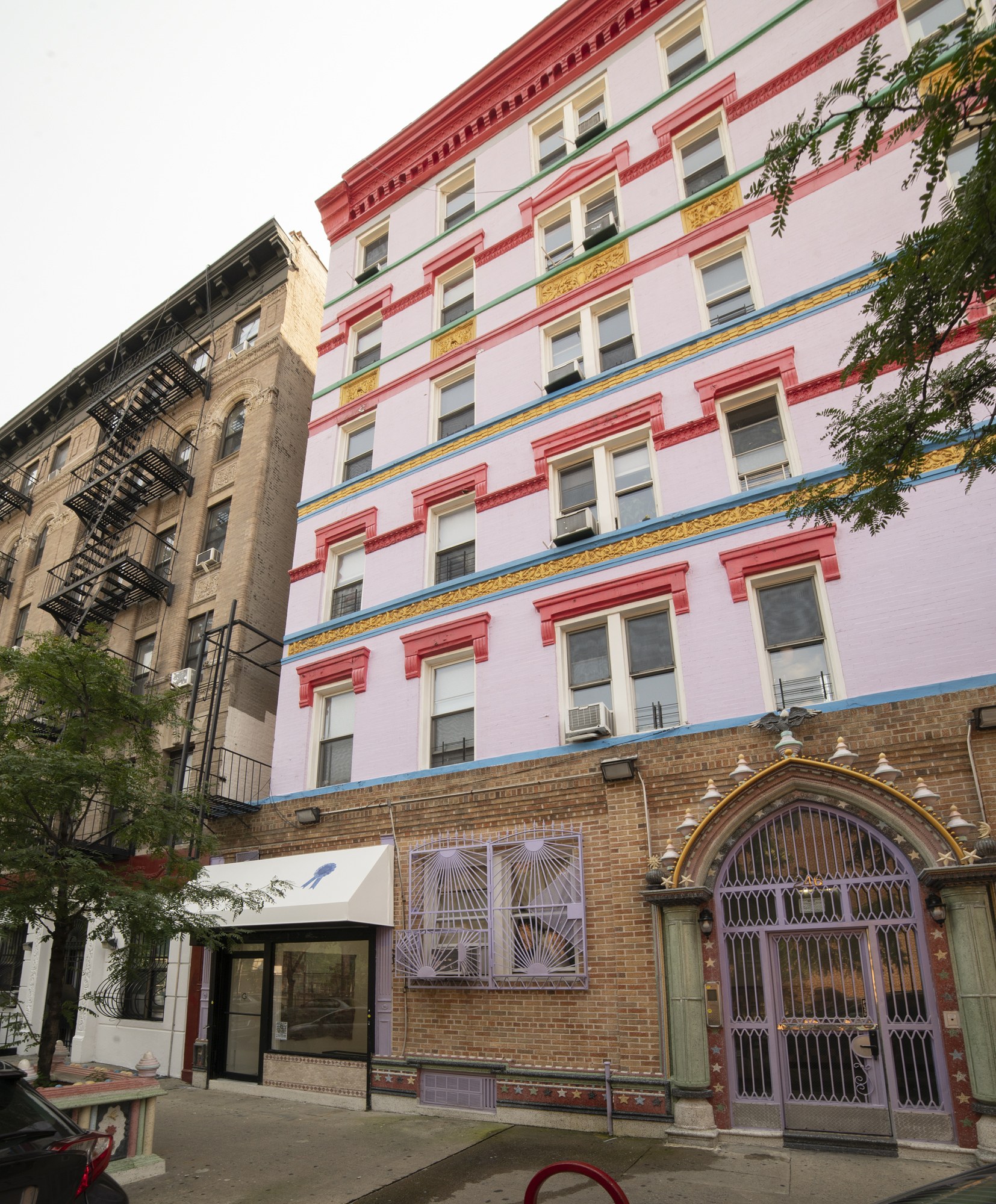
Gern en Regalia
Chinatown, Downtown, NY
105 Henry St, #5, Basement
Sign in to save this gallery, log a visit, or add a show to a shared list.
Exhibitions
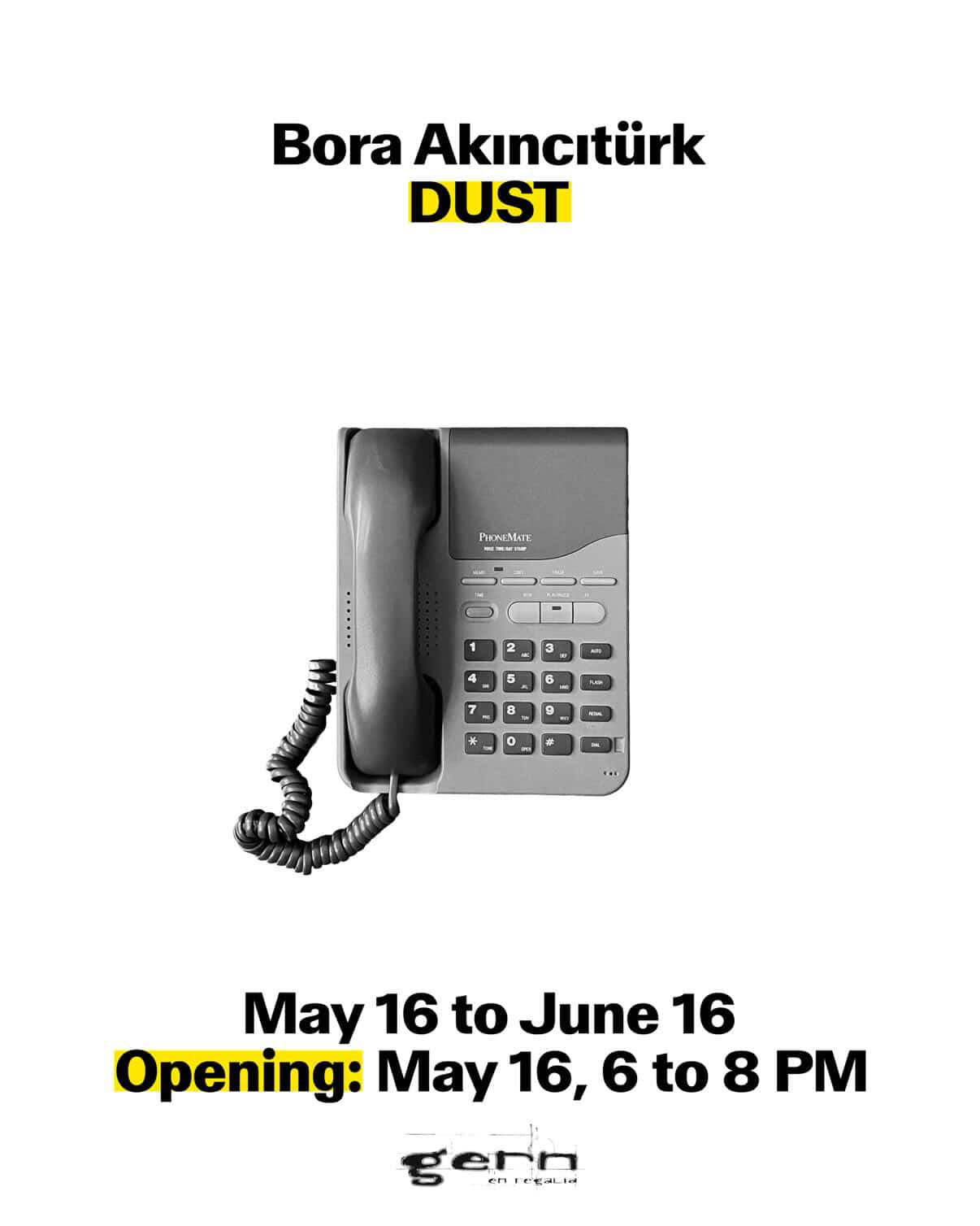
- On viewDust
Bora Akinciturk
May 16 – Jun 17
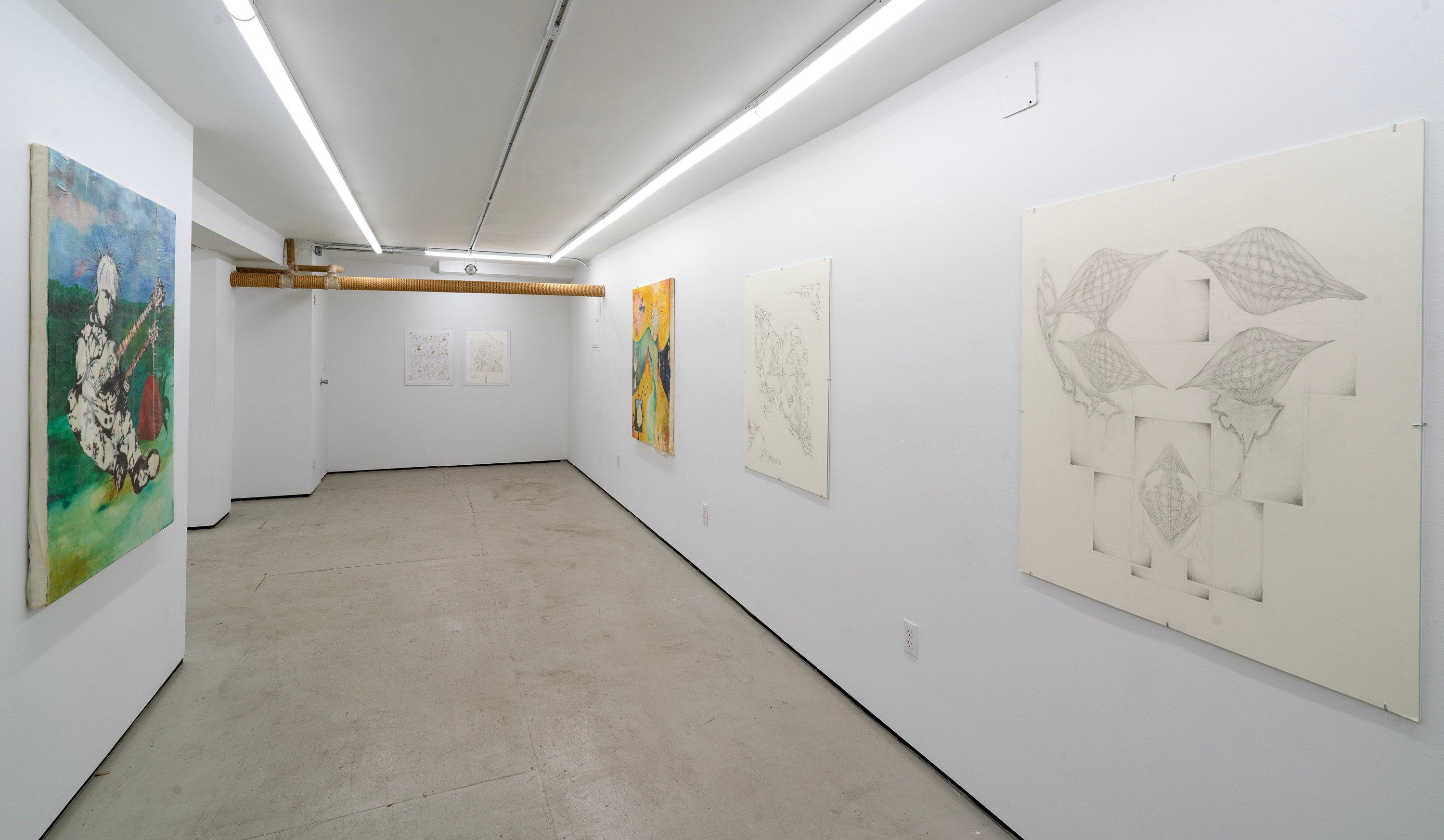
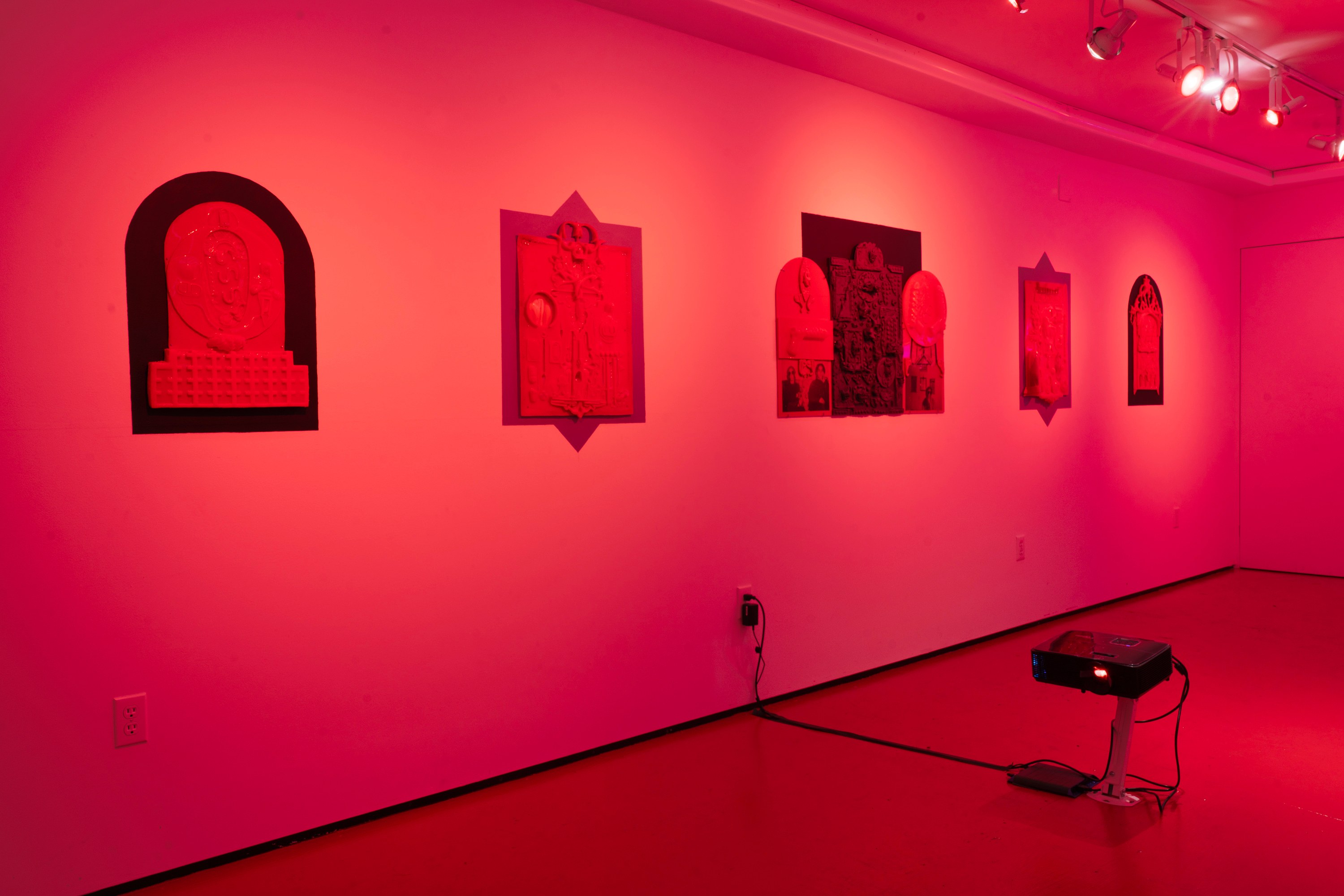
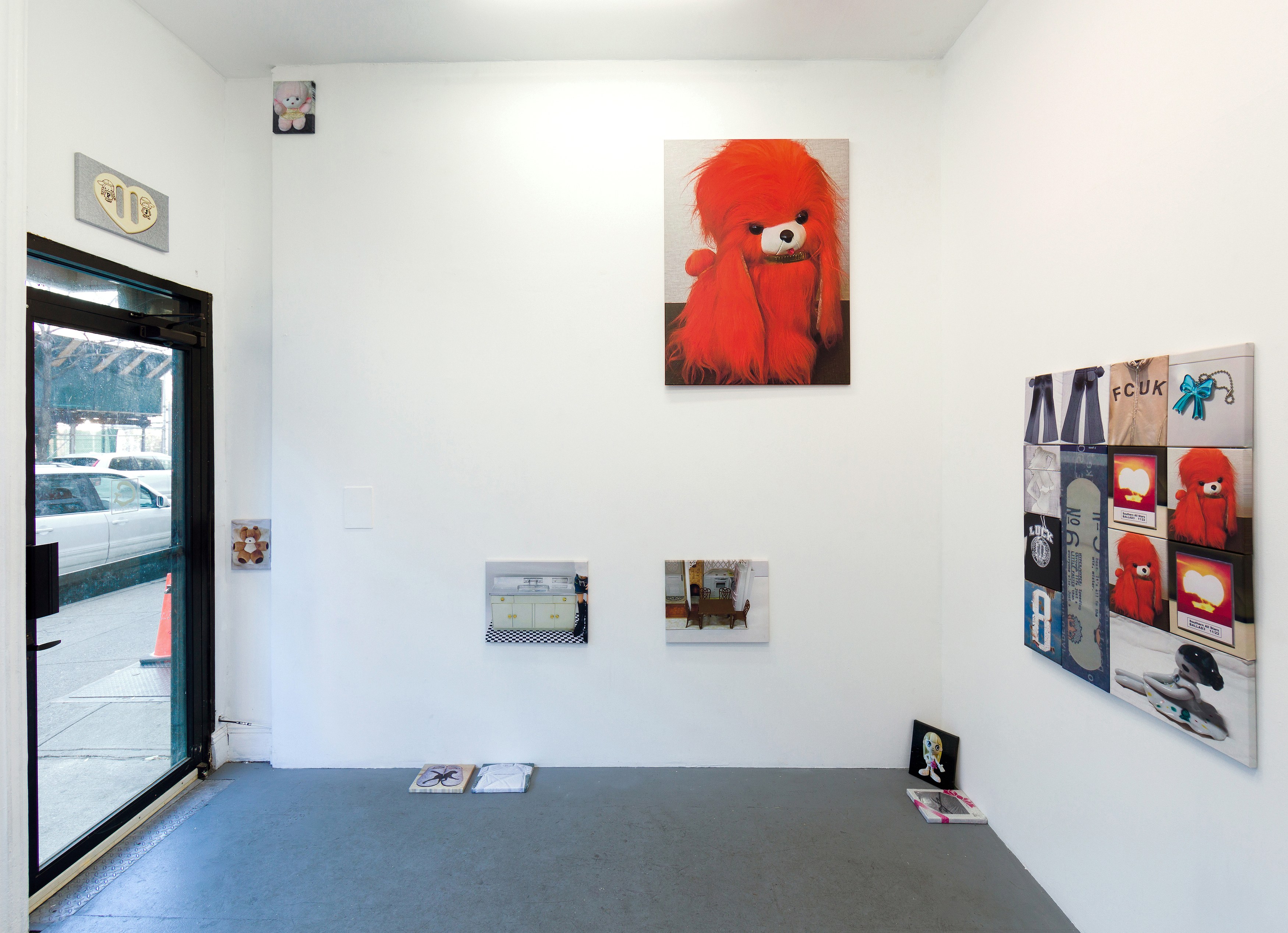
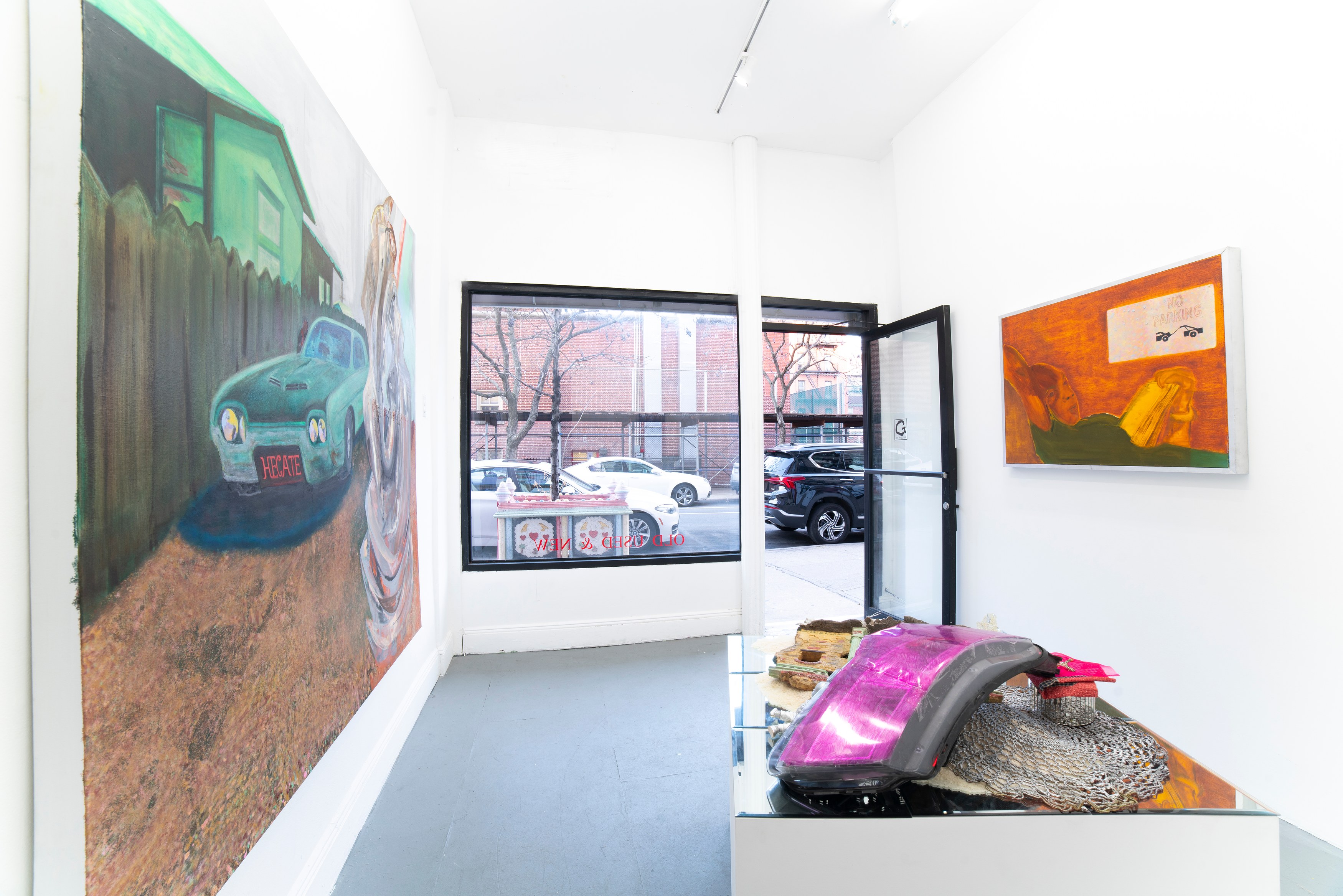
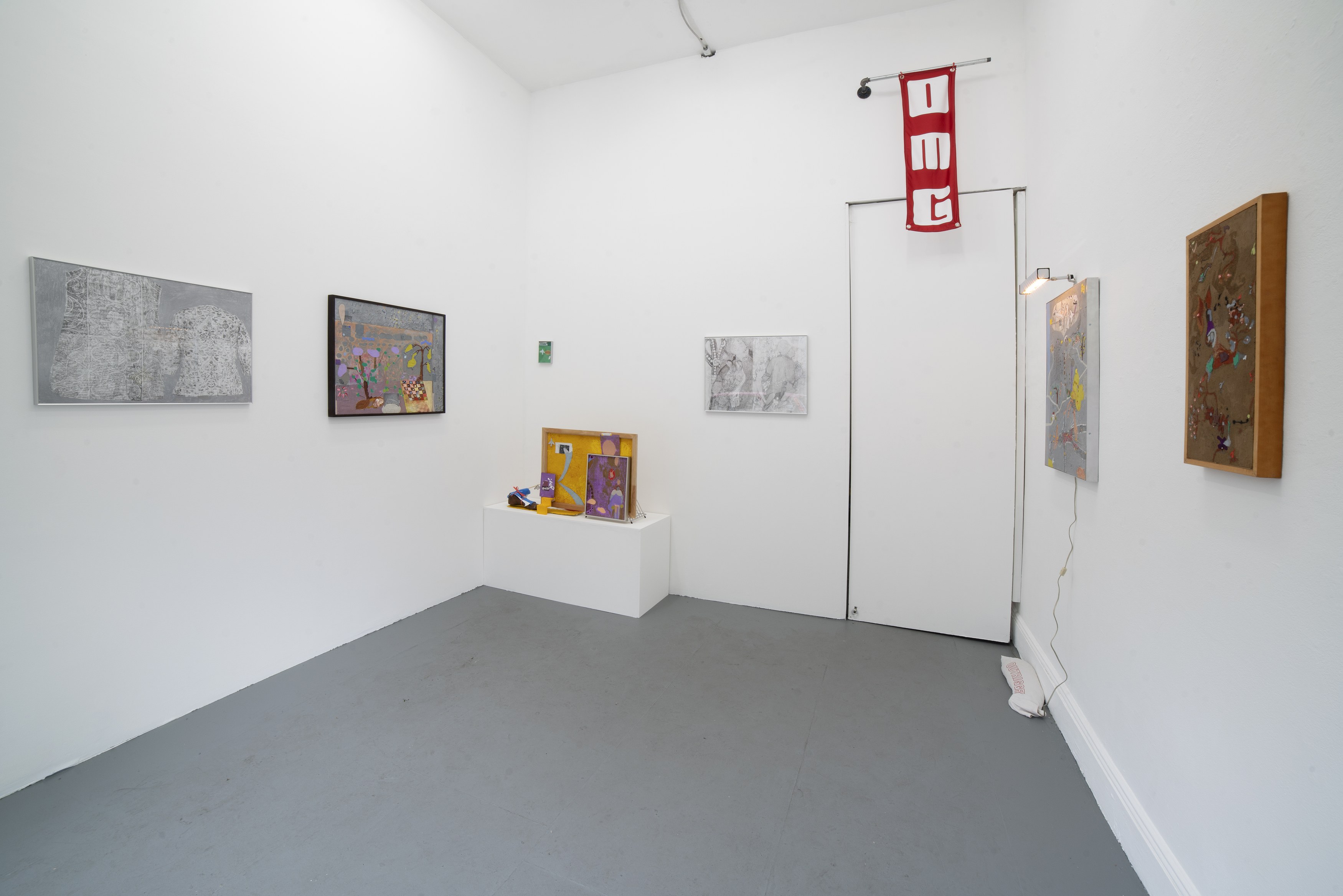
Gern is pleased to present Dust, Bora Akinciturk’s second solo exhibition in New York. The show brings together new paintings, a site-specific installation, and Dial Tone, a publication made for the exhibition. The exhibition starts with Istanbul, and with the buildings that have been disappearing from it. After the 1999 İzmit earthquake, safer housing became an urgent need across Turkey. In 2012, a new urban transformation law pushed that urgency into a fast-moving cycle of demolition and rebuilding. On Istanbul’s Asian side, in neighborhoods such as Suadiye, Caddebostan, and Göztepe, many modest apartment buildings from the 1960s through the 1990s were replaced by taller, denser developments. What was presented as earthquake preparation also became a real-estate machine. Akinciturk reflects on the loss of those buildings, memory, and ways of living, which changed drastically with how technology progressed and systems evolved. In the large plaid paintings, each number refers to an old landline or early mobile number connected to the artist’s friends and family. These are numbers from a time when people still memorized each other’s homes, called from hallways, waited through dial tones, and knew that someone’s parents might pick up first. The plaid patterns come from another kind of memory. In Istanbul, girls’ school uniforms were often identified by specific colors and checks. For Akinciturk, these patterns carry the feel of adolescence: school codes, friendships, crushes, sidewalks, and the everyday rhythm of the city. The futuristic font used for the phone numbers reflects a transformation of Akinciturk’s early imagination of the future, an optimistic vision shaped by childhood ideas of technology, and progress. Mobile phones, the internet, and digital communication once promised a better globalist world (globalist in a good way), more freedom, greater connection, and the feeling that borders, social, cultural, and physical would become less important. Instead, hyper-capitalism turned connection into constant consumption, attention into currency, and everyday life into doom scrolling, and watching brain rot videos. The works hold this tension between nostalgia and disappointment, between what the future once promised and what it became. In the smaller works, Akinciturk uses family photographs from his demolished home, along with images of apartment buildings where close friends still live. In these images, the people have been removed with basic AI tools. Rooms, furniture, façades, and empty spaces remain. The result is quiet but uneasy, as if the picture is trying to remember what has been taken out. The exhibition also includes a new site-specific installation: a working phone line. Visitors are invited to call 1-888-M41L B0X (1-888-641-5209) from their mobile phones while in the gallery. Leave a message, a complaint, a number, a song, anything. The calls become part of the exhibition’s live archive. Dial Tone, the publication accompanying the show, includes texts by artists and writers, along with further manipulated photographs connected to Istanbul’s ongoing urban transformation. Rooted in Istanbul, made from the distance of London, and landing now on the Lower East Side, Dust follows what sticks around after a place changes beyond recognition. The entirety of the works in the show consider how disaster, urban transformation, and technological progress reshape not only a city and the way we communicate but also the ways memory, intimacy, and belonging slowly disappear. —Mehmet Ekinci Bora Akinciturk (b. 1982, Ankara, Turkey) lives and works in London and Istanbul. Selected exhibitions include The Interior, Artissima Fair, Present Future Section, Turin, Italy, 2025; A Normal Life, Pilevneli Gallery, Istanbul, Turkey, 2024; Sprezzatura, Amanita, Florence, Italy, 2021; SKEE, in collaboration with Iain Ball, narrative projects, London, UK, 2019; A Very Small Window, Kim? Contemporary Art Center, Riga, Latvia, 2019; Vibrant Maturity® 7+ Adult Show, in collaboration with Ville Kallio, Futura, Prague, The Czech Republic, 2018; Keep Smiling is The Art of Living, Alyssa Davis Gallery, New York, USA, 2017. His band Fino Blendax, in collaboration with Ahmet Öğüt at: The ICA, London; Chisenhale Gallery, London; VanAbbe Museum, Eindhoven; The 56th Venice Biennale, Creative Time Summit: The Night Art Made the Future Visible 2015. Akinciturk holds a BFA in Graphic Design, Yeditepe University, Istanbul, 2007; Fine Art Postgraduate studies at Middlesex University, London, 2008.
 PastCompanion
Mary Helena Clark, Jin Mei, Gordon Parks, Quay Quinn Wolf
Apr 9 – May 10
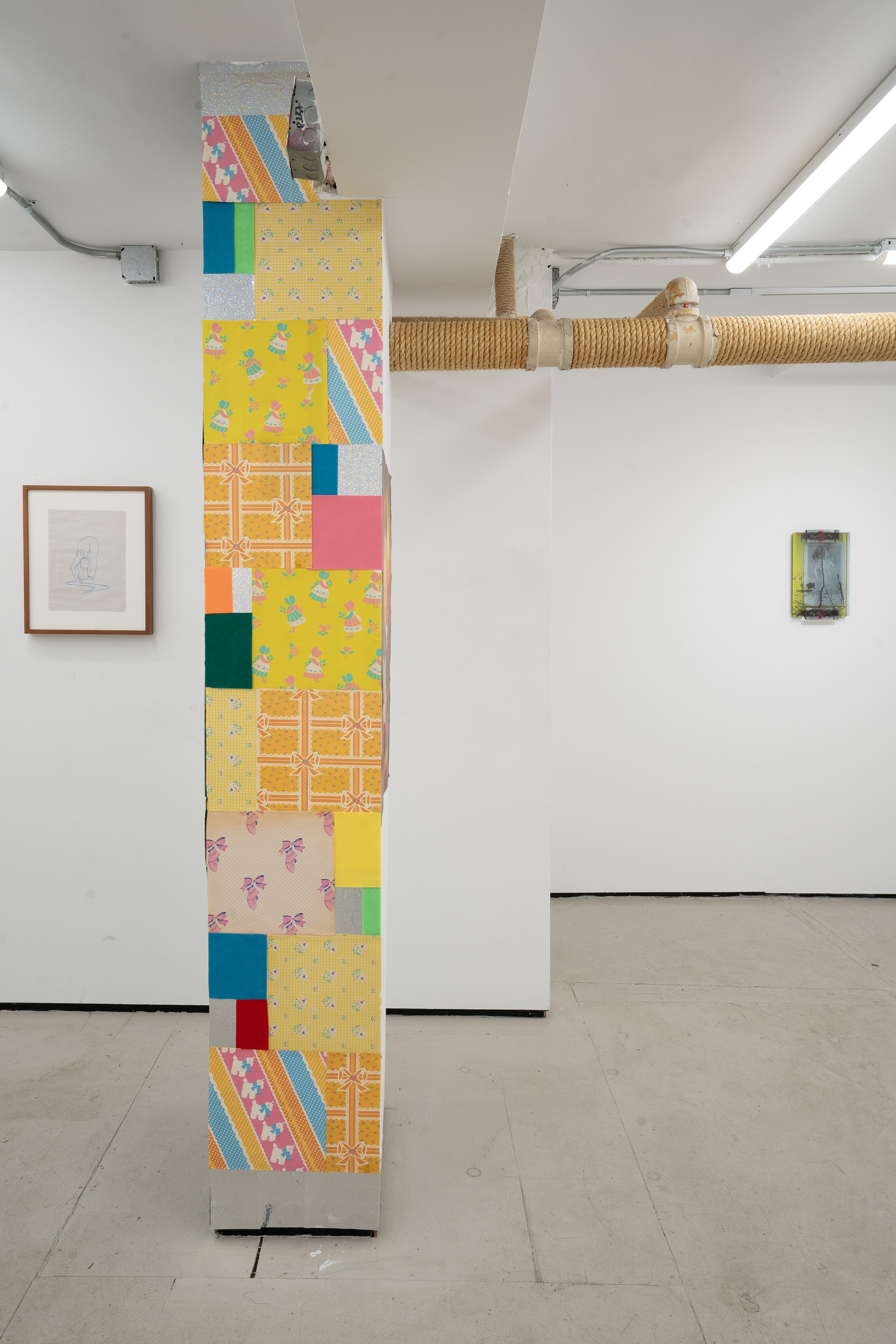
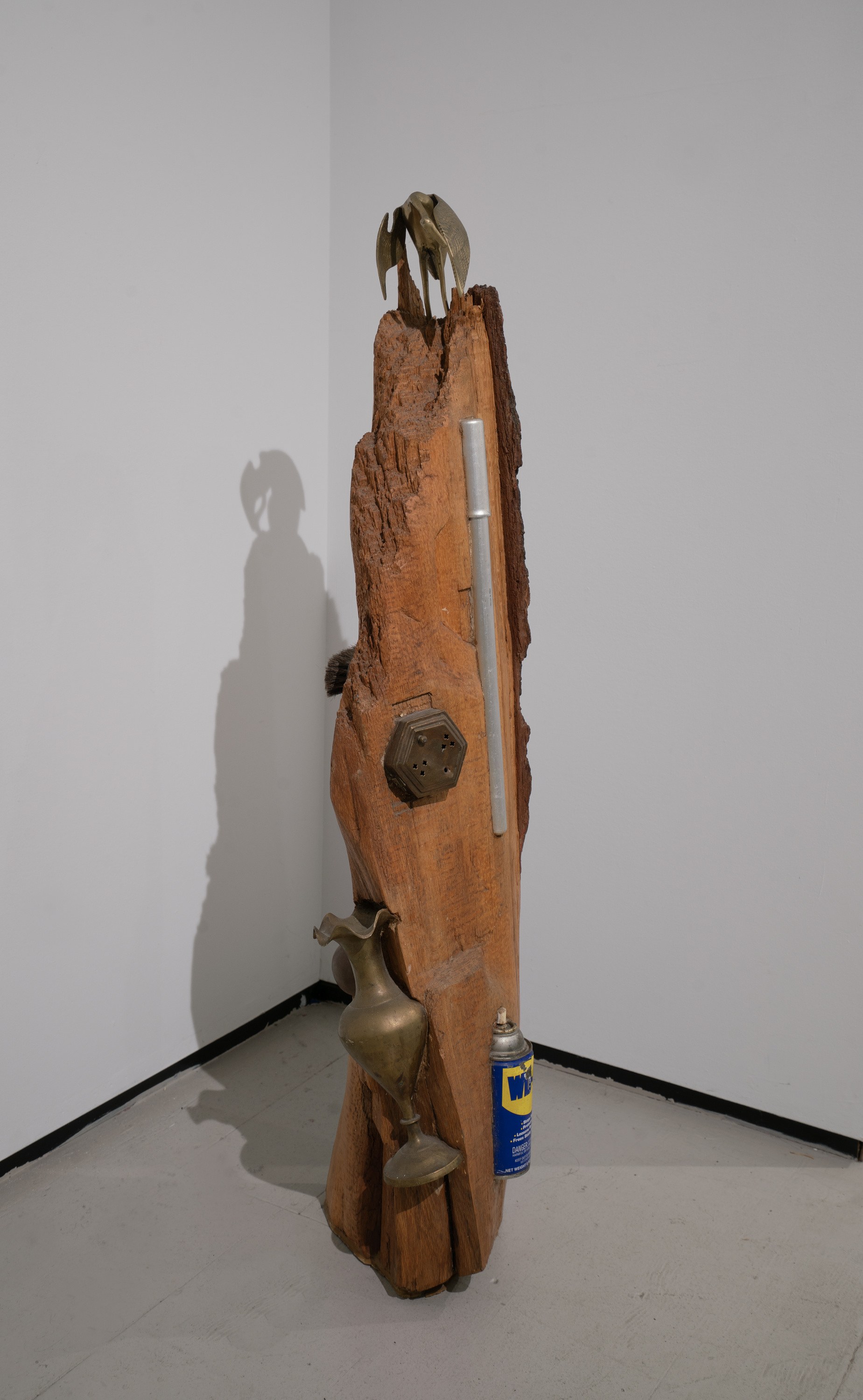
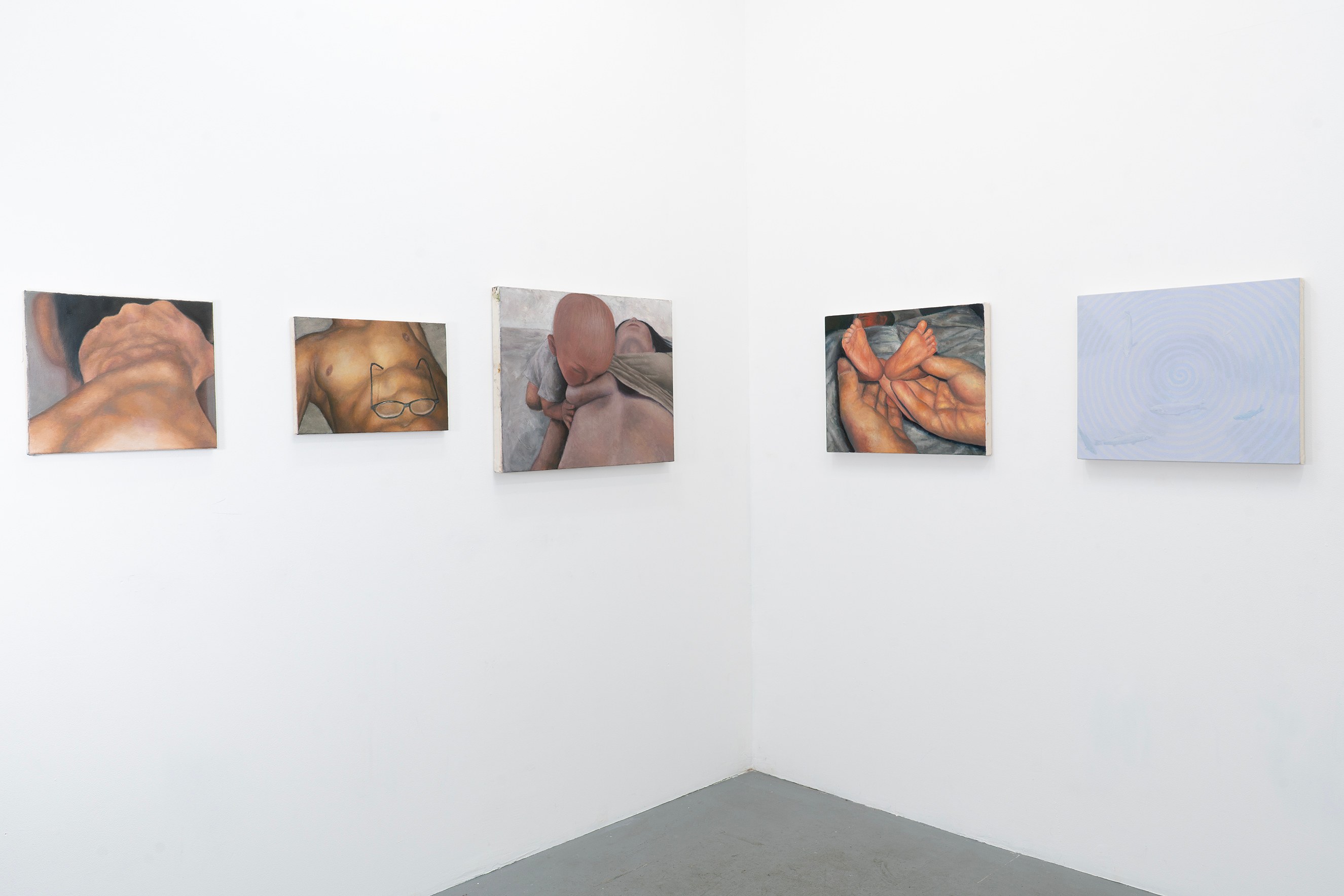
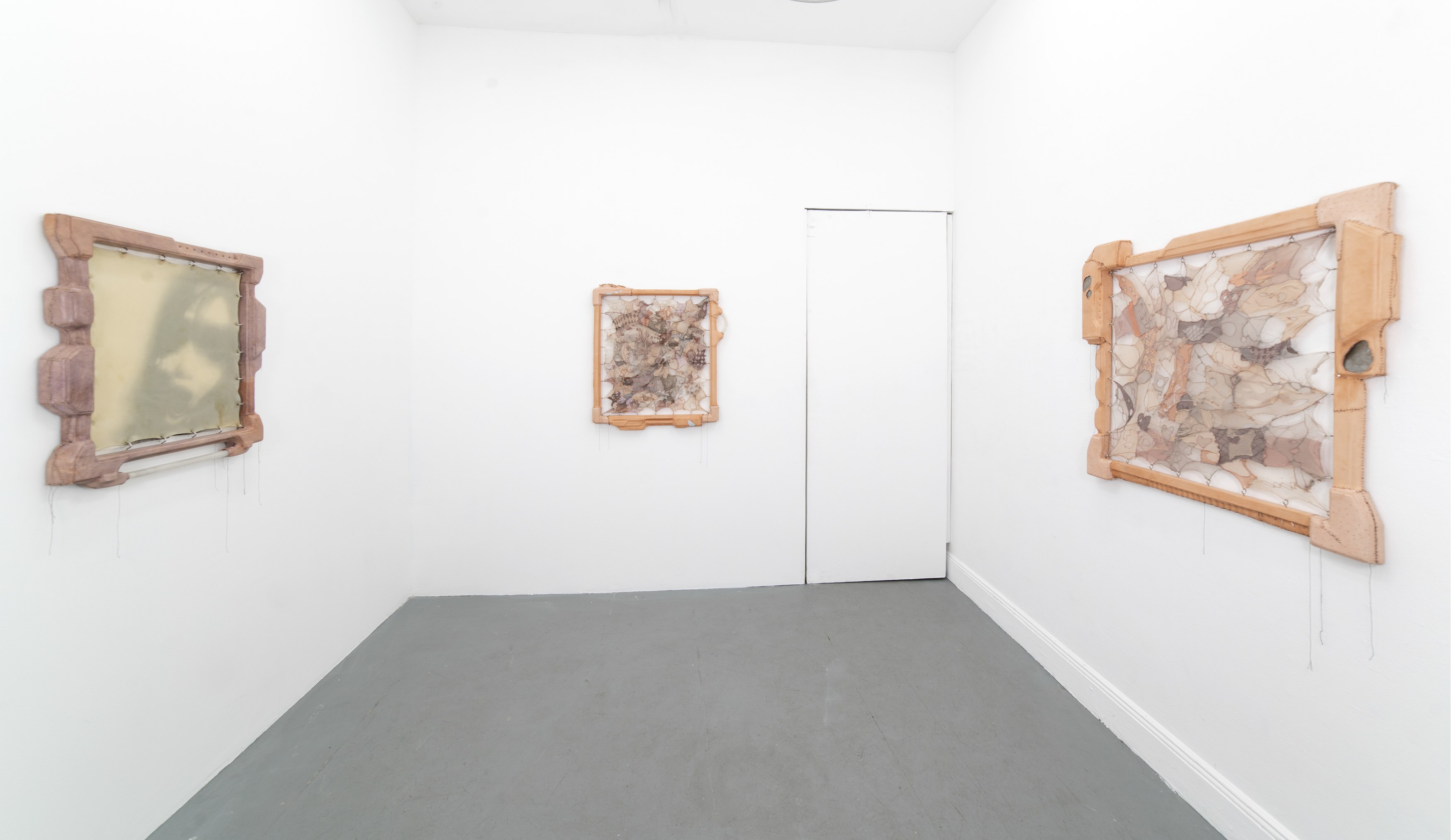
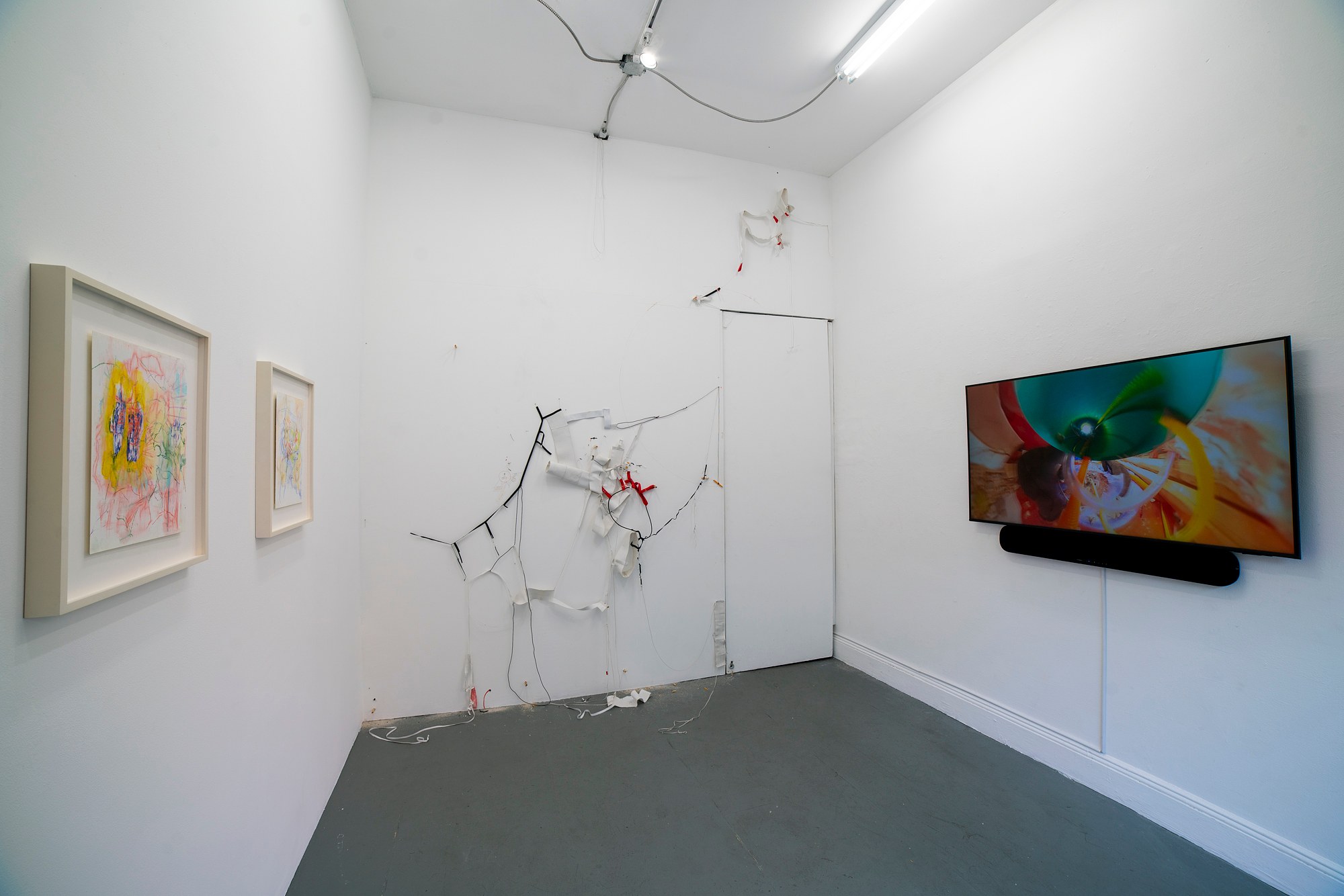
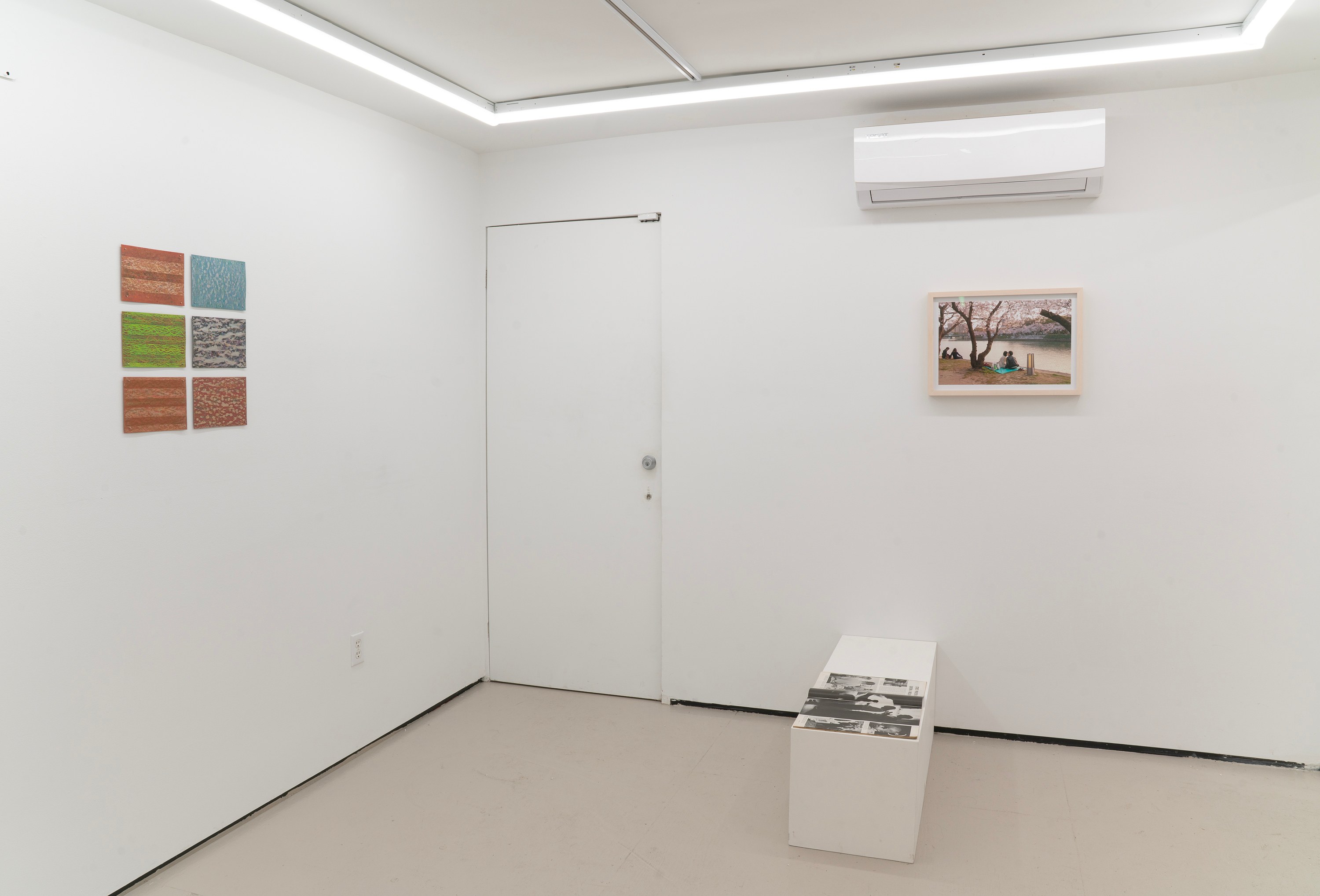
Mary Helena Clark Aya Fujioka Jin Mei Gordon Parks Quay Quinn Wolf Gern en Regalia is delighted to present Companion, a group exhibition curated by Alex Ito. In Companion, the artists attend to the nearly imperceptible threads that bind us to the material world- where narratives splinter, difference binds, and memory incubates through cycles of forgetting and reemergence. Meaning does not arrive fully formed or with the intention of complete understanding. It withholds and accumulates relationally. Across the exhibition, materials and methodologies range from found objects and repetitive gestures to publication and unstaged photography, resisting the spectacle of rendering a world into seamless representation. Rather than fabricating a world into being, these approaches embody the amorphous mechanics of experience, where meaning accrues slowly, relationally, and without guarantee. These practices ask for modes of attention grounded in proximity and companionship with an outer world. As technology increasingly anticipates language and shapes behavior before individuals can consciously articulate themselves, the space for indeterminacy narrows. The everyday risks becoming overdetermined, pre-scripted, and frictionless. To engage these works is to rehearse openness for ambiguity; to encounter artworks as undefined invitations rather than recommendation engines. In doing so, Companion gestures toward a world expanded not through clarity, but through intimacy, pause, and the generative potential of not yet knowing. Mary Helena Clark (b. 1983, USA) lives and works in New York. Her work has been exhibited and screened nationally and internationally, including presentations at the Whitney Museum of American Art, New York, MIT List Visual Arts Center, Cambridge; Sundance Film Festival, Park City; Swedish Film Institute, Stockholm; The Gene Siskel Film Center, Chicago; Museum of Contemporary Photography, Chicago; Wexner Center for the Arts, Columbus; Anthology Film Archives, New York; Yerba Buena Center; San Francisco; National Gallery of Art, Washington DC; and at the New York, London, Rotterdam and Toronto International Film Festivals. Aya Fujioka (b. 1972, Hiroshima, Japan) studied photography at the College of Art, Nihon University. From 2007 to 2013, Fujioka lived in New York with support from the Agency for Cultural Affairs of Japan. Her photobook of her hometown Hiroshima, Here Goes River (Akaaka, 2017) earned multiple major awards, including the Kimura Ihei Award. Her work has been widely exhibited, including at the 21st Century Museum of Contemporary Art in Kanazawa and the Irie Taikichi Memorial Museum of Photography in Nara. Her publications include Comment te dire adieu (Ricochet) and I Don’t Sleep Public (Akaaka). Fujioka’s work is held in the permanent collection of the San Francisco Museum of Modern Art. She lives and works in Kyoto, Japan. Jin Mei was born in Shanxi in 1961 and attended the School of Art at Shanxi University in 1982. After graduation, she worked as an art editor for a magazine. In 1993, she opened her own business, Jin Mei Flower Shop, through which she supported the artistic practice of her family. Jin Mei picked up a paintbrush again at the age of fifty. The book of her drawings, titled 晋美: jm was published by her daughter Chang Yuchen in 2024 under the imprint How Many Books. The same year she had her first solo exhibition at Kiang Malingue, Hong Kong, and launched a fashion collaboration with Home Society, Shanghai. In 2025, Jin Mei participated in a residency at Anaya, Jinshanling. Gordon Parks (b. 1912, Fort Scott, KS; d. 2006, New York, NY) was a photographer, filmmaker, writer, and composer who lived and worked primarily in New York City. Parks’ work explored the social realities of American life, with a particular focus on race, poverty, and justice. His photographs were widely published in Life magazine, where he was the magazine’s first Black staff photographer. Parks also directed the films The Learning Tree (1969) and Shaft (1971). Parks’ work has been exhibited internationally, including exhibitions at Museum of Modern Art, The Metropolitan Museum of Art, and The Art Institute of Chicago. Parks’ photographs have been widely reproduced and discussed in publications such as Artforum, The New York Times, and Time. The work presented in this exhibition is being presented with the permission of The Gordon Parks Foundation. Quay Quinn Wolf (b. 1989, New York, NY) is a sculptor living and working in New York City. Wolf’s work has been exhibited both nationally and internationally. Recent solo shows include 002 Salon 75, Copenhagen, Denmark (2025), Repair Jack Barrett, New York,(2022) and Rest Prairie, Chicago (2022). Recent group exhibitions include, Cafe Wednesday Van Abbehuis, Eindhoven, Netherlands (2025), There is a guy standing in front of a fan reminiscing about the past, Linienstraße, Düsseldorf, Germany(2025), Correspondences, Francois Ghebaly, Los Angeles, CA (2025), Ideal Shapes of Disappearing, Silke Linder, New York, NY (2023), Sneckdown, EACC, Castellón, Spain (2023), Inauguration, Lo Brutto Stahl, Paris, France (2023), Helmut Lang seen by Antwaun Sargent : YOꓭWOƆ, Hannah Traore, New York, NY (2023), In Practice: You may go, but this will bring you back, Sculpture Center, New York, NY (2021). His work has been reviewed in publications including Artforum, Art in America, The New York Times, ARTnews, Artsy and i-D.
 PastPepper's Ghost
Isabella Kressin & Connor Bokovay
Feb 19 – Mar 23
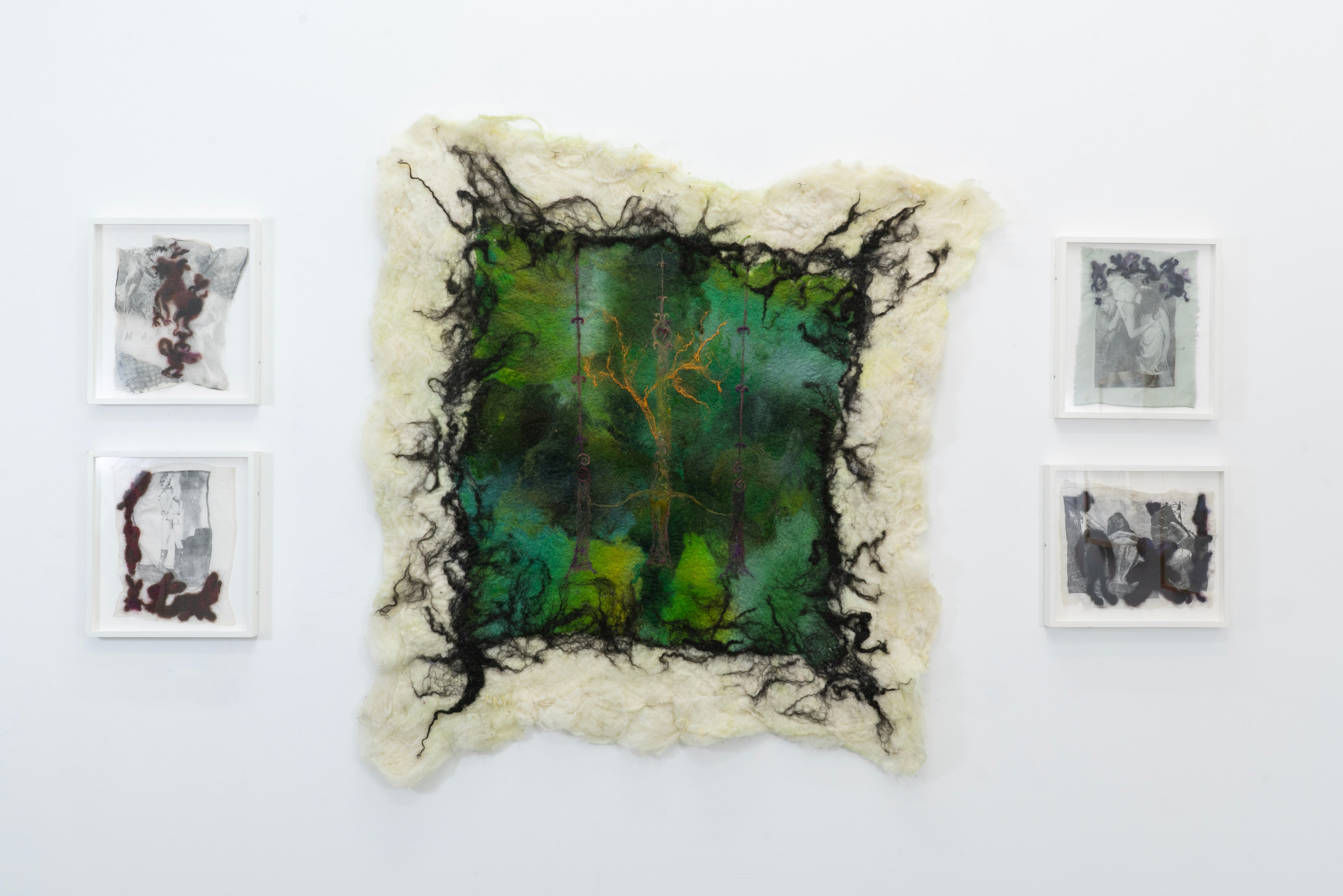
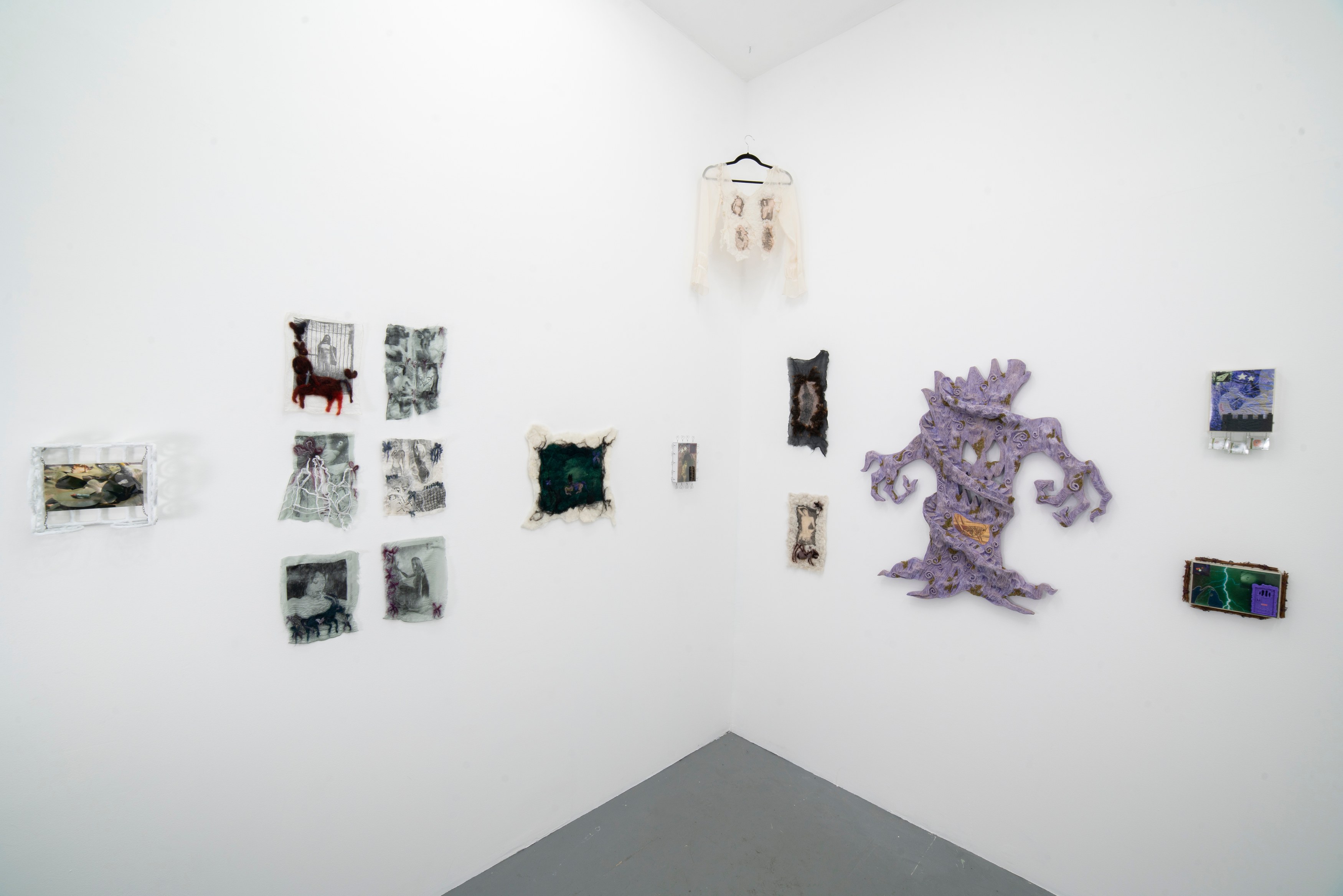
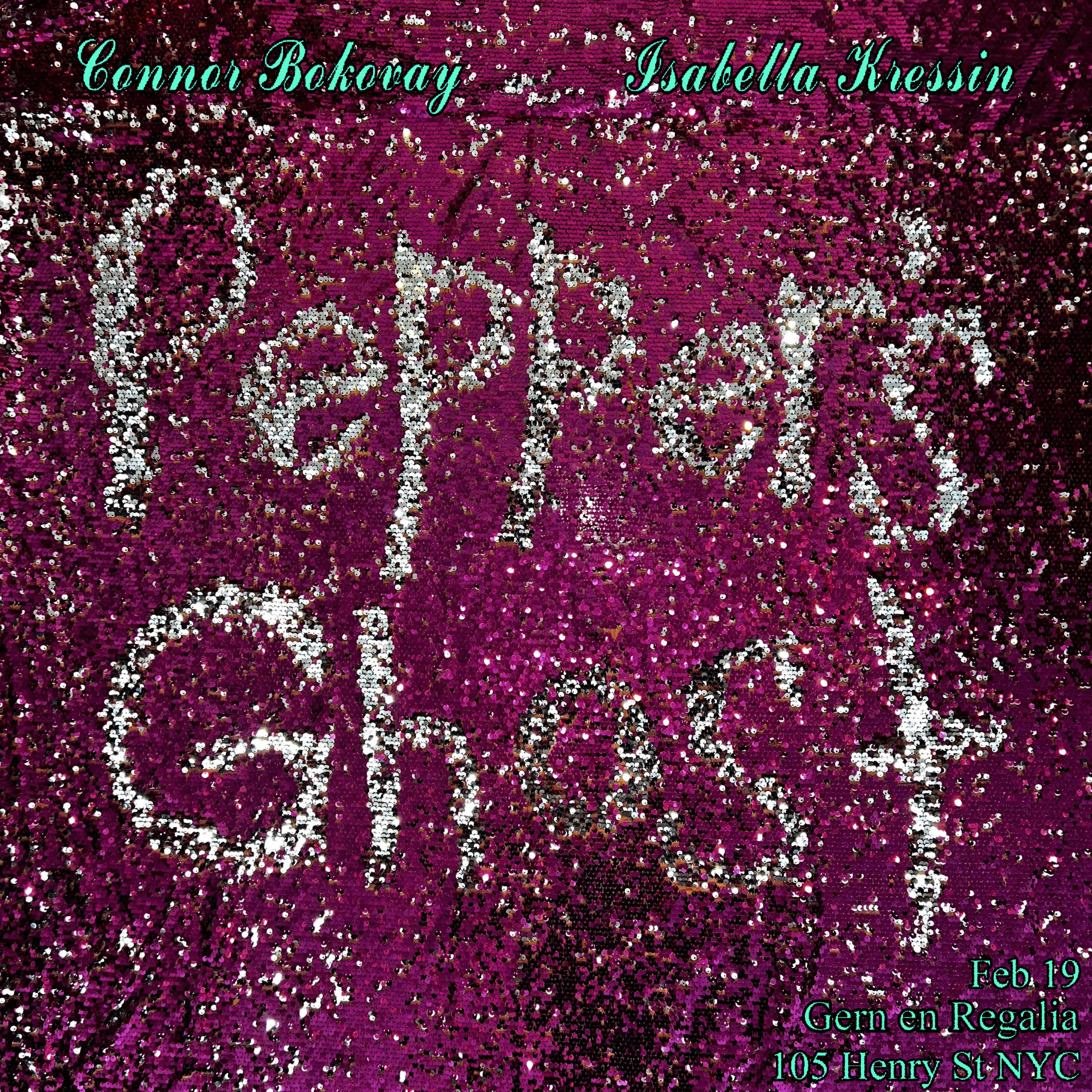
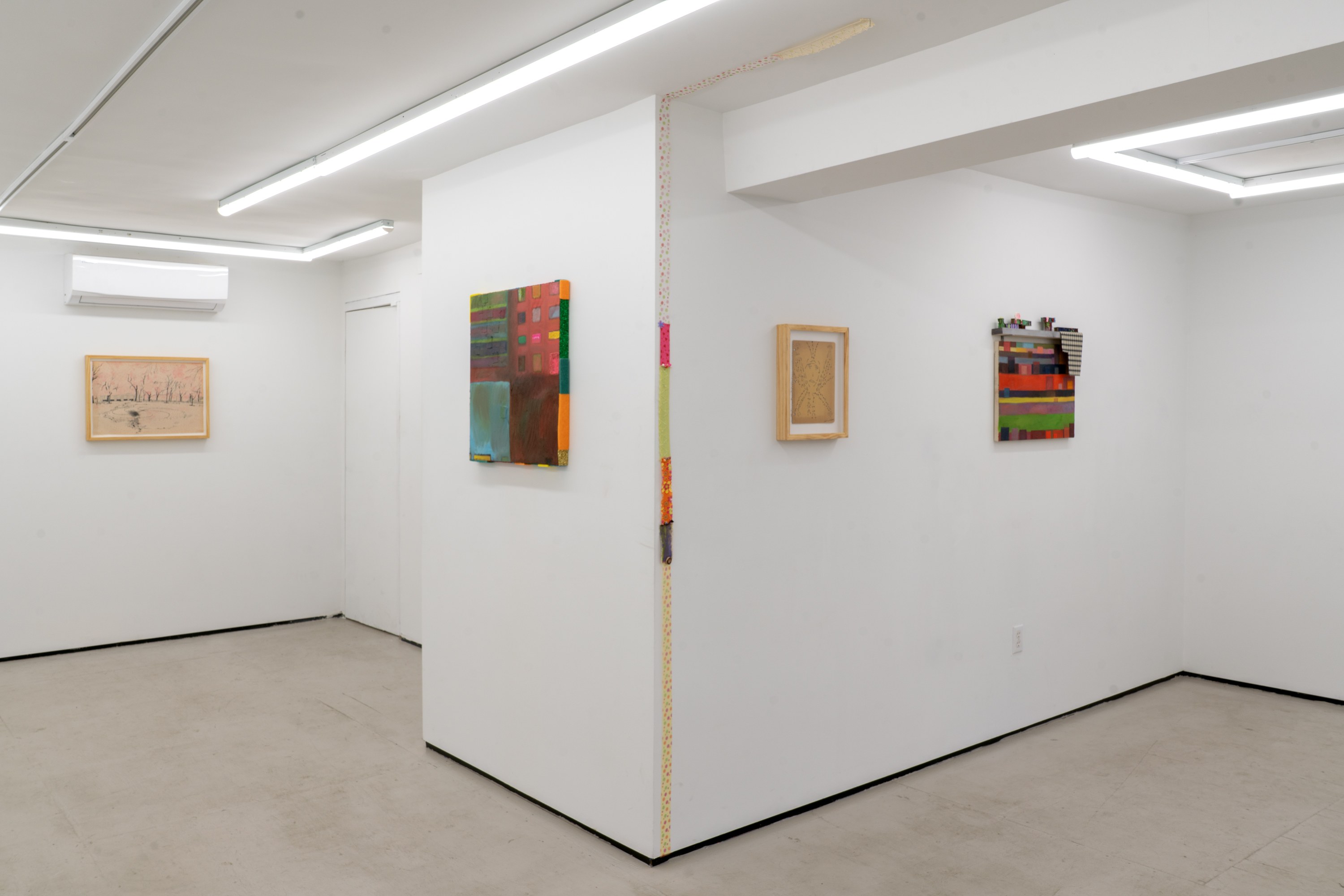
Pepper’s Ghost brings together works by Connor Bokovay and Isabella Kressin, whose distinct practices converge through shared symbolic and material concerns, alternating between collaborative and individual works, yet seamlessly unfolding. There is a high level of theatricality in this exhibition… one might begin, almost without noticing, to read a story… Miss Dr. Pepper is a brilliant but withdrawn thinker. Burdened by memories she cannot escape that echo through her solitude. On a cold night, she is visited by a spectral double of herself, a ghost born from remembrance & personalized goods; The translucent silhouette alight Carrying a set of beautiful 3D pressed powders in shiny boxes Their reflective packaging never looks the same twice They behave like living things Just like glistening water It's so eventful Opening one of the boxes The Ghost offers Miss Dr. Pepper a bargain: Freedom from pain through the erasure of sorrowful memory. Prompted by a vague sense of urgency rather than by any definite resolution, Miss Dr. Pepper accepts. Her grief disappears, but so does her tenderness and devotion. As she moves through the world untroubled, those around her begin to mirror her condition, infected by an emotional vacancy. Coined by John Henry Pepper, the Pepper’s Ghost effect is a 19th-century illusion in which a figure or object, hidden from the viewer, is reflected from a mirror onto a pane of glass, producing a spectral presence. This logic of apparition permeates the exhibition: in recurring silhouettes of female protagonists, in translucent materials, collages, and the eerie suspension of objects. Seeing two artists collaborate on a single work is a rare sight and a joy to witness. When meeting them, Bokovay and Kressin exchanged a piece of fur and colorful plastics, sometimes drawn from their personal archives, sometimes sourced from a Québécois secondhand store named Renaissance. These reworked materials, neither refined nor concealed, are presented as much as they were gathered. What might have been dismissed becomes charged anew. A kind of magic emerges in this accumulation; consumption operates as choreography rather than an endpoint. Objects persist as ghosts within circuits of exchange: hat pins, insects, feathers, rusted metal, window film, and tinsel coexist as cherished relics. In Kressin’s work Shimmering Information, the Sphinx is less of an ancient colossal monument than a Victorian Era apparition: born of early photography, a spectral presence. It is a figure produced through reflection, reproduction, circulation, and anachronism, made visible again and again. As in Pepper’s Ghost itself, what appears immaterial reveals the apparatus that sustains it, binding illusion to matter. —Sophie Latouche Isabella Kressin (b. 1996, North York, Ontario) lives and works in Montréal, Quebec. Previous exhibitions include Kurtkubin, Mexico City (2025), Sophie Présente, Montréal (2024), Gern en Regalia, New York (2023 and 2021), Pangée, Montréal (2023), Andrew Edlin, New York, (2022) and Chris Andrews, Montréal (2022). Connor Bokovay (b. 1995, Sioux Lookout, Canada) is an artist based in Montréal. Recent group exhibitions include Crush Loop at Grunts Rare Books (Chicago, IL), 2007 at Galerie Nicolas Robert (Montreal, QC) and Public Life (Drawings) at Chris Andrews (Montreal, QC).
 Past
PastPast
New York PaintingsWill Yackulic
Jul 10 – Jul 11
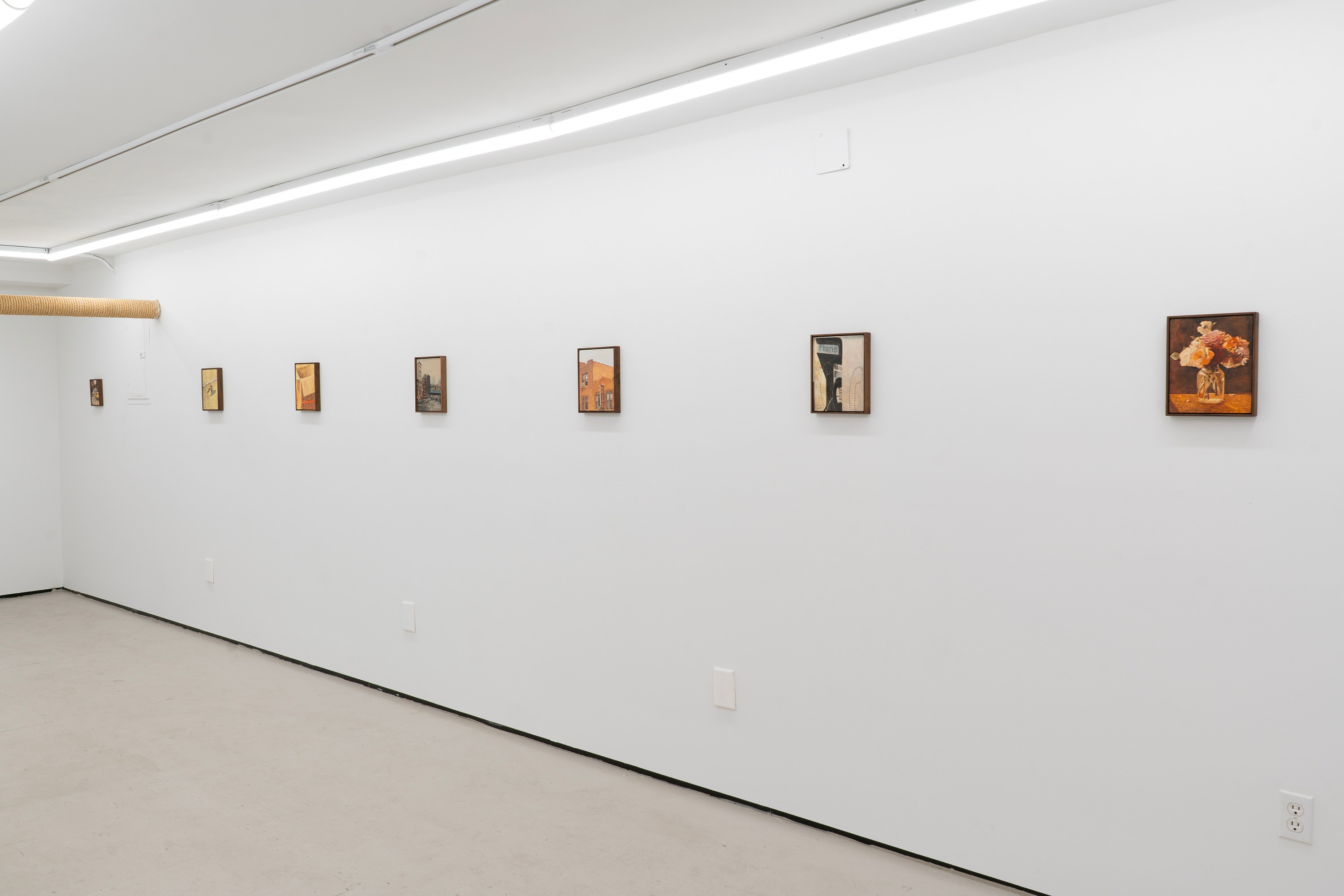
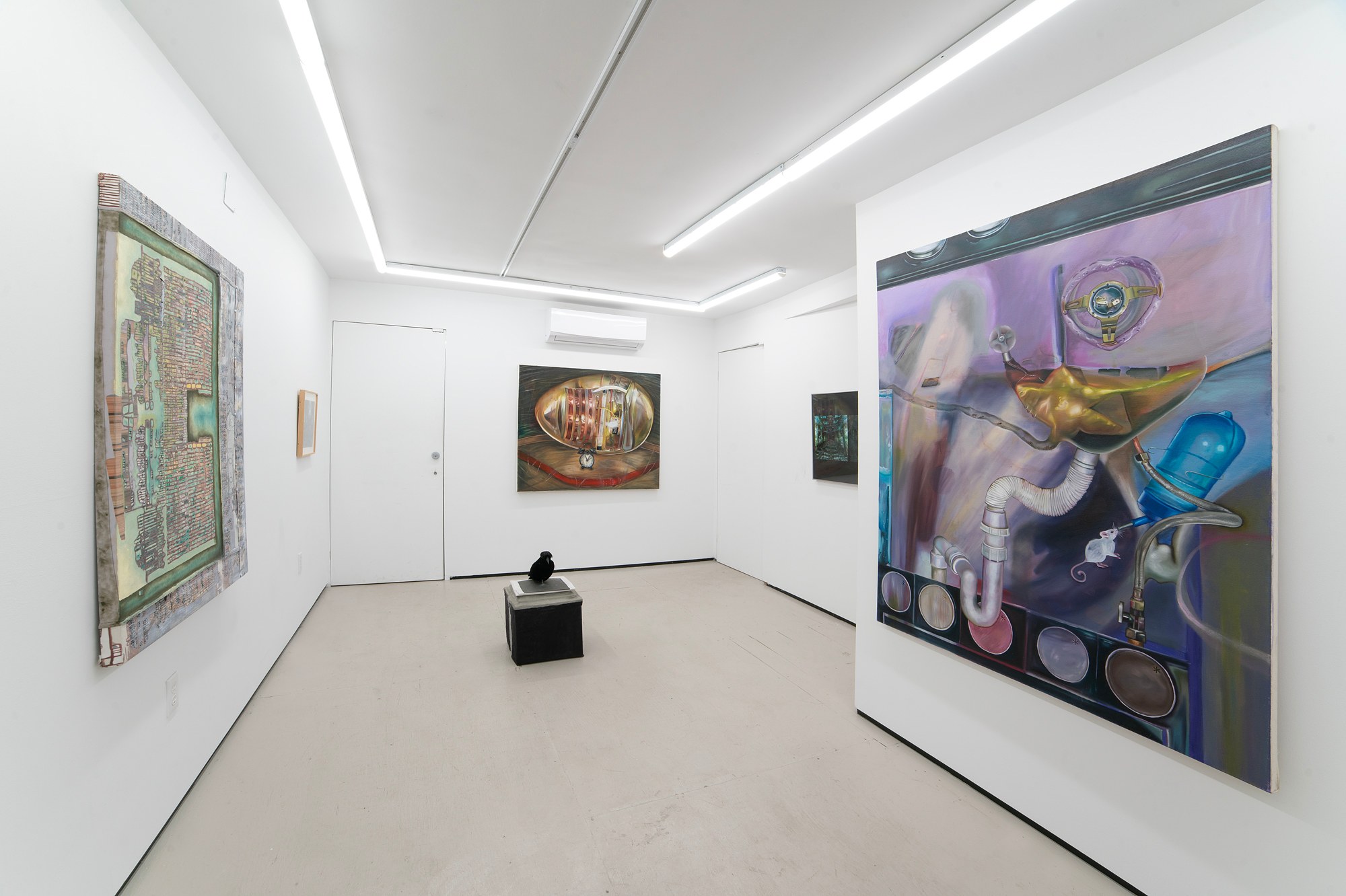
In New York Paintings, Will Yackulic revisits the mix of visual blur and angular precision that gives his native city its own special gravity. Part of an ongoing series, these paintings contain urban scenes mostly absent of people, with objects just on the point of recognition before returning to paint. A vase of flowers, captures of traffic, a weathered phone booth — each a relatable image but often with a ghostly absence. An empty cardboard box with pictorial writing looks ancient with light-washed browns and oranges, the composition a meeting of shapes. A sparrow is strangely pensive, its front feathers blending eerily into the cement surface it rests upon, as if their matter was merging. Distant buildings across a river settle into the haze of a city evening unified in smog. A bright yellow cab is a creature unto itself, awkwardly turning into the edge of the panel and losing its physicality, as if it must de-corporealize to escape the painter. The tone of the paintings offers a quiet wonder that expands outward. The sense of worn inhabitance is a quality that both attracts and repels one from cityscapes, and is a heart to the stories in them. It begs a questioning of the place where comfort of symbol recognition is undermined by decay of use, yet also carries a comfort from that very use. In one painting, bricks are almost pills constructed with a maddening enough angularity that we house a concept of ourselves in them, yet still require a larger than life sign outside some poor soul's window, acknowledging "DRUGS". Looking at a rooftop from below, the distance between sky and roof is up, only to be seen looking straight ahead. The upper lip of another structure appears at the very bottom of the same panel, as if one could pull it right out of the painting between the fingers, with the whole structure toppling over. Yackulic's reticence in detailing human figures is telling in that his connection is to the cityscape itself. Instead of portraits, a dark curve here, a light wisp there, but the blurriest of images that can easily be confused with surrounding marks and minute splotches of colors ... the same marks that placed elsewhere make one think of vegetables, or traffic paint. Perhaps what's most ghostly about a densely populated city like New York, is that each subsequent revisit reveals much of it has changed, moved on, is gone. Like a memory, every time one goes back it resembles less and less the thing remembered. These paintings are the rooms of memory then, a capture of the wonder at a favorite landscape that changes and wears both internally and externally. —Edmund Berrigan Will Yackulic was born in 1975 in New York City and now lives and works in Berkeley, CA. He received a BFA from SUNY Purchase, studied at Lacoste Ecole des Beaux-Arts, Lacoste, France and Hogeschool voor de Kunsten in Amsterdam. Recent exhibitions include Et al, San Francisco, Berkeley Art Museum, Berkeley; Crocker Art Museum, Sacramento. Yackulic’s art has been reviewed in publications such as Artforum, Modern Painters, FlashArt, and the Los Angeles Times.
Past
New York PaintingsWill Yackulic
Jul 10 – Aug 24
In New York Paintings, Will Yackulic revisits the mix of visual blur and angular precision that gives his native city its own special gravity. Part of an ongoing series, these paintings contain urban scenes mostly absent of people, with objects just on the point of recognition before returning to paint. A vase of flowers, captures of traffic, a weathered phone booth — each a relatable image but often with a ghostly absence. An empty cardboard box with pictorial writing looks ancient with light-washed browns and oranges, the composition a meeting of shapes. A sparrow is strangely pensive, its front feathers blending eerily into the cement surface it rests upon, as if their matter was merging. Distant buildings across a river settle into the haze of a city evening unified in smog. A bright yellow cab is a creature unto itself, awkwardly turning into the edge of the panel and losing its physicality, as if it must de-corporealize to escape the painter. The tone of the paintings offers a quiet wonder that expands outward. The sense of worn inhabitance is a quality that both attracts and repels one from cityscapes, and is a heart to the stories in them. It begs a questioning of the place where comfort of symbol recognition is undermined by decay of use, yet also carries a comfort from that very use. In one painting, bricks are almost pills constructed with a maddening enough angularity that we house a concept of ourselves in them, yet still require a larger than life sign outside some poor soul's window, acknowledging "DRUGS" Looking at a rooftop from below, the distance between sky and roof is up, only to be seen looking straight ahead. The upper lip of another structure appears at the very bottom of the same panel, as if one could pull it right out of the painting between the fingers, with the whole structure toppling over. Yackulic's reticence in detailing human figures is telling in that his connection is to the cityscape itself. Instead of portraits, a dark curve here, a light wisp there, but the blurriest of images that can easily be confused with surrounding marks and minute splotches of colors ... the same marks that placed elsewhere make one think of vegetables, or traffic paint. Perhaps what's most ghostly about a densely populated city like New York, is that each subsequent revisit reveals much of it has changed, moved on, is gone. Like a memory, every time one goes back it resembles less and less the thing remembered. These paintings are the rooms of memory then, a capture of the wonder at a favorite landscape that changes and wears both internally and externally. —Edmund Berrigan Will Yackulic was born in 1975 in New York City and now lives and works in Berkeley, CA. He received a BFA from SUNY Purchase, studied at Lacoste Ecole des Beaux-Arts, Lacoste, France and Hogeschool voor de Kunsten in Amsterdam. Recent exhibitions include Et al, San Francisco, Berkeley Art Museum, Berkeley; Crocker Art Museum, Sacramento. Yackulic’s art has been reviewed in publications such as Artforum, Modern Painters, FlashArt, and the Los Angeles Times.
Past
MagnoliaTyler Garces Ormsby
Jan 9 – Feb 10
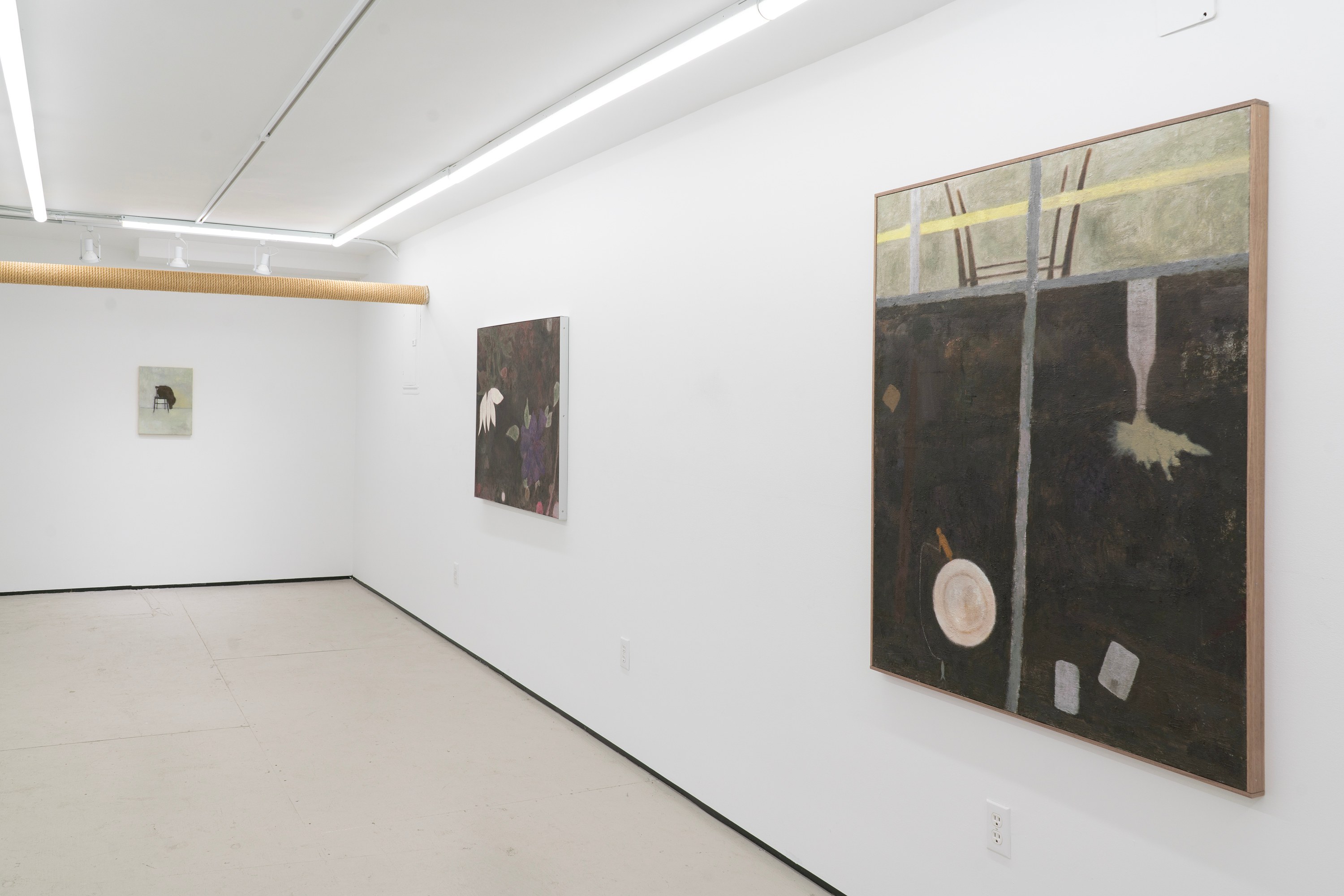
"the creek was running faster than we’d ever seen it. it was our sixth time coming to this creek bed. he left two weeks ago. something about a different country. i remember the way we smelled together. his hands were shaking. it was okay." —Evan Moore Tyler Garces Ormsby (b. 1994) is based in San Francisco, California. His recent exhibitions include House of Seiko, San Francisco; Et al. Gallery, San Francisco; New Remedios Enterprises, Manila.
 PastXO Show
Sara Yukiko
Nov 8 – Dec 15
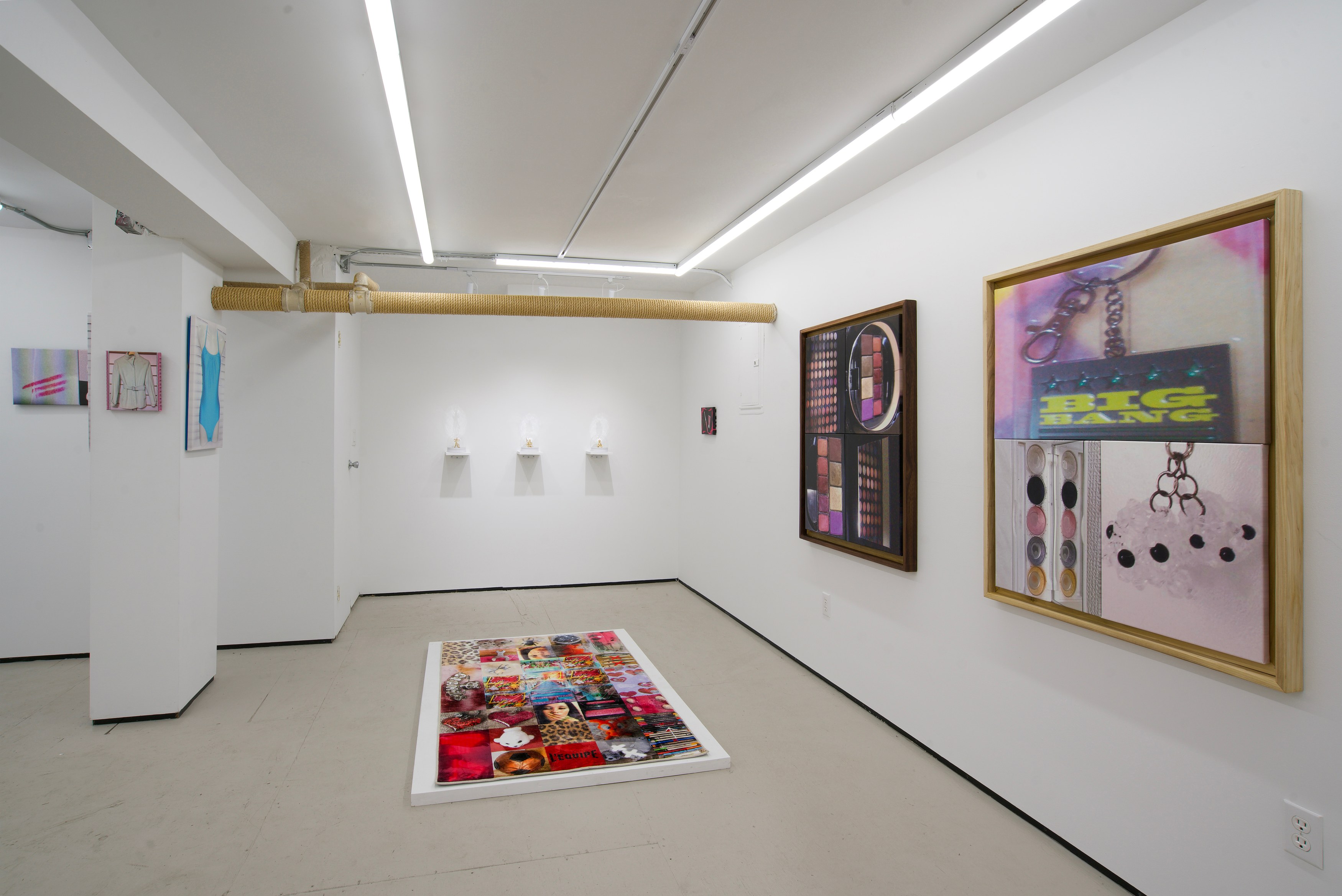
X is: “No”. It is also “yes”. It is an invitation, a treasure hunt. It solves a mystery, it marks the spot – A kiss. X both resists and sets boundaries. A magic trick. Now you see it, now you don’t. Sometimes everything is the same! O is: The air we breathe. It is circling forever. Inhale, exhale. Open, Closed. Hopeful. O is everything and nothing at all. Our eyes inside the mirror. Infinite choices, perhaps some already taken – reflecting what would or could be. We feel dizzy. The context continues to shift. “Because I said so.” —Milah Libin + Sara Yukiko Sara Yukiko (b. 1996, San Francisco, California) is a multidisciplinary artist and designer living and working in New York, New York. She graduated from UCLA with a BA in Design Media Arts in 2018. Solo and duo exhibitions include 11:11 at Gern en Regalia, New York (2022), Pirouette at Estrella, New York (2022) and Two Birds, One Stone at Gern en Regalia, New York (2020). Recent group exhibitions include Weatherproof, Chicago (2024); Produit Rien, Montreal (2024); Art et Amicitiae, Amsterdam (2024); A.D., New York (2024); Brunette Coleman at Shoot the Lobster, New York (2023); and Entrance Gallery, New York (2022).
 PastOn a Glass Pillow
Nadair Asghari
Jul 19 – Aug 25
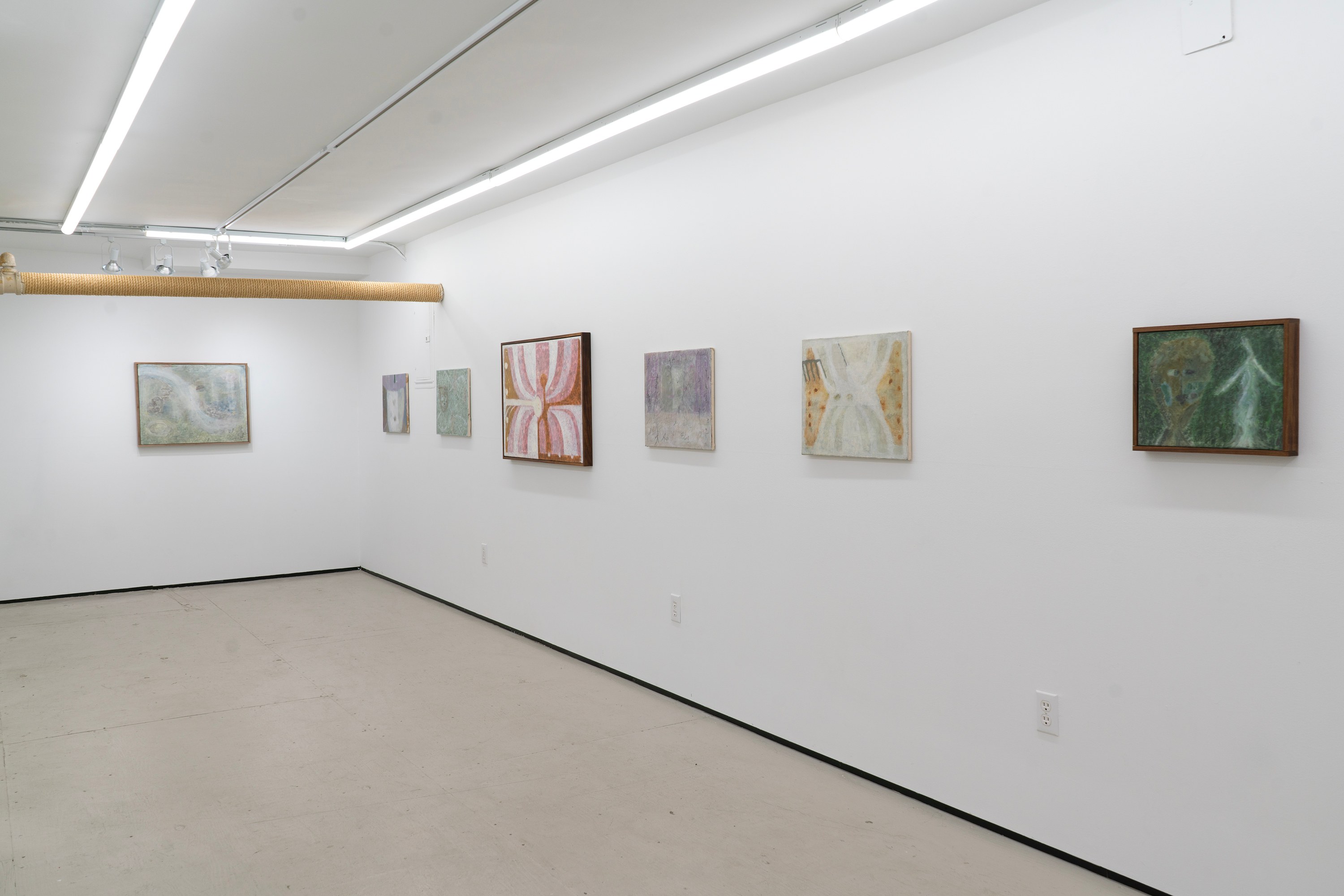
Gern en regalia is pleased to present new paintings by Nadair Asghari. "Where grace is an object that can enter the terrestrial realm Grace is a star In a series of blissful descents On a glass pillow" —Mary Jane Dunphe
Past
New Poems and Bows 13-19Kayla Ephros & Payton Barronian
Jun 6 – Jul 15
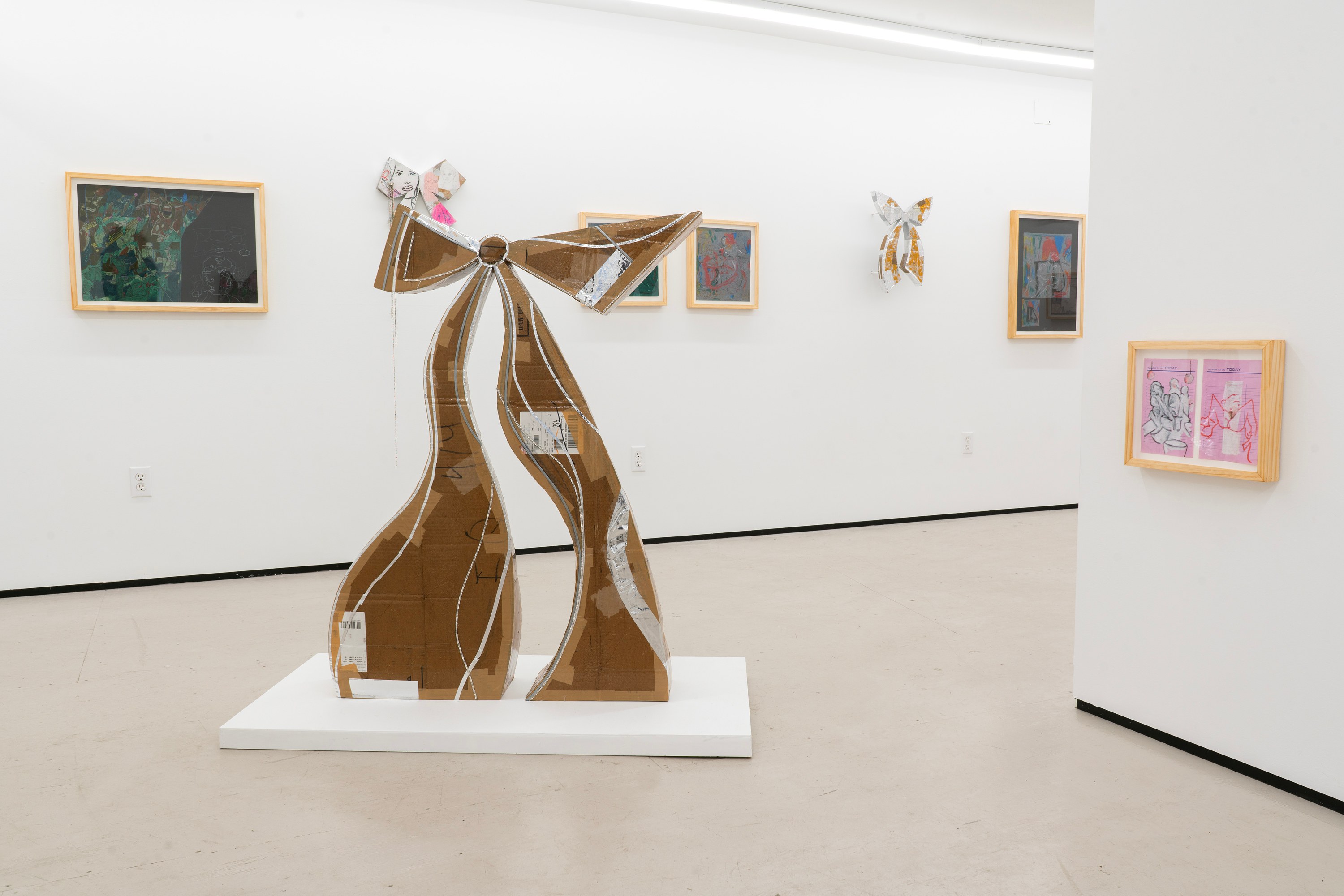
Payton Barronian (Brooklyn, New York) makes Bows 13-19 in his bedroom studio. Kayla Ephros (Los Angeles, CA) makes New Poems in the garage behind her mom’s apartment. Payton: so it’s not 11-17, its 13-19 Payton: —bows, big silver jewel, red paint, green paint— Kayla: i wish i could save Kayla: could shellack the audio of you K: finding the big jewel, and you’re P: trying to cut this K: plastic? dead-stock P: foiled— rhinestone lines P: USPS, one quarter turn K: and do it loose, draw language in the pond K: like, letters that break P: @ USPS, pushing values K: pushing valuables? P: found valuables? your pond K: your excess, that song? P: acapella or K: your excess acapella, our palette P: wait can you send me the palette K: green K: silver K: pink K: brown K: red K: margin for air? P: lost in the mail K: oh and sometimes blue K: words in blue, bent, rules around dusk P: over your shoulder K: perfect reflections K: idea of living? first time P: painting— P: one quarter turn, tilt, dangle K: do it loose P: updo 6 inch nike box crucifix K: scrap question? P: scraps in reverse K: scraps, in Projected Verse K: Projected Verse for scraps K: Projected Verse for knots and links K: Projected Verse in silver, etc. P: that jewel, at this party P: this plexiglass situation K: Projected Verse in Found Charm? P: feels too shiny P: stepped on my toes K: love you breakdown Kayla Ephros (b. 1992, New Jersey) is an artist, poet, and teacher living in Los Angeles. She received her BFA from The California Institute of the Arts in 2017. She has had solo exhibitions at From The Desk of Lucy Bull (Los Angeles), Et. al (San Francisco), and in lieu (Los Angeles). Her work has also been exhibited in group exhibitions and fairs in Miami, Mexico City, and Copenhagen. Ephros is the co-founder of September Spring: an interdisciplinary poetry workshop at the Kesey Farm Project (Eugene), and co-editor of Mishou Magazine, an all ages art publication. Her most recent poetry chapbook, B Sides: Loose Translations, was published by nueoi press (Los Angeles) in 2021. She will be an MFA candidate at The University of California (Irvine) beginning Fall 2024. Payton Barronian (b. 1990, Phoenix, AZ) is a New York City based artist and performer. His work has been displayed in numerous exhibitions across the country and in Canada. Payton has participated in group and solo performances at MoMA PS1, St. Marks Church in-the-Bowery, Portland Institute for Contemporary Art, and others. In 2023 he founded PB Style, an on-going experimental garment project. Payton holds an MFA from Pacific Northwest College of Art (2020), an Associates in Design from Pratt Institute (2015), and a BS in media studies from New York University (2008).
 PastBug Mobile
Henry Gunderson
Mar 7 – Apr 8
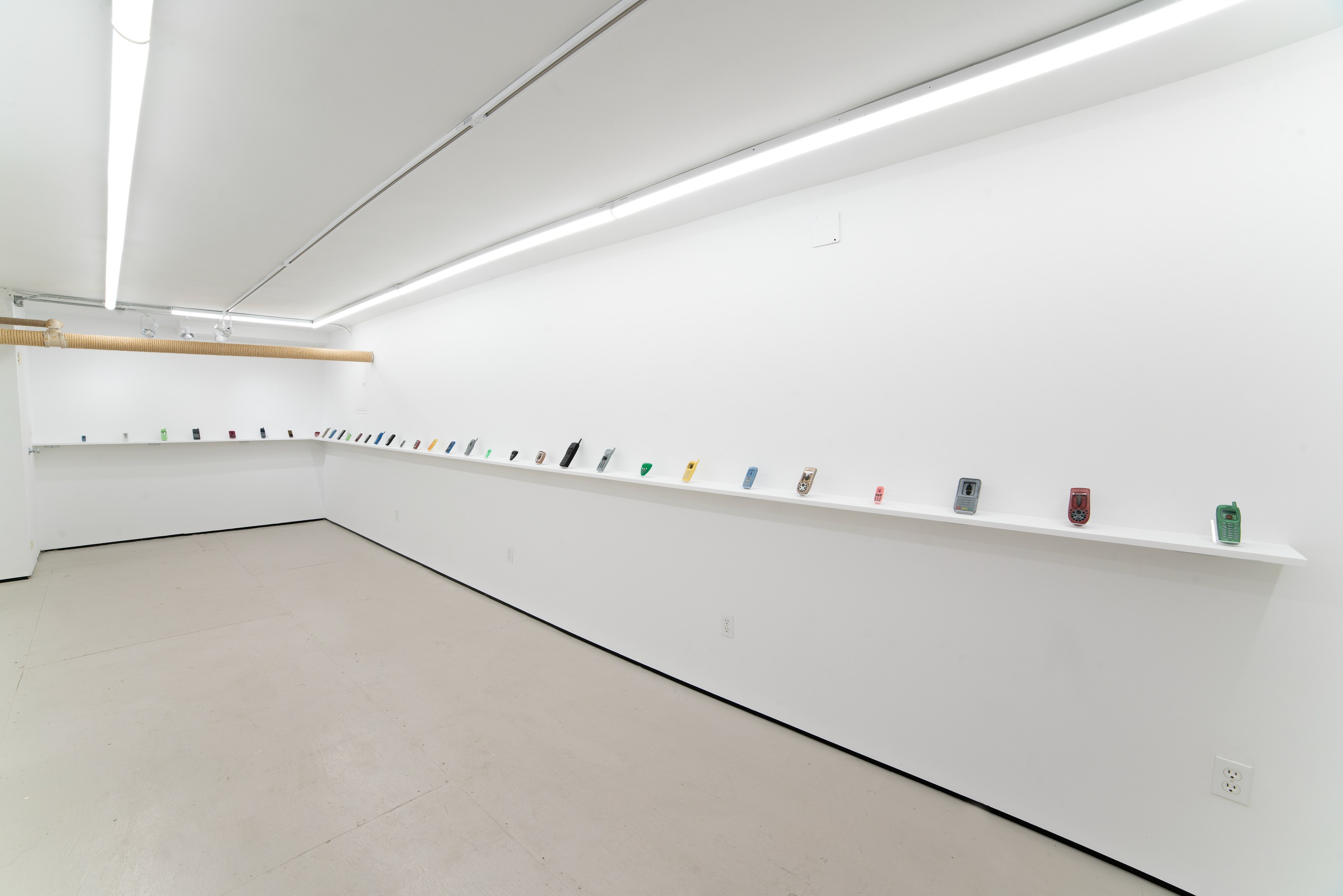
You could think of the bug phone more as a meditation device rather than information device. The encased bug as a totem for your prayer, a mantra of sorts. The phone itself works as a framing device that encapsulates a singular specimen, a container to direct your attention inward. It could be said that all art objects function as a type of content moderator to hone one’s vision, narrowing the dizzying gaze of all existence to a single point of reflection. Showing the viewer what it wants them to see and nothing else. Here is a bug to look at; it can tell you all you need to know. It can pacify you next time you feel the impulse to drown your thoughts in a screen. Something tangible to hold onto when you need grounding. A reminder of the smallness and preciousness of life. But the phones are ‘bugged’. This goes without saying. I need not remind you of the tracking devices we carry in pocket and voluntarily permit to monitor our conversations, locations, spending habits, google searches, and more. These bugs are watching our every move in compound vision; innocently suggesting cool art you will like on your feed, ever so gently guiding your tastes and sensibilities until you yourself resemble a bug, dull and suggestible. A metamorphosis so gradual that it goes completely unnoticed. The bugs know more about us than we know about ourselves and if the goal is psychological manipulation, the more data we give them, the easier it is. There is also the ‘bug’ as a disrupter of systems, a pesky little nuisance, one that lodges itself in the circuitry and is fried to a crisp, a lone individual taking the initiative to carry out a suicide mission, wiping out the entire power grid triggering societal collapse. Either a “hero” or a “terrorist” depending on your value judgement of this operating system. This could also be a function of art, a mini terror attack on your neural pathways. Artist as bug; permanently lodged in your psyche. A transgression that brings on revelation. Join the Bug Mobile network and reclaim your mind today. —Henry Gunderson Henry Gunderson is an American artist based in Brooklyn, New York. Originally from the San Francisco Bay Area, Gunderson received his BFA from the San Francisco Art Institute. Gunderson has had solo exhibitions at 247365 (New York), Loyal (Stockholm), Water McBeer (New York), Ever Gold (San Francisco), Carl Kostyal (London), Castiglioni (Milan), Derek Eller (New York), Perrotin (New York), and has been included in numerous exhibitions in the US and abroad.
 PastThe Infinitesimal Man and his Ephemeral Existence
Jay Payton
Jan 11 – Feb 18
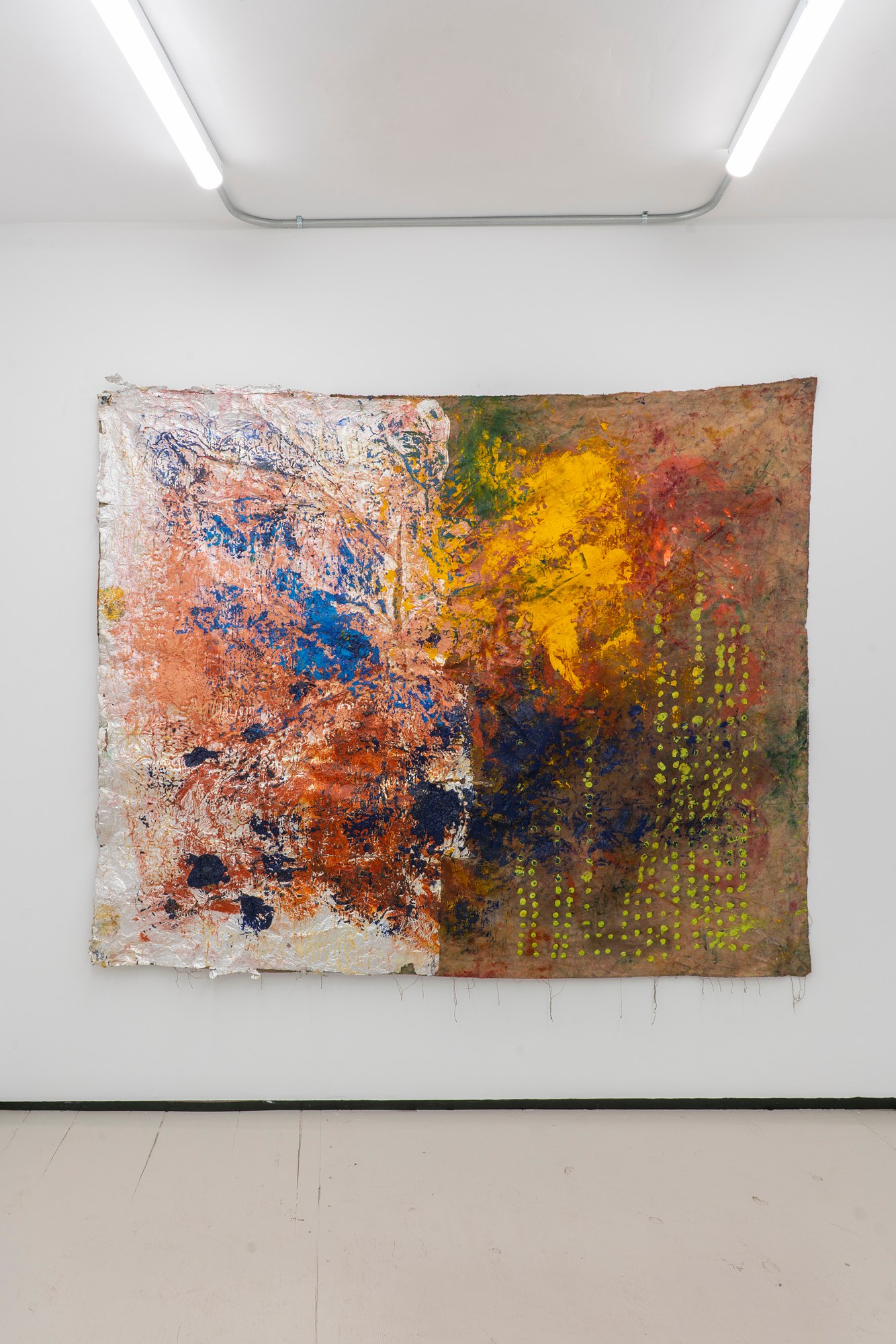
An exhibition of paintings dedicated to furthering an understanding of Man and his position within the ecosystem he has created for himself. Through conquest and conquering From love and war No matter where man places his efforts during his time in this moment, he must understand he is not infinite. No more than a dust particle in a bed of salt Not to be confused with purposelessness His influence can be such that, through the histories of the future, many remember and value his efforts Or Others may see him as a danger to the society of his time There is a great power within the human experience Greater than any degree of life within the universe that can be measured today Power + Responsibility = ? The equation we as a species, society, community, have yet to solve Luckily for us, a new day is an opportunity to consider what yesterday failed to bring to our attention But We must work with haste Because tomorrow is not guaranteed
 Past
Past