
Hyacinth Gallery
Chinatown, Downtown, NY
56 Eldridge St
Sign in to save this gallery, log a visit, or add a show to a shared list.
Exhibitions
- Orion
Anna Samara
Jun 12 – Jul 20
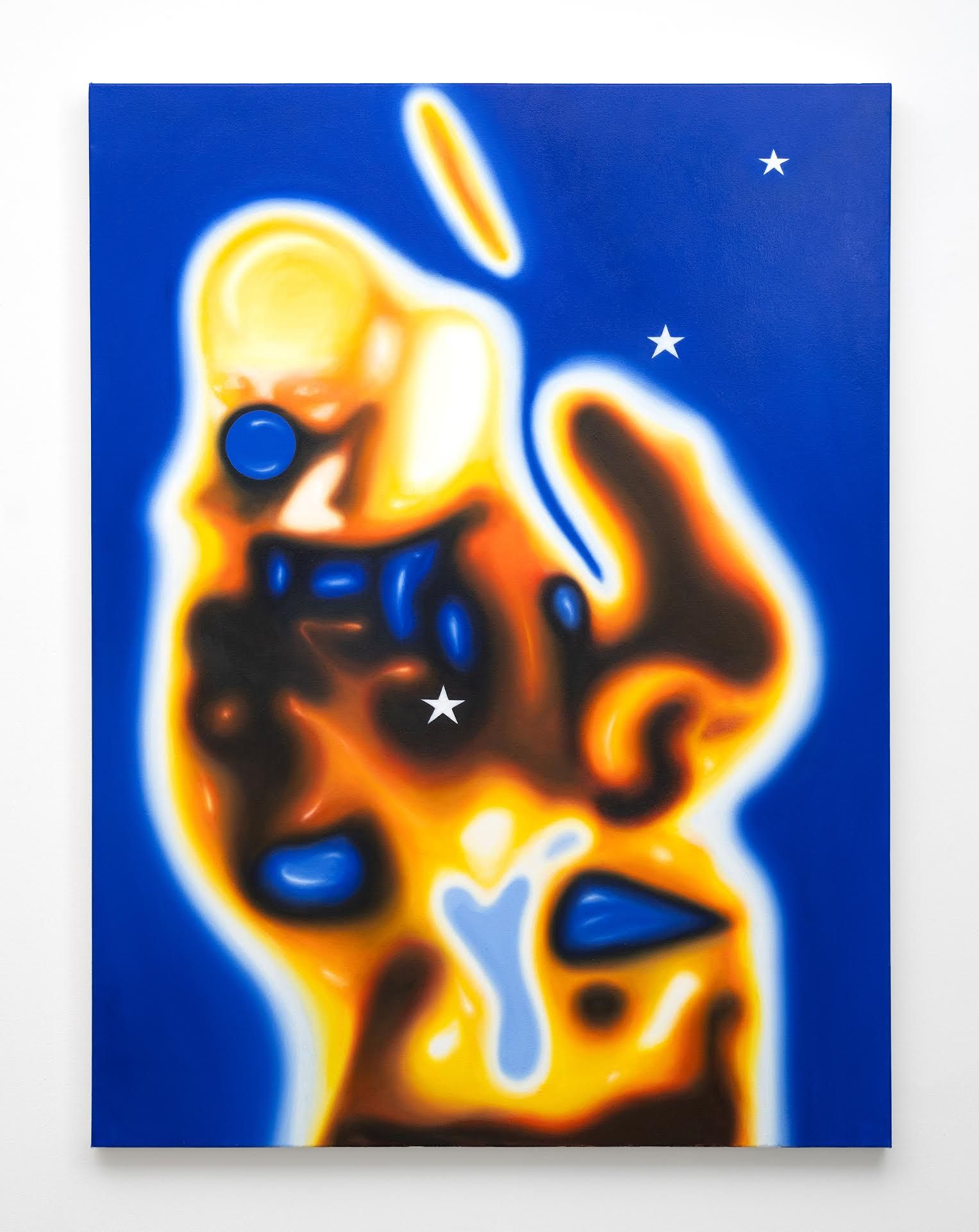
Drawing from thermal imagery, hunter vlogs, online archives, and digitally altered source material, Orion looks at how images move between digital and physical space. Pixelated landscapes and fragments of internet culture are translated into oil paint, slowing down images that are usually meant to circulate quickly and giving them a physical presence. Hunters, figures, and environments exist in a space where roles keep shifting. The observer becomes the observed, and the landscape starts to feel active rather than passive. Using the visual language of surveillance, thermal vision, and digital media, the paintings consider how contemporary ways of seeing are shaped by technology while still being embodied and physical. The title comes from the myth of Orion, a great hunter who becomes so confident in his skill that he claims nothing can escape him. In one version of the story, he is eventually turned into a constellation and becomes the hunted himself.That reversal runs through the work. This myth would serve as a reminder to mortals to avoid arrogance and boastfulness and to care for all creatures. Rather than showing hunting literally, the paintings use it as a way to think about observation, vulnerability, and the instability of looking and being looked at. Anna Samara is a Greek visual artist currently based in New York City. She attained an Integrated Master’s Degree from Athens School of Fine Ars in Greece (2021) and a Master’s degree in from Parson’s School of Design (2024). Her work has been exhibition internationally including Gallery Bart in Amsterdam, Netherlands, U10 Art Space in Belgrade, Serbia, Crux Galerie in Athens, Greece, The Opening Gallery, The Greek Consulate, and Hyacinth in New York City. This is her first solo exhibition with Hyacinth.
 PastEndsong
Kyler Garrison
May 1 – Jun 1
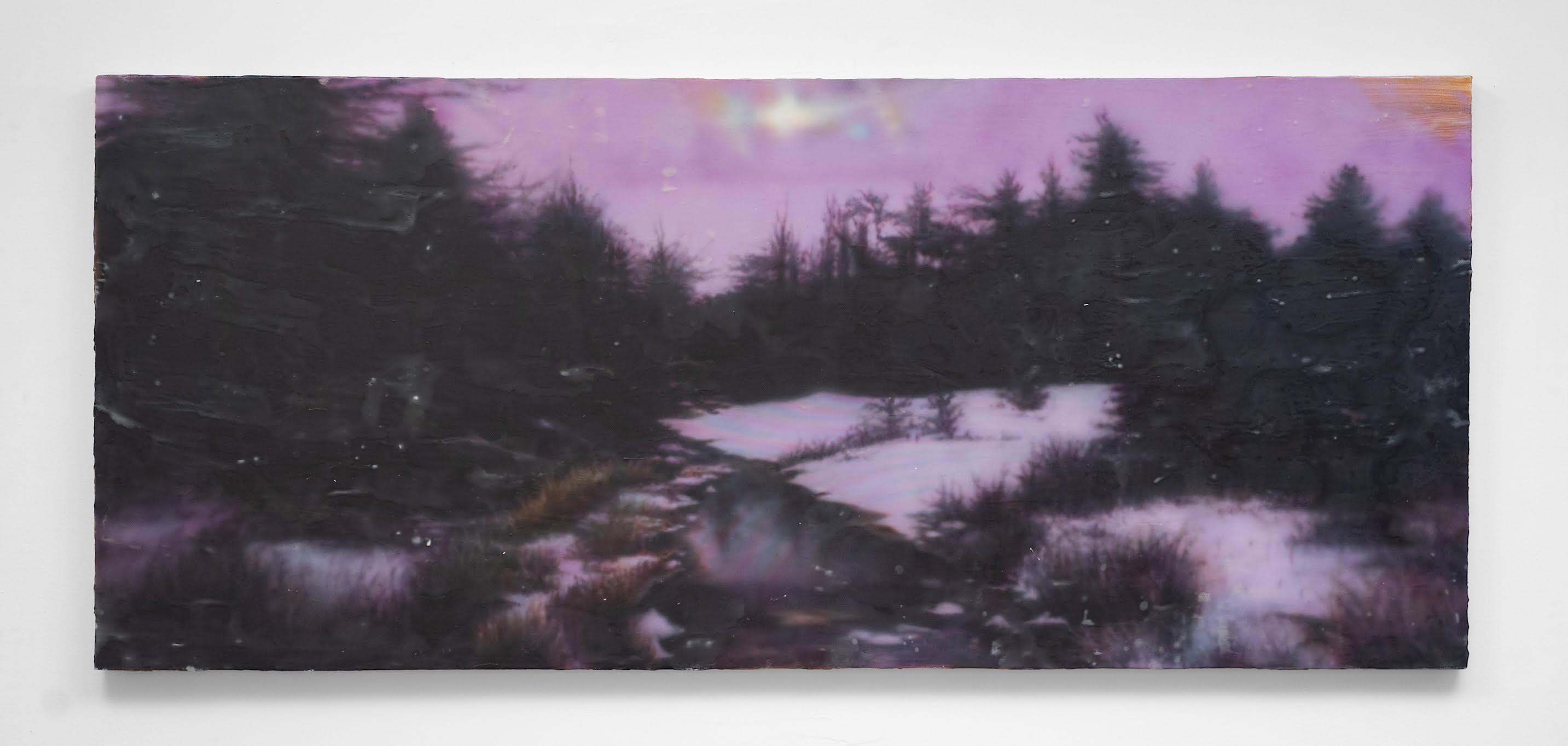
Within the unforgivingly cold and snow filled forest there roams a presence that we call ‘the wanderer’. The wanderer walks the forest plains while filling every corner of it with the muffled sound of a giant rust covered longblade being dragged right behind them through the layers of thick pillowed snow. The wanderer traverses in a slow and irregular pace causing for enough snowfall to gather on their tattered cloak and their trusty blade, falling off again with each step they take. Over time, the wanderer has forgotten who they are and what brought them here, only being driven by an indescribable feeling from deep within to hum a tune that’s urging them to keep on wandering, often to the point of exhaustion. Just like their own past, the wanderer does not know where this tune came from or how they know it, but it’s the only thing that offers them some way of comfort during their long and endless journey. When occasionally looking back, the wanderer sees each of their tracks being thoroughly covered up by the heavy snowfall. Suddenly the sound of a loud bell fills the air and the wanderer looks up. Far in the distance between what looks like a group of pine trees, a tiny source of light is being ignited. The wanderer feels their body being attracted to the light immediately and sets course straight towards it. The moment the wanderer sets foot into their new direction, the snow stops falling. Instead the wanderer notices tiny plows of snow rising back into the air. First a few, then quickly all around them snow starts to rise, fly back up into the clouds and vanish like it never existed. While dragging the rusty longblade forward, the wanderer notices that the snow has now made place for roads filled with mud and pebbles. Between the mud and pebbles they notice small glowing rocks that are looking different than others surrounding them, all spread out equally on the roads that were once covered with snow. The wanderer feels attracted to them somehow but does not know what they are meant for and to whom they once belonged. The only thing the wanderer notices is that the glowing rocks seem to form a path going in the direction of the light source. The peaceful and quiet sound of their longblade gliding through the snow has now made place for the industrial sound of metal grinding against rocks and pebbles causing for tiny sparks to fly off the giant longblade. Dirt and mud gathers around the wanderer’s blade and feet. The journey gets more tiresome by the minute, but they see the source of light coming closer each step they take. The wanderer continues humming the unknown tune to lighten the mood and boost their morale, still not remembering how they know this tune and which note is next in line. The humming combined with them exhaustedly panting makes for a beautiful swansong. The light source starts to take shape, and the wanderer sees that it’s a brightly burning campfire. The campfire seems to lure them closer, but each step the wanderer takes starts to feel heavier and heavier, like they’re about to collapse. Like a blessing from the skies, the sound of the loud bell fills the air again, and snow starts to fall immediately. The glowing rocks, dirt and other lost artifacts get buried beneath the snow, and the rusty dirt-covered longblade stops screeching and starts gliding again. They continue to roam dedicatedly in between the snow covered pine trees and shelters made from branches while the campfire starts getting closer and closer. They feel the warmth of the campfire touching their frozen, bandaged and blister filled hands more and more each step they take. The wanderer finally reaches their destination but just when they can almost touch the campfire with the tip of their longblade, the fire goes out like a door being loudly shut in front of their face leaving them alone in a dark cold forest surrounded by pine trees and continuous snowfall. They kneel down and a tear streams down their face, freezing in place right on their cheek. This sobbing which fills the forest air is suddenly being accompanied by the soothing melody of flowing water. The wanderer looks around and tries to locate where it's coming from. Carefully traversing in between a few of the surrounding pine trees, this soothing sound quickly starts to get louder and louder, first merging with and then overtaking the natural white noise of the forest that they’ve been exploring for what feels like ages. After a few more tiresome steps, they locate the source of sound to be coming from a nearby stream. The melody of this stream is luring the wanderer towards the snowy edge of it, and they decide to kneel down and look into the water, trying to get closer to the soothing tune. When looking in the water, they see a shape that vaguely resembles themselves but something seems off. The wanderer can’t quite recognize themselves and thus decided to take a closer look. When the flowing water almost touches their frozen nose, the unrecognizable silhouette their hands reach out of the water, grabs the wanderer’s head and drags them down into the stream. When the wanderer opens their eyes, they notice that they’re floating at the bottom of the stream, but there doesn’t seem to be any water and the melody is gone too, there’s just air and silence. Confused and in panic, the wanderer looks around and notices a tiny orb slowly hovering within the vast nothingness. Inside of the orb, they see the spirit of their own reflection. After a moment, the spirit of the wanderer becomes autonomous and starts to crawl out of the orb. When floating face to face with their other half, the spirit reaches towards the tear on the wanderer's cheek, still frozen in place, and picks it up. The spirit pulls back, looks at the tear in their hand, closes it and holds it against their chest. The tear almost seems to dissolve within the spirit. Immediately the wanderer is greeted by the sight of the spirit being surrounded and held by others, all of which are strangers to the wanderer. The sight comforts the wanderer, but it’s not for long that each of the surrounding silhouettes start to vanish one after another. The wanderer starts to panic and refuses to witness the downfall of what seems to have been but forgotten. When they try to float back up towards the surface of the stream, their body seems to be pulled down by spirit-like hands grabbing their legs and feet. The wanderer nervously starts humming the comforting tune while they keep on wriggling and pulling, witnessing every silhouette to slowly vanish around the spirit in front of them. Just when the last of the silhouettes is about to vanish, the wanderer closes their eyes, starts humming louder and gives one last pull. The hands grabbing their feet suddenly let go, and the wanderer almost launches towards the surface and out of the stream back onto the layers of snow right next to their longblade. With all their might, they keep their eyes closed, continue humming, and envision the sight of the last silhouette hugging the spirit while tears stream down their face. The loud bell rings again in the distance, they feel the snow rising up again all around their body and the fire that went out is suddenly being lit again. With the sight of the silhouette and themself still fresh in their mind, and the comfortable campfire burning in the distance, the exhausted wanderer falls asleep while the last tune of their song leaves their mouth. A wanderer wakes up in the middle of a desolate and snow capped forest by the sound of a loud bell in the distance. Next to them lies a giant shiny longblade and a bag full of tools and artifacts. Next to the bag lies a musical sheet with scribbled notes on it, above the notes the sheet is titled ‘endsong’. The wanderer picks up the sheet, looks at it for a moment, smiles and starts humming the notes. Snow starts to fall from the sky, and the wanderer decides to look for shelter. They put the musical sheet in their bag, dust themself off, and start wandering while dragging the longblade behind them. —Mitchel Peters
 PastThe Stillest Hour
Mar 20 – Apr 27
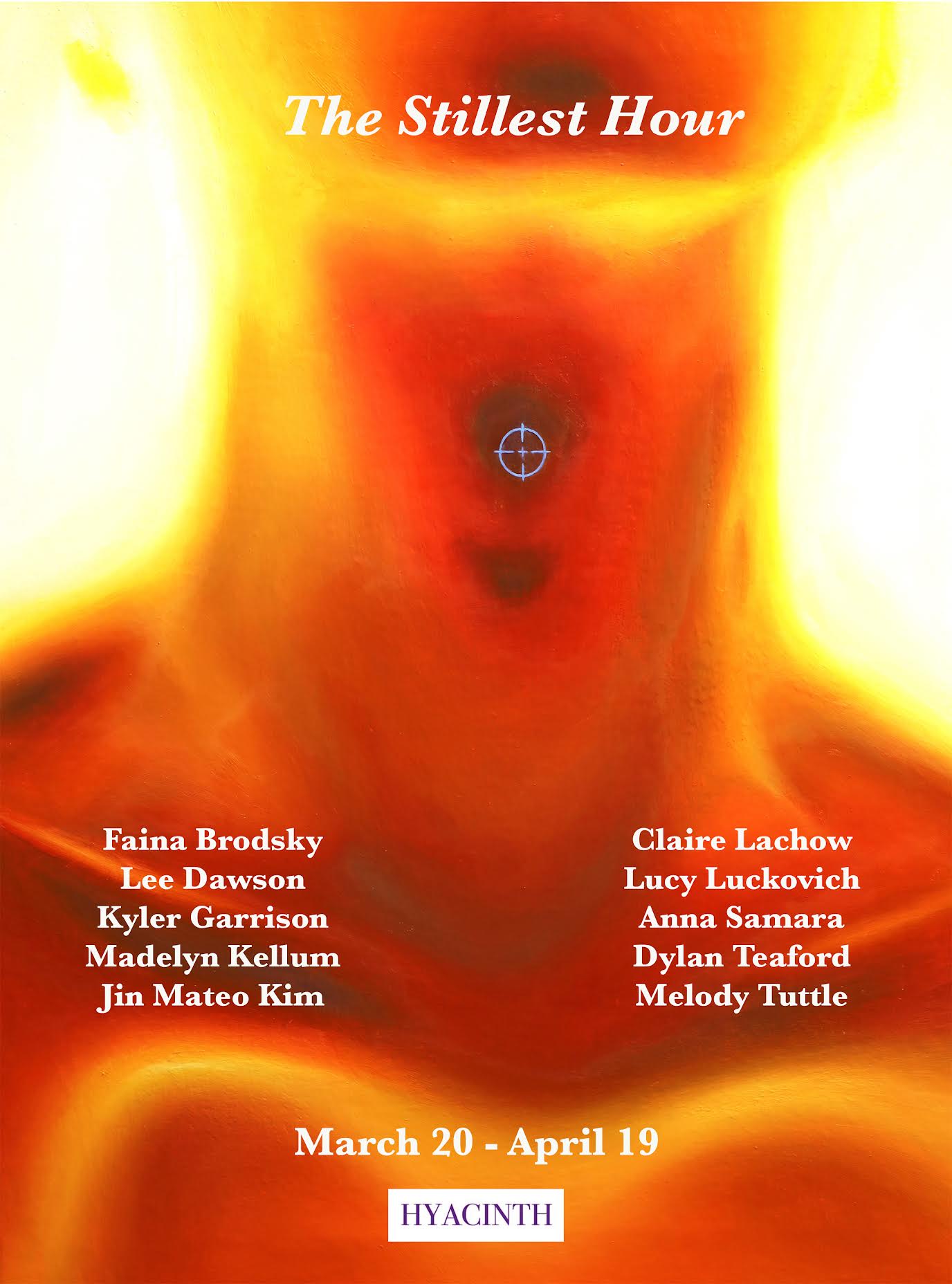
Faina Brodsky, Lee Dawson, Kyler Garrison, Madelyn Kellum, Jin Mateo Kim, Claire Lachow, Lucy Luckovich, Alison Peery, Anna Samara, Dylan Teaford, Melody Tuttle Framed as a fictional narrative of the second life of Zoroaster, the pre-Abrahamic prophet of Good vs. Evil, Friedrich Nietzche in Thus Spoke Zarathustra reimagines the ancient oracle as tormented by an internal voice guiding him to new methods of thinking beyond established moral dichotomies. Canonized by late 20 th Century theorists, attacks on dogmatic or binary approaches to critical thinking easily permeate beyond artistic and philosophical circles into mainstream American life. Declarations like “We have art so as not to die of the truth” fit so comfortably into our contemporary verbiage about artmaking it seems almost inexplicable that Nietzsche appears more often cited in bizarre corners of internet subcultures and fringe political podcasts than in coherent artistic didactics or manifestos. Yet the comfort with which some ideas can be historically adopted and others discarded reflects exactly the type of philosophical cowardice that Nietzsche would condemn or as he wrote cryptically “He who hath removed mountains also has to remove valleys and plains.” While the romantic representation of the artist as amalgam of Apollonian and Dionysian traits might flatter our modern sensibilities about the gravity of artmaking, creative interpretations and even direct historical revisionism make phrases such as artist-tyrant or Nietzsche’s notorious Übermensch indigestible to our contemporary belief systems. Nietzsche might anticipate the beauty of unresolved tensions beyond the finitude of congruity, but, in turn, he outright opposed supposed Western ideals like social stability, equality, and peace. The artists in this exhibition we’re prompted by a section in Thus Spoke Zarathustra titled The Stillest Hour in which Zoroaster realizes he’s been reluctant to speak his full truth and returns to solitude in the mountains 6,000 feet beyond men and time before returning to his followers to proclaim ideas that continue to sound historically compromising. The Stillest Hour represent exactly this type of moral turmoil, the realization that to graduate to a higher level of intellect one must abandon both the axioms you deplore and other you might continue to cherish. Though Nietzsche himself uses many symbolic devices to articulate complex philosophical ideas, e.g., The Mountain, The Tightrope Walker, The Serpent or the Lion/Child, this exhibition examines the implications of making and perceiving artwork through a Nietzschean lens rather than a visual retelling of the text itself. For Nietzsche, artists invent new modes of conceiving of human life because art exists in a distinct realm able to imagine existence outside established ideas. The artist never fears pain and gladly revisits joy, love, trauma, and humiliation. While many critics have targeted Nietzsche’s views as social Darwinism or even proto-fascist, it’s clear that internal and artistic conflict and not organized violence remain at the core of Nietzsche’s ideas, and vitality and optimism often persist in this unfamiliar or seemingly paradoxical language. Nietzsche aligns his perspective with the artist because he emphasizes the strength and creativity brought by conflict that could be described as perseverance or as Nietzsche says metaphorically as Zoroaster in The Stillest Hour “The earth crumbled beneath my feet, and I began to dream.” Some of the artists in the exhibition represent this moment, the realization that knowledge cannot be bound by social truths, as a physical or psychological struggle—In others, the tension is compositional, pictorial, or stylistic. The notion that visual conflict in an artwork might constitute a valid means of hermeneutic appraisal might very well have influenced prominent 20 th Century thinkers who continue to maintain an active dialogue with contemporary art, but the implications are less clear for the artist-tyrant, the aspiring Übermensch, and how they might pursue a method associated with these seemingly controversial ideas. Nietzsche’s philosophy never articulates a clear path towards attaining a higher level of creativity only the conditions or mindset for achieving his vision of excellence. Though considering the modernist trajectory, Art never responded to times of war, struggle or tragedy with fear or pity, but rather as an opportunity to abandon every moral and aesthetic dictum that tried to restrain it in order to conceive of something new.
 PastEtiolated Calligrapher
Mitch Patrick
Feb 13 – Mar 16
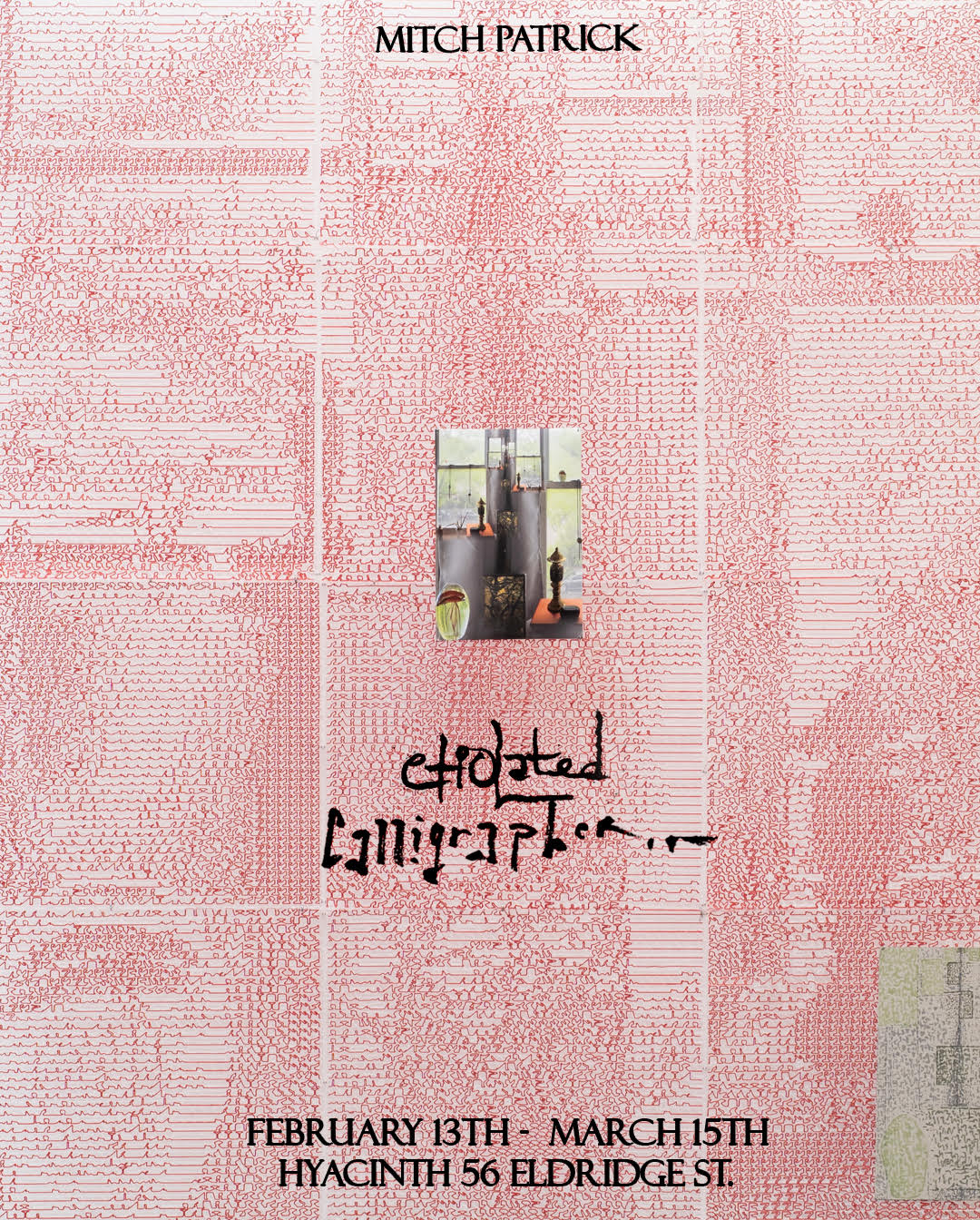
To describe Mitch Patrick’s artistic practice as mediated by technology fails to encapsulate the gravity with which digital interfacing has radically transformed our understanding of internal and external life. Depending on the viewer’s exposure to new printing and coding methods, Patrick’s multimedia approach might range in familiarity as it relates to conventional artistic applications, potentially confusing the prototypical relationship between human creativity and machine-learning production. Inspired by observations of organic shapes, Patrick creates unique symbols or glyphs equally reminiscent of ancient visual languages and contemporary digital codes, incorporated initially into hand-made drawings depicting emaciated humanoid figures amidst mysterious and atemporal landscapes. Encapsulated away from a teeming world outside, the figures are intently focused on an object suggesting the shape of a screen, a tablet, or even a window. The drawings, primarily “written” out in the artist’s conceived typographic glyphs allude to pixels, and the utterances of the artist’s hand at work, where the action of visual consumption is accounted for in each stroke of a calligraphic mark. The title of the exhibition Etiolated Calligrapher similarly references the tendency of plants and other biological entities to gravitate towards light sources, a wry analogy for the vast amount of contemporary experience envisioned through an electronic display. Each drawing is mounted on wooden clipboards reminiscent of clerical work further confounding the outmoded historical distinction between poetic visual mark-making and the presumed sterile monotony of digital coding or technocratic office culture. The exhibition is anchored by four suspended prints fabricated by Patrick’s bespoke printing mechanism fashioned from re-assembled 3D-printer parts and generated into square plastic sheeting in a process similar to many types of mainstream consumer production. Patrick hand sews the original digitally printed source-imagery into the composition that has been re-imagined in the artist’s calculated visual language. The content of each work draws from the perspective of the artist’s daily life, but each calligraphic symbol is coded with an indicator of a representational light-value allowing the picture to regenerate through Partick’s asemic glyphic system. The film Born in Cold Light is an ongoing video-animation featuring a continuous POV zoom into screens displaying various light sources (light bulbs, sunsets, fire, etc.). Watching in first person, a viewer indefinitely pushes into a source of artificial light depicted on screens. Every frame in the video is rendered entirely in a typeset titled Lodestar, where each glyph is likened to the shape of a star, emphasizing the grandiose negation between the representation of the everyday within the staggering context of historical time. While Patrick’s practice promotes an artistic representation through an original digital language, his approach avoids any clear endorsement of the evolving relationship between humans and machines. There are no dystopic representations of a robot-governed future techno-state as often found in science fiction and tech-based artmaking or an endorsement of transhumanist philosophy often popular in emergent tech industries—though the show likely solicits questions about human programmability. Instead, Patrick confronts the gravity of these potentially enormous cultural transformations through an artistic lens, applied with an elegance that might recall the creative engagements with previous monumental historical events, e.g., the advent of the camera or the devastation wrought by modern military machinery. While Patrick utilizes the tools of industrial mechanization, seeing the world through symbols has always been a fundamental part of the human experience, and while his method of perceiving and representing the contemporary world appears to belong specifically to our time, his practice also implores the possibility that the presumed distinction between plants, animals, and machines was never vast or permanent. Mitch Patrick (b. 1985 McDonough, GA) is a multimedia artist based on Brooklyn, New York. Patrick received his BFA from University of Montevallo in Alabama in 2007 and his MFA from Brooklyn College in 2013. Recent solo exhibitions include Tenjinyama Studio in Sapparo, Studio Kura in Itoshima, and Lithium Gallery in Chicago. A two-person exhibition with Ernesto Renda took place at Chart Gallery in New York in 2025. This is his first exhibition with Hyacinth.
- No imagePastThe Architecture of Solitude
Melody Tuttle
Jan 9 – Feb 9
In The Architecture of Solitude, Melody Tuttle presents interiors as psychological structures—spaces shaped as much by absence as by presence. Figures appear absorbed in private, quotidian acts—sewing, resting, drawing a curtain, extinguishing a flame—while other paintings omit the figure entirely, leaving behind rooms and objects that feel recently inhabited. These works function as portraits without sitters, where presence is registered through light, atmosphere, and spatial tension rather than depiction. Throughout the series, the female body—rendered in saturated oranges and reds—exists in quiet friction with deep, velvety grounds, collapsing distinctions between figure and environment. Darkness operates not as drama but as enclosure: an architectural condition that holds stillness, interiority, and pause. Taken together, the paintings frame solitude as a constructed space—one sustained by ritual, repetition, and the charged silence of being alone Melody Tuttle (b. 1985 Des Moines, IA) received a BFA from Rhode Island School of Design in 2011 and an MFA from the School of the Art Institute of Chicago in 2017. Tuttle has recently been included in group exhibitions at Hashimoto Contemporary, New York, Hyacinth Gallery, New York, and Monya Rowe Gallery in New York. She has presented solo exhibitions at Thierry Goldberg, New York, UTA Artist Space, Los Angeles, Great State Gallery, Chicago, and Hyacinth Gallery, New York. A three-person exhibition at Rhodes Gallery in London took place March 2025. A solo presentation of new work is being exhibited at the Karpidas Collection in Dallas in 2026. This is her third exhibition with Hyacinth Gallery.
Past
The Architecture of SolitudeMelody Tuttle
Jan 9 – Feb 9
In The Architecture of Solitude, Melody Tuttle presents interiors as psychological structures—spaces shaped as much by absence as by presence. Figures appear absorbed in private, quotidian acts—sewing, resting, drawing a curtain, extinguishing a flame—while other paintings omit the figure entirely, leaving behind rooms and objects that feel recently inhabited. These works function as portraits without sitters, where presence is registered through light, atmosphere, and spatial tension rather than depiction. Throughout the series, the female body—rendered in saturated oranges and reds—exists in quiet friction with deep, velvety grounds, collapsing distinctions between figure and environment. Darkness operates not as drama but as enclosure: an architectural condition that holds stillness, interiority, and pause. Taken together, the paintings frame solitude as a constructed space—one sustained by ritual, repetition, and the charged silence of being alone Melody Tuttle (b. 1985 Des Moines, IA) received a BFA from Rhode Island School of Design in 2011 and an MFA from the School of the Art Institute of Chicago in 2017. Tuttle has recently been included in group exhibitions at Hashimoto Contemporary, New York, Hyacinth Gallery, New York, and Monya Rowe Gallery in New York. She has presented solo exhibitions at Thierry Goldberg, New York, UTA Artist Space, Los Angeles, Great State Gallery, Chicago, and Hyacinth Gallery, New York. A three-person exhibition at Rhodes Gallery in London took place March 2025. A solo presentation of new work is being exhibited at the Karpidas Collection in Dallas in 2026. This is her third exhibition with Hyacinth Gallery.
Past
Night ChangesMadelyn Kellum
Oct 29 – Dec 15
Madelyn Kellum’s painting practice resembles as much the entrenched silhouettes of early 20th century symbolists as the glossy veneers of American pop-cultural iconography; an amalgam that results in compositions that are both visually arresting and thoughtfully detailed. Named for the 2014 saccharine pop-hit by One Direction, Kellum infuses carefree paparazzi photos of celebrity culture with haunting displays of war-era artillery and devastation. The song itself, despite mainstream appeal, also references the grandeur of sentimental moments within the larger context of global disorder, and the often catastrophic accumulation of time, an inspiration for Kellum that amounts to monumental compositions sometimes at historical scale. The band’s leading man himself Harry Styles played a death-defying British soldier in the blockbuster film Dunkirk, one of many casting decisions that glamorized the allied war effort and the ensuing global dominance of western media culture. In Kellum’s paintings the lines between reality and fiction are equally difficult to distinguish. The artist book and lectern that anchors the exhibition similarly includes references to Justin Bieber’s Beauty and the Beat video, a feel-good anthem that includes Bieber celebrating amidst a choregraphed group of bikini-clad, party-goers that Kellum reimagines as a whirlpool of lost souls in the mythical River Styx, simultaneously fossilizing the intimate experiences of consumer youth culture while casting a suspicious shadow on representations of perceived post-war American supremacy. While the astounding detail of her canvases contain a seemingly infinite amount of amusing references, the inimitable magnitude of her paintings resists any interpretation of her practice as purely humorous or political. In order to achieve this textural complexity, each canvas is underlaid with a distinguishing gesso treatment made from hand-carved linoleum stamps; in one case replicating a 14th Century embroidery titled the Adoration of the Magi Altarcloth. Kellum’s intent remains unclear in replacing the ancient saints represented in the medieval tapestry, but her technique memorializes the newly anointed, spectral iconoclasts that populate her new visual universe. A riotous miasma of western life, the moral perspective of Kellum’s fantastical visions appears decidedly absent as if such questions might no longer logically resonate in the sphere of art, media, and popular culture. When the battle of Normandy absorbs seamlessly into quiet memories the beach, and fireworks celebrations turn to incendiary bombs, when your fleeting youth mimics societal decay, the question of what to choose feels less like an exercise in identity building and more a confrontation with the contradictions consumerism and a disaffected admission that, despite the totality of devastation, you will be entertained. Originally from Naples, Florida (b. 2002) Madelyn Kellum received her BA from Fashion Institute of Technology in 2024. She has since appeared in group exhibition at Cheremoya in Los Angeles, Quarters Gallery in Los Angeles, Kasmin Gallery in New York, 1969 Gallery in New York, and Sébastian Bertrand in Geneva. Her work has been featured in Harvard University Press publication Peripheries, NYC-based interview series Super!, and Hyperallergic. Kellum currently lives and works in Brooklyn, New York.
Past
In Plastic SleevesIsabelle Heldenfels
Sep 12 – Oct 20
Inspired by found family photographs, Isabelle Heldenfels manipulates the scale, color, and orientation of domestic scenery to transform this often idyllic imagery into compositions with amusing and unnerving implications. Sourced largely from photo albums as indicated by the exhibition title, Heldenfels’s process serves simultaneously as a method of identity-building and estrangement. Placed in various time-periods from the artist’s hometown Dallas, Texas, the seemingly familiar characters are largely unknown, and the stories, both the original and Heldenfels’s depictions, are never fully articulated. While the peculiar arrangements of these paintings invite interpretive speculation, Heldenfels’s technique itself relies on a combined application of realistic, painterly renditions of the original photographs and imaginative reinventions of color and composition where disparate images strategically comingle resulting in perplexing visual narratives. Presumably celebratory occasions are complicated by weighty but mysterious symbols—a nightgown, a lock and key, or swimmer’s goggles pair with equally inexplicable outbursts of color and tonality furthering our desire to uncover the gravity behind these found, fictional memories. While Heldenfels’s retelling of these events enlivens the interest in the otherwise forgotten moments, her process rebuilds history only to destroy it—a dramatized fictionalization of times that were likely already staged. Her characters occupy a space that no longer exists, observant specters leaving impressions that transfer shared emotional impact for the viewer, subject, and creator alike, but refuse to memorialize their former existence with any confirmation of perceived truth-telling. Along with Heldenfels’s often eerie undertones, the playful aesthetic resembles both a kitschy sense of nostalgia and a recognizable history of American folklore, but her project suggests the originals might be as concocted as her own creative inventions. Searching through her plastic sleeves, Heldenfels seeks answers to where we have been and what got us to this place—a new story of our shared memories that manages mostly to confuse the American narrative rather than confirm it. While Heldenfelds’s paintings originate from an earnest effort to archive our visual identity, her artistic project reinforces the fear, beauty, and necessity involved in leaving our history malleable and incomplete. Isabelle Heldenfels received her Bachelor of Architecture from Pratt University in 2023. She has since appeared in group exhibition at Galerie Shibumi in New York, Blue Mountain Gallery in New York, and 440 Gallery in Brooklyn. This is her first solo exhibition at Hyacinth.