
P·P·O·W
Chinatown, Downtown, NY
390 Broadway, 2nd Floor
Sign in to save this gallery, log a visit, or add a show to a shared list.
Exhibitions
- Strip
Jun 12 – Aug 1
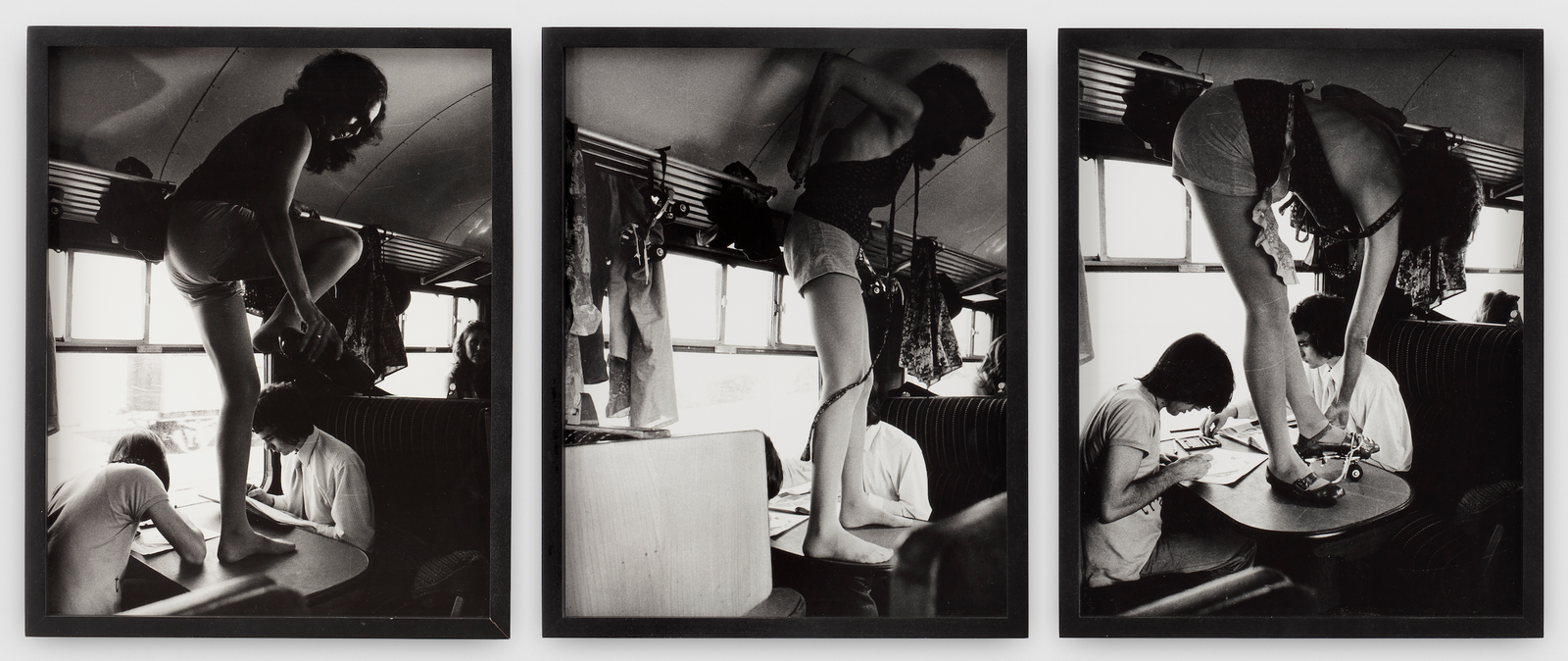
Jimmy DeSana Carolee Schneemann Martha Wilson P·P·O·W is pleased to present Strip, a group exhibition bringing together three major works by the groundbreaking artists Jimmy DeSana, Carolee Schneemann, and Martha Wilson. In 101 Nudes, 1972, Ices Strip / Isis Trip, 1972, and Transformance: Claudia, 1973, DeSana, Schneemann, and Wilson combine performance with seriality, text, and photo to establish the body as medium within conceptual art. Created between 1972-1973 in the context of a male dominated conceptual art movement and a cultural backdrop of conservative backlash against the recent civil rights, feminist, and gay liberation movements, these performance driven works undermined societal taboos and restrictions surrounding sexuality and gender within the art world and beyond. DeSana, Schneemann, and Wilson's campy, provocative, and collaborative works claimed their autonomous subjectivity within spaces that were not accustomed to such commanding presence. By dressing up and dressing down, the artists in Strip simultaneously undressed assumed systems of authority, transforming them into sites of radical liberation. Jimmy DeSana (1949-1990) grew up in Atlanta, GA, and received his bachelor’s degree from the Georgia State University in 1972 before relocating to New York’s East Village in the early 1970s. Recent solo exhibitions include Jimmy DeSana: Submission at the Brooklyn Museum, New York, 2023, accompanied by a catalogue co-published by the Brooklyn Museum and DelMonico Books; The Sodomite Invasion: Experimentation, Politics and Sexuality in the work of Jimmy DeSana and Marlon T. Riggs, Griffin Art Projects, Vancouver, Canada, 2020; and Remainders, Pioneer Works, Brooklyn, NY, 2016. DeSana’s work can be found in numerous public collections including the Institute of Contemporary Art, Boston, MA; the Metropolitan Museum of Art, New York; the Museum of Contemporary Art, Chicago, IL; the Museum of Fine Arts, Houston, TX; the Museum of Modern Art, New York, NY; and the Whitney Museum of American Art, New York, NY. Ruin of Rooms, a major two-person exhibition of the work of Jimmy DeSana and Paul P., at KW Institute for Contemporary Art, Berlin, was on view in 2024. Carolee Schneemann (1939- 2019) received a BA in poetry and philosophy from Bard College and an MFA from the University of Illinois. Her work has been exhibited worldwide, and is in the permanent collection of major public institutions including Hirshhorn Museum, Washington, DC; Hammer Museum, Los Angeles, CA; Centre Pompidou, Paris, France; Museum of Modern Art, New York, NY; Philadelphia Museum of Art, Philadelphia, PA; San Francisco Museum of Art, San Francisco, CA; Tate Museum, London, UK; The Walker Art Center, Minneapolis, MN; and the Whitney Museum of American Art, New York, NY; among many others. The comprehensive retrospective Carolee Schneemann: Kinetic Painting traveled from Museum der Moderne, Salzburg, Austria (2015), to the Museum fur Moderne Kunst, Frankfurt am Main, Germany (2017) and MoMA PS1, New York (2018). And in 2022, the major survey Carolee Schneemann: Body Politics was on view at the Barbican Art Centre, London, UK. In 2017, Schneemann was awarded Venice Biennale’s Golden Lion, honoring lifetime achievement. Of Course You Can / Don’t You Dare, an exhibition highlighting Schneemann’s early painting constructions, drawings, and works surrounding gesture, movement, and materiality, building up to the making of the artist’s iconic film Fuses in 1964, was on view at P·P·O·W in early 2024. Her work was recently on view in her first solo exhibition with Lisson Gallery, Los Angeles, CA. Martha Wilson (b. 1947) began making videos and photo-text works in the early 1970s while in Halifax in Nova Scotia, and further developed her performative and video-based practice after moving in 1974 to New York City, embarking on a long career that would see her gain attention across the U.S. for her provocative appearances as political personae. In 1976 she founded, and as Founding Director Emerita, continues to help guide Franklin Furnace, an artist-run space that champions the exploration, promotion and preservation of artists’ books, installation art, video, online and performance art, further challenging institutional norms, the roles artists play within society, and expectations about what constitutes acceptable art mediums. For four decades, Wilson has performed nationally and internationally in the guises of Alexander Haig, Nancy Reagan, Barbara Bush, and Tipper Gore, among others. In the Fall of 2021, the Centre Pompidou in Paris presented Martha Wilson in Halifax, 1972-1974, the first institutional presentation of Wilson’s groundbreaking early photo-text works. In 2023, Wilson’s work was the subject of Invisible—Works on Aging 1972–2022 at Frac Sud in Marseille, France.
 PastPilot Light
May 2 – Jun 7
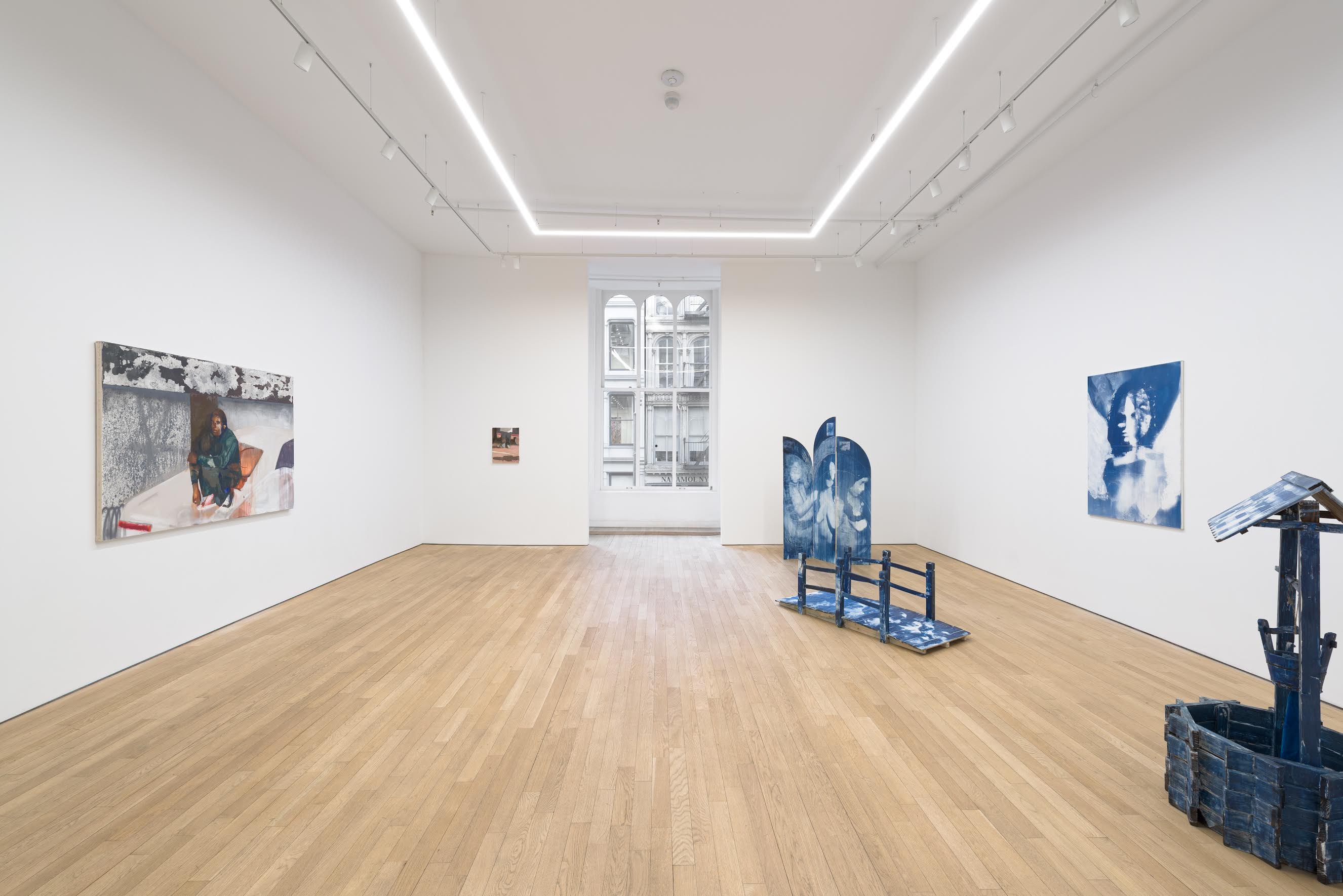
Bre Andy, Praise Fuller, Gerald Lovell, Devin N. Morris, Nickola Pottinger, Curtis Talwst Santiago, Taylor Simmons P·P·O·W is pleased to present Pilot Light, a group exhibition curated by Gerald Lovell. The exhibition spans painting, sculpture, and multi-media installation. The resulting presentation is shaped, not by spectacle, but by endurance: the slow, persistent force of faith, practice, and resiliency. In an art world where diversity can become a passing trend and visibility is often confused with care, Pilot Light insists on another measure of value outside the demands of immediacy, legibility, and consumption. Named after a small but essential flame that continuously burns regardless of the conditions outside, the exhibition presents artists who embrace forms of creation that are deeply personal and life-sustaining. In Pilot Light, artistic practice is understood as a mode of caregiving, a commitment to one's divination, one's community, and the subtle but unwavering spark that makes creation possible in the first place. Bre Andy (b. 1994) is a figurative oil painter exploring intimacy, sexuality, domesticity, and self-observation through portraiture and still life. Her introspective works offer a personal reflection of everyday, fleeting moments and quiet cogitations that capture the essence of womanhood. Andy has recently participated in group exhibitions at Fábrica, Mexico City, Mexico; Chilli Art Projects, London, UK; Hannah Traore Gallery, New York, NY; V1 Salon, Copenhagen, Denmark; 25 Allen St, New York, NY; Andrea Festa Fine Art, Rome, Italy; and Kates-Ferri Projects, New York, NY; among others. In 2021, she completed a residency with Kates-Ferri Projects, New York, NY. Her first international solo exhibition, Waiting Room, presented by Cierra Britton Gallery and hosted by Long Story Short, Paris, France, was on view January 31 - February 28, 2026. Praise Fuller is a New York-based, self-taught artist, poet, and educator. Her practice spans printmaking, installation, and mixed media with a central focus on the cyanotype process. Fuller's work emerges from historical analysis and introspections, exploring what lies beyond the constraints of family, the church, trauma, and the cultural realities of the American South. Her work has been exhibited at the Harwood Museum in Taos, NM, and Ward Gallery, New York, NY, in collaboration with Slow Factory. Fuller was an artist in residence at Pocoapoco, Oaxaca, Mexico, in 2023 and the Macedonia Institute, Chatham, NY, in 2025. She regularly holds cyanotype workshops in collaboration with institutions and organizations, including the Center of Photography in Woodstock, NY. For Gerald Lovell (b. 1992), painting is an act of biography. Combining flat and impressionistic painting with thick daubs of impasto, Lovell creates monumental, loving scenes often lost to the abyss of memory. His portraits refuse the notion that all Black figures put down on canvas are somehow political. Rather, his work records a deep commitment to fostering alternative community narratives by imbuing his subjects with social agency and self-determinative power, while also revealing individualistic details that lay their essential humanity bare. Born in Chicago, IL, and raised in Atlanta, GA, Lovell currently lives and works in New York City. He has exhibited at P·P·O·W, New York, NY; Jeffrey Deitch, Moore Building, Miami, FL; Anthony Gallery, Chicago, IL; Kohn Gallery, Los Angeles, CA; The Harvey B. Gantt Center for African-American Arts + Culture, Charlotte, NC; Mint, Atlanta, GA; and Galerie Peter Kilchmann, Zurich, CH; among others. In 2022, Lovell's work was on view in What is Left Unspoken, Love at the High Museum of Art, Atlanta, GA, and featured in a concurrent publication with DelMonico Books. His work is in the public collections of the High Museum of Art, Atlanta, GA; Museum of Contemporary Art, San Diego, CA; Vanhaerents Art Collection, Brussels, Belgium; Munson Art Institute, Utica, NY; and Wedge Collection, Toronto, Canada; among others. Lovell completed the Fountainhead Artists Residency in October 2023. Featuring pieces honoring the terrains of his past and expressing gratitude for new horizons, his second exhibition with P·P·O·W, verde, was held in Spring 2024. His artistic process was discussed in The Work of Art: How Something Comes from Nothing, published by Penguin Press. Through collage, painting, photography, physical assemblage, and video, Devin N. Morris (b. 1986) prioritizes displays of personal innocence and acts of kindness within a surreal landscape. Morris earned BAs from University of Maryland Eastern Shore, Princess Anne, MD, in 2009 and Towson University, Towson, MD, in 2010. He has presented solo exhibitions at CPM Gallery, Baltimore, MD; Deli Gallery, New York, NY; and Company Gallery, New York, NY; among others. Morris's work has been featured in group exhibitions at MoMA PS1, Long Island City, NY; Frist Art Museum, Nashville, TN; Brooklyn Museum, Brooklyn, NY; Bass Museum, Miami, FL; Yale University Art Gallery, New Haven, CT; Baltimore Museum of Art, Baltimore, MD; San Diego Arts Institute, San Diego, CA; and the New Museum, New York, NY; among numerous others. He has recently completed residencies at the Studio Museum in Harlem, New York, NY, and Residencia Sao Joao, Rio de Janeiro, Brazil, and was a Robert Blackburn Printmaking Fellow in 2019. Nickola Pottinger (b. 1986) combines elements of drawing, collage, and sculpture to create heavily textured and layered reliefs that reflect on her background as a dancer. Born in Kingston, Jamaica, and raised in Brooklyn, NY, she earned her BFA from The Cooper Union, New York, NY, in 2008. She has been featured in group exhibitions at Canada, New York, NY; White Columns, New York, NY; Rebecca Camacho Presents, San Francisco, CA; Nicola Vassell, New York, NY; Cooper Cole, Toronto, Canada; Document, Chicago, IL; Sargeant's Daughters, New York, NY; Chapter, New York, NY; New Museum, New York, NY; and Galerie Julien Cadet, Paris, France; among others. Pottinger has presented solo exhibitions at the Aldrich Museum, Ridgefield, CT; Mrs., Maspeth, NY; Deanna Evans Projects, New York, NY; and Parker Gallery, Los Angeles, CA. Pottinger is included in the group exhibition Greater New York at MoMA PS1, which will be on view April 16 - August 17, 2026. She has been represented by Mrs. since 2025. Curtis Talwst Santiago (b. 1979) works across painting, sculpture, diorama, sound, and performance to interrogate systems of control and the spaces where those systems break. His practice is rooted in ancestral research, diasporic memory, speculative history, and metaphysical geometry. Santiago was born in Edmonton, Canada, and lives and works in Potsdam, Germany. He studied Drawing and Painting at Emily Carr Fine Arts, Vancouver, Canada. Santiago has presented solo exhibitions at Orange County Museum of Art, Costa Mesa, CA; Martina Simeti, Milan, Italy; Nir Altman Gallery, Munich, Germany, Art Gallery of Alberta, Edmonton, Canada; The Drawing Center, New York, NY; and Uffner & Liu, New York, NY; among others. His work has been featured in group exhibitions at Ludwig Museum, Budapest, Hungary; National Art Gallery of Canada, Ottawa, Canada; Aldrige Contemporary Art Museum, Ridgefield, CT; Studio Museum in Harlem, New York, NY; and New Museum, New York, NY; among others. He has completed residencies with Fountainhead Arts, Miami, FL; Palazzo Monti, Brescia, Italy; Banff Centre for Arts and Creativity, Banff, Canada; and Pioneers Works, Brooklyn, NY; among others, and has received numerous awards including the Discovery Prize at Art Brussels and the Ontario Arts Council Emerging Artist Grant. His work is featured in the public collections of Lenbachhaus, Munich, Germany; Kadist Foundation, San Francisco, CA; National Gallery of Canada; Ottawa, Canada; Nevada Museum of Art, Reno, NV; Birmingham Museum of Art, Birmingham, AL; and the Studio Museum in Harlem, New York, NY; among others. The paintings and drawings of Taylor Simmons (b. 1990) incorporate hazy depictions of everyday life to form an archive of compulsively collated imagery. Sampling fragments of his surroundings, from his upbringing in Atlanta, Georgia, to his years in New York, NY, Simmons questions the conventional performance of masculinity while recalling universal themes of youthful play, human nature, work, and rest. Simmons has been included in group exhibitions at DADA Gallery, Lagos, Nigeria; 25 Allen St, New York, NY; Deli Gallery, Mexico City, Mexico; Martha's Contemporary, Austin, TX; Marlborough Gallery, London, UK; and Carlye Packer, Palm Springs, CA; among others. He presented recent solo exhibitions at Public Gallery, London, UK; Helena Anrather, New York, NY; and SIXI Museum, Nanjing, China. He has completed residencies at Studio Museum in Harlem, New York, NY, and the Macedonia Institute, Chatham, NY. His work is in the permanent collections of the Friedrich Christian Flick Collection, Berlin, Germany; Igal Ahouvi Collection, London, UK; SIXI Museum, Nanjing, China; and X Museum, Beijing, China. His most recent solo exhibition with Public Gallery, HangTime, was on view in 2025.
 PastOrchid Rain on the Underground
Chris "Daze" Ellis
Mar 20 – Apr 26
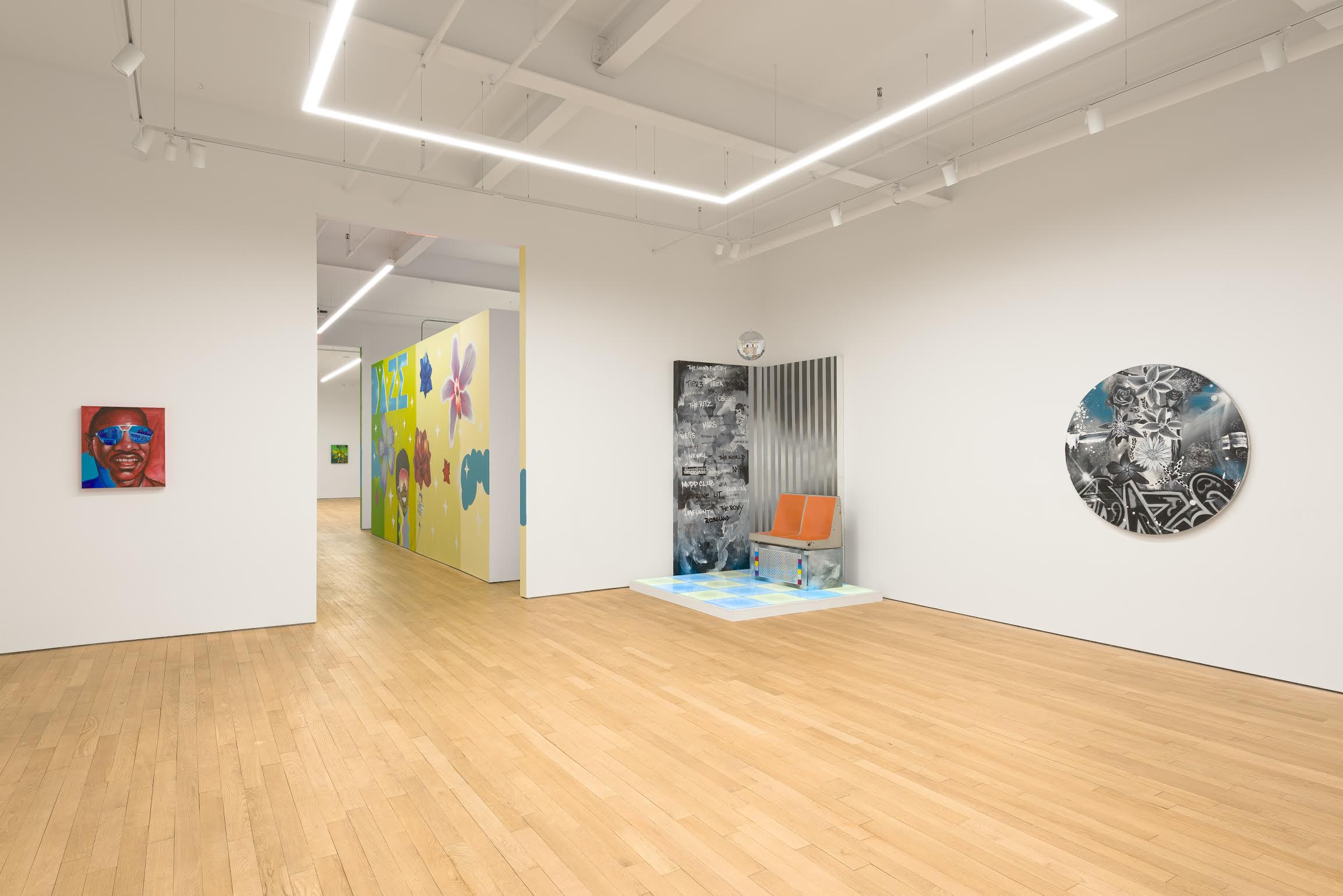
P·P·O·W is pleased to present Orchid Rain on the Underground, Chris “Daze” Ellis’s third solo exhibition with the gallery. Featuring a new series of paintings, multimedia installation, and a site-specific mural, the exhibition harnesses the passion and spontaneity of the graffiti movement of the 1970s and 80s while demonstrating a thoughtful and meticulous practice honed over the past five decades. While the version of New York City that fostered Daze’s beginnings as a fine artist may feel like a bygone era, the works in this exhibition are evidence of its enduring legacy. By revitalizing that foundational energy for the present moment, Daze affirms the continued relevance of those figures and places, and their profound influence on the creative spirit that persists throughout the city today. Born in Brooklyn in 1962, Daze became inspired by early graffiti writers like Blade, Lee Quiñones, and Phase 2 while attending High School of Art and Design in the mid 1970s. As he began to establish his own name as an artist, he was also a frequent visitor to what would become historic landmarks of the city’s nightlife, including the Lit Lounge in the East Village, Danceteria on West 21st Street, and the Mudd Club in Tribeca. These nightclubs, which often doubled as art galleries and performance venues, functioned as generative sites of social and artistic experimentation and part of the driving force behind Daze’s early works. By the early 1980s, he had begun transitioning from tagging subway cars to developing a studio practice that encapsulates the ethos of the city. Inspired by early 20th-century urban realist artists, including John Sloan of the Ashcan School and Reginald Marsh of the WPA era, Daze’s works honor New York City’s streets and subways as important sites of his creative evolution. Simultaneously influenced by the lyrical abstraction of works by Joan Mitchell and Willem De Kooning, Daze combines gestural swaths of acrylic and spray paint with detailed renderings of train car interiors, tunnels, and stations. In Gem Spa In the 80s, 2025, Daze depicts the now iconic newspaper stand and candy store that once operated on the corner of St. Mark’s Place and Second Avenue. Gem Spa was a central destination and meeting place for members of the city’s subcultures and is referenced by literary figures like Jack Kerouac and Allen Ginsberg (who called it a “nerve center” of the city). Important people from Daze’s life can be found throughout the composition, among them critic and curator Carlo McCormick as well as artist Martin Wong, who both emerge amongst the crowd in the painting’s foreground. In other works, technicolor throngs of flowers ascend from heaps of urban rubble, representing optimism amidst inequality and the beauty that can arise out of destruction. Throughout the exhibition, these varied combinations of tropical flora and local flowers from the artist's home in upstate New York function as poignant memorials to what has been lost and hopeful testaments to the beauty and creativity that can still be found around every corner. The exhibition will also include a site-specific mural, bringing an aspect of Daze’s practice often relegated to the outdoors into the interior setting of the gallery. Covering the walls of a hallway, the mural gives way to the final room of the gallery, featuring a multimedia installation that transports viewers into a composite scene from the artist’s youth. Combining a light-up dance floor and disco ball, actual subway car seats, and a curated track fusing house, disco, hip-hop, and club music, the installation emphasizes the freedom and creative inspiration that arose from these settings, and their importance to Daze’s personal and artistic development. Combining elements from throughout his career, Orchid Rain on the Underground showcases Daze’s never-ending exploration of daily life in New York City while paying homage to the people and places that comprise its vibrant cultural heartbeat. Chris “Daze” Ellis (b. 1962) has presented numerous solo exhibitions at Fashion Moda, Bronx, NY; Palais Liechtenstein, Feldkirch, Austria; Musée d’Art Moderne et d’Art Contemporain, Nice, France; Galleria del Palazzo, Florence, Italy; Fortune Cookie Projects, Singapore; Museum of the City of New York, NY; and P·P·O·W, New York, NY; among others. His work has been included in major group exhibitions at MoMA PS1, Long Island City, NY; Louisiana Museum of Modern Art, Humlebaek, Denmark; Semaphore East, New York, NY; Bronx Museum, Bronx, NY; Aldrich Museum, Ridgefield, CT; Stedelijk Museum, Amsterdam, The Netherlands; New Museum, New York, NY; Tampa Museum of Art, Tampa, FL; Museum of Contemporary Art, Los Angeles, CA; Wadsworth Atheneum, Hartford, CT; K11 Art Foundation, Hong Kong; and the Drawing Center, New York, NY; among others. His works belong to the permanent collections of the Addison Gallery of American Art, Phillips Academy, Andover, MA; Brooklyn Museum, Brooklyn, NY; Groninger Museum, Groningen, The Netherlands; Institute of Contemporary Art, Miami, FL; Ludwig Museum, Budapest, Hungary; Museum of Modern Art, New York, NY; Museum of the City of New York, NY; Whitney Museum of American Art, New York, NY; and the Yale University Art Gallery, New Haven, CT; among others. In 2025, Daze was commissioned by the Museum of the City of New York and the Olayan Group to create Above Ground Midtown: MCNY x Daze, a large-scale mural project at 550 Madison Avenue.
 PastPlaying with Dolls
Judy Glantzman
Feb 6 – Mar 15
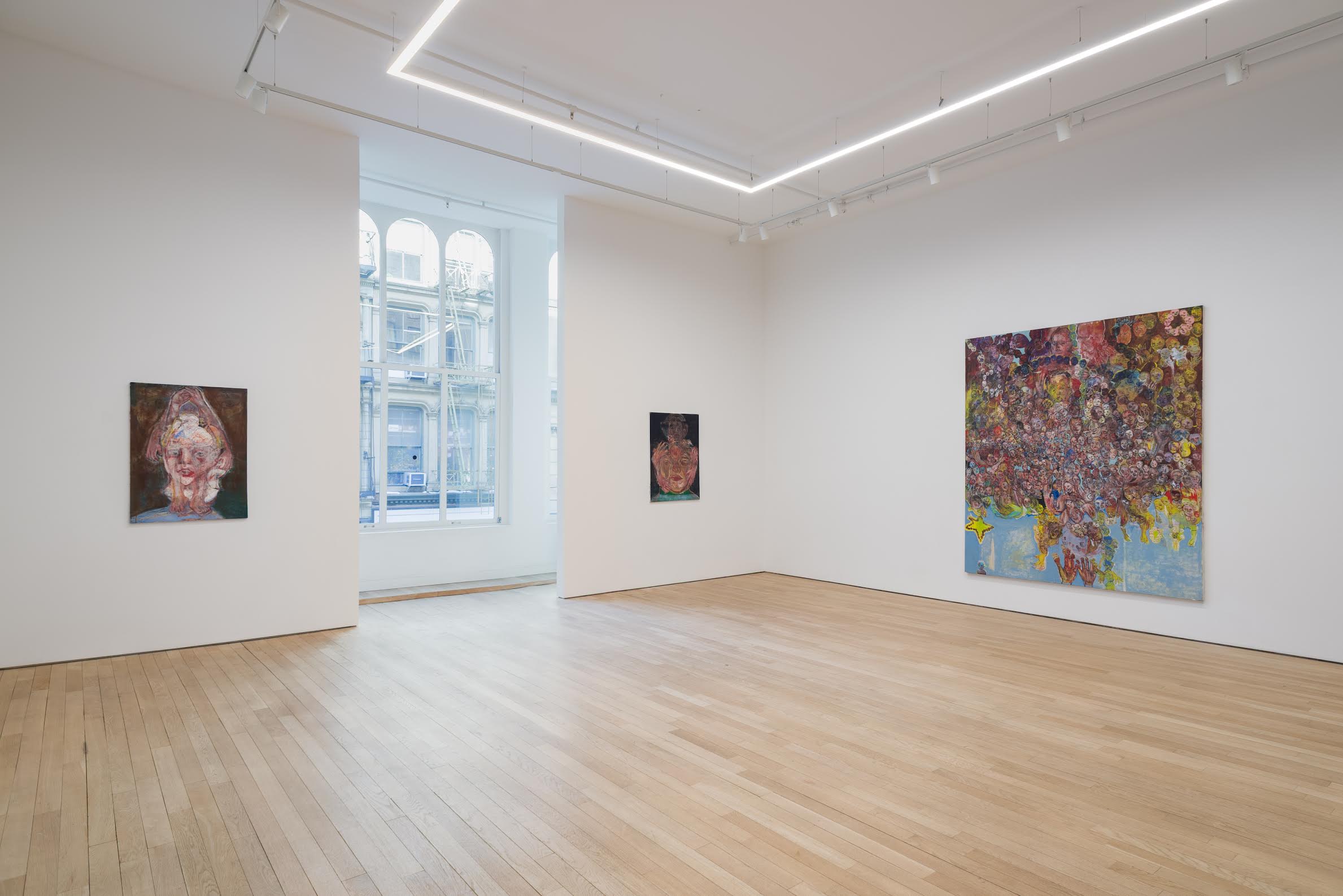
P·P·O·W is pleased to present Playing with Dolls, Judy Glantzman’s first solo exhibition with the gallery. A fixture of the 1980s East Village art scene and a dedicated art educator of over 30 years, Glantzman approaches her practice as an open and continuous engagement with the unconscious. Through paintings and ceramic works made between 2000 and 2025, the exhibition chronicles Glantzman’s lifelong dedication to channeling one’s inner impulses without judgement. Bursting with a cacophony of color and expression, the resulting imagery is both a marvelous and terrifying reflection of our time. Glantzman’s heroically scaled works immerse viewers in dichotomous physiological realties where inner voices speak to the chaotic and irrational heart of human existence. Often taking years to complete, her zealous and frenetic accumulations of diversely rendered self-portraits and disembodied heads, hands, and feet are created through a continuous process of layering, scraping, destroying, and reworking her surfaces. Glantzman generates emotionally raw iconographies by pulling from a multitude of art historical references, ranging from ancient Greek theatre to religious paintings of miracles. Across these works, hermetic and personal symbols bore out from the center of her canvases or are inscribed within triangular, haloed, cruciform, or totemic configurations. Works such as Angel, 2000, from her iconic series of white paintings, were created in single sittings using a wet-on-wet technique that Glantzman developed following the death of her father and birth of her daughter. Lathering her canvas in thick white paint before inscribing it with a central female figure, she writes that, “In these paintings, the figure is emerging from the white as well as being swallowed back into it. The whole body of the painting is the figure, the paint its skin.” Playing with Dolls also includes an operatic installation of hand built ceramic heads and hands. Blurring the line between painting and sculpture, the works appear to have leapt from the two-dimensional constraints of Glantzman’s painterly accumulations. Forming a silent choreography of outstretched hands and hundreds of faces, the installation expresses the insanity of our lives while celebrating artistic freedom in its purest form. Judy Glantzman (b. 1956) was born in Long Island, NY and now lives and works in Chatham, NY. After graduating from the Rhode Island School of Design in 1978, she began exhibiting in the early 1980s East Village art scene at galleries such as Civilian Warfare, New York, NY, and Gracie Mansion, New York, NY. Since the 1990s, Glantzman has presented solo exhibitions at Hudson River Museum, Yonkers, NY; BlumHelman Gallery, New York, NY; Hirschl & Adler Modern, New York, NY; Pennsylvania College of Art and Design, Lancaster, PA; Betty Cuningham Gallery, New York, NY; Hopkins Center for the Arts, Dartmouth College, Hanover, NH; and Kleinert/James Center for the Arts, Woodstock, NY; among others. In 2009, Glantzman presented a 30-year survey exhibition at Dactyl Foundation for the Arts and Humanities, New York, NY. Throughout her career, Glantzman has taught drawing and painting at institutions including the Rhode Island School of Design and the New York Studio School, among others. The artist’s work belongs to numerous public collections, including the Whitney Museum of American Art, New York, NY; Grey Art Gallery, New York, NY; San Francisco Museum of Modern Art, San Francisco, CA; Phoenix Art Museum, Phoenix, AZ; Weatherspoon Art Museum, Greensboro, NC; Progressive Collection, Cleveland, OH; and the Tampa Museum of Art, Tampa, FL; among others. She has been the recipient of numerous awards and grants, most notably the John Simon Guggenheim Memorial Fellowship, the Anonymous Was a Woman Foundation Grant, the New York Foundation for the Arts Grant, and the Pollock Krasner Foundation Grant.
Past
Paintings from the Orange RoomPhoebe Helander
Oct 31 – Dec 21
P·P·O·W is pleased to present Paintings from the Orange Room, Phoebe Helander’s first solo exhibition with the gallery. In deftly made oil on wood paintings, Helander finds her subject within familiar elements of daily life. Revisiting the same group of objects, including melting ice, cut flowers, burning candles, bowls of milk, and a mirror with changing reflections, Helander’s book-sized paintings come out of an expressive and durational form of perceptual painting. The candle paintings included in this show exist in varied states of burning, each an organic result of the same process. All painted in a single session lasting anywhere from four to ten hours in her studio, the orange room referenced in the title of the exhibition, these works form a record of the change inherent to the object as well as the artist’s presence and attention. Discussing the process for these works, Helander notes: "Almost all of my work gets buried in the end. For example, in the middle of painting, I notice something and devote myself to describing it, and if I’m lucky this results in a passage or mark I feel connected with, something I don’t want to lose. Then the wax melts more, or the wick grows another knob, and the painting no longer reflects the candle in front of me. So I end up continually painting over my work, re-making the same central area of the composition, for as long as the candle burns. Loss is a natural part of change, and that’s something I accept as a part of this work. My goal is to stay with the flame." Even a seemingly still object, like a glass of water, evolves in the studio. A flower’s petals continue to open; ice melts quickly, changing its boundaries and shrinking within a growing pool. In a moment where so much seems to be wrong with the world, the works in Paintings from the Orange Room allow viewers to share moments of contemplation with the painter and invite reflection on the weight of simple things not taken for granted. Phoebe Helander (b. 1988) received her MFA from Yale University in 2019, and now lives and works in Brooklyn, NY. Her work has been featured in group exhibitions at Karma, in Thomaston, ME; Pamela Salisbury Gallery, in Hudson, NY; Palo Gallery, in New York, NY; and New Release, in New York, NY; among others. In 2024, she presented her third solo exhibition with Pamela Salisbury Gallery, Hudson, NY, which was reviewed in Hyperallergic by art critic John Yau.
Past
Running WaterElizabeth Glaessner
Sep 5 – Oct 26
P·P·O·W is pleased to present Running Water, Elizabeth Glaessner’s fourth solo exhibition with the gallery. In this exhibition, water becomes an inescapable force dissolving the boundaries between body, landscape, memory, and the present in an incessant flood. Glaessner utilizes poured pigments mixed with various mediums and layers of rich oil paint, mimicking the fluidity of water, to create permeable narratives in which figures continuously ebb between formal articulation and non-representational gesture. Throughout this new series of large-scale paintings and works on paper, Glaessner submerges moments of miraculous transformation in dreamlike landscapes where the lines between birth, death, creation, and excretion are porous and ever-changing. Combining art historical, mythological, and cultural references with childhood memories and the subconscious, Running Water resists familiarity and nostalgia, instead submitting to the new and unknown. The swampy landscape of East Texas, particularly its rivers and streams, haunt Glaessner’s symbolic compositions. As a child, Glaessner recalls playing in the bayous and floodwaters that now threaten whole communities and their natural surroundings. Throughout the exhibition, bodies and bodies of water are presented in a perpetual exchange, highlighting humanity’s inextricable link to these hydrological systems. As our environment becomes more compromised, so do our bodies and the notion that we are sealed, impenetrable, and autonomous beings. In Dissociating on a rock, 2025, a prone figure lays atop a boulder on a murky beach. A ghostly apparition springs up from her rounded belly as if breaking through old skin, flowing forth like a wave. A skull rests on the sand, recalling Catholic Crucifixion scenes and memento mori paintings of classical antiquity. Staring out at the viewer with the wide grin of a clown, the skull pokes fun at our sense of horror, death, and change. An anole lizard, also native to Houston, glowing acidic green against the misty seascape, looks on as a witness, with its tiny hands gathered in prayer. In other paintings such as Holy Fury, 2025, the viewer is confronted by a front-facing figure, viewed from close-up as she floats to the surface. Frozen in place, her eyes are wide open with terror as a miniature apparition swims out from her mouth directly towards the viewer. Here, exorcism becomes another form of birth. The mouth, taking the place of a pregnant belly, becomes a site of rupture, expulsion, and regeneration. Again, Glaessner flips our interpretive precepts by subverting what is often considered horrifying or threatening. As water levels continue to rise and our old familiar world dies, a new world is born. In Running Water, change, like water, is our only constant. Elizabeth Glaessner (b. 1984) received her BA from Trinity University, San Antonio, TX in 2006, and she completed her MFA at the New York Academy of Art, New York, NY in 2013. She was awarded a postgraduate fellowship at the New York Academy of Art in 2013. Glaessner has presented solo exhibitions at P·P·O·W, New York, NY; Perrotin, Tokyo, Japan and Paris, France; François Ghebaly, Los Angeles, CA; and Consortium Museum, Dijon, France. Her work has been included in group shows at Timothy Taylor, New York, NY; James Cohan, New York, NY; Mrs., Maspeth, NY; Brigitte Mulholland, Paris, France; Flag Art Foundation, New York, NY; Kasmin, New York, NY; Asia Art Center, Taipei, Taiwan; and Public Gallery, London, UK; among others.
Past
Furniture MusicFicus Interfaith
Jul 10 – Aug 16
"I came into the world very young, in an age that was very old." —Erik Satie P·P·O·W is pleased to present Furniture Music, a multimedia project by Ficus Interfaith commemorating the 100-year anniversary of French composer Erik Satie's death. Featuring five new table works, each corresponding to a piece of Satie's music, alongside a selection of terrazzo wall pieces, the artworks on display blur the boundaries between furnishings and fine art. Accompanied by the five compositions by Satie, performed by Molly McCommons and recorded, mixed, and mastered by Charles Heimes, Furniture Music invites viewers to rethink the role that decoration plays in our built environment through the form of sound, art, and objects. Throughout his enigmatic life, Satie redefined the boundaries of music, devising new modes of expression based on the interplay of words, space, visuals, and sound. Between 1917 and 1923, he wrote his prescient musique d 'ameublement, or "furniture music," a set of five short compositions that were meant to be played in the background as opposed to actively listened to. While these works were rarely performed during his lifetime, and never in full, they became direct precursors to Muzak and were later championed by musicians John Cage and Brian Eno. Notoriously eccentric, Satie radically reimagined what music could be, posing aesthetic questions that are still explored today. A recluse until the end of his life, Satie's final words were "Ah…the cows." Ficus Interfaith is a collaboration between Ryan Bush (b. 1990) and Raphael Martinez Cohen (b. 1989). As a sculptural practice, Ficus Interfaith explores the ingenuity and novelties that emerge from craft. Their focus is on historical narratives and materials that are ubiquitous to the point of being overlooked or misunderstood. Ficus Interfaith embraces the spirit of collaboration and reuse, reimagining how craft can enter our lives and influence the spaces we create and inhabit. They have presented solo exhibitions at Nina Johnson, Miami, FL; Deli Gallery, New York, NY; and Prairie, Chicago, IL; among others. Selected group exhibitions include Noplace at P·P·O·W, New York, NY; In Practice: Total Disbelief at SculptureCenter, New York, NY; Material Knowledge at Arsenal Contemporary, New York, NY; and Industrial Dry at Jack Barrett Gallery, New York, NY; among others. In 2024, they were visiting artists at Salmon Creek Farm in Albion, CA, as well as Numanohashi in Tokyo, Japan. In 2026, they will present their first solo exhibition with Tower 49 Gallery, New York, NY.
Past
Night BirdsKaren Arm
Jun 27 – Aug 16
P·P·O·W is pleased to present Night Birds, Karen Arm’s seventh solo exhibition with the gallery. For over three decades, Arm’s work has engaged dialogues between micro and macro, form and element, and light and space to heighten the intangible aspects of nature while capturing unseeable moments in time. Drawing inspiration from the natural world, Arm investigates her subjects through direct observation, photographs, and other visual tools to uncover their fundamental energetic power. Through an obsessive virtuosity and a meticulous process of layering and glazing, Arm’s canvases function as portals to the infinite sublime. A culmination of works made over the past six years, Night Birds continues the artist’s exploration of the earthly and celestial and captures our daily metaphysical experience of nature often overlooked by the naked eye. In dense accumulations of waves, rays, dots, and lines, Arm’s meditative compositions seem to push and pull against their own visual gravity. Light and mass engage in the form of beams colliding into a tidal horizon or radiating behind an eclipsed moon. Noting that birds use planetary cues, like the moon and stars, to navigate their long journeys, works such as Untitled (Night Birds), 2025, distills an imagined seascape to its essential interconnected elements. The rays of the sun or moon, the waves of the ocean, and the coordinated flight of birds are bound together in an energetic rhythm that connects the viewer to the spirit of our earth’s origins. Karen Arm (b. 1962) lives and works in Brooklyn and Shelter Island, NY. She received her BFA from The Cooper Union in 1985 and her MFA from Columbia University in 1989. She has presented seven solo exhibitions with P·P·O·W since 1999. Her work has been included in group exhibitions at the Brooklyn Museum, Brooklyn, NY; Shelter Island Historical Society, Shelter Island, NY; Loong Mah, New York, NY; VSOP Projects, Greenport, NY; Foley Gallery, New York, NY; 56 Henry, New York, NY; Fortnight Institute, New York, NY; the Frances Young Tang Teaching Museum and Art Gallery, Skidmore College, Saratoga Springs, NY; and the Contemporary Art Center, Cincinnati, OH; among others. In 2002, Arm received a New York Foundation for the Arts Award for Painting. From 2012 to 2016, Arm’s works were exhibited in the United States Embassy in Burma as part of the Art in Embassies Program.
Past
El Lugar de Los Milagros / The Place of MiraclesJovencio de la Paz
May 16 – Jun 22
P·P·O·W is pleased to present El Lugar de Los Milagros / The Place of Miracles, Jovencio de la Paz’s first solo exhibition with the gallery. Featuring three new bodies of work, the exhibition showcases de la Paz’s practice of integrating ancient weaving techniques with emergent technologies. Derived entirely from software and algorithms designed by the artist and captured in cloth, these works embody a hybrid visual language, not entirely human or machine in origin. As a traditionally trained weaver and self-proclaimed digital native, de la Paz’s practice is situated at the intersection of radically different but interrelated technologies: the loom and the computer. The artist uses a digital TC2 (Thread Controller 2) Jacquard loom to manipulate design software, which they then implement using a combination of cotton, wool, alpaca, and agave fiber colored with natural dyes such as indigo. Harnessing a shared language of binary code, de la Paz exploits, disrupts, and undermines modern software and ancient textile practices to create textural works that oscillate between organic and cybernetic. Central to the exhibition are a collection of woven ellipses titled Some Circles (NY), each numerically constructed as perfect circles, but warped and skewed through the weaving process. Variations in the material thickness of the thread produce anomalies when the digital form is embodied in cloth. While this phenomenon is referred to as an ‘aspect-ratio error’ within the technological realm, de la Paz embraces the erroneous output that results from this queering of geometric proportions. The exhibition also includes works from the artist’s Warped Grid series. Reconfiguring code to generate woven cloth, de la Paz captures the undulating physical effects of the software using a traditional structure known as waffle weave. The work invites the viewer into a dimensional field of aberrations and conflicting tensions, presenting variegated surfaces that blur lines between the taxonomies of textile, painting, and sculpture. The conceptual nature and material history of the resulting pieces reflect the personal politics, non-binary identity, and multicultural background of the artist. The title of the exhibition, El Lugar de Los Milagros / The Place of Miracles is a quotation from didactic signage at the necropolis of Mitla. Located in San Pablo Villa de Mitla, Oaxaca, Mexico, this archaeological site is ritually significant to the history of textiles. The walls of the pre-Colombian settlement depict traditional weave structures from the region, considered to be sacred pathways for the souls of the dead to traverse between the seen and unseen worlds. De la Paz likens the site to a massive computational device transmitting sacred data via circuitry of carved stone, aiding the spirit in its negotiation between worlds. Re-coding the mathematical pattern language of Mitla into digital weave structures, de la Paz confronts their own colonial displacement as an immigrant and cultural descendent of Spanish colonialism. Jovencio de la Paz (b. 1986) was born in Singapore, and currently lives and works in Eugene, OR. They received their BFA from the School of the Art Institute of Chicago, IL, in 2008, followed by an MFA from Cranbrook Academy of Art, Bloomfield Hills, MI, in 2012. De la Paz has been included in group shows at Museum of Contemporary Art Denver, CO; EFA Project Space, New York, NY; Museum of Craft and Folk Art, Los Angeles, CA; Jordan Schnitzer Museum of Art, Eugene, OR; Cranbrook Art Museum, Bloomfield Hills, MI; The Franklin, Chicago, IL; Uri Gallery, Seoul, Korea; among others. Their recent solo shows include Cumulative Shadow, Holding Contemporary, Portland, OR; The end of rainbows, Halsey Institute of Contemporary Art, Charleston, NC; Some Circle, Bent Pyramids, and Warped Grids, Chris Sharp Gallery, Los Angeles, CA; Objects: USA 2020, R & Company, New York, NY; among others. They have taken part in residencies at OxBow School of Art, Chicago Artists Coalition Bolt, Acre, and more. In 2022, Jovencio de la Paz was named a United States Artist Fellow for their significant contribution to the field of craft.
Past
Side LinedApr 11 – May 11
Keltie Ferris, Brenda Goodman, Marilyn Lerner, Stephen Mueller, Sojourner Truth Parsons, Erika Ranee, Julia Rommel P·P·O·W is pleased to present Side Lined, an exhibition bringing together a diverse group of painters who have committed decades to their practices: Keltie Ferris, Brenda Goodman, Marilyn Lerner, Stephen Mueller, Sojourner Truth Parsons, Erika Ranee, and Julia Rommel. Through a devotional relationship to their canvases, each artist constructs images with vigor and vitality that obliterate the line between abstraction and figuration. Welding paint, tactility, light, and color to create places in which unpredictable metaphysical sensations take place, each work in the exhibition demands to be experienced physically. This exhibition was born out of inspiring conversations with the influential painter Judith Linhares, whose work is equally literary and abstract. “Color is first,” the artist explains. “[It] helps me construct a space where anything can happen. Touching the surface of the painting repeatedly with a loaded brush working over the entire surface with every visit, I make spaces where action can happen.” The practices highlighted within this exhibition are rooted in process, improvisation, and experimentation. Keltie Ferris’ meticulously layered canvases create a multiplanar site for constructed light and shifting space, while Julia Rommel’s minimalist yet gestural compositions are defined by the paintings’ scaffolding which drive their construction. Brenda Goodman, Erika Ranee and Sojourner Truth Parsons’ work delve into psychological and emotional realms underneath our material daily life. For over fifty years, Goodman has relentlessly explored the physical and psychological limits of abstraction and figuration through her deeply personal and expressive paintings. Ranee’s vibrant and densely built-up inventions evoke the passage of time, while Parsons’s paintings translate fleeting affective moments into visual forms. Marilyn Lerner and Stephen Mueller combine optimism and spiritualism with kaleidoscopic geometric compositions which transport the viewer into a realm of transformative introspection and vibrant energy. In a world increasingly dominated by divisive and meaningless categorization, the artists in Side Lined aim to challenge boundaries— not enforce them. As Brenda Goodman stated in a recent interview, "If you're not experimenting, why are you painting?”
Past
SplitJessica Stoller
Feb 28 – Apr 6
P·P·O·W is pleased to present Split, Jessica Stoller's third solo exhibition with the gallery. Known for her meticulous and highly detailed porcelain sculptures, Stoller mines the rich and complicated history of the medium to reveal its capacity for subversion, defiance, and play. Featuring a new series of freestanding sculptures, wall works, and a large-scale ceramic still-life, this exhibition synthesizes historical, cultural, and personal narratives that grapple with the belief that 'in a patriarchy your body is technically not your own until you pass the reproductive age.'[1] Sparked by America's ongoing repression of bodily autonomy, Stoller created Seeing Red, 2024, an evocative tableau composed of over 150 individual ceramic components positioned low to the ground. Deliberately debased, yet impossible to ignore, this installation draws inspiration from 18th and 19th century 'anatomical Venuses,' pseudoscientific wax sculptures of slumbering women, often adorned with strands of pearls. In Stoller's version, these pearls are stripped of their traditional ties to beauty and seduction. Instead, they adopt an ominous quality, looming large atop the marbled, blood red tiles. Referencing the elaborate ceramic platters of 16th century French potter Bernard Palissy, Stoller also intersperses this tableau with amphibians, shells, abortifacient plants, fractured body parts, broken shards, birth control tests, and crumpled underwear to underscore the connection between the natural world and the female body as subjugated entities. Dizzying and complex, Seeing Red confronts a world that repeatedly denies gendered female bodies dignity and self-determination. Alongside Seeing Red, Stoller's more intimately scaled freestanding and wall-based works seduce with their soft pastel colors and tactile sensuosity before revealing a more menacing edge. Masterfully sculpting crones, skeletons, medusas, and other supernatural forms, Stoller explores the repeated pathologization of the female body. One such work, Multiply, 2024, depicts a skeletal figure evoking an Auricular Style. Channeling the eerie effect of this 17th century Dutch ornamentation based on human anatomy, Stoller's Multiply strikes a fervent stance atop a bulbous, fleshy protuberance oozing out from its core. Taken together, the works in Split suggest that, as philosopher and gender theorist Christine Battersby writes, 'the experience of the female human in our culture has direct links with the anomalous, the monstrous, the inconsistent, and the paradoxical - in such a way that allows for a recontextualization or an opening up of embodied identity.'[2] Jessica Stoller (b. 1981) lives and works in West New York, NJ. She received her BFA from the College for Creative Studies, and an MFA from Cranbrook Academy of Art. Her work has been included in exhibitions at the Fondation Carmignac, Hyères, France; Brigitte Mulholland, Paris, France; Van Doren Waxter, New York, NY; Perrotin, Paris, France; Vielmetter, Los Angeles, CA; Cranbrook Art Museum, Bloomfield Hills, MI; UTA Artist Space, Los Angeles, CA; Jeffrey Deitch, New York, NY; Kavi Gupta, Chicago, IL; Anton Kern Gallery, New York, NY; Foundation Bernardaud, Limoges, France; and the Bronx Museum of the Arts, Bronx, NY, among others. She has had solo exhibitions at P·P·O·W, New York, NY; Hionas Gallery, New York, NY; and The Clay Studio, PA. A 2023 New Jersey State Arts Council Fellow, 2016 Pollock-Krasner grantee, 2013 Peter S. Reed grantee, and 2013 Louis C. Tiffany nominee, Stoller has also participated in residencies such as the Museum of Arts and Design's Artist Studios Program, the Kohler Arts & Industry Program, and the Bronx Museum of the Arts' Artist in the Marketplace Program, among others. 1 - July, Miranda. All Fours. Penguin, May 2024. 2 - Battersby, Christine. The Phenomenal Woman: Feminist Metaphysics and the Patterns of Identity. Cambridge, UK: Polity Press, 1998. Print.
Past
Are My Hands Clean?Rajkamal Kahlon
Jan 10 – Feb 16
P.P.O.W is pleased to present Are My Hands Clean?, Rajkamal Kahlon's second solo exhibition with the gallery. Kahlon's artistic work builds on twenty years of extensive research into drawing and painting as sites of political resistance. Kahlon draws on legacies of imperialism, often using the material culture, documents, and aesthetics of Western colonial archives. Her artistic research, at the intersection of visuality, violence and imperial histories, has evolved to reflect on how trauma and the body are at the center of political violence. Through her work, Kahlon addresses the studied and objectified body from within the archive. For Kahlon, painting and drawing are proposed as forms of care work, mediums of rehabilitation, that give voice to anonymous photographic subjects. Beauty, joy, and rebellious humor are yielded simultaneously as disruptive and healing strategies to violence inherent to western hegemony. In Are My Hands Clean? Kahlon brings together three bodies of work that incorporate pages ripped from controversial early 20th century German anthropological and scientific books. Overlaying enlarged photographs of anonymous women from within these texts, Kahlon hand-colors her surfaces in fields of vibrant hues before adorning her subjects in garments and accessories inspired by histories of fashion, radical feminists, and Third World armed revolutionaries. Through this process of material and historical layering, Kahlon recuperates humanity for these unnamed women and, in doing so, "talks back"-- to the original authors, to the discipline of anthropology, to Western knowledge production, and to U.S. imperial violence. Rajkamal Kahlon (b. 1974, Auburn, CA) is an American artist living and working in Berlin, Germany. Kahlon received her Bachelor of Fine Arts from the University of California, Davis, CA, and a Master of Fine Arts in Painting and Drawing from the California College of the Arts, San Francisco, CA. She is an alumna of Skowhegan and the Whitney ISP and is a professor of painting at the University of Fine Arts in Hamburg, Germany. Kahlon has held solo exhibitions at Kunsthalle Wien, Vienna, Austria; Galeria Wedding, Berlin, Germany; P·P·O·W, New York, NY; Wilhelm Hack Museum, Ludwigshafen, Germany; and Kunstverein Konstanz, Denmark; among others. Her work has been featured in group exhibitions at Stadtmuseum Dresden, Germany; Museum of Modern Art, Warsaw, Poland; Taipei Fine Art Museum, Taipei, Taiwan; Artists Space, New York, NY; Museo Universitario Arte Contemporaneo, Mexico City, Mexico; Museum of Contemporary Art, Rijeka, Croatia; among others. She has been awarded the Hans and Lea Grundig Prize, Villa Romana Prize, Joan Mitchell Painting and Sculpture Award, Pollock Krasner Award, and has completed residencies and fellowships at American Civil Liberties Union (ACLU) National Security Project, New York, NY; Center for Book Arts, New York, NY; and Newhouse Center for Humanities, Wellesley College, Wellesley, MA; among others.
Past
New StatueClementine Keith-Roach
Nov 1 – Dec 22
"Our voices echo, magnifying your arrival. New statue. In a drafty museum, your nakedness Shadows our safety. We stand round blankly as walls." —Sylvia Plath, Morning Song P·P·O·W is pleased to present New Statue, Clementine Keith-Roach’s first solo show with the gallery. Six ‘statues’ populate the gallery, along with two wall-hung reliefs. On first encounter, these sculptures appear as archaeological artifacts in a state of semi-ruin — fragmented limbs supporting urns suggest ancient ritual functions lost in time. Or perhaps these sculptures are not ruins, but ruins-in-reverse — statues in the process of creation, their cultural significance yet to be ascribed by a society still to emerge. Whether these are mournful objects from a lost world or propositional objects for a new world, that world appears to be one of collectivity: we see torrents of hands grasping and clutching, bodies merging, torsos sharing burdens. Resolutely acephalic (headless), these works are not representations of specific individuals but embody, in their anonymous multiplicity, bonds of love and labor. At the center of each ‘new statue’ is a vessel. These are antique terracotta urns and bowls that the artist procures. The histories of these objects are not known but the traces of them are written into their forms and surfaces, which bear the indexical marks of the potter’s hand, the rub of countless bodies that have used them and the erosion of time. In her studio, Keith-Roach communes with each vessel in something akin to a movement practice, from which the compositions arise, before beginning the long process of sculptural intervention that is at the core of her work. She then takes plaster casts of her own body as well as the bodies of her friends and family before slowly and painstakingly merging them with the antique vessels. The final fusion is a painterly process in which the plaster casts are intricately trompe l’oeil painted to mimic all those marks of time and labor, unifying the complex assemblage into a single chimera. Statue is a strange word, and not one that is typically applied to contemporary sculpture. Statues personify ideals and virtues or stand in for historical individuals. Triumphant and solemn, they bear down on us with their ideological weight. In personifying an ideal, statues smooth over the complexity of the particular, and in idealizing a person, they erase the difficulty of collective struggle. Keith-Roach’s new statues are not triumphant but ambiguous, not deifying but contradictory. Unlike the impossible smoothness of Justice, Prudence and indeed Liberty herself, the skin of these new statues appears cracked, porous and vulnerable. Their forms are both powerful and fragile, erotic and encumbered. The empty vessels held aloft by this multitude of limbs offer a pregnant nothingness, waiting to be filled with social meaning. The title of the exhibition is drawn from Sylvia Plath’s 1961 poem Morning Song, which describes the ambivalence of childbirth with striking vividness. The baby is compared to a new statue, stark and gleaming in a hospital that is now a museum. The temporal and emotional ambiguity of the poem — warm, flailing newborn as cold, imposing artifact — chimes with the complexity of Keith-Roach’s works. While the poem might expose an unnerving distance between mother and child, the artist reads in it an emancipatory self-effacement, a coming to terms with the difficulty of giving birth to the new and strange. Keith-Roach’s new statues, burdened and tender, ruinous and optimistic, might stand as ambivalent monuments to a wide-open future. Clementine Keith-Roach (b. 1984) received a BA in Art History from University of Bristol, Bristol, UK and now lives and works in Dorset, UK. She has exhibited at Ben Hunter Gallery, London, UK; Museum of Contemporary Art, Los Angeles, CA; Blue Projects, London, UK; Centre Regional D’art Contemporain, Sète, France; Villa Lontana, Rome, Italy; Open Space Contemporary, London, UK; Pervilion, Palermo, Italy and London, UK; and Public Gallery, London, UK; among others. Works by Keith-Roach have recently been included in Wonder and Wakefulness: The Nature of Pliny the Elder, The Herbert F. Johnson Museum of Art, Cornell University, Ithaca, NY; Milk, Wellcome Collection, London, UK; Slip Tease, Kasmin, New York, NY; Present Tense, Hauser & Wirth Somerset, Bruton, UK; Mother Lode: Material and Memory, James Cohan, New York, NY; and Body of Work, Mrs. Gallery, Maspeth, NY. Her work was featured on the cover of Art in America’s September 2022 issue illustrating Glenn Adamson’s article Monuments for the Moment, which contextualizes her vessels alongside other influential sculptors including Baseera Khan, Julia Kunin, and Martin Puryear. Keith-Roach is also an editor of Effects, a journal of art, poetry and essays. She presented Knots, a two-person exhibition with Christopher Page, at P·P·O·W in 2022. Keith-Roach is co-represented by Ben Hunter Gallery, London, UK.
Past
Good MourningRobin F. Williams
Sep 6 – Oct 27
P·P·O·W is pleased to present Good Mourning, Robin F. Williams’s fifth solo exhibition with the gallery. Featuring a series of new large-scale paintings and gouaches on paper, this exhibition builds upon Williams’s previous examinations of the constructions of gender in portraiture, advertising, folklore, and social media. An avid cinephile, Williams found themself looking for ‘the paintings’ in horror films and psychological thrillers. These films cultivated a generative space for Williams, revealing transformative moments where both composition and narrative collide. In Good Mourning, Williams blends their filmic references with art historical and cultural events to develop a type of fan fiction that creates space for alternative endings. Obscuring the line between villain, victim, and savior, each of the female protagonists within Williams’s paintings resist the confines of their prescribed role. Morally complex, they present their dualities to the viewer as they learn to escape cycles of abuse. In Out the Window, 2024, Williams invokes Carl Andre’s infamous words, “she went out the window,” in his 911 call following the murder of Ana Mendieta. Visually referencing the 1973 vampire film, Ganja & Hess, Williams pays homage to the role of the female character, Ganja Meda, as one who will go to any length to protect herself. Throughout the film, Ganja grapples with her sexuality, gender, and morality as it relates to race, class, and her bodily autonomy. In an act of self-preservation, she enters into an unholy union with a male vampire, leaving her further from her autonomy than before. In Williams’s version, the female figure is given the power to preserve her freedom by throwing that union out the window, creating a new horizon for her story. Williams further complicates the notion of a ‘perfect victim’ in the exhibition’s eponymous work, Good Mourning, 2024. Inspired by the 1979 Gothic novel Flowers in the Attic, later adapted into film, Williams examines the established conventions surrounding the widow archetype. Williams’s female figure gazes out defiantly, recalling Francisco Goya’s Mourning Portrait of the Duchess of Alba, 1797, as if challenging the viewer to call her a ‘bad widow.’ Evoking both Anjelica Huston’s 1985 Vanity Fair portrait by Annie Leibovitz, as well as the controversial wedding dress Anna Nicole Smith wore to her husband’s funeral, Williams constructs a layered portrait of a widow defying the false binaries between grief and joy, sex and death. In a pair of large-scale paintings, Williams expands the theme of alternative endings from narrative concept to formal tool. Referencing the story of Édouard Manet’s The Execution of Emperor Maximilian, 1867-69, which was cut into pieces and sold off separately by Manet’s son before being reassembled by Edgar Degas, Williams composed The Cult, 2024, and Leaving the Cult, 2024, such that they connect to form a continuous image but can also exist as independent paintings. When shown as a diptych, the female figure in Leaving the Cult teeters forever on the edge of escape. If the paintings are split up through the course of their lifecycle, the meaning of “leaving the cult” comes to fruition. However, the work suggests that ‘leaving’ remains an ongoing process and ‘mourning,’ as philosopher and gender theorist Judith Butler writes, “has to do with agreeing to undergo a transformation (perhaps one should say submitting to a transformation) the full result of which one cannot know.” [1] Alongside their oil paintings, Williams will also present a new series of gouaches on paper. Based on individual stills from When Harry Met Sally, The Texas Chainsaw Massacre, Suspiria, Carrie, and more, these works depict women in critical moments of vulnerability, revelation, transformation, or catharsis. The process of making these gouaches allowed Williams to identify tropes within these films, such as women screaming, lying prone on the floor, and peaking around doors, which inspired their fan fiction approach to the large-scale works. As curator Sarah Berenz notes, “Like art history, Williams’s timeline is not linear, but progresses, borrows, blends, and folds back on itself to progress and reinvent again.” [2] Robin F. Williams (b. 1984) received their BFA from the Rhode Island School of Design and has presented solo exhibitions at P·P·O·W, New York, NY; Morán Morán, Mexico City, Mexico; Perrotin, Tokyo; Pace Prints, New York, NY; and Various Small Fires, Los Angeles, CA, among others. Robin F. Williams: We’ve Been Expecting You, Williams’s first solo institutional exhibition, was on view at the Columbus Museum of Art, April 5 - August 18, 2024. Their work has been featured in numerous group exhibitions nationally and internationally including Pictures Girls Make: Portraitures, curated by Alison Gingeras, Blum & Poe, Los Angeles, CA; In New York, Thinking of You (Part I), Flag Art Foundation, New York, NY; I’m Not Your Mother, P·P·O·W, New York, NY; Fire Figure Fantasy, ICA Miami, Miami, FL; Present Generations, Columbus Museum of Art, Columbus, OH; Xenia: Crossroads in Portrait Painting, Marianne Boesky Gallery, New York, NY; Nicolas Party: Pastel, Flag Art Foundation, New York, NY; Seed, curated by Yvonne Force, Paul Kasmin Gallery, New York, NY. Their work is in the permanent collections of the Brooklyn Museum, Brooklyn, NY; Collection Majudia, Montreal, Canada; the Columbus Museum of Art, Columbus, OH; the Institute of Contemporary Art, Miami, FL; and X Museum, Beijing, China; among others. 1 - Butler, Judith. Precarious Life: The Powers of Mourning and Violence, Verso, 2004. pp. 21. 2 - Berenz, Sarah. Robin F. Williams: We've Been Expecting You, Columbus Museum of Art, OH, 2024. pp. 4.
Past
AirheadJun 28 – Aug 10
Laura Bernstein, Gabo Camnitzer, Anton van Dalen, Jef Geys, Elizabeth King, Alison Knowles, Montez Press Radio, Pepón Osorio, Adam Putnam, Araya Rasdjarmrearnsook, Shellyne Rodriguez, Douglas Ross, Paul Mpagi Sepuya, Timmy Simonds, Franz Erhard Walther P·P·O·W is pleased to present Airhead, a group show pulling together a distinct selection of artists who move between worlds of teaching and artmaking. While their practices as artists have influenced how they teach, their experiences teaching have also influenced their work. Some are “teachers,” defined by institutions, and some not. The works in the exhibition raise questions about our cultural understanding of the character of “the teacher,” our expectations of what it is they do, and our presumptions of what education should be. These works do not lecture. They do not solve problems, nor provide a path to answers. They do not dictate morals. They are not pedagogical in the sense of Froebel’s “gifts” or Montessori’s sensorial letter cards. These works are catalysts of possibility. Yet, they are also images of what happens to a thing when it creates possibilities for others. They speak unresolvedly about authority, martyrdom, visibility and invisibility, voice, influence, agency, role play, navigation, connecting worlds, and the human attempt to empathize. Coinciding with the show is a program of exercises, teach-ins, and performances called Faculty Meetings, part of an ongoing teacher-focused project organized by Timmy Simonds. The program unfolds throughout the duration of the exhibition and includes both artists participating in the exhibition such as Alison Knowles, Shellyne Rodriguez, Franz Erhard Walther, and Douglas Ross as well as other artists and collaborative projects such as No School, Alejandro De La Guerra & EspIRA, Gaby Collins-Fernandez, Bethany Ides, Stephen Kwok, Holly Adams, Ethan Philbrick & Prem Krishnamurthy, and the Young Filmmaker’s Foundation & Jessica Gordon-Burroughs.
Past
Under ConstructionJay Lynn Gomez
May 3 – Jun 16
P·P·O·W is pleased to present Jay Lynn Gomez, Under Construction, the artist’s second solo exhibition with the gallery. Formerly known as Ramiro Gomez, this is the artist’s first major presentation since her transition from male to female and since moving from Los Angeles, CA where she was born and raised, to Boston, MA, which she now calls home. In Under Construction, the past and the present blend within a lavender dreamlike gauze. Continuing to use her photography practice as source images, Gomez creates a new series of paintings and mixed media works that depict moments of respite, reflection, and fantasy. Combining personal memories and the contemporary lived experiences of herself and her trans sisters, Gomez portrays the complicated emotional, physical, and psychological work of reinvention. Always responding to her surrounding environment, Under Construction bridges persistent themes of Ramiro’s practice, such as documenting the often-overlooked immigrant labor force that constructs and maintains America’s largest metropolises, with the current concerns of Jay Lynn, who has become newly imbedded within local communities of trans women who thrive and live with exuberance in the face of enormous social, political, and economical odds. Alongside the paintings and installations, Gomez will also present a new series of painted hormone medication box covers. While some depict fleeting scenes of childhood memories and quotidian moments from daily life, others are left abstract, their expressive purple brushstrokes reminiscent of both turbulent landscapes and bruised flesh. In all of them, Gomez’s former name is visible on the prescription label. Jay Lynn Gomez was born in 1986 in San Bernardino, California to undocumented Mexican immigrant parents who have since become US citizens. Gomez has been the subject of solo exhibitions at the University of Michigan, Institute for the Humanities, Ann Arbor, MI; Charlie James Gallery, Los Angeles, CA; and the West Hollywood Public Library, West Hollywood, CA as part of Pacific Standard Time: LA/LA. Her work has been included in group exhibitions at the Museum of Contemporary Art, Chicago, IL; Los Angeles County Museum of Art, Los Angeles, CA; the Whitney Museum of American Art, New York, NY; the Smithsonian National Portrait Gallery, Washington, DC; the Denver Art Museum, Denver, CO; the Museum of Fine Arts, Houston, TX; the Blanton Museum of Art, Austin, TX; the Institute of Contemporary Art Boston, MA; the Jordan Schnitzer Museum of Art at Portland State University, Portland, OR; and the Cantor Arts Center at Stanford University, Stanford, CA; among others. Her work is in the collections of the Museum of Fine Arts, Boston, MA; Los Angeles County Museum of Art, Los Angeles, CA; the Smithsonian American Art Museum, Washington, DC; the Museum of Fine Arts, Houston, TX; the Museum of Contemporary Art, San Diego, CA; the Crocker Art Museum, Sacramento, CA; and the Museum of Latin American Art, Long Beach, CA; among others. In 2016, Gomez, was the subject of Domestic Scenes – The Art of Ramiro Gomez, a monograph by Lawrence Weschler, published by Abrams.
Past
The Midnight Sea, a Little Dash of LSDMartin Wong & Paul P.
Mar 15 – Apr 28
P·P·O·W is pleased to present The Midnight Sea, a Little Dash of LSD, a two-person exhibition featuring works on paper by the late Chinese-American artist Martin Wong and the Toronto-based artist Paul P. Selected by P., the works on view plumb each artists’ respective archive, revealing an intergenerational dialogue unfolding through the compositions of two queer makers as their creative interests evolved from young adulthood to mid-career maturity. While largely created decades apart, the drawings, prints, and poems included in the exhibition evince a shared desire to catalogue and celebrate the world at-hand with stylistic flourish. For Wong, this proclivity emerged during his post-college years living in Eureka, California. A self-described ‘human instamatic’—a labeling he coined to define his skillful street portraits—Wong sought to visually preserve the denizens and landscapes of the coastal town as gentrification encroached during the mid-1970s, an artistic decision that carried over to the artist’s iconic paintings of New York’s Loisaida from the 1980s. From friends and lovers to trees and bridges, Wong captured his surroundings with a visual language indebted in equal parts to West coast psychedelia, Old Master techniques, and Asian art history. For P., who came of age in the 1990s, his self-awareness was largely shaped by the effects of the AIDS epidemic. In response to a decimated community, he embarked on a series of pencil-on-paper head-and-shoulder portraits of erotic models sourced from gay magazines discovered in the back of adult bookstores. The figures, all originating from a period between the 1960s to 80s, represent a homosexual timeline bookended by gay liberation and the early days of the AIDS crisis. Through this series, P. sought to honor these mostly anonymous young men and their unknown fates. And while P.’s source material for this body of work is derived from printed images, like Wong, he would go on to incorporate direct observation into his practice, exalting the quotidian through the drawn medium and a queer coded lens. The similarity between Wong and P. continues with each artist’s subject matter. Toggling between low/high cultural allusion, images of palm trees, coastal landscapes, and cartoonish fauna sit alongside references to Baroque statuary, Romantic painting, and classical antiquity. In this way, P.’s choice of works both for himself and Wong creates a lineage of shared means and ends: analogous subjects populate the artists’ respective visual worlds, even while the line, gesture, and style remain distinctly individual. Martin Wong (b. 1946 Portland, OR; d. 1999 San Francisco, CA) has work in the permanent collections of The Metropolitan Museum of Art, New York, NY; Museum of Modern Art, New York, NY; The Bronx Museum of the Arts, New York, NY; Whitney Museum of American Art, New York, NY; Cleveland Museum of Art, Cleveland, OH; Art Institute of Chicago, Chicago, IL; and San Francisco Museum of Modern Art, San Francisco, CA, among others. Human Instamatic, a comprehensive retrospective, opened at the Bronx Museum of The Arts in November 2015, before traveling to the Wexner Center for the Arts in 2016 and the UC Berkeley Art Museum and Pacific Film Archive in 2017. In late 2022, Martin Wong: Malicious Mischief, the first touring retrospective of Wong’s work in Europe, debuted at the Centro de Arte Dos de Mayo in Madrid, before travelling to the KW Institute for Contemporary Art in Berlin, and the Camden Art Centre in London. Curated by Krist Gruijthuijsen and Agustín Pérez-Rubio, the final leg of the exhibition is currently on display at the Stedelijk Museum, Amsterdam until April 2024. Paul P. (b. 1977) lives and works in Toronto, Canada. His work is held in the permanent collections of the Museum of Modern Art, New York, NY; Whitney Museum of American Art, New York, NY; Brooklyn Museum, NY; Hammer Museum, Los Angeles, CA; and The National Gallery of Canada, Ottawa, Canada, among others. Solo exhibitions include: Amors et Mors, National Gallery of Canada, Ottawa, Canada (2023); Early Skirmishes, Hordaland Kunstsenter, Bergen, Norway (2022); Vespertilians, Maureen Paley, London, UK (2022); Gamboling Green, Cooper Cole, Toronto, Canada (2020); Slim Volume, Queer Thoughts, New York, NY (2019); Civilization (inverted), Griffin Art Projects, Vancouver, Canada (2017); Dry Neptune, Massimo Minini, Brescia, Italy (2011); and Dusks, Lamplights, The Power Plant, Toronto, Canada (2007). Group exhibitions include: Copy Machine Manifestos: Artists Who Make Zines, Brooklyn Museum, NY (2023); Shadows Fall Down, Hammer Museum, Los Angeles, CA (2021); Front International Cleveland Triennial, Cleveland, OH (2018); 2014 Whitney Biennial, Whitney Museum of Art, New York, NY (2014); and Compass in Hand, Museum of Modern Art, New York, NY (2009).This summer, KW Institute of Contemporary Art in Berlin will mount a major two-person exhibition of the work of Paul P. and Jimmy DeSana.
Past
VerdeGerald Lovell
Feb 2 – Mar 10
“Remembered landscapes are left in me The way a bee leaves its sting, Hopelessly, passion-placed, Untranslatable language. Non-mystical, insoluble in blood, they act as an opposite To the absolute, whose words are a solitude, and set to music. All forms of landscape are autobiographical.” —Charles Wright, from All Landscape Is Abstract, and Tends to Repeat Itself P·P·O·W is pleased to present Verde, Gerald Lovell’s second solo exhibition with the gallery. For Lovell, painting is an act of biography. Combining flat and impressionistic brushwork with thick daubs of impasto, Lovell’s monumental portraits depict brief moments of love often lost to time. In Verde, Lovell interweaves memories with daily moments to depict the landscape of life in transition. Embracing the space between placelessness and freedom, loss and renewal, and the epic and quotidian, Lovell creates contemplative portraits of friends, travel, and nature that chronicle a journey towards self-actualization and discovery of home. In Verde, Lovell, who moved from Atlanta to New York City in 2021, portrays himself and a tightknit community of friends who have made New York City their home against the odds. Reflecting on this experience, Lovell notes, “A lot of friends I’ve painted come from similar backgrounds and it’s just as wonderful for them as it is to me that we live the life that we live, and we get to share these moments together.” In 17 Points / I Believe I Can Fly, 2023, Lovell paints two figures playing basketball in Brooklyn from two different angles. One half of the title references a reoccurring childhood dream in which Lovell scores 17 points and gets signed to play in the NBA, while the other references the theme song from the 1996 movie Space Jam, the artist’s favorite movie growing up. Lovell recalls singing “I Believe I Can Fly” on his fourth birthday when he finally got out of foster care and moved in with his grandmother. Within these New York City scenes, Lovell intersperses moments from his first travels outside the United States, which include not only paintings with friends in major cities but in the quiet solitude of nature. Viewing landscape painting as a form of self-portraiture, Lovell describes works such as At the Peak of both Truths, the Descent Inevitable, 2024, a monumental portrayal of a mountain he climbed in Spain, as a portrait of grief, and the ways in which grief can also be viewed as an expression of love. Throughout Verde, Lovell mourns the terrain of his past while extending gratitude for the new landscape of his present, an exploration of which has just begun. Gerald Lovell (b. 1992, Chicago, IL) began painting at the age of 22 after dropping out of the graphic design program at the University of West Georgia. Lovell completed the Fountainhead Artists Residency in October 2023. He has exhibited at P·P·O·W, New York, NY; Jeffrey Deitch, Moore Building, Miami, FL; Anthony Gallery, Chicago, IL; Galerie Peter Kilchmann, Zurich, CH; Kohn Gallery, Los Angeles, CA; The Harvey B. Gantt Center for African-American Arts + Culture, Charlotte, NC; and Mint, Atlanta, GA, among others. In 2022, Lovell’s work was on view in What is Left Unspoken, Love at the High Museum of Art, Atlanta, GA, and is in the museum’s permanent collection. Lovell has been featured in Harper’s Bazaar, Artsy, Artnews, Elephant Magazine, and The New York Times, among others.
Past
The Foliated RoomKatharine Kuharic
Dec 15 – Jan 28
P·P·O·W is pleased to present The Foliated Room, Katharine Kuharic's fifth solo exhibition with the gallery since 1994. Pioneering a genre of distinctly queer, feminist image-making, Kuharic’s paintings conjure open-ended narratives, always insisting that things are different from what they seem. Emphasizing an individual aesthetic counter to the virtual realities of technology, her labor-intensive process necessitates an equivalent time-based immersion and emotional engagement by the viewer. Featuring early works from the 1990s alongside a new body of paintings, The Foliated Room highlights Kuharic’s decades-long visual examination of mortality, sexuality, and connection to nature through her meticulous technical approach, multilayered symbolism, and highly keyed pallet. Drawing inspiration from the Sala a Fogliami or "Room of Foliage” at the Palazzo Grimani di Santa Maria Formosa in Venice, where she was an artist in residence at the Emily Harvey Foundation, Kuharic similarly depicts flora and fauna to examine the struggle between life and death. Adamant that her references are real and not photographic, Kuharic sources invasive species such as the echinocystis lobata and dead animals such as hummingbirds, cardinals, and finches, from the Hamilton College Cemetery, where tenured professors such as herself are allotted a burial plot. Referencing Albrecht Dürer, El Greco, and Stanley Spencer, Kuharic imbues her withering tangles of closely observed clippings from the natural world with memories and feelings of their lost lives, creating alluring compositions that capture nature’s waning beauty and resilient life force. An abundant web of unnaturally vibrant yellows, greens, blues, and oranges, Parable, 2023, derives its name from the New Testament. Citing Carl Jung’s interpretation that religion is a psychological response to a world filled with the unknown, Kuharic views dedicated observation and immersion in the physical act of painting as a devotional experience akin to prayer. An act of generosity, painting for Kuharic is an opportunity to linger in and prolong the beauty that surrounds us, even in the face of death. In the late 1980s and early 90s, Kuharic found herself grappling with the loss of friends to the HIV/AIDS crisis while at the same time witnessing other friends having children. By juxtaposing these life altering experiences, Kuharic highlights the entangled nature of life and death. In an untitled work from 1994, a baby clutches its foot in its hands, its plump and smooth skin contrasted with a pair of flexing, worn and wrinkled hands, perhaps stretching to find relief from pain or labor. These symbols of different life stages are set against a backdrop of fibrous corn husks, referencing Kuharic’s rural, midwestern upbringing. Deeply attuned to the transitory and often contradictory nature of life, Kuharic uses her practice to move herself into a prayerful state as she paints intuitively. Today, the existential threat of climate catastrophe and the fragility of the biosphere provide another lens through which to understand her work. Katharine Kuharic (b. 1962) was born in South Bend, IN, and completed her BFA in Painting & Drawing at Carnegie Mellon University in 1984. She has exhibited in the U.S. and abroad in solo or group exhibitions in Paris, Rome, Tokyo, Stockholm, London, and Amsterdam. Kuharic has been the subject of museum exhibitions at the St. Louis Art Museum, St. Louis, MO; the Delaware Center for Contemporary Art, Wilmington, DE; the South Bend Regional Art Museum, South Bend, IN; the Contemporary Art Museum, St. Louis, MO; and the Portsmouth Museum of Art, Portsmouth, NH.
Past
Soy el Dueño de mi CasaDaniel Correa Mejía
Oct 27 – Dec 10
In Soy el Dueño de mi Casa, Daniel Correa Mejía’s first solo exhibition with P·P·O·W, the artist presents a new series of paintings and ceramic sculptures which explore humanistic themes of loss, relationships, and collective being. Mejía’s practice combines painting, drawing, sculpture, and writing to mine imagery from his own subconscious and mythologize the landscape of his interior world. His highly symbolic figures personify various emotional states, becoming one with their scenery as contemporary society fades away and sacred, primordial knowledge is uncovered. Juxtaposing rich ultramarine with vibrant red on rough jute canvas, Mejía invokes the complimentary nature of masculine and feminine energies to summon the divine power of contrasting forces. In Soy el Dueño de mi Casa, or I am the owner of my house, Mejía grapples with the process of grief and loss, rediscovering sanctuary within the power of the human imagination and the interconnectivity of our shared planet. Confronting himself with the complexity of being responsible for his own house, his own existence as a breathing and individual body, Mejía finds through his work an expanded notion of home — one that is not limited to four walls or even the confines of the physical body. In El Duelo, 2023, a solitary figure floats, arms and legs wrapped around himself, bracing to prevent disintegration while in La raíz de la existencia, 2023, a man is held within a tree’s animated branches. His faithful dog’s slumbering body is wrapped around the tree’s trunk while its roots drink from the water below. Serving as the title piece of the exhibition, Soy el Dueño de mi Casa, 2023, depicts a male figure empathetically embraced by a female deity with flowing hair, their bodies merging. A shell-like form protects the head of the held figure, providing a makeshift home. Conjuring such images and symbols that have recurred for thousands of years, Mejía connects us to the mystery of existence. Why are we here? How might we navigate our existence? Honoring the natural purity of his materials, Mejía leaves areas of the jute canvases unpainted, using the fabric itself as a light source and connective tissue between the contrasting red and blue pigments. Similarly, Mejía’s ceramic sculptures are consciously left unglazed, allowing the naturally occurring shades of the terracotta to come into dialogue with each other as he sculpts. In works such as Soy el Dueño de mi Casa, 2023, the natural imperfections of the jute canvas punctuate the tender image. The earth-body connection depicted in his painted images takes on a physical embodiment in the ceramic works. Using terracotta, a term meaning ‘baked earth,’ Mejía sculpts the hands, the face, and the lungs from the land itself. Together, the paintings and ceramic works presented in Soy el Dueño de mi Casa highlight the tension and harmony between nature’s elements: water and fire, light and darkness, life and death. The exhibition’s installation mirrors this flux, revealing that home exists within the embrace of change and natural cycles of life. In the third room, darkened and tomb-like, a poem written by the artist reads: “It’s me and the body flowing with everything absorbed It’s me and the moon in its different phases It’s me and the sun burning in flames It’s me and the rain pouring down on the earth It’s me and the wind drifting through space It’s me and the Earth existing in gravity It’s me, and the emotional poetry in search of reflections.” Daniel Correa Mejía (b. 1986 Medellín, Colombia) is a visual artist based in Berlin. His solo exhibitions include Lucrecia, mor charpentier, Paris, FR; Soy hombre: duro poco y es enorme la noche, Fortnight Institute, New York, NY; Amor y Agua, Public Gallery, London, UK; and Die Klarheit, Colombian Embassy, Berlin, DE. His work has been included in group exhibitions at mor charpentier, Bogotá, COL; Maureen Paley, London, UK; P·P·O·W, New York, NY; Kunstverein Meissen, Meissen, DE; Museo de Arte Moderno de Medellín, Medellín, COL; Mendes Wood DM, São Paulo, BR, and New York, NY; Pony Royal, Berlin, DE; Fortnight Institute, New York, NY; and Galerie Crone, Berlin, DE, among others. His work has been featured in articles in Juxtapoz, Art Viewer, and Artnet, among others.
Past
Kabbalistic FuturismSuzanne Treister
Sep 8 – Oct 22
“Whilst consciousness and unconsciousness bi-rotated inside darkness behind light before the end of the future in a lemon yellow mountain lake reunion surrounded by painted trees and cerulean asteroids a lush wilderness of supernovae and extinct roaming voices” —Kabbalistic Manuscripts 08 P·P·O·W is pleased to present Kabbalistic Futurism, Suzanne Treister’s fourth solo exhibition with the gallery. Since the 1980s, Treister has conducted years-long investigations into societal taxonomies and technological paradigms to expose the existence of covert, unseen forces that bind power, identity, and knowledge. With a focus on the relationship between technology, science, spirituality, and art, Treister’s recent projects propose the necessity of a holistic embrace of these perceived binaries to envision possibilities for a more ethical technological future. In Kabbalistic Futurism, Treister draws from the ideas and mythologies of Jewish mysticism in conjunction with her ongoing collaboration with scientists at CERN to reveal how science and spirituality form a spectrum in which the creation of a just planetary future hinges on our ability to think differently. A project that began in 2021, Kabbalistic Futurism offers an open-ended exploration into the layers of reality beyond current scientific reach using the teachings of Treister’s Jewish upbringing, specifically her early fascination with the Kabbalah for its ability to open her mind in new directions. Long before the discovery of the Big Bang, Kabbalist texts contained the notion that all creation sprang forth from one point. In this way, Treister’s interest in the Kabbalah finds unexpected parallels to her current collaborations with cosmologists and astrophysicists at CERN, the largest particle physics laboratory in the world. Treister states, “I am interested in the idea that these areas of Kabbalah and scientific cosmology might be capable of informing each other in their search for the underlying nature of reality, just as I feel that experimenting with thinking like an artist could have a positive effect on scientists.” Inventing an alternative version of the Kabbalah for our contemporary society, Treister grounds this exhibition in the Kabbalistic Manuscripts; a single roving and poetic text written by Treister divided between 46 watercolor works on paper accompanied by an A.I narrator. Each verse is contained within a Tree of Life diagram. In the Kabbalah, Trees of Life function as abstract tools to map the point beyond human comprehension of the origins of being and are comprised of 10 connected nodes, which act as skeleton keys for unlocking the universe. In Kabbalistic Futurism, Treister replaces these nodes with her signature futuristic architectural imaginings, through which she encourages positive transformative visions. Alongside the Kabbalistic Manuscripts, Treister presents paintings and works on paper which transform her Tree of Life interpretations into blueprints for a potential future technological utopia. Hallucinogenic and hypnotic, Treister’s designs for museums, space stations, residential buildings, cultural pavilions, gardens, and algorithms dissolve categorical and disciplinary boundaries, embodying ethical systems of infinite relationships on Earth and in outer space. In three monumental paintings, Treister takes the viewer out of their own perception of reality and transports them to world full of materiality, color, and shape. Glowing with an amber atmosphere, Kabbalistic Futurism-Space Station for Transforming Light, 2023, depicts a mountain range foregrounded by a city of multicolored peaks. Alluding to refracting light or settling dust, a celestial precipitation twinkles above this otherworldly landscape while a massive blue orb subsumes the center of the painting. The project’s central motif, a Tree of Life, appears above this orb, each node made up of colorful polygons, presiding over the foreign composition. Throughout Treister’s work, these unexpected combinations of light, form, and color become sites where the spiritual, cosmological, and political blend. With this exhibition, Treister encourages all of us to open our minds to the possibilities of transcendence and visions of a different future of humanity. Suzanne Treister (b. 1958) studied at St Martin’s School of Art, London (1978-1981) and Chelsea College of Art and Design, London (1981-1982) and currently lives and works in London. Recent exhibitions include solo and group shows at the ICA London; 10th Shanghai Biennale, China; ZKM, Karlsruhe, Germany; Stedelijk Museum Bureau Amsterdam (SMBA), Netherlands; Schirn Kunsthalle, Frankfurt; Raven Row, London; Secession, Vienna; Museum of Contemporary Art (CAPC), Bordeaux, France; Annely Serpentine Galleries, London; Museum of Modern and Contemporary Art, Bolzano, Italy; Centre Pompidou-Metz, Metz, France; Helsinki Biennial, Vallisaari Island, Helsinki, Finland; and Juda Fine Art, London. Treister’s work is held in private and public collections including Tate Britain; Science Museum, London; Centre Pompidou, Paris; Muzeum Sztuki, Łódź, Poland; and Thyssen-Bornemisza Art Contemporary, Vienna. Treister’s work, HFT The Gardener, 2015, was recently on view as part of Spiritual Technology at the High Line.
Past
Rhizome St./Fugue AvenueMosie Romney
Sep 8 – Oct 22
P·P·O·W is pleased to present Rhizome St./Fugue Avenue, Mosie Romney’s first solo exhibition with the gallery. Working in the space between figuration and abstraction, romney uses painting as a portal through which to explore themes of self-perception and polychronic time. Often beginning with collage, romney stages fantasy worlds that disrupt our notions of reality, memory, and symbolic order. An introduction to a new body of work, Rhizome St./Fugue Avenue immerses the viewer in an imaginary place of both rupture and renewal. With a new cast of characters, romney envisions the psychology of alienation and placelessness, taking the viewer on a flight of the unreasonable towards spiritual transformation. In Rhizome St./Fugue Avenue, romney searches for footing within a landscape of unreality, mistranslation, and disordered perception. Imbedded symbols, text, and talismans both direct and evade as the line between enlightenment and lunacy blur. In Explode, 2023, stars circle around a central figure’s disembodied head, recalling either a saintly halo or a loony toons signifier for dizziness, often in the aftershock of blunt force trauma. A pyramidal fleet of fighter jets soar outward from the figure’s chest towards the viewer through the hazy atmosphere of what appears to be the interior of an opera house, a reoccurring setting in the artist’s recent works. Completed in Amsterdam, the bottom of the canvas includes red and green lines mimicking a map of the city’s waterways. In Autonomy (Re)Quest, 2023, romney depicts the same figure again, this time sitting towards a brilliant sunset or sunrise along the wing of a victorious cosmonaut. Instead of fighter jets, a flock of birds fly overhead and a translucent ampersand, almost undetectable, hovers in the center of the canvas. Victory’s torch is transformed into a spiraling staircase made up of a double helix, its flame becoming an emoji yellow figure, who climbs the stairs towards an illuminated Yin Yang. Together, the works within Rhizome St./Fugue Avenue represent fragments of a fantasy world in which romney intentionally surrenders to the rough texture of life and searches for unity within the self, ultimately making a friend of impermanence. Mosie Romney (b. 1994) lives and works between Ridgewood, Queens, and the Hudson Valley, New York. They received their BFA in Visual Art from SUNY Purchase in 2016 and have completed residencies with the Home School, Hudson, NY; Pocoapoco, Oaxaca City, MX; Painters Painting Paintings, Amsterdam, Netherlands; and Mahler & LeWitt Studios, Spoleto, Italy, among others. Their work is in the permanent collections of the Institute of Contemporary Art, Miami, FL; Pond Society, Shanghai, China; the Studio Museum in Harlem, New York, NY; and the Yuz Museum, Shanghai, China. romney’s work has been included in exhibitions at White Columns, New York, NY; Nicodim, Bucharest, RO, Los Angeles, CA, and New York, NY; Greene Naftali, New York, NY; Gern en Regalia, New York, NY; Almine Rech, London, UK, and New York, NY; Rachel Uffner Gallery, New York, NY; Fine Arts Center Gallery at University of Arkansas, Fayetteville, AR; and Luce Gallery, New York, NY. Their work has been featured in articles in Bomb Magazine, Hyperallergic, The Brooklyn Rail, and Juxtapoz, among others.
Past
What Surprised Them MostDotty Attie
Jun 9 – Aug 5
“Everything I do is taken from sources that didn’t originate from me and yet everything I do emanates from my whole life.” —Dotty Attie, 1976 P·P·O·W is pleased to present What Surprised Them Most, Dotty Attie’s eleventh solo exhibition with the gallery. Featuring major works from 1974 to 2023, this exhibition marks the first survey of Attie’s practice. For nearly six decades, Attie has rigorously engaged the grid as a formal and conceptual tool, masterfully rendering her small-scale drawings and canvases to create cadenced arrangements that disrupt the accepted art historical canon. From her earliest drawings to her more recent paintings, What Surprised Them Most highlights Attie’s lifelong dedication to recontextualizing sourced images with unique text, exhibiting a profoundly original body of work that questions societal conventions and reveals to the viewer “the parts of ourselves that we don’t really share with anybody else.” A presence in the New York art scene since the late 1960s, Attie co-founded A.I.R. Gallery, the first all-female cooperative artists’ gallery, in 1972. The original founding group of 20 women included Nancy Spero, Judith Bernstein, Agnes Denes, Harmony Hammond, and Howardena Pindell, amongst others. Between 1972 and 1986, Attie presented seven solo exhibitions with the pioneering cooperative, exhibiting works exclusively in graphite. Serving as the title piece of the exhibition, one such work is comprised of 86 intimate miniatures that process across nearly 30 feet of wall. In What Surprised Them Most, 1974, Attie intersperses isolated sentences from the 1954 erotic novel, The Story of O, with close-ups of faces, body parts, animals, and gardens from 18th and 19th European portraiture and landscape painting. Deftly straddling the line between fantasy and taboo, Attie deploys these cropped images to belie the erotic drama beneath the surface of her carefully rendered drawings. Departing from her early drawing practice, Attie’s first solo exhibition at P·P·O·W in 1988 marked a shift to working exclusively in series of 6 x 6-inch canvases, a scale she continues to use to this day. Employing strategies of minimalism and appropriation, Attie radically dismembers accepted genres of painting. Reveling in nuance, she sequences sections from canonical Old Master paintings, Modern photographs, and Hollywood promotional imagery with her own texts, harnessing the power of the subliminal through her disjointed imagery. Bringing together these historic and contemporary works for the first time, What Surprised Them Most chronicles Attie’s narrative approach to ceaselessly mining the hidden depths of the psyche and exposing viewers to the secret parts of themselves. Dotty Attie (b. 1938) was born in Pennsauken, New Jersey, and lives and works in New York City. She received a BFA from the Philadelphia College of Art, Philadelphia, PA, in 1959; a Beckmann Fellowship at the Brooklyn Museum of Art School, New York, NY, in 1960; and attended the Art Students League, New York, NY, in 1967. Attie was awarded a Creative Artists Public Service grant in 1976 from the New York State Council and grants from National Endowment for the Arts in 1976 and 1983. In 2013, Attie was inducted into the National Academy of Design. Her work is in the collections of the Yale University Art Gallery, New Haven, CT; the Walker Art Center, Minneapolis, MN; the Wadsworth Athenaeum, Hartford, CT; the Museum of Modern Art, New York, NY; the Whitney Museum of American Art, New York, NY; and the Brooklyn Museum, New York, NY; among others. Attie’s work has been the subject of solo exhibitions at P·P·O·W, New York, NY; Cantor Arts Center at Stanford University, Stanford, CA; Pittsburgh Center for the Arts, Pittsburgh, PA; New Museum, New York, NY; Wadsworth Atheneum Museum of Art, Hartford, CT; Contemporary Arts Museum, Houston, TX; and A.I.R. Gallery, New York, NY, among others. Her work has been featured in numerous group exhibitions including The Grid and the Curve, JTT, New York, NY; Rage, Resist, Rise!, Museum of Sonoma County, Santa Rosa, CA; This Will Have Been: Art, Love & Politics in the 1980s, curated by Helen Molesworth, the Museum of Contemporary Art, Chicago, IL, the Institute of Contemporary Art, Boston, MA, and the Walker Art Center, Minneapolis, MN; and Burning Down the House: Building a Feminist Art Collection, curated by Maura Reilly and Nicole Caruth, the Brooklyn Museum of Art, New York, NY.
Past
Years of Bad HairHortensia Mi Kafchin
Apr 28 – Jun 4
P·P·O·W is pleased to present Years of Bad Hair, Hortensia Mi Kafchin’s first solo exhibition with the gallery. Imbuing a highly classical painting style with her own mythologies, fairytales, and belief systems, Kafchin’s avatars traverse time, space, and reality to reach states of self-transformation and liberation. Hybridity, a central tenet of Kafchin’s practice, is innately tied not only to her transition from male to female, but also to her upbringing in a post-Communist and post-Chernobyl Romania in which an influx of Western culture intertwined with deeply rooted Eastern Orthodoxy and Medieval traditions. Akin to alchemical experiments, Kafchin’s canvases combine the male and female, the East and West, the traditional and contemporary, and the scientific and spiritual, to create dialectic formulas which together reveal the power of the imagination as a divine and uniting force. Viewing her compositions as journals of thoughts, feelings, dreams, and experiences, Kafchin, in Years of Bad Hair, chronicles a hero’s journey, not to conquer, but to survive. Her quest is aided by scientific and technological advancement that is at once philosophical and mystical. In Years of Bad Hair Day, 2022-2023, Kafchin paints herself as both celestial scientist and cursed princess in desperate search of the perfect transition spell. Surrounded by a vibrating clutter of various hair growth serums, hormone blockers, estrogen pills, and beauty tools, she gazes up towards her hair covered brush as if it were a looking glass revealing the inescapability of both time and biology. Inscribed on her back between a pair of rainbow angel wings are various sigils which act as navigational tools: the transgender symbol becomes a compass, the Eastern cosmological symbol of the ying-yang sits between a sun and moon, and the ancient Western ouroboros is depicted as a clock. Here, Eastern and Western traditions seamlessly intertwine to aid Kafchin in her journey towards transformation and immortality. For Kafchin, technological advancement is the spiritual destiny of the human evolution, to transform our vessels, overcome the human condition, and create new realities. In monumental paintings such as Mother of Singularity, 2022-2023, Kafchin reveals her vision of a utopian techno-future born out of humanity’s current struggles and suffering. An alien civilization of our own making, the technological sublimity depicted in this composition is matriarchal, non-violent, dualistic, harmonious, and based in Taoist philosophy. In a contemporary landscape, where a given reality can be hard to comprehend, such works invite viewers to embark on a futuristic odyssey in which the regenerative fuel of the human imagination becomes our salvation. In the words of David Wojnarowicz, “Hell is a place on earth, Heaven is a place in our head.” Hortensia Mi Kafchin (b. 1986, Galati, Romania) is a Romanian contemporary artist living and working in Cluj, Romania, and Berlin, Germany. Her work can be found in collections including the Centre Pompidou, Paris, FR; Collection Deutsche Telekom, Bonn, DE; and the Ludwig Museum, Köln, DE. Kafchin has presented solo exhibitions at the National Museum of Contemporary Art, Bucharest, RO; Galerie Judin, Berlin, DE; Nicodim Gallery, Los Angeles, CA; BWA Sokół Gallery, Nowy Sącz, PL; Art Encounters Foundation, Timișoara, RO; Lyles & King, New York, NY; Museum of Art, Cluj, RO, among others. Kafchin has also taken part in many group exhibitions at the Centre Pompidou, Paris, FR; New Museum, New York, NY; Austrian Museum of Applied Arts, Vienna, AT; Prague Biennale, Prague, CZ; La Kunsthalle Mulhouse, Paris, FR; La Triennale, Paris, FR; Espace Niemeyer, Paris, FR; Espace Louis Vuitton, Paris, FR, among others.
Past
Years of Bad HairHortensia Mi Kafchin
Apr 28 – Jun 4
P·P·O·W is pleased to present Years of Bad Hair, Hortensia Mi Kafchin’s first solo exhibition with the gallery. Imbuing a highly classical painting style with her own mythologies, fairytales, and belief systems, Kafchin’s avatars traverse time, space, and reality to reach states of self-transformation and liberation. Hybridity, a central tenet of Kafchin’s practice, is innately tied not only to her transition from male to female, but also to her upbringing in a post-Communist and post-Chernobyl Romania in which an influx of Western culture intertwined with deeply rooted Eastern Orthodoxy and Medieval traditions. Akin to alchemical experiments, Kafchin’s canvases combine the male and female, the East and West, the traditional and contemporary, and the scientific and spiritual, to create dialectic formulas which together reveal the power of the imagination as a divine and uniting force. Viewing her compositions as journals of thoughts, feelings, dreams, and experiences, Kafchin, in Years of Bad Hair, chronicles a hero’s journey, not to conquer, but to survive. Her quest is aided by scientific and technological advancement that is at once philosophical and mystical. In Years of Bad Hair Day, 2022-2023, Kafchin paints herself as both celestial scientist and cursed princess in desperate search of the perfect transition spell. Surrounded by a vibrating clutter of various hair growth serums, hormone blockers, estrogen pills, and beauty tools, she gazes up towards her hair covered brush as if it were a looking glass revealing the inescapability of both time and biology. Inscribed on her back between a pair of rainbow angel wings are various sigils which act as navigational tools: the transgender symbol becomes a compass, the Eastern cosmological symbol of the ying-yang sits between a sun and moon, and the ancient Western ouroboros is depicted as a clock. Here, Eastern and Western traditions seamlessly intertwine to aid Kafchin in her journey towards transformation and immortality. For Kafchin, technological advancement is the spiritual destiny of the human evolution, to transform our vessels, overcome the human condition, and create new realities. In monumental paintings such as Mother of Singularity, 2022-2023, Kafchin reveals her vision of a utopian techno-future born out of humanity’s current struggles and suffering. An alien civilization of our own making, the technological sublimity depicted in this composition is matriarchal, non-violent, dualistic, harmonious, and based in Taoist philosophy. In a contemporary landscape, where a given reality can be hard to comprehend, such works invite viewers to embark on a futuristic odyssey in which the regenerative fuel of the human imagination becomes our salvation. In the words of David Wojnarowicz, “Hell is a place on earth, Heaven is a place in our head.” Hortensia Mi Kafchin (b. 1986, Galati, Romania) is a Romanian contemporary artist living and working in Cluj, Romania, and Berlin, Germany. Her work can be found in collections including the Centre Pompidou, Paris, FR; Collection Deutsche Telekom, Bonn, DE; and the Ludwig Museum, Köln, DE. Kafchin has presented solo exhibitions at the National Museum of Contemporary Art, Bucharest, RO; Galerie Judin, Berlin, DE; Nicodim Gallery, Los Angeles, CA; BWA Sokół Gallery, Nowy Sącz, PL; Art Encounters Foundation, Timișoara, RO; Lyles & King, New York, NY; Museum of Art, Cluj, RO, among others. Kafchin has also taken part in many group exhibitions at the Centre Pompidou, Paris, FR; New Museum, New York, NY; Austrian Museum of Applied Arts, Vienna, AT; Prague Biennale, Prague, CZ; La Kunsthalle Mulhouse, Paris, FR; La Triennale, Paris, FR; Espace Niemeyer, Paris, FR; Espace Louis Vuitton, Paris, FR, among others.
Past
Third World Mixtapes: The Infrastructure Of FeelingShellyne Rodriguez
Mar 17 – Apr 23
“Didacting!” Shellyne laughs, hard. “My shit is didactic. Baby!” And it is in the way of a fetish: it’s teaching even though you have to figure out what and how to learn and bear weighty consciousness rather than carry facts. Didacting.” —Gilmore, Ruth Wilson, Life in Rehearsal, P·P·O·W, 2023 P·P·O·W is pleased to present Third World Mixtapes: The Infrastructure of Feeling, Shellyne Rodriguez’s (b. 1977) first solo exhibition with the gallery. In her highly detailed colored pencil drawings on black paper, the Bronx-based artist, educator, writer, and community organizer, stewards the stories of people that have shaped her lived experience. Engaging with the legacy of the Ashcan School, who bore witness to the rise of the modern metropolis and its effects on the poor and working classes in New York, Rodriguez views figures such as Alice Neel, Jane Dickson, and Martin Wong as extensions of this tradition and situates her practice alongside them. In twenty two new portraits and landscapes, Rodriguez portrays the intellectuals and insurgents who have shaped her sociopolitical thinking and documents the diverse social fabric of the South Bronx. Together, the works form what Rodriguez describes as an “expression of love for life and the people around me striving to live it” and they present a curriculum intended to spark the dynamic analysis of relationships and the creation of connections across siloed forms of knowledge. For Rodriguez, the landscape of the Bronx represents “a Third World at the periphery,” an enclave of varying global diasporas and displaced peoples, who make home just miles from the operating centers of capitalism. Documented in Rodriguez’s drawings is the insistence of life and the continuing potential for an interconnected struggle that is at once global and local. In Gemelos (Ibeji), 2022, twin boys from Haiti grin atop the playground slide; in Uncle’s Jack Fruit Hustle, 2022, an older Bangladeshi man stands at the corner he has stood selling fruit for years; and in Barry lines dem up, 2023, a local barber’s haircutting cape becomes a subversion of bourgeois aspirations. Certain portraits within the exhibition zoom in on various radical scholars in Rodriguez’s community. In Ruth Wilson Gilmore's Syllabus in Rehearsal, 2023, Rodriguez draws one of her mentors, the abolitionist, activist, and writer Ruth Wilson Gilmore, standing alongside the literary building blocks of her educational arsenal. Borrowing the exhibition’s subtitle from a term coined by Gilmore, “the infrastructure of feeling” is a consciousness foundation, built by the accumulated histories of Black radical place making “even under extreme constraint” to create pockets of freedom. In three large-scale, diagrammatic drawings, Rodriguez maps the visual lexicon of this infrastructure. Inspired by early 1980’s hip-hop event flyers by the Bronx-based artist Buddy Esquire, the series’ architectural framing “rejects any notion of nostalgia about hip hop’s origin story, and instead sees it alive and constantly shape shifting, mirroring the migrants and diasporas that call the Bronx home today as well as the descendants of those Black New Yorkers, West Indians, and Puerto Ricans who built it.” Reflecting the sampling and remixing inherent in the music and aesthetics of early hip-hop jams, works such as BX Third World Mix Tape no. 4, Caminos (Slow and Steady), 2022 leverage words, symbols, and figures to communicate the balance and unity created by a multitude of intersecting life paths traversing time, space, and cultures. Depicting different forms of movement New Yorkers see each day, Rodriguez intersperses this composition with the phrase, “together but separate and in agreement,” in the languages of various diasporas taken from the Zapatista parable “The Story of Questions.” Rodriguez ultimately views her work as a political education tool. Creating room for inclusion and solidarity, one of the exhibition spaces will also act as a reading room where visitors are invited to engage with physical copies of Rodriguez’s syllabi. The reading room will serve as a stage for Rodriguez to engage with fellow radicals in conversation and host teach-ins over the course of the exhibition. The gallery guide, available at the front desk, includes an essay on the exhibition by Ruth Wilson Gilmore, along with descriptions, diagrams, a bibliography, and a playlist.
Past
The Dungeon Series, 1978-79Jimmy DeSana
Feb 3 – Mar 12
P·P·O·W is pleased to present Jimmy DeSana: Dungeon Series, 1978-79, an exhibition showcasing one of the artist’s earliest bodies of work, conceived and executed in close collaboration with the author and dominatrix Terence Sellers. This show marks the gallery’s first exhibition of DeSana’s photography since taking on representation of the artist’s estate in 2022, and coincides with Jimmy DeSana: Submission, the first major institutional retrospective of DeSana’s work, currently on view at the Brooklyn Museum. After his move to New York City in 1973, DeSana quickly fell in with several burgeoning downtown social circles, most notably the mail art network championed by Ray Johnson, and the then-nascent punk and New Wave music scenes. It was through these connections that DeSana not only found odd jobs as an editor and photographer, but also formed a close friendship with Sellers, who was dating DeSana’s friend Duncan Hannah during this time. Working out of her “Dungeon,” a condominium on East 51st Street in Manhattan, Sellers would invite DeSana to photograph her clients, allowing the subject matter of each shoot to be determined by the sitter’s often-sadomasochistic wants and fetishes. While DeSana and Sellers worked collaboratively—Desana controlling the lighting and angle; Sellers overseeing the styling of herself and her client—their aims differed. For DeSana, these shoots used tropes of Americana to continue a formal and conceptual inquiry into the idiosyncrasies of queer subcultures that the artist began investigating with his 1972 portfolio 101 Nudes. For Sellers, DeSana’s images were meant to be visual accompaniments to chapters of her then-in-progress manuscript The Correct Sadist: The Memoirs of Angel Stern, a quasi-manual for sadomasochistic practices. Even though DeSana’s photographs were ultimately not used in this context, the body of work that emerged from these Dungeon sessions is radical, portraying a relationship between pleasure and pain that celebrates an aestheticized view of the human body and sexual practices free of reproductive and economic considerations. DeSana’s Dungeon Series also illustrates a number of compositional motifs that the artist would use throughout his career, from the early 101 Nudes portfolio to his most famous body of work Suburban (1979-85). A single light source, contorted faceless subjects, and the transposition of prosaic household items into fetish are all staples of DeSana’s photographic practice. Now givens within the zeitgeist of commercial fashion photography—in which a flash bulb and modicum of sexual aberrance set off scenes of luxury retail—DeSana employed these devices to showcase the power dynamics at play within sex acts of all stripes, giving creative voice to both the dominant and the submissive. DeSana (1949-1990) grew up in Atlanta, GA, and received his bachelor’s degree from the Georgia State University in 1972 before relocating to New York’s East Village in the early 1970s. Recent solo and two-person exhibitions include The Sodomite Invasion: Experimentation, Politics and Sexuality in the work of Jimmy DeSana and Marlon T. Riggs, Griffin Art Projects, Vancouver, Canada, 2020; and Remainders, Pioneer Works, Brooklyn, NY, 2016. DeSana’s work can be found in numerous public collections including the Institute of Contemporary Art, Boston, MA; Metropolitan Museum of Art, New York, NY; Museum of Contemporary Art, Chicago, IL; Museum of Fine Arts, Houston, TX; Museum of Modern Art, New York, NY; and the Whitney Museum of American Art, New York, NY. The Jimmy DeSana Trust is executed by Laurie Simmons, and a retrospective of DeSana’s work is now on view at the Brooklyn Museum, New York, through April 16, 2023, accompanied by a catalogue co-published by the Brooklyn Museum and DelMonico Books.
Past
Drawn After LifeTom Knechtel
Feb 3 – Mar 12
"Retreat from the world is seldom achieved – your existence picks you up and carries you along. The life outside the studio, the objects on the wall which speak of attachments and histories, the narratives that have been used for millennia – they pull you out of the vortex of grief, whether you want that or not. This tug of the world is a complex mixture of the joyous and the painful." —Tom Knechtel, 2022 P·P·O·W is pleased to present Drawn After Life, an exhibition of recent paintings and drawings by Tom Knechtel. Known for his complex allegorical narratives using a repertoire of characters and exploring themes of sexuality, animal nature, and the fragility of the human body, Knechtel’s work pushes an unflinching vulnerability to boldly confront his lived reality. Ebbing between opulent, saturated colors and stark, somber hues, Drawn After Life surveys an emotional tide, vacillating between the sited and psychic, the observed and imagined. Made over the course of five years since the passing of his husband, Rabbi Robert Baruch, Drawn After Life charts states of not only loss, grief, and pain but also of happiness, joy, and beauty. The works which make up Drawn After Life function as navigational tools allowing Knechtel to articulate the incomprehensible. Of this work, he states: “it is perhaps better to understand where we are, to accept the contradictions and unresolved situations of mourning, loss and being alive, along with the solace that beauty and the imagination can offer.” In Drawn After Life, Knechtel embodies the intimate connection between the hand and the self, caught within a web of the conscious/unconscious mind, the physical world, and realms of memories and dreams. Paintings such as Fall, 2021, describe a collision of these realities. Located within the artist’s studio in Southern California, the scene is caught in a moment of suspension as the artist’s tools and their colorful vessels fall away. Perfectly articulated and statically preserved, his portrait is wholly vanished against a studio wall covered in pictures, punched through by a window to the backyard. A profile image of the artist’s husband hangs on the wall just behind, as if the artist were a transient figure within paradoxically stable, concrete, and permanent memories. Drawn After Life will also include a new series of silverpoint and graphite drawings of hares and hands. The hare, as with other animals in the exhibition, is enigmatic and a malleable vessel of meaning, often standing in for the emotional state of its human counterpart. Long, rangy, and athletic, with elongated snouts and wild eyes, hares often live alone or in pairs. These works on paper highlight Knechtel’s careful attention to his mediums: the silverpoint and graphite marks on prepared paper are precise, yet the composition is scattered about the perimeter, dislocated but exact. The purely graphite drawings, on the other hand, break down the individual marks, becoming atmospheric and narrative. For Knechtel, drawing is a language in which he can change syntax, and syntax changes meaning. Tom Knechtel was born in Palo Alto, California in 1952. He holds both a BFA (1974) and an MFA (1976) from California Institute of the Arts (CalArts). In 2002 he had a 25-year retrospective entitled On Wanting to Grow Horns, which opened at the Weatherspoon Art Gallery in North Carolina before traveling to the Ben Maltz Gallery at Otis College of Art and Design, Los Angeles, CA; The Contemporary Art Museum, Honolulu, HI; and the Henry Art Gallery, Seattle, WA. Other solo exhibitions include Marc Selwyn Fine Art, Los Angeles, CA; the Santa Barbara Contemporary Arts Forum, Santa Barbara, CA; P·P·O·W, New York, NY; and Rosamund Felsen Gallery, Los Angeles, CA. Knechtel has been included in numerous group exhibitions including The Drawing Center, New York, NY; The Aldrich Contemporary Art Museum, Ridgefield, CT; Pomona College Museum of Art, Claremont, CA; and The Museum of Contemporary Art, Los Angeles, CA. His work is in the permanent collections of The Berardo Collection Museum, Lisbon, Portugal; The Museum of Modern Art, New York, NY; The Museum of Contemporary Art, Los Angeles, CA; The Hammer Museum, Los Angeles, CA; The Fine Arts Museums of San Francisco, San Francisco, CA; the Orange County Museum of Art, Costa Mesa, CA; and The Contemporary Museum, Honolulu, HI. Knechtel lives and works in Los Angeles. P·P·O·W originally showed Knechtel’s work in 1997; this will be his second solo exhibition with the gallery.
Past
Drawn After LifeTom Knechtel
Feb 3 – Mar 12
"Retreat from the world is seldom achieved – your existence picks you up and carries you along. The life outside the studio, the objects on the wall which speak of attachments and histories, the narratives that have been used for millennia – they pull you out of the vortex of grief, whether you want that or not. This tug of the world is a complex mixture of the joyous and the painful." —Tom Knechtel, 2022 P·P·O·W is pleased to present Drawn After Life, an exhibition of recent paintings and drawings by Tom Knechtel. Known for his complex allegorical narratives using a repertoire of characters and exploring themes of sexuality, animal nature, and the fragility of the human body, Knechtel’s work pushes an unflinching vulnerability to boldly confront his lived reality. Ebbing between opulent, saturated colors and stark, somber hues, Drawn After Life surveys an emotional tide, vacillating between the sited and psychic, the observed and imagined. Made over the course of five years since the passing of his husband, Rabbi Robert Baruch, Drawn After Life charts states of not only loss, grief, and pain but also of happiness, joy, and beauty. The works which make up Drawn After Life function as navigational tools allowing Knechtel to articulate the incomprehensible. Of this work, he states: “it is perhaps better to understand where we are, to accept the contradictions and unresolved situations of mourning, loss and being alive, along with the solace that beauty and the imagination can offer.” In Drawn After Life, Knechtel embodies the intimate connection between the hand and the self, caught within a web of the conscious/unconscious mind, the physical world, and realms of memories and dreams. Paintings such as Fall, 2021, describe a collision of these realities. Located within the artist’s studio in Southern California, the scene is caught in a moment of suspension as the artist’s tools and their colorful vessels fall away. Perfectly articulated and statically preserved, his portrait is wholly vanished against a studio wall covered in pictures, punched through by a window to the backyard. A profile image of the artist’s husband hangs on the wall just behind, as if the artist were a transient figure within paradoxically stable, concrete, and permanent memories. Drawn After Life will also include a new series of silverpoint and graphite drawings of hares and hands. The hare, as with other animals in the exhibition, is enigmatic and a malleable vessel of meaning, often standing in for the emotional state of its human counterpart. Long, rangy, and athletic, with elongated snouts and wild eyes, hares often live alone or in pairs. These works on paper highlight Knechtel’s careful attention to his mediums: the silverpoint and graphite marks on prepared paper are precise, yet the composition is scattered about the perimeter, dislocated but exact. The purely graphite drawings, on the other hand, break down the individual marks, becoming atmospheric and narrative. For Knechtel, drawing is a language in which he can change syntax, and syntax changes meaning. Tom Knechtel was born in Palo Alto, California in 1952. He holds both a BFA (1974) and an MFA (1976) from California Institute of the Arts (CalArts). In 2002 he had a 25-year retrospective entitled On Wanting to Grow Horns, which opened at the Weatherspoon Art Gallery in North Carolina before traveling to the Ben Maltz Gallery at Otis College of Art and Design, Los Angeles, CA; The Contemporary Art Museum, Honolulu, HI; and the Henry Art Gallery, Seattle, WA. Other solo exhibitions include Marc Selwyn Fine Art, Los Angeles, CA; the Santa Barbara Contemporary Arts Forum, Santa Barbara, CA; P·P·O·W, New York, NY; and Rosamund Felsen Gallery, Los Angeles, CA. Knechtel has been included in numerous group exhibitions including The Drawing Center, New York, NY; The Aldrich Contemporary Art Museum, Ridgefield, CT; Pomona College Museum of Art, Claremont, CA; and The Museum of Contemporary Art, Los Angeles, CA. His work is in the permanent collections of The Berardo Collection Museum, Lisbon, Portugal; The Museum of Modern Art, New York, NY; The Museum of Contemporary Art, Los Angeles, CA; The Hammer Museum, Los Angeles, CA; The Fine Arts Museums of San Francisco, San Francisco, CA; the Orange County Museum of Art, Costa Mesa, CA; and The Contemporary Museum, Honolulu, HI. Knechtel lives and works in Los Angeles. P·P·O·W originally showed Knechtel’s work in 1997; this will be his second solo exhibition with the gallery.
Past
Doves: Where They Live and WorkAnton van Dalen
Dec 9 – Jan 29
“van Dalen’s ongoing practice is proof that the most important and galvanizing ideas can be forged and nurtured outside of the mainstream. An effort through which one builds a family of friends and allies. A community of many.” [1] —Tiernan Morgan, Artists Living in Cities, 2022 P·P·O·W is pleased to present Doves: Where They Live and Work, Anton van Dalen’s third solo exhibition with the gallery. Since moving to New York in 1966, and settling in the East Village, van Dalen has served as witness, storyteller, and documentarian of the dramatic cultural shifts in the neighborhood, through his masterfully honed and singular iconography. As critic John Yau writes in his essay for the recently published monograph, Anton van Dalen: Community of Many, “van Dalen’s work arises out of a meticulous draftsmanship in service of an idiosyncratic imagination merged with civic-mindedness.” [2] Bringing together new and historical works, Doves: Where They Live and Work juxtaposes van Dalen’s lifelong commitment to exposing inequality amidst the societal influences of technology, war, and capitalism with his personal and artistic dedication to the lives of the white pigeons who have lived on his East Village roof since 1971. Born in Amstelveen, Holland in 1938, van Dalen found solace, in the wake of World War II, in the companionship of birds and began rearing pigeons at the age of 12. Quiet and shy, the birds became van Dalen’s closest comrades, offering a community outside the instability, pain, trauma, and violence of human relationships. Enraptured by the magic of their flight, van Dalen saw his own migration journey, from Holland to Canada and ultimately to the United States, reflected in the migratory nature of the birds. As a new arrival to New York City’s East Village in 1966, van Dalen felt in many ways that he had entered yet another war zone. Amid the city’s financial crisis, he felt compelled by his personal history to use his training as a graphic designer to document the rampant political corruption, police violence, crack and AIDS epidemics, and homelessness ravaging his neighborhood and the whole city. Alongside this societal documentation, van Dalen also honed his visual relationship to birds and nature. Since 1989, van Dalen has been working on Doves: Where They Live and Work, depicting the anthropomorphized daily activities of doves. For van Dalen, the beauty of these animals’ lives acts as a model for our own. Throughout the course of his life and artistic practice, van Dalen has sought to emulate his avian companions’ ability to find home and peace wherever their community lands. Deftly utilizing birds as a symbol of migration, freedom, peace, and community, van Dalen offers an optimistic counterpoint to his observations of the violence, disconnection, and destruction of human society. Focusing on these dual visual commitments for the first time, Doves: Where They Live and Work reveals that not only studying what is bad in the world, but what is already beautiful and good, can be an important part of the work of social change and political action. Anton van Dalen (b. 1938) has presented solo exhibitions at P·P·O·W, New York, NY; University of Massachusetts, Amherst, MA; Sargent’s Daughters, New York, NY; Temple Gallery, Tyler School of Art, Temple University, Philadelphia, PA; and Exit Art, New York, NY, among others. His work is in the permanent collections of the Whitney Museum of American Art, New York, NY; Museum of Modern Art, New York, NY; Brooklyn Museum, New York, NY; and the Yale University Art Gallery, New Haven, CT. His work has also been included in group exhibitions at notable institutions including the Whitney Museum of American Art, New York; Museum of Modern Art, New York, NY; The Drawing Center, New York, NY; Institute of Contemporary Arts, Boston, MA; New Museum, New York, NY; Art Institute of Chicago, Chicago, IL; The Studio Museum in Harlem, New York, NY; Flag Art Foundation, New York, NY; Artists Space, New York, NY; Montreal Museum of Fine Arts, Montreal, Canada; and the National Gallery of Canada, Ottawa, Canada, among others. Anton: Circling Home, a documentary by Morgan Schmidt-Feng, Dennis Mohr, Katy Swailes and Will Nold, premiered in 2020 and was named DOC LA's Best Documentary Portrait. 1 - Morgan, Tiernan. “Artists Living in Cities.” Anton van Dalen: Community of Many, Black Dog Press, 2022, p. 180. 2 - Yau, John. “Not An Artist But A Public Servant.” Anton van Dalen: Community of Many, Black Dog Press, 2022, p. 10.
Past
I'm Not Your MotherOct 28 – Dec 4
Grace Carney, Jasper Francis Cropsey, LaToya Ruby Frazier, Jacci Den Hartog, Brook Hsu, Hortensia Mi Kafchin, Daniel Correa Mejía, Nohemí Pérez, Carolee Schneemann, Mira Schor, Tarwuk, Robin F. Williams “But I resist the accolade of “mother”…Mother of anything, with the examples that you and I have of “mother” that’s not a position I want to invite. I prefer art priestess, goddess, whore, snake-swallower, smoke-blower…but “mother” is deprived of self-definition…her energies must go unquestioningly to sustain…what?" —Carolee Schneemann, January 10, 2014 P·P·O·W is pleased to present I’m Not Your Mother, a group exhibition bringing together early landscapes by Carolee Schneemann with contemporary artists whose compositions reject misogynistic and romanticized depictions of nature and grapple honestly with the realities of our natural world today. I’m Not Your Mother questions how we define motherhood and its damaging consequences for bodies both feminized and ecological. The history of western landscape painting is inextricably connected to ideas of consumption, ownership, and domination by a masculine vision over a maternally feminized land. In the nineteenth century, European artists such as Cézanne described painting their “motherland” as an “instinctual absorption in the bosom of mother nature.” [1] In the US, the artists of the Hudson River School developed highly formulaic canvases from which viewers could imagine experiences of heroic conquest, quiet occupation, and surveying ownership over a “virgin” landscape already transformed by economic and colonialist endeavors [2]. From the mid-1950s to early 1960s, Carolee Schneemann devoted herself to this genre. However, instead of viewing nature as passive or maternal, Schneemann saw an expressive lifeforce filled with its own power and agency. In rhythmic brushstrokes, Schneemann painted what she saw and felt directly, without any feeling of possession or domination. “Her father was a country doctor, and her mother took care of the family.” [3] As a young teen, Schneemann’s dual discoveries of a deep connection with nature and the writings of Virginia Woolf made her aware of an alternative life of freedom and nonconformity beyond the domestic toil prescribed to the female body: “From childhood-without any break-I felt myself a part of nature; saw the world as animate, expressive, alive and sometimes responsive to my own desires. . . The sense of my own physical life and making things within that life were united.” [4] In one of Woolf’s most biographic novels, To the Lighthouse, which centers around the fictional Ramsay family and their holiday home off the coast of Scotland, the central character, Lily Briscoe, a single friend of Mrs. Ramsay’s and an aspiring painter very much in love with the natural world, endeavors to paint a landscape. However, she is continually thwarted both by the intellectual male company with which Mr. Ramsay surrounds himself (“…whispering in her ear ‘women can’t paint, women can’t write...’” [5]) and especially by Mr. Ramsay himself. Every time she lifts her brush, Mr. Ramsay is there “bearing down on her… Every time he approached- ruin approached, chaos approached. She could not paint… That man, she thought, her anger rising in her, never gave; that man took. She, on the other hand, would be forced to give. Mrs. Ramsay had given. Giving, giving, giving, she had died-and had left all this.” [6] In many ways, the treatment and fate of Mrs. Ramsay runs parallel to that of our natural world. Like an insatiable and greedy child, Mr. Ramsay quite literally sucks all the lifeforce from his wife. We often describe mothers and mother nature as “precious gifts,” but in reality, such definitions give license to treat both not as “a bowl of berries,” writes Robin Wall Kimmerer, “but an open pit mine, and the spoon a gouging shovel.” [7] Ultimately, I’m Not Your Mother wonders if mothers and mother nature were not considered gifts but powerful gift-givers, and this power belonging to everyone regardless of gender identity. In Death By Landscape, Elvia Wilk reveals that we are all already mothers full of reproductive capabilities. Referencing an interview with Sophie Lewis, author of Full Surrogacy Now, “If everything is surrogacy, the whole question of original or ‘natural’ relationships fall the wayside. In that sense, what surrogacy means is standing in for one another, caring for one another, making one another. It’s a word to describe the very actual but also utopian fact that we are the makers of one another, and we can learn to act like it.” [8] 1 - Smith, Paul. “Cézanne’s maternal landscape and its gender.” Gendering the Landscape, edited by Steven Adams and Anna Gruetzner Robins, Manchester University Press, 2000 pp. 116. 2 - Cao, Maggie M. The End of Landscape, University of California Press, 2018. 3 - Breitwieser, Sabine. Carolee Schneemann: Kinetic Painting, Museum der Moderne Salzburg, 2015, pp. 13. 4 - Schneemann: Early & Recent Work, exh. cat. (Max Hutchinson Gallery; New Paltz, NY: Documentext, 1982). 5 - Woolf, Virginia. To the Light House, Hogarth Press, 1927, pp. 48. 6 - Ibid, pp.149. 7 - Kimmerer, Robin Wall. Braiding Sweetgrass. Milkweed Editions, 2013, pp. 383. 8 - Wilk, Elvia. “This Compost: Erotic’s of Rot.” Death by Landscape. Soft Scull Press, 2022, pp.44.
Past
La JardineraAstrid Terrazas
Sep 9 – Oct 23
P·P·O·W is pleased to present La Jardinera, Astrid Terrazas’ first solo exhibition with the gallery. Taking the form of mixed media painting and ceramic sculpture, Terrazas’ illustrative, highly detailed, and symbolic practice re-writes worlds. Influenced by surrealist artists such as Remedios Varo and folk artists such as Minnie Evans, Terrazas’ paintings are filled with transient, often zoomorphic figures, idiosyncratic iconographies, and illogical narratives. With unflinching vulnerability, Terrazas merges dreamscapes, Mexican ancestral folklore, personal experiences, and unearthly transfigurations to create spaces for communal healing, protection, and metamorphosis. Featuring a new series of paintings and Terrazas’ first ever large-scale ceramic fountain, La Jardinera presents an alternative, sacred space honoring duality and upholding ideals of empathy and reciprocity. Informed by the geography of her childhood, Terrazas contends with borders both physical and psychological. Born in Juarez, Mexico, she regularly crossed the border into El Paso, Texas to go to her favorite stores or to help family members shop for groceries. This fluid relationship was abruptly curbed when, at the age of seven, Terrazas and her parents were forced to leave Mexico and relocate to Dallas, Texas. Cut off from her extended family in Mexico, Terrazas felt rootless but never lost her sense of living in two cultures. In How many love tokens went missing in Mexico, 2022, Terrazas recalls memories of sending her uncle clothing from the United States that was unavailable in Mexico. Recently deceased, her uncle is portrayed as an angel, couched within a fantastical landscape of Juarez and a vision of her grandmother’s apartment set in front of a backdrop of mountains which are simultaneously a herd of giant cows. By sending her uncle gifts, Terrazas was able to transcend the bounds of time and space, and through the process of painting these memories, she also crosses the borders between life and death to reach him. For Terrazas, painting is “a process of finding and burying” akin to incanting, a way to cast spells and weave new remedial narratives to transmute histories. Throughout the exhibition, Terrazas employs the symbol of a fountain to challenge the traditional power structures directing the flow of giving and restricting individual capacity for reciprocity and regeneration. Looking specifically at the Rio Grande’s natural divide between the United States and Mexico, Terrazas questions what could have been if such a waterway had been used to nurture both countries instead of sowing divisiveness. Drawing a direct parallel to this body of water, Terrazas highlights the way fountains in cities become symbols of power and access for the few through the exploitation of resources intended for all. In Fountains, can I build one, be one?, 2021, Terrazas depicts herself as a stone fountain with water flowing through her to fill an empty, dried out basin. Grappling with personal and inherited trauma, Terrazas reveals how individuals can take on the power of a fountain and become sites of radical empathy and abundant replenishment. Translating to “gardener” or “flowerbed,” Terrazas describes the paintings in La Jardinera as seeds. Beginning as investigations into reoccurring phrases or mantras which would become lodged within Terrazas’ subconscious often coming to her in dreams, the paintings became portals populated by various guardian figures who could guide Terrazas towards healing and transformation. Just as a garden is able to grow and flourish, these paintings both nurture La Jardinera and are nurtured by the exhibition’s central ceramic fountain, La Fuente (para Sydney), 2022. A sphinx-like creature with the contemporary clothing of a young woman, the fountain’s pomegranate mouth acts as a nozzle from which water flows into a basin of hand painted, carved, and cut tiles ornamented with Terrazas’ unique cast of reoccurring hybrid characters of angels-devils and human-animals. A wishing fountain, Terrazas invites visitors to write down their wishes and throw them into the fountain. While wishes are usually kept secret, Terrazas believes it is important to make our wishes, desires, and hopes known in order for us to grow together as a community. Neither inside nor outside, good nor evil, human nor non-human, American nor Mexican, La Jardinera holds multiple truths at once, providing a framework for how individuals and society can gain the capacity to become regenerative fountains for giving. Astrid Terrazas (b. 1996) received her BFA in Illustration from Pratt Institute in 2018 and lives and works in Queens, New York. She has exhibited work at P·P·O·W, New York, NY; Lyles & King, New York, NY; Nicodim Gallery, New York, NY; Y2K Group, New York, NY; Andrea Festa Fine Art, Rome, Italy; Marinaro, New York, NY; Fort Makers, New York, NY; Gern en Regalia, New York, NY; Front Gallery, Houston, TX; and 98 Orchard St, New York, NY; among others. Her work has recently been featured in articles in Art Maze Mag, The Art Newspaper, and The Brooklyn Rail and is currently on view in 52 Artists: A Feminist Milestone at the Aldrich Contemporary Museum of Art through January 8, 2023.