
Chelsea, New York
Louis Faurer & Helen Levitt
New York City, 1938-1988
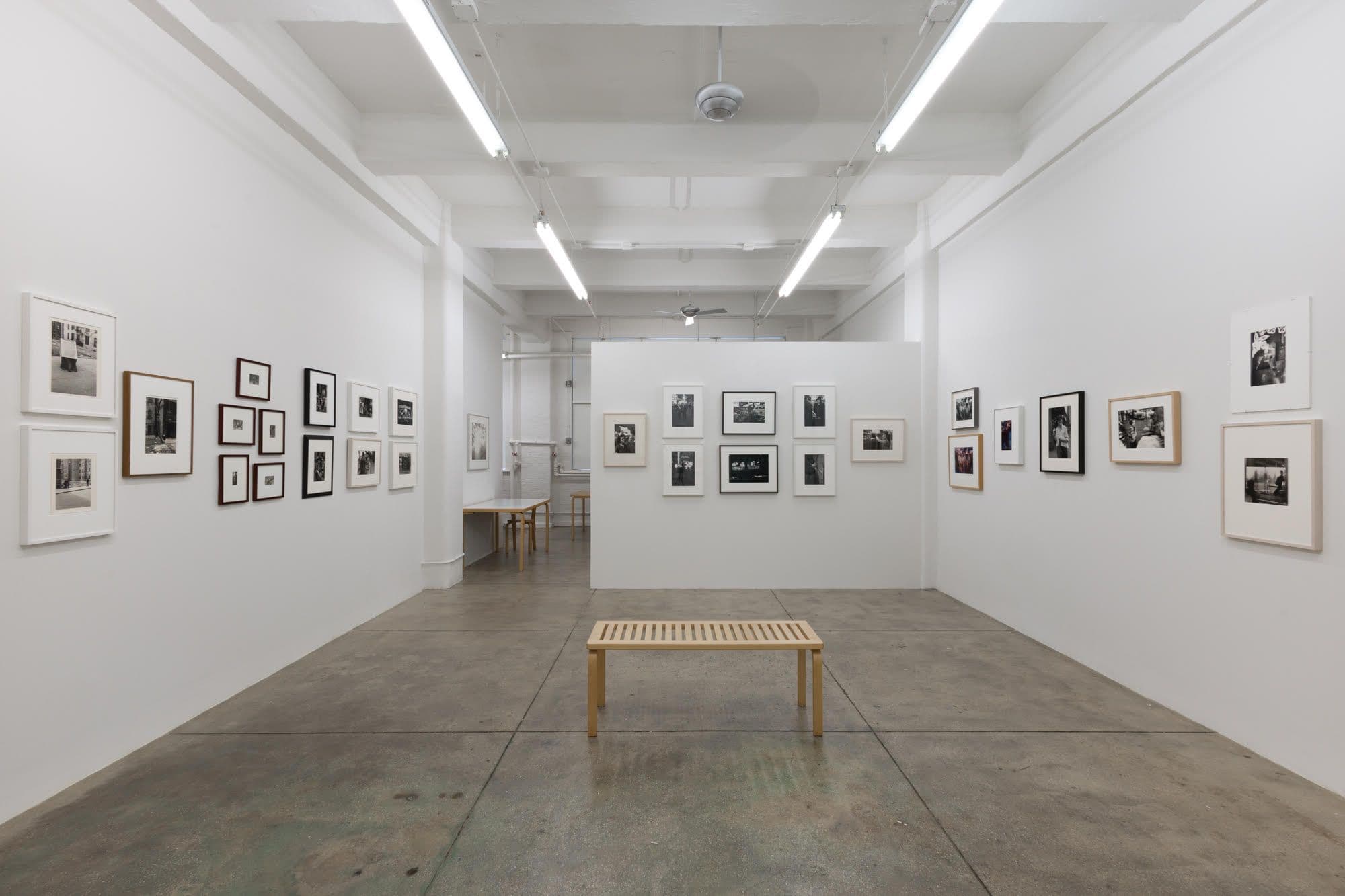
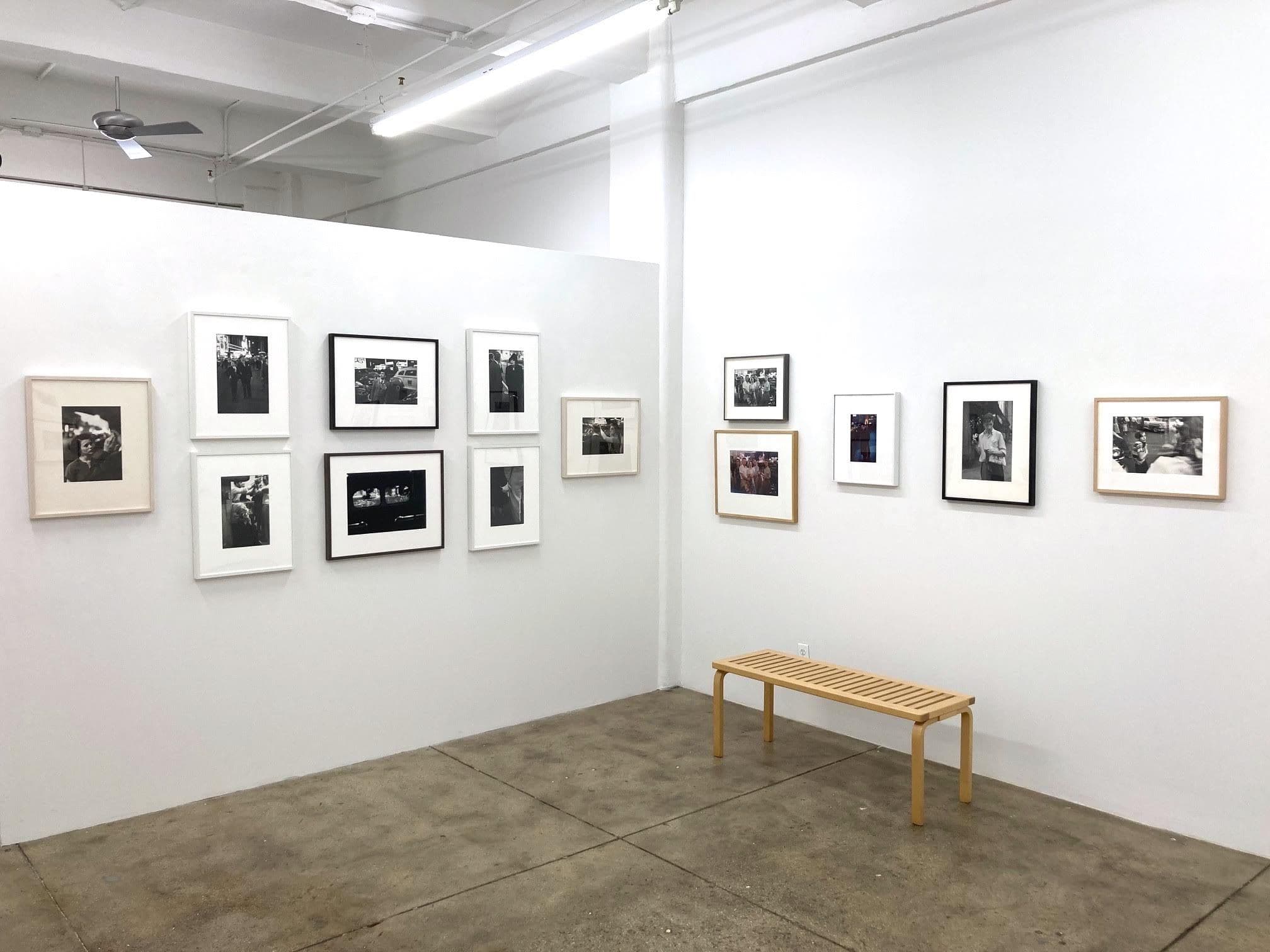
Deborah Bell PhotographsDeborah Bell Photographs presents Louis Faurer & Helen Levitt: New York City, 1938-1988, an exhibition of black-and-white and color photographs by the American photographers Louis Faurer and Helen Levitt. Levitt and Faurer were known to have admired and respected each other's work greatly. The everyday life of encounters and exchanges among ordinary people are witnessed in Levitt's witty images of children's antics and their precocious chalk drawings. Faurer's tender, gritty images of night wanderers in Times Square and layered, abstract cityscapes convey his fascination with the allure of mid-century New York City. Helen Levitt (b. 1913, Bensonhurst, Brooklyn) became interested in photography in 1931 and received her technical training by working for a portrait photographer. By the age of 16, she resolved to become a professional photographer. In the early 1930s, Levitt moved to the Yorkville section of Manhattan. Influenced by Henri Cartier-Bresson and Walker Evans, who became her friends, she bought a 35mm camera and began photographing on the streets of New York in the late 1930s. Levitt is also lauded for her film projects, which she began in 1947. She collaborated with James Agee and Janice Loeb on the award-winning documentaries In the Street (1948 and 1952) and The Quiet One (1948). Levitt received a Ford Foundation Fellowship for filmmaking in 1964. In the late 1940s, Agee and Levitt began to collaborate on a book of her photographs, A Way of Seeing, for which Agee wrote the essay. It was eventually published in 1965, 10 years after Agee's death. As the curator Susan Kismaric noted, Helen Levitt's pictures were among the first in this country in the genre that would later be labelled 'street photography.' John Szarkowski, MoMA's head of the Department of Photographs from 1962-1991, eloquently explained the magic of Levitt's photographs from the early 1940s: These pictures, quickly recognized as extraordinary, established a new documentary genre for American photography. ... Levitt's pictures report no unusual happenings; most of them show games of children, the errands and conversations of the middle-aged, and the observant waiting of the old. What is remarkable about the photographs is that these immemorially routine acts of life, practiced everywhere and always, are revealed as being full of grace, drama, humor, pathos, and surprise, and also that they are filled with the qualities of art, as though the street were a stage, and its people were all actors and actresses, mimes, orators, and dancers. A native of Philadelphia, Louis Faurer (b. 1916) was inspired by Walker Evans' 1938 Museum of Modern Art exhibition and catalogue, American Photographs. Curator Anne Tucker describes Faurer in the catalogue essay for her superb and comprehensive Faurer retrospective at the Museum of Fine Arts Houston as the master of city spaces: empty streets, overlapping signs, and the illogical spaces created by reflections. The energy of his pictures is found at interfaces, such as the space between approaching figures, the collision of sidewalks, and the simultaneously perceived inside and outside of a bus or a store. The qualities of 'film noir' of the 1940s and 1950s are also recognized as strong components of Faurer's work. As the curator Lisa Hostetler explains, Stylistically, both [film noir and Faurer's work] are characterized by an extensive use of shadow and darkness, a preference for unusual compositional techniques and oblique viewpoints, and a high-contrast, graphic sensibility.