
Chinatown, New York
Hend Samir
The Talking Candle
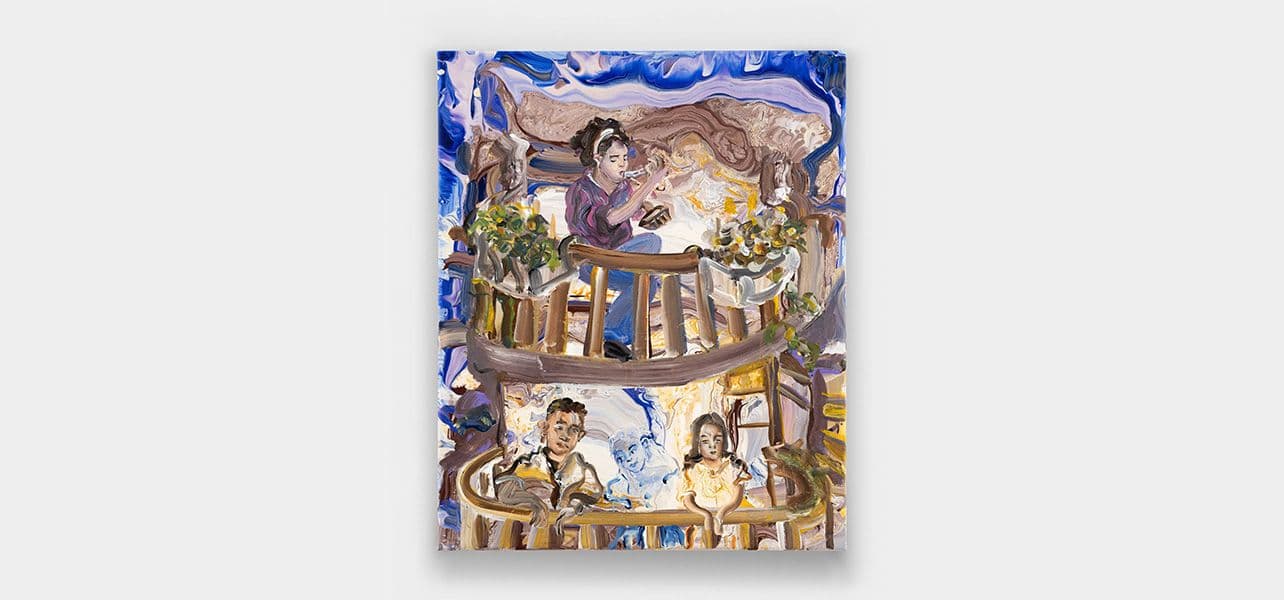
HarkawikHarkawik is pleased to present Hend Samir's third solo exhibition with the gallery. Here, Samir develops a singular mode of representation departing from scenes of interiors and interiority. These are paintings of what remains unnameable, unsaid and unsettled. These are paintings of recognition and entanglement, throwing back the disquieting horizon that early memories present and disambiguate. The excess of what escapes and confuses language and the self is abstracted and figured across form, subject and material. Brush strokes appear to slow and warble, streak as Samir's paintings expand and extract into abstracted forms, as if entering an elsewhere of dreams, slips of the tongue and the unknown. A rhythm between abstraction and figuration picks up a faster pace, echoed throughout each painting, which re-encounters the construction of the forgotten—it is not only what is forgotten, but what cuts through is the act of forgetting itself, what it displaces and inscribes. The lack of central perspective in Samir's compositions lay out the structure of the interior among various scenes occupying the same plane across time and perspective. In the suggestive Finding Hidey Whole, the ceiling on which an abstracted chandelier hangs is also the ground upon which a bed sits and a young boy stands by a door. The body of the boy seeps into the ground which bleeds into the similarly abstracted domestic rooms that border the canvas. The boy becomes the structure of the home—or the memory of the home. Does the room downstairs exist in material reality or psychic reality? Can the whole of desire, of the subject, that corresponds to the hole that derives pleasure and is figured as lack, really be found? One of Samir's more abstracted paintings, figures and edges are discernible in Finding Hidey Whole, but appear to be clouded over, shrouded willfully by psychic concealment. A Sudden Impulse and The Feeling of What Happens are similarly heavily abstracted with rogue moments of clarity: the figure of a young girl and outline of an older man in the former, faces and a day bed in the latter. Abstraction frames these canvases. That is to say, the edges that both constitute the work and delineate it from the world outside of the work are abstracted and point to this abstraction between world and art. These abstractions, unlike Euro-Modernity's transcendental impulse of the autonomous and functionless myth of pure abstraction, forever outside of history and, if it wants, representation, are in constant relation to the world of things and experiences and also the other. Erotic vignettes hang to dry, cutting across the top three quarters of the canvas, against various scenes rife with the minutiae of table talk and gestures in domestic festive meals in The Talking Candle. The event that marks an occasion to celebrate in the family, a somewhat fleeting moment associated with unity and belonging, is punctured with suspended arousing images of what now looks salacious, in relation, and are intermittently transparent—where sexual acts and erotic desire are grafted onto some of the family members attending the meal. Extruded from the family group, "hung out to dry," these images in suspension, and even more so the perspectival lines on which these images hang, are articulated clearly precisely over the abstract backdrop of The Talking Candle. A formal relationship between abstraction and figuration develops across Samir's oeuvre that creates a singular vocabulary of representation across art historical, psychoanalytic, and world-historical milieus. Hend Samir's paintings occupy what they constitute: space is inverted, time repeats compulsively, and the sensations of the aporia of existence, from ur-memories to inherited familial structures and the struggle towards articulation and recognition, persist in agony, but also desire. —Perwana Nazif