
Chelsea, New York
Catalina Tuca
Luma
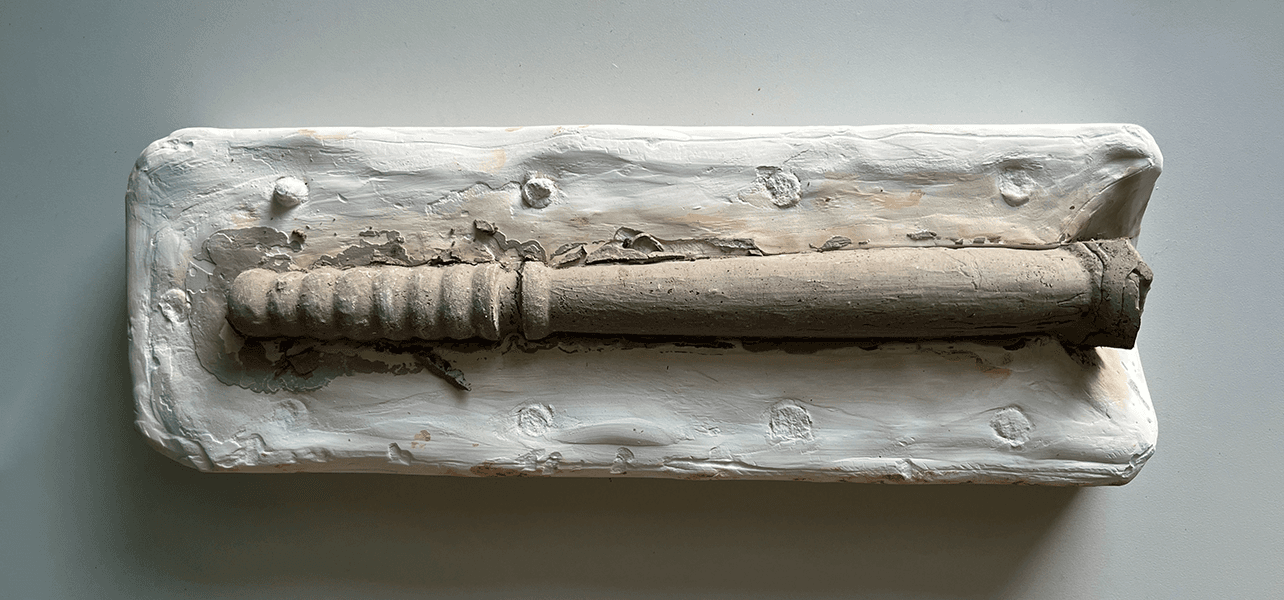
Cue Art FoundationCue Art presents Luma, a solo exhibition by artist Catalina Tuca with mentorship from Esperanza Mayobre. The exhibition presents new works by Catalina Tuca informed by the luma—the word used for a police baton in Chile, as well as for a species of evergreen tree that is the source of the dense wood originally used to make them. Tuca explores the paradoxes between these two meanings, positioning the luma as a mediator of geographic identity, cultural heritage, ecological understanding, and systems of power. Tuca’s work “reminds us that objects are not simply inert products of society, but active agents that participate in the construction and reproduction of social and cultural meaning,” writes catalogue essayist Alexandra Trujillo Tamayo. Through film, sculpture, drawing, and archival material, the exhibition contemplates meaning-making through language and objecthood, reflecting upon the use and transformation of the luma to reveal the blurry boundaries between the local and the global, the personal and the collective. Amomyrtus luma, the scientific name for a type of myrtle tree now found primarily in the south of Chile, has long been an important resource to indigenous and local communities. Its leaves, berries, and bark have provided food, medicine, and firewood to inhabitants of this land, including the Mapuche peoples, for centuries. The word luma—now also the name of a larger genus of trees in the Myrtaceae family—comes, in fact, from the Mapuche word for this particular species. As part of the exhibition, Tuca presents a new film-based work that documents her search for the tree, situated in three national parks on the island of Chiloé. The film orients us to the ecosystem of the island, shifting focus in scale from the sweeping landscapes of the forest where the luma lives to the textures of its foliage. She undertakes a sort of pilgrimage—a metaphorical reversal of the exploitation of the luma for its subsequent use as a weapon of state power. Tuca’s familiarity with the luma stems from this latter form. Coming of age during the dictatorship of Augusto Pinochet, the wooden baton worn as part of police uniforms represents a distinct period of political unrest for the artist—and has a strong presence in the collective memory of Chileans of her generation. The wood of the luma tree, incredibly hard and resistant to impact, made an ideal material for use by the military police to strike protestors and dissidents. The blows dealt by the baton are still referred to as lumazos, even though the weapon itself is now made of globally produced polycarbonates. Luma materially intervenes with this complex history. Alongside an original wooden luma from the dictatorship period, Tuca presents her own cast sculpture version, materially intervening with its form to draw attention to the dichotomy between ecology and violence. Rendering the baton in clay and soil, she softens its impact, allowing it to decompose back into the earth. Further reflecting upon the tree as a natural resource, she presents drawings that contextualize its stories, referencing the illustrations of botanist Adriana Hoffmann. Hoffman spent her career documenting the flora of Chile, and in the process became a prominent environmental activist and critic of the state’s sustainability and forestry policies. Luma orients us toward multiplicities of meaning, tracing the many narratives embedded within a seemingly definable symbol of violence and oppression. In uncovering and translating these latent histories, Tuca’s work widens our perception of the ecosystems we inhabit, allowing us to consider their expansive roots. Catalina Tuca (b. Santiago, Chile) is a multidisciplinary visual artist, educator, and independent curator. After earning a BFA and a degree in Visual Arts Education, she developed her career in Santiago, Chile by showing her work in solo and group exhibitions, teaching visual arts and film, and creating and directing art spaces. Tuca has had residencies at Youkobo Art Space (Tokyo, Japan); Taller 7 (Medellin, Colombia); and Skowhegan School of Painting and Sculpture (United States). In 2016, she moved to the U.S. to pursue an MFA at Rutgers University, which she received in 2018. She has been a member at New Inc (New York), a resident at NARS Foundation (New York), a fellow at the Interdisciplinary Art and Theory Program (New York), a resident with Collider Artist Residency at Contemporary Calgary (Canada), and a grantee of the Foundation for Contemporary Arts (New York). She is currently an Adjunct Professor at Pratt Institute. Tuca lives and works in Brooklyn, New York.