
Upper East Side, New York
Gunybi Ganambarr
Gapu-Buḏap – Crossing the Water
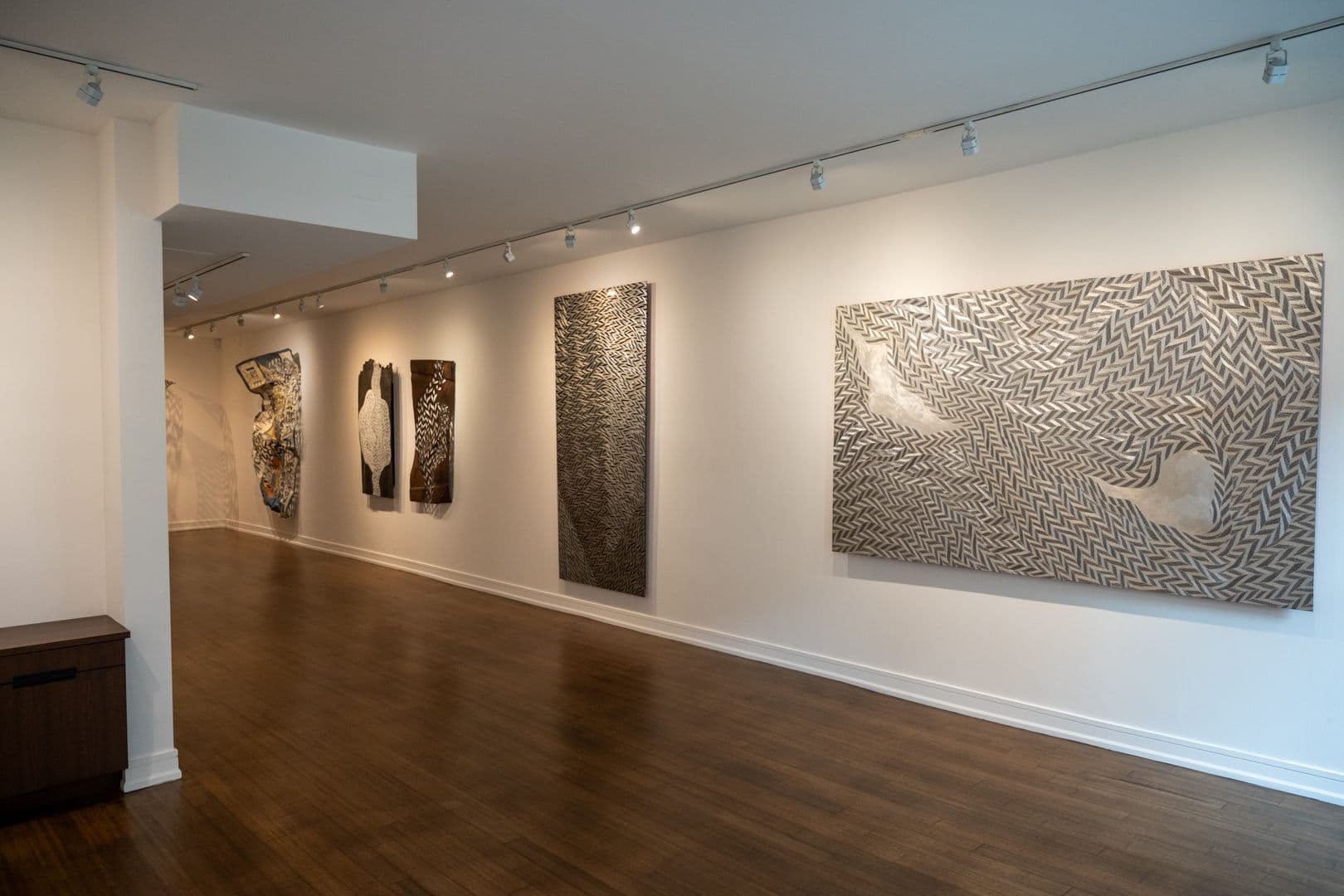
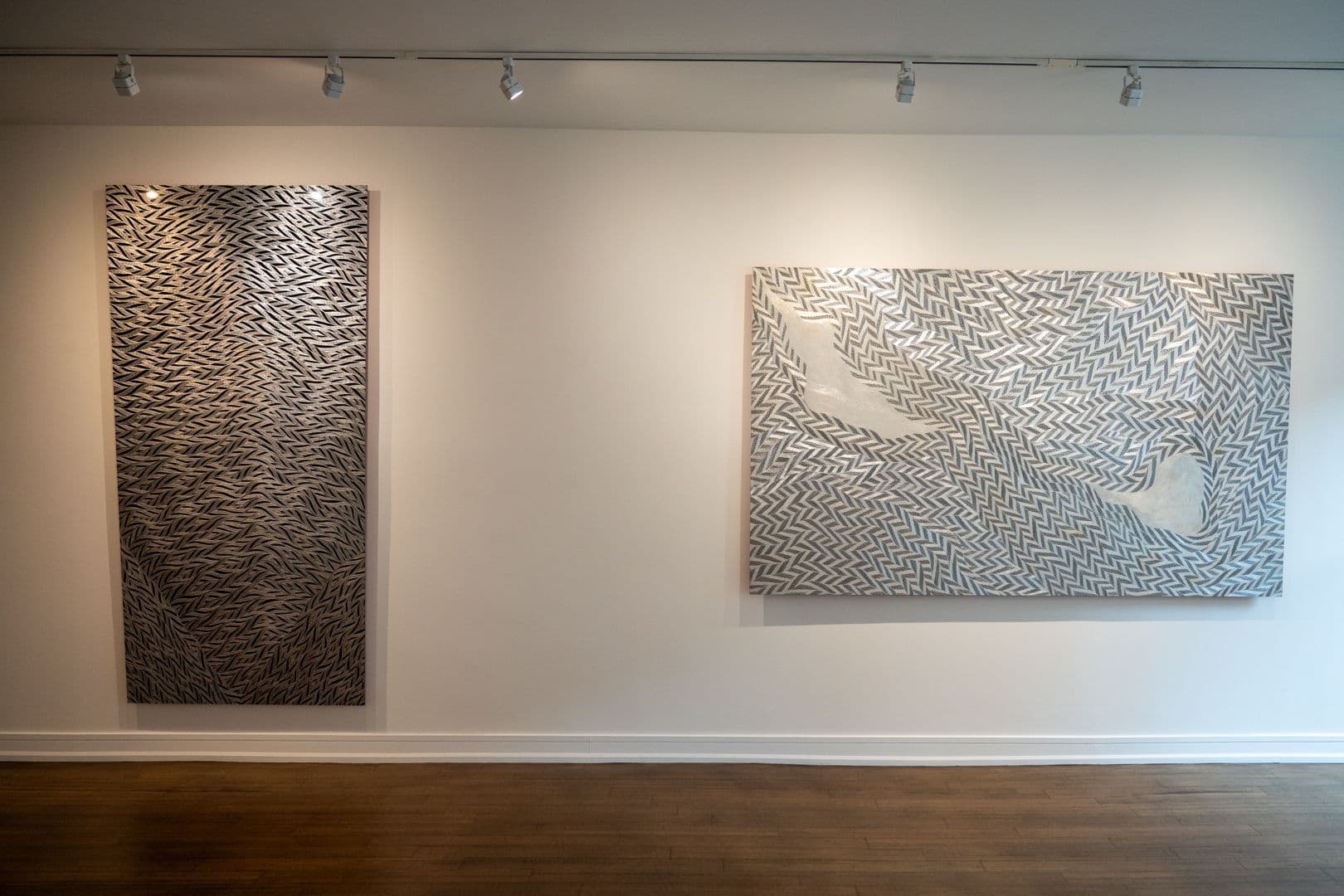
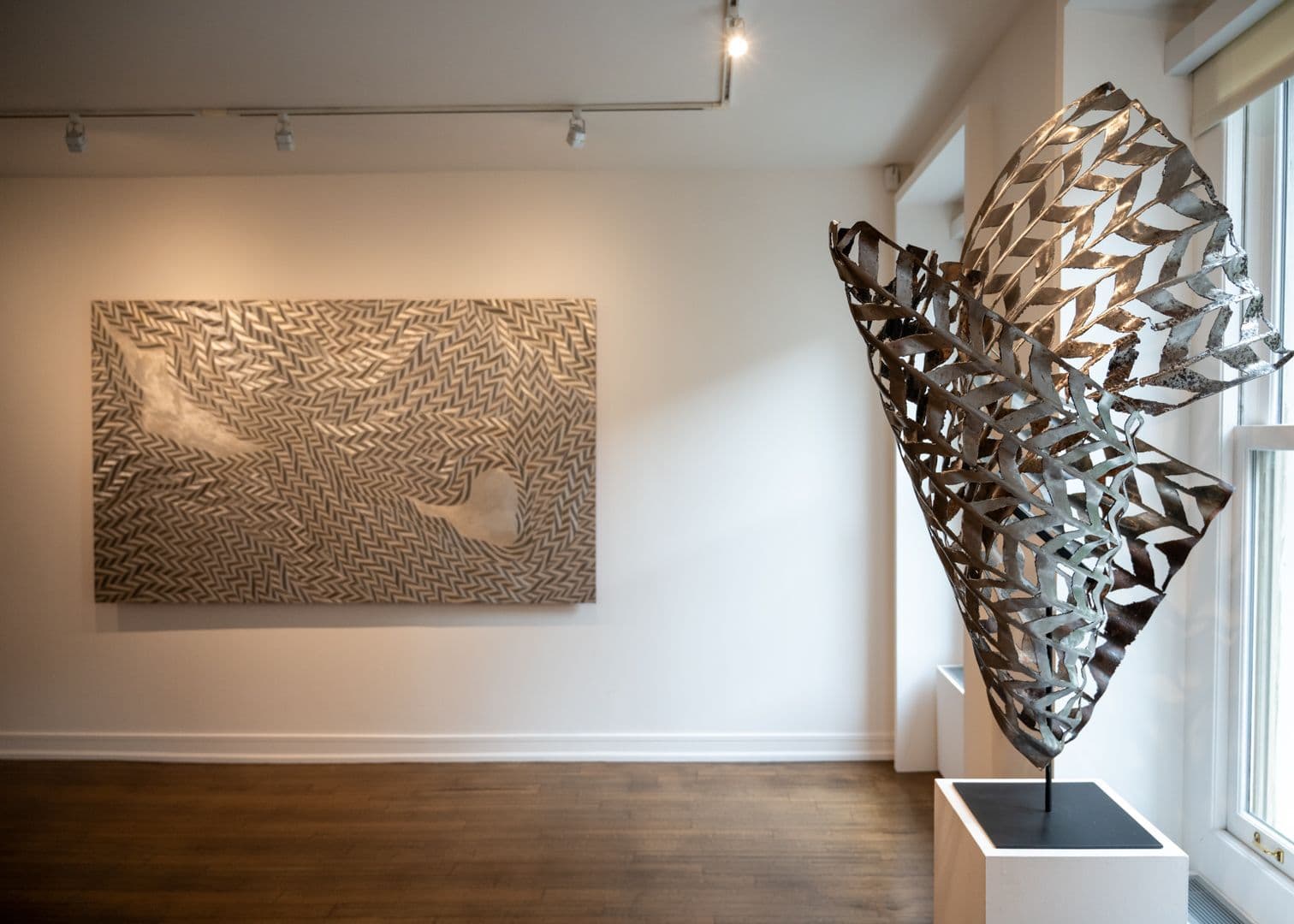
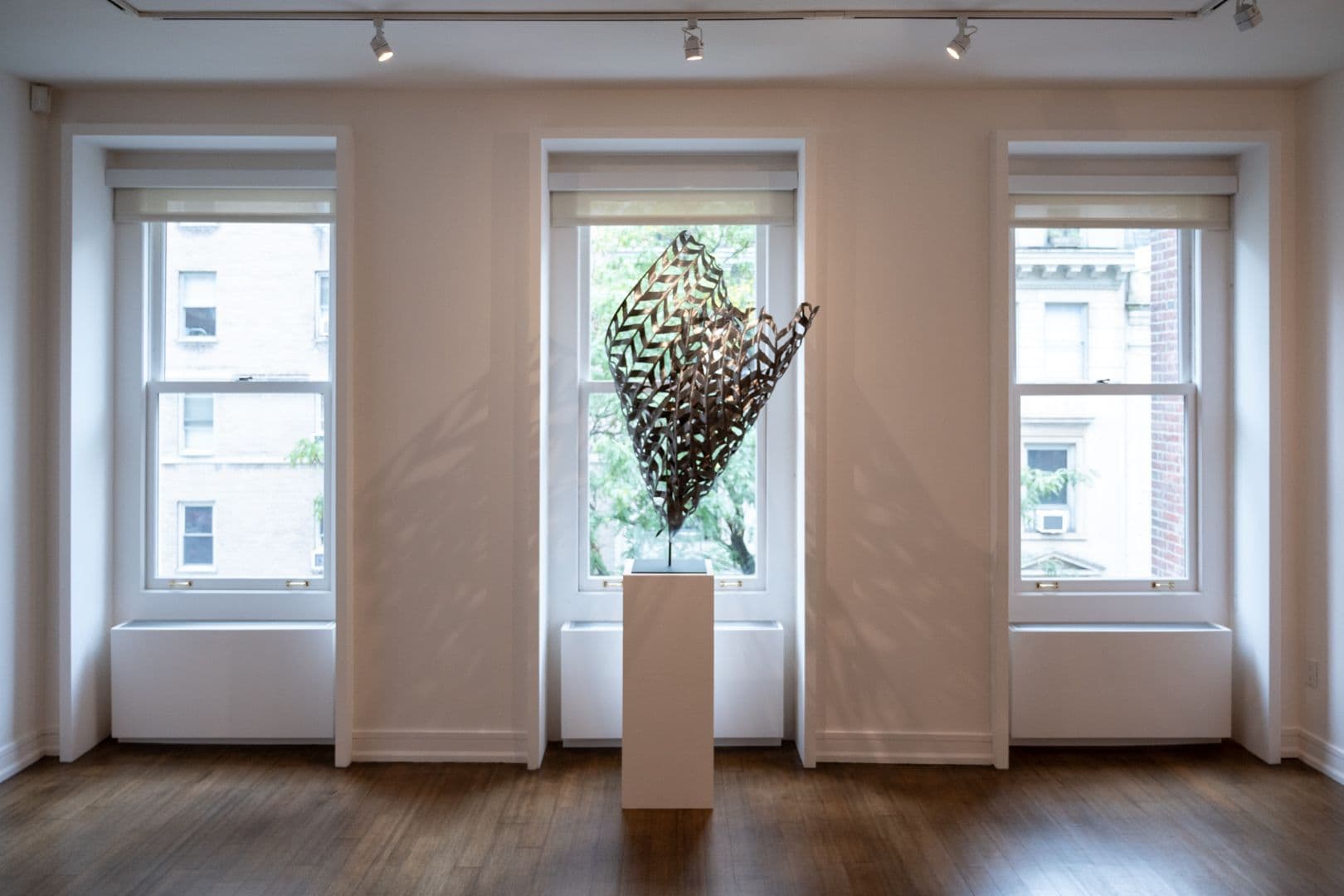
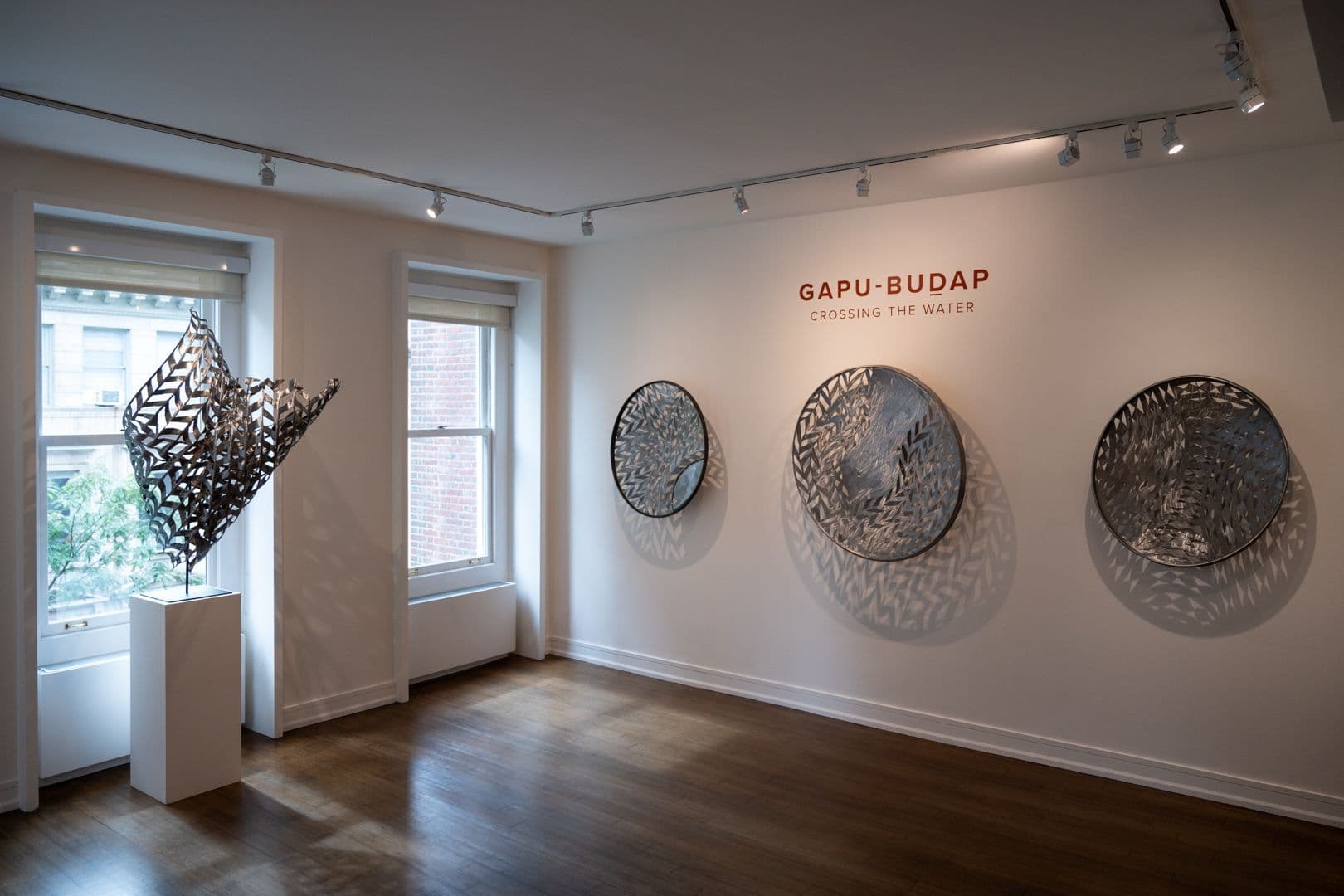
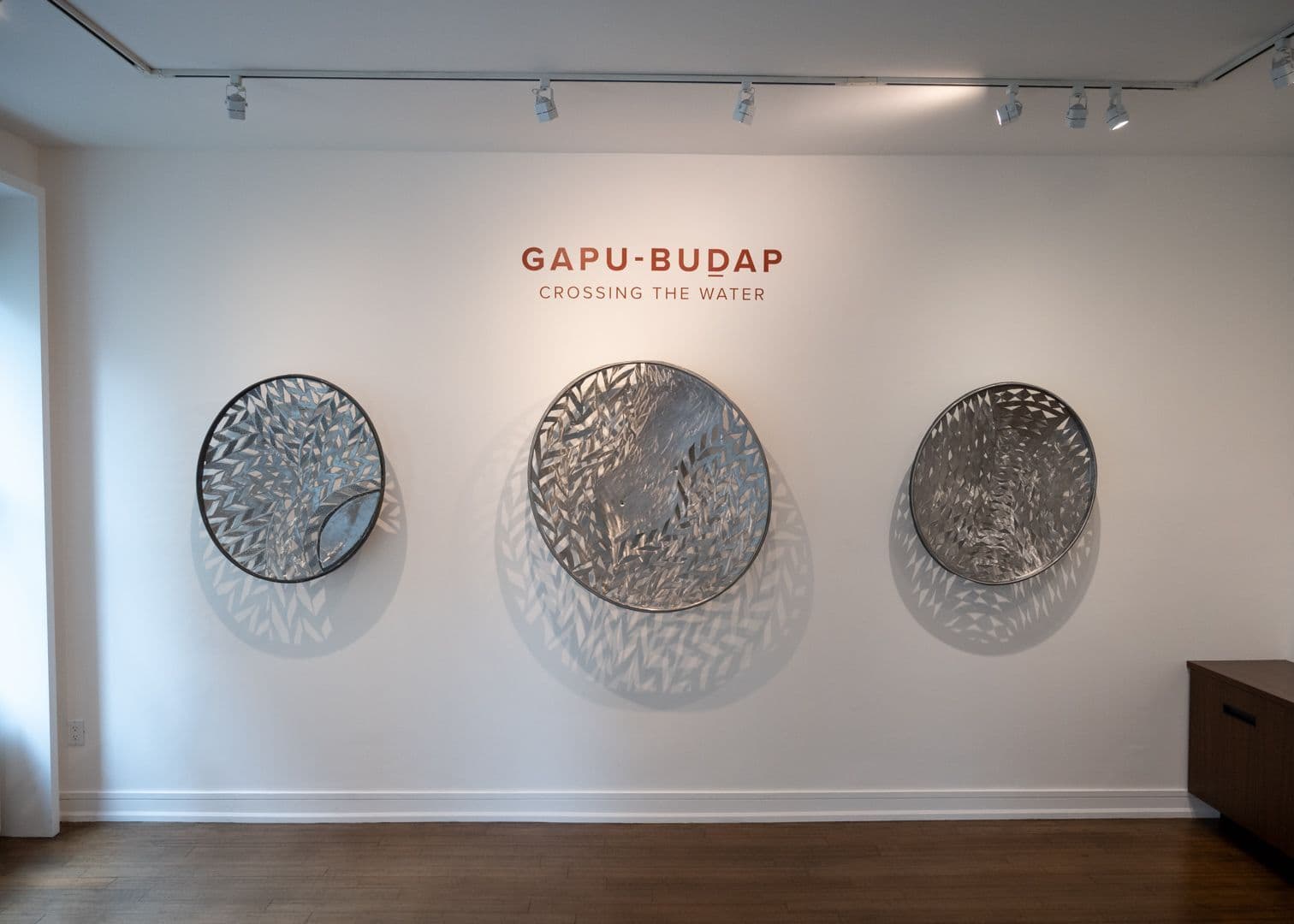
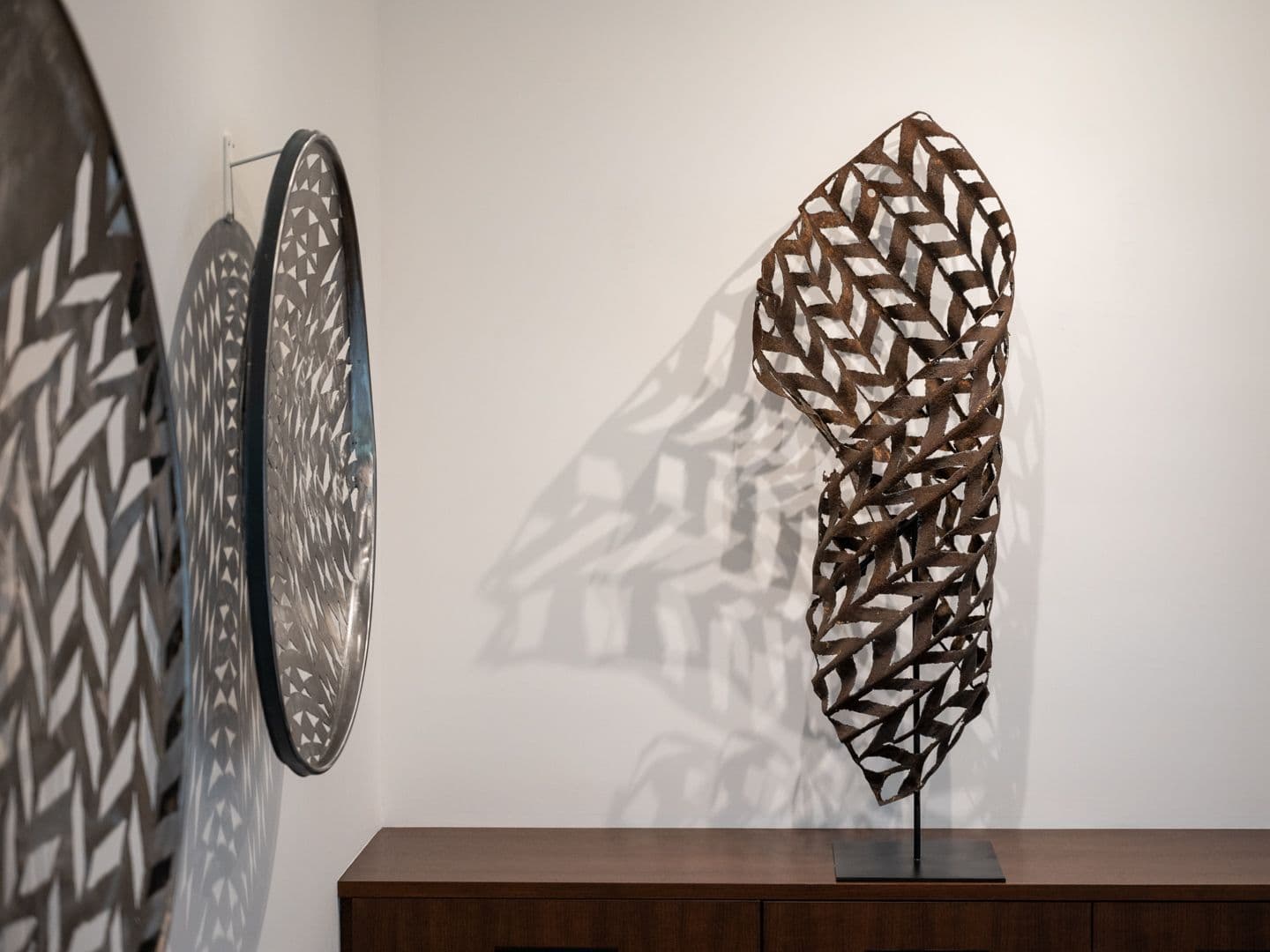
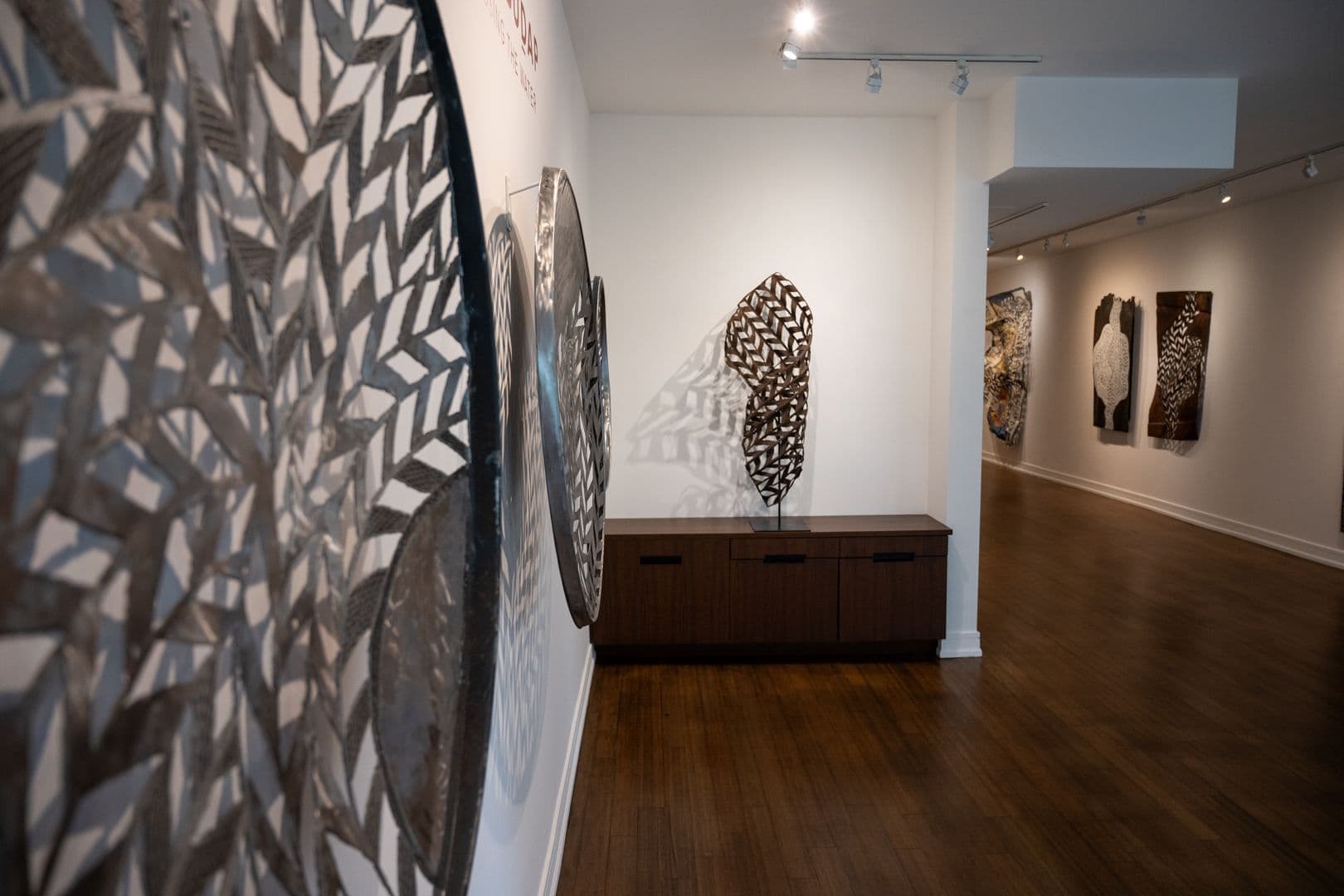
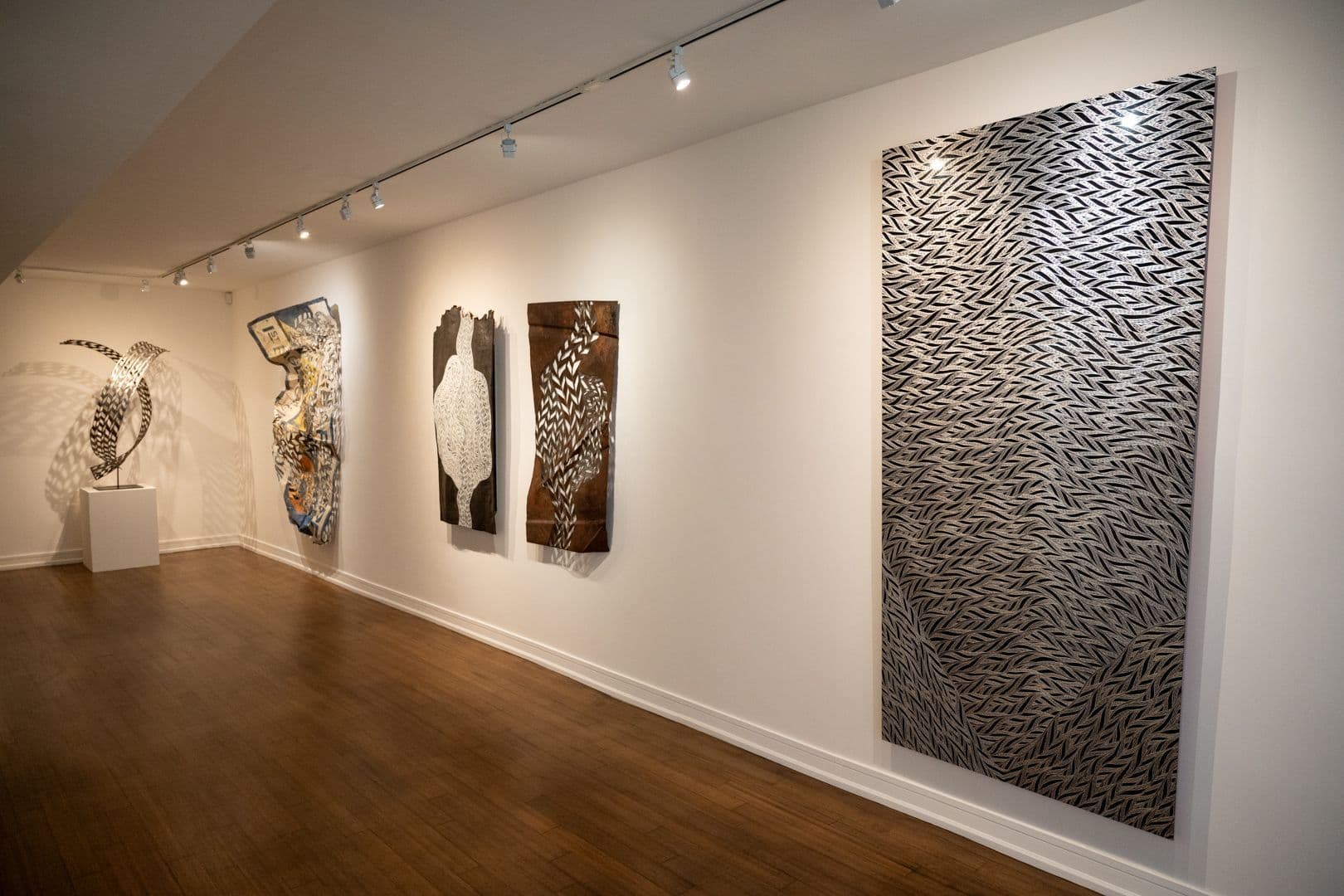
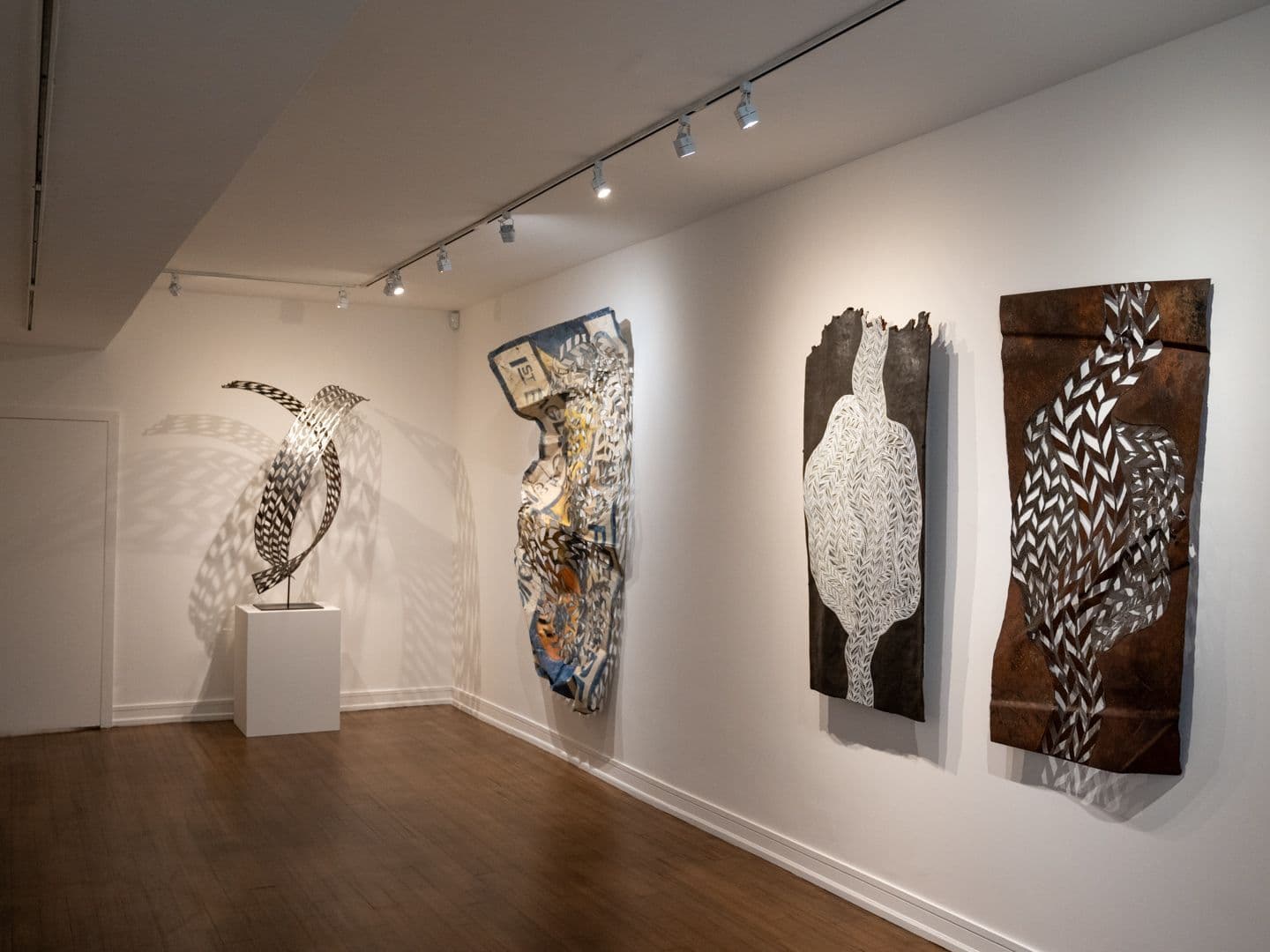
D'Lan ContemporaryD’Lan Contemporary is proud to present Gapu-Buḏap – Crossing the Water, the first solo exhibition in New York by acclaimed Australian First Nations artist, Gunybi Ganambarr. The exhibition, which also marks the first collaboration between D’Lan Contemporary, Ganambarr, and Buku-Larrŋgay Mulka Art Centre. Gapu-Buḏap – Crossing the Water features 17 recent two- and three-dimensional works in bark and metal that reflect the innovative vision and skill of one of Buku-Larrŋgay’s most important and groundbreaking artists. Highlights include Spring Water Running Through Reeds 2024 – which represents the rippling flow of water in the lagoons and freshwater springs in a sacred area close to Arnhem Bay, intricately etched into a discarded steel panel. The mirrored bark and metal works in the exhibition, which reference the bark painting tradition, and the metal work movement of which Ganambarr was the catalyst – represented in Dhalwaŋu Saltwater I and II 2024, Milŋurr Ŋaymil I and II 2024 and Darra II and I 2024 – are a central theme in the exhibition alongside the sculptural series of elegantly plasma cut wings of the Gudurrku, or brolga, a large water-bird native to Australia. The exhibition also features a group of reclaimed satellite dishes into which Gunybi has carved his clan designs, as well as the large scale, etched aluminium composite board Gundalmirri 2024 and Ŋaymil Font 2024 which reflect Gunybi’s sculptural mastery. Almost immediately after Ganambarr began working as a visual artist in 2001, he was hailed a rising star who has since attracted national and international critical acclaim. In 2009, art critic John McDonald described him as “the brightest new talent in the ranks of indigenous artists.” McDonald later compared Ganambarr’s ability to revolutionize and reinvent his medium to the skill of Picasso. Ganambarr is a Yolŋu man who lives and works at Gängän, near Yirrkala in north-east Arnhem Land. He is part of the Duwa moiety and the Nyamil clan, whose ontological and spiritual world is the foundation of his artistic practice. Gunybi spent his early twenties working as a house builder where he acquired the skills to work with many of the materials he now uses in his work. Gunybi Ganambarr is a Yolngu artist who lives and works at Gängän, near Yirrkala in north-east Arnhem Land in the Northern Territory. He began his artistic career painting on bark and larrakitj but has since extended his practice with an experimental and innovative use of reclaimed materials, which include wood, rubber, glass, steel, galvanized iron, and aluminum. Under the tutelage of artists such as Gawirrin Gumana and Yumutjin Wunungmurra, Ganambarr has assumed ceremonial authority, which also informs and influences his work. In 2008, Ganambarr won the Xstrata Coal Emerging Indigenous Artist Award at the Gallery of Modern Art at Queensland Art Gallery. In 2011, he also won the West Australian Indigenous Art Award and in 2018, he was awarded the First Prize in the National Aboriginal and Torres Strait Islander Art Awards. His work has been exhibited in The Metropolitan Museum of Art, Museum of Art Pudong, Qatar Museums and Harvard Art Museums, and is currently featured in the touring exhibition, Madayin: Eight Decades of Aboriginal Bark Painting From Yirrkala, which opened in 2022. His work can also be found in institutional collections including the Museum of Contemporary Art, Sydney, the Art Gallery of New South Wales, and The Metropolitan Museum of Art, New York.