
NoHo, New York
Brenda Miller
Dianderous, Entassis, Gaude: Works 1971–93
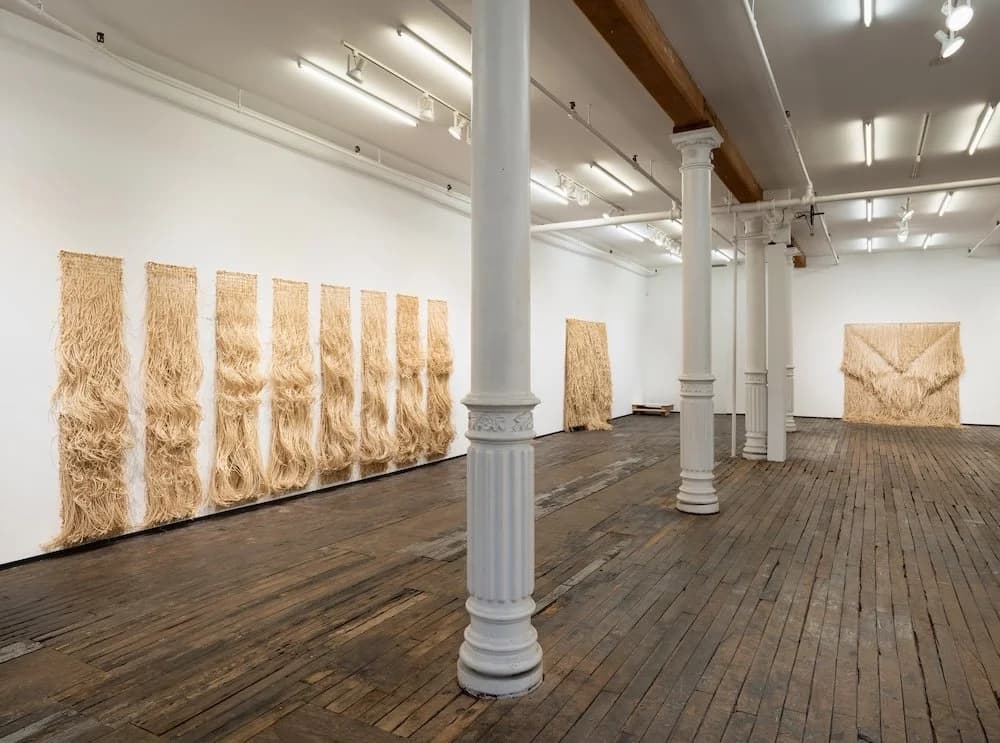
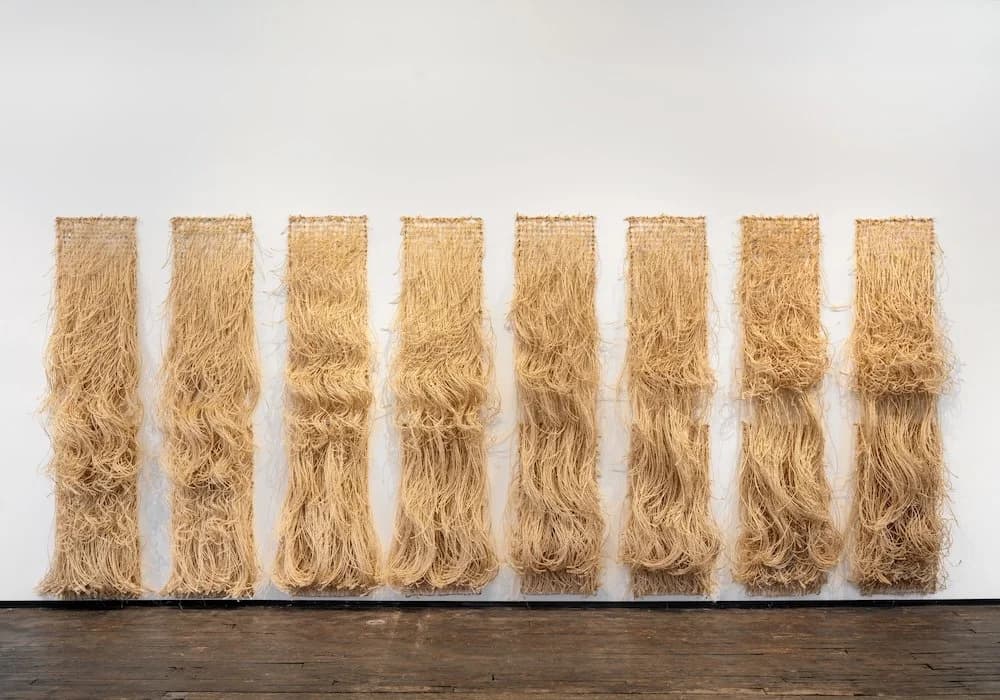
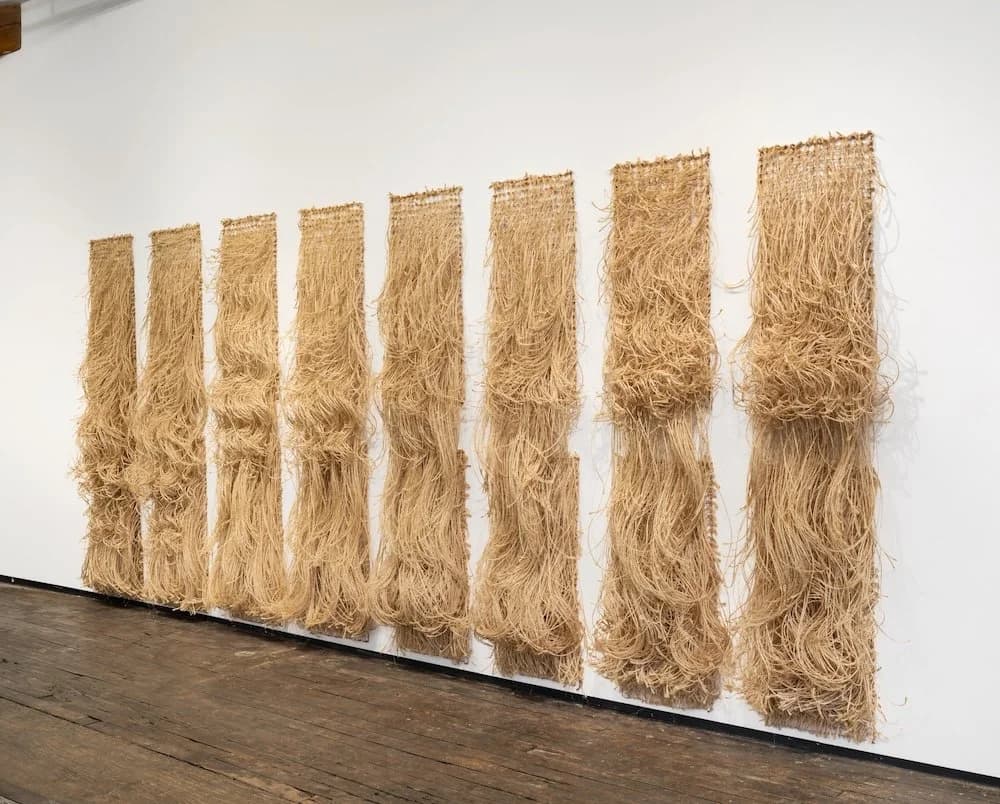
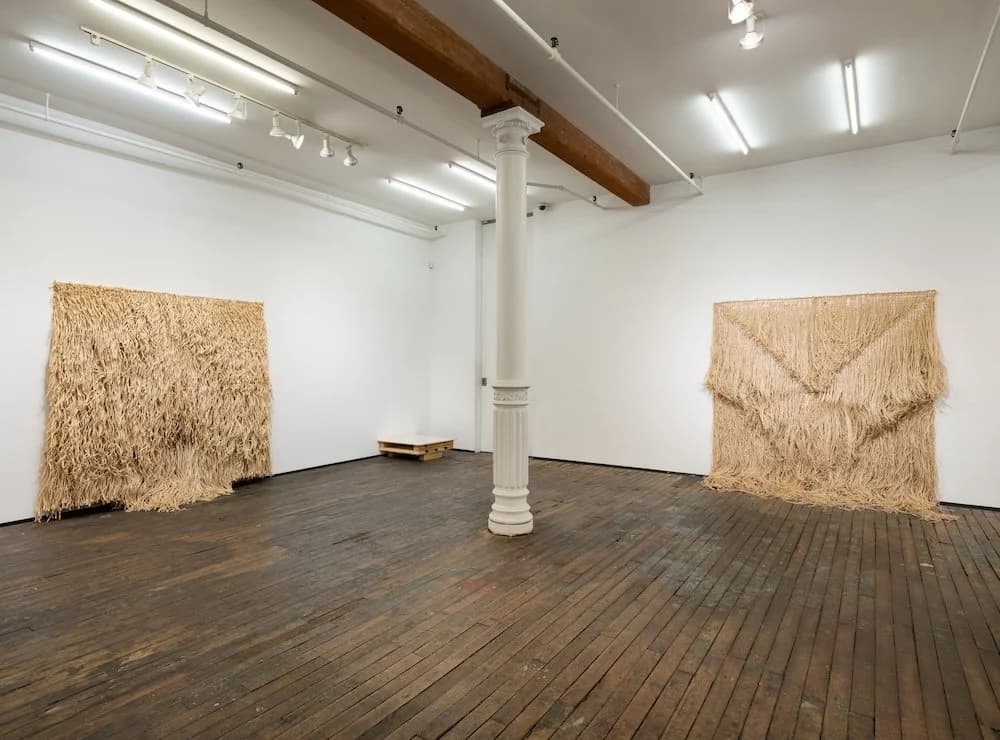
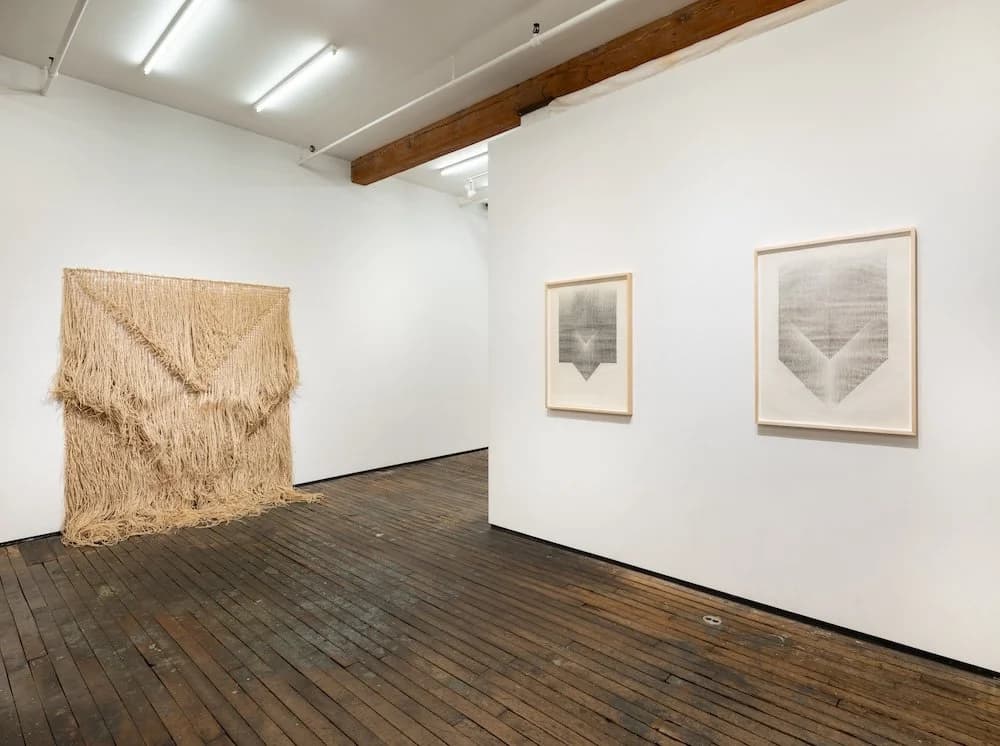
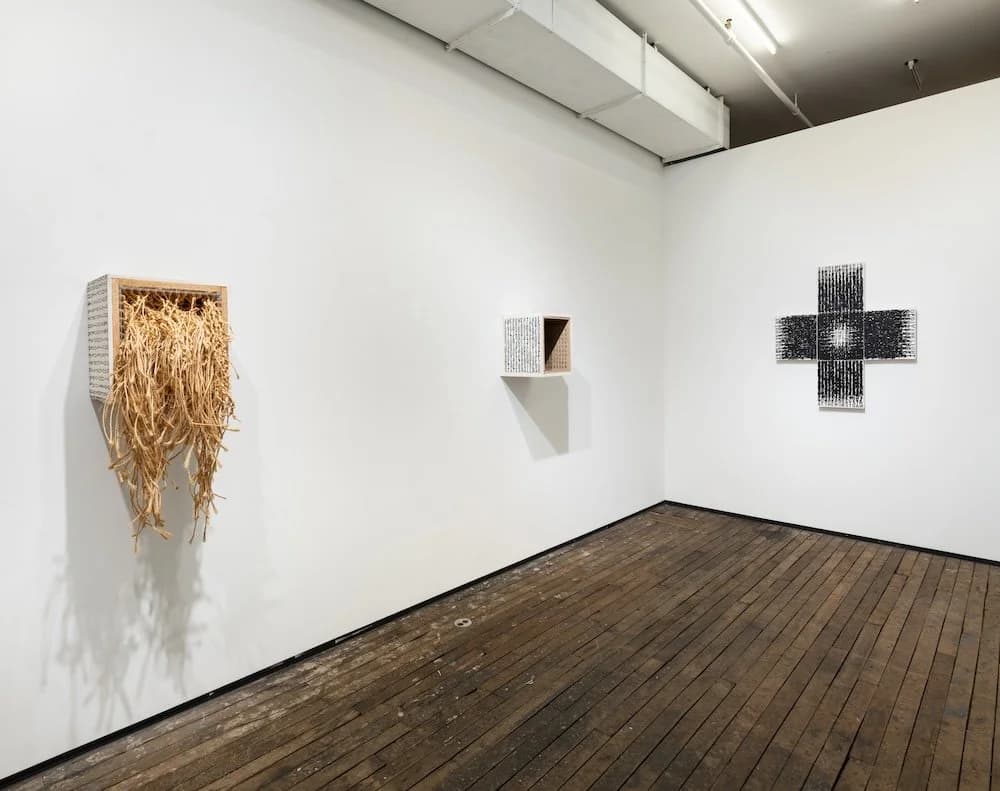
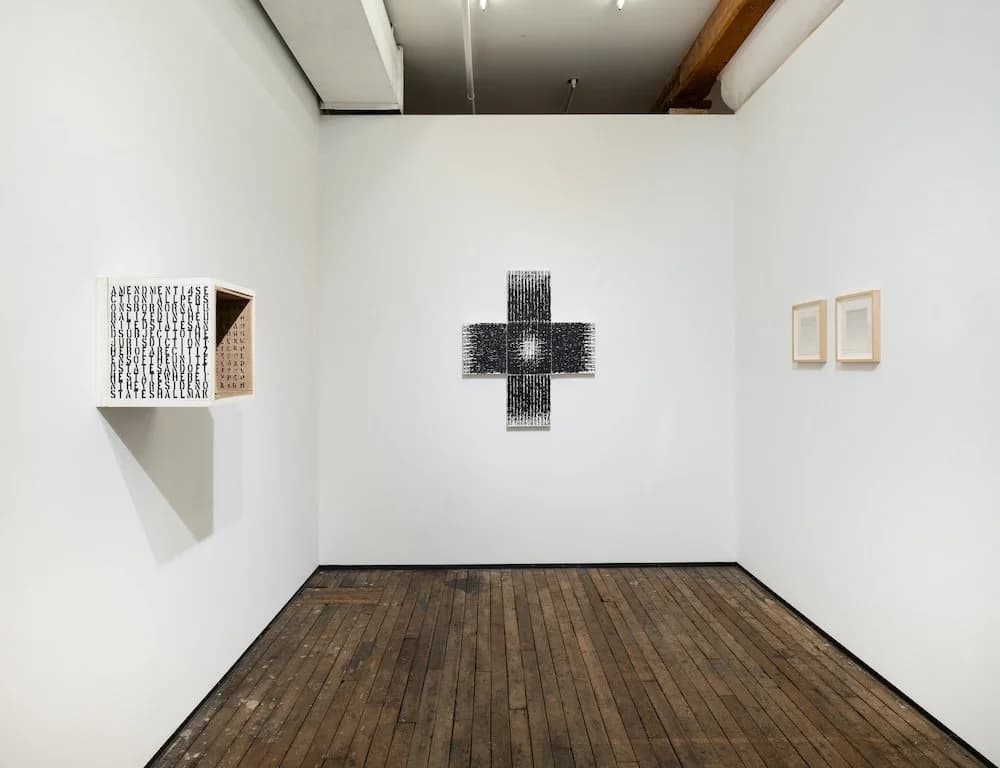
Zürcher GalleryZürcher Gallery is thrilled to present a second solo-show of Brenda Miller (b. 1941, The Bronx, NY) who had not been shown in a New York art gallery since 1994 until her first solo-show at Zürcher Gallery in the winter of 2025. Brenda Miller is best known for her sisal wall sculptures, her typewriting works, and her alphabet-rubber-stamped ink and pencil on wall or paper works that she has made since 1969 and has exhibited at the Whitney Museum of American Art (1975), Museum of Modern Art (1972) and later at P.S.1. In this second solo-show at Zürcher Gallery, we are presenting 3 important sisal works by Brenda Miller, which she first conceived in the 70s and recreated in the last two years: Dianderous (1972–2024), Entassis, (1971-2026), and Gaude (1977–2026). Entassis, (1971) was exhibited as part of Untitled IV, a show organized by Pierre Apraxine at The Members’ Penthouse at The Museum of Modern Art, New York, in April 1972. An image of the work was also reproduced on page 20 of the GEDOK Museum’s American Woman Artist Show (April 14–May 14, 1972) exhibition catalogue. In the early 70s, the sisal works were destroyed shortly after being shown since they were made directly on the wall. Brenda Miller decided to remake them to make them permanent. The work begins with a grid which she draws. She then uses it as a diagram or a map for the arrangement of picture hanging wire and sisal. So, the work takes on different stages of existence. Lucy Lippard says that "Brenda Miller’s own pieces exist, then, 'ideally' (in the drawing or diagram stage), 'potentially' (in their capability of regeneration) and ‘actually’ (when assembled on the wall).” Brenda Miller chose to work with sisal of a one- or two-ply thickness because it is neutral, colorless, shapeless, available everywhere, inexpensive and its linearity is subject to gravity. She cuts “lines” of different lengths which she ties and knots to the wire grid to create a specific design which grows in density the more material she adds in order to obtain physical persistence. The end result being the physical remains of an intellectual activity. This exhibition also features an oil painting from 1984, Sin Remember is... which is based on a text from James Joyce’ Portrait of the Artist as a Young Man, a popular literary work. An excerpt was chosen in which all punctuation and word spacing were removed. The remaining letters were stenciled on to the canvasses, overlaying the characters, each letter obliterating the original text by covering it up, until the section was complete. You needn’t read the real text to understand, or at least to have an idea about what the text said without actually seeing it. The repetition, the overlay, the number of impressions, the superimposition, and the accumulation cause density and contribute to the three-dimensionality of the work. If, as I believe, art is a conversation then perhaps this is a conversation between art and literature. The United States Constitution exists as an institution. Americans hold it in awe. It doesn’t have to be memorized because it exists as a set of facts that are common knowledge, and it’s constantly being redefined. In Notes for Beginning Texts, 1993 and Portrait of a Protected Verse, 1992, both made of melanite, wood, linen and ink, the text comes from the United States Constitution. Again, all punctuation and word spacing were eliminated, reducing the text to only the individual letters which were cut out and/or painted in. All the characters in the alphabet are there. It doesn’t matter what sections or parts were used. They are coherent and incoherent at the same time. They have their true meanings somewhere in the jumble. Each strand of sisal in Notes for Beginning Texts, 1993 contains the number of knots of the corresponding letter’s placement in the English alphabet. A equals 1 knot, B equals 2 knots, and Z equals 26 knots. The obsessive and time-consuming nature of her work indicates that Brenda Miller deals with time, change, and impermanence. Brenda Miller studied at the University of New Mexico where she was duly impressed by the Native American culture, the sand paintings, and art which can travel. “There was no need to preserve art there, the same drawing was passed through the generations ... and yet, each transient drawing was so permanent.” Lucy Lippard writes in Brenda Miller: Woven, Stamped for Art in America, Vol 64, N°3 (May/June 1976): To a Minimalist vocabulary of formal qualities—repetition, symmetry, literality—Brenda Miller has added a distinct personal flavor: of aggressive feeling in her twine works and, in her alphabet pieces, of paradoxical obsessiveness and tranquility." Brenda Miller asserts that she is a feminist. She was actively involved with the women’s movement in New York in the 70s. She then co-founded the Ad-Hoc Women Artists Committee with Faith Ringold, Poppy Johnson, and Lucy Lippard. Her earliest work combined gender politics with post-minimal concerns of materials and process, frequently occupying a space between drawing and sculpture. For years, she has worked with repurposed materials like sisal and rubber stamps as a means to introduce content to abstraction. Brenda Miller was part of 26 Contemporary Women Artists at the Aldrich Museum of Contemporary Art, Ridgefield, CT, which was probably the First American museum show of Women artists of “second wave" feminism. Her work shared approach, technique, or content to some degree with the work of Alice Adams, Carl Andre, Hanne Darboven, Jackie Ferrara, Nancy Holt, Sol LeWitt, Agnes Martin, Mary Miss, Robert Smithson, Lawrence Weiner, and Jacky Winsor.