
Upper East Side, New York
Gabriel Mills
The Great Collapse
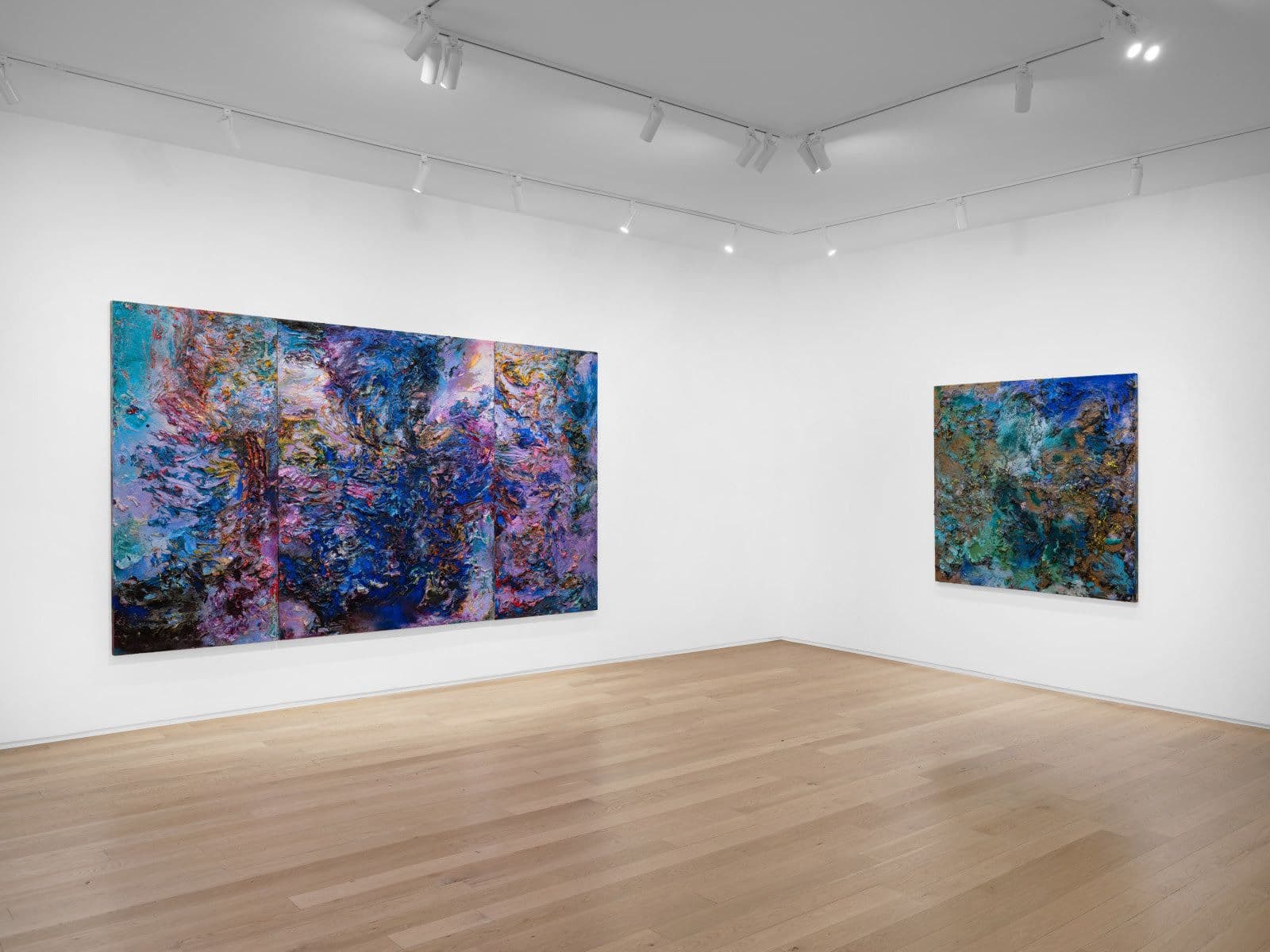
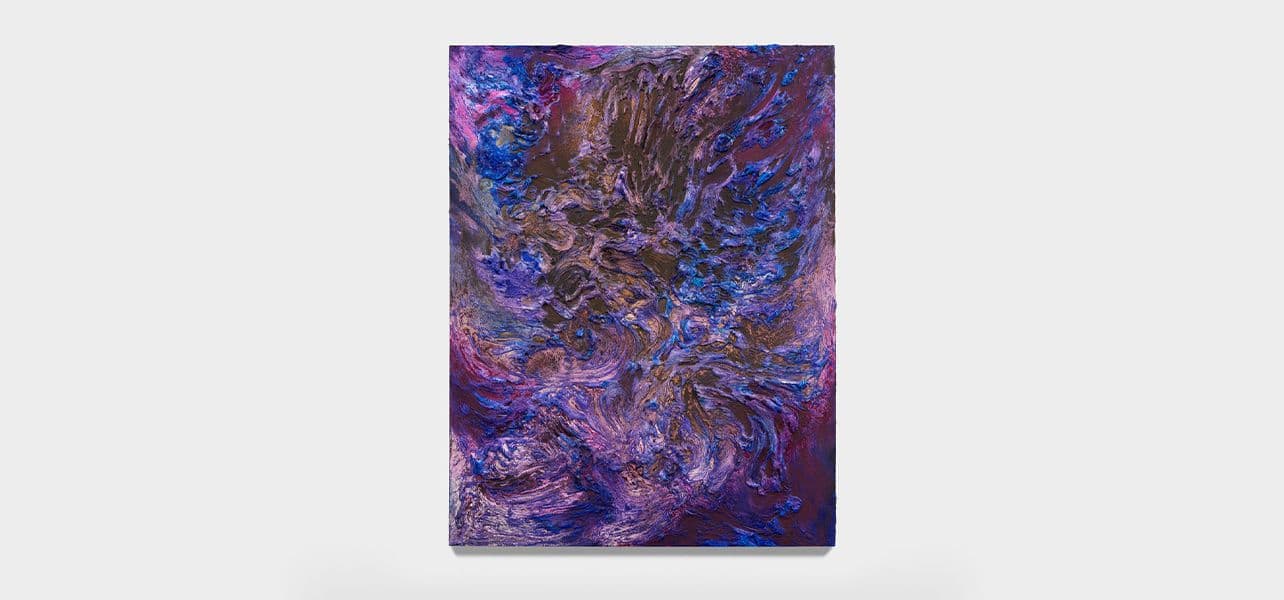
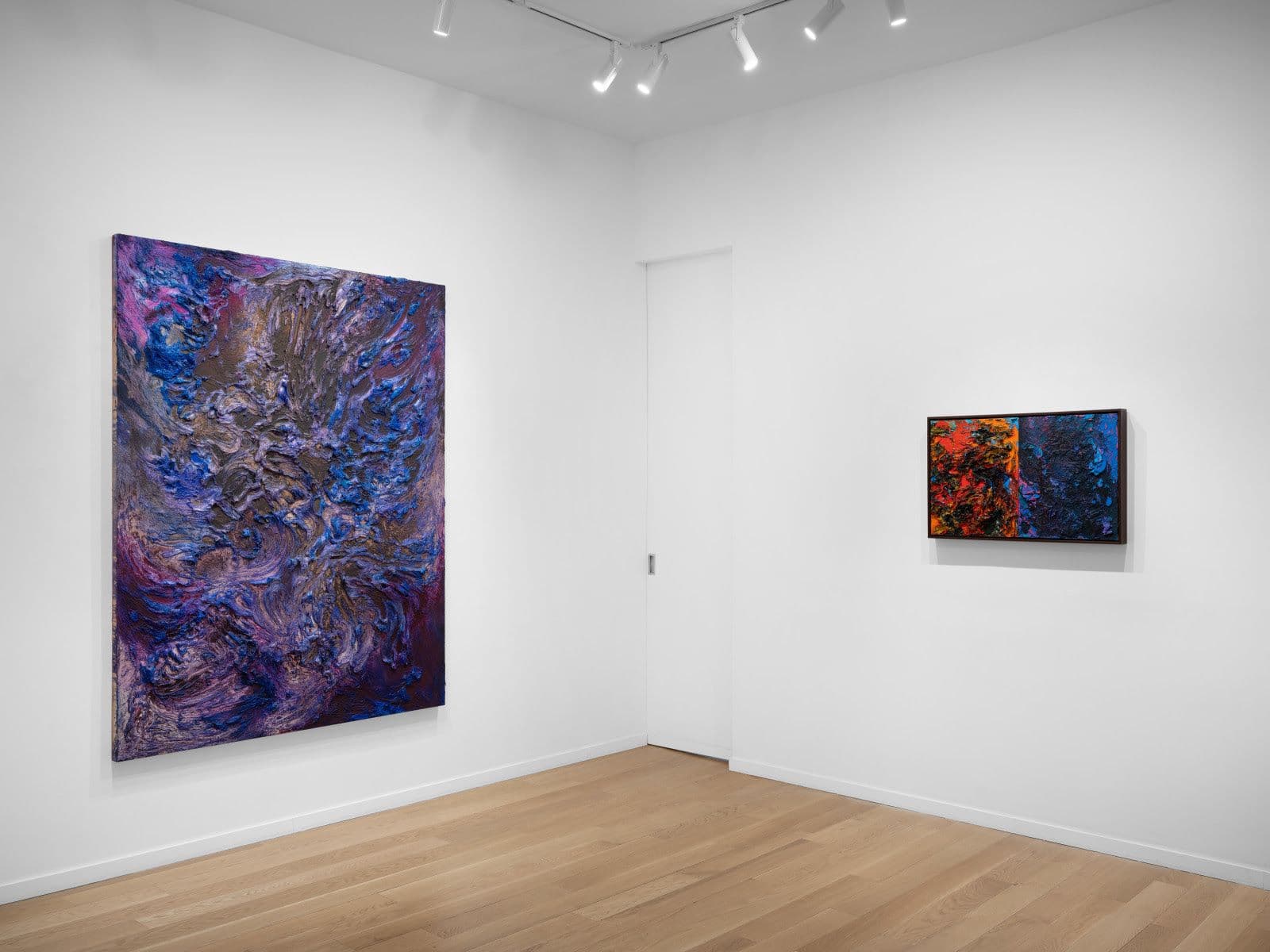
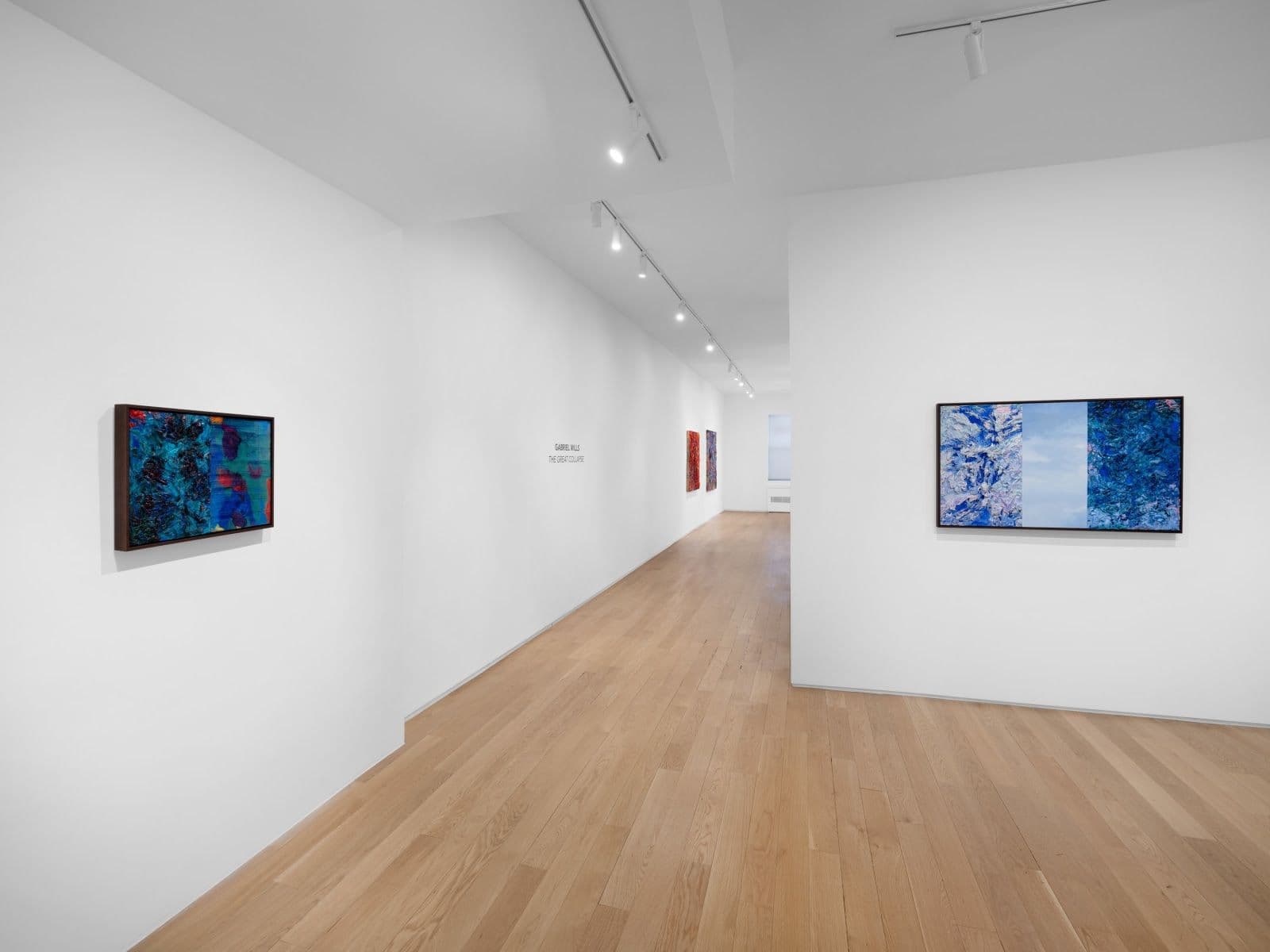
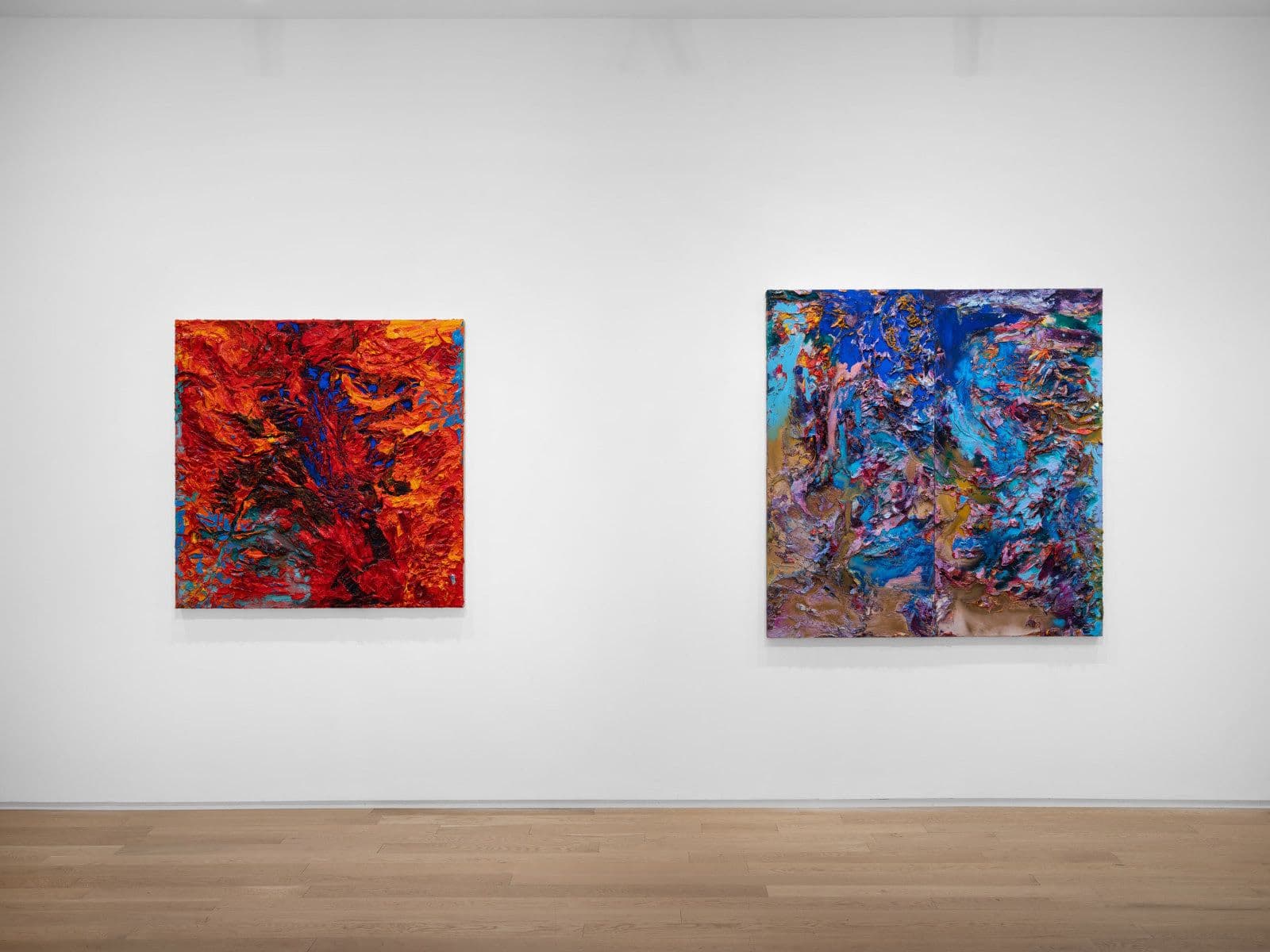
Alexander BerggruenAlexander Berggruen is pleased to present Gabriel Mills: The Great Collapse. Our second solo show with the artist, this exhibition opens at the gallery. Through distinctive approaches to process and color, Gabriel Mills's paintings enigmatically reconcile material presence with atmospheric release. These two orbiting facets of his work have become further refined and idiosyncratic in this exhibition The Great Collapse. First, he audaciously maneuvers around the material conditions of oil paint by intentionally employing the various mishaps and failures that can happen when pushing the chemical makeup of paint to its presumed limits. Second, his unorthodox yet captivating approach to color results in unexpected, widely contrasting saturations and temperatures. Here, somber mixtures of ocher and umber are interspersed within an expanse of richly vivid hues, such as turquoise, lilac, and cerulean blue. These colors' optical interactions produce an iridescent-like quality that marks many works in this exhibition. The contradicting textures and colors Mills paints imbue the surfaces with, in the artist's words, "a union of weight and atmosphere." The particulars of each painting's forms emerge as a byproduct of the cascade of events that took place on its surface. For instance, closely inspecting Aejic reveals a small, worm-like texture that resembles the peaks and valleys of a mountain range. Clearly not the product of delineated mark making by Mills's hand, this complex topography arose from overloading the paint mixture with an excess of linseed oil, which coils and warps into ridges and crevices as it attempts to oxidize over time. In Qephe, minute streams of paint trickle down as a result of low viscosity oil solutions that passed over still-drying, flat color. Further, large sacs of slow drying pigment have been carefully cut open and excavated, leaving the outer skin to be reintegrated and buried beneath fresh layers. Mills's paintings are thus not solely defined by his own gestures, but by the behavioral dictates of oil and pigment as subject to his experimental methods. Every material action consequently leaves behind an entourage of scars and traces that compound to produce a surface so complex and tightly knit that it matches the variety, unpredictability, and material transformation of geological structures. In his largest works, the literal heaviness of abundant reserves of oil paint gripping onto a vertical panel is mediated by gently flowing gestures that, from a distance, carry a sense of weightlessness. Mills's use of color similarly counters his paintings' physicality, given that two colors of separate temperatures and intensities produce two different shifts in depth. The concentrated area of ultramarine blue in the center of Jeiourmyne, to name one example, visually recedes in space compared to the lighter, warmer surrounding colors that shift forward. The painting possesses a purely optical reality through the interaction of color alone; constructing not linear perspective but rather atmospheric perspective. This optical space extends into the painting, beyond its literal surface, just as the paint physically reaches out into the room to affirm the works' material presence. Speaking about this quality, Mills stated: "The paintings are an embodiment of energy rather than a window into it." Mills employs alternative strategies to achieve the same sensation of compression and release in his smaller paintings. Dense, impasto brushwork disperses into delicately combed lines and smooth, blended color in the diptychs Aeoas and Qymne. Likewise, the visceral, encrusted paint on either end of the triptych Aune finds its inverse in the soft rendering of clouds in the center. Despite alluding to the geological and the atmospheric, Mills does not strive for direct evocations of the natural world but more specifically to create an experience that parallels nature. His paintings, though varied in format and process, all possess an undeniable presence that holds energy and charge through the gradual accumulation—and occasional collapse—of material density. Mills's core project is hence closely related to one of abstraction's fundamental tenets, Symbolism, summarized by nineteenth-century French poet and critic Stéphane Mallarmé: "Paint not the thing, but the effect it produces." —Matt Herriot