
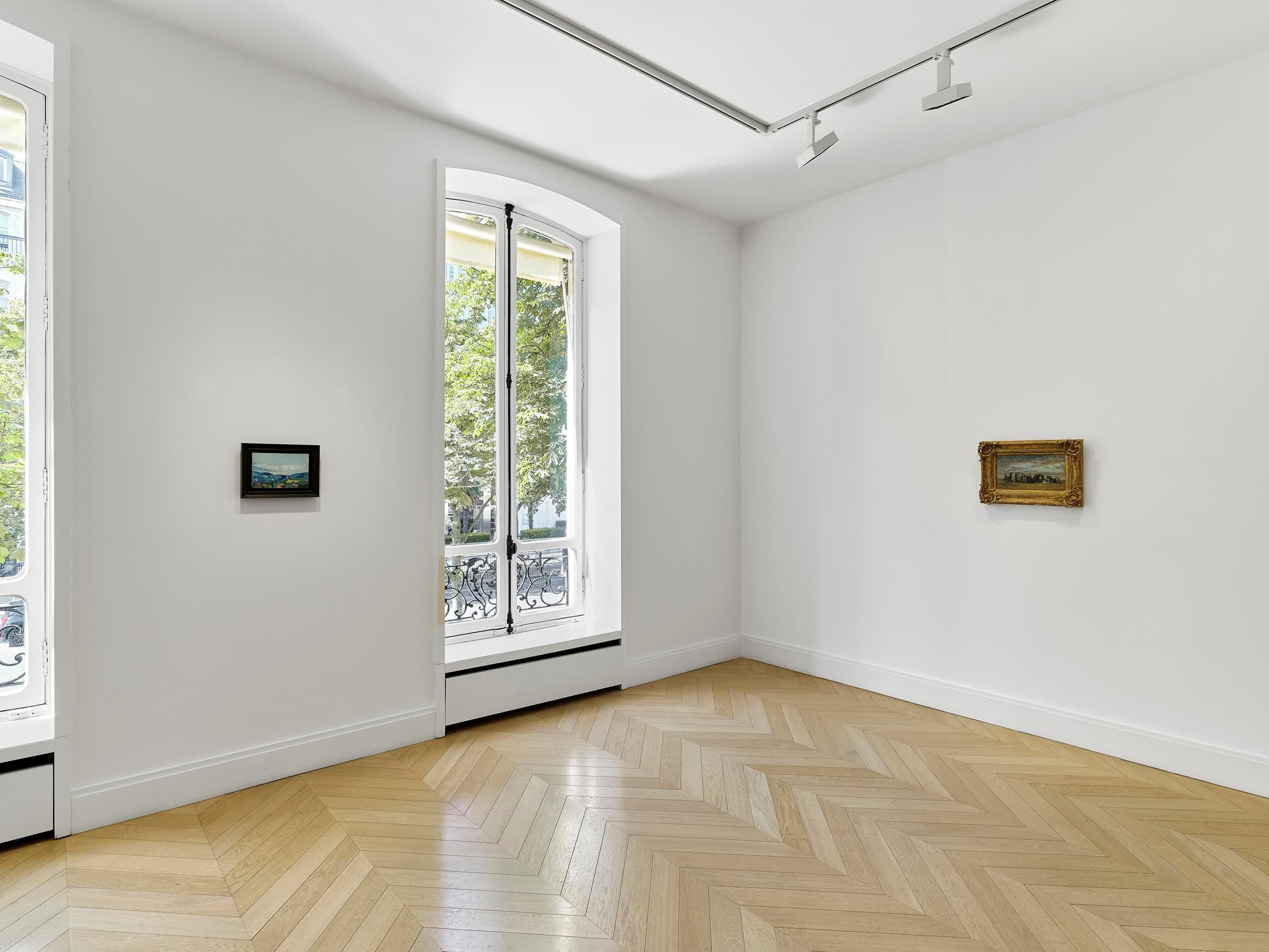
Matignon, Paris
Group Exhibition
Petits Formats
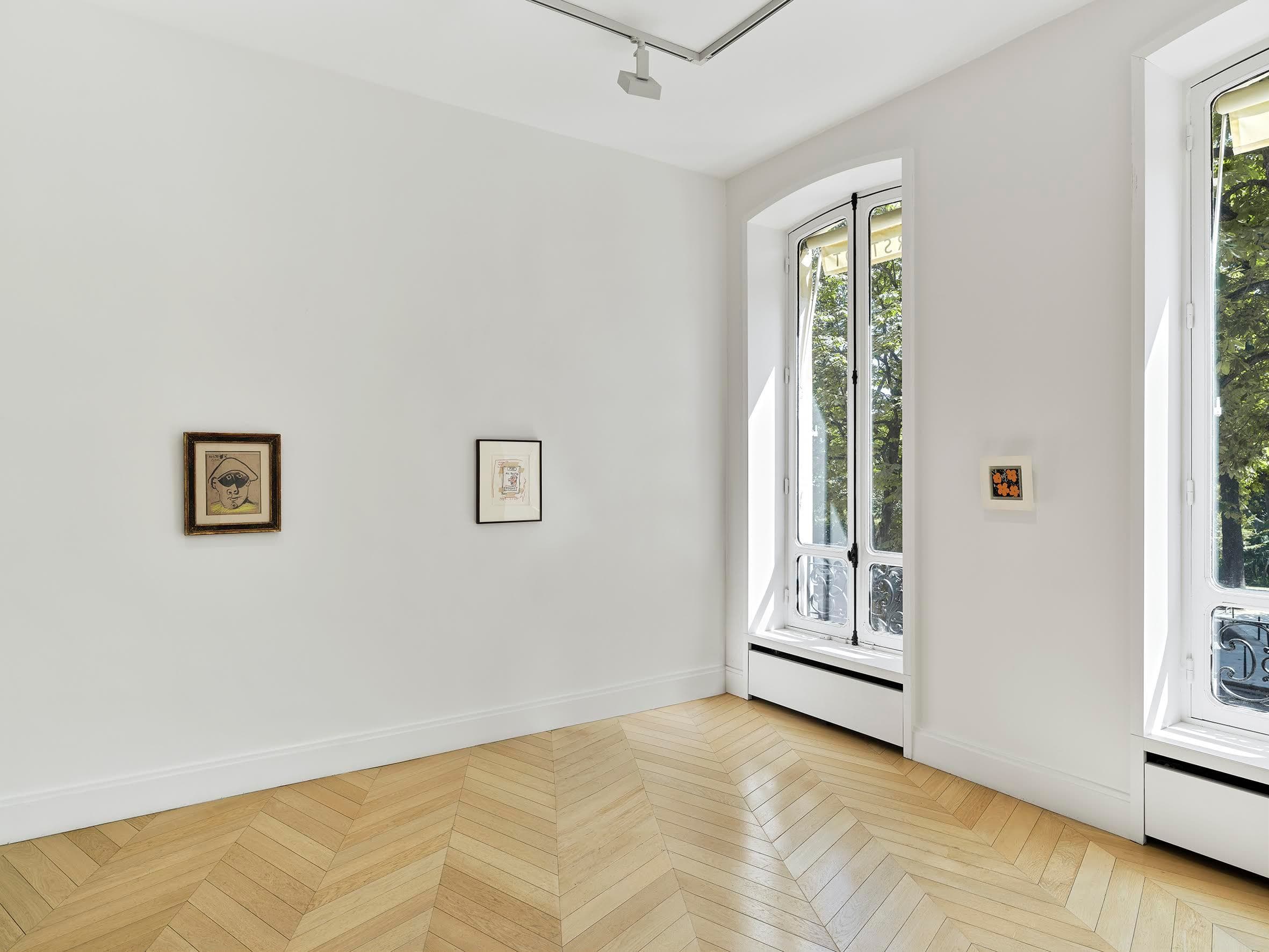
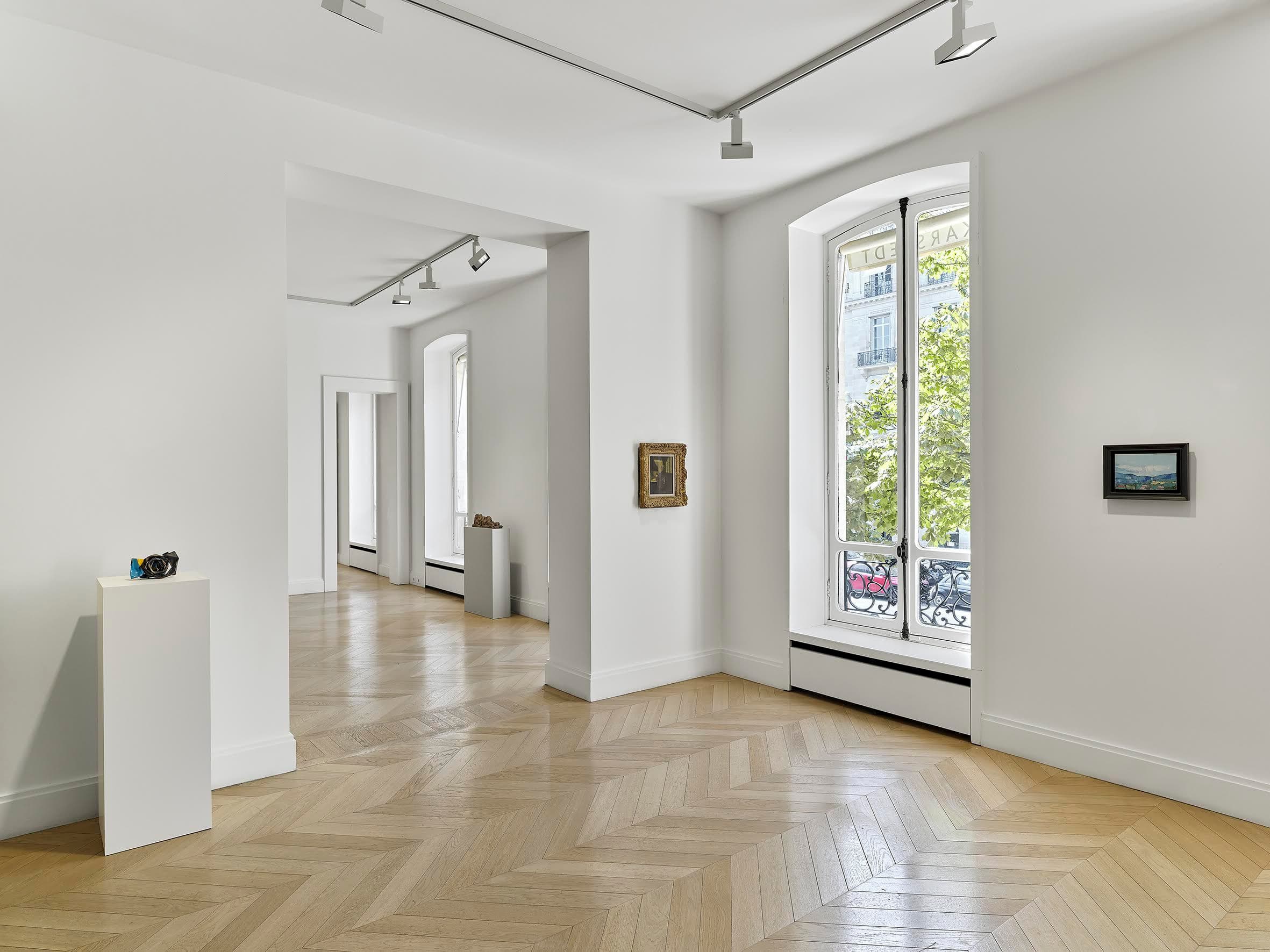
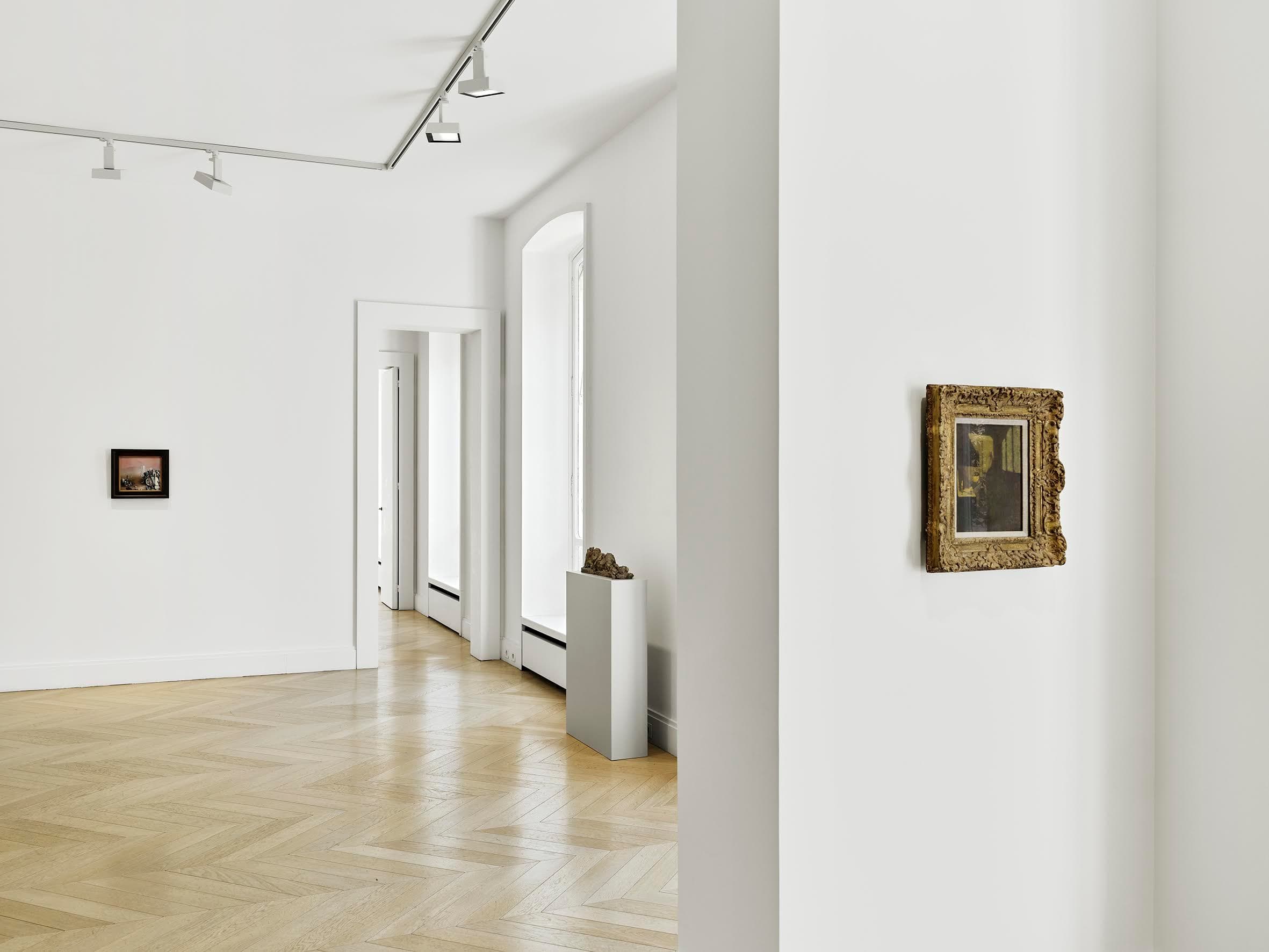
SkarstedtJean-Michel Basquiat, Pierre Bonnard, Eugène Boudin, John Chamberlain, Jean Dubuffet, Hans Josephsohn, Yves Klein, Pablo Picasso, Georges Rouault, Maria Helena Vieira da Silva, Nicolas de Staël, Yves Tanguy, Günther Uecker, Édouard Vuillard, Andy Warhol Skarstedt Paris is pleased to present Petits Formats, a group exhibition that celebrates the expressive power of art made on an intimate scale. In contrast to the monumentality that has long dominated contemporary art, the small format does not seek to impress by its size; on the contrary, it invites an intimate and attentive experience. In this reduced space, nothing is left to chance. Every line, color, and material acquires a particular intensity. The artist concentrates their language, gesture, and vision, distilling them to their very essence, which they deposit into the work like a confidence offered in silence. The small format becomes a site of condensation, a window onto the world where subtle and profound messages are revealed—whose reach far exceeds the limits of the frame, for its power is not measured by its dimensions. It is often in restraint that the greatest intensity unfolds. The small format reminds us that it is possible to contain the universe in a nutshell and to unleash the infinite in just a few inches. Much like a fractal structure, it seems to harbor a world far vaster than its scale would suggest. Tracing a trajectory from the 19th into the 21st century, Petits Formats features works by Jean-Michel Basquiat, Pierre Bonnard, Eugène Boudin, John Chamberlain, Jean Dubuffet, Hans Josephsohn, Yves Klein, Pablo Picasso, Georges Rouault, Maria Helena Vieira da Silva, Nicolas de Staël, Yves Tanguy, Günther Uecker, Édouard Vuillard and Andy Warhol, many of whom spent a significant portion of their careers in Paris. Often labeled as an intimist painter, Édouard Vuillard is particularly known for painting on a modest scale. La Cuisine à la bougie (circa 1892) exemplifies how the artist tightly focused his gaze on the domestic interior and its seemingly mundane activities. The close quarters of his family apartment became Vuillard’s principal scene, where he observed the comings and goings of friends and clients and the daily rituals of family life. That same year, Pierre Bonnard turned his gaze outward to the bustling Parisian social scene. The vibrant brushstrokes in La Foire ou La Parade (circa 1892) evoke a transient perception of light and color in this unique work. The artist was able to address the representation of movement in the entertainment world and the advent of leisurely economy related to the industrial revolution. Some years prior, Eugène Boudin returned time and again to the fashionable beaches of Trouville. Painted in 1867, Plage de Trouville (‘La Conversation’) captures the serene world of elegantly dressed bourgeoisie, offering a sunlit counterbalance to Vuillard’s shadowed interior. A pioneering plein air painter hailed by Monet as his “Master,” Boudin devoted himself to the fleeting effects of light and atmosphere along the Normandy coast. Vieira da Silva focuses on space and its constant recomposition, challenging classical perspectives. Composition- ville (1947) offers a psychological reconstruction of a city: streets, buildings, and structures dissolve into a dense network of lines and overlapping planes. From this fractured urban vision, the exhibition leads towards the dream. In La Cage des Temps (1951), Yves Tanguy, a leading figure of Surrealism, explores a suspended sense of time through a delicate palette of powdered pinks, beiges, and grays that envelop the composition, while space remains deliberately undefined, devoid of any stable points of perspective. From this expanse emerge enigmatic sculptural forms, vestiges of an unknown civilization. These mysterious silhouettes draw their origins from the artist’s childhood memories of the coast of Brittany, where the rocks shaped by the sea nourish his imagination and permeate his dreamlike world. From Tanguy’s oneiric plains, the exhibition moves toward the incandescent light of the South of France. Deeply struck by its radiance, Nicolas de Staël saw his palette entirely transformed. The vibrant contrasts of blue and yellow, the bursts of red and pink, become the focal point of his singular mastery of color and light in Paysage, executed in 1953, a pivotal year that crystallizes the summit of his art. At the end of the 1950s, sculpture was also undergoing a period of transition. It was the decade when John Chamberlain was making his first sculptures, and Yves Klein shifted his focus from the painted monochrome toward a more direct exploration of color’s physical presence within space. Created in 1959, Éponge bleue belongs to one of the most emblematic and innovative series of Klein’s career. Fascinated by the sponges’ ability to absorb and retain color, Klein used them as vessels for his famous blue, which he regarded not merely as a hue, but as the embodiment of space, emptiness, and infinity. Through them, color takes on a sculptural dimension and seems to materialize in space. This reflection on materiality finds a different echo in the work of John Chamberlain. In contrast to the streamlined forms favored by many of his minimalist contemporaries, the artist developed a unique sculptural language using salvaged metal. Made of painted and chrome-plated steel, parts fold inward and unfold outward guiding the eye around the work, transforming industrial material into an almost lyrical form of expression in Untitled (2005). Hans Josephsohn’s sculptural practice, on the other hand, was defined by a lifelong devotion to the human form. Conveying the corporeality and weight of the body, his works often project the sense of stillness and immutability. Modeled in plaster or clay and subsequently cast in brass, Josephsohn’s sculptures reveal a complex surface bearing traces of the movement of the artist’s hands. This attention to tactility is also found in the work of Jean Dubuffet. Executed at a pivotal moment in his career, Personnage (1960) bears witness to a transition between the characteristic roughness of his earlier works, nourished by a fascination with textures and reliefs, and the more nervous energy that marks the beginning of a new decade. The exhibition takes a final turn towards the self-reflective. Just two years before his death, Pablo Picasso returned to one of his most enduring motifs: the harlequin. Tête d'arlequin masqué (1971) distills seven decades of fascination with this Commedia dell’Arte figure into a single, arresting image. Here, the harlequin is not a nimble trickster but a masked, quietly introspective presence, a reflection of an artist confronting his own mortality while still enmeshed in the theatricality of hiw own identity. Two decades later, Jean-Michel Basquiat, for whom questions of identity were equally central, offers his own reinvention of classical tradition. Venus (1982) recalls Botticelli’s Renaissance muse yet renders her with starkly minimal, abstracted features. Each work presented in Petits Formats offers both a synthesis of its artist’s pictoral language and an intimate experience of contemplation. By reducing the space in which to create, each artist pushed themselves toward the summit of their creative expression.