
South, London
T. Venkanna
Sculpture Garden
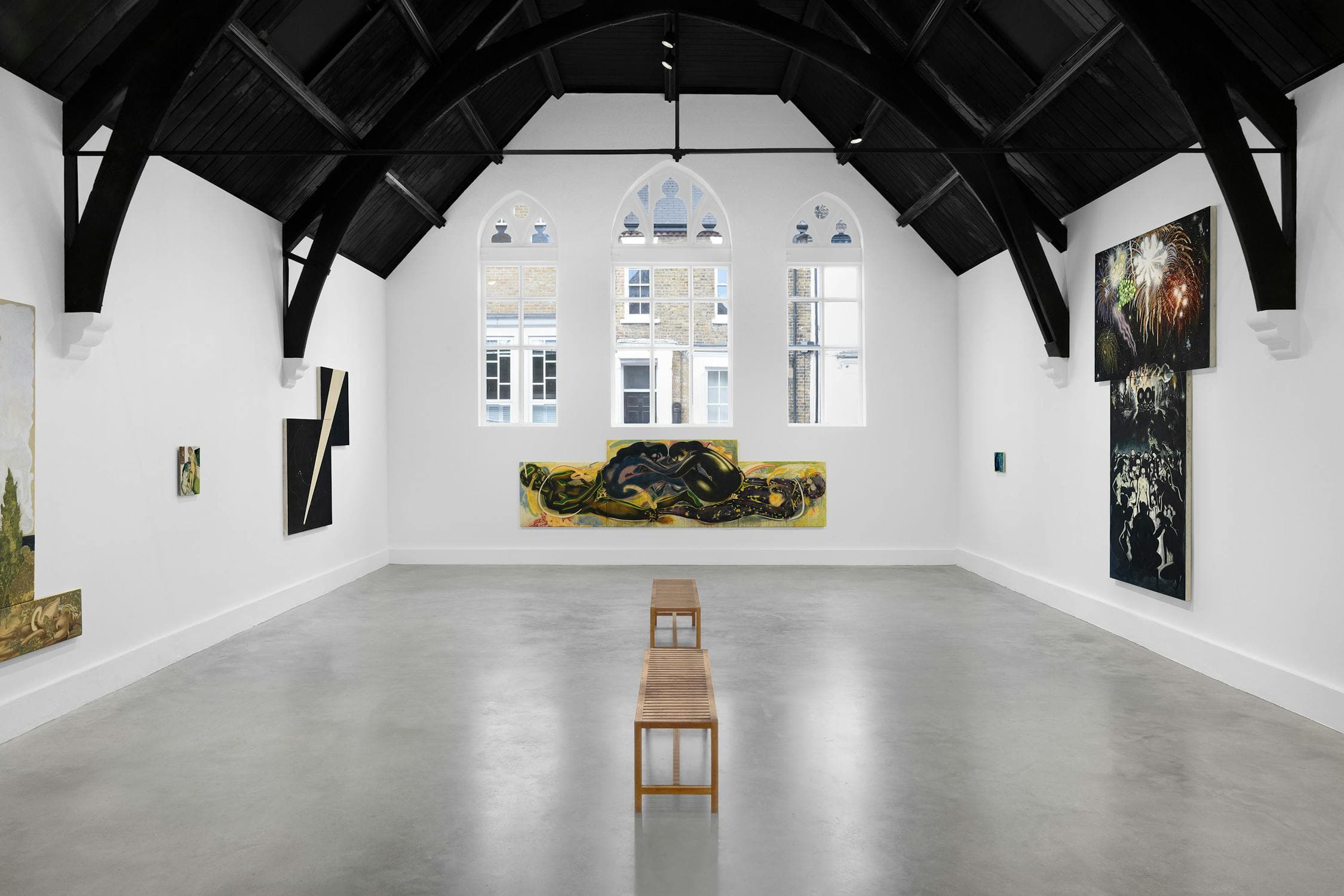
Studio VoltaireFor the artist’s first institutional solo exhibition, T. Venkanna (b. 1980, Gajwel, India) presents Sculpture Garden, an expansive series of new egg-tempera paintings on board that continue the artist's reflections on power, desire, obedience and transgression. This new body of work emerges from a daily practice of painting and drawing in his studio in Hyderabad and is informed by the shifting socio-political contexts of India. The fantastical and, at times, unsettling images within Venkanna’s paintings detail densely symbolic landscapes blending the sacred with the corporeal. Several paintings draw from traditions of South Asian and European devotional image-making. Renaissance imagery, such as Dürer’s Adam and Eve (1504), Correggio’s Leda and the Swan (after 1530) and Michelangelo’s David (c.1501–1504), is featured alongside references to the gilded manuscripts of the Mughal Empire, Indian miniature paintings and the compositions of temple reliefs. Venkanna’s use of egg tempera, recognisable for its almost luminous quality and widely used in Renaissance painting, connects to a global history of religious painting practices. The artist hand-grinds coloured pigment before combining it with viscous egg yolk, building up detail and colour through an intricate and diligent process of layering. The centrepiece of the exhibition, Sculpture Garden (2026), spans the altar recess, an architectural feature that reveals the gallery’s former function. Here, figures, sculptures, flora and fauna explore their desires amidst lush greenery, with the boundaries between them appearing to dissolve. Two figures, referencing Adam and Eve - an enduring motif in Venkanna’s work - look on with their backs towards the viewer. Rather than presenting a verdant paradise, the garden functions as a staged landscape of sex and observation, combining hidden moments of intimacy with disconcerting public spectacle. Elsewhere, the two-panel painting Celebration (2026) is laden with imagery that speaks to the tension between liberation and violence, joy and grief in the formation of contemporary India. Connecting with Venkanna’s previous works addressing the politicisation and weaponisation of sex as a tool of power and coercion, a bemused crowd observes a tangle of limbs below, while sinister figures loom in the distance and fireworks explode overhead. Across the gallery, the irregular triptych Golden Quartet (2025) features four lovers consumed by pleasure. Their bodily excesses, sometimes considered abject, are here gilded in gold leaf, creating an interplay between supposed impurity and the sacrosanct. In Sculpture Garden, studio processes become rituals of observation, documenting the body as both a site of liberation and control. Together, the paintings create a complex portrait of national identity, power, devotion and the persistence of desire.