

Tribeca, New York
Group Exhibition
Angle of Repose
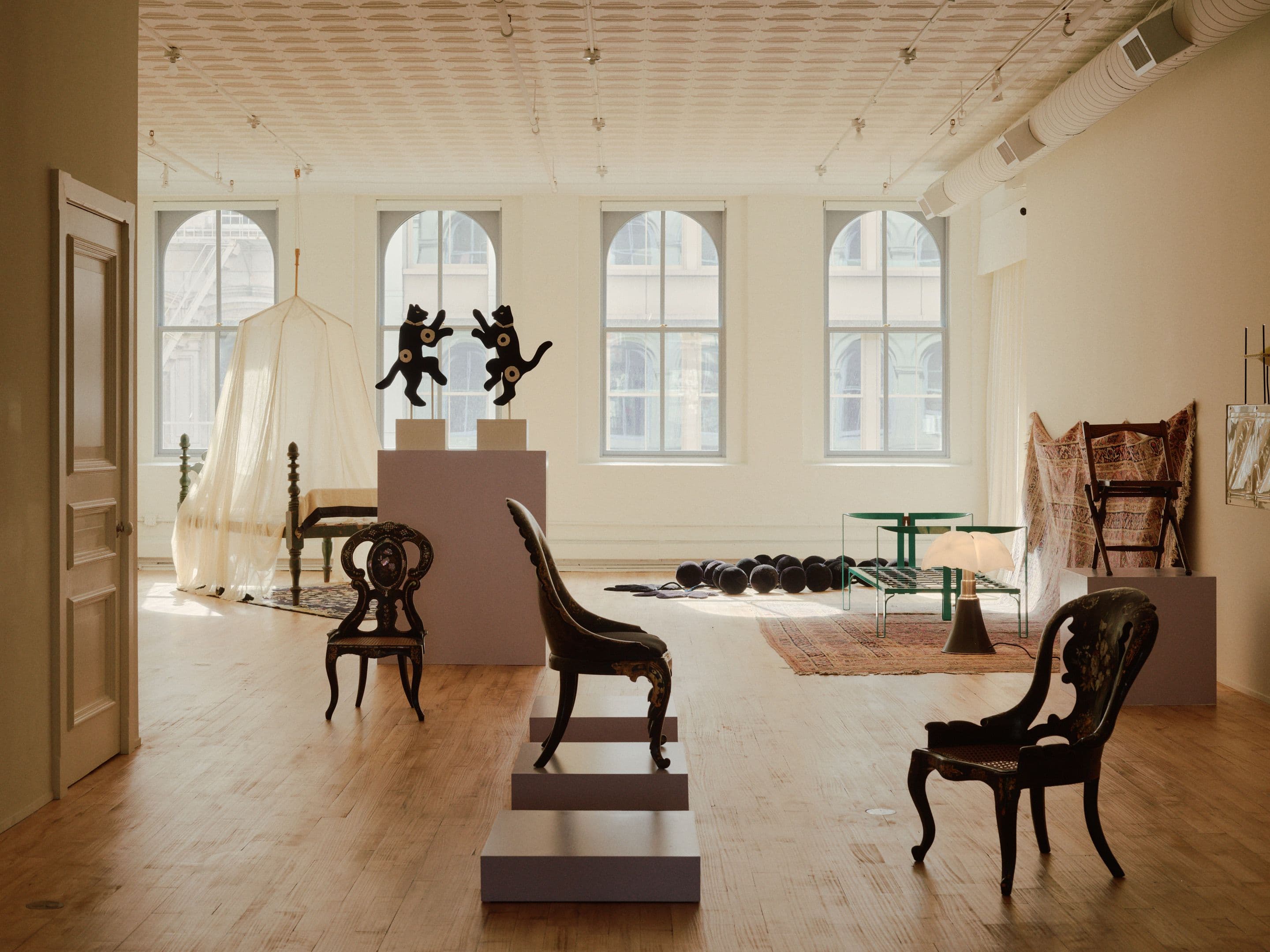
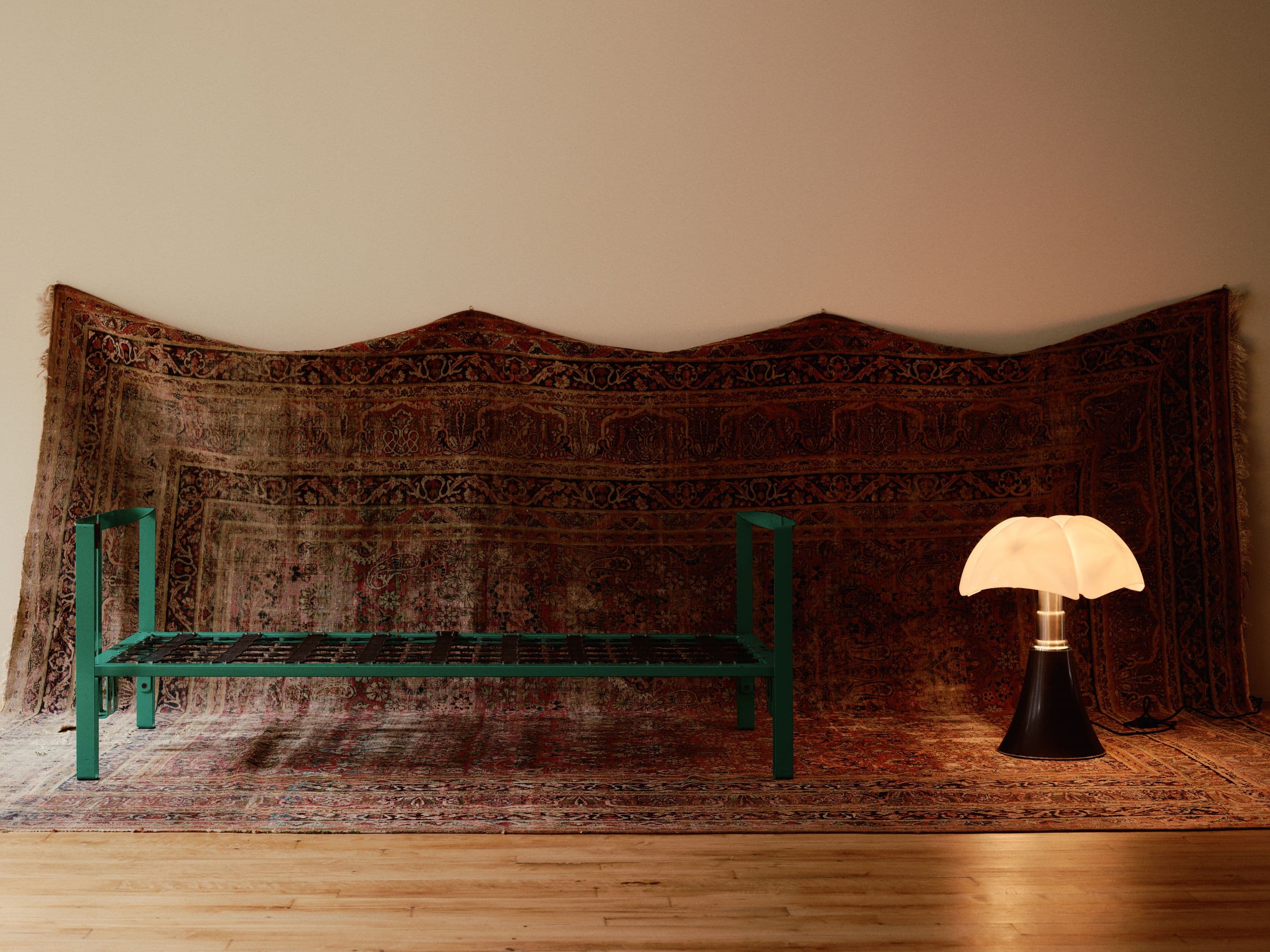
Jacqueline Sullivan GalleryElliot Camarra Valentina Cameranesi-Sgroi Isa Toledo Conie Vallese Jacqueline Sullivan Gallery, the decorative arts and design gallery located in TriBeCa, is pleased to debut its second Collection, Angle of Repose. The exhibition features contemporary works by Elliot Camarra, Valentina Cameranesi-Sgroi, Isa Toledo and Conie Vallese alongside canonical historical design and objects. Angle of Repose follows Substance in a Cushion, debuted in September 2022, both literary-inspired and concept-driven collections of furniture and objects from contemporary and historical designers. For Angle of Repose, Sullivan was initially inspired by Wallace Stegner’s 1971 novel by the same name (Pulitzer Prize for Fiction, 1972.) The novel recounts the history of four generations of an American family and the complex and sometimes incongruous experiences of a family in search of a “home” that consistently eludes them, the story inspires questions about the interior and frontier, rugged exteriority and domestic intimacy, and the way in which this dissonance can make way for a rich tapestry of human experience. Another catalyst for the exhibition concept is found in engineering principles:‘the steepest angle of descent at which a material can be piled before it loses its form and slumps to lose its shape.’ Within this principle, there is opportunity to explore ideas of inherent friction – particles in conversation, dialogue and even perhaps disagreement, to the point of surrender. “For me, this notion of repose, the idea of a material “reaching its limit” is endlessly fascinating. How far can we push an idea or a material in a way where the result teeters on absurdity, or doesn’t make sense? The liminal space where things haven’t quite resolved provides fertile ground for artistic exploration, and it has been a joy to explore these concepts with our contemporary artists, as well as find new meaning in objects of historical significance,” says Jacqueline Sullivan. Previewed earlier this year at The North American Pavilion in London, Elliot Camarra’s Grape Soft Sculpture is entirely hand-stitched, comprising a combination of velvet remnants, scraps and ribbons from the 1910s-1940s, as well as contemporary silk and cotton velvet. A pair of rearing dogs are displayed on plinths as sculptures, but are coated in layers of soft velvet and silk. The works intend to reclaim materials and techniques traditionally coded as female, such as millinery, domestic sewing and upholstery - a theme often explored by artists at Jacqueline Sullivan Gallery - and also to play with ideas of softness and slump (or, say, repose.) For Lisbon-based artist Isa Toledo’s Four Angles, the notion of repose as ‘naturally coming to rest’ informed the choice to create a mosquito net, which falls into a distinct shape. The net is installed above a rare and special historical Pennsylvania rope daybed (ca. 1830-1840). Instead of letting the net fall at its natural angle, Toledo has forced a new angle, by weighing down the net’s edges with pavement stones wrapped in black pongé silk. Grounding the installation is an unusual example of a traditional Portuguese Arraiolos rug, sourced by Toledo at a flea market, which features a cryptic dedication stitched in its back, reminiscent of the dedication of Stegner’s novel. Conie Vallese (Lisbon) debuts Jardin, a collection of Sterling Silver cutlery and small objects adorned with red garnet, designed in collaboration with goldsmith Orit Elhanati. Jardin serves as an homage to this aesthetic, artfully infusing designs with intricacy, nuance, and romantic splendor. The juxtaposition of Gothic Victorian - elements with the delicate resplendence of floral motifs creates a harmonious contrast, emblematic of the dialectic between resilience and fragility. Valentina Cameranesi-Sgroi continues her experimentation with borosilicate glass - still delicate, yet simpler in form than the works from the gallery’s inaugural exhibition, the two pieces for Angle of Repose lean more towards the realm of fashion, with a lace-inspired surface nodding towards a well-loved garment in need of careful repair. In keeping with the gallery’s ethos of celebrating the antiquarian alongside the contemporary, presentations of new work are always contextualized alongside select historical pieces: Christopher Dresser (1834-1904) glass vessels from the Clutha Collection, 1888 - 1896 (QTY: 11): Produced by James Couper Otto Zapf (1931-2018) wall shelving, 1969 (QTY: 4): ‘Softline’ wall mounted board; Acquired directly from the estate of Otto Zapf. Zapf designed the ‘Softline’ system prior to his tenure at Knoll (which he described as “an island of humanitarianism”), which began in 1973. He is well known for creating Knoll’s “Zapf system” which is a flexible office system using fabric covered panels. American folding chair, c. 1900 (QTY:1) Copper Arts & Crafts pendant light by W.A.S. Benson, c. 1900 (QTY: 1) Pipistrello light by Gae Aulenti (QTY: 1) Vanessa bed by Afra & Tobia Scarpa, 1959 (QTY: 1) Mother of pearl inlay papier mache chairs, c. 1880 (QTY: 3) Corner Chair by H.W. Batley for Jas Shoolbred, c. 1870 (QTY: 1) Easy Edges Table by Jack Brogan for Frank Gehry, 1982 (QTY: 1) Plywood prototype 4801 by Joe Colombo (QTY:1) Laver Kirman carpet, Persia, c. 1880 (QTY: 1) Ettore Sottsass Cabinet for Esprit Showroom, Cologne, 1987 (QTY: 1)