
South, London
Natalia González Martín
Table Manners
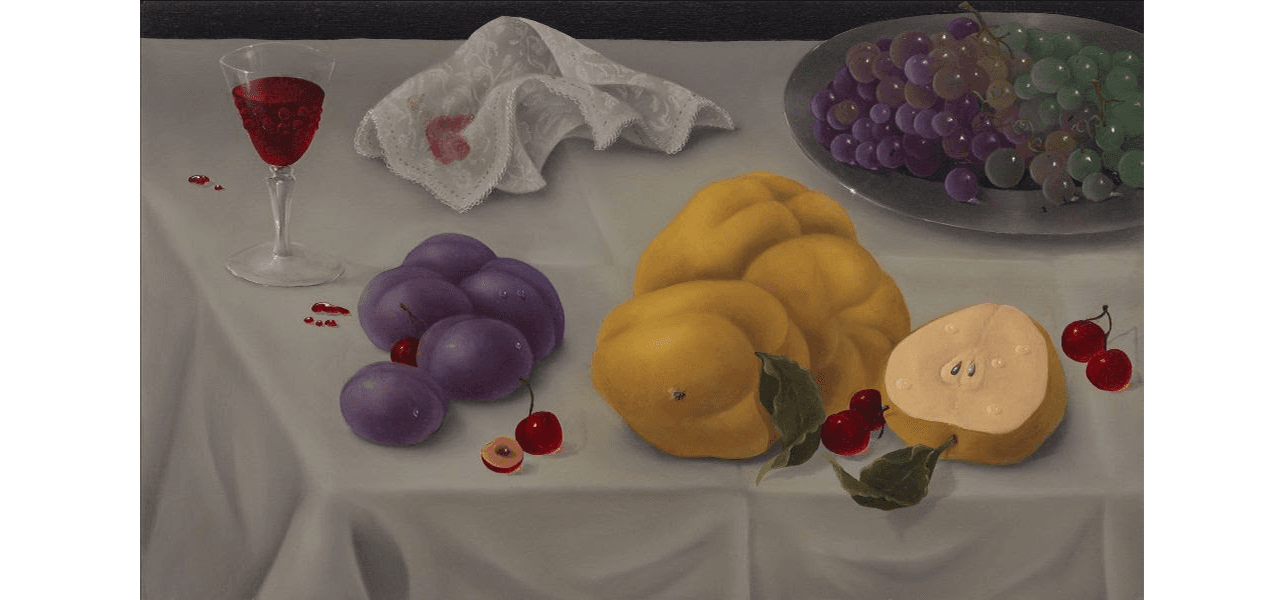
Hannah BarryNatalia González Martín's second solo exhibition at the gallery, Table Manners, presents a body of work that explores the use of religious symbolism in female monastic life, the relationship between food, community and bodily autonomy, and associated themes of guilt, pleasure and martyrdom through the visual language of still life, renaissance portraiture and the iconography of Catholic saints. Through a reading of Rudolph M. Bell’s Holy Anorexia (1985), as well as references to the symbolism of Spanish painters of the Counter-Reformation such as Francisco de Zurbarán, Martín's new work examines the connection between food and vessels as a symbolic religious language, the purity and desire of spiritual identity, and attempts to both curtail and empower women’s quest for liberation and autonomy through the ages. Natalia González Martín (b. 1995, Montejo de la Sierre) lives and works in London, UK. Martin's work explores the symbolic aspect of objects and their veneration through a contemporary visual language of still lifes, renaissance portraiture and religious iconography. Inspired by a mixture of her iconodule Catholic upbringing and a fascination with the history of Western mythology, her work explores the myriad ways in which both religious symbolism, allegory and fables represent deeper truths about ourselves and society, but also the myriad ways in which they have been used to establish and uphold patriarchal narratives about the limits of female desire, creativity and freedom. Bringing together ancient and contemporary worlds, from Ovid’s Metamorphoses to art history from the Counter-Reformation, contemporary popular culture to subtle imprints of her own personal experience, Martín’s work illustrates the symbolic mutability of love, passion and power throughout the ages.