Hollywood, Los Angeles
Cynthia Hawkins
Natural Things, 1996–99
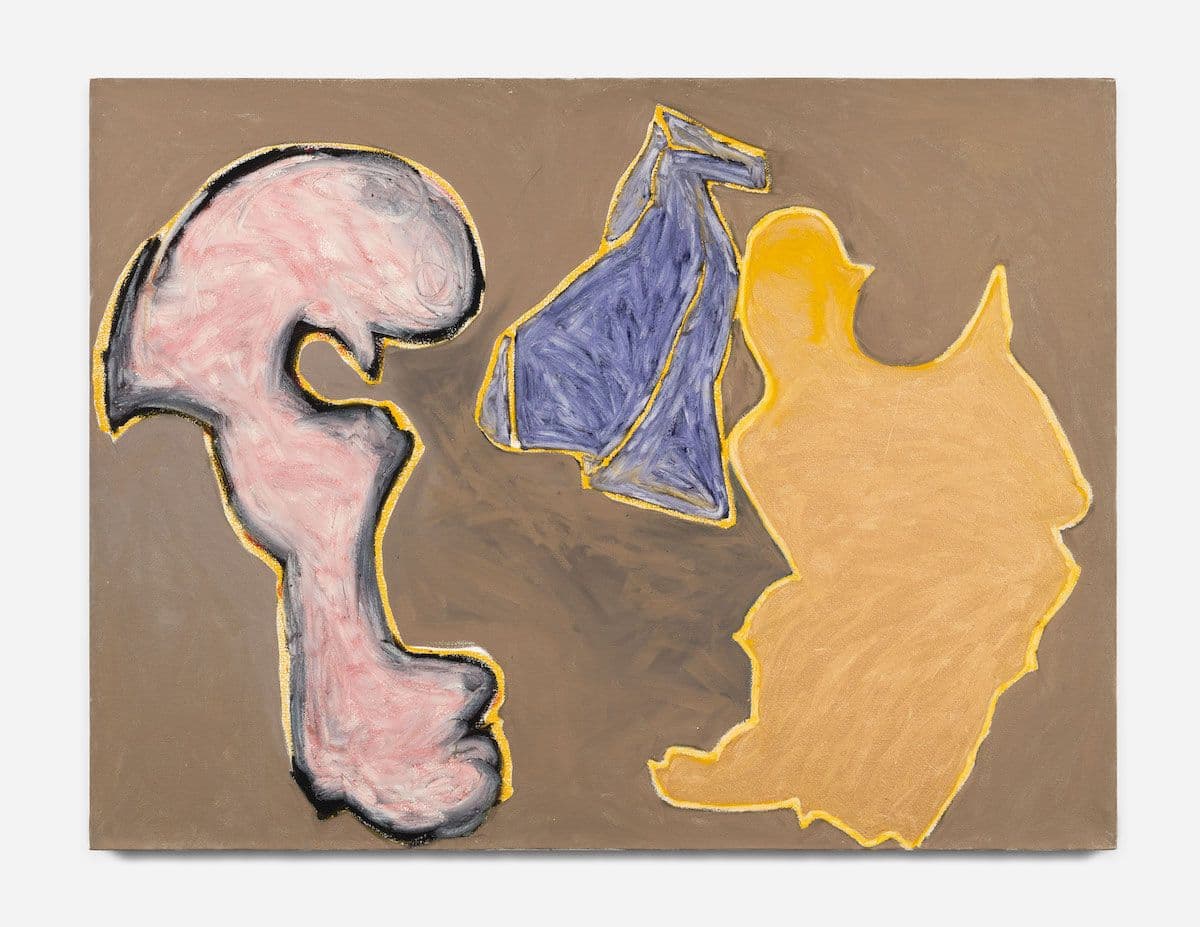
StarsStars is pleased to present Natural Things, 1996–99, the first exhibition in Los Angeles of work by the Rochester-based artist Cynthia Hawkins. In the late 70s and 80s, as a young artist in New York City, Hawkins exhibited in influential venues including Just Above Midtown, Clocktower, Artists Space, Kenkeleba Gallery, Cinque Gallery, and the Studio Museum in Harlem, where she was an Artist-in-Residence in 1987–88. Since then she has worked as a painter, curator, and academic, having received a doctorate degree in American Studies from the University of Buffalo, SUNY with a dissertation titled, “African American Agency and the Art Object, 1868-1917.” As a painter, Hawkins has spent nearly five decades building a visual vocabulary of abstract forms derived from investigations into scientific, celestial and natural phenomena. Working in loose series, Hawkins is constantly repeating, evolving and adding to her own index of forms, allowing shapes to perform differently each time they are used. In her lyrical compositions, gravitational forces are illustrated through lines, grids, arrows, masses in orbit, and patches of color, with a palette that is both sophisticated and unpredictable, aside from a single series made in the 80s focused on the color green. Natural Things, as the title implies, uses imagery from the natural world such as rock formations and patterns of sunlight through the trees as source material. Far from faithful reproductions, Hawkins intuitively distorts her subjects with energetic layers of color and pattern. As is emblematic of her practice, Natural Things proposes an alternative way of seeing the world around us. Cynthia Hawkins received a BA in Art from CUNY, Queens College, an MFA from Maryland Institute, College of Art, an MA in Museum Studies from Seton Hall University, and earned a Ph.D. in American Studies from the University of Buffalo, SUNY. Until recently she was gallery director and curator at the Bertha V.B. Lederer Gallery at SUNY Geneseo. Below is an excerpt from a recent interview between the artist and Julia Trotta, who organized the exhibition at Stars. JT: Are there themes that have been part of an ongoing investigation that unite all or most of your work? CH: I’d say that even though I’ve been using natural forms for quite a long time, I still think it has a lot to do equally with science and space. I get space in my work through color relationships and positioning of forms. I allow natural forms to become something else. I actually insist on it. I appreciate their existence in the world as such, as they are, but my job is to reinvent them. JT: What do you feel are the stakes or the potential of abstraction? Both generally and for yourself as an artist? CH: I have never been tempted to not work abstractly. I do know that there has been reluctance on the part of many people to accept abstract work from a Black woman artist, although there have been quite a few. I feel, especially in the ferment of recent years, that my continuing commitment is an act of resistance. I stick to my own goals and my own methods, but there is more than one way to communicate with people. I'm certain that politics and one's responses to social conditions are harder to read through abstraction, but I have no problem asking people to work a little harder. I would like people to walk by my paintings and feel joy. That would be nice. JT: I read the talk that you gave recently that was specifically on the subject of abstraction and its political potential. In it you say that "abstract works of art offer the artist many different possibilities to reframe and discuss political and social issues extant at any moment in our evolving society.” So I was thinking about that statement as it applies to you. What are you thinking about in a political or social context that is getting filtered into the work you’re doing right now? CH: I have completed one piece in the last two years called Oxygen that was made specifically thinking about George Floyd and other people who were choked to death. A lot of the work that was in the exhibition I was referring to in that talk were addressing social issues, and I could see, if one researches symbols in a work, that it’s meant to be read to be a certain way even if it’s abstract. I feel that what I do is my expression of freedom and resistance to those bodies that even still would like to presume one is not smart enough or intellectual enough or read enough to use these narratives to make work. This idea that Black artists have to be making figurative work, to talk about Black issues, social issues, is still prevalent. That is what most Black artists do, and that’s great, but I want to work differently. I want to expand my audience's experience of painting’s potential, painting’s possibilities.