
Marais, Paris
Léon Spilliaert
Léon Spilliaert
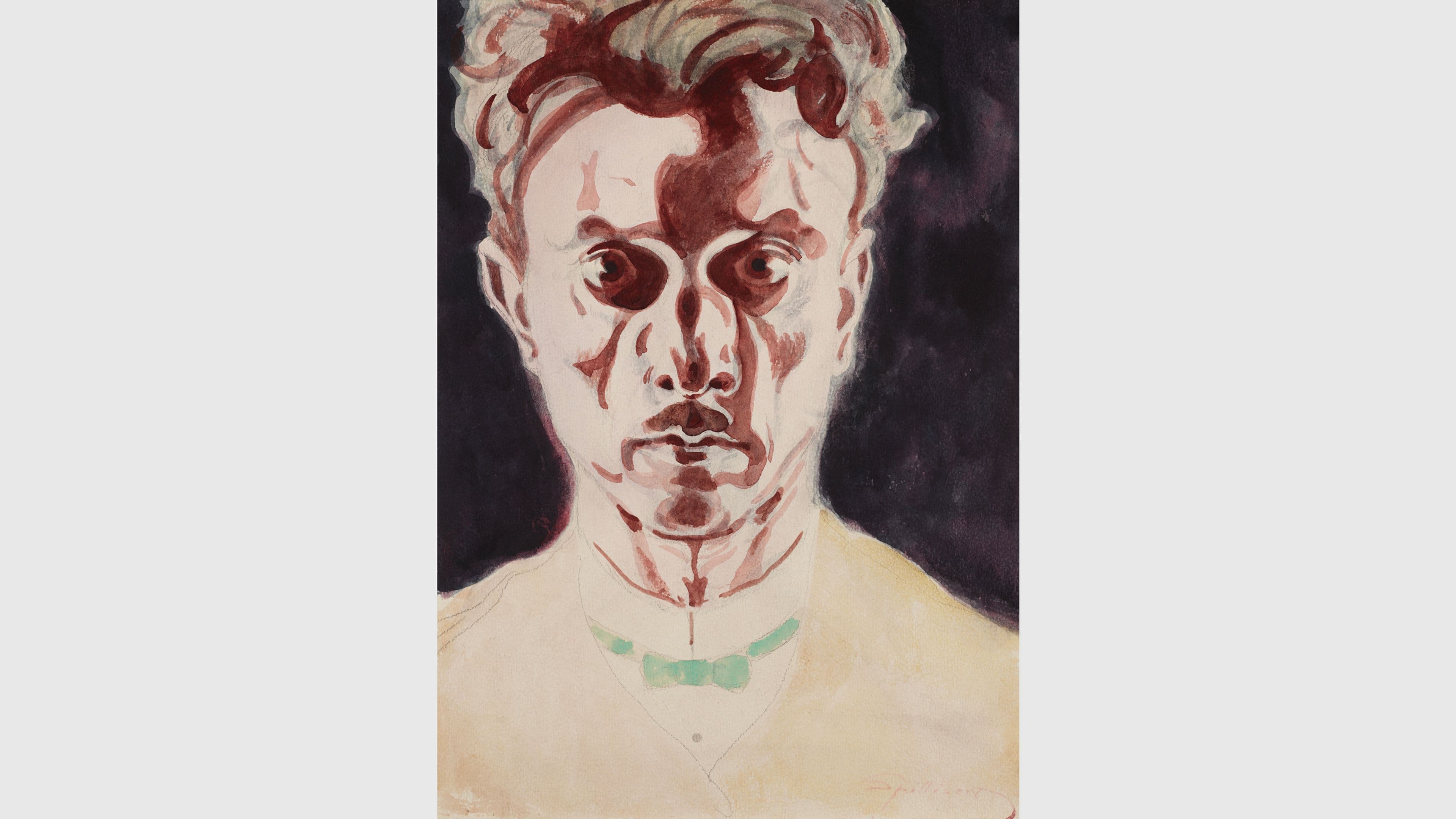
David ZwirnerDavid Zwirner is pleased to present an exhibition of work by Belgian artist Léon Spilliaert (1881–1946), organized in collaboration with Agnews, Brussels, which is on view on the second floor of the gallery's location in Paris. Best known for his works on paper, Spilliaert developed a unique vision characterized by its psychological intensity and aura of mystery over nearly fifty years. Showcasing the depth of Spilliaert's signature style, the exhibition includes a focused group of works that incorporates the artist's most renowned subject matter, including self-portraiture. Léon Spilliaert follows a major exhibition in France at the Musée d'Orsay in 2020–2021, as well as an acclaimed exhibition at David Zwirner New York in 2025. The exhibition, such as in New York, is curated by Dr. Noémie Goldman, specialist of nineteenth-century Belgian art and director of Agnews, Brussels. Spilliaert's distinctive and highly enigmatic compositions reveal myriad inspirations—ranging from symbolist literature to the seaside city of Ostend, Belgium. Rarely working from a dedicated studio, and suffering from insomnia, Spilliaert skillfully mixed watercolor, gouache, pastel, ink, wash, colored pencil, and more on portable supports of paper, using various techniques to produce uniquely resplendent surfaces. Across a range of subject matter, including self-portraits, nocturnal coastal landscapes, and solitary figures in dreamlike spaces, Spilliaert's compositions convey a sense of melancholy and stillness influenced by his life in Ostend. He has been highly influential to subsequent generations of artists—most notably, Luc Tuymans (b. 1958)—who have observed the universal qualities in Spilliaert's depictions of the human condition. At David Zwirner Paris, a selection of work primarily dating to a highly productive period of the 1900s and 1910s showcases the depth of the artist's singular style. Among the earliest works on view are a selection of still lifes depicting flasks and jars in close view, characterized by their reflective surfaces that negotiate transparent and opaque qualities. These represent a brief period between late 1908 and early 1909 when, for the first time, Spilliaert rented an attic studio along the Visserskaai overlooking the Port of Ostend. There, he not only developed a fascination for the boats and masts in the port, he worked to capture what he called the "essential singularity" of objects. As art historian and Spilliaert specialist Dr. Anne Adriaens-Pannier has observed, the artist's reflections of reality in these works prefigure the metaphysical painting of Giorgio de Chirico and the work of the surrealists. The choice to depict light-sensitive bottles further recalls Spilliaert's family history as the son of a successful perfume maker in Ostend. The exhibition also includes examples of Spilliaert's celebrated self-portraits. Beginning in 1902, Spilliaert began exploring the subject of the self in a number of works produced in a variety of media. Moody atmospheres characterize the self-portraits, which often present the artist in profile or facing forward in mirrored view, as seen in Autoportrait au gilet jaune (Self-Portrait with Yellow Waistcoat, 1911). Among Spilliaert's best-known works, the self-portraits were the subject of a comprehensive survey exhibition at the Musée d'Orsay, Paris, in 2007. Spilliaert enjoyed his first successes as an artist between 1907 and 1909, participating in early exhibitions and earning recognition in the press, yet this period was flanked by bouts of illness. Wandering the promenade of Ostend at night offered Spilliaert reprieve from his insomnia, leading to the creation of his celebrated nocturnal scenes along the coast. Seen in works such as La courbe de la digue (The Bend of the Promenade, 1908), these often depict the promenade along a curved line, and render distant architectural elements nearly to the point of abstraction, distorting standard perspective. The enigmatic character of Spilliaert's promenade scenes carry through to the landscapes of his late years, represented here by Les troncs verts (The Green Trunks, 1942–1944), from a period when Spilliaert found himself surrounded by the Sonian Forest after settling in Brussels in the final decade of his life. The exhibition further considers Spilliaert's depictions of solitary figures, reflecting both his personal relationships and his literary interests. In particular, the influence Spilliaert drew from the Belgian playwright Maurice Maeterlinck, for whom Spilliaert had produced original illustrations while employed by the Brussels publisher Edmond Deman in the early 1900s, is represented in works such as Princesse Maleine, 1917. Spilliaert's depictions of women are often distinguished by the melancholic appearance of his subjects, who quietly wait in front of a door or window. The artist's fascination for this subject could be explained by the influence of the wives of the fishermen in Ostend, waiting for their husbands in front of the sea. Spilliaert's women, frequently shrouded in darkness or shown with their backs turned to the viewer, embody these vibrant moments of society life occurring in front of the artist's windows. This exhibition extends Spilliaert's long presence in the city of Paris, where Spilliaert was the subject of retrospectives at the Grand Palais in 1981 and the Musée d'Orsay in 2020–2021. Paris, where Spilliaert visited annually between 1904 and 1916, played a pivotal role in the development of the artist's career, as the site of his first solo exhibition in 1913. In 1900, Spilliaert's father gifted him his first set of pastels while in Paris, and he discovered the symbolist art movement at the World's Fair—two events that radically altered the course of his artistic output. The rich cultural network Spilliaert found in Paris, largely through a close friendship with the Belgian poet Émile Verhaeren, would introduce him to artists and writers including Auguste Rodin, Eugène Carrière, Félix Vallotton, and the work of Paul Cézanne. To date, the largest institutional collection of Spilliaert's work outside of Belgium is held in Paris at the Musée d'Orsay. Léon Spilliaert (1881–1946) was born in the coastal city of Ostend, Belgium. Raised in a prosperous family as one of seven children, the artist was plagued by periods of ill health throughout most of his life; he suffered from chronic stomach ulcers that resulted in bouts of insomnia and nightwalking that came to be read in the physical and psychological darkness of his artwork. Spilliaert began his career as an illustrator for bookseller Edmond Deman (1857–1918), who published nineteenth-century symbolist writers including Stéphane Mallarmé and translations of Edgar Allan Poe, before initiating his own artistic practice, which would come to be defined by melancholic, moody color palettes influenced by artists like Odilon Redon. Predominantly self-taught, Spilliaert was enrolled for a short time at the Academy of Fine Arts Bruges; the brevity of his formal instruction allowed for the development of his highly unique style. His expressive compositions often depict solitary figures in dreamlike spaces, scenes of ordinary life, and the Belgian landscape, as well as self-portraits. Like his contemporary James Ensor, Spilliaert lived primarily in Ostend before settling in Brussels, and the city's coastal setting informed his seascapes late into his career. As early as 1904, Spilliaert began exhibiting his work in group shows at a number of galleries in Paris and Brussels, including the Salon de Printemps (1909) and Bruxelles des Indépendants (1911). The artist's first solo exhibition was held in Paris in 1913, organized by Belgian poet and gallerist Henri Vandeputte. Spilliaert's work has since been the subject of several solo exhibitions at institutions including Galerie Sneyers, Brussels (1917, 1927); Center for Fine Arts, Brussels (1936, 1944, 1947, 1953); Museum voor Schone Kunsten Ghent, Belgium (1953-54); Stedelijk Museum, Amsterdam (1954); Museum voor Schone Kunsten Elsene, Brussels (1961, 1971); Royal Museums of Fine Arts of Belgium, Brussels (1972); and Kunstnernes Hus, Oslo (1977), among others. In 1980, Spilliaert's work was featured in a solo exhibition that toured the United States: Léon Spilliaert, Symbol and Expression in 20th Century Belgian Art opened at The Phillips Collection, Washington, DC, and traveled to The Metropolitan Museum of Art, New York. In 2007, the Musée d'Orsay, Paris, presented a solo exhibition of Spilliaert's self-portraits, and in 2020, together with the Royal Academy of Arts, London, the museum organized Léon Spilliaert (traveled to the Musée d'Orsay as Léon Spilliaert: Lumière et solitude). Also in 2020, Mu.ZEE, Ostend, presented James Ensor and Léon Spilliaert: Two Masters of Ostend. In 2023, Spilliaert's work was the subject of solo exhibitions at Fondation de l'Hermitage, Lausanne, Switzerland; Royal Museums of Fine Arts of Belgium, Brussels; and Clemens Sels Museum Neuss, Germany. In 2025, the Royal Museums of Fine Arts of Belgium installed a gallery of Spilliaert's work as part of a rotating program dedicated to modern works on paper. Spilliaert's work has been featured in numerous group exhibitions at prominent institutions, including the 1920 Venice Biennale; Belgian Artists of Today, Rijksmuseum, Amsterdam (1940); One Hundred Years of Belgian Art, Haus der Kunst, Munich (1959); 20th Century Sources: European Art 1884–1914, Musée National d'Art Moderne, Paris (1960–61); From Ensor to Permeke, Musée de l'Orangerie, Paris (1970); Painters of the Imaginary: Belgian Symbolists and Surrealists, Galeries Nationales du Grand Palais, Paris (1974); Painters of the Mind's Eye, New York Cultural Center and Museum of Fine Arts, Houston (1974); Flemish Expressionists, from Ensor to Permeke, Galleria Nazionale d'Arte Moderna, Rome (1977); and Belgian Art 1880–1914, Brooklyn Museum, New York (1980). More recently, his work was included in Nature's Mirror: Reality and Symbol in Belgian Landscape, McMullen Museum of Art, Boston College (2017), and was selected by the Belgian artist Luc Tuymans (b. 1958) to appear in his curated exhibitions The Forbidden Empire: Visions of the World by Chinese and Flemish Masters, Palais des Beaux-Arts, Brussels, and Palace Museum, Beijing (2007); and James Ensor by Luc Tuymans, Royal Academy of Arts, London (2016). Work by the artist is included in public collections worldwide including the Art Institute of Chicago; Himeji City Museum of Art, Japan; Koninklijk Museum voor Schone Kunsten (KMSKA), Antwerp; The Metropolitan Museum of Art, New York; Musée de Grenoble, France; Musée d'Ixelles, Brussels; Musée d'Orsay, Paris; Museum Dhondt-Dhaenens, Deurle, Belgium; Museum Plantin-Moretus, Antwerp; Museum voor Schone Kunsten, Ghent; Mu.ZEE, Ostend, Belgium; and Royal Museums of Fine Arts of Belgium, Brussels. A catalogue raisonné of the works of Léon Spilliaert is currently in preparation by Dr. Anne Adriaens-Pannier. A collection of the artist's letters is also forthcoming, edited by Adriaens-Pannier and Dr. Noémie Goldman, a specialist in nineteenth-century Belgian art.