
Chinatown, New York
Rodrigo Valenzuela
Los Restos
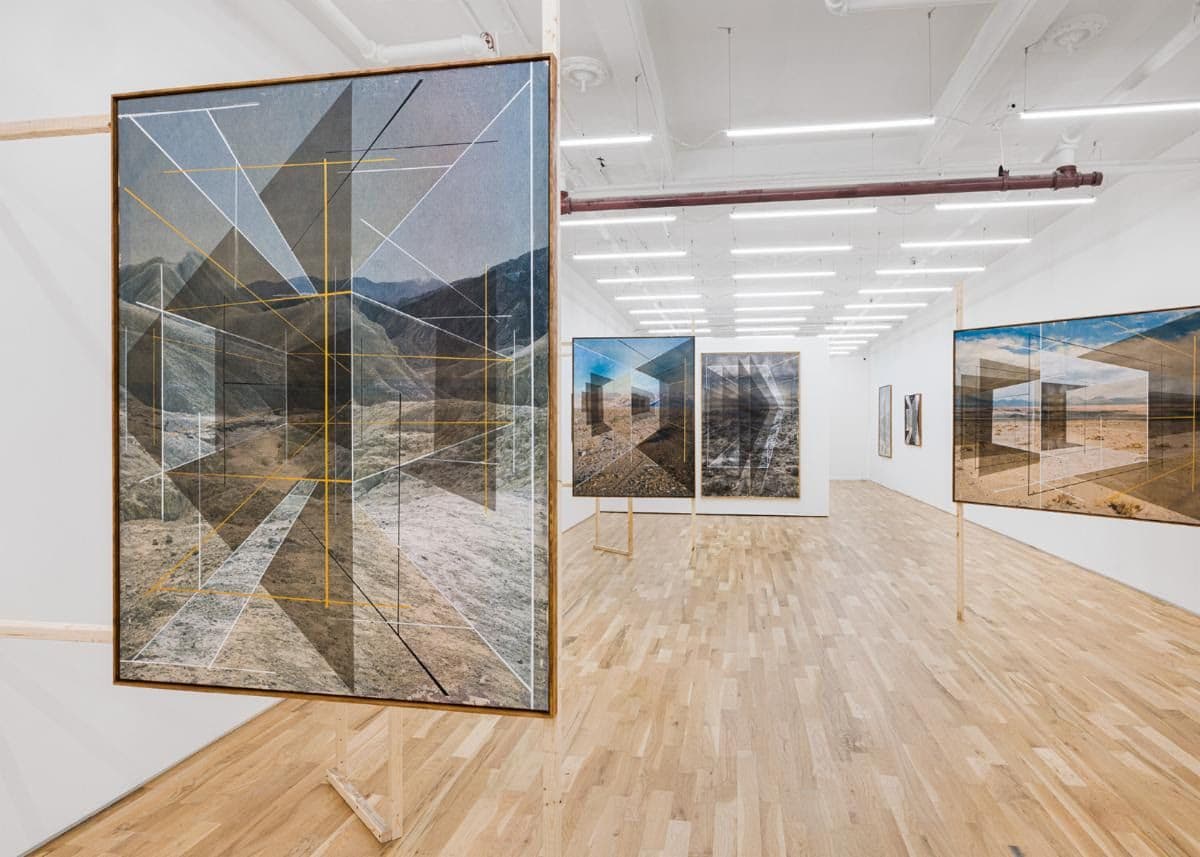
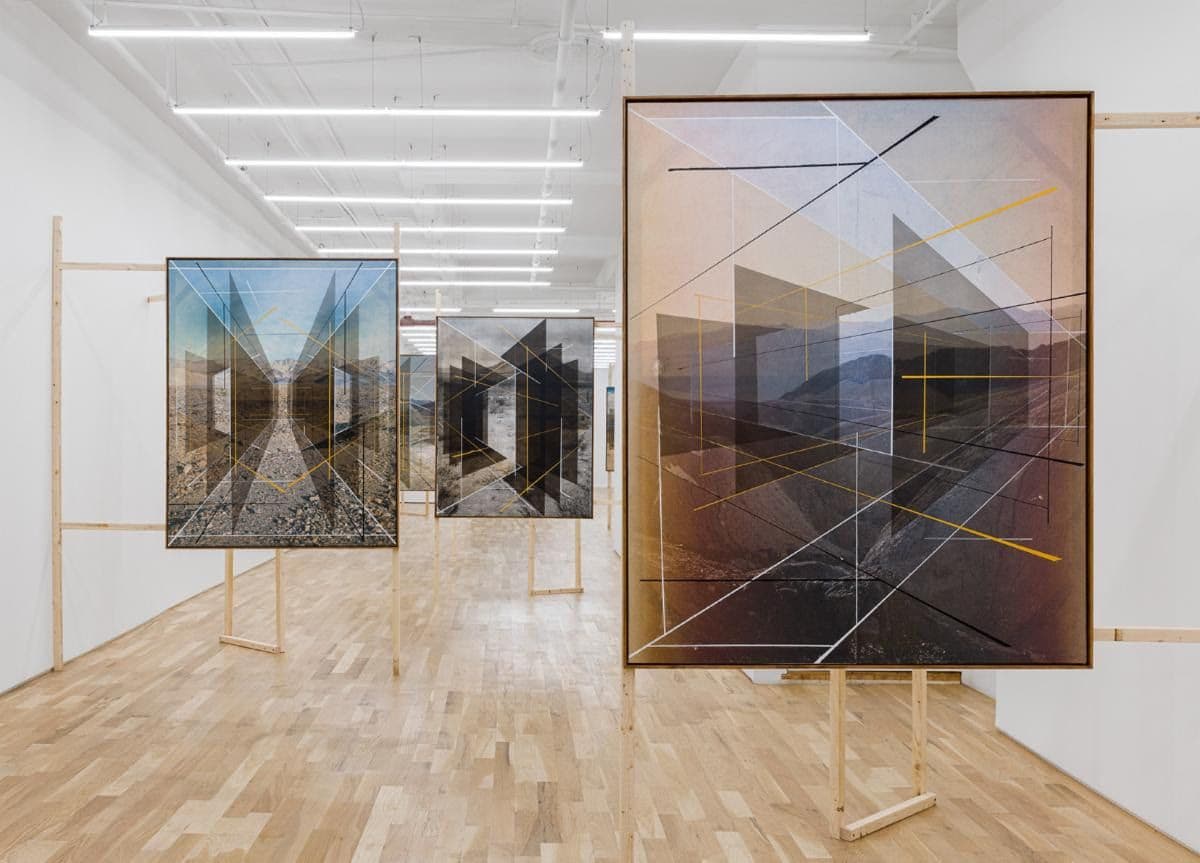
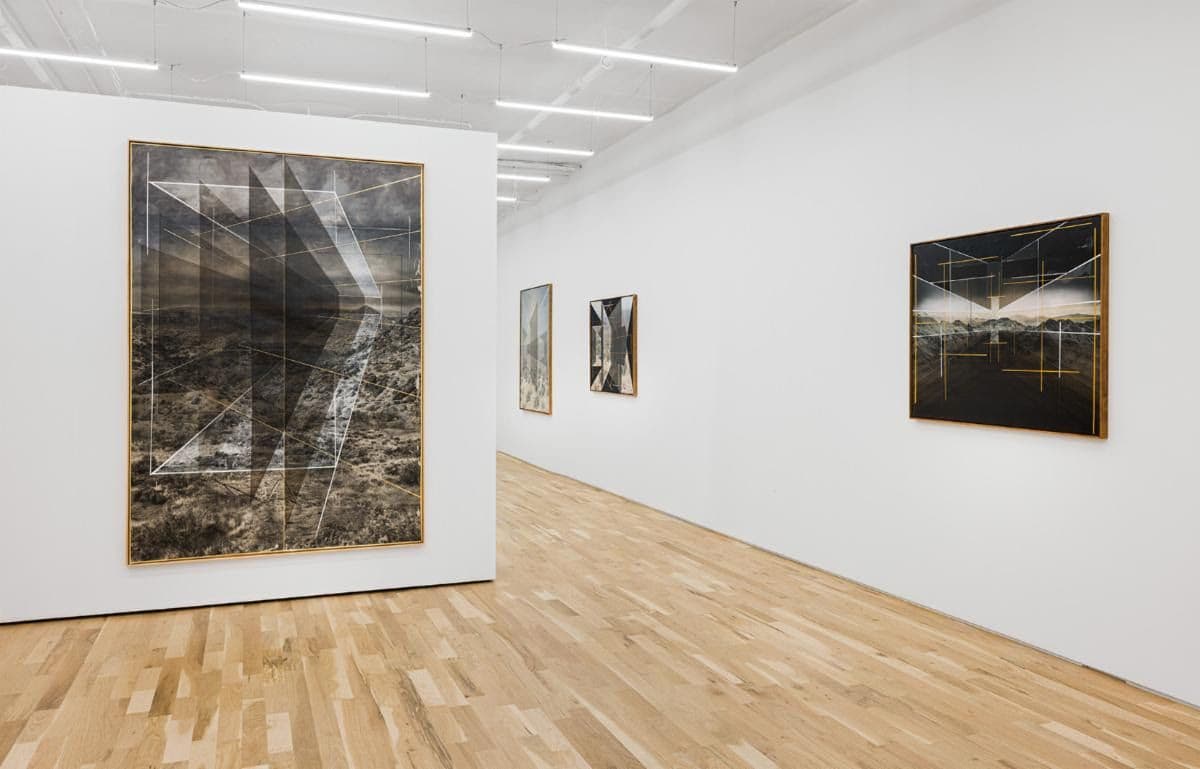
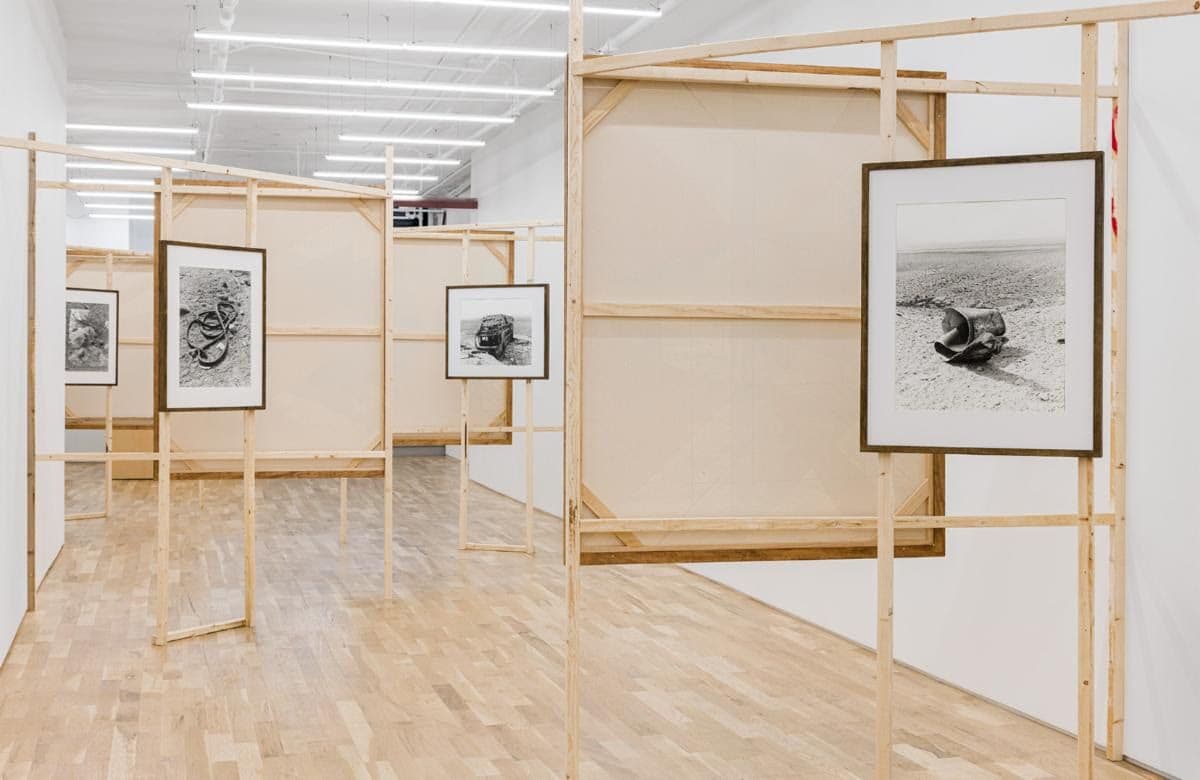
Asya GeisbergAsya Geisberg Gallery is pleased to present Los Restos, Rodrigo Valenzuela’s third solo exhibition with the gallery. Valenzuela transforms the gallery space with an installation showcasing New Land: renderings of the Atacama Desert landscape on large scale canvases, alongside more traditional documentary silver gelatin prints. This presentation opens the conversation for how both the use of painterly gesture and the photographic index coexist to legitimize and confront one another through the medium of photography. Each mode of Valenzuela’s pictorial imaging of the desert depicts a vast and “empty” place riddled with ghosts and violent histories, as well as dreams and undifferentiated futures of possibility. Valenzuela began the New Land series in 2017, made by transferring his photographic images with toner in multiple layers of adding and subtracting. Through this process of visual translation, Valenzuela shows the desert through the discourse of painting. These images, originally captured with a medium format camera, bring us back to mid-to-late 19th century landscape photography, most of it topographical in character, featuring an analytic perspective that tends to flatten, fragment, and generate ambiguity in space with a horizon line that divides the composition. Valenzuela implements a classic Renaissance construction of synthetic linear perspective as he paints bold graphic lines and rays of windows within the process of the image transfer onto canvas. This gesture of visual splicing enhances our awareness of the sublimity and transcendence of the space we are looking at, as well as the artifice and mythologizing we often fall into while gazing over this dreamlike land. The artist is mapping the coordinates of a homogenous space into a cartographic grid, after he laboriously walks across the Moon Valley of the Atacama Desert surveying the land to make these pictures. In the Los restos series, Valenzuela’s gaze is mostly looking down instead of outward: we are seeing what the camera is empirically capturing on the film’s emulsion in black and white. The documentation of found, abandoned objects, broken, and burned, alludes to relics that once belonged to bodies we cannot see but feel. Valenzuela’s skeletal caravan remains and mechanical carcasses, which we see in their entirety or in parts as elegant strings of fallen rubber and hollowed out tires, act as anti-monuments scattered around an eerie sci-fi lunaresque terrain in a place that borders the edges of Argentina, Bolivia, and Chile. The dust of the sand here also doubles as scattered ashes. The quiet stillness in a plane of shattered glass half submerged in the sand or in an obscure sculptural piece of bent, twisted metal, burst our sense of the Sublime we are first trained to see in New Land. These images uncannily refer to Robert Smithson’s Maps of Broken Glass or Mirror Displacement series, as well as Nancy Holt’s Sun Tunnels. Yet, these deflated versions of monumental conceptual American land works transmit a sense of disillusionment, the collapsed logic of the American Dream or Manifest Destiny, or even the failure of Latin America Utopianism in the 1960s and 70s. Los restos and New Land float within the gallery, suspended on an apparatus built with wooden scaffolding jutting out from the walls, guiding how the viewer moves in space and encounters images of each series on opposing vertical planes. This presentation suggests a new physical iteration of Roland Barthes’ studium and punctum, where each photographic iteration is faceting between the dimensions of how the land is represented: either as something iconic resembling its subject matter through a general cultural, historical, and social context, or in how it evokes personal associations as a trace of a past moment through fragmented remains. Rodrigo Valenzuela (b. 1982, Santiago, Chile) lives and works in Los Angeles, CA, where he is an Associate Professor and Head of the Photography Department at UCLA. Valenzuela is the recipient of the 2025 Foundation of Contemporary Art/Richard Pousette-Dart award, the 2024 Louis Comfort Tiffany Foundation award, the 2023 Harpo Foundation Grant, and the National Endowment for the Arts. He has received the 2021 Guggenheim Fellowship in Photography, the Smithsonian Artist Research Fellowship, the Joan Mitchell Award, the Art Matters Foundation Grant, and the Artist Trust Innovators Award. Recent solo exhibitions include The Griffin Museum of Photography, Winchester, MA; Center for Maine Contemporary Art, Rockland, ME; The Print Center, Philadelphia, PA; BRIC Arts Media, NY; Screen Series at the New Museum, NY; Jordan Schnitzer Museum of Art, Eugene, OR; Orange County Museum, Santa Ana, CA; Portland Art Museum, OR; Frye Art Museum, Seattle, WA. Recent residencies include the Headlands Center for the Arts, Sausalito, CA, Dora Maar Fellowship, Ménerbes, France; Fountainhead Residency, Miami FL; Core Fellowship at the Museum of Fine Arts, Houston, TX; Skowhegan School of Painting and Sculpture, Madison, ME; MacDowell Colony, Peterborough, NH; Bemis Center for Contemporary Arts, Omaha, NE; Lightwork, Syracuse, NY, and the Center for Photography at Woodstock, NY.