
Marais, Paris
Group Exhibition
Abraham Cruzvillegas, Rirkrit Tiravanija, Danh Vo
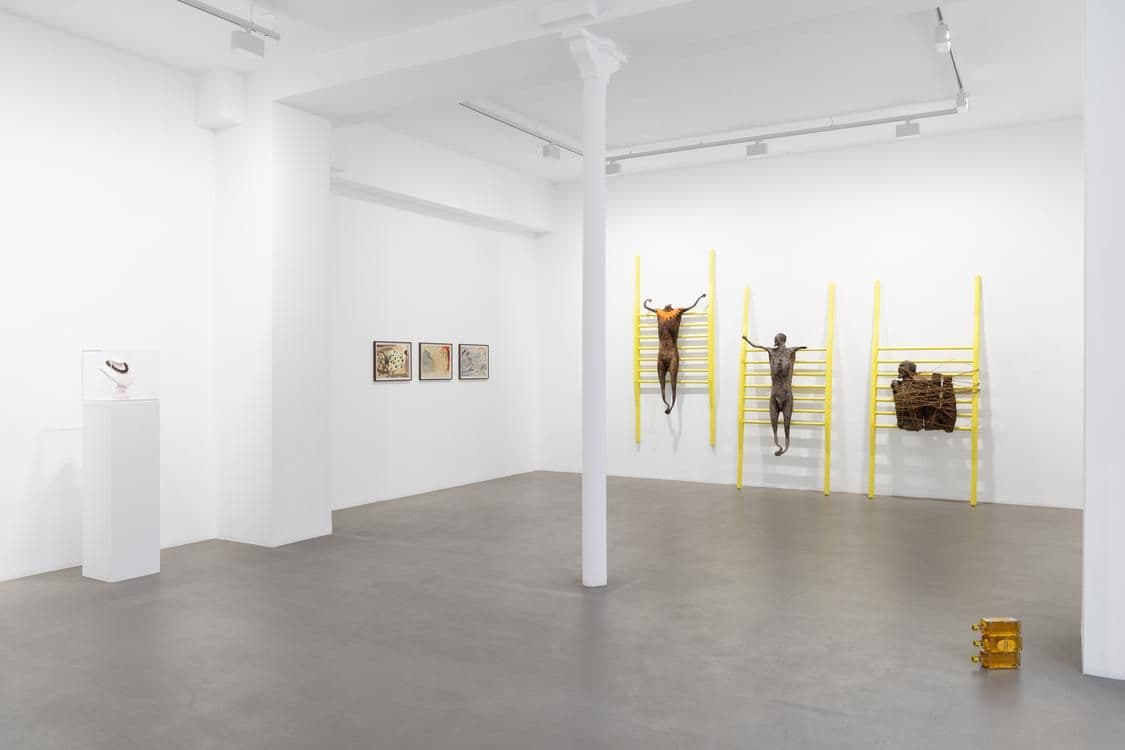
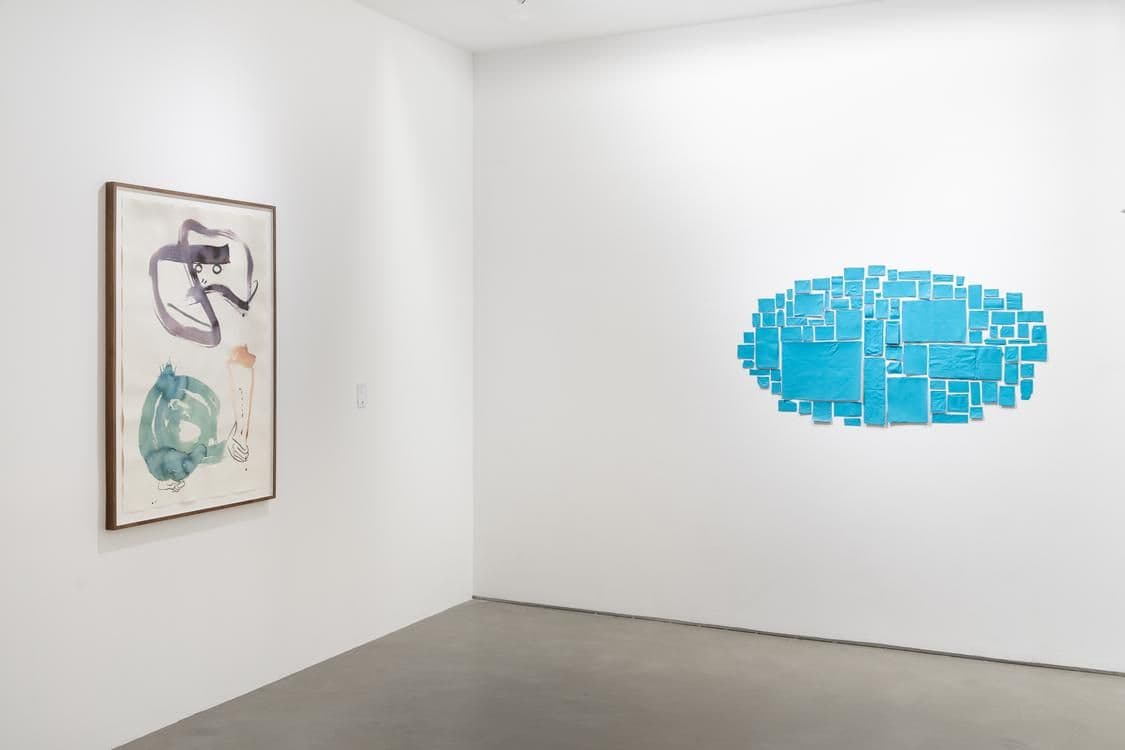
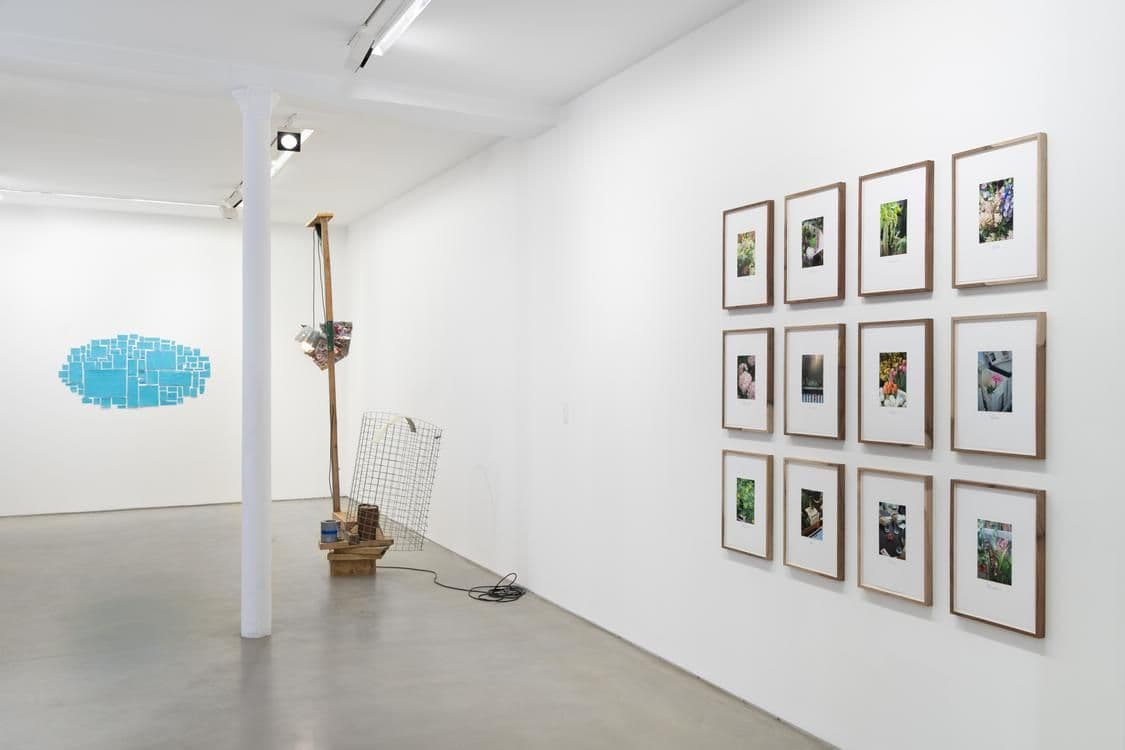
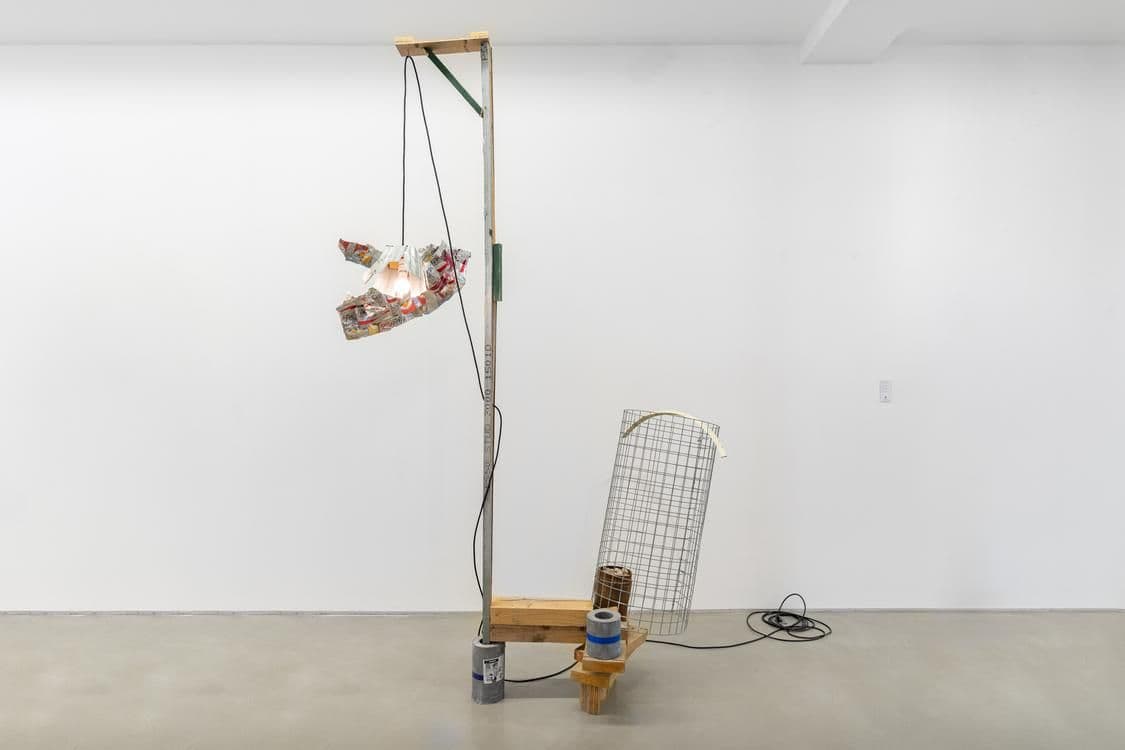
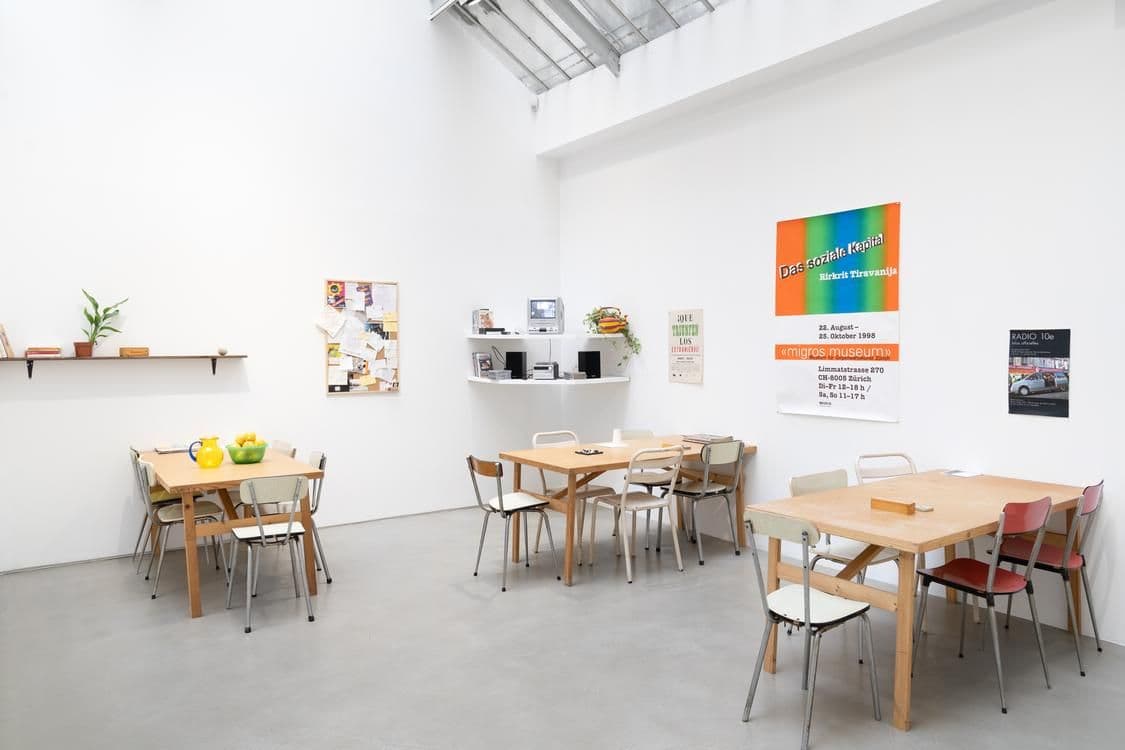
Chantal Crousel[Scroll down for French version / Veuillez trouver ci-dessous la version française] Around La salle de jeux (1998), a historical and participatory piece by Rirkrit Tiravanija, the gallery presents a selection of works by Abraham Cruzvillegas and Danh Vo. Since 1985, Abraham Cruzvillegas' drawings, paintings, and screenprints of primates—inspired by his fascination with gorillas—become metaphors for the human condition. In the work Autorretrato oponible actual, 31 (2023), the artist observes the similarities between these animals and his relatives, weaving a link between animality and humanity. Through these simian figures, he questions his own reflection, blurring the boundaries between human and animal. In the series Blind Self Portrait, he continues this introspective exploration by covering everyday elements with paint: personal documents, press clippings, pamphlets, or found objects. These supports are hidden under a layer of acrylic that erases visible content. Organized in a composition that is both chaotic and rigorously structured, these fragments give birth to a "blind self-portrait" where meaning is deliberately blurred, giving way to a form of abstract introspection. With the installation Empty Lot, presented in 2015 at the Tate Modern, Abraham Cruzvillegas addresses the tension between nature and urbanization more directly. Through a geometric arrangement of planters filled with soil but initially empty, he invites nature to establish itself in the heart of the city. The spontaneous growth of plants, made possible by a lighting and irrigation system, becomes a metaphor for constant transformation, latent potential, and the unpredictability of the living. Abraham Cruzvillegas explores the complex relationships between humans, identity, and nature. By articulating representations of primates, abstract self-portraits, and sculptural installations, he constructs a work centered on evolving identity. The artist explores the shifting links between the individual and their environment—whether natural, urban, or social—and invites us to rethink the invisible connections that shape our identities, as well as to see the coexistence between nature, culture, and memory as a process in constant evolution. La salle de jeux (1998) by Rirkrit Tiravanija evokes a café or a club, social places where individuals are accustomed to meeting to drink tea, watch television, play cards, or share their memories. A selection of games, DVDs, and CDs is made available to the public, who are invited to immerse themselves in the exhibition space. The presence of a corkboard—intended to host the thoughts or drawings visitors wish to share—encourages social interactions. Since the late 1990s, Rirkrit Tiravanija has been creating participatory installations, offering the public platforms for expression within the exhibition space itself, which asserts itself as a place of exchange and sharing. Inspired by artistic forms such as the happenings of the 1960s, participatory art overturns traditional conceptions of the work and questions social conventions. The artist retreats to give the visitor the possibility of appropriating the space and thereby bringing the work to life. Untitled (2023) by Danh Vo brings together twelve photographs of flowers, under which Phung Vo, the artist's father, has inscribed in pencil the first part of their Latin name. This gesture extends the collaboration between father and son, especially known through 2.2.1861 (2009-), a work in which Phung copies the farewell letter that French missionary Theophane Venard addressed to his father before being executed by Buddhist monks in Vietnam. A Catholic refugee settled in Denmark, Phung has made this letter a vocation, both a source of income and an act of prayer. Danh Vo's interest in flower photography began with the series untitled (2021), made on iPhone in his gardens in Guldenhof (Germany) and Pantelleria (Italy). Around the same time, the artist befriends a German-Vietnamese florist family that he welcomes into the space located under his Berlin apartment. Initially, he offers them flowers from Guldenhof, but since these are grown non-professionally, they are "imperfect" and not suited for commercialization. This observation fuels Danh Vo's curiosity for floral species and gives birth to untitled (2023). He photographs cut flowers in the store, often staged in solitary contexts: a single rose on a scale, a carnation placed on wood. Inscribed under each photograph, the Latin name of the floral species questions the power relations and domination between cultures. The choice of frames extends this political reflection. They are made of black walnut offered to the artist by Craig McNamara, son of Robert McNamara, the American Secretary of Defense and a major architect of the Vietnam War, a conflict that forced the artist's family into exile. Using wood from the McNamara's property, Danh Vo weaves links between family history and world history. ***** Autour de La salle de jeux (1998), pièce historique et participative de Rirkrit Tiravanija, la galerie présente une sélection d’œuvres de Abraham Cruzvillegas et Danh Vo. Depuis 1985, ses dessins, peintures et sérigraphies de primates — inspirés par sa fascination pour les gorilles — deviennent autant de métaphores de la condition humaine. Dans l’œuvre Autorretrato oponible actual, 31 (2023), l’artiste observe les similitudes entre ces animaux et ses proches, tissant un lien entre animalité et humanité. À travers ces figures simiesques, il interroge son propre reflet, brouillant les frontières entre l’humain et l’animal. Dans la série Blind Self Portrait, il poursuit cette exploration introspective en recouvrant de peinture des éléments du quotidien : documents personnels, coupures de presse, prospectus ou objets trouvés. Ces supports sont masqués sous une couche d’acrylique qui en efface le contenu visible. Organisés dans une composition à la fois chaotique et rigoureusement structurée, ces fragments donnent naissance à un « autoportrait aveugle » où la signification se brouille volontairement, laissant place à une forme d’introspection abstraite. Avec l'installation Empty Lot, présentée en 2015 à la Tate Modern, Abraham Cruzvillegas aborde de manière plus directe la tension entre nature et urbanisation. À travers un agencement géométrique de jardinières remplies de terre mais initialement vides, il invite la nature à s’inscrire dans le cœur de la ville. La croissance spontanée des plantes, rendue possible par un système d’éclairage et d’irrigation, devient une métaphore de la transformation constante, du potentiel latent et de l’imprévisibilité du vivant. Abraham Cruzvillegas explore les relations complexes entre l’être humain, l'identité et la nature. En articulant représentations de primates, autoportraits abstraits et installations sculpturales, il construit une œuvre centrée sur l'identité en constante évolution. L’artiste explore les liens mouvants entre l’individu et son environnement — qu’il soit naturel, urbain ou social — et nous invite à repenser les connexions invisibles qui façonnent nos identités ainsi qu'à voir la coexistence entre nature, culture et mémoire comme un processus en constante évolution. La salle de jeux (1998), de Rirkrit Tiravanija évoque un café ou un club, lieux de sociabilité où les individus ont l’habitude de se retrouver pour boire un thé, regarder la télévision, jouer aux cartes ou se raconter leurs souvenirs. Une sélection de jeux, de DVD et de CD est mise à disposition du public, invité à investir l’espace d’exposition. La présence d’un panneau en liège — destiné à accueillir les pensées ou dessins que les visiteurs souhaiteraient partager — encourage les interactions sociales. Depuis la fin des années 1990, Rirkrit Tiravanija crée des installations participatives, offrant au public des plateformes d’expression au sein même de l’espace d’exposition, qui s’affirme comme un lieu d’échange et de partage. Inspiré par des formes artistiques telles que les happenings des années 1960, l’art participatif renverse les conceptions traditionnelles de l’œuvre et interroge les conventions sociales. L'artiste se met en retrait pour offrir au visiteur la possibilité de s’approprier l’espace et, ainsi, de donner vie à l’œuvre. untitled (2023) de Danh Vo réunit douze photographies de fleurs, sous lesquelles Phung Vo, le père de l’artiste, a inscrit au crayon la première partie de leur nom latin. Ce geste prolonge la collaboration entre père et fils, surtout connue à travers 2.2.1861 (2009-), une œuvre dans laquelle Phung recopie la lettre d’adieu que le missionnaire français Théophane Vénard adresse à son père avant d’être exécuté par des moines bouddhistes au Vietnam. Réfugié catholique installé au Danemark, Phung a fait de cette lettre une vocation, à la fois source de revenus et acte de prière. L'intérêt de Danh Vo pour la photographie de fleurs a commencé avec la série untitled (2021), réalisée à l’iPhone dans ses jardins de Güldenhof (Allemagne) et Pantelleria (Italie). À la même période, l'artiste se lie d’amitié avec une famille de fleuristes germano-vietnamiens qu’il accueille dans le local situé sous son appartement berlinois. Au départ, il leur offre des fleurs de Güldenhof, mais celles-ci sont cultivées non professionnellement, donc « imparfaites » et ne sont pas adaptées à la commercialisation. Cette observation nourrit la curiosité de Danh Vo pour les espèces florales et donne naissance à untitled (2023). Il photographie des fleurs coupées dans la boutique, souvent mises en scène dans des contextes solitaires : une rose seule sur une balance, un œillet posé sur du bois. Inscrit sous chaque photographie, le nom latin des espèces florales questionne les rapports de pouvoir et de domination entre les cultures. Le choix des cadres prolonge cette réflexion politique. Ils sont réalisés dans du noyer noir offert à l'artiste par Craig McNamara, fils de Robert McNamara, secrétaire américain à la Défense et architecte majeur de la guerre du Vietnam, conflit qui a précipité l’exil de la famille de l’artiste. En utilisant le bois provenant de la propriété des McNamara, Danh Vo tisse des liens entre histoire familiale et histoire mondiale.