
Chelsea, New York
Kathleen Jacobs
Woods of Symbols
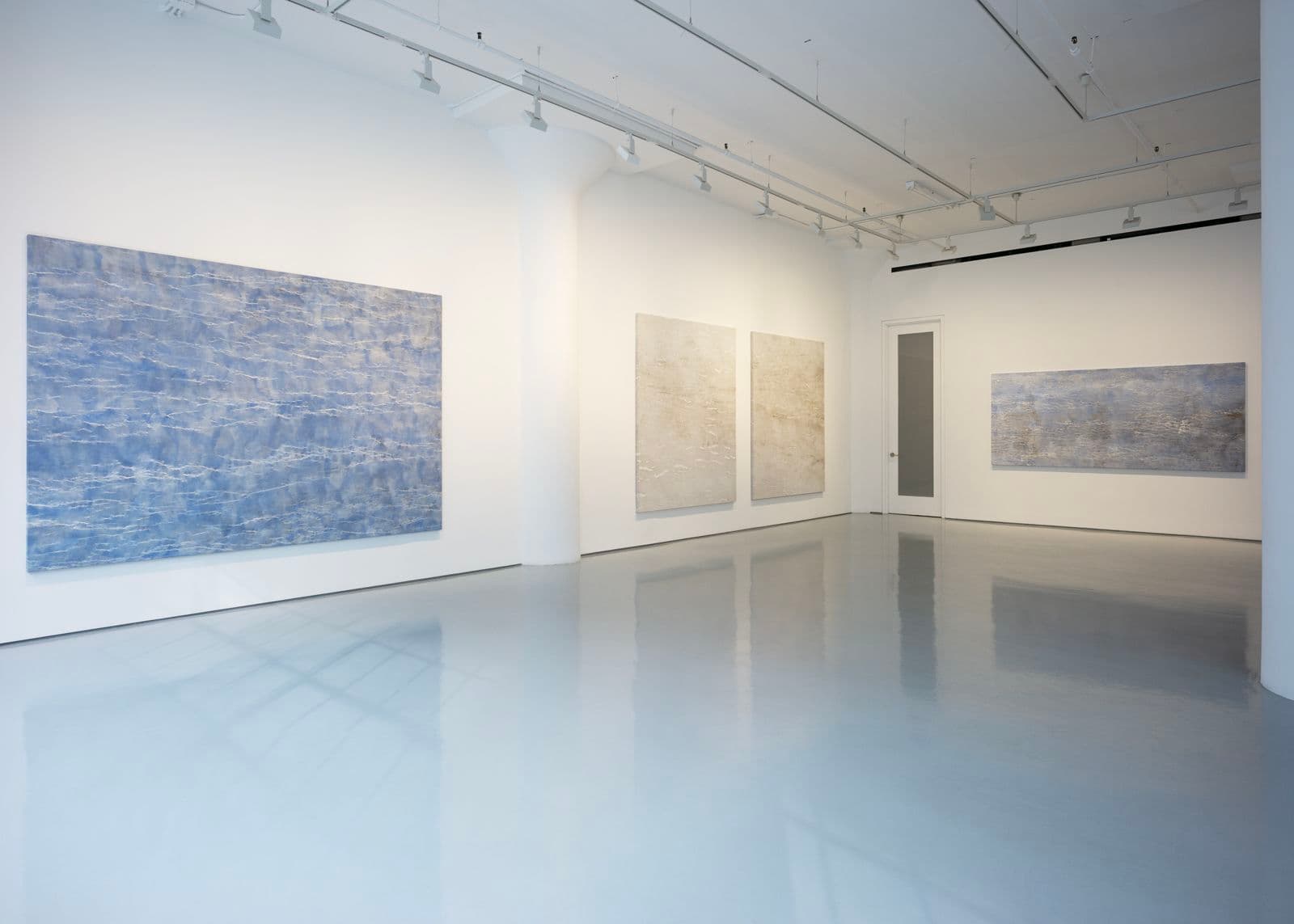
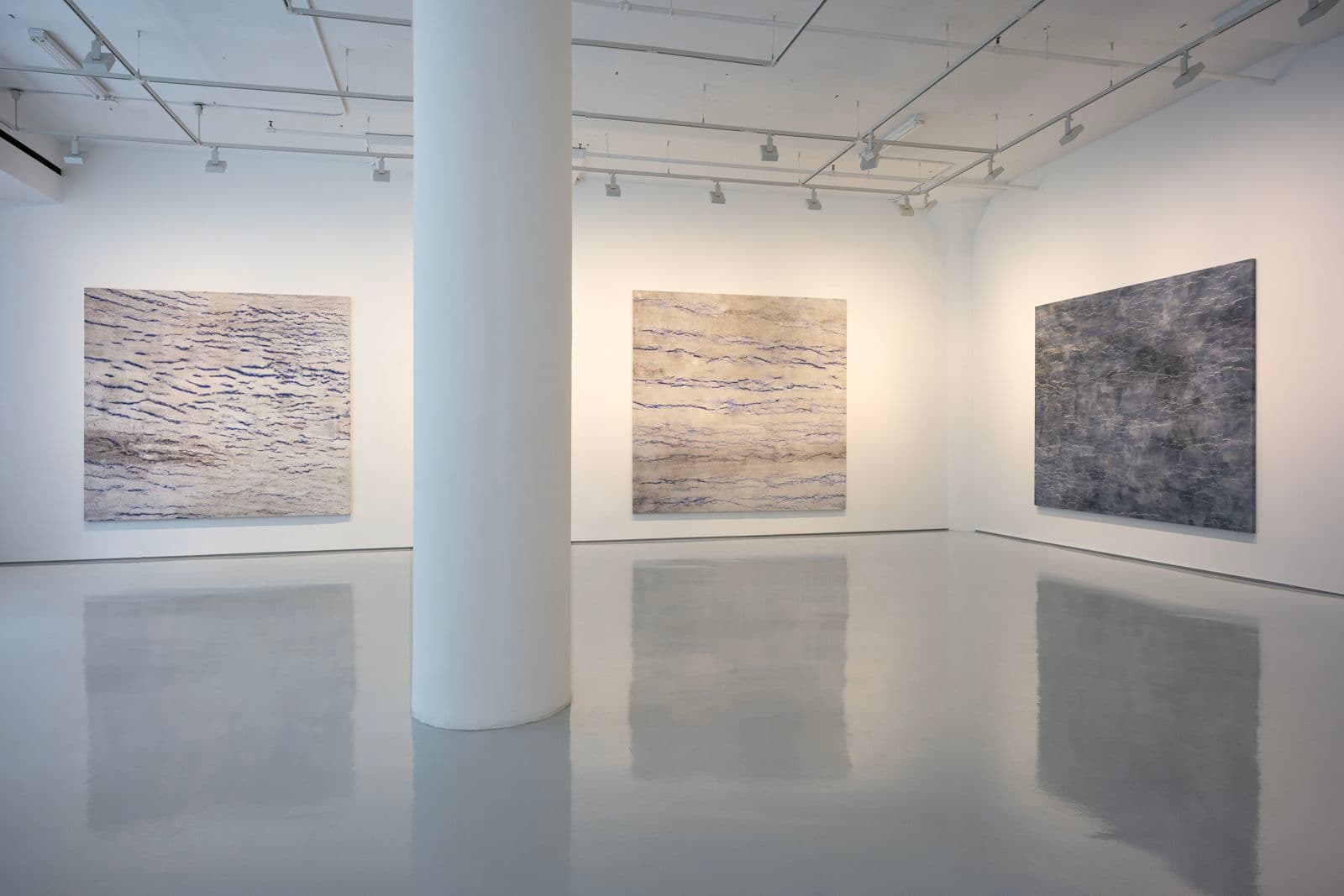
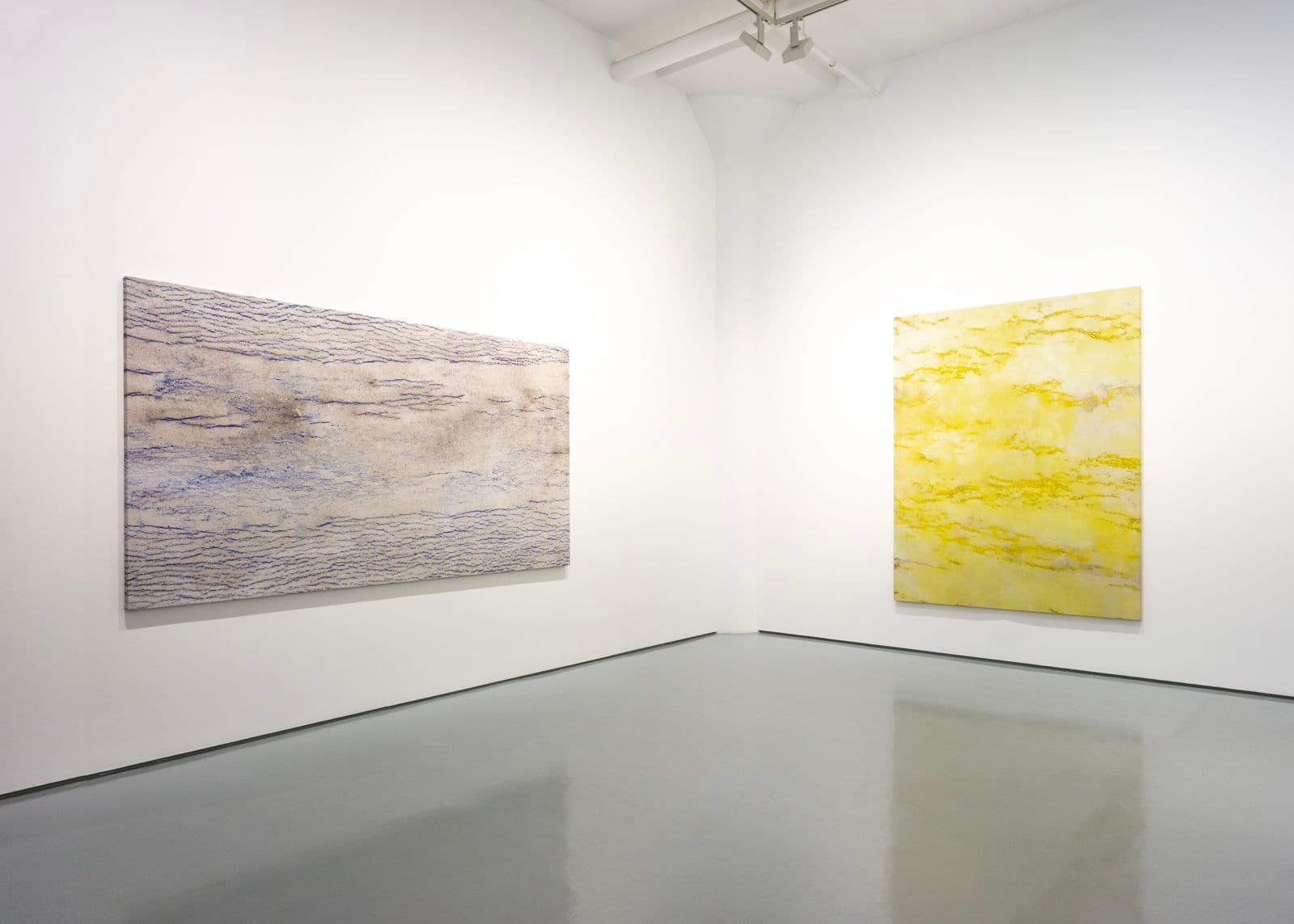
Fergus McCaffreyThe American painter Kathleen Jacobs is a member of the ‘reverse Hudson River School’ in having grown up in Aspen in the West and subsequently living and working nearby the Hudson River in the East for the last thirty years. She is also a member of a small club of artist/aviators including Doug Wheeler and James Turrell, whose experiences of flying small aircraft have brought them a unique perspective on atmosphere and the aesthetics of the sublime. Jacobs’ exhibition Woods of Symbols is her second at our 26th street location and features twelve very large paintings laboriously produced in the woods surrounding The Mount, the Lenox, Massachusetts home and garden that writer Edith Wharton designed and built for herself in 1902. The study of clouds, mountains, oceans, and the wind, have a different level of seriousness for an artist/pilot like Jacobs than a regular landscape painter, given the life-threatening potential of those factors to disorient flight. Likewise, Jacobs’ exhausting practice of affixing, painting, and curing large canvases that envelope old growth trees in woods and forests over several years, gives her a heightened sensitivity to the psychological dimensions of forests in the human subconscious. These perceptual and intuited factors are important aspects of Jacobs’ practice. Edmund Burke’s 1756 concept of the sublime comes to mind when considering Jacobs’ experiences of the world sideways and upside-down as an aerobatic pilot and in confronting the darkness and the unknown while working in the forest. Both environments remain places of unpredictability, freedom and risk, and of enchantment and danger; these haptic sensations feed directly into the disorientating splendor of Jacobs’ work. Though composed in collaboration with the unpredictability of nature, Jacobs’ paintings share a foundation in the hard geometry of aeronautical navigation. The artist likens the parameters of her canvases to the aeronautical box in which she flies aerobatic patterns. Further, her five letter titles refer to satellite navigation waypoints and fixes for aircraft flying in the clouds or at night, that offer passage to imaginary locations defined by the interception of magnetic vectors drawn from the earth’s poles. Jacobs keeps a copy of Antoine de Saint-Exupéry’s 1931 novel Night Flight at hand as a guard against complacency in her art and aviation. Saint Exupéry was also a pilot, and his words express the intoxicating, confusing, and often tragic visual stimulation that pilots encounter, which ultimately led to the death of his protagonist Fabien: "And now a wonder seized him. Dazzled by that brightness, he had to keep his eyes closed for some seconds. He had never dreamt the night-clouds could dazzle thus. But the full moon and all the constellations were changing them to light… Now all grew luminous, his hands, his clothes, the wings, and Fabien thought that he was in a limbo of strange magic; for the light did not come down from the stars but welled up from below, from all that snowy whiteness." Voyage and communication between the underworld, the earthy domain, and heavens have been human obsessions since the beginnings of recorded culture, represented in the form of mythical trees of life like Yggdrasil and the flying chariots of Helios. In establishing her art practice between the forest and the sky, Jacobs extends these ancient traditions in contemporary form.