

Marais, Paris
Théo Mercier
I Swallow Your Tears
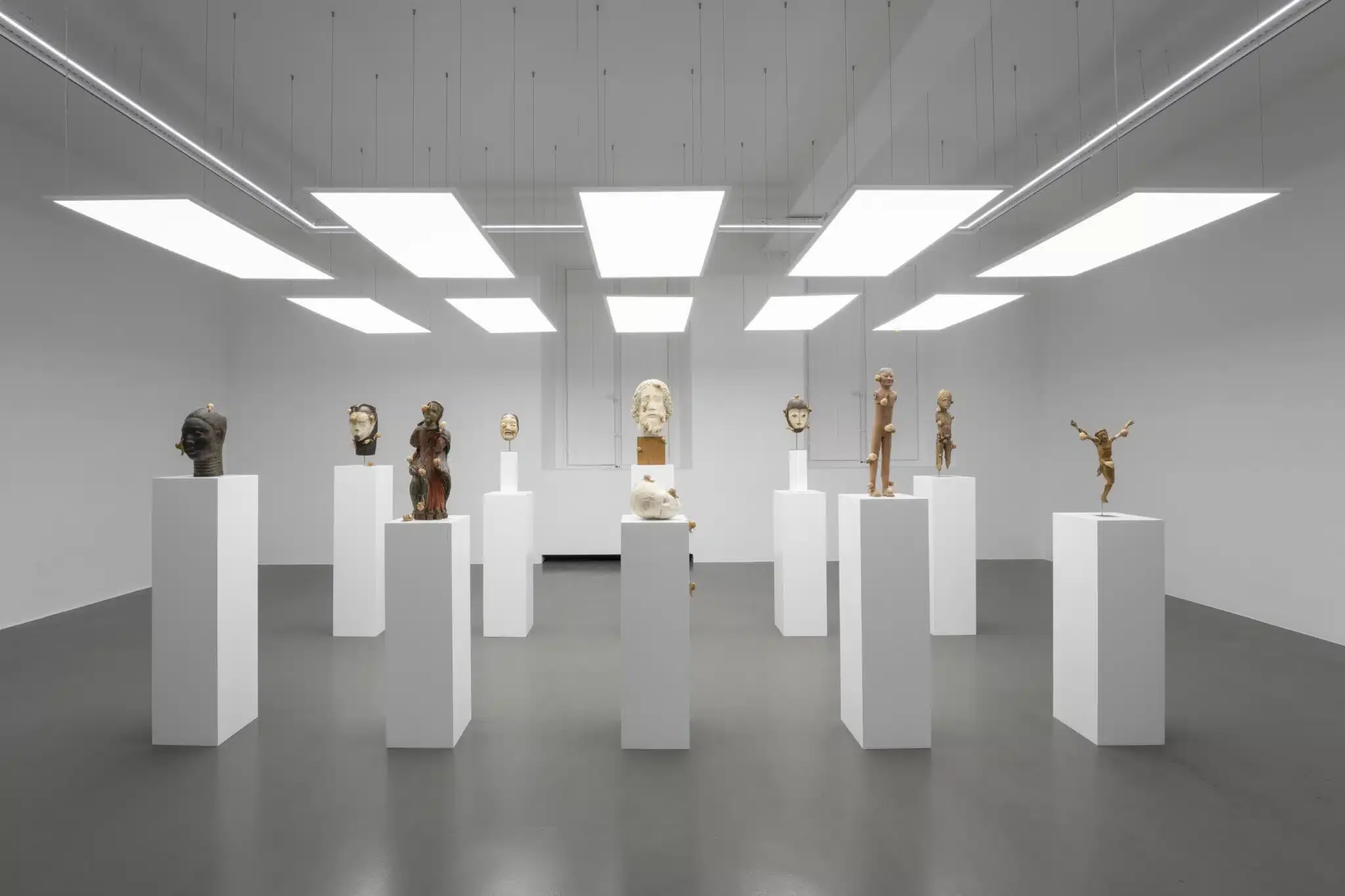
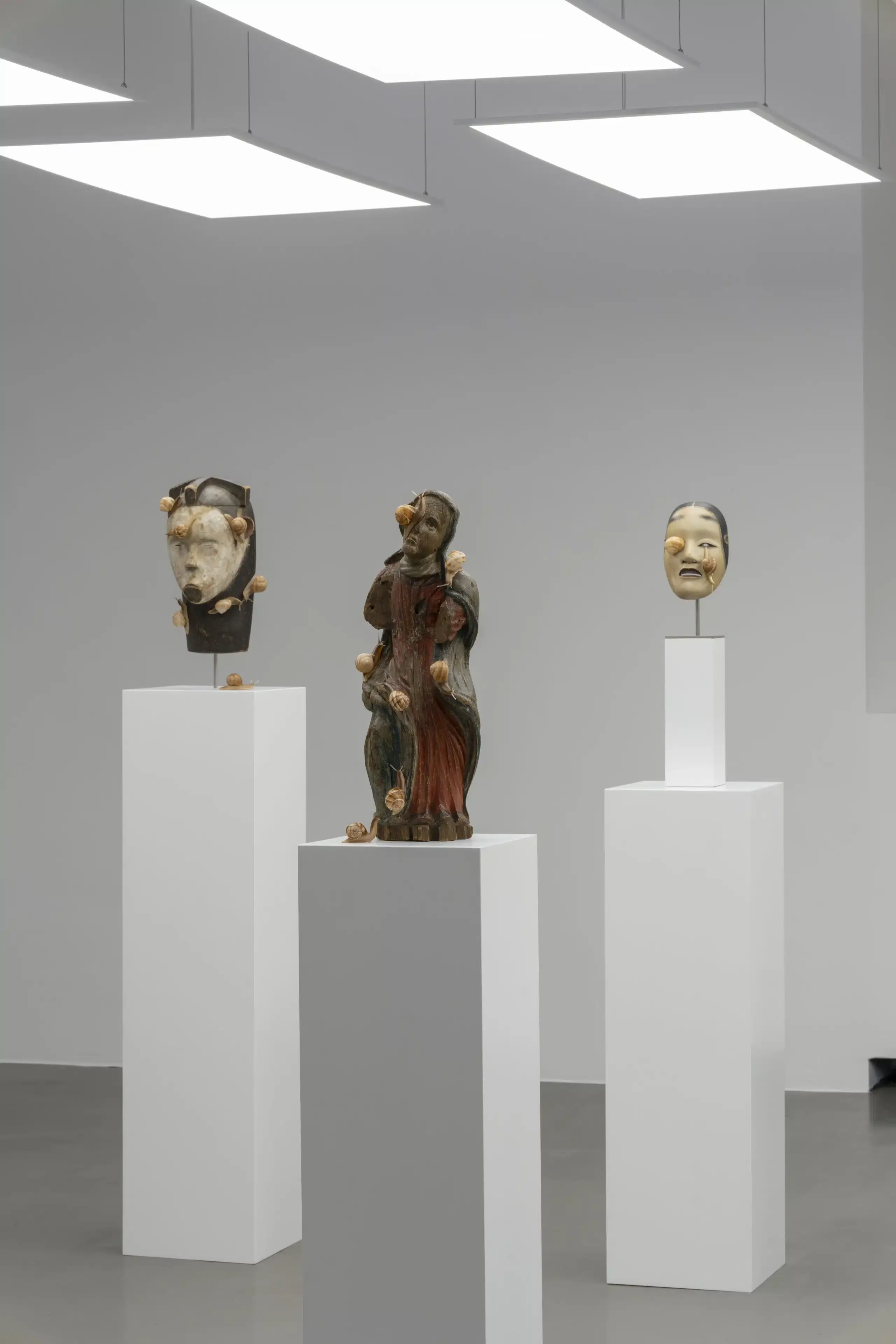
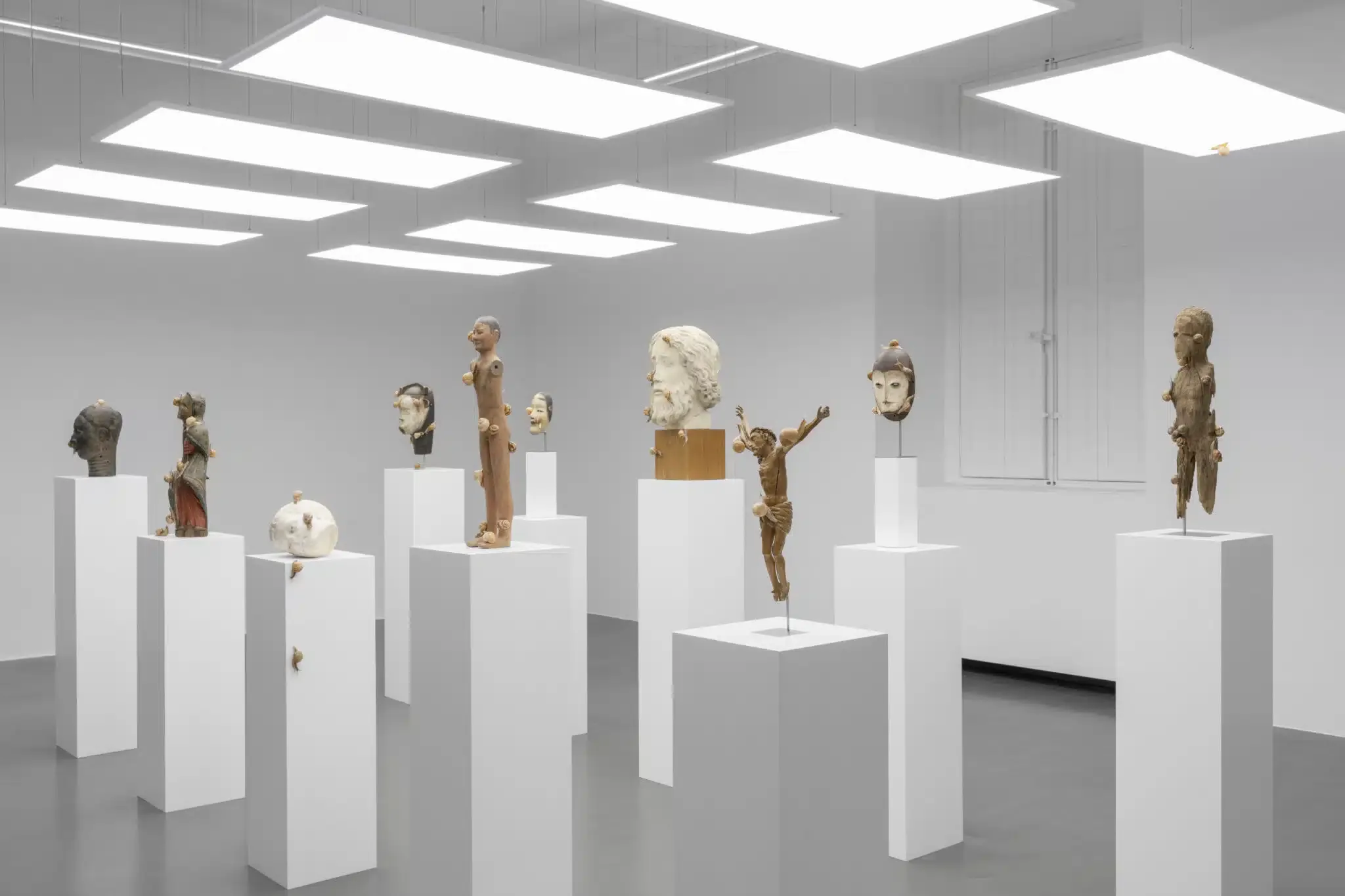
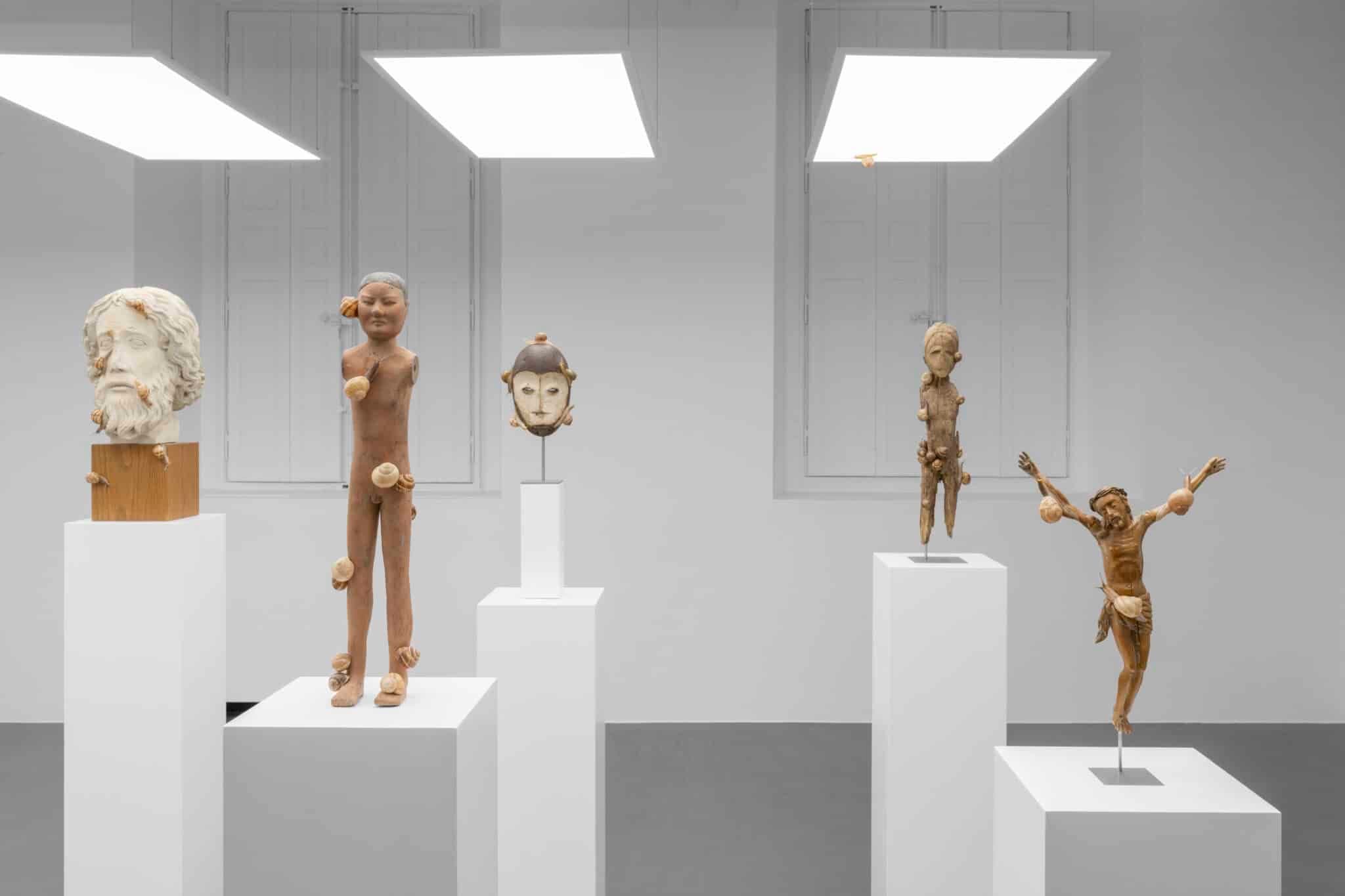
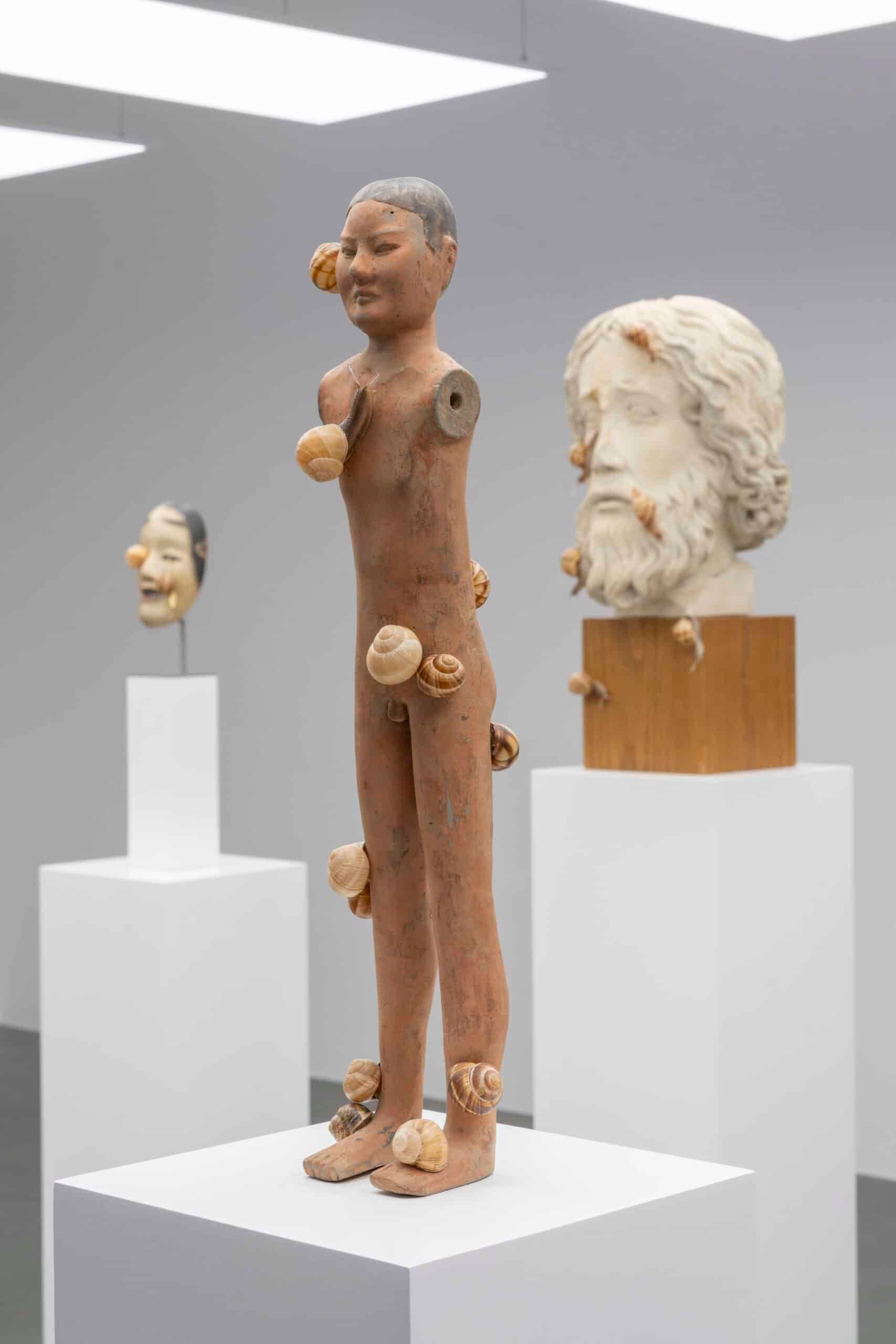
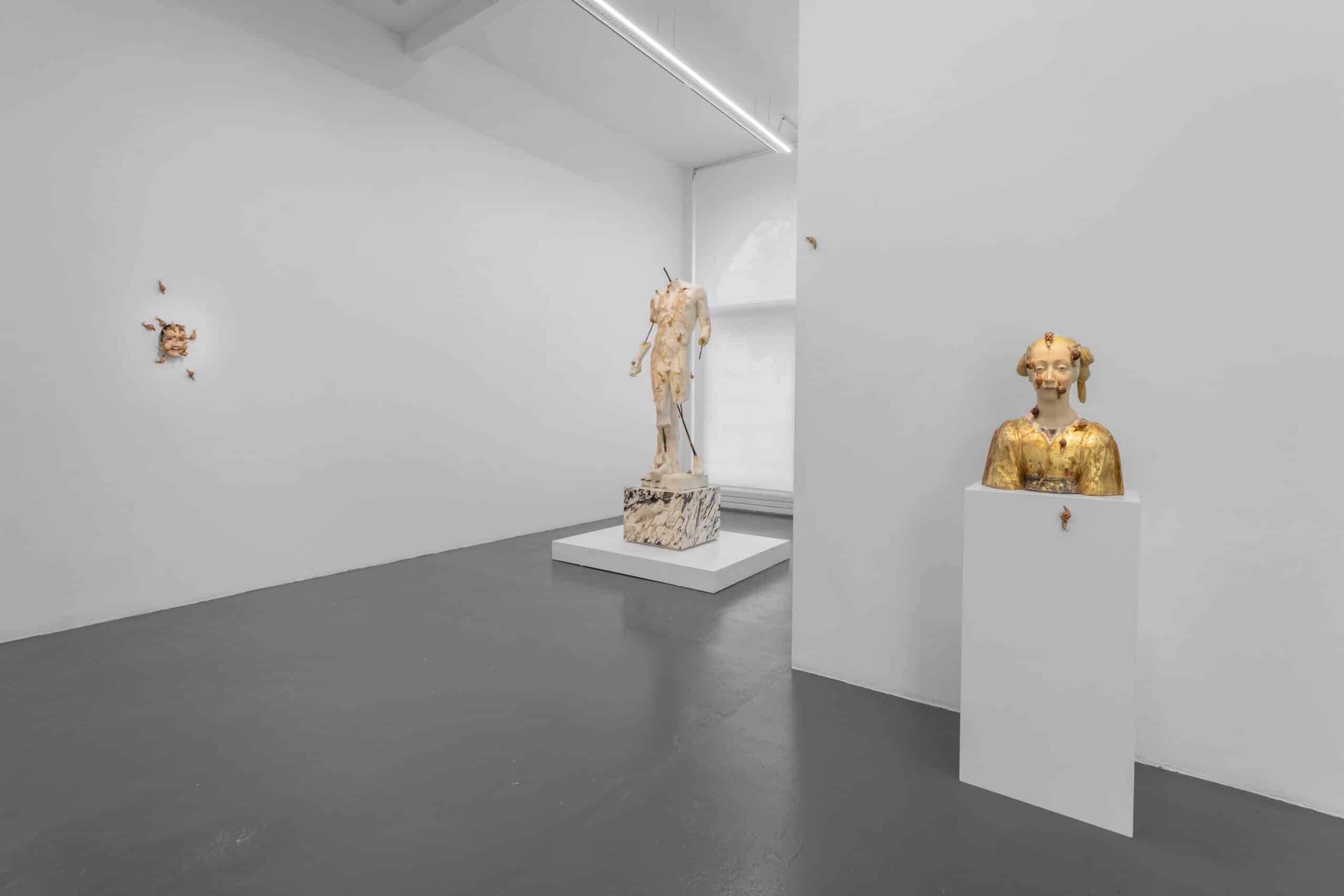
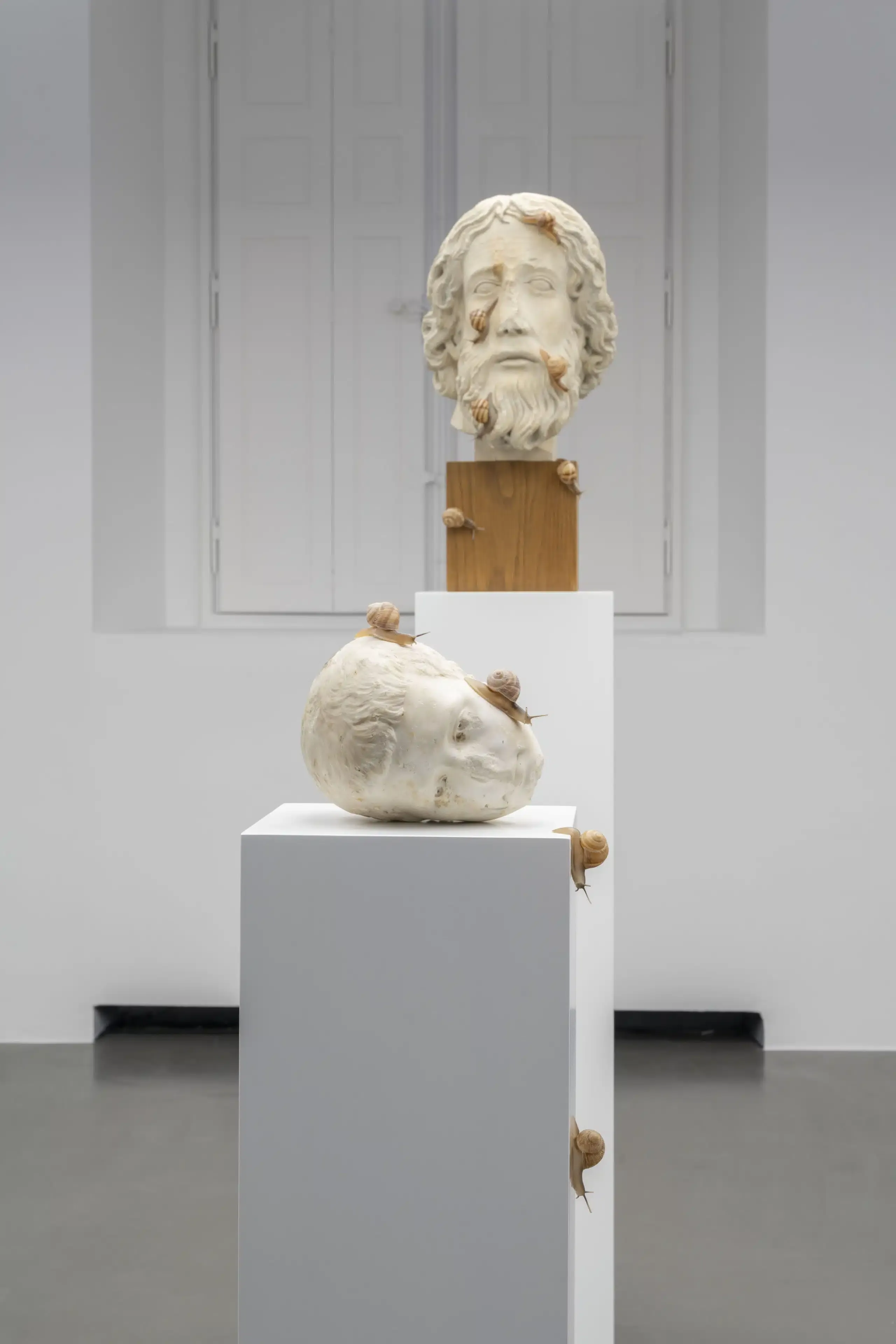
Mor CharpentierFor his third solo exhibition at mor charpentier, Théo Mercier presents a new series of thirteen sculptures, in which he continues his exploration of temporal paradoxes by confronting art history with the living. As is often the case with the artist, the Snail Machines project began with the collection of antique objects, acquired from European antique dealers, to create a gallery of portraits from various eras and traditions; ranging from Roman statuary to medieval Christian iconography, African fetishes, and Noh theater masks. Placed on pedestals under the almost clinical light of LED panels, the works form a sculpted forest in which hyperrealistic resin snails evolve. Made from authentic shells and 3D-printed bodies, the creatures seem to crawl over faces, pedestals, and even the walls of the gallery, transforming the sculptures into animated landscapes that are both fascinating and disturbing. This scenography, somewhere between a museum presentation and an archaeological laboratory, establishes a dialogue between the statues and the gastropods that gravitate around them and insinuate themselves into their bodies. The snails' millennial slowness and their unique anatomy (antennae-eyes, four-lipped mouth, 15,000 teeth) destabilize the museographic logic. More than intruders or simple ornaments, they contaminate, question, and reveal, weaving an ambiguous relationship with each object. By subverting the codes of conservation, Mercier breathes new life into these sculptures, uprooted from their original context. Where the museum tends to freeze the works in time, the snails revive them and make the faces of stone, clay, or wood vulnerable and inhabited; suddenly, these figures seem charged with tears and mystery, as if resurrected by the effect of this slow contamination. By invoking the figure of the snail, a symbol of regeneration and persistence, the artist explores a new kind of vanitas. Rather than a eulogy to slowness, I Swallow Your Tears offers another perspective on our relationship with the past: that of a tiny humanity confronted with forces of continuous transformation, where time moves inexorably forward, like the snail, without ever retreating.