

Lower East Side, New York
Misha Japanwala
Sarsabzi سرسبزی
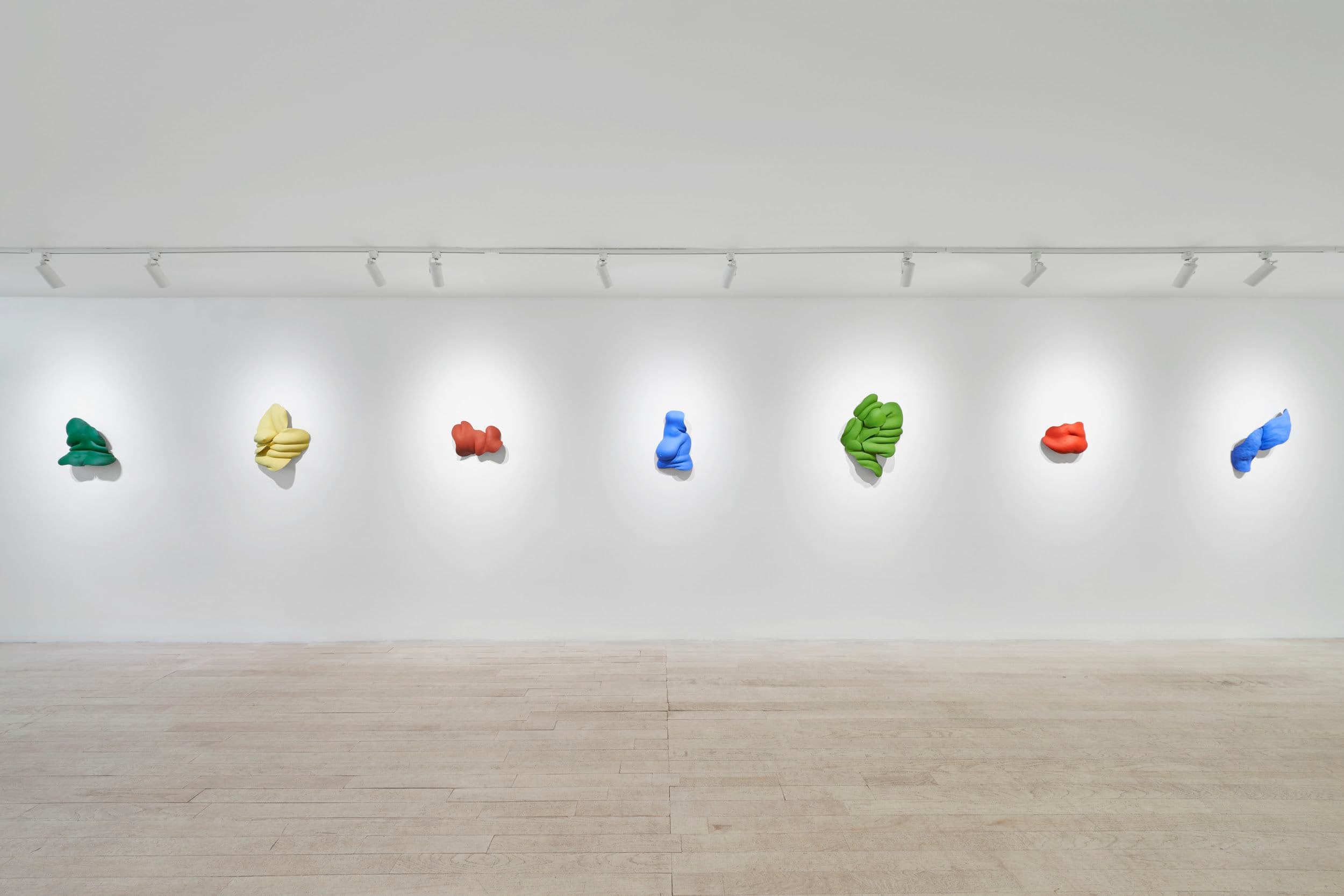
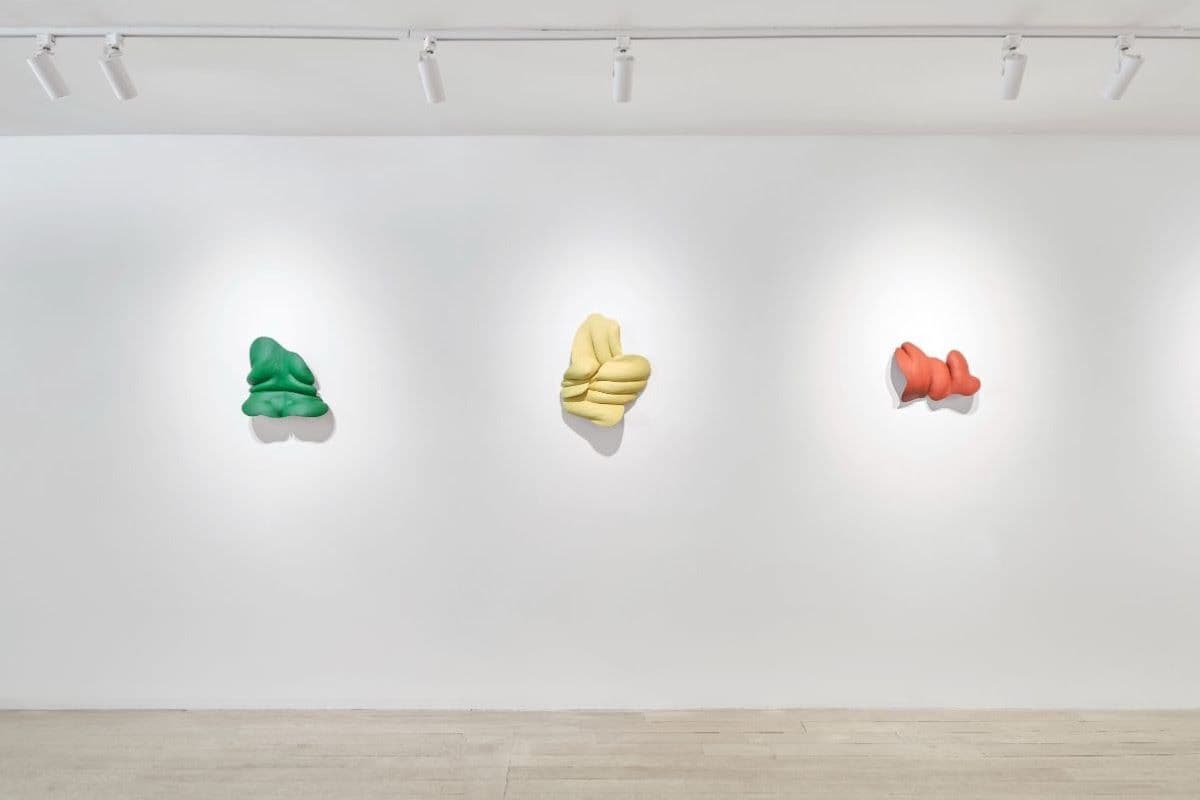
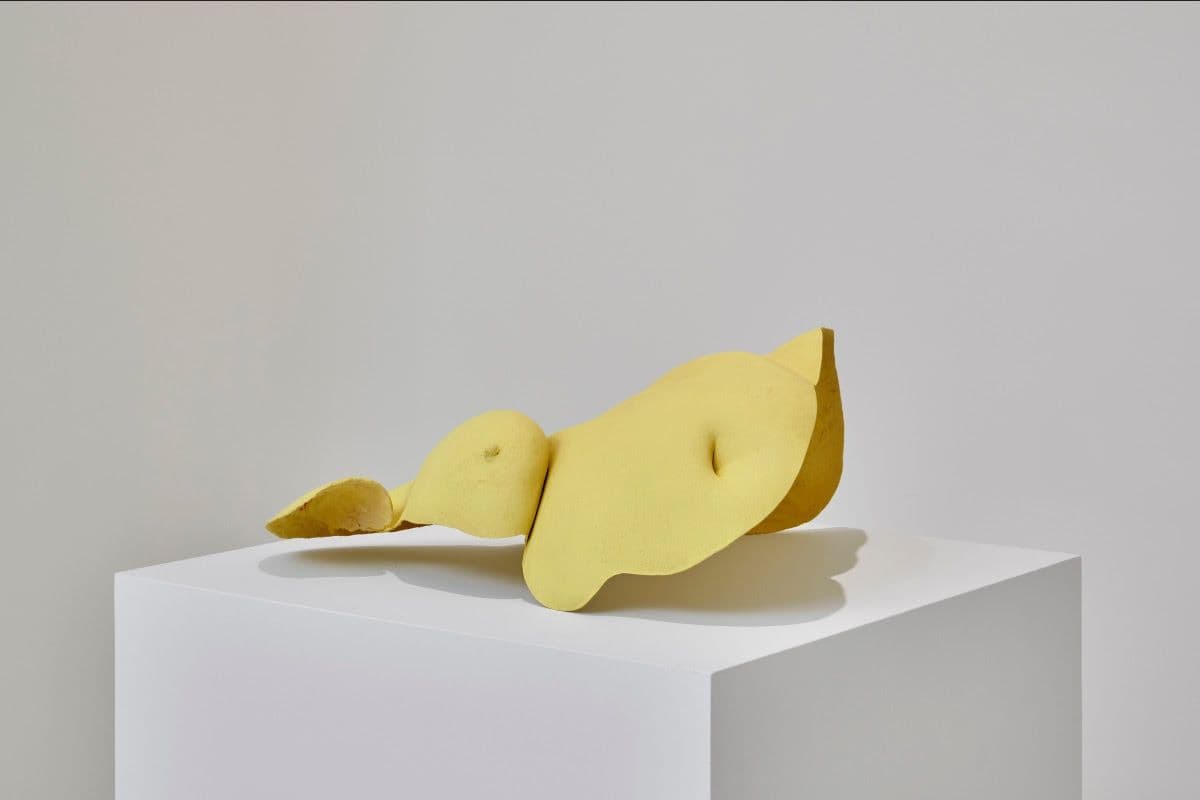
Hannah TraoreHannah Traore Gallery is pleased to present Sarsabzi سرسبزی, the second solo exhibition with artist and designer Misha Japanwala. Featuring all-new work that expands on Japanwala’s Topographies series—first exhibited at Expo Chicago in 2024—Sarsabzi deepens her exploration of the human form as a natural landscape, capturing wrinkles, body hair, scars, and other details as topographic features that mark growth and transformation. Known for her signature body casts and sculptural garments, Japanwala’s practice centers the rejection of shame often imposed on the bodies of femme and nonbinary folks. In the earlier Topographies series, she documented and celebrated bodies with rolls, folds, and lumps through brightly colored, monochromatic wall sculptures molded from muses selected through an open call. Each piece honored every curve and contour, reimagining the body as a dynamic, living landscape. In Sarsabzi, Japanwala’s abstracted objects take on an added layer. Highlighting features commonly scrutinized as flaws—wrinkles, cellulite, body hair, stretchmarks, scars—the artist reframes them as signs of vitality and change. Drawing on the Urdu word “sarsabzi,” meaning lushness, verdancy, or prosperity, the exhibition parallels bodily “overgrowth” with thriving natural environments, and in doing so, these so-called “blemishes” are redefined as marks of flourishing and abundance. Japanwala’s process is both emotionally charged and liberating. It begins with a public open call, inviting participants to release any shame or trauma they carry within their bodies through the practice of molding their bodies and documenting them as art. In her New Jersey studio, she molds the bodies using silicone and plaster, and aqua resin for casting, documenting them exactly as they are: every mark, down to each single single pore, is preserved and untouched. The finished works are coated in vibrant colors with a velvet-like finish that accentuates the skin’s texture and emphasizes its topographic qualities. Each cast carries a story embedded within: the weight of a life-long pursuit of fad diets, the trauma of a surgery and its lingering scars, the wonder at an ever-changing appearance, the acceptance of a healthy belly. Sarsabzi also debuts a salon-style series of small wallworks that spotlight scar tissues and stretchmarks. These intricate and intimate studies celebrate the magic of the body’s ability to heal and represent a reframing of what is often hidden and masked in shame as powerful, remarkable features of survival and resilience. The exhibition features collective sculptural collages composed of cast body parts from multiple muses. Anchored around the topographies of stomachs, bodily folds, and breasts, these works offer a visual network of support and an emblem of communal healing. Central to Sarsabzi is an eponymous installation that arises throughout the duration of the exhibition, transforming a blank gallery wall into an ever-growing artwork composed of nipple moldings from the public. Japanwala is holding regular molding sessions at the gallery during the exhibition’s run, inviting muses to commission a custom nipple cast for themselves and to contribute an additional cast to a growing archive of shamelessness. A percentage of the proceeds from the commissions is being donated to support the construction of Shaukat Khanum Memorial Cancer Hospital in the artist’s hometown of Karachi. The donation is being made in honor of a woman who acted as a nipple cast muse for the artwork Dupatta (2022). She was molded by Japanwala in 2022 on the eve of her double mastectomy, and tragically lost her battle to cancer earlier this summer. The culminating nipple cast installation in this exhibition stands as a tribute to this muse and her fierce advocacy to destigmatize conversations around breast cancer and the body. Sarsabzi continues Japanwala’s powerful reclamation of the body as a site of beauty, archive, and transformation—one that mirrors the flourishing and abundance of nature and should be celebrated as such. Japanwala invites us to reconsider the marks we carry not as imperfections, but as testaments to lives fully lived. Misha Japanwala (b. 1995) is a Pakistani artist and fashion designer, whose work is rooted in the rejection and deconstruction of shame attached to one’s body, and discussion of themes such as bodily autonomy, gender based violence, moral policing, sexuality and censorship. Speaking to the objectification, commodification and control exerted on marginalized bodies by societies and systems enveloped in patriarchy, Japanwala’s work aims to create a new historical record and documentation of people—one that is on our own terms, and rooted in honesty, resistance and hope. Through molding the body to create casts that are worn as sculptural garments, Japanwala’s artistic practice blurs the lines between fashion and fine art, clothing and nudity, and demands for our bodies to be seen exactly as they are. Japanwala’s calligraphic work takes the form of silhouettes of the body intertwined with Urdu script—often in an effort to reclaim words and ideas that are used as weapons of shame and control. Her practice is an insistence for bodies to occupy physical space, emphasizing the notion that our bodies shouldn’t need to prove anything other than being allowed to simply exist. Japanwala has exhibited work in Pakistan and the US. Her work is part of the permanent collection at The Tang Museum as well as numerous private collections around the world. Her work has been featured and written about for international publications including The New York Times, Vogue, The Guardian, The Washington Post, and Document Journal, among others. Japanwala’s pieces have been worn by people such as Cardi B, Lupita Nyong’o, Lil Nas X and Joy Crookes. She was an honoree on the Forbes Under 30 list in 2021, and on the Dazed 100 list in 2024. Japanwala was raised in Karachi, Pakistan. She received a BFA in Fashion Design from Parsons School of Design in 2018, and is currently based between Karachi and New Jersey, where she lives with her husband, and puppy Snug The Joiner.