

West, London
Ever Baldwin & Magdalena Skupińska
Tuning Ground
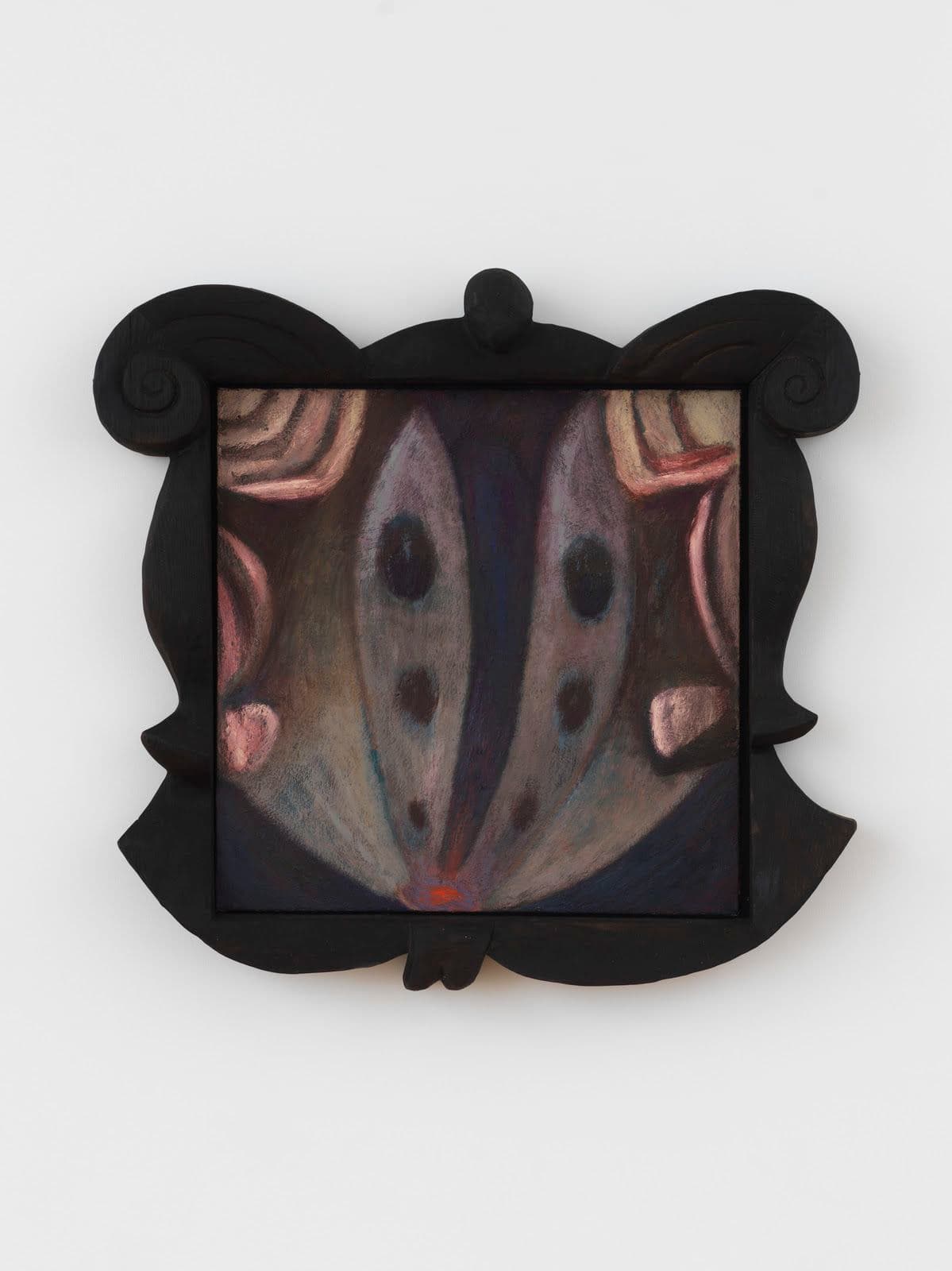
Cob GalleryTuning Ground brings together the practices of American artist Ever Baldwin and Polish artist Magdalena Skupińska through a shared commitment to material transformation and a reverence for the unpredictable life of matter. Working with processes of mixing, extraction, burning, erosion and the application of pigment, both artists approach making as an act of listening, allowing materials to guide the work rather than imposing a predetermined image upon them. At the centre of the exhibition is wood, a material that binds their practices both physically and symbolically. As a living substance marked by growth, decay and renewal, wood becomes a site of memory and transformation, carrying the traces of life, fire, mineral and time. For both artists, it is less a support than a collaborator, a material with its own agency and capacity to direct the work's becoming. For Skupińska, this relationship emerges through a new engagement with the traditions of Orthodox iconography. Working on arched wooden panels that recall Romanesque architecture, Byzantine painting and portable devotional objects, she combines plant fibres and pigments with tempera, earth pigments, amber and lapis lazuli. Revered for centuries as a precious pigment reserved for sacred painting, lapis lazuli carries histories of devotion and pilgrimage, while amber and sandalwood invoke their own spiritual and cultural associations. These materials are not symbolic additions but active presences, each carrying accumulated histories, rituals and forms of knowledge. Underlying both practices is an understanding that materials are never inert. Wood, mineral, plant fibre, ash and pigment are active participants in the making of the work. Through burning, grinding, extraction and acts of material transformation, Baldwin and Skupińska enter into processes that are at once chemical and devotional, embracing the unpredictability of matter itself. For Baldwin, fire functions almost as a ritual offering, where a portion of the material is transformed into smoke and released into the air. More recently, bleaching has become a corrosive analogue to burning, a process that erodes rather than ignites, drawing out tannins and leaving behind a pale, chalky, almost bone-like surface. If burning produces a dark carbonised skin, bleaching yields a ghostly residue, two elemental states that speak to transformation through both destruction and renewal. Their practices are fundamentally alchemical. The artist prepares the conditions for change but cannot entirely determine its outcome. Fire leaves unforeseen traces, pigments bloom unexpectedly and surfaces evolve according to their own internal logic. To work in this way requires a degree of surrender, a willingness to relinquish control and allow the intelligence of the material to lead. The sacred emerges precisely through this unpredictability, through an acceptance that matter itself possesses the capacity to transform and reveal.