Nolita, New York
Alex Sutcliffe
Katabasis
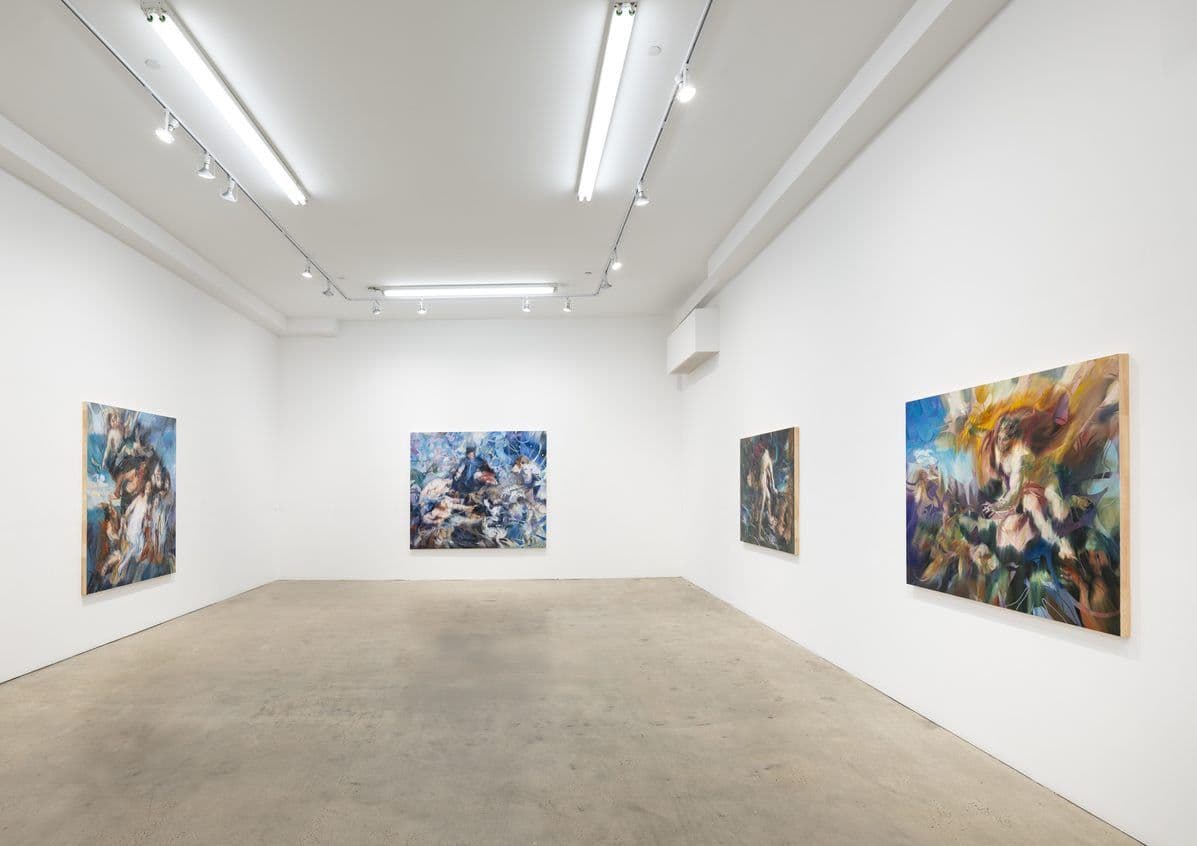
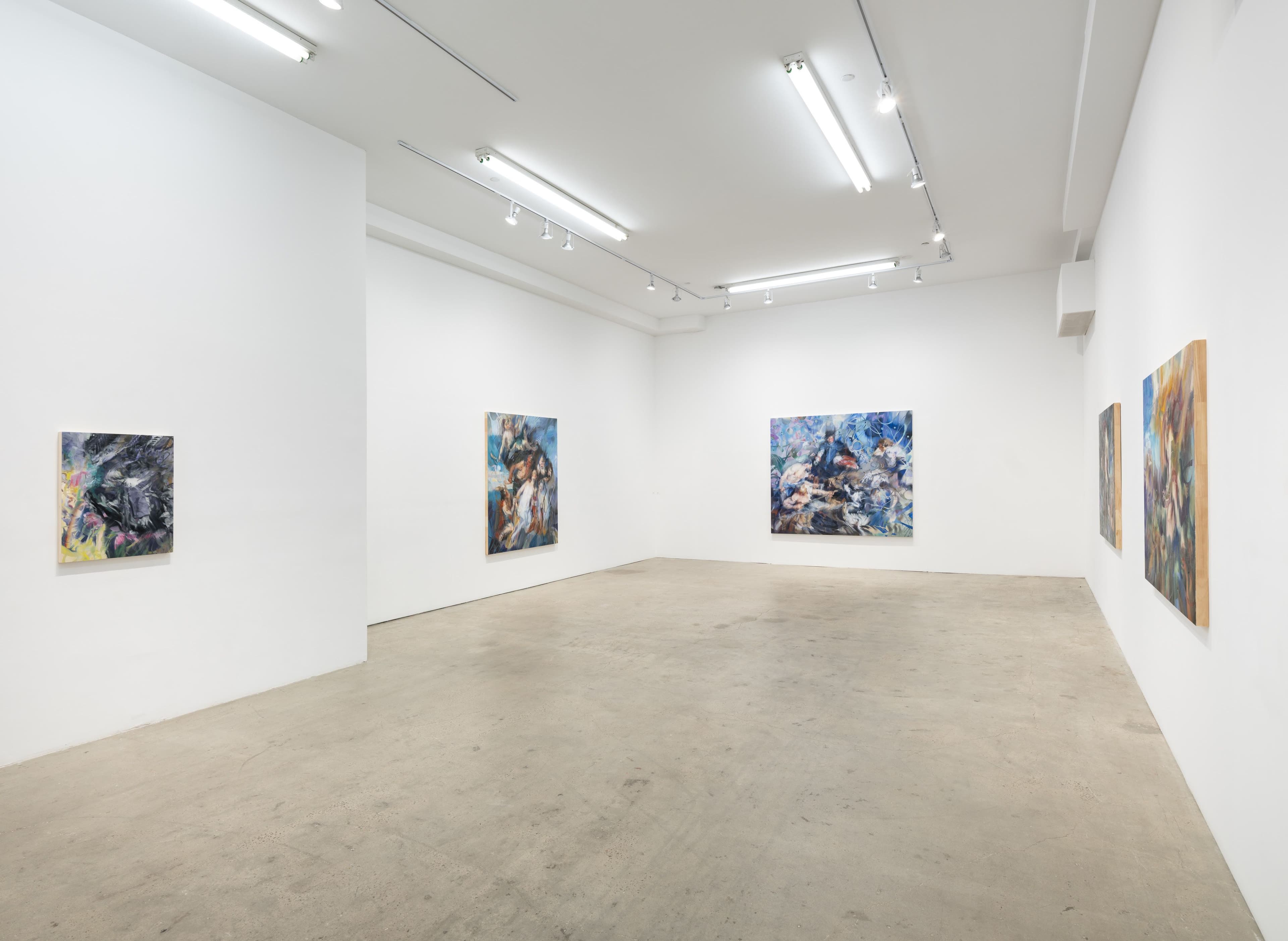
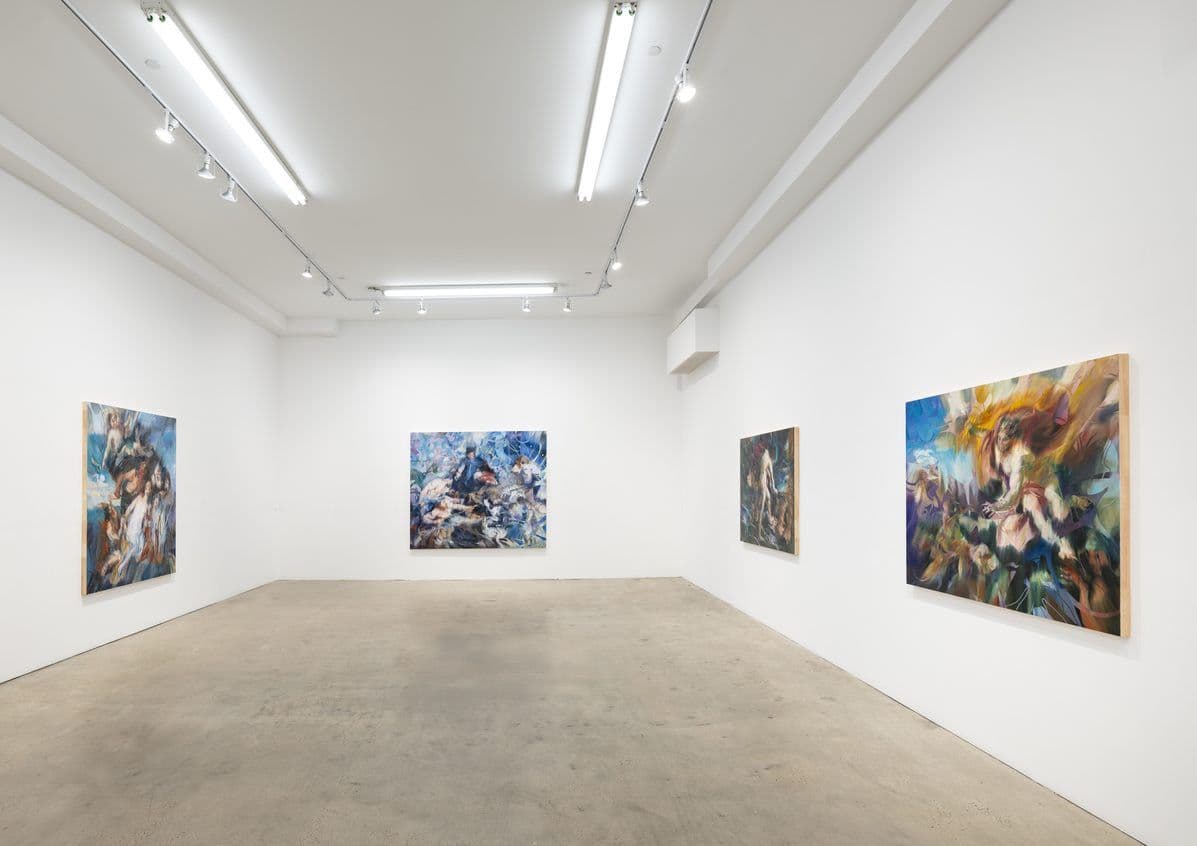
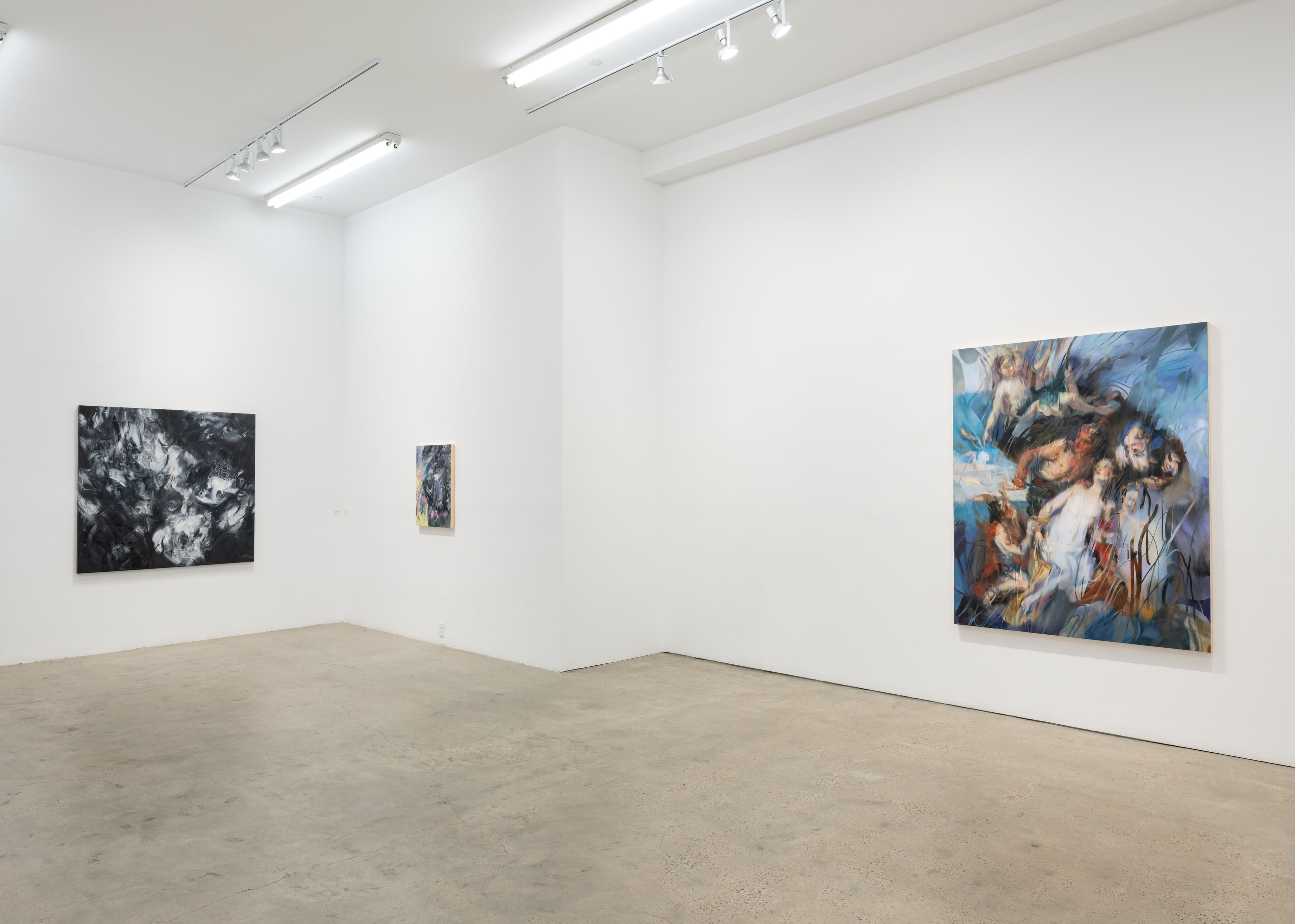
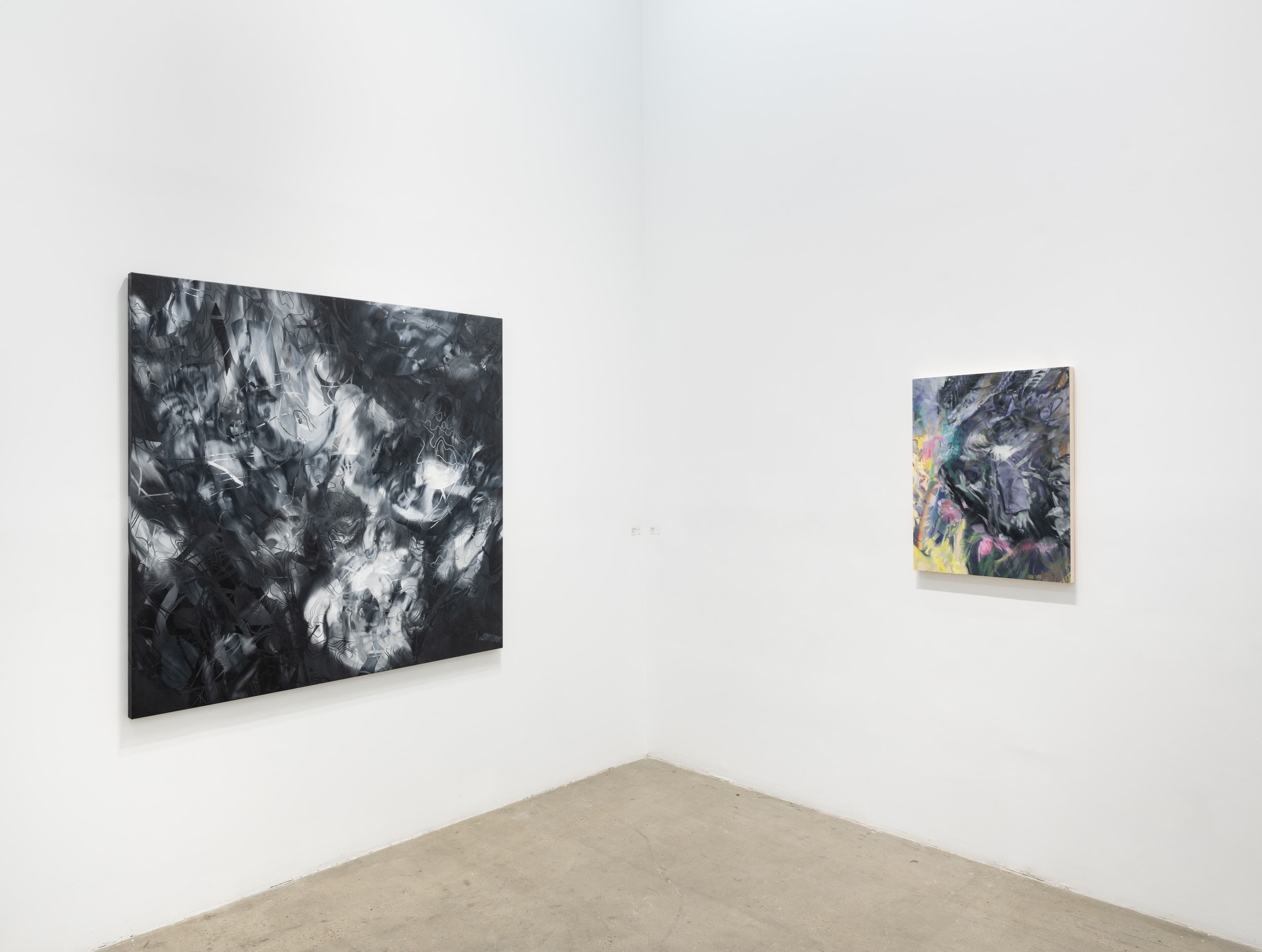
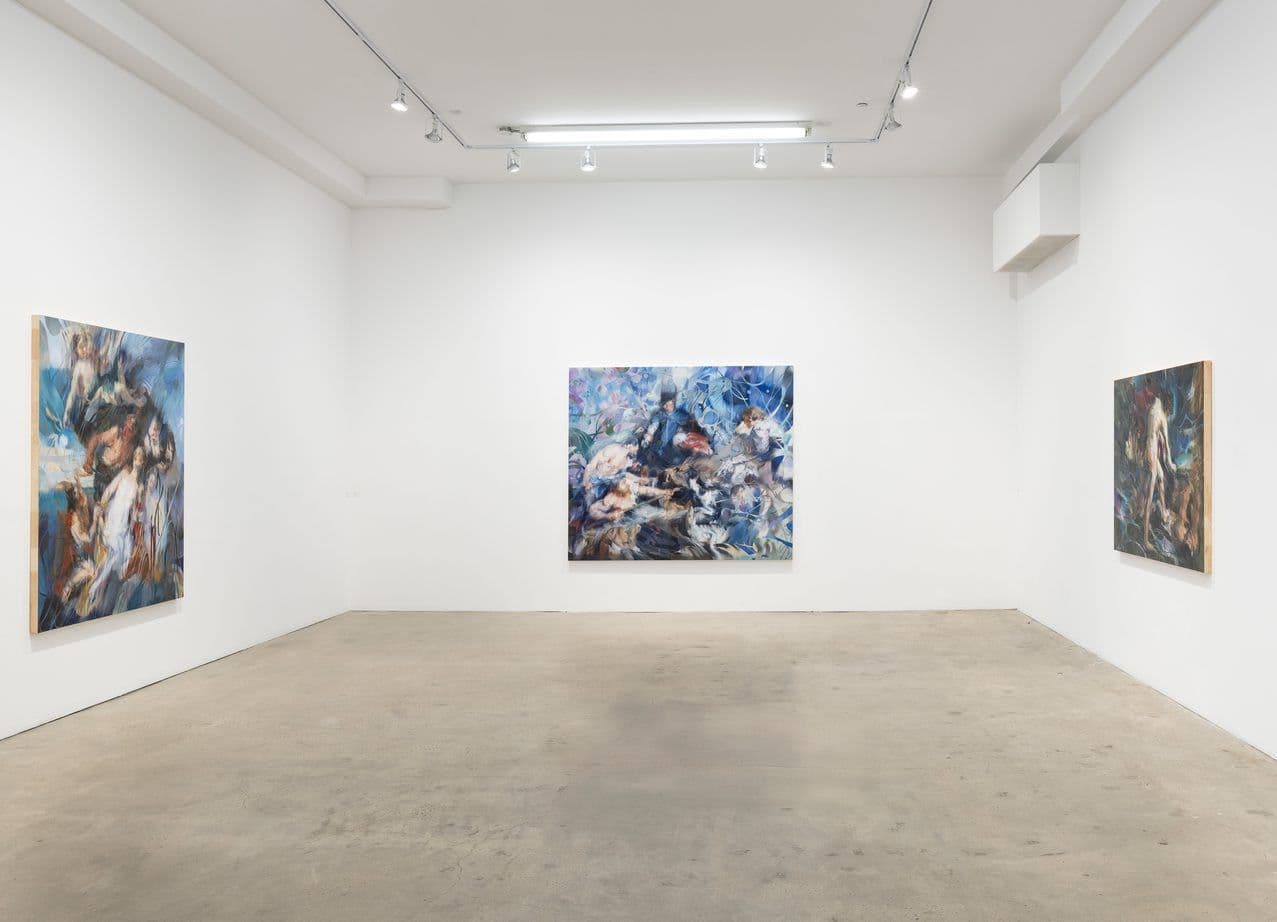
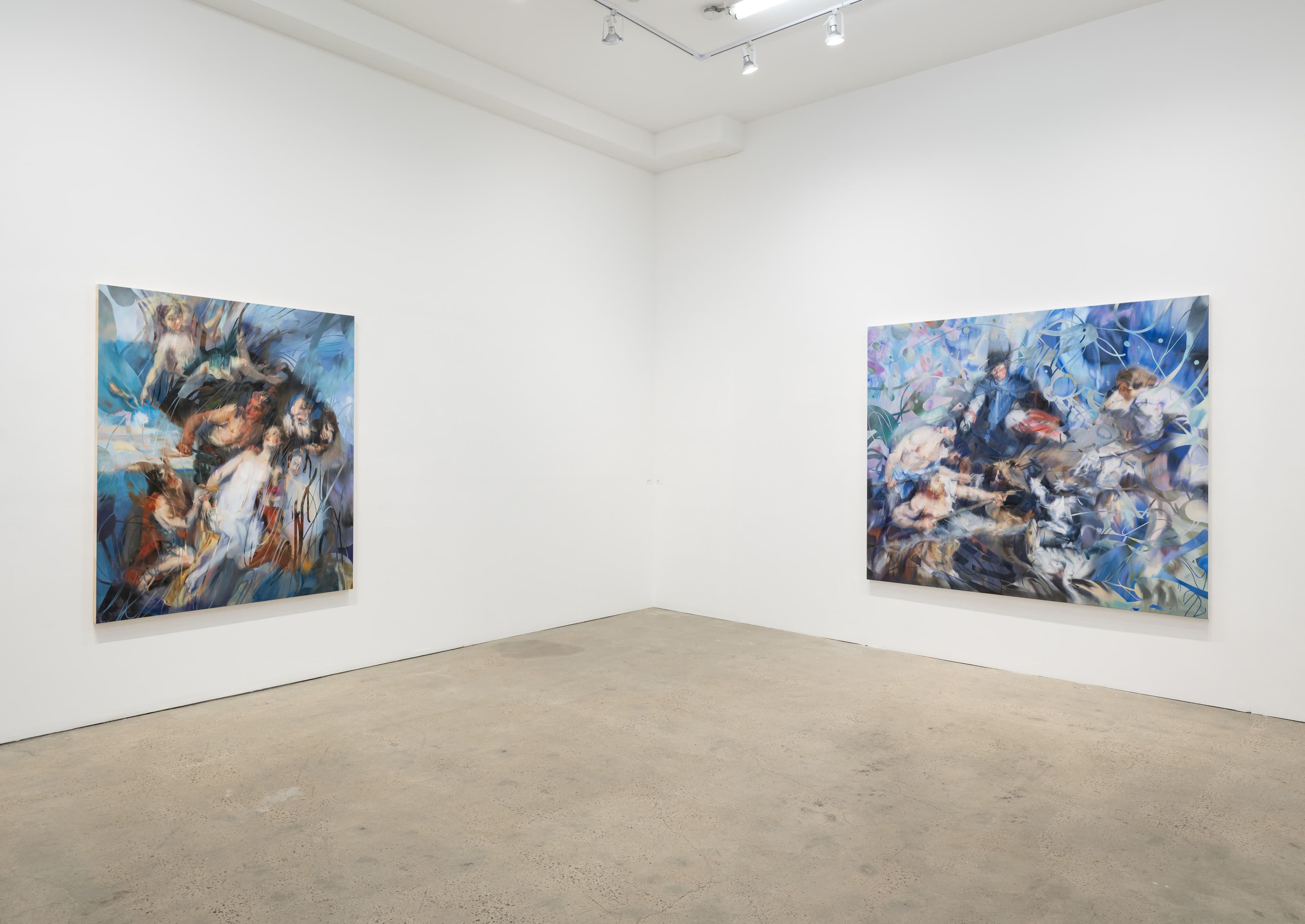
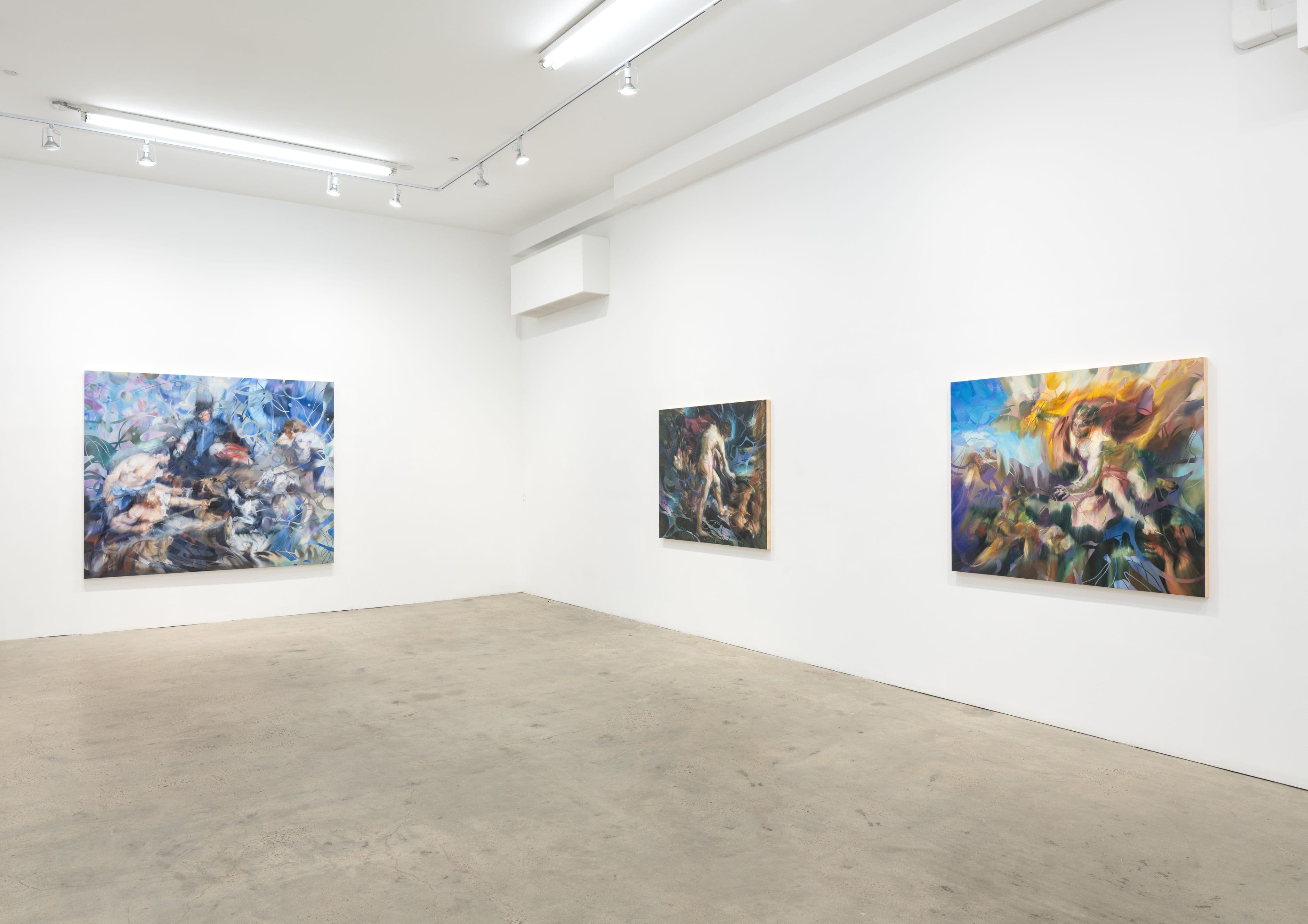
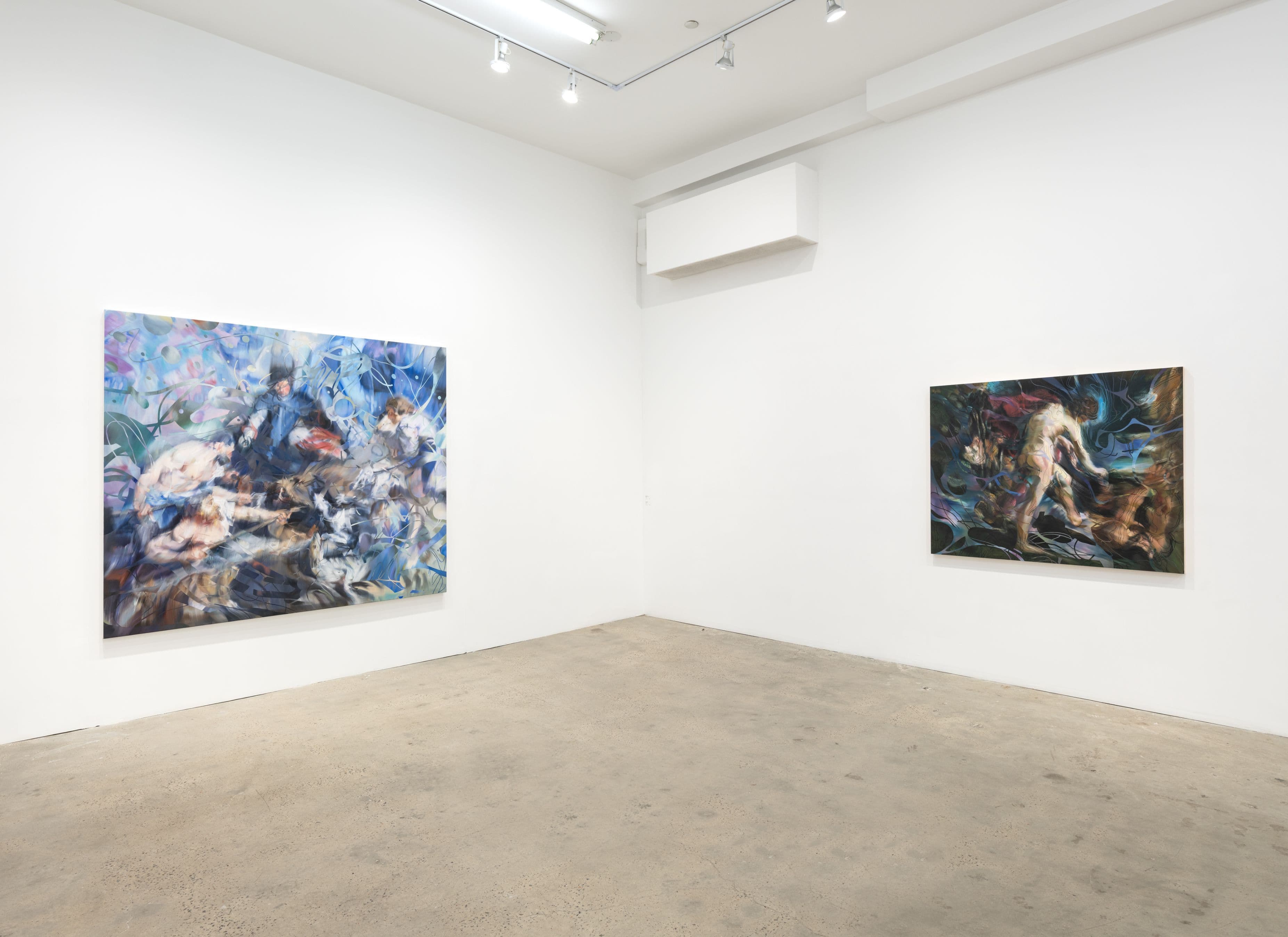
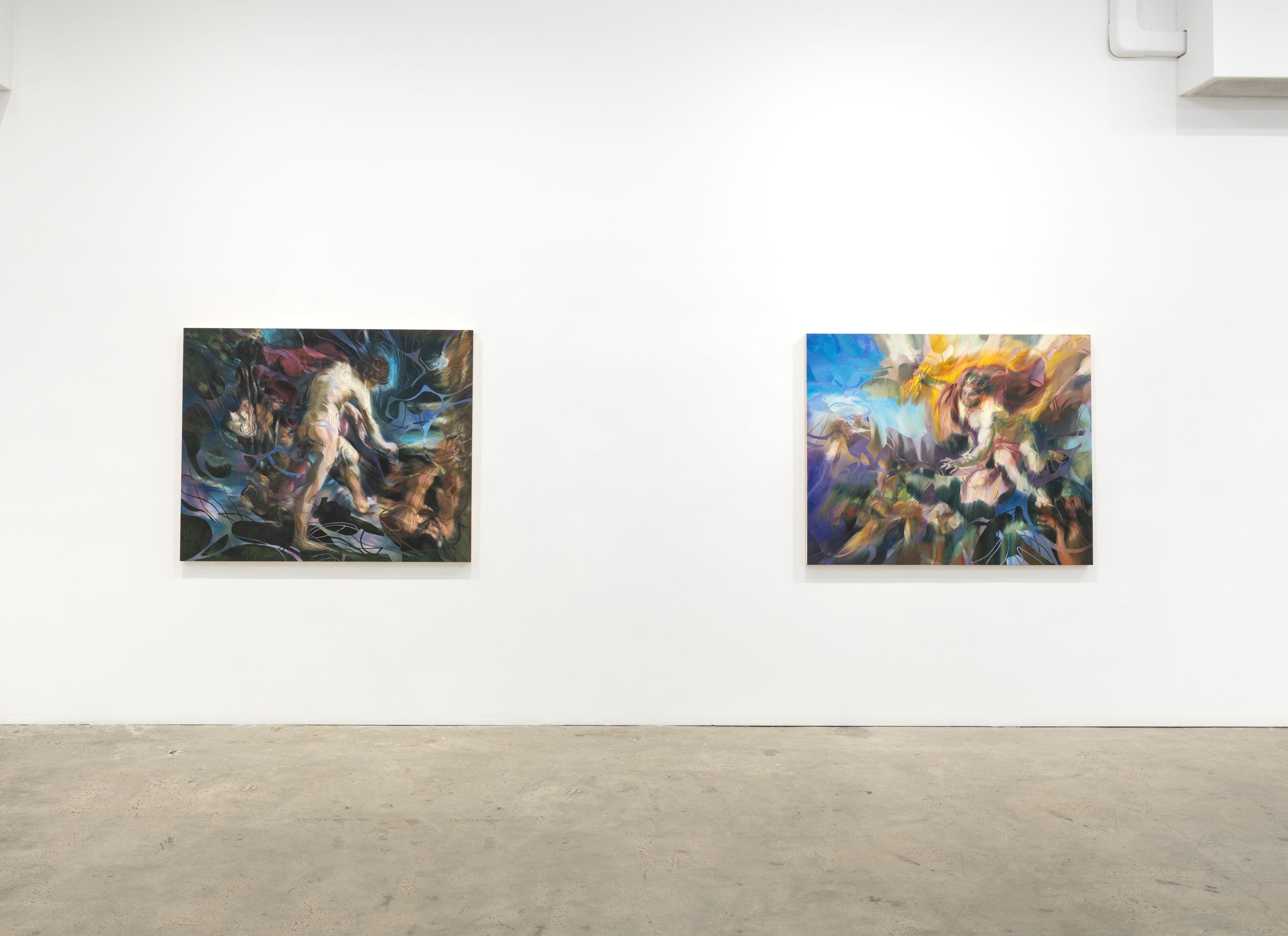
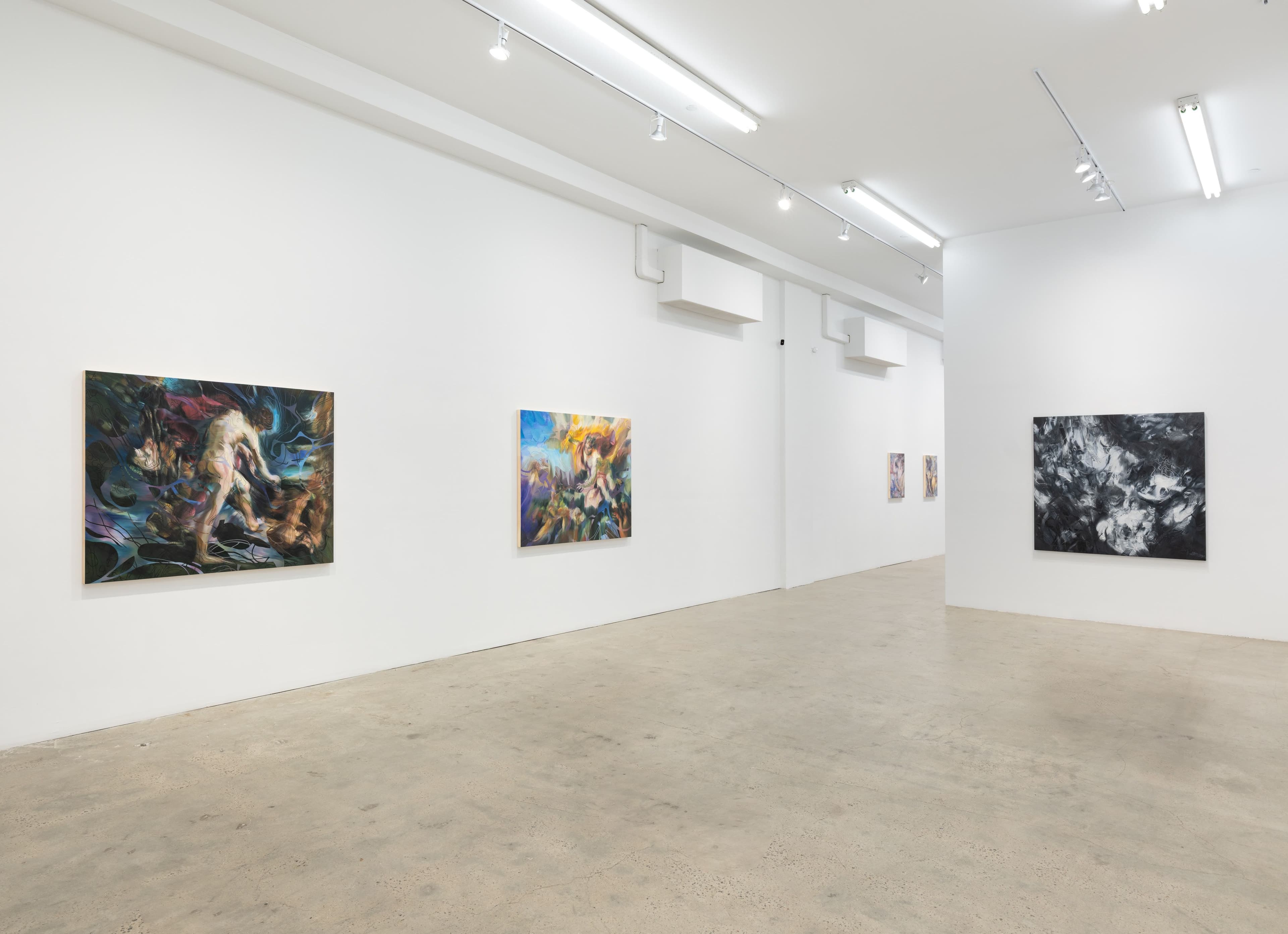
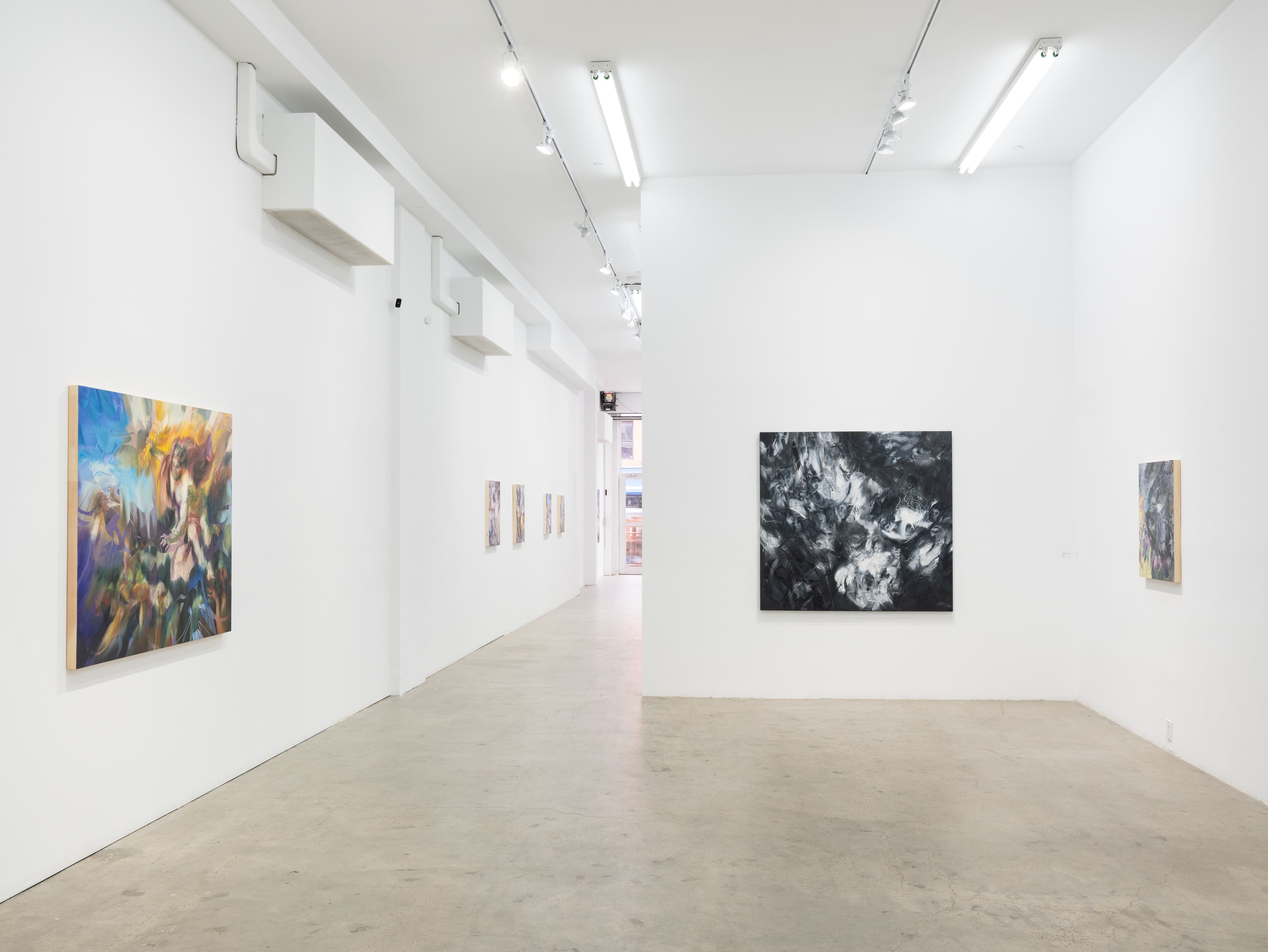
PlatoPlato is delighted to present Alex Sutcliffe’s inaugural solo exhibition with the gallery, Katabasis. The history of Western art has been unfolding as a series of reappraisals: artists revisiting, rethinking, and attempting to outdo — if not occasionally obliterate — the work of their predecessors. Similarly, the Nova Scotia-based painter Alex Sutcliffe’s ever-expanding quest to reinvent painting in the digital age has led him to engage with such titans of European art as Peter Paul Rubens, Titian, Guercino, Joshua Reynolds, and others. The exhibition’s title, Katabasis, drawn from the ancient Greek term for a descent into the underworld, suggests both a physical and a historical journey: an immersion into the substance of paint, a dive into the past, and a return carrying new knowledge. Sutcliffe’s method merges the physical tactility of paint with digital precision. It starts with a blurred oil underpainting, followed by an application of a translucent mask, similar to liquid painter’s tape. Then, a digital stencil is projected onto the surface and cut away in certain areas. A second version of the image is painted on top of it. The mask is then peeled off, allowing both layers to interact. The process is often repeated over and over. The passion and force behind Sutcliffe’s vigorous cutting and smudging have been hard on his wrist, a challenge solved by occasionally replacing the mask with pre-cut vinyl stencils. Overcoming adversity thus led to innovation and to a meaningful dialogue with historical paintings that explore “the pursuit of transcendence at the risk of self-destruction.” The myths depicted in Sutcliffe’s works often relate to the method of their creation. Figures such as Prometheus, Orpheus and Marsyas stand in for the painter’s labor of transformation. Prometheus in Pieces, after Dirck van Baburen’s 1623 Prometheus Being Chained by Vulcan, reimagines the ancient myth of the titan — punished for stealing fire from the gods and giving it to mortals — through the lens of a visual culture saturated with vectors and screens. The figure is fractured by digitally designed yet hand-painted boundaries; each layer temporarily shackles the next, echoing Prometheus’ chaining. Industrial precision presses against the tactility of the oil paint, staging a conflict between risk and control, craft and creation. The largest painting in the show is based on Peter Paul Rubens' Wild Boar Hunt (c. 1615-1616), itself a reinvention of Leonardo da Vinci’s lost fresco Battle of Anghiari, which has been reinterpreted by generations of artists. Rubens’ tangle of hunters and animals appears layered, filtered, and partially occluded, like a memory passed through many hands. The Baroque knot of bodies persists as an afterimage, while blurs and layers emulate the mechanics of copying and reproducing. The work treats variation as knowledge; each iteration adds noise and meaning, turning the Hunt into a record of how artworks survive by changing. Isobar Over Iphigenia, painted after Johann Michael Rottmayr’s The Sacrifice of Iphigenia (1690-1691) treats an ancient myth as a weather event visualized through layers of paint. Digitally designed masks — laid, cut, and lifted between oil layers — trace isobar gestures and rain streaks across the scene, turning the surface into a barometric map of fate. In the story, the Greek fleet is stranded on its way to Troy until a sacrifice appeases the goddess Artemis, who brings back the favorable winds. In one telling, Iphigenia is deceived and forced to the altar. In another, she chooses to offer herself as a sacrifice and Artemis replaces her with a deer at the last moment, like an overwrite, a mask lift that edits one fate for another. Rather than a single window where the myth unfolds, the surface acts as a stage of possibility. Layers, seams, and cuts hold a multitude of different finales at once. Stencilled ‘meridian lines’ oscillating between flesh and diagram cover both Mars, Venus in Net (after Titian’s Mars, Venus and Amor (c. 1550)) and After Reynolds, Infant Hercules, which reprised Joshua Reynolds’ The Infant Hercules Strangling Serpents in His Cradle (1786); but with vastly different implications. These serpentine lines are made by converting a photo of the first paint layer into a kind of topographical drawing. In Infant Hercules, they act as fingerprint traces, vectors, and snakes that the infant Hercules wrestles. The monochrome palette evokes an X-ray, ultrasound, or night vision, relating how images of birth and violence are often encountered via technological apparatus. The characters’ secret love in Mars, Venus in Net is portrayed as a mapped and surveilled landscape. The overlaid linework oscillates between planetary contours and the strings of Vulcan’s net that caught the two amorous gods, with blurred edges serving as thresholds at which bodies dissolve into the painted surface. The affair appears in fragments, yet revealed by the very procedures that ensnared it, hinting at how in recent times love and intimacy are surveilled and trapped by the same digital algorithms that help us discover them. Paint and flesh are intertwined in Katabasis. Canvases behave like a body — opened, resealed, and metabolizing its own injuries. Even the painting process itself elicits corporeal metaphors for the artist, “peeling off the final stencil is definitely satisfying, like lifting a scab to see new skin underneath.” These works treat versioning as a form of knowledge, where every replication gathers new information, alluding to various elements of contemporary visual culture and technology. Historical gestures reappear as data, weather, or interference. In their descent and return, Sutcliffe's canvases inhabit a threshold between the mythic and the mechanical, proposing that even today painting continues as a living archival body remade by the very forces that undo it. Alex Sutcliffe (b. 1997) was born and raised in Chicago before moving to Ottawa when he was eleven. He received a BFA from NSCAD University, Halifax in 2020. Sutcliffe has participated in solo and group exhibitions internationally such as Exaltation, Plato, New York, New York (2025); Falling in Place, Opera Gallery, Geneva, Switzerland (2025); Legacy, Plato, New York, New York (2024); Prologue, Gallery Sonder, Corona Del Mar, California (2024); Summer 2023 Group Exhibition at Studio 21, Halifax, NS (2023); Modal Strata, Studio 21, Halifax, NS (2023); Nova Scotia Art Bank Acquisitions, Anna Leonowens Gallery, Halifax, NS (2022) and Syncing Matter, Studio Sixty Six, Ottawa, ON (2022), among others. Sutcliffe’s work has been acknowledged by awards such as the 2022 Canada Council for the Arts Concept to Realization Grant, 2021 Canada Council for the Arts Research and Creation Grant, the Bank of Montréal’s 2020 1st Art! Competition grant and the 2019 Margo and Rowland Marshall Award for Painting. He was also a two-time recipient of the Robert Pope Foundation Painting Scholarship.