
Downtown, Los Angeles
Gwyneth Bulawsky
We Begin to Wilt Beneath the Son
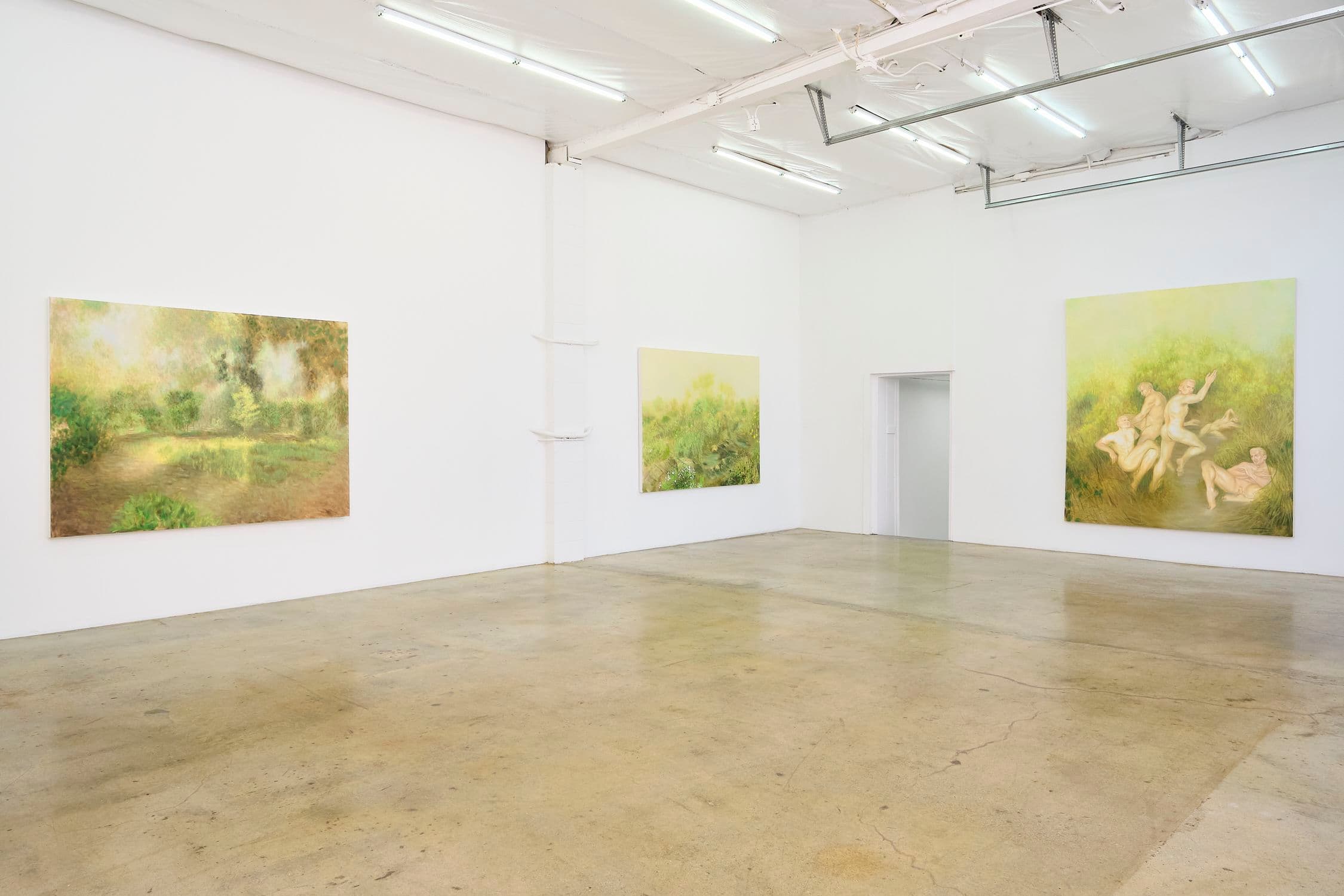
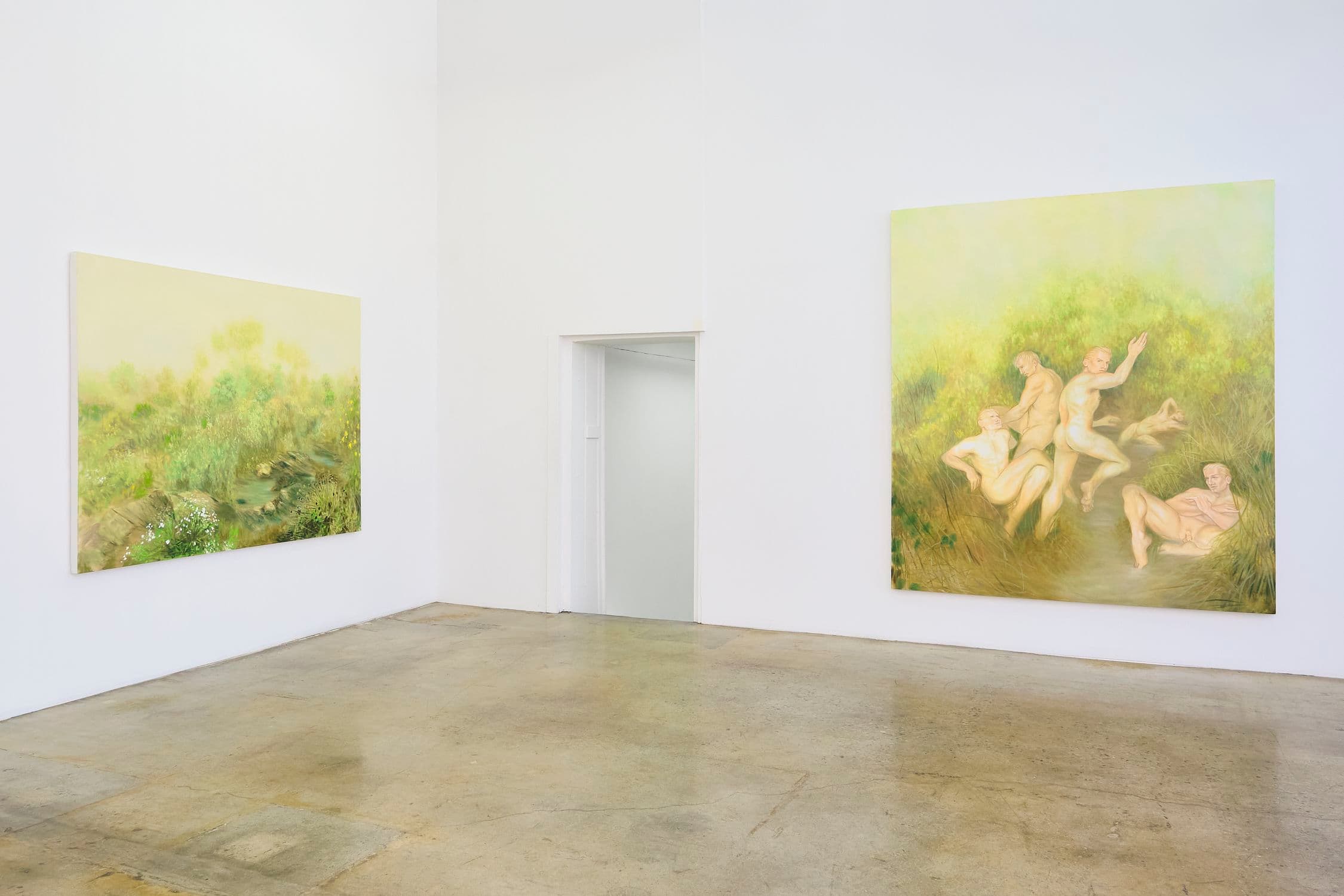
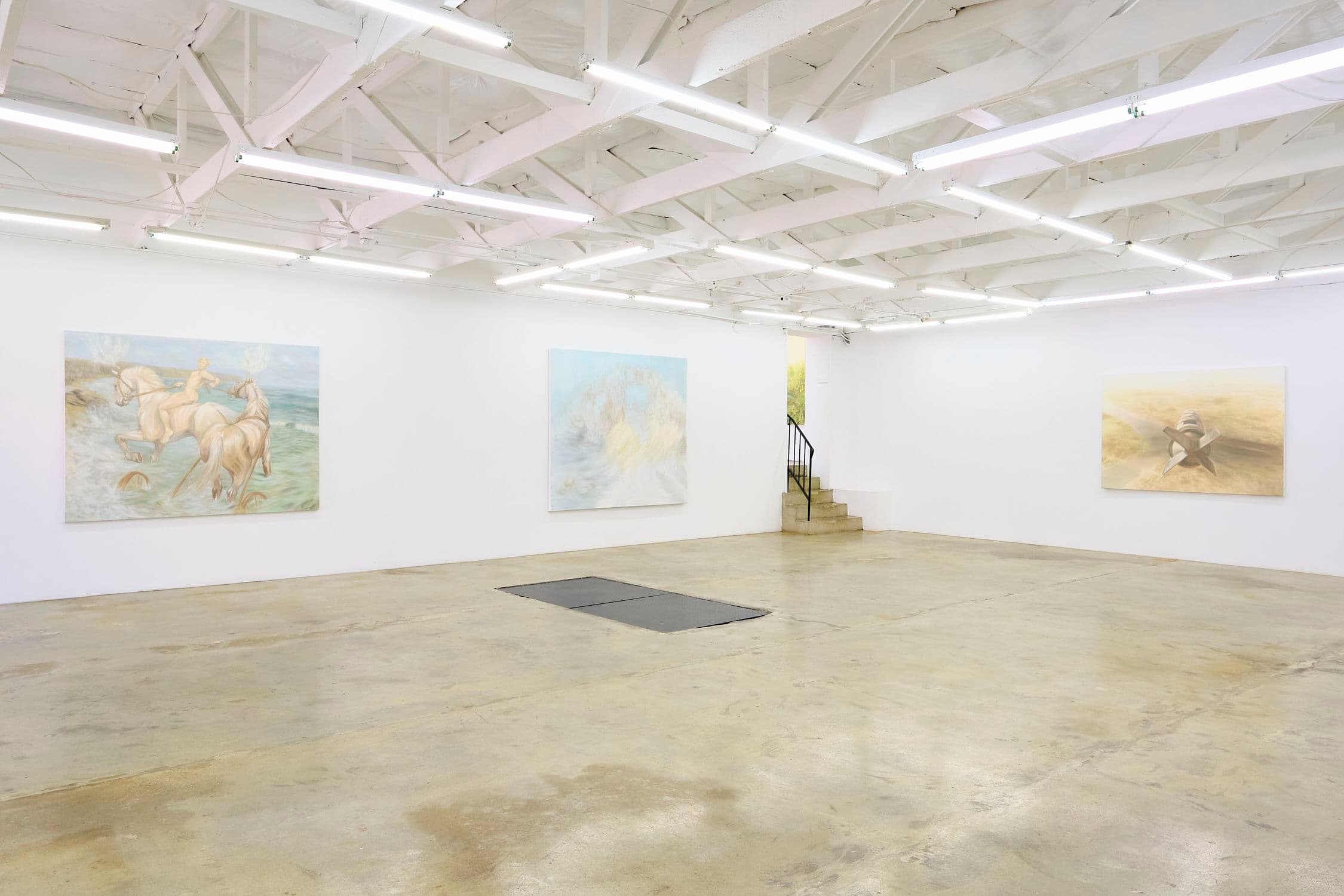
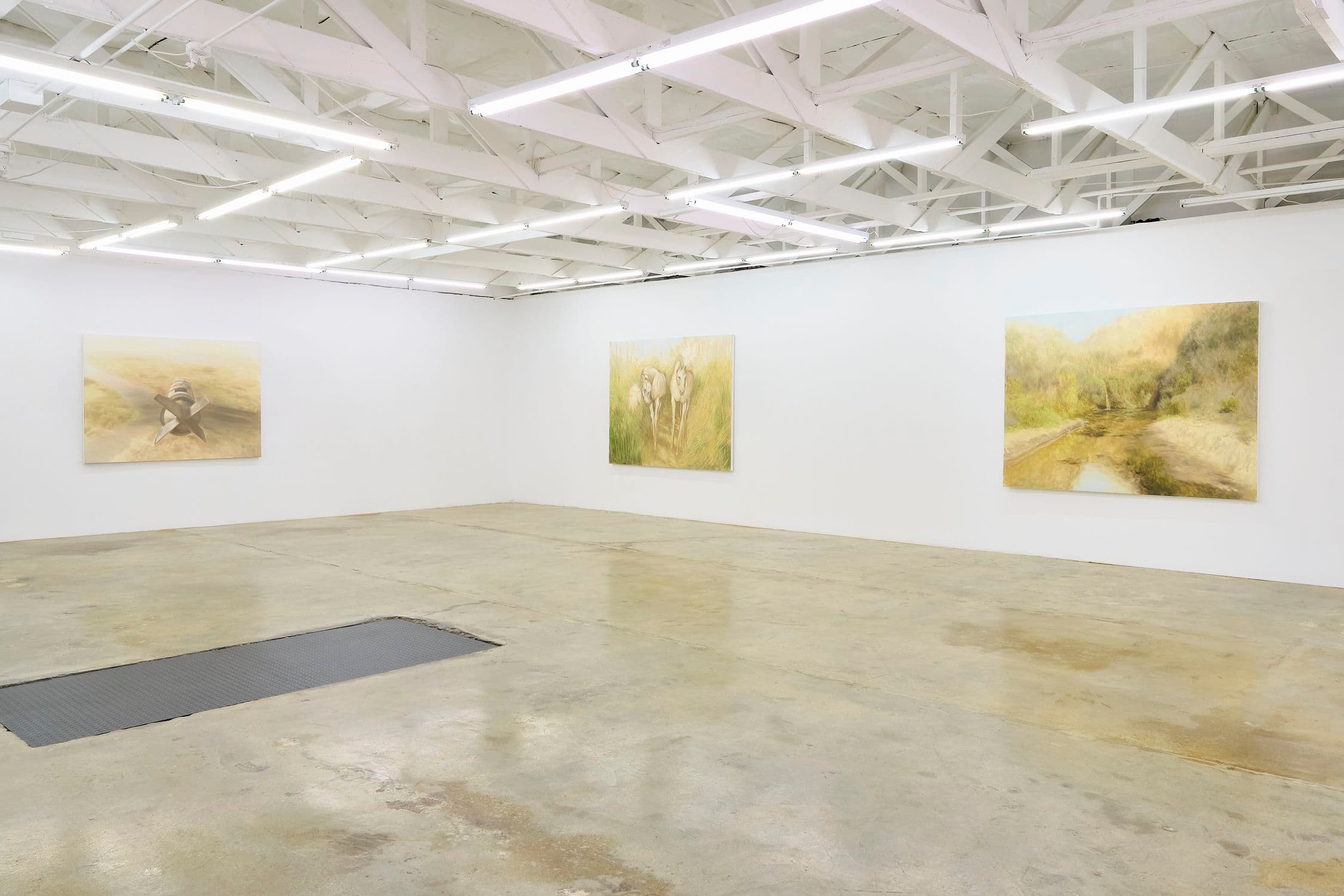
GattopardoIn We Begin to Wilt beneath the Son, Gwyneth Bulawsky presents a series of brushy, pastoral paintings that use landscape as a vehicle for exploring memory, displacement, queerness, and survival. Two horses approach in a field of acid green. Delicate grasses bend toward water and stone. The twinned feathered headdresses of showgirls balance atop each their heads, they dip and sway as if in a breeze. The landscape is washed in thinned layers of paint, its colors luminous and slightly unstable, as though illuminated by a distant flash. The landscape beyond them and across the exhibition transforms into sites of searching—places where the desire for belonging encounters the realities of displacement, absence, and the passage of time. Drawing from traditions of the pastoral and Sublime, Bulawsky approaches landscape as a place where viewers can imagine themselves and their desires. Seemingly empty terrains transform into environments of refuge, fantasy, and survival, reflecting queer experiences of searching for kinship in places both real and imagined. Here, the work asks what it means to dream of elsewhere during moments of instability, and how communities create forms of liberation through performance, nightlife, spectacle, and collective imagination. The exhibition is deeply informed by Bulawsky's family history: Her grandmother, who survived World War II in Latvia, shared stories of displacement, survival, and sisterhood with the artist. One memory recounts how she and her sister heard the whistle of a bomb falling toward them as children, both looking to the sky. After failing to detonate, the bomb was later dismantled by soldiers, who transformed its remains into a toy horse before the girls were forced to flee advancing armies and spend time in a displaced persons camp. These inherited stories intersect with Bulawsky's interest in the destruction and erasure of queer and trans histories, particularly the collapse of early twentieth-century movements for trans liberation under fascism. Throughout the exhibition, horses appear as recurring symbols of freedom, labor, performance, and escape. They reference both personal memory and broader cultural narratives, from wartime survival to contemporary questions of queer visibility and value. Bulawsky considers figures such as the showgirl and the workhorse, asking what remains when identities built around spectacle, desirability, or utility begin to dissolve. By softening the heaviness of history through translucent paint and luminous yellow-greens, We Begin to Wilt beneath the Son creates space for difficult questions: Where do we go when the worlds we imagined disappear? How do we continue searching for belonging amid recurring cycles of displacement and erasure? Through landscapes marked by absence yet animated by hope, Bulawsky offers a meditation on persistence, connection, and the enduring possibility of liberation. —Angella d'Avignon