
Upper East Side, New York
Gego & Myra Landau
Reading Between the Lines
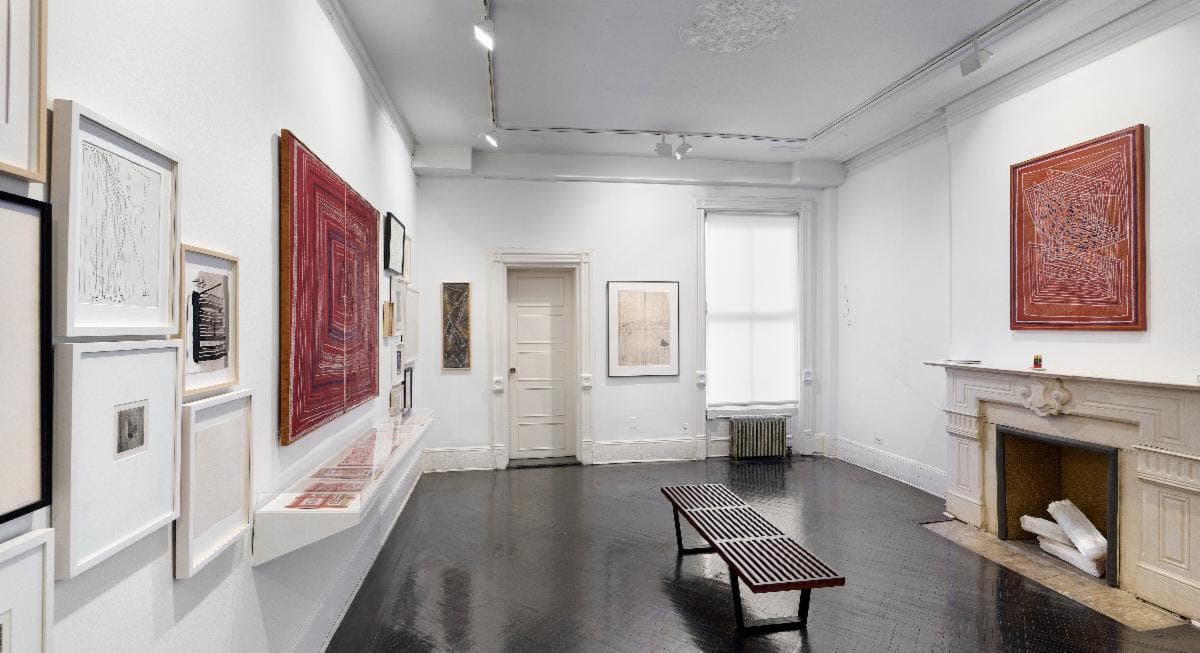
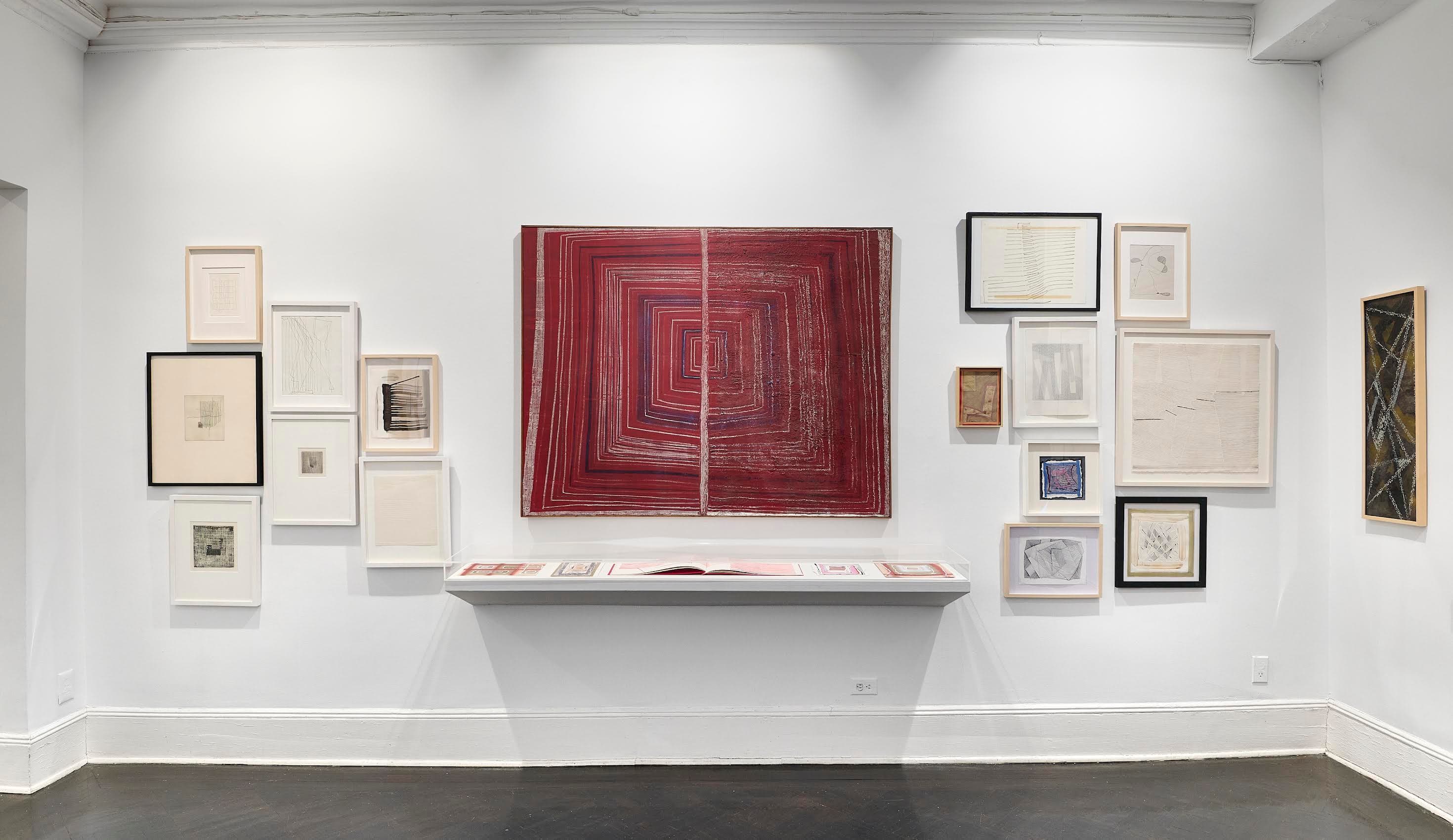
Henrique FariaHenrique Faria is pleased to present Reading Between The Lines, an exhibition that brings into close dialogue the practices of Gertrud Goldschmidt and Myra Landau — two visionary women artists whose lives were shaped by displacement, and whose work reimagines line as structure, touch and lived experience. Born into Jewish families in Europe, both artists rebuilt their lives in Latin America amid the upheavals of the twentieth century. Gego fled Nazi persecution in 1939 and immigrated to Venezuela, where she would develop one of the most influential bodies of work in postwar Latin American art. Landau —born in Bucharest— fled Romania with her family in 1940, finding refuge in Brazil before later establishing a decisive chapter of her practice in Mexico. In Reading Between the Lines, these parallel trajectories are not offered as biography alone, but as a key to their shared commitment to reinvention: how an artist can build form from fragments, and a new language from what remains. The exhibition is accompanied by a text by art historian and Gego specialist Mónica Amor, who frames the show through the concept of trama —a word that immediately encapsulates narrative structure and textile construction: “In Spanish, the word trama refers to the actions and relations that structure a story… In a material and textile context, trama designates the weft… The trama adds density; it determines the surface character of the textile and introduces variation, texture, and material play.” Across the gallery, Reading Between the Lines traces how both artists transform the grid—architectural, pictorial, pedagogical — into something provisional and permeable. In Gego’s late Tejeduras, weaving becomes literal: strips of printed matter and residual materials are interlaced into abstract, tactile fields, where structure is inseparable from contingency. In her Dibujos sin Papel, and in works that refuse the traditional mediations of paper and frame, line is constructed through connection— assembled, knotted, and suspended rather than drawn. Landau’s collages and notebooks resonate with this same insistence on building the plane “from within.” As Amor writes: “Here, too, the plane is built from within through overlays and overlaps… as if these were the ‘themes,’ the ‘subject,’ of these delightful collages.” Landau’s practice — rooted in humble materials and rigorous variation — turns the notebook into an aesthetic engine: a site where repetition generates drift, where form presses against boundary, and where geometric clarity gives way to “pattern entropy,” producing a tactile kind of appearance. Together, Gego and Landau reveal line as something lived: a method of survival as much as a method of art. In their hands, the grid does not stabilize the world — it bursts and unravels, unfolds and dismembers, making room for new relations between shape and ground, craft and concept, discipline and play. Gertrud Goldschmidt (GEGO) (Hamburg 1912, Caracas, 1994) was a German-born, Venezuelan-based artist and trained architect who emigrated to Venezuela in 1939 to escape rising anti-Semitism in Germany, working initially as a freelance architect and industrial designer before turning decisively to art. After early figurative, expressionist works made in Tarma beginning in 1953, she returned to Caracas in 1956 and moved into pure abstraction, focusing on the problems of sculptural space and exhibiting alongside key figures such as Cruz-Diez, Otero, and Soto; by 1959 MoMA had begun acquiring her work, and she lived in New York from 1960 to 1967. A committed educator and institution-builder, she taught at the Universidad Central de Venezuela and the Escuela Cristóbal Rojas, founded and taught at the Instituto de Diseño Neumann (1964–77), and produced major public commissions, including architecturally integrated sculptures and murals—most notably Cuerdas (1972) for Parque Central. In later decades she embraced chance procedures and “poor” industrial materials, developing landmark bodies of work such as Dibujos sin papel, Bichos, and Reticulárea ambiental, culminating in her final series Tejeduras, where orthogonal line-fields are woven with strips of paper into intimate, rigorous weavings. Myra Landau (Bucharest, 1926–Alkmaar, 2018) was a self-taught artist and art researcher whose practice was shaped by exile, experimentation, and political commitment: her family fled Romania in 1940 to escape fascist persecution and arrived in Rio de Janeiro later that year, where relationships with leading Brazilian artists encouraged her to begin painting. After early figurative work, she turned to abstraction and, in the 1960s, developed a distinctive vocabulary through a metal engraving method she called “metal relief,” pastel applied directly to raw linen, and her signature Rhythms (from 1965)— movements of free geometrical lines that became central to her visual language. While living in Mexico City, she joined the activist Salón Independiente in protest of the 1968 Tlatelolco student massacre, and activism remained important throughout her life. In the mid-1970s she moved to Xalapa, Veracruz to teach at the Universidad Veracruzana and later became a full-time researcher at its Institute of Aesthetics and Artistic Creation; later relocations to Italy, Israel, and the Netherlands never interrupted her ongoing painting, drawing, writing, and production of artist books. Landau held more than sixty solo exhibitions —including major presentations at Mexico City’s Museum of Modern Art in 1974 and 1987— and participated in at least 150 group exhibitions internationally; her work also received renewed institutional attention with a major museum exhibition at MUAC in 2024.