
West, London
Takashi Murakami
Japanese Art History à la Takashi Murakami
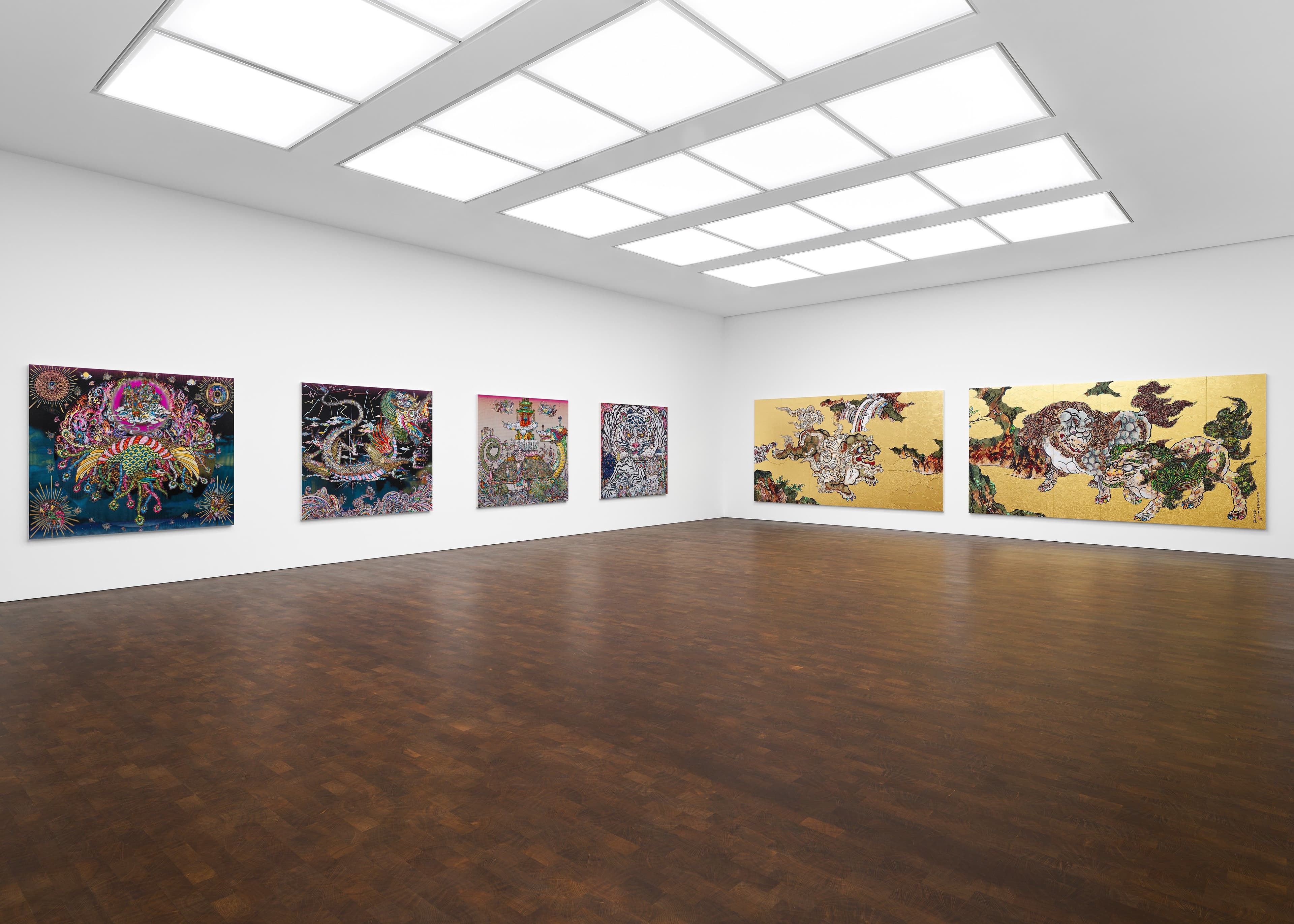
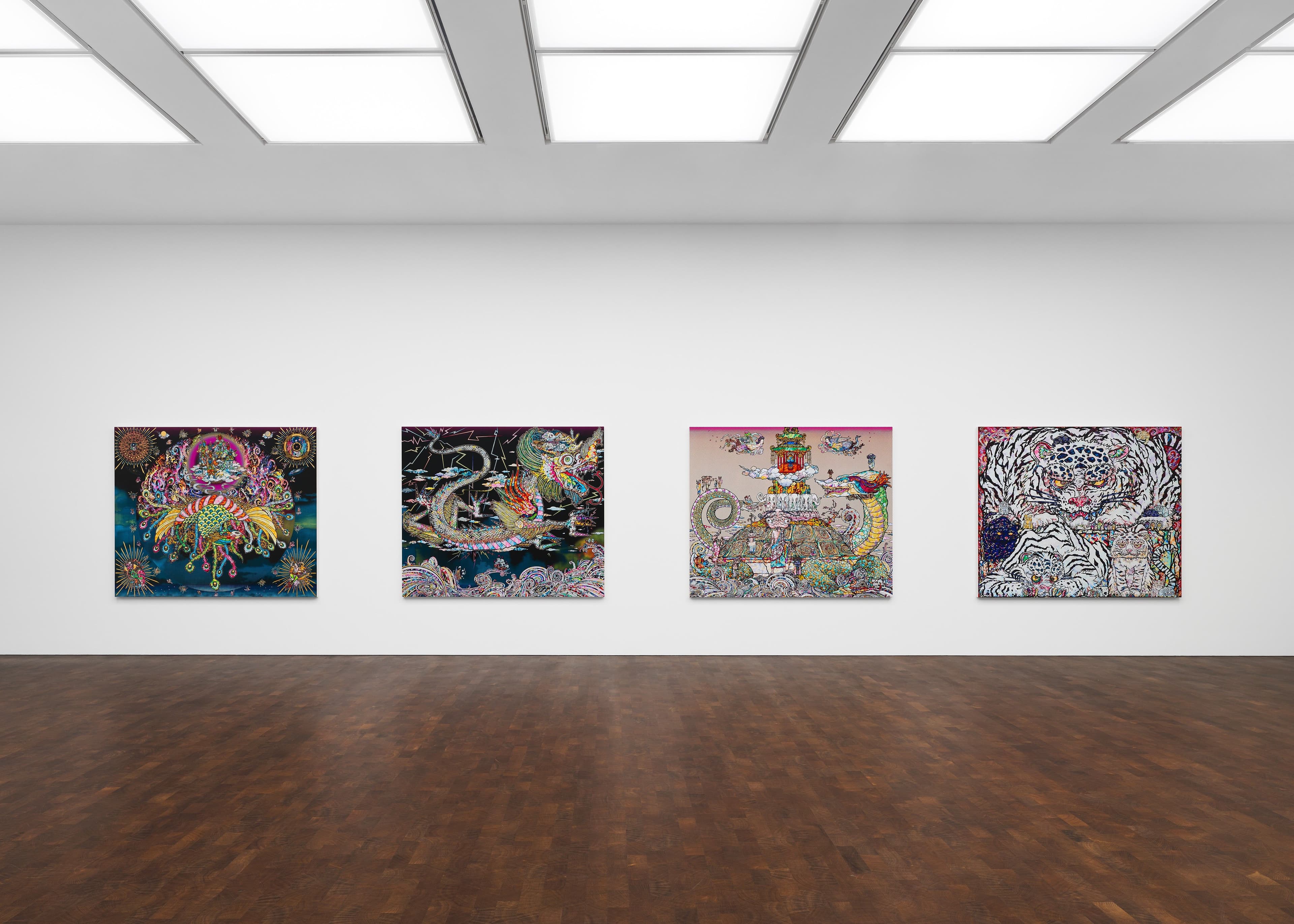
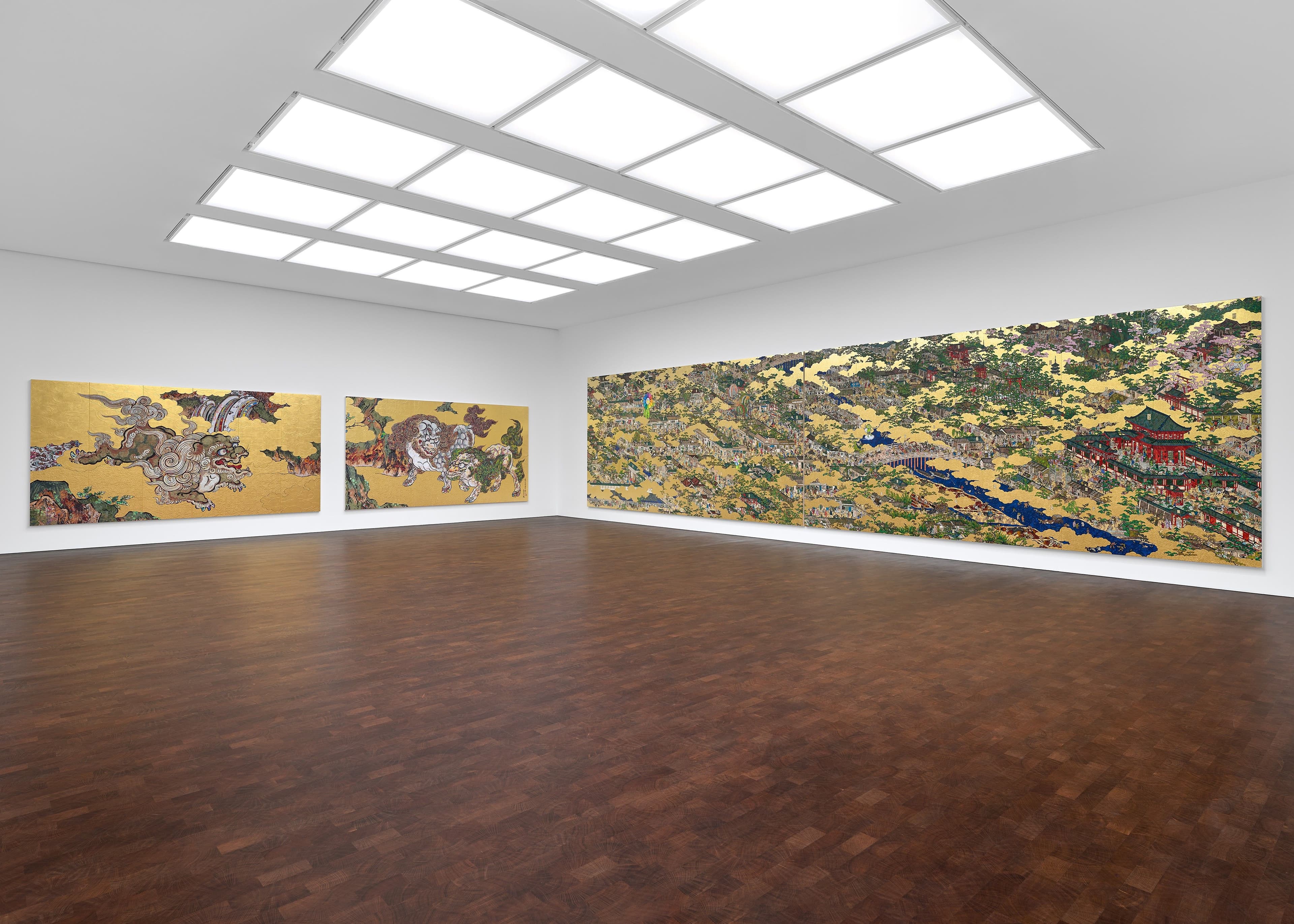
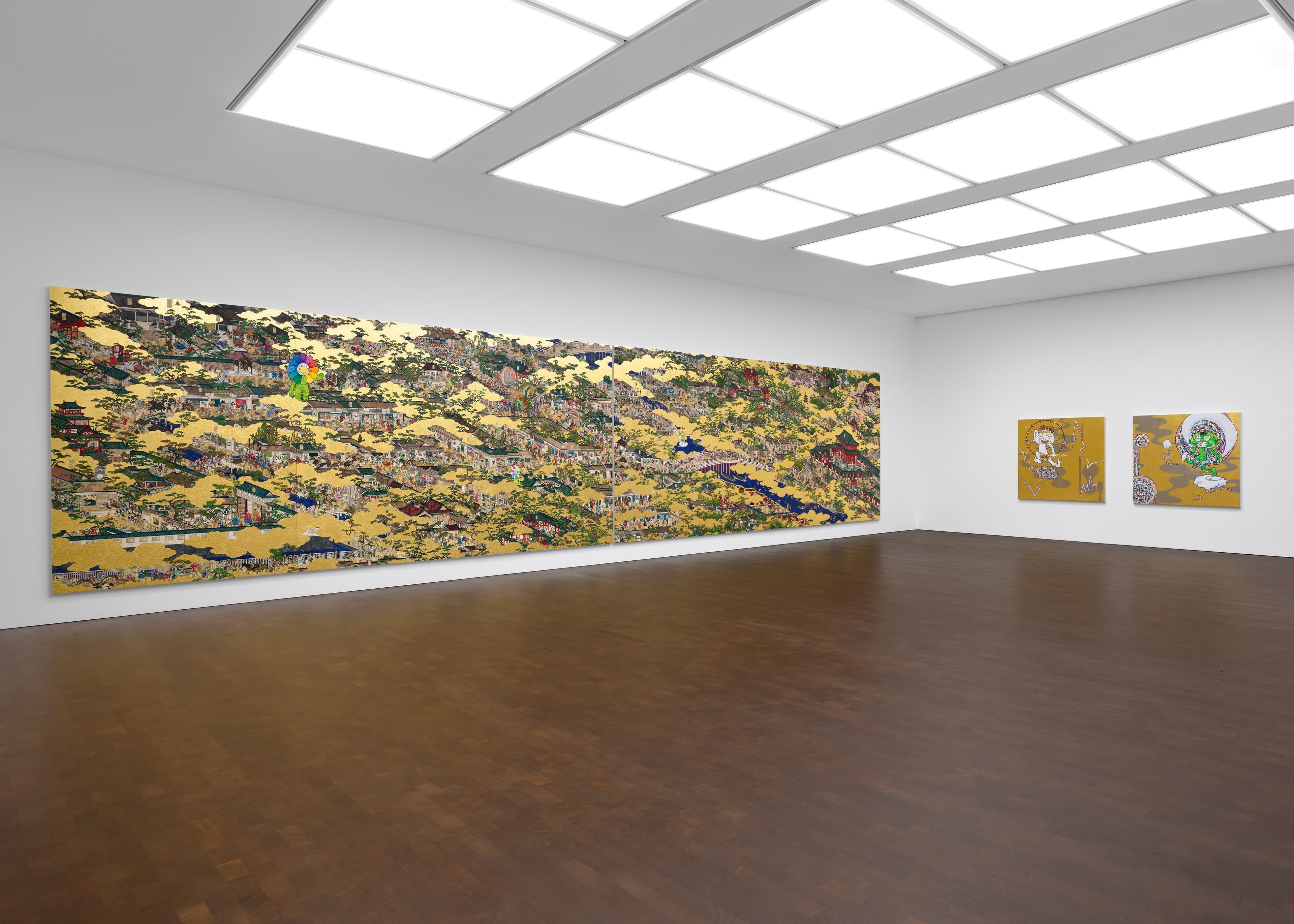
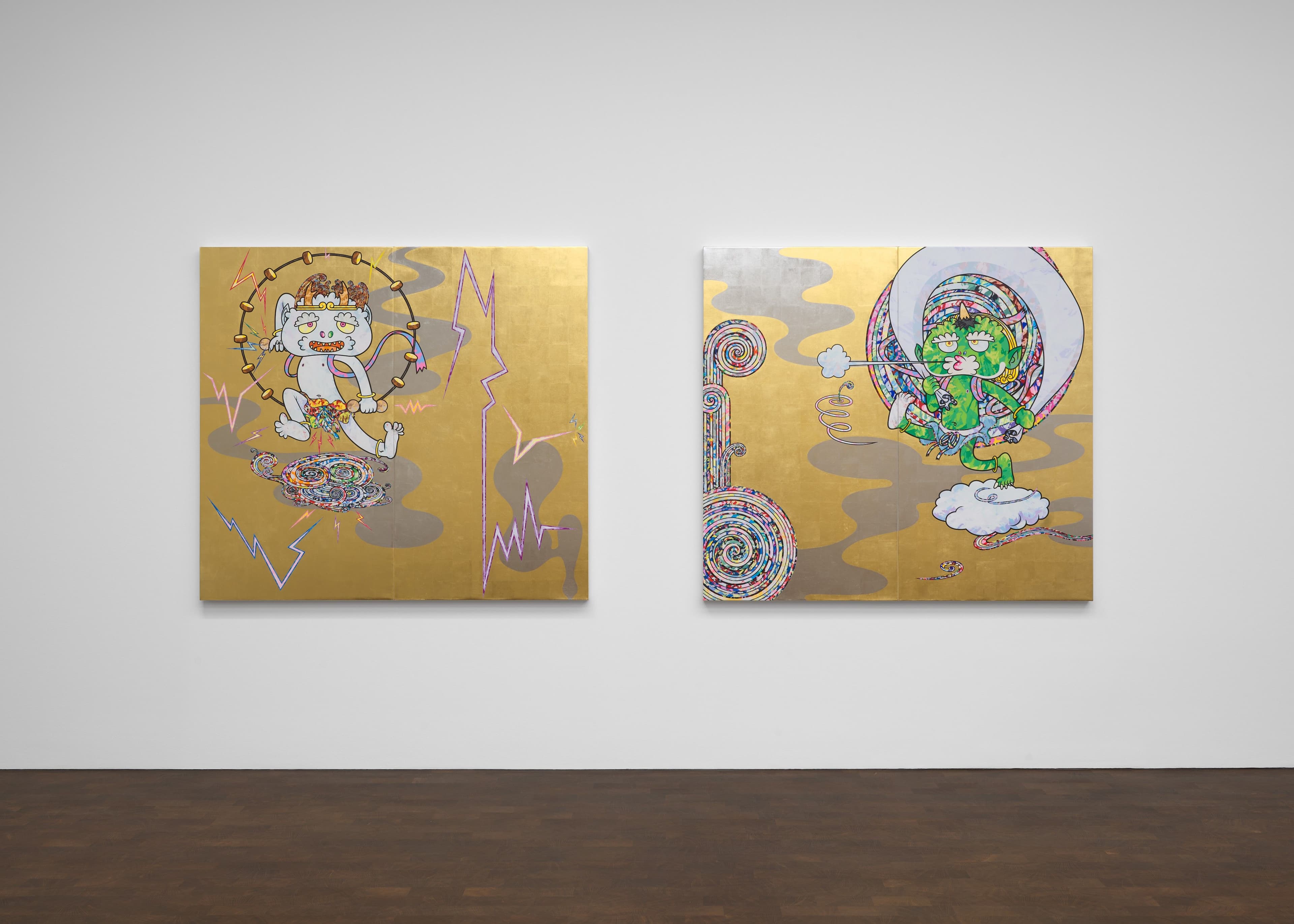
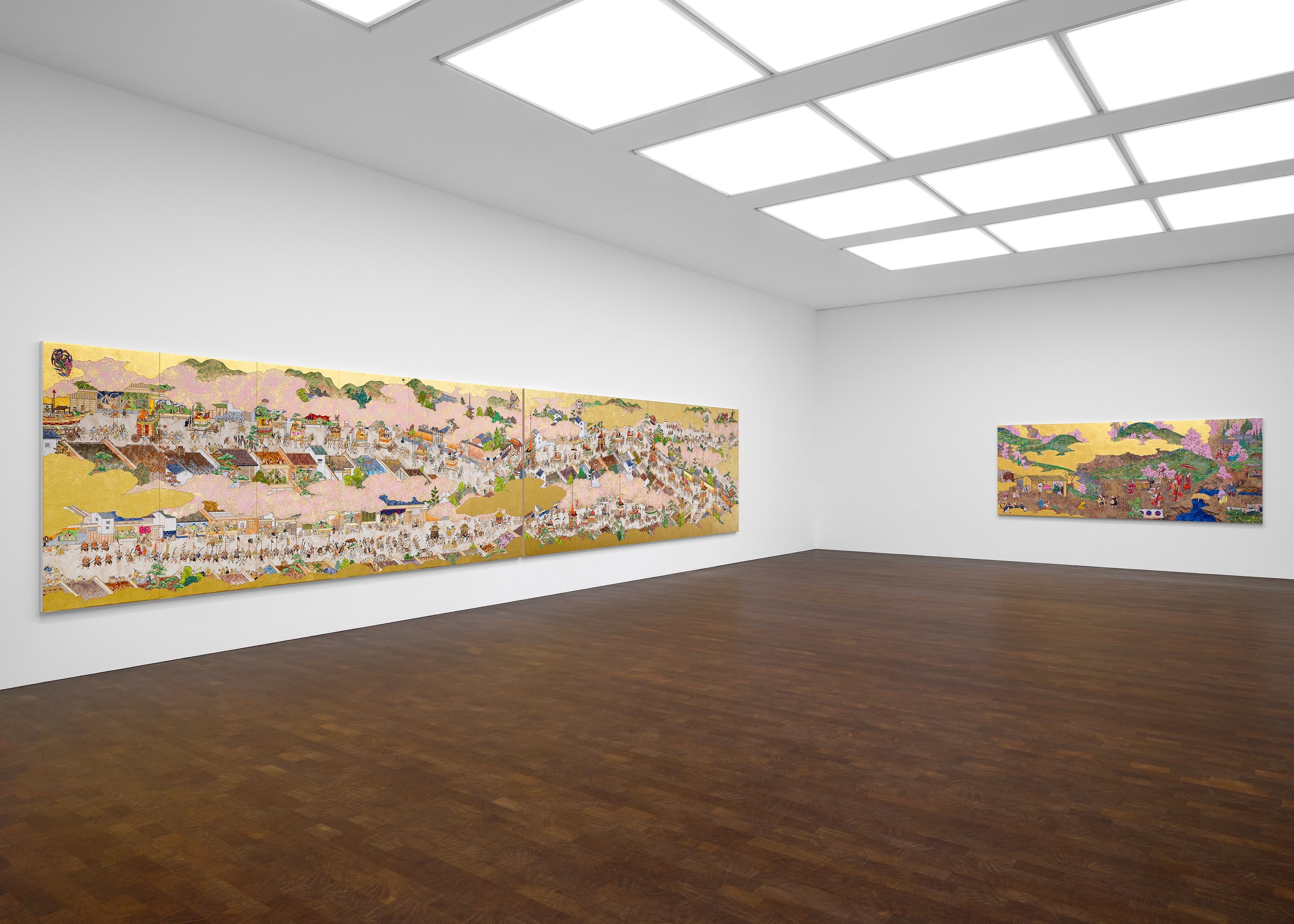
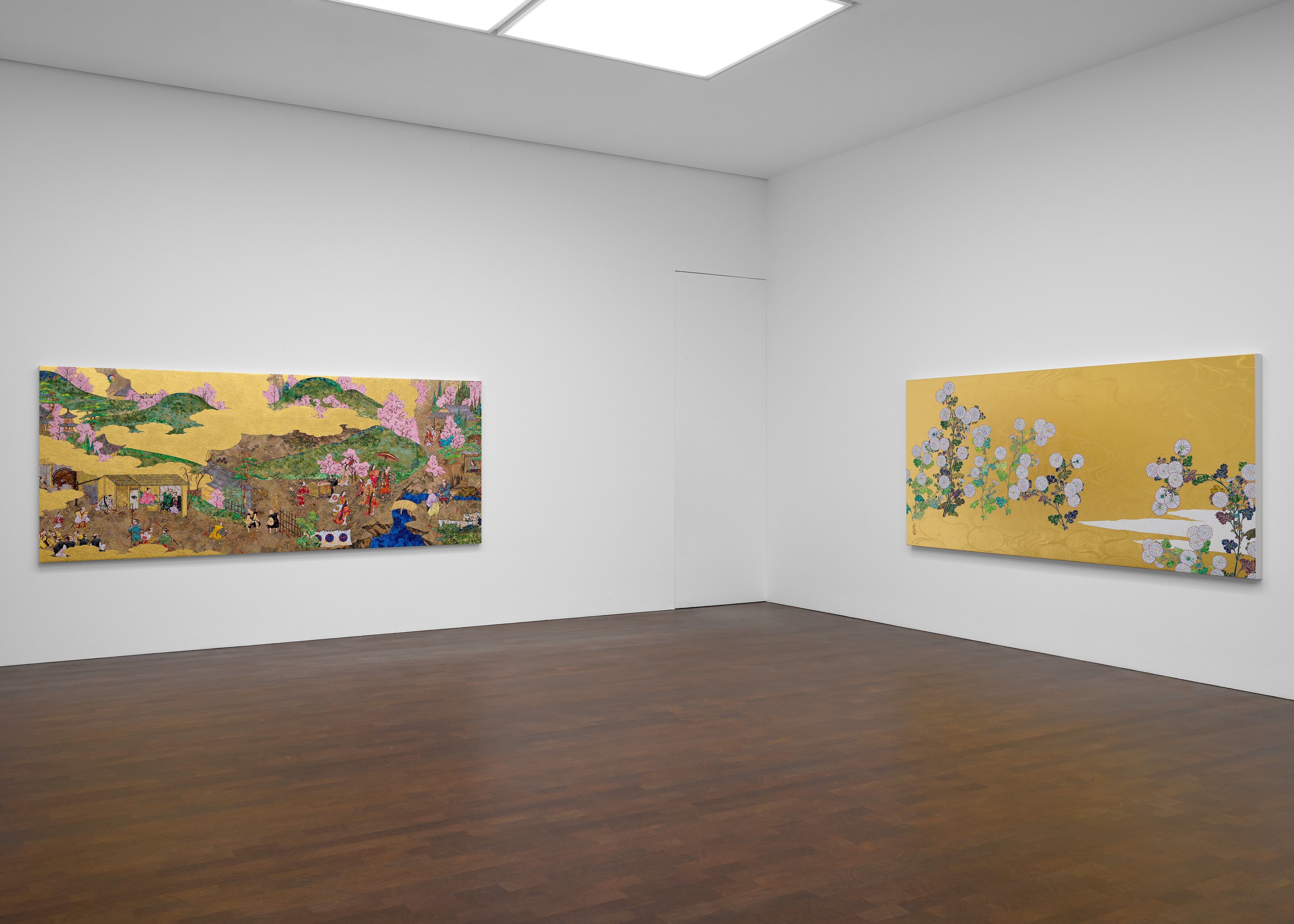
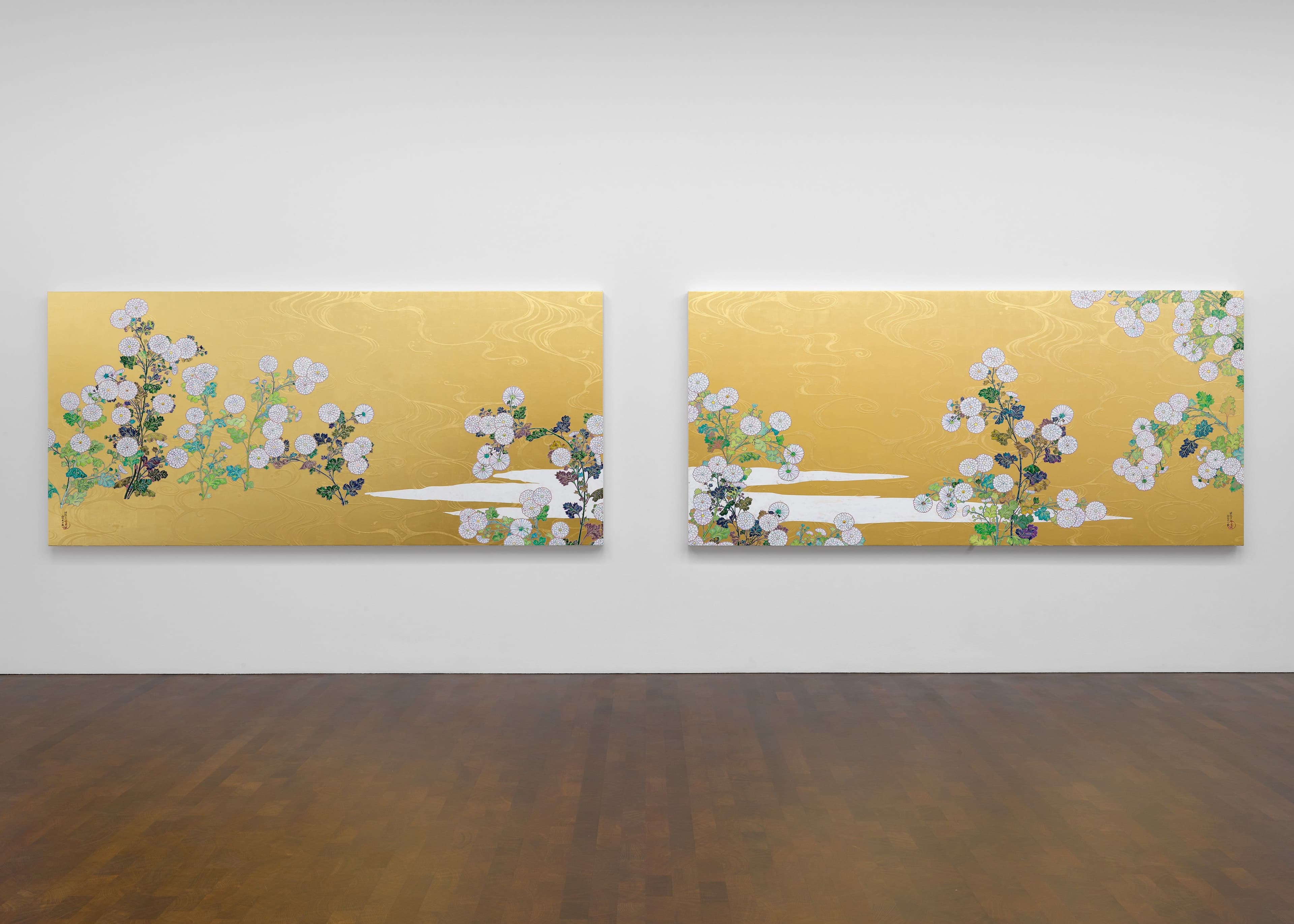
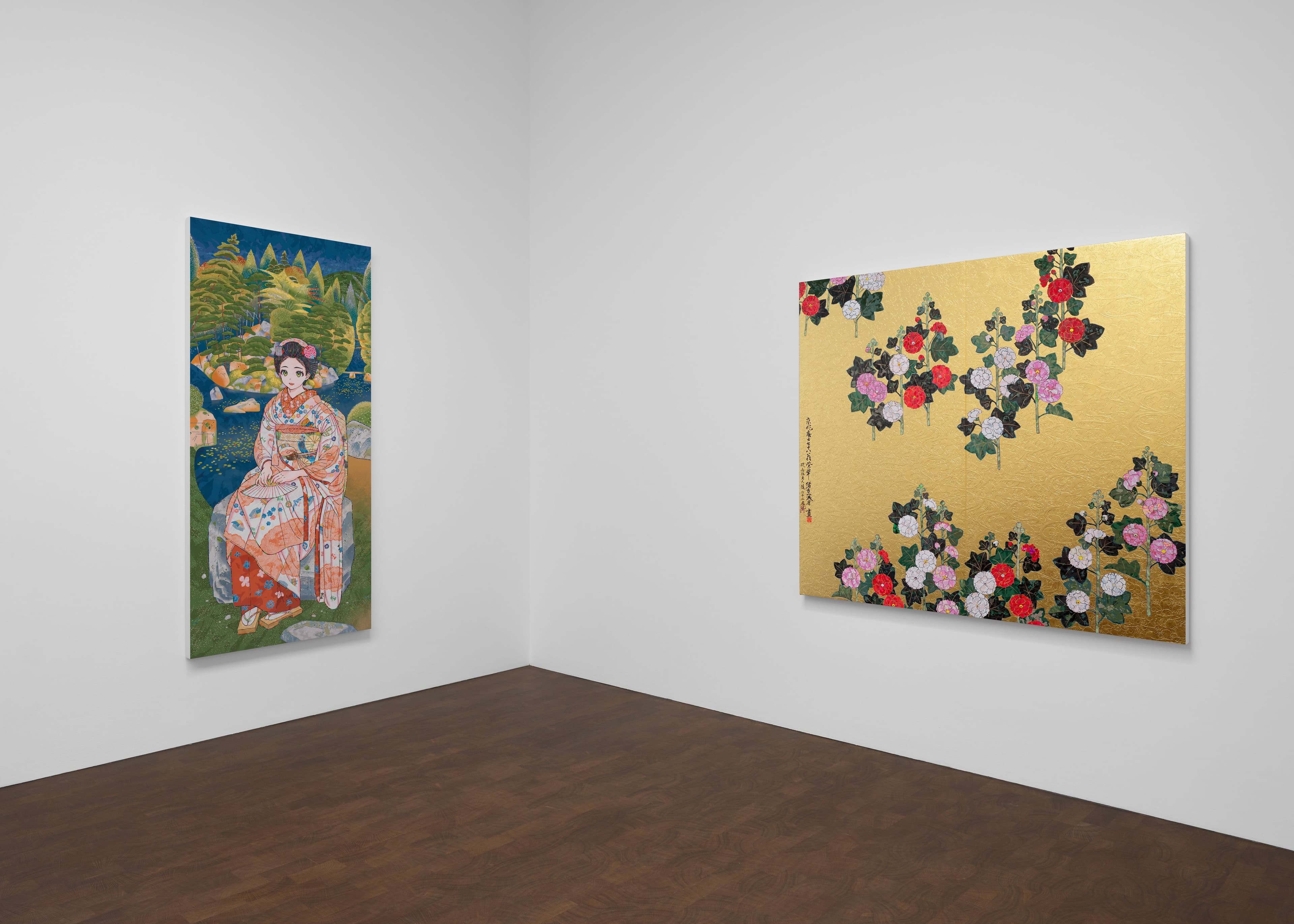
GagosianGagosian is pleased to present Japanese Art History à la Takashi Murakami, an exhibition of new paintings by Murakami at its Grosvenor Hill gallery in London. In this presentation, the artist pursues his fascination with the narrative of Japanese art by offering his own interpretations of historical paintings. By "Murakamizing" these iconic images, he ponders the erosion of the nation's ancient splendor; he also considers the ways in which it has been impacted by new aesthetics and values associated with its opening to the West after the end of the Edo period (1603–1868). Rakuchū-Rakugai-zu Byōbu: Iwasa Matabei RIP (2023–24) is modeled on Iwasa Matabei's Rakuchū-Rakugai-zu Byōbu(Scenes in and around Kyoto) (Funaki Version) from the collection of the Tokyo National Museum. The original seventeenth-century work depicts the city in extraordinary detail across two six-panel folding screens. Murakami's version, which was commissioned for his exhibition Mononoke Kyoto at the Kyoto City Kyocera Museum of Art, populates its gold-leaf clouds with skulls, a memento mori inspired by a visit to the Toribeno burial ground. He also integrates examples of his own iconography including smiling flower-faced figures and his familiar Mr. DOB character. Murakami's paintings of the Four Symbols, mythical guardians of Kyoto, pair each of their subjects with metropolitan locations aligned with the four compass directions: the Black Tortoise is associated with Mount Funaoka and Mount Kitayama in the north of the city; the Blue Dragon with the Kamo River in the east; the Vermilion Bird with Ogura Pond in the south; and the White Tiger with the San'indo Highway in the west. To arrive at these juxtapositions, Murakami combined his own sketches with AI-generated images and fragments of his earlier works in a process that parallels the inventiveness of earlier artists in depicting unfamiliar or imaginary creatures.