
Civic Center, New York
Halsey Rodman
Triple Trouble
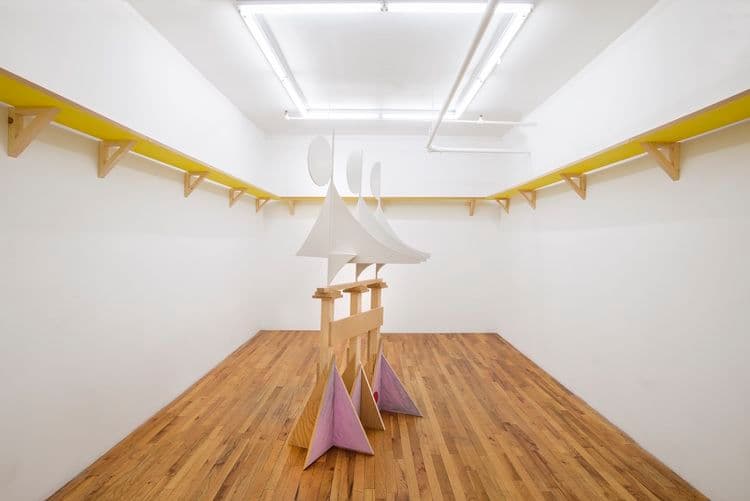
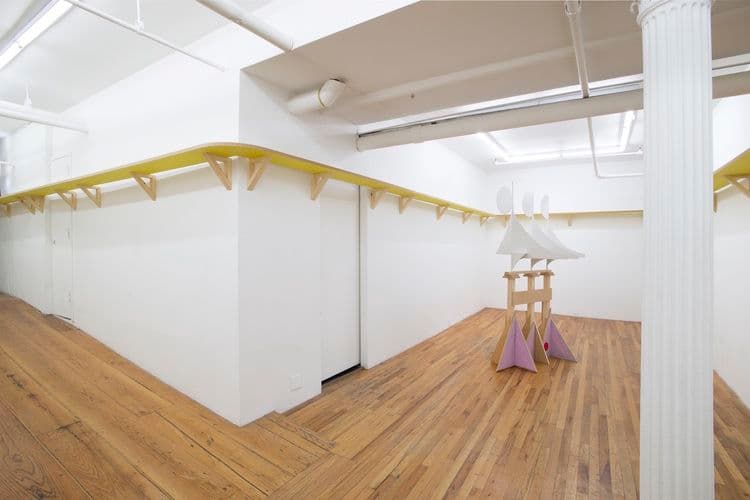
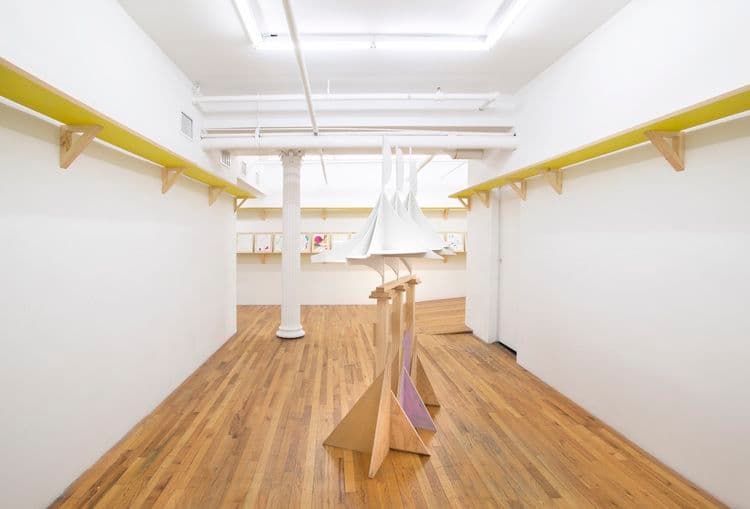
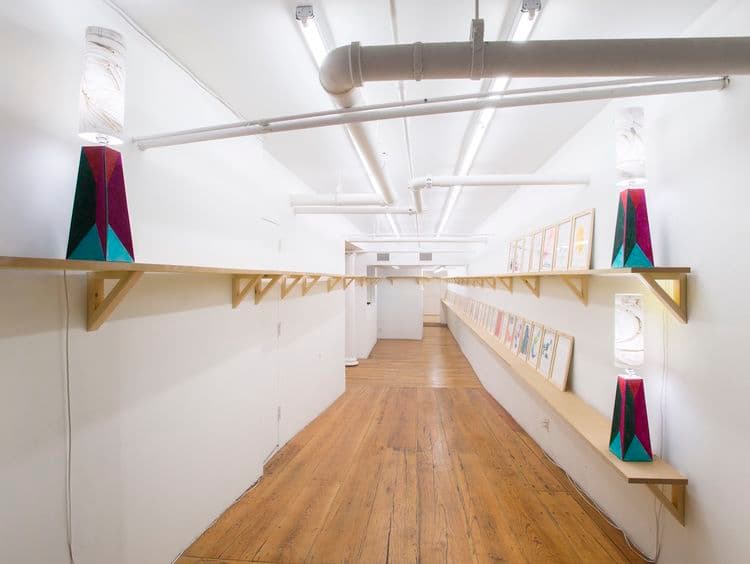
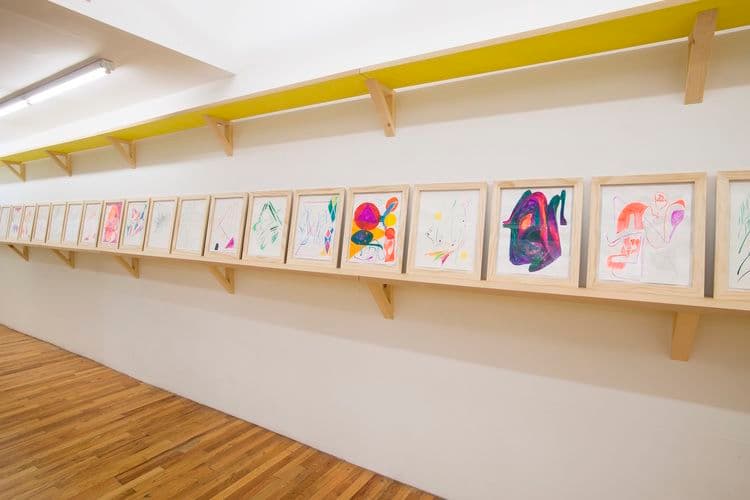
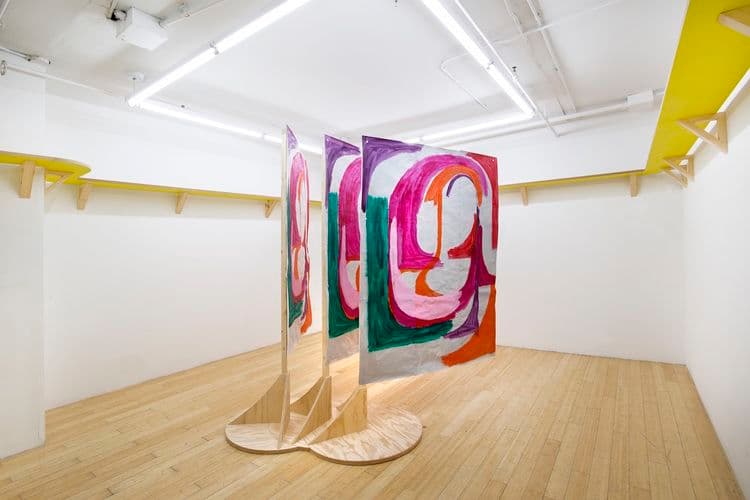
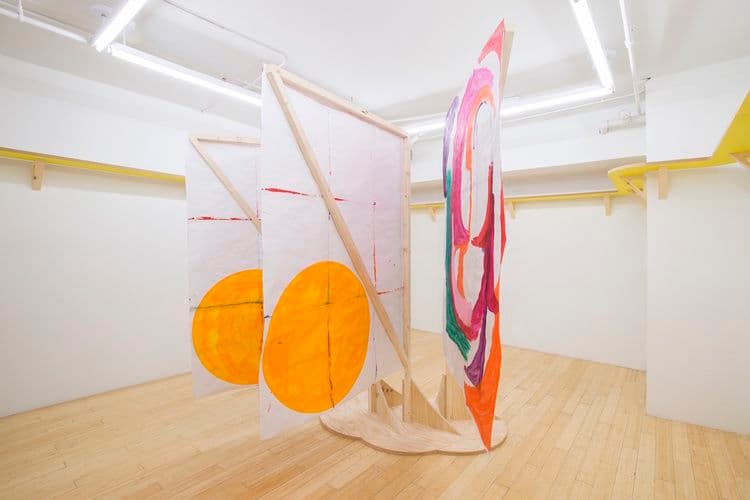
Kansas GalleryKansas is pleased to announce a solo exhibition of new work by Halsey Rodman. Triple Trouble presents a series of works concerned with minimal difference. The term minimal difference refers to the pulse of difference separating one moment from the next, the continuous transformation of objects in time, the modulation of color, and the wavering constitution of one's self from moment to moment. Minimal difference is a way to think of the wavering edges of things considered as an event. This show asks: if everything is in a constant state of becoming different from itself, can an entity ever be considered complete? And if no thing ever achieves a "true" state, what possibilities are suggested by this aggressive refusal to accept a natural state for things? Central to this exhibition is Rodman's fascination with the particularities of a specific object, the metronome, from within Henri Matisse's 1916 painting, "The Piano Lesson". The metronome sits on a piano's top, its back facing towards us. We see its hidden, time regulating arm only through the eyes of a clock-faced student sitting at the keyboard. Deep in the museum, the paint is quite dry, crystallized now for almost a century; the lights are always even and the temperature controlled. A bench across from the painting waits, ready to suspend the pendulous weight of one's body in favor of the wandering eye. At first glance, the metronome is still as a statue. But looking further, over there on the canvas, the metronome will not settle. This is because it has been painted twice: first, as a planar collection of gently modulating grey trapezoidal planes; and second, as a black wireframe - almost coinciding with the planar form but very specifically not quite. The bottom of this second linear metronome is kicked towards us, hinged out from the top to indicate a minutely steeper plane. Both forms exist simultaneously, the planes clearly visible through the wireframe. The paint is still, but the tick-tock of the metronome's clock swings back and forth between these forms in the eye of their beholder. Never at rest, these two simultaneous possibilities are always there to meet your gaze. This motion between, the profoundly unresolved "and" of the this and this, is suggested by what is on the canvas, but these two states oscillate decidedly in the field of the beholder. Planar, Linear, Planar and Linear. This delicate shift, the metronome's movement between states, always becoming other than itself, suggests a great unravelling: a shimmering entity, on the verge, always, of becoming something else. Many of the works in "Triple Trouble" suggest a continuity as a "ground" to read this "figure" of minimal difference. A continuous shelf, beginning and ending at the front door, outlines the entire gallery, in a sense bringing the entirety of KANSAS' eccentric floor plan into the picture from any single vantage point. We can only see part of the shelf from any given place, but our awareness draws us beyond our position, always beyond our particular place. The shelf is punctuated by three near-identical lamps taking the form of Matisse's metronome installed adjacent to the front window of the gallery. The light of the lamps is unwavering, an inverse clock to register the changing atmosphere filtered in from the outside. Also central to this exhibition is a group of 47 gouache drawings, Cave System or Ear Canal, made over the past three years. Largely concerned with the difficulty (or impossibility) of assembling a coherent, continuous self from fragmentary experience, the drawings collect a strain of thought summarized by the question: are you inside it or is it inside you? Halsey Rodman's work proposes a consensual and liberating encounter with objects by rendering apparent the radical instability of their forms. Though appearing disparate and sometimes improvised, his work is conceived and executed using specific structural, performative, and/or temporal frameworks. Rodman often integrates gestural painting, diagrammatic drawing, and intense color with sculptural and architectural constructions. He has collaborated with others to realize "event-based group figurative sculptures." Rodman draws inspiration from wide-ranging sources, from the Pink Panther to Lacan to Virginia Woolf and Samuel Delaney. Halsey Rodman (b. 1973) lives and works in Brooklyn, NY. Rodman received his BA from the College of Creative Studies at the University of Santa Barbara in 1995 and his MFA from Columbia University in 2003. Rodman has been the subject of solo exhibitions including Cave System or Ear Canal, Soloway, Brooklyn, NY (2013); The Birds, Guild & Greyshkul, New York, NY (2008); The Navigator's Quarters Must Not Be Disturbed, Guild & Greyshkul, New York, NY (2006); among others. His work has been exhibited in numerous group exhibitions including A Room in Three Movements, Sue Scott Gallery, New York, NY (2011); in here, Laurel Gitlen, New York, NY (2010); The Line of Time and the Plane of Now, curated by Jacob Dyrenforth, Ohad Meromi, and Halsey Rodman, Harris Lieberman, New York, NY (2007); among others. His work has been the subject of articles in The New York Times, The Village Voice, The Brooklyn Rail and Time Out New York among others. Rodman's project, Gradually / We Became Aware / Of A Hum in the Room, is currently on view at High Desert Test Sites in Joshua Tree, CA through May 31, 2015. *A catalog will be printed to mark both this exhibition and "Cave System or Ear Canal" at Soloway (2013) published by Publication Studio.