
West, London
Takesada Matsutani
Shifting Boundaries
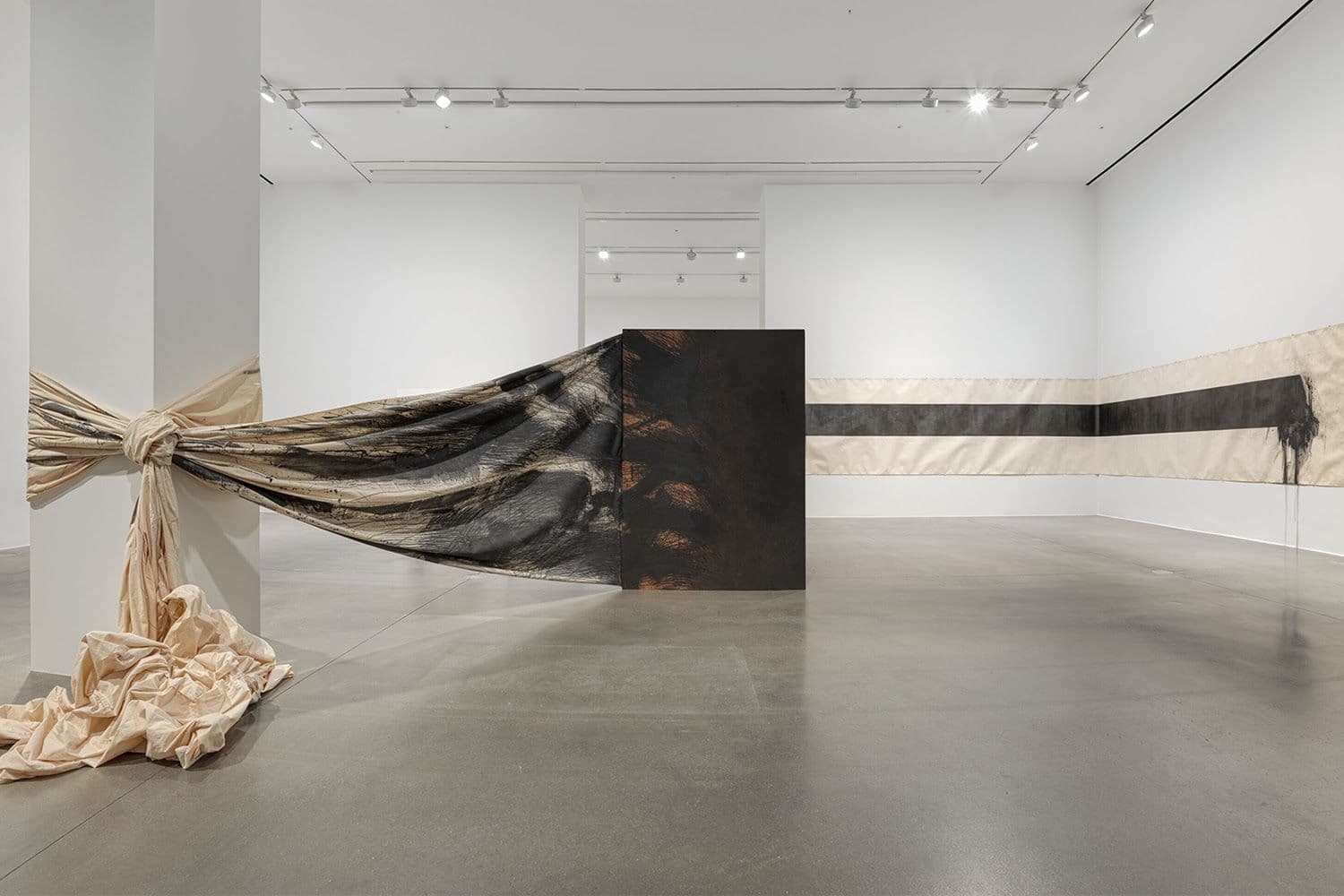
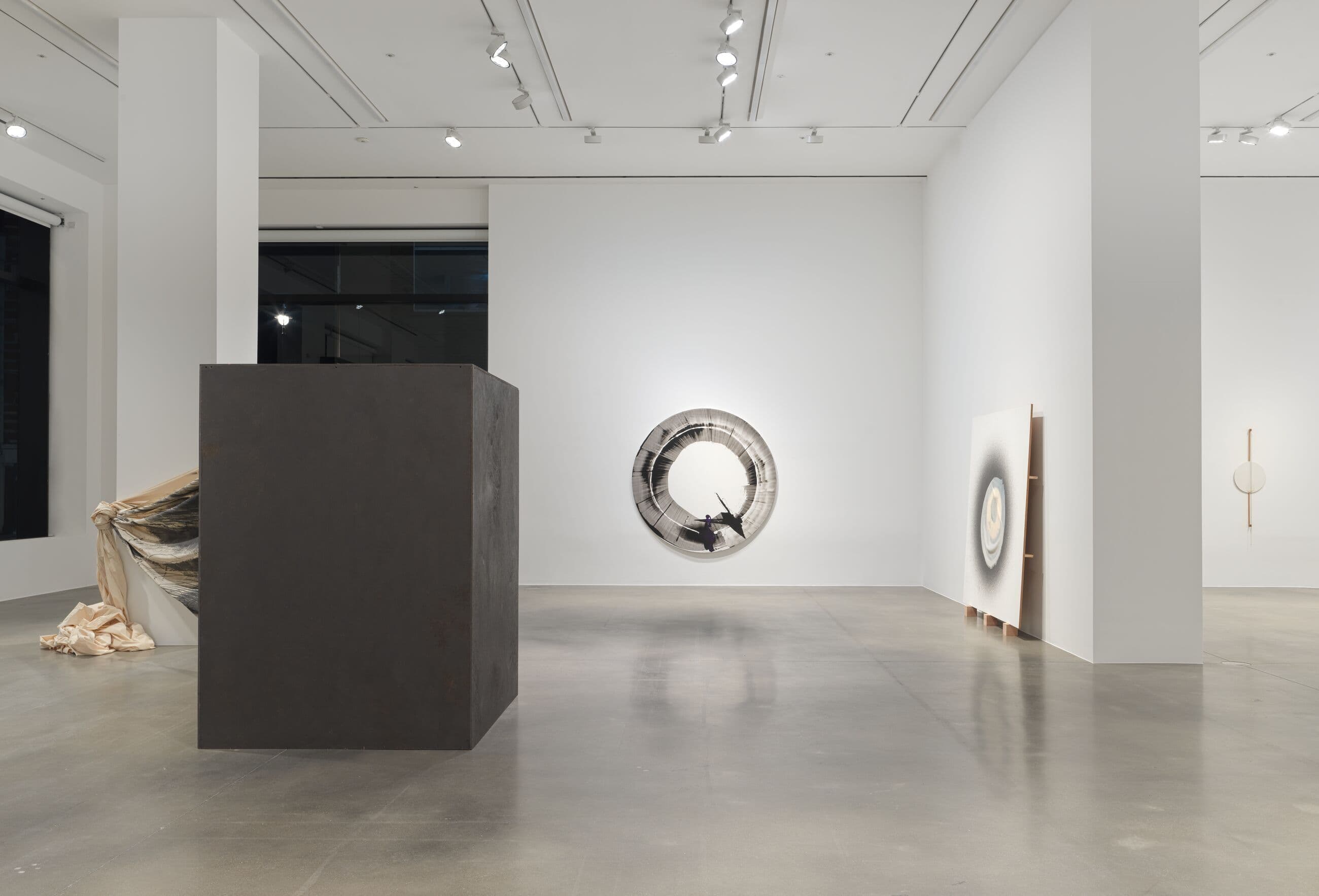
Hauser & WirthThe Ōsaka-born artist Takesada Matsutani takes over Hauser & Wirth’s North Gallery on Savile Row for his first exhibition in London in over a decade, coinciding with his 60th year of living and working in Paris, France. The artist’s diverse practice is concerned with the reshaping of matter, namely his signature materials of vinyl glue and graphite. This exhibition, organized with Olivier Renaud-Clement, ranges from the sensational sculpture ‘The Magic Box’ (1988) to brand-new works that epitomize his experimentation with glue. Hauser & Wirth Publishers are releasing the compact title In The Studio: Takesada Matsutani, containing a text by independent curator Mika Yoshitake and newly unearthed archival images. Running alongside Matsutani’s exhibition is a solo show on Tetsumi Kudo (1935 – 1990) in the South Gallery. Kudo was a key player of Tokyo’s anti-art movement as well as the nouveau realisme movement in France. Though the two artists were part of different movements, they are united by their relocation from Japan to Paris, France, in the 1960s, where they became acquainted with each other, and by their rejection of established modes of making. A key member of the Japanese avant-garde collective the Gutai Art Association (1954 – 1972) in the 1960s, Matsutani moved to Paris in 1966 after receiving a grant from the French government as a result of winning first prize in the 1st Mainichi Art Competition. As part of the Gutai group, the artist experimented with vinyl glue by manipulating the substance to create bulbous and sensuous forms reminiscent of human curves and features. By applying glue to canvas, letting it partially dry to form a skin and then inflating it with his own breath using a straw or hairdryers and fans, Matsutani brings the material to life. Continuing this form of artmaking in the present day, he incorporates acrylic paint in the new body of work on view to turn the glue a deep purple—a color he began exploring in the last five years. Transforming the viscous material into solid, three-dimensional forms, the artist attempts to stop time and capture a suspended moment. In Gutai fashion, Matsutani challenges traditional painting by incorporating unconventional, everyday materials into the surface of his vinyl works, such as a piece of rope in ‘Propagation 25-A 繁殖25の A’ (2025), creating a tension between flatness and sculptural protrusion. This is complemented by the assemblage work ‘A pillar 柱’ (2025), which proposes an inverse of his canvases. Here, a wooden stick forms the base of this sculpture, onto which Matsutani applies glue, ink and acrylic. Together, his works initiate an investigation between soft and hard material forms. A selection of recent vinyl works allows viewers to trace the powerful evolution of the artist’s meditative and methodical practice, including ‘Work – P’ (2009 – 2013)—presented as a completed work for the first time since its conception during a performance at the Centre Pompidou in Paris, France, in 2019. Historic works on display provide an insight to Matsutani’s time living in Paris in the 1970s, where he was working with limited resources and was compelled to reconsider the essential tools of artmaking. The artist began creating works composed of vast expanses of metallic black graphite on mural-size sheets of paper built up with painstaking individual strokes, known as his Streams series. Stretching across two walls, ‘Stream-2’ (1978) acts as a time-based record of his mark-making, a ritualized act that has a performative gesture. Applying graphite outside of its conventional use for flat and often wall-mounted works, Matsutani heroes the material in ‘Magic Box’ (1988). With the graphite-marked cotton cloth that connects the wooden cube to a column that reaches the gallery’s ceiling, the artist furthers his interplay of soft and hard components. Exemplifying the Gutai spirit to ‘do what no one has done before,’ Matsutani has reimagined graphite and vinyl glue as artistic tools, pushing the boundaries of their uses to the limits. One of the last surviving members of the Gutai group, he turns 89 on 1 January 2026, yet he still maintains a daily studio practice, evident in the relentless energy that continues from his historic works to the new canvases on view. In this guide to the artist’s life and work, learn about how Matsutani arrived at his first experiments with vinyl glue and his work as part of Japan’s influential Gutai group, his time as a printmaker in Stanley William Hayter’s studio in Paris in the 1960s and the energetic daily studio practice that he has maintained for decades. A generous selection of archival material, studio photography and artwork images open a window onto Matsutani’s unique process, while an informative text by curator Mika Yoshitake offers insight into his work across painting, performance, assemblage, installation, and works on paper; his wide-ranging influences, including Buddhist philosophy and Gutai; his half century-long creative and personal dialogue with his wife Kate Van Houten; and the forms and materials that comprise his singular visual language. A comprehensive yet accessible account of the artist’s celebrated career, ‘In the Studio: Takesada Matsutani’ is an essential resource for those looking to discover or dive further into Matsutani’s distinctive and fearless work.