

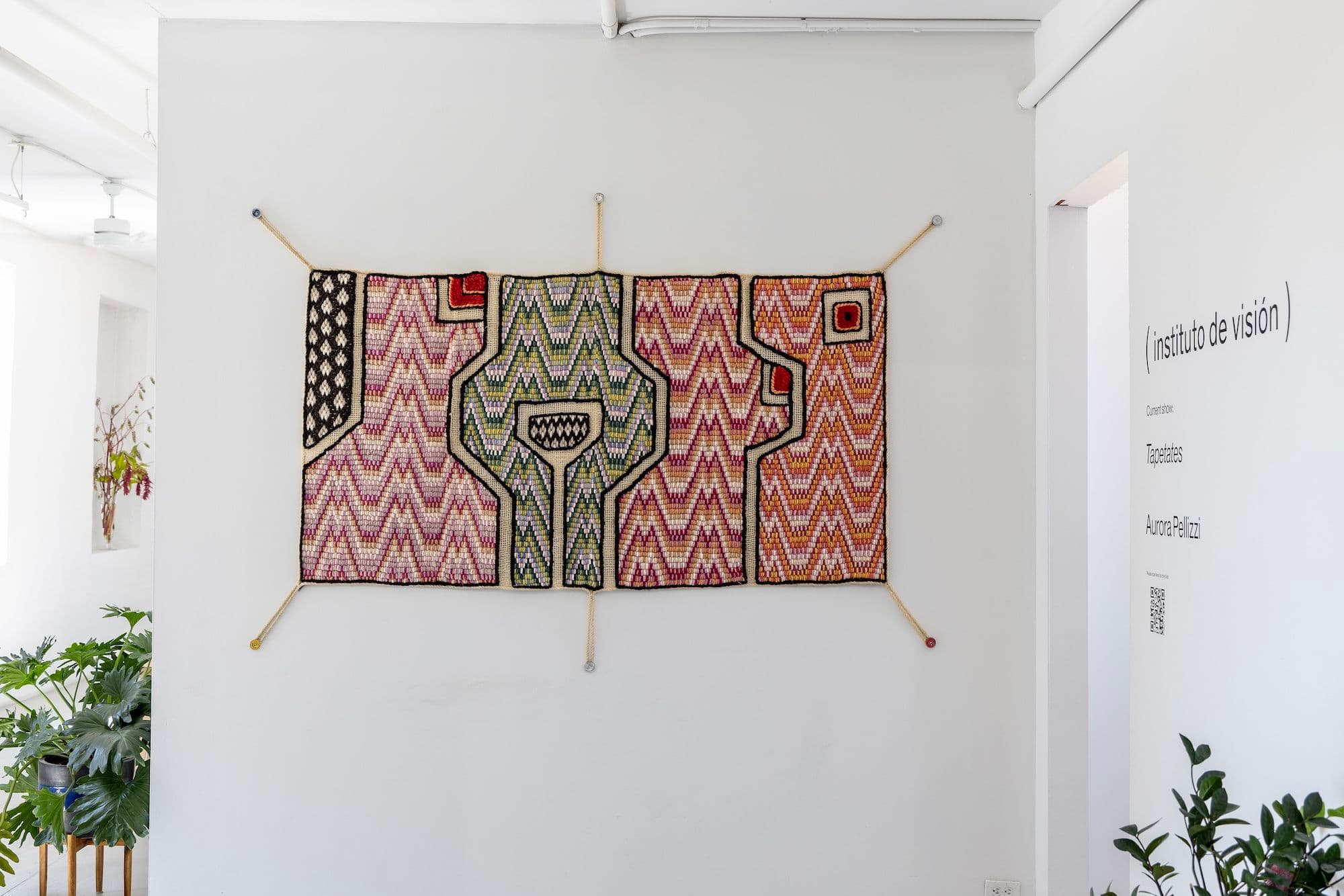
Chinatown, New York
Aurora Pellizzi
Tapetates
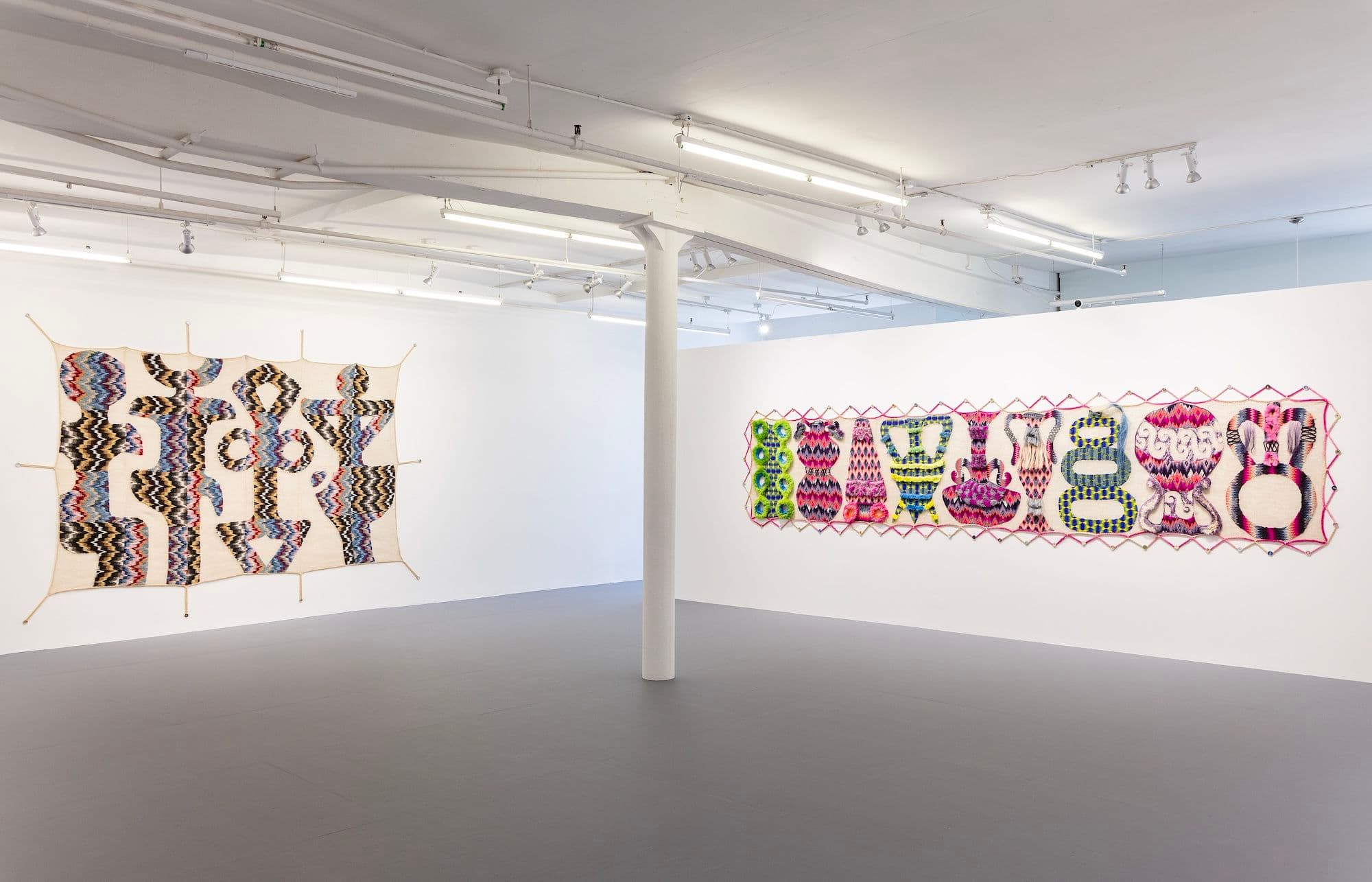
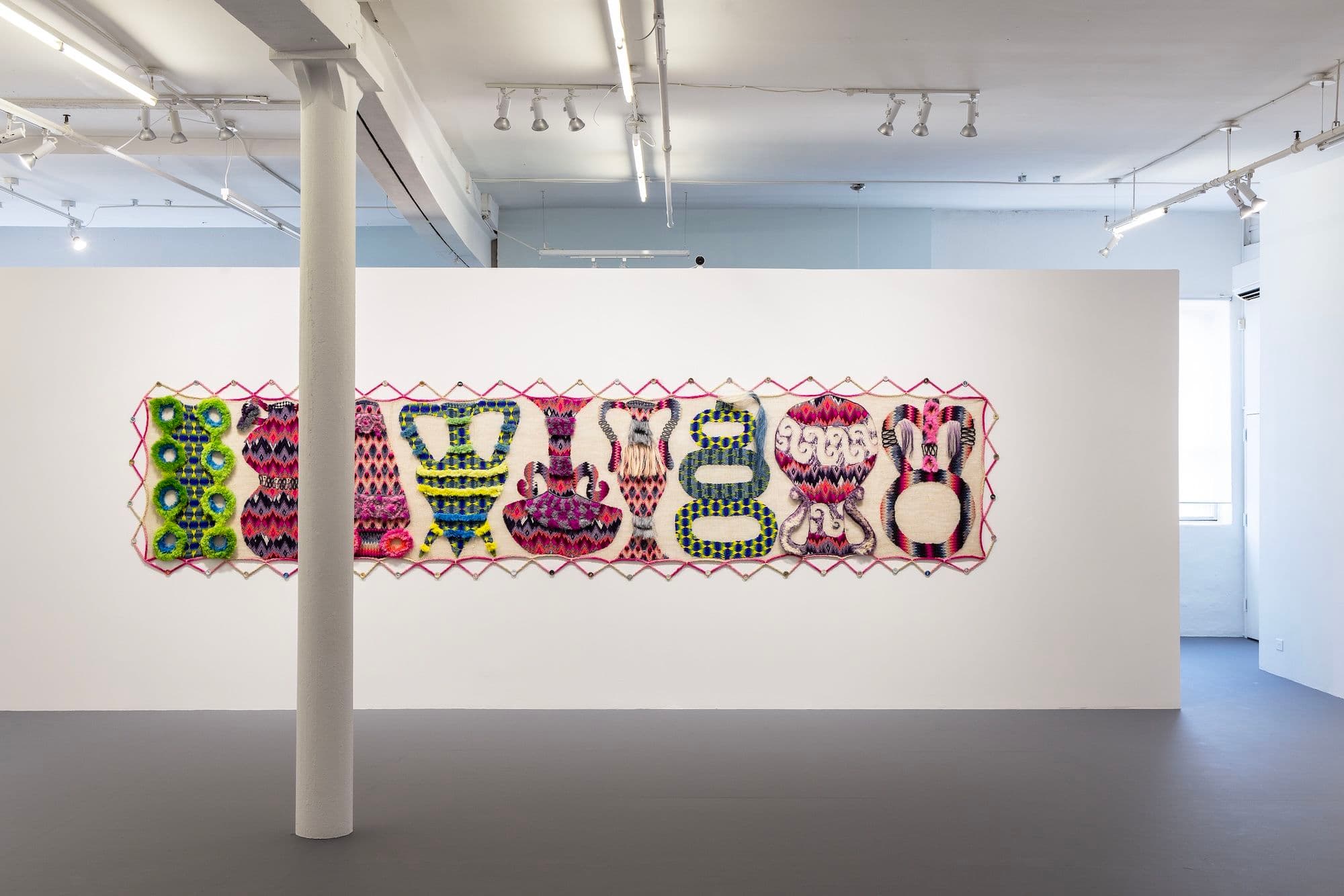
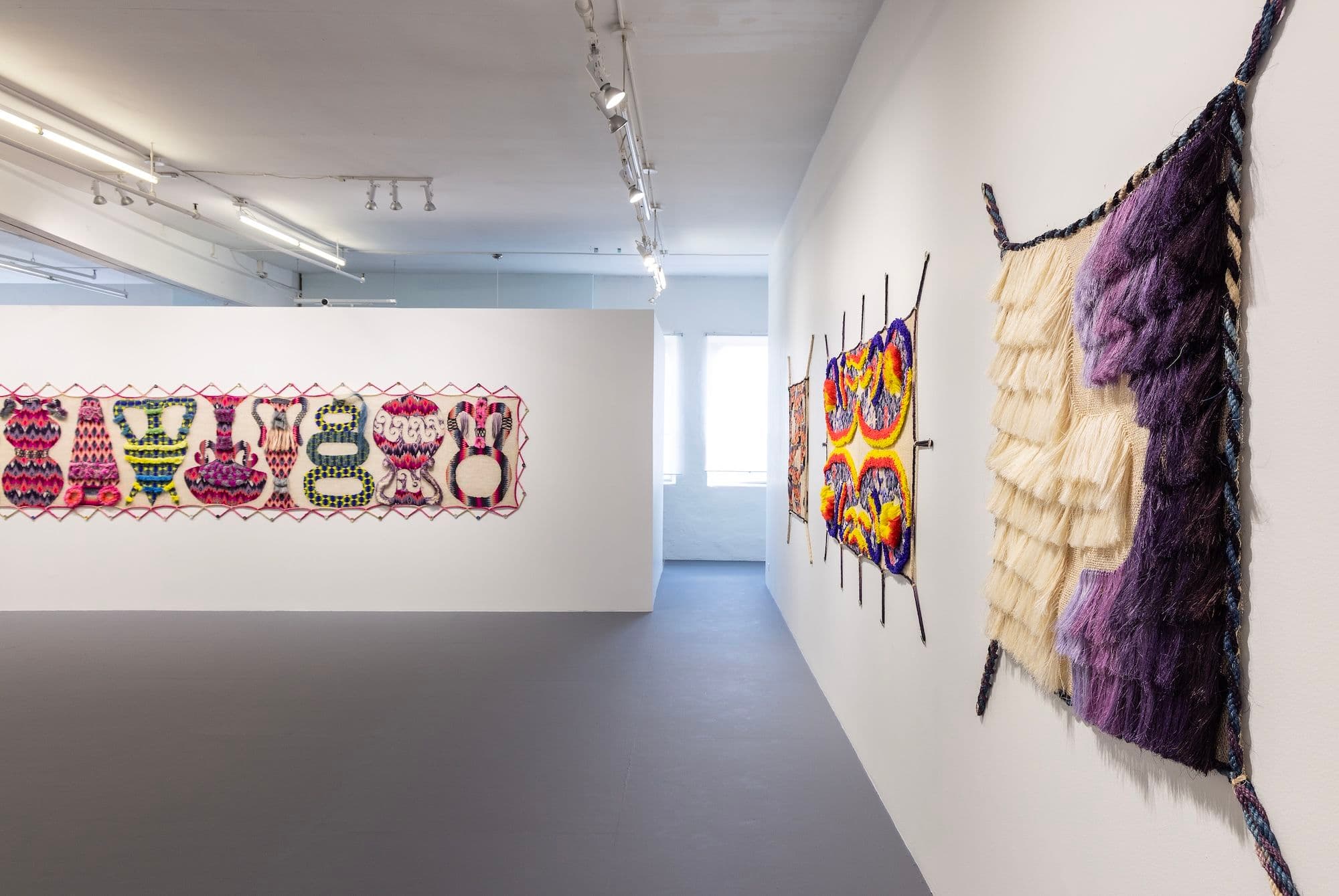
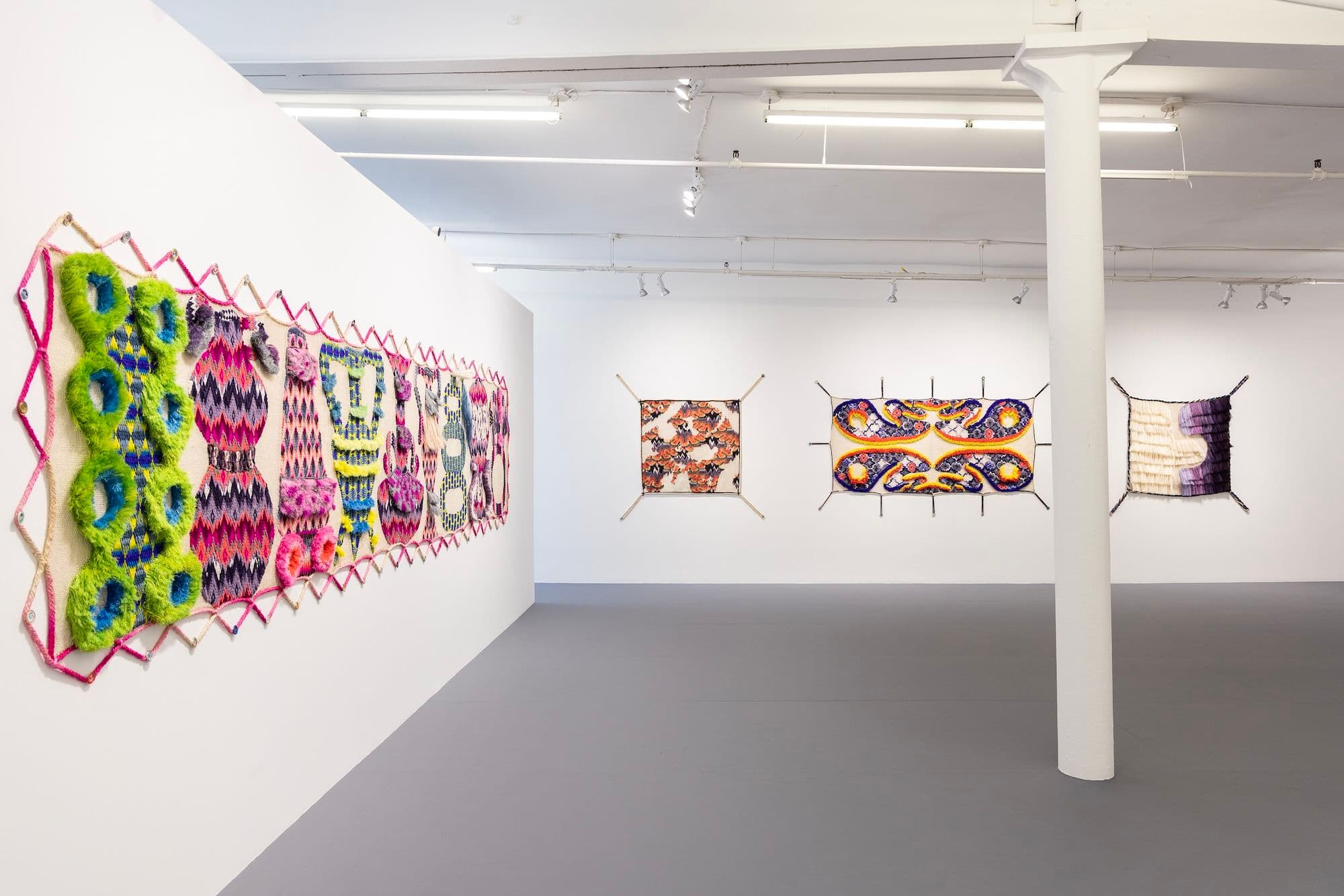
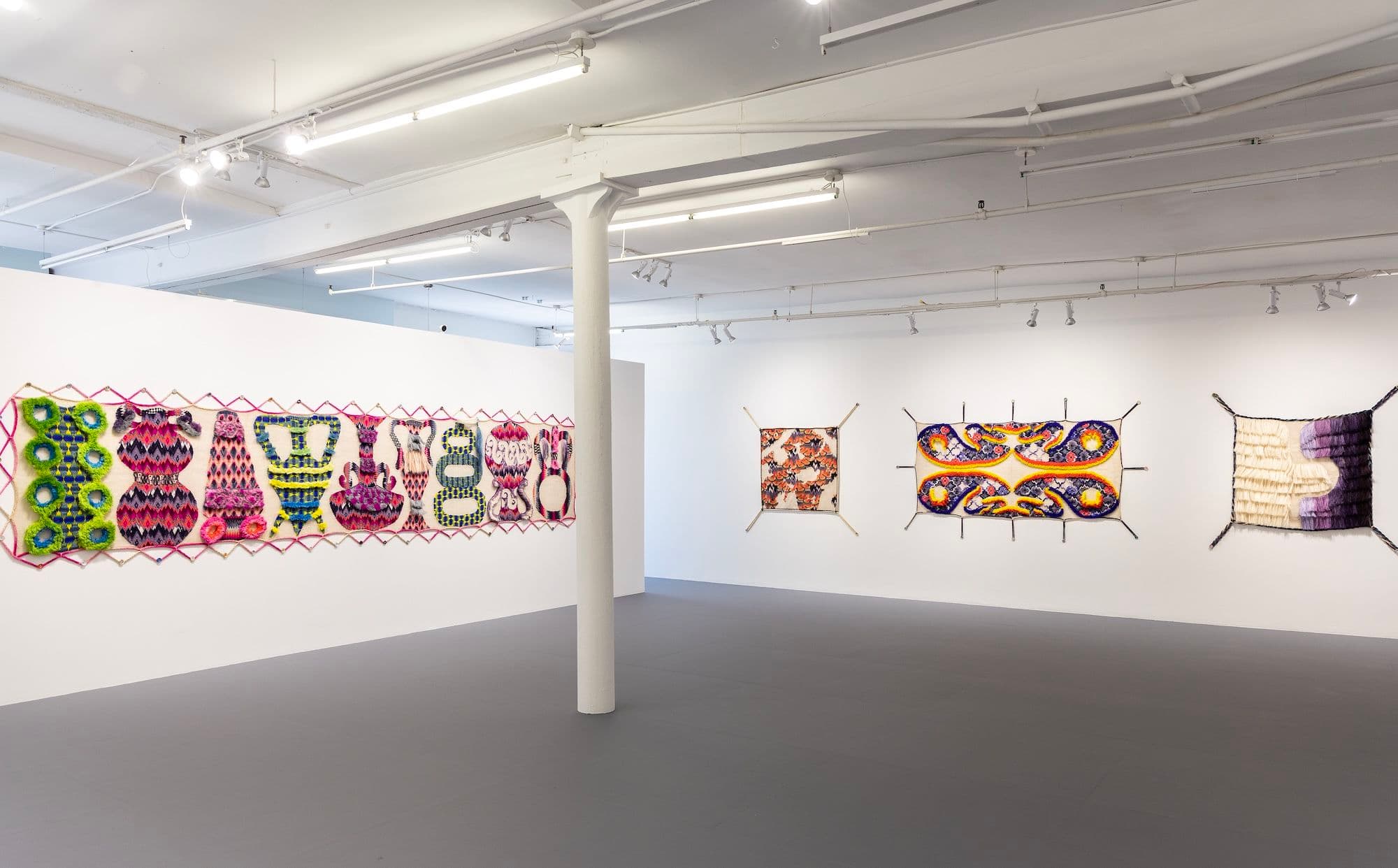
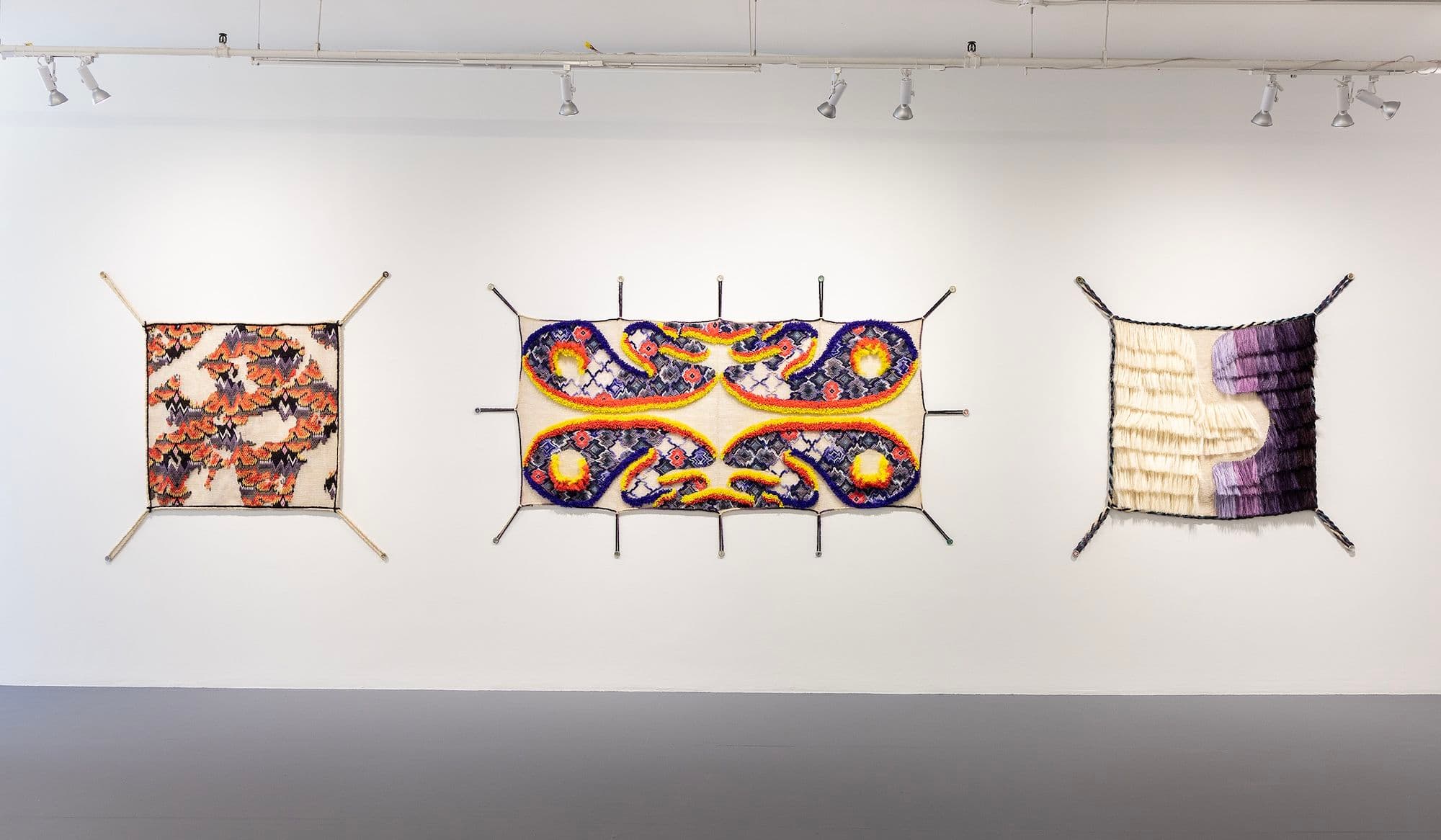
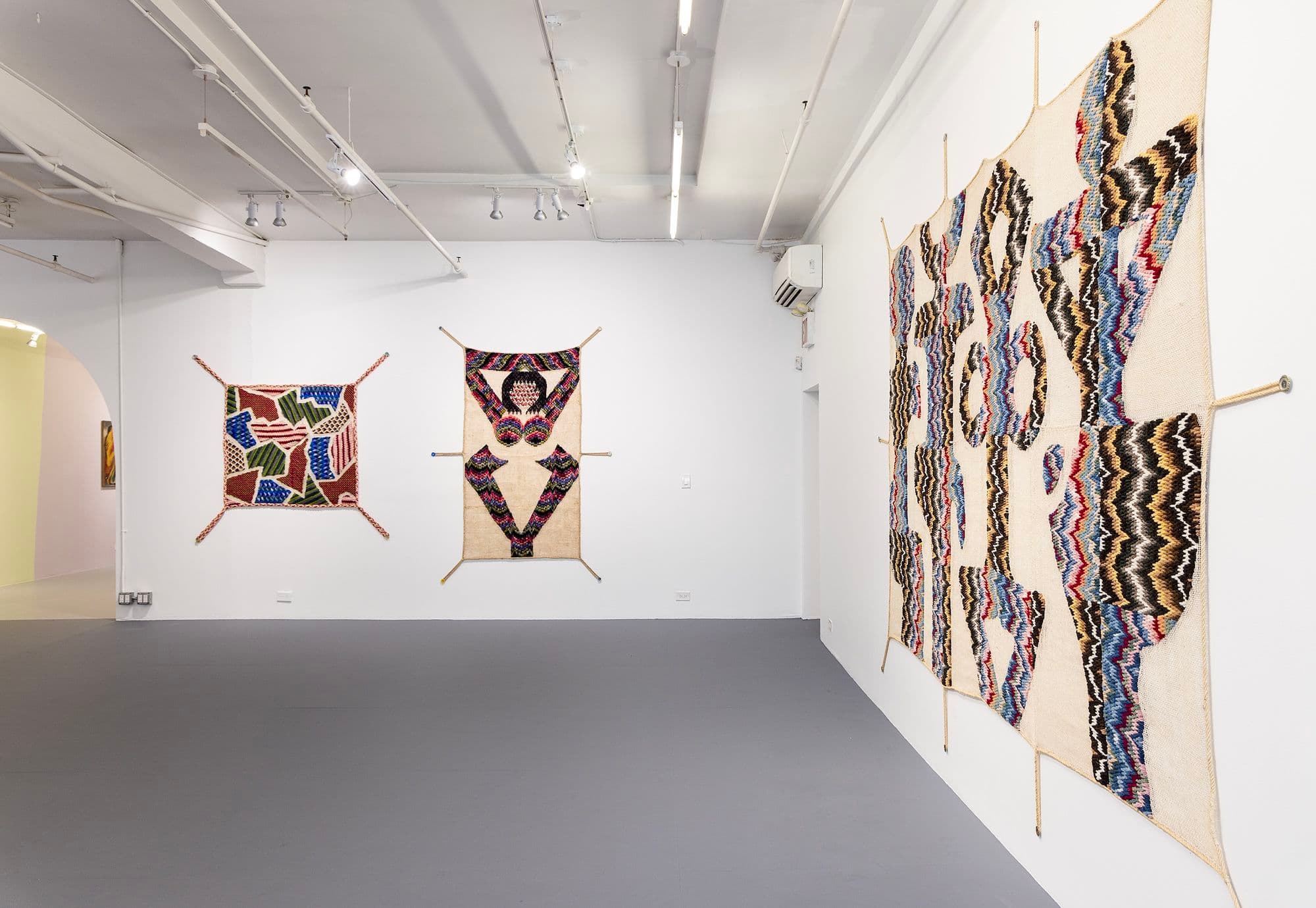
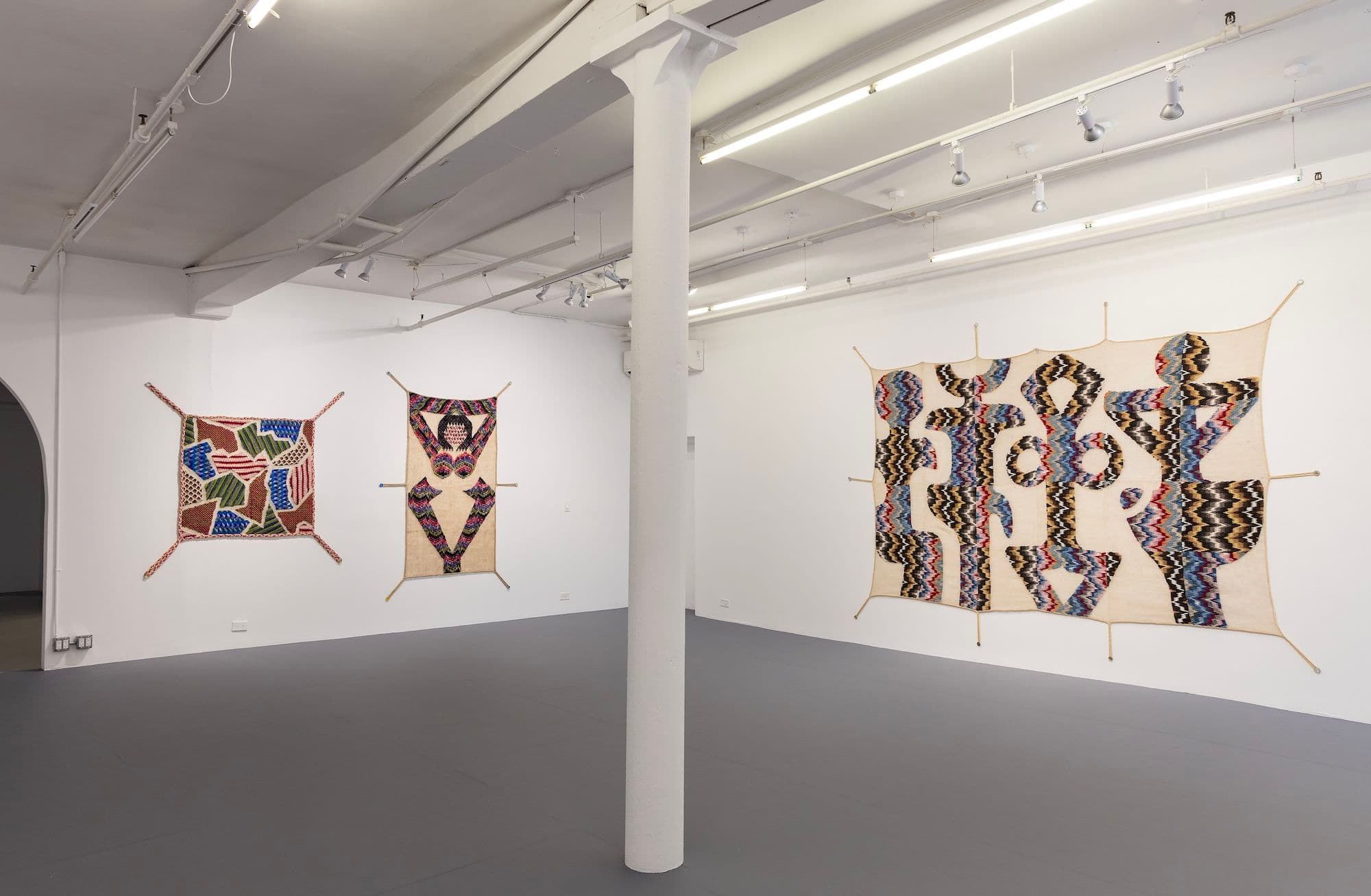
Instituto de VisiónThe exhibition Tapetates brings together works created with the Renaissance technique of Bargello, a form of embroidery originating in 17th-century Florence that, through stepped stitches, imitates the effect of loom woven textiles. Aurora Pellizzi reclaims this historic technique and projects it into an expansive territory, in which aesthetic developments from the Renaissance echo in dialogue with Mayan codices, Egyptian friezes, modernist abstraction and 20th-century feminist and craft narratives. The Bargello technique experienced an unexpected resurgence in the mid-20th century. The Arts and Crafts movement, hippie do-it-yourself culture, and the first feminist waves reclaimedpractices once deemed “feminine,” “domestic,” or “minor.” Craft took on political connotations: making by hand meant rejecting machine-making; embroidering was a way to reclaim the dignity of women’s labor; stitching became a way to inscribe the body into the fabric of culture. Tapetates challenges the idea of craft by expanding its scale. What begins as hand embroidery unfolds into the architectural and the geological. Bargello, once the technique of armchairs and cushions becomes here a textile mural, monumental frieze and topographic landscape. —Ana Elena Mallet