
Marais, Paris
Group Exhibition
Dancing on the Marks
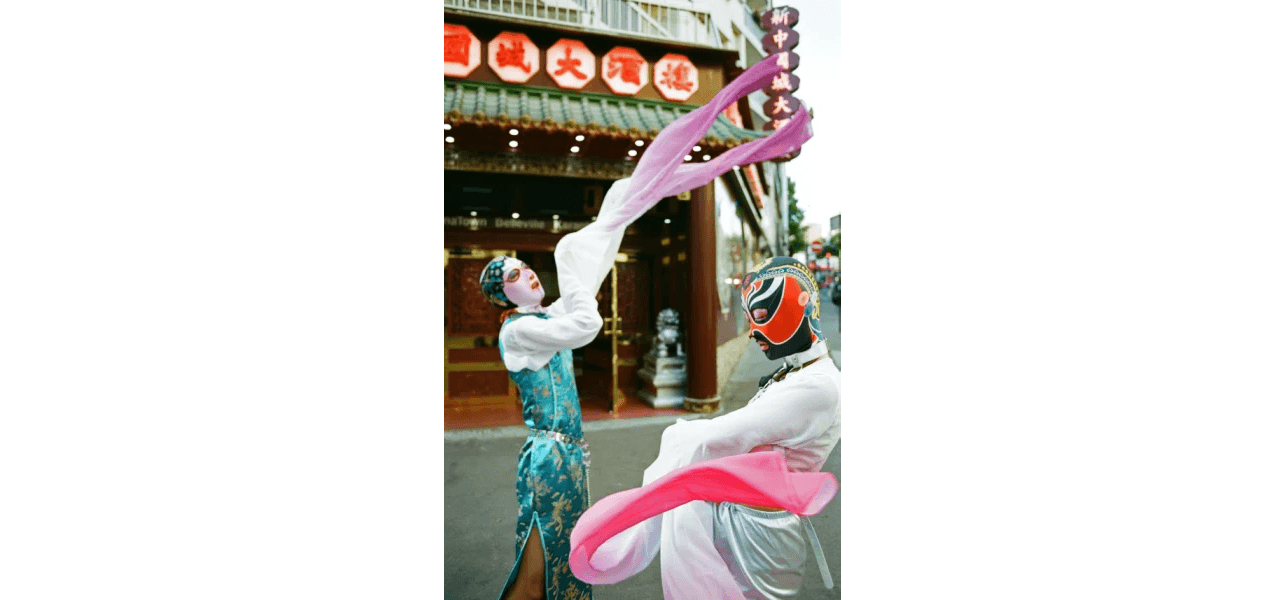
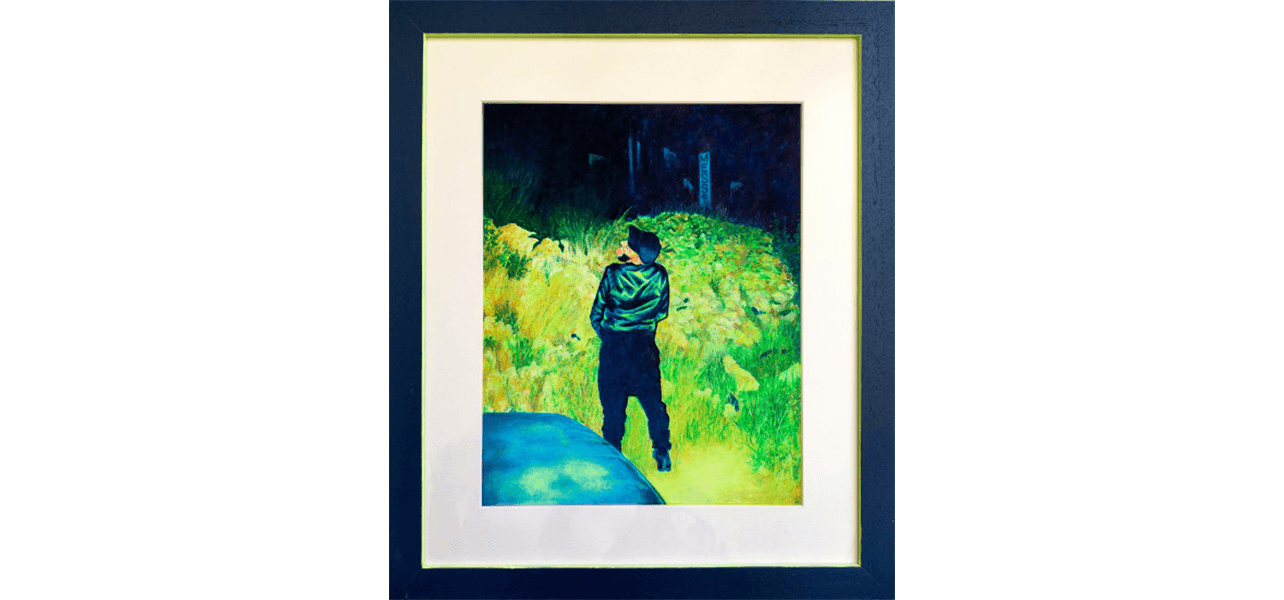
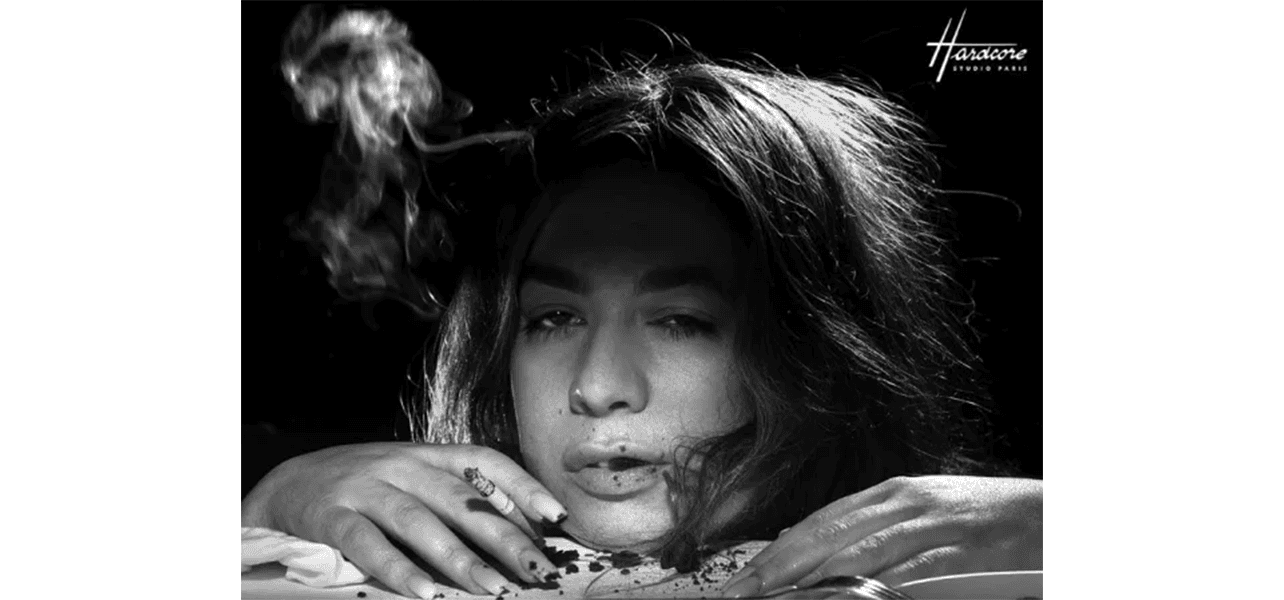
Praz-DelavalladeMaïc Baxane, Nelson Bourrec Carter, Aëla Maï Cabel (in collaboration with Victor Bulle), Audrey Couppé de Kermadec, Naëlle Dariya, Sido Lansari, Elijah Ndoumbe, No Anger, Jordan Roger Barré, Kianuë Tran Kiêu [Scroll down for French version / Veuillez trouver ci-dessous la version française] Praz-Delavallade Paris is pleased to present Dancing on the Marks, a group show of the winners of the Utopi.e Prize. I often wonder what works of art are for, and perhaps even more so today. I remember a professor starting a term in a Philosophy of Art course with that question a few years ago. One of the answers that often comes up in the history of this discipline is the idea of representation - that of a landscape, an emotion, a movement. It seems to me that this is also true for the exhibition we are dealing with here, the only difference being that it tackles the representation of a community. Indeed, a lot of the works of art that were selected for the second edition of the Prix Utopi·e at the Galerie Praz-Delavallade are portraits, and in particular that of others, of people the artists know. Maïc’s pastels showcase the faces of loved ones and extended friendships. These close relationships also nourish Audrey’s work. Caring for her community has become a major focus of her craft, not least through her recently co-founding the Mental Health in Contemporary Art collective. Self-care and pleasure are also at the heart of No Anger’s fractured self-portrait, as they choose this ‘grammar of fragmentation’ as a way of completely reappropriating their body. Despite what one might think, this is no longer essentially a question of gender, identity or desire. Rather, what dominates is the sense of a shift towards joy. That very joy can be seen in many of the drawings and photographs on display in the gallery. The exhibition thus almost appears as a self-portrait of a community that is perhaps a little disordered, but self-confident, prosperous and joyful. This does not mean that queer struggles are over. It’s simply a question of taking the same path as before but doing it with even greater joy. Obviously, history is still being written, as Sido shows it with his project on Lahzem, i.e. the first Arab-Berber homosexual group founded in the 1980s in France and the Arab world. In doing so, he contributes to the construction of a useful narrative for the community. The latter grows as knowledge expands, or as fiction makes room for it, as in the case of Jordan’s House of Uranists, which imagines new entities, like an adopted family that has become necessary. The way in which a collective organises itself and narrates its own story is also at the heart of Aëla’s practice; they collaborated with Victor Bulle in the context of this exhibition. Their installations are often linked to performance work and workshops; they revisit the issues of self-sufficiency and the environment through a singular use of materials and knowledge. Nelson’s work, in which the US suburbs are a recurring motif, is more concerned with the way a style of habitation becomes desirable and, above all, fantasised about. The houses we see are reconstitutions of Allensworth in the United States, a village founded by and for black people at the beginning of the twentieth century and deserted a few years later. Kianuë and Elijah offer possibilities to reappropriate certain dominant narratives. Using radically different approaches, they both present their work in opposition to a formerly ordinary and colonial use of photography, which has marked the history of racism. Their aim is to add these stories to our common history, to make them visible, to re-establish them. A similar method can be seen in Naëlle’s work. The references she makes to an ideal of the world she works in, i.e. cinema, allows her to reappropriate that very world through humour. With this self-portrait, Naëlle raises the question of validation and success, and also undoubtedly of the tortuous path that led to them. So I'm back to my introductory question: what is the purpose of works of art? In this case, to support artists. To support a confident, prosperous and happy community. —Théo Diers Utopi.e is a non-profit organization that promotes gender equality in the visual and performing arts. Through a variety of events, Utopi.e aims to promote and defend committed LGBTQIA+ artists whose practices address societal issues, and whose work conveys notions of inclusion, testimony, and respect for difference. Our ambition is to celebrate, in the most respectful way, this artistic, militant ‘presence’ that proposes new perspectives. Every year Utopi.e partners up with galeries to organize an exhibition with the laureats. ***** Praz-Delavallade Paris est heureux de présenter Danser sur les traces, exposition de group des lauréat.e.s du Prix Utopi.e, du 1er au 18 février 2024. Je me demande souvent à quoi servent les œuvres d’art. Peut-être encore plus aujourd’hui. Dans un cours de philosophie de l’art il y a quelques années, on avait ouvert le semestre sur cette question. Parmi les réponses qui reviennent souvent dans l’histoire de cette discipline, il y a l’idée de représentation. Celle d’un paysage, d’une émotion, d’un mouvement. Il me semble que c’est également vrai pour l’exposition qui nous occupe ici, à la seule différence qu’il s’agit de la représentation d’une communauté. En effet, la sélection de la deuxième édition du Prix Utopi·e pour cette exposition à Praz-Delavallade est dominée par le portrait, et en particulier celui des autres, de celleux que l’on connaît.