

Tribeca, New York
Group Exhibition
Revisiting The Potosí Principle Archive: Histories of Art and Extraction
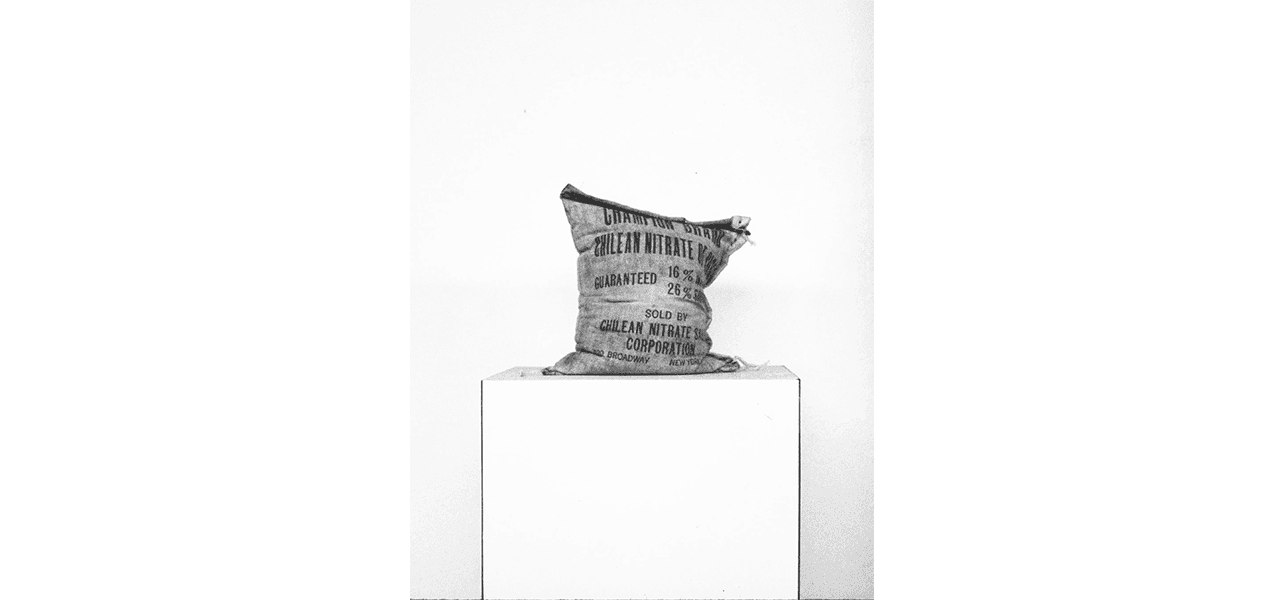
Institute for Studies on Latin American ArtMonika Baer, Matthijs de Bruijne, Alice Creischer, Stephan Dillemuth, Juan Downey, Harun Farocki, León Ferrari, Pedro Figari, Sally Gutiérrez Dewar, Miguel Hilari, Claus Kempe, Zhibin Lin, Cildo Meireles, Melchor María Mercado, Dennis Oppenheim, Claudio Perna, Felipe Guaman Poma de Ayala, Juan Carlos Romero, Konstanze Schmitt, Andreas Siekmann, Territorio Doméstico, Augusto Torres, Abraham Regino Vigo Curated by Olivia Casa and Pujan Karambeigi The Institute for Studies on Latin American Art (ISLAA) is pleased to present the inaugural ground-floor exhibition in our new Tribeca headquarters. Revisiting The Potosí Principle Archive: Histories of Art and Extraction examines the legacies of colonization through the intertwined histories of art, labor, and resource extraction in Latin America. It brings together publications, films, and artworks, including works from ISLAA’s collection by artists Juan Downey, Pedro Figari, Cildo Meireles, and Claudio Perna, among others. The exhibition explores how the colonial silver-mining industry in the city of Potosí, located in present-day Bolivia, was instrumental to the development of capitalism and Baroque art on both sides of the Atlantic. Modernity, it acknowledges, was only possible through the extraction of natural resources and the exploitation of labor in the Americas. This history set the stage for the present-day ecological disasters resulting from resource extraction. At the center of this presentation is The Potosí Principle Archive, a series of thirty-six paperback booklets produced in 2018 that were first presented in 2021 at the Haus der Kulturen der Welt, Berlin. Installed on a large table and available for visitors to read, these booklets showcase research by artists Alice Creischer and Andreas Siekmann and elaborate this historical foundation in relation to events of the recent past in interviews, essays, and poems by artists and scholars, including Roberto Choque Canqui, Silvia Federici, María Galindo, Elvira Espejo Ayca, Eduardo Molinari, and Edgar “Huracán” Ramírez. This reading area is surrounded by artworks, facsimiles, and films that are connected by threads that wind through the gallery and are united by Creischer and Siekmann’s research into Baroque paintings of processions—a motif used throughout history to make otherwise abstract economic processes and social categories visible. Films by Harun Farocki, Sally Gutiérrez Dewar, and Miguel Hilari respond to Baroque paintings of the city of Potosí, while reproductions of images by Melchor María Mercado and Felipe Guaman Poma de Ayala highlight Indigenous lives and perspectives in the South American colonies. Other works examine distinct forms of economic exchange, exploitation, and labor around the globe. Works by Juan Downey, Cildo Meireles, Claudio Perna, and Juan Carlos Romero confront resource extraction, monetary value, and political oppression in twentieth-century Latin America. Meanwhile, Matthijs de Bruijne, Zhibin Lin, Dennis Oppenheim, Konstanze Schmitt, and Territorio Doméstico grapple with financial systems, neoliberalism, and contemporary labor conditions in Europe, Asia, and North America. This presentation at ISLAA builds on the 2010 exhibition The Potosí Principle: How Can We Sing the Song of the Lord in an Alien Land?, curated by Alice Creischer, Andreas Siekmann, and Max Jorge Hinderer Cruz, and organized by the Museo Nacional Centro de Arte Reina Sofía, Madrid, and the Haus der Kulturen der Welt, Berlin. It was significant for both its experimental curatorial approach and its examination of colonial painting, which reframed modern history by placing the South American colonies at its center. Coinciding with the 2010 exhibition, the Reina Sofía published a separate counter-project titled Principio Potosí Reverso by Bolivian sociologist Silvia Rivera Cusicanqui and El Colectivo, a self-organized group of cultural action and critique, which reflected on the history of Potosí from an anthropological perspective rooted in Andean cosmologies. Revisiting The Potosí Principle Archive is a project by artists Alice Creischer and Andreas Siekmann, curated by Olivia Casa and Pujan Karambeigi. It is accompanied by an original booklet connecting the exhibition’s research to the site of New York, designed by Ramon Tejada, ISLAA’s Graphic Designer in Residence.