
Arsenale, Venice
Group Exhibition
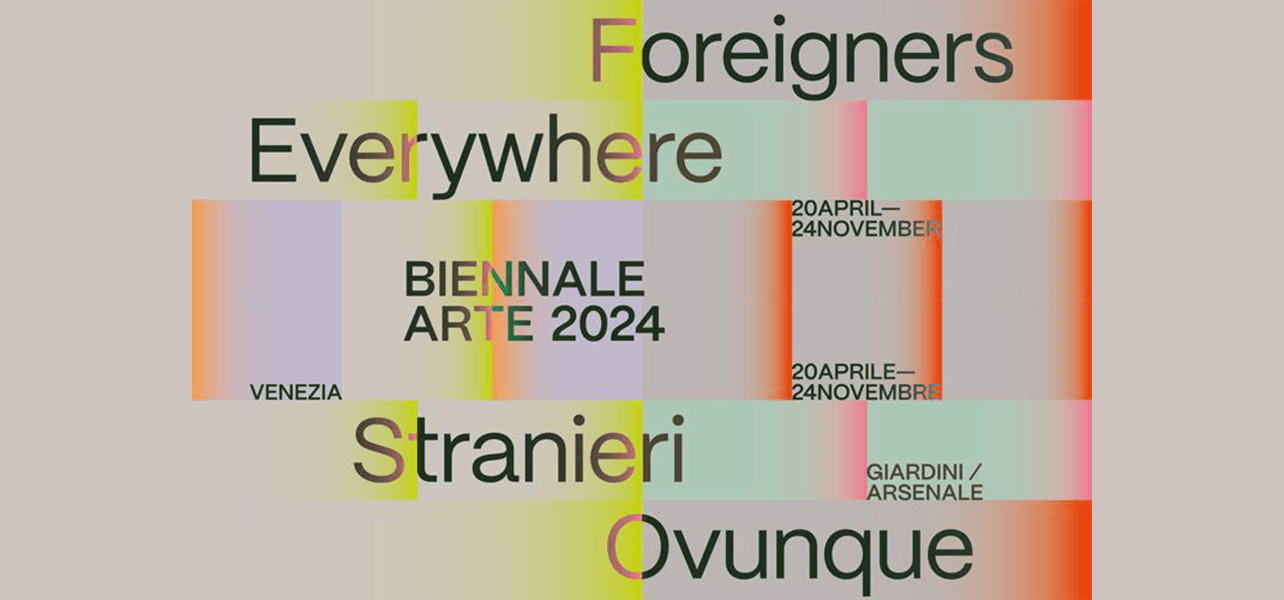
Stranieri Ovunque – Foreigners Everywhere
CorderiePlease scroll down for a complete list of participating artists. Statement by Adriano Pedrosa, Curator: The title of the 60th International Exhibition of La Biennale di Venezia is drawn from a series of works made by the Paris-born and Palermo-based collective Claire Fontaine since 2004. The works consist of neon sculptures in different colors that render in a growing number of languages the expression “Foreigners Everywhere”. The expression was in turn appropriated from the name of a collective from Turin that in the early 2000s fought racism and xenophobia in Italy: Stranieri Ovunque. There are currently some 53 languages in Claire Fontaine’s series of neon scultpures, both western and non-western, including several indigenous languages, some that are in fact extinct—they will be exhibited at the Biennale Arte this year in a new, large-scale installation in the iconic Gaggiandre shipyards in the Arsenale. The backdrop for the work is a world rife with multifarious crises concerning the movement and existence of people across countries, nations, territories and borders, which reflect the perils and pitfalls of language, translation, nationality, expressing differences and disparities conditioned by identity, nationality, race, gender, sexuality, freedom, and wealth. In this panorama, the expression Foreigners Everywhere has several meanings. First of all, that wherever you go and wherever you are you will always encounter foreigners—they/we are everywhere. Secondly, that no matter where you find yourself, you are always truly, and deep down inside, a foreigner. In addition, the expression takes on a very particular, site-specific meaning in Venice: a city whose original population consisted of refugees from Roman cities, a city that was at one point the most important centre for international trade and commerce in the Mediterranean, a city that was the capital of the Republic of Venice, dominated by Napoleon Bonaparte, and taken over by Austria, and whose population today consists of about 50,000 residents that may reach 165,000 in a single day during peak seasons due to the enormous number of tourists and travelers—foreigners of a privileged kind—visiting the city. In Venice, foreigners are everywhere. Yet one may also think of the expression as a motto, a slogan, a call to action, a cry— of excitement, joy or fear: Foreigners Everywhere! More importantly, it assumes a critical signification today in Europe, around the Mediterranean and in the world, when the number of forcibly displaced people hit the highest in 2022, at 108.4 million according to the United Nations High Commissioner for Refugees, and is expected to have grown even more in 2023. Artists have always traveled and moved about, under various circumstances, through cities, countries and continents, something that has only accelerated since the late 20th century—ironically a period marked by increasing restrictions regarding the dislocation or displacement of people. The Biennale Arte 2024’s primary focus is thus artists who are themselves foreigners, immigrants, expatriates, diasporic, émigrés, exiled, or refugees—particularly those who have moved between the Global South and the Global North. Migration and decolonization are key themes here. The Italian stranieri, the Portuguese estrangeiro, the French étranger, and the Spanish extranjero, are all etymologically connected to the strano, the estranho, the étrange, the extraño, respectively, which is precisely the stranger. Sigmund Freud’s Das Unheimliche comes to mind—the uncanny in English, which in Portuguese has indeed been translated as “o estranho”—the strange that is also familiar, within, deep down side. According to the American Heritage and the Oxford Dictionaries, the first meaning of the word queer is strange, and thus the Exhibition unfolds and focuses on the production of other related subjects: the queer artist, who has moved within different sexualities and genders, often being persecuted or outlawed; the outsider artist, who is located at the margins of the art world, much like the self-taught artist, the folk artist and the artista popular; as well as the indigenous artist, frequently treated as a foreigner in his or her own land. The productions of these four subjects are the interest of this Biennale Arte, constituting the International Exhibition’s Nucleo Contemporaneo, and although their work is often informed by their own lives, experiences, reflections, narratives and histories, there are also those who delve into more formal issues with their own strange, foreign or indigenous accent. Indigenous artists have an emblematic presence in the International Exhibition, and their work greets the public in the Central Pavilion, where the Makhu collective from Brazil will paint a monumental mural on the building’s façade, and in the Corderie in the Arsenale, where the Maataho collective from Aotearoa—New Zealand will present a large-scale installation in the first room, two other iconics locales in the exhibition. Queer artists appear throughout the exhibition, and are also the subject of a large section in the Corderie, which gathers works by artists from Canada, China, India, Mexico, Pakistan, the Philippines, South Africa, and the USA, and one devoted to queer abstraction in the Central Pavilion, with works by artists from China, Italy, and the Philippines. From Europe, three of its most remarkable female outsider artists are presented: Madge Gill, from the United Kingdom, Anna Zemánková, from the Czech Republic, and Aloïse, from Switzerland. The Nucleo Contemporaneo will feature a special section in the Corderie devoted to the Disobedience Archive, a project by Marco Scotini, which since 2005 has been developing a video archive focusing on the relationships between artistic practices and activism. In the Biennale Arte 2024, the presentation of the Disobedience Archive is designed by Juliana Ziebell, who also worked in the exhibition architecture of the entire International Exhibition. The section is divided into two parts especially conceived for our framework, diaspora activism and gender disobedience, and will include works by 39 artists and collectives made between 1975 and 2023. The International Exhibition will also feature a Nucleo Storico gathering works from 20th century Latin America, Africa, the Middle East and Asia. Much has been written about global modernisms and modernisms in the Global South, and a number of rooms will feature works from these territories, much like an essay, a draft, a speculative curatorial exercise that seeks to question the boundaries and definitions of modernism. We are all too familiar with the histories of modernism in Euroamerica, yet the modernisms in the Global South remain largely unknown. Knowledge about these is limited to the specialists in each individual country or region at best, yet connecting and exhibiting these works together will be revealing. It is this sense that these histories assume a truly contemporary relevance—we urgently need to learn more about and from them. Additionally, European modernism travelled far beyond Europe throughout the 20th century, often intertwined with colonialism, and many artists in the Global South traveled to Europe to be exposed to it. In this process, modernism was appropriated and devoured in the Global South. The reference here is to Oswald de Andrade’s notion of antropofagia, offered as a tool to the modern intellectual at the margins of Europe to appropriate metropolitan culture, cannibalizing it and producing something of his or her own, and evoking the cannibalistic practice of the indigenous Tupinambá people in pre-invasion Brazil. The unique, distinct types of modernism around the Global South assume radically new figures and forms as they often dialogue with local and indigenous narratives and references. Three rooms are planned for the Nucleo Storico, with one work by each artist, mostly paintings but also works on paper and sculpture, spanning the years of 1905 and 1990. It is difficult to establish a strict overarching chronology here, as the processes may be quite singular in each country or region, often following their own idiosyncratic courses. In the Central Pavilion, one room is devoted to portraits and representations of the human figure and a second one devoted to abstractions. The double-room named Portraits, includes works by 112 artists from Algeria, Aotearoa — New Zealand, Argentina, Bolivia, Brazil, Chile, China, Colombia, Cuba, Dominican Republic, Ecuador, Egypt, Ghana, Guatemala, India, Indonesia, Iran, Iraq, Jamaica, Korea, Lebanon, Malaysia, Mexico, Mozambique, Nigeria, Pakistan, Peru, Philippines, Puerto Rico, Singapore, South Africa, Sri Lanka, Sudan, Tunisia, Turkey, Uruguay, Venezuela, Vietnam, and Zimbabwe. The selection shows how the human figure has been explored in countless different ways by artists in the Global South, reflecting on the crisis of representation around the very figure that marked much of the art in 20th century art. In the Global South, many artists were in touch with European modernism, through travels, studies or books, yet they bring in their own highly personal and powerful reflections and contributions to their works. Most works depict non-white characters, which in Venice, at the heart of the Biennale, becomes an eloquent feature of this large and heterogenous group and the Exhibition itself. The room devoted to Abstractions includes works by 37 artists from Argentina, Aotearoa — New Zealand, Brazil, Colombia, Cuba, Dominican Republic, Egypt, Guatemala, India, Indonesia, Iraq, Jordan, Lebanon, Mexico, Morocco, Pakistan, Palestine, Philippines, Puerto Rico, South Africa and Turkey. A key reference here is the extraordinary Casablanca School of painters from Morocco, some of which will be presented at the Biennale for the first time. What is of interest here is a certain type of abstraction that detaches itself from the European constructivist abstract geometric tradition, with its rigid orthogonal grid of verticals and horizontals and its palette of primary colors, in order to privilege more organic, curvilinear shapes and forms, bright and vivid colors, in striking compositions. Most of these artists are being exhibited together for the first time, and we will learn from these unforeseen juxtapositions in the flesh, which will then hopefully point towards new connections, associations, and parallels much beyond the rather straightforward categories that I have proposed. Although not technically part of the Global South any longer, artists from Singapore and Korea have been brought into these sections, given that at the time they were part of the so-called Third World. In a similar manner, Selwyn Wilson and Sandy Adsett, from Aotearoa — New Zealand, have been brought into this Nucleo Storico given that they are historical Maori artists, and the focus on indigenous artists. With the inclusion of the vast majority of these artists in the Nucleo Storico at the Biennale Arte for the first time, a historical debt is paid to them. A third room in the Nucleo Storico is dedicated to the worldwide Italian artistic diaspora in the 20th century: Italian artists who travelled and moved abroad developing their careers in Africa, Asia, Latin America, as well as in the rest of Europe and the United States, becoming embedded in local cultures—and who often played significant roles in the development of the narratives of modernism beyond Italy. This room will feature works by 40 artists who are first or second generations Italians, exhibited in Lina Bo Bardi’s glass easel display system (Bo Bardi herself an Italian who moved to Brazil, and who won the 2021 Biennale Architettura’s Special Golden Lion for Lifetime Achievement in Memoriam). Two quite different but related elements have emerged rather organically in the research and have been developed, appearing as leitmotivs throughout the International Exhibition. The first one is textiles, which have been explored by many artists in the show in multiple, from key historical figures such as Olga de Amaral, Eduardo Terrazas, and Monika Correa in the Nucleo Storico, to many artists in the Nucleo Contemporaneo, including Agnes Waruguru, Ahmed Umar, Anna Zemánková, Antonio Guzman and Iva Jankovic, the Bordadoras de Isla Negra, Bouchra Khalili, Claudia Alarcon & Silät, Dana Awartani, Frieda Toranzo-Jaeger, Günes Terkol, Kang Seung Lee, Liz Collins, the Mataaho Collective, Nour Jaouda, Pacita Abad, Paula Nicho, Sangódáre Gbádégesin Ajàla, Shalom Kufakwatenzi, Susanne Wenger, Yinka Shonibare, as well as in the Chilean arpilleristas. These works reveal an interest in craft, tradition, and the handmade, and in techniques that were at times considered other or foreign, outsider or strange in the larger field of fine arts. A second motif is family of artists, artists related by blood, many of them Indigenous—such as Andres Curruchich and his granddaughter Rosa Elena from Guatemala; Abel Rodriguez and his son Aycoboo from Colombia; Fred Graham and his son Brett, Maori artists from Aotearoa — New Zealand; Juana Marta Rodas and her daughter Julia Isidrez from Paraguay; the Mahku, Movimento dos Artistas Huni Kuin, the Huni Kuin collective from the western part of the Brazilian Amazon region; Joseca and Taniki Yanomami, from the northern part of the same region; Santiago Yahuarcani and his son Rember from Peru; Susanne Wenger and her adopted son Sangódáre Gbádégesin Ajàla from Nigeria, the brothers Philomé and Senèque Obin from Haiti, and Jewad and Lorna Selim, the husband and wife from Iraq and the UK. Again tradition plays an important role here—the transmission of knowledge and practices from father or mother to son or daughter or among siblings and relatives. As a guiding principle, the Biennale Arte 2024 has favored artists who have never participated in the International Exhibition—though a number of them may have been featured in a National Pavilion, a Collateral Event, or in an edition in the 20th century. Special attention is being given to outdoor projects, both in the Arsenale (with works by Anna Maria Maiolino, Beatriz Cortez, Claire Fontaine, Lauren Halsey, Leilah Babirye, and Taylor Nkomo) and in the Giardini (with works by Ivan Argote, Mariana Telleria, Rindon Johnson, and Sol Calero). A performance program is being planned with events during the opening and closing days of the Exhibition. The Catalogue and the Short Guide of the Biennale Arte 2024 is being designed by Paula Tinoco from Estúdio Campo in São Paulo, and edited by myself with the collaboration of our two Artistic Organizers, Amanda Carneiro and Sofia Gotti. We have invited over 100 authors from different parts of the world to write the more than 300 artists’ entries in the books, privileging a polyphonic approach to the publication. The Catalogue features interviews with the two artists who won the Golden Lion for Lifetime Achievement, Anna Maria Maiolino and Nil Yalter, another one with Claire Fontaine, and one with myself, conducted by Julieta González. In addition, it includes essays by Jaider Esbell, Kobena Mercer, Luce Delire, Naine Terena, Ranajit Guha, Ticio Escobar, Walter Mignolo. In a personal level, I myself feel implicated in many of the themes, concepts, motifs and framework of the exhibition. I have lived abroad and have been fortunate to travel extensively during my lifetime. Yet often I have experienced the treatment reserved to a Third World foreigner—although never a refugee, and in fact holding one of the highest ranking passports form the Global South according to the Henley Passport Index. I also identify myself as queer—the first openly queer curator in the history of the Biennale Arte. Moreover, I come from a context in Brazil and in Latin America where the indigenous artist and the artista popular play important roles; although they have been marginalized in art history, they have recently begun to receive more attention. Brazil is also home to many diasporas, a land of foreigners as it were: besides the Portuguese who invaded and colonized the country, it is home to the largest African, Italian, Japanese and Lebanese diasporas in the world. La Biennale itself, as an international event with so many official participations by numerous different countries, has always been a platform for the exhibition of works of foreigners from all over the world. In this rich tradition, the 60th International Art Exhibition of La Biennale di Venezia, the Biennale Arte 2024, will be a celebration of the foreign, the distant, the outsider, the queer, as well as the indigenous. Lastly, I would like to express my deepest gratitude to the Board of La Biennale di Venezia and to the President Roberto Cicutto,who appointed me as Artistic Director of the Visual Arts sector in December 2022, in charge of curating the Biennale Arte 2024. — Invited Artists: 1. Pacita Abad, Basco, Philippines, 1946-2004, Singapore 2. Mariam Abdel-Aleem, Alexandria, Egypt, 1930–2010 3. Etel Adnan, Beirut, Lebanon, 1925–2021, Paris, France 4. Sandy Adsett, Wairoa, New Zealand, 1939. Lives in Hastings, New Zealand 5. Affandi, Cirebon, Indonesia, 1907–1990, Yogyakarta, Indonesia 6. Zubeida Agha, Lyallpur, India, 1922–1997, Islamabad, Pakistan 7. Dia al-Azzawi, Baghdad, Iraq, 1939. Lives in London, UK, Jordan and Lebanon. 8. Claudia Alarcón & Silät, Comunidad La Puntana, Salta, Argentina, 1989. Lives in Comunidad La Puntana 9. Rafa al-Nasiri, Tikrit, Iraq, 1940–2013, Amman, Jordan 10. Miguel Alandia Pantoja, Catavi, Bolivia, 1914–1975, Lima, Peru 11. Aloïse, Lausanne, Switzerland, 1886–1964, Gimel, Switzerland 12. Giulia Andreani, Venice, Italy, 1985. Lives in Paris, France. 13. Claudia Andujar, Neuchatel, Switzerland, 1931. Lives in São Paulo, Brazil 14. María Aranís Valdivia, Santiago, Chile, 1903–1966, Chile 15. Aravani Art Project, Founded in Bangalore, India, 2016. Based in several cities, India 16. Iván Argote, Bogotá, Colombia, 1983. Lives in Paris, France 17. Karimah Ashadu, London, UK, 1985. Lives in Hamburg, Germany and Lagos, Nigeria 18. Dana Awartani, Palestinian, born in Jeddah, Saudi Arabia, 1987. Lives in Jeddah 19. Aycoobo (Wilson Rodríguez), La Chorrera, Colombia, 1967. Lives in Bogotá, Colombia 20. Margarita Azurdia, Antigua, Guatemala, 1931–1998, Guatemala City 21. Leilah Babirye, Kampala, Uganda, 1985. Lives in New York City, USA 22. Libero Badii, Arezzo, Italia, 1916–2001, Buenos Aires, Argentina 23. Ezekiel Baroukh, Mansoura, Egypt, 1909–1984, Paris, France 24. Baya, Bordj El Kiffan, Algeria, 1931–1998, Blida, Algeria 25. Aly Ben Salem, Tunis, Tunisia, 1910–2001, Stockholm, Sweden 26. Semiha Berksoy, Istanbul, Turkey, 1910–2004 27. Gianni Bertini, Pisa, Italy, 1922–2010, Caen, France 28. Lina Bo Bardi, Rome, Italy, 1914-1992, São Paulo, Brazil 29. Maria Bonomi, Meina, Italy, 1935. Lives in São Paulo, Brazil 30. Bordadoras de Isla Negra, Founded in Isla Negra, Chile, 1967–1980 31. Victor Brecheret, Farnese, Italy, 1894–1955, São Paulo, Brazil 32. Huguette Caland, Beirut, Lebanon, 1931–2019 33. Sol Calero, Caracas, Venezuela, 1982. Lives in Berlin, Germany 34. Elda Cerrato, Asti, Italy, 1930–2023, Buenos Aires, Argentina 35. Mohammed Chebaa, Tangiers, Morocco, 1935–2013, Casablanca, Morocco 36. Georgette Chen, Zhejiang, China, 1906–1993, Singapore 37. Galileo Chini, Florence, Italy, 1873–1956 38. Kudzanai Chiurai, Harare, Zimbabwe, 1980. Lives in Harare 39. Isaac Chong Wai, Hong Kong, 1990. Lives in Berlin, Germany and Hong Kong 40. Saloua Raouda Choucair, Beirut, Lebanon, 1916–2017 41. Chaouki Choukini, Choukine, Lebanon, 1946. Lives in La Verrière, France 42. Chua Mia Tee, 1931, Shantou, China. Lives in Singapore. 43. Claire Fontaine, Founded in Paris, France, 2004. Based in Palermo, Italy 44. Manauara Clandestina, Manaus, Brazil, 1992. Lives in São Paulo, Brazil. 45. River Claure, Cochabamba, Bolivia, 1997. Lives in Cochabamba and La Paz, Bolivia 46. Julia Codesido, Lima, Peru, 1883–1979 47. Liz Collins, Alexandria, USA, 1968. Lives in Brooklyn, USA 48. Jaime Colson, Puerto Plata, Dominican Republic, 1901–1975, Santo Domingo, Dominican Republic 49. Waldemar Cordeiro, Rome, Italy, 1925–1973, São Paulo, Brazil 50. Monika Correa, Mumbai, India, 1938. Lives in Mumbai 51. Beatriz Cortez, San Salvador, El Salvador, 1970. Lives in Los Angeles and Davis, USA 52. Olga Costa, Leipzig, Germany, 1913–1993, Guanajuato, Mexico 53. Miguel Covarrubias, Mexico City, 1904–1957 54. Victor Juan Cúnsolo, Vittoria, Italy, 1898–1936 Lanus, Argentina 55. Andrés Curruchich, Comalapa, Guatemala, 1891-1969 56. Rosa Elena Curruchich, Comalapa, Guatemala, 1958–2005 57. Djanira da Motta e Silva, Avaré, Brazil, 1914–1979, Rio de Janeiro, Brazil 58. Olga De Amaral, Bogotá, Colombia, 1932. Lives in Bogotá 59. Filippo de Pisis, Ferrara, Italy, 1896–1956, Milan, Italy 60. Juan Del Prete, Vasto, Italy, 1897–1987, Buenos Aires, Argentina 61. Pablo Delano, San Juan, Puerto Rico, 1954. Lives in West Hartford, USA 62. Emiliano Di Cavalcanti, Rio de Janeiro, Brazil, 1897–1976 63. Danilo Di Prete, Zambra, Italy, 1911–1985, São Paulo, Brazil 64. Cícero Dias, Escada, Brazil, 1907–2003, Paris, France 65 - 104. Disobedience Archive – Marco Scotini, Ursula Biemann, Black Audio-Film Collective, Seba Calfuqueo, Simone Cangelosi, Cinéastes pour les sans-papiers, Critical Art Ensemble, Snow Hnin Ei Hlaing, Marcelo Expósito with Nuria Vila, Maria Galindo & Mujeres Creando, Barbara Hammer, mixrice, Khaled Jarrar, Sara Jordenö, Bani Khoshnoudi, Maria Kourkouta & Niki Giannari, Pedro Lemebel, LIMINAL & Border Forensics (Lorenzo Pezzani, Jack Isles, Giovanna Reder, Stanislas Michel, Chiara Denaro, Alagie Jinkang, Charles Heller, Kiri Santer, Svitlana Lavrenchuk, Luca Obertüfer), Angela Melitopoulos, Jota Mombaça, Carlos Motta, Zanele Muholi, Pınar Öğrenci, Daniela Ortiz, Thunska Pansittivorakul, Anand Patwardhan, Pilot TV Collective, Queerocracy, Oliver Ressler and Zanny Begg, Carole Roussopoulos, Güliz Sağlam, Irwan Ahmett & Tita Salina, Tejal Shah, Chi Yin Sim, Hito Steyerl, Sweatmother, Raphaël Grisey and Bouba Touré, Nguyễn Trinh Thi, James Wentzy, Želimir Žilnik 105. Juana Elena Diz, Buenos Aires, Argentina, 1925 – ? 106. Tarsila do Amaral, Capivari, Brazil, 1886–1973, São Paulo, Brazil 107. Saliba Douaihy, Ehden, Lebanon, 1915–1994, New York City, USA 108. Dullah, Surakarta, Indonesia, 1919–1996, Yogyakarta, Indonesia 109. Inji Efflatoun, Cairo, Egypt, 1924–1989 110. Uzo Egonu, Onitsha, Nigeria, 1931–1996, London, UK 111. Mohammad Ehsaei, Qazvin, Iran, 1939. Lives in Tehran, Iran, and Vancouver, Canada 112. Hatem El Mekki, Jakarta, Indonesia, 1918–2003, Carthage, Tunisia 113. Aref El Rayess, Aley, Lebanon, 1928–2005 114. Ibrahim El-Salahi, Omduran, Sudan, 1930. Lives in Oxford, UK. 115. Elyla, Chontales, Nicaragua, 1989. Lives in Masaya, Nicaragua 116. Ben Enwonwu, Onitsha, Nigeria, 1917–1994, Lagos, Nigeria 117. Romany Eveleigh, London, UK, 1934–2020, Rome, Italy 118. Hamed Ewais, Beni Soueif, Egypt, 1919–2011, Cairo, Egypt 119. Dumile Feni, Worcester, South Africa, 1939–1991, New York City, USA 120. Alessandra Ferrini, Florence, Italy, 1984. Lives in London, UK 121. Cesare Ferro Milone, Turin, Italy, 1880–1934 122. Raquel Forner, Buenos Aires, Argentina, 1902–1988 123. Simone Forti, Florence, Italy, 1935. Lives in Los Angeles, USA 124. Victor Fotso Nyie, Doula, Cameroon, 1990. Lives in Faenza, Italy 125. Louis Fratino, Annapolis, USA, 1993. Lives in Brooklyn, USA 126. Paolo Gasparini, Gorizia, Italy, 1934. Lives in Trieste, Caracas, Venezuela and Mexico City 127. Osogbo, Nigeria, 1948–2021 128. Umberto Giangrandi, Pontedera, Italy, 1943. Lives in Bogotà, Colombia 129. Madge Gill, Walthamstow, UK, 1882–1961, London, UK 130. Marlene Gilson, Wadawurrung, Warrnambool, Australia, 1944. Lives in Gordon, Australia 131. Luigi Domenico Gismondi, Sanremo, Italy, 1872–1946, Mollendo, Peru 132. Gabrielle Goliath, Kimberley, South Africa, 1983. Lives in Johannesburg, South Africa 133. Brett Graham, Auckland, Aotearoa, New Zealand, 1967. Lives in Auckland 134. Fred Graham, Arapuni, Aotearoa, New Zealand, 1928. Lives in Waiuku, Aotearoa, New Zealand 135. Enrique Grau Araújo, Panama City, Panama, 1920–2004, Bogotá, Colombia 136. Oswaldo Guayasamín, Quito, Ecuador, 1919–1999, Baltimore, USA 137. Nedda Guidi, Gubbio, Italy, 1923–2015, Rome, Italy 138. Hendra Gunawan, Bandung, Indonesia, 1918–1983 Bali, Indonesia 139. Antonio Jose Guzman & Iva Jankovic, Panama City, 1971. Lives in Amsterdam, the Netherlands and Panama City; Ruma, Serbia, 1979. Lives in Amsterdam, the Netherlands 140. Marie Hadad, Beirut, Lebanon, 1889–1973 141. Samia Halaby, Jerusalem, Palestine, 1936. Lives in New York City, USA 142. Tahia Halim, Dongola, Sudan, 1919–2003, Cairo, Egypt 143. Lauren Halsey, Los Angeles, USA, 1987. Lives in Los Angeles 144. Nazek Hamdi, Cairo, Egypt, 1926–2019 145. Mohamed Hamidi, Casablanca, Morocco, 1941. Lives in Casablanca and Azemmour, Marocco 146. Faik Hassan, Baghdad, Iraq, 1914–1992, Paris, France 147. Kadhim Hayder, Baghdad, Iraq, 1932–1985 148. Gilberto Hernández Ortega, Baní, Dominican Republic, 1923–1979, Santo Domingo, Dominican Republic 149. Carmen Herrera, Havana, Cuba, 1915–2022, New York City, USA 150. Evan Ifekoya, Iperu, Nigeria, 1988. Lives in London, UK 151. Julia Isídrez, Itá, Paraguay, 1967. Lives in Itá 152. Mohammed Issiakhem, Tizi Ouzou, Algeria, 1928–1985, Algiers, Algeria 153. Elena Izcue Cobián, Lima, Peru, 1889–1970 154. María Izquierdo, San Juan de los Lagos, Mexico, 1902–1955, Mexico City 155. Nour Jaouda, Cairo, Egypt, 1997. Lives in Cairo and London, UK 156. Rindon Johnson, San Francisco, USA, 1990. Lives in Berlin, Germany 157. Joyce Joumaa*, Beirut, Lebanon, 1998. Lives in Montreal, Canada. Biennale College Arte 158. Mohammed Kacimi, Meknes, Morocco, 1942–2003, Rabat, Morocco 159. Frida Kahlo, Mexico City, 1907–1954 160. Nazira Karimi*, Dushanbe, Tajikistan, 1996. Lives in Almaty, Kazakhstan and Vienna, Austria Biennale College Arte 161. George Keyt, Kandy, Sri Lanka, 1901–1993, Colombo, Sri Lanka 162. Bhupen Khakhar, Bombay, India, 1934–2003, Baroda, India 163. Bouchra Khalili, Casablanca, Morocco, 1975. Lives in Vienna, Austria and works itinerantly. 164. Kiluanji Kia Henda, Luanda, Angola, 1979. Lives in Luanda 165. Linda Kohen, Milan, Italy, 1924. Lives in Montevideo, Uruguay 166. Shalom Kufakwatenzi, Harare, Zimbabwe, 1995. Lives in Harare 167. Ram Kumar, Shimla, India, 1924–2018, Delhi, India 168. Fred Kuwornu, Bologna, Italy, 1971. Lives in New York City, USA 169. Grace Salome Kwami, Worawora, Ghana, 1923–2006 170. Lai Foong Moi, Negeri Sembilan, Malaysia, 1931–1995, Singapore 171. Wifredo Lam, Sagua la Grande, Cuba, 1902–1982, Paris, France 172. Judith Lauand, Araraquara, Brazil, 1922–2022, São Paulo, Brazil 173. Maggie Laubser, Bloublommetjieskloof, South Africa, 1886–1973, Strand, South Africa 174. Simon Lekgetho, Schoemansville, South Africa, 1929–1985, Ga-Rankuwa, South Africa 175. Celia Leyton Vidal, Santiago, Chile, 1895—1975 176. Lim Mu Hue, Singapore, 1936–2008 177. Romualdo Locatelli, Bergamo, Italy, 1905–1943, Manila, Philippines 178. Bertina Lopes, Maputo, Mozambique, 1924–2012, Rome, Italy 179. Amadeo Luciano Lorenzato, Belo Horizonte, Brazil, 1900–1995 180. Anita Magsaysay-Ho, Zambales, Philippines, 1914–2012, Manila, Philippines 181. MAHKU (Movimento dos Artistas Huni Kuin), Founded in Kaxinawá (Huni Kuin) Indigenous Territory, Acre, Brazil, 2013. Based in Kaxinawá (Huni Kuin) Indigenous Territory, Brazil 182. Esther Mahlangu, Middelburg, South Africa, 1935. Lives in Mpumalanga, South Africa 183. Anna Maria Maiolino, Scalea, Italy, 1942. Lives in São Paulo, Brazil 184. Anita Malfatti, São Paulo, Brazil, 1889–1964 185. Ernest Mancoba, Johannesburg, South Africa, 1904–2002, Clamart, France 186. Edna Manley, Bournemouth, England, 1900–1987, Kingston, Jamaica 187. Josiah Manzi, Zimbabwe, 1933–2022 188. Teresa Margolles, Culiacán, Mexico, 1963. Lives in Mexico City and Madrid, Spain 189. Maria Martins, Campanha, Brazil, 1894–1973, Rio de Janeiro 190. María Martorell, Salta, Argentina, 1909–2010 191. Mataaho Collective, 2012, Aotearoa, New Zealand. Based in Aotearoa, New Zealand 192. Naminapu Maymuru-White, Yirrkala, Australia, 1952. Lives in Yirrkala 193. Mohamed Melehi, Asilah, Morocco, 1936–2020, Paris, France 194. Carlos Mérida, Guatemala City, 1891–1985, Mexico City 195. Gladys Mgudlandlu, Peddie, South Africa, (1917–1926?)–1979, Cape Town, South Africa 196. Omar Mismar, Bekaa Valley, Lebanon, 1986. Lives in Beirut, Lebanon. 197. Sabelo Mlangeni, Mpumalanga, South Africa, 1980. Lives in Johannesburg, South Africa 198. Tina Modotti, Udine, Italy, 1896–1942, Mexico City 199. Bahman Mohasses, Rasht, Iran, 1931–2010, Rome, Italy 200. Roberto Montenegro, Guadalajara, Mexico, 1885–1968, Mexico City 201. Camilo Mori Serrano, Valparaíso, Chile, 1896—1973, Santiago, Chile 202. Ahmed Morsi, Alexandria, Egypt, 1930. Lives in New York City, USA 203. Effat Naghi, Alexandria, Egypt, 1905–1994 204. Ismael Nery, Belem, Brazil, 1900–1934, Rio de Janeiro, Brazil 205. Malangatana Valente Ngwenya, Matalana, Mozambique, 1936–2011, Matosinhos, Portugal 206. Paula Nicho, Comalapa, Guatemala, 1955. Lives in Comalapa 207. Costantino Nivola, Orani, Italy, 1911–1988, East Hampton, USA 208. Taylor Nkomo, Bulawayo, Zimbabwe, 1957. Lives in Harare, Zimbabwe 209. Marina Núñez del Prado, La Paz, Bolivia, 1910–1995, Lima, Peru 210. Philomé Obin, Bas-Limbé, Haiti, 1892–1986 211. Sénèque Obin, Limbé, Haiti, 1893–1977 212. Alejandro Obregón, Barcelona, Spain, 1920–1991, Cartagena, Colombia 213. Tomie Ohtake, Kyoto, Japan, 1912–2015, São Paulo, Brazil 214. Uche Okeke, Nimo, Nigeria, 1933–2016 215. Marco Ospina, Bogotá, Colombia, 1912–1983 216. Samia Osseiran Junblatt, Saida, Lebanon, 1944. Lives in Bramiyeh, Lebanon. 217. Daniel Otero Torres, Bogotá, Colombia, 1985. Lives in Paris, France 218. Lydia Ourahmane, Saïda, Algeria, 1992. Lives in Algiers, Algeria and Barcelona, Spain 219. Pan Yuliang, Yangzhou, China, 1895–1977, Paris, France 220. Dalton Paula, Brasília, Brazil, 1982. Lives in Goiânia, Brazil 221. Amelia Peláez, Yaguajay, Cuba, 1896–1968, Havana, Cuba 222. George Pemba, Port Elizabeth, South Africa, 1912–2001, Eastern Cape, South Africa 223. Fulvio Pennacchi, Villa Collemandina, Italy, 1905–1992, São Paulo, Brazil 224. Claudio Perna, Milan, Italy, 1938–1997, Holguín, Cuba 225. Emilio Pettoruti, La Plata, Argentina, 1892–1971, Paris, France 226. Lê Phổ, Hanoi, Vietnam, 1907–2001, Paris, France 227. Bona Pieyre De Mandiargues, Rome, Italy, 1926 –2000, Paris, France 228. Ester Pilone, Cuneo, Italy, 1920 – ? 229. La Chola Poblete, Mendoza, Argentina, 1989. Lives Buenos Aires, Argentina 230. Charmaine Poh, Singapore, 1990. Lives in Berlin, Germany and Singapore 231. Maria Polo, Venice, Italy, 1937–1983, Rio de Janeiro, Brazil 232. Candido Portinari, Brodowski, Brazil, 1903 – 1962, Rio de Janeiro, Brazil 233. Sandra Poulson*, Angolan, born in Lisbon, Portugal, 1995. Lives in Luanda, Angola and London Biennale College Arte 234. B. Prabha, Maharashtra, India, 1933–2001, Nagpur, India 235. Lidy Prati, Resistencia, Argentina, 1921–2008, Buenos Aires, Argentina 236. Puppies Puppies (Jade Guanaro Kuriki-Olivo), Dallas, USA, 1989. Lives in New York City, USA. 237. Lee Qoede, Chilgok, South Korea, 1913–1965 238. Agnes Questionmark*, Rome, Italy, 1995. Lives in Rome and New York City, USA Biennale College Arte 239. Violeta Quispe, Lima, Peru, 1989. Lives in Lima 240. Alfredo Ramos Martinez, Monterrey, Mexico, 1871–1946, Los Angeles, USA 241. Sayed Haider Raza, Madhya Pradesh, India, 1922–2016, Delhi, India 242. Armando Reverón, Caracas, Venezuela, 1889–1954 243. Emma Reyes, Bogotá, Colombia, 1919–2003, Bordeaux, France 244. Diego Rivera, Guanajuato City, Mexico, 1886–1957, Mexico City 245. Juana Marta Rodas, Itá, Paraguay, 1925–2003 246. Laura Rodig Pizarro, Los Andes, Chile, 1896/1901–1972, Santiago, Chile 247. Abel Rodríguez, Cahuinarí, Colombia, 1941. Lives in Bogotá, Colombia 248. Aydeé Rodriguez Lopez, Cuajinicuilapa, Mexico, 1955. Lives in Cuajinicuilapa. 249. Freddy Rodriguez, Santiago de los Caballeros, Dominican Republic, 1945–2022, New York City, USA 250. Miguel Ángel Rojas, Bogotá, Colombia, 1946. Lives in Bogotá 251. Rosa Rolanda, Azusa, USA, 1896–1970, Mexico City 252. Jamini Roy, Bengal, India, 1887–1972, Calcutta, India 253. Rómulo Rozo, Bogotá, Colombia, 1899–1964, Mérida, Mexico 254. Erica Rutherford, Edinburgh, UK, 1923–2008, Charlottetown, Canada 255. José Sabogal, Cajabamba, Peru, 1888–1956, Lima, Peru 256. Mahmoud Sabri, Baghdad, Iraq, 1927–2012, Maidenhead, UK 257. Syed Sadequain, Amroha, India, 1930–1987, Karachi, Pakistan 258. Nena Saguil, Manila, Philippines, 1914–1994, Paris, France 259. Mahmoud Saïd, Alexandria, Egypt, 1897–1964 260. Kazuya Sakai, Buenos Aires, Argentina, 1927–2001, Dallas, USA 261. Ione Saldanha, Alegrete, Brazil, 1919–2001, Rio de Janeiro, Brazil 262. Dean Sameshima, California, USA, 1971. Lives in Berlin, Germany 263. Zilia Sánchez, Havana, Cuba, 1926. Lives in San Juan, Puerto Rico 264. Bárbara Sánchez-Kane, Mérida, Mexico, 1987. Lives in Mexico City 265. Nenne Sanguineti Poggi, Savona, Italy, 1909–2012, Finale Ligure, Italy 266. Fanny Sanín, Bogotá, Colombia, 1938. Lives in New York City, USA 267. Aligi Sassu, Milan, Italy, 1912–2000, Pollença, Spain 268. Greta Schödl, Hollabrunn, Austria, 1929. Lives in Bologna, Italy 269. Ana Segovia, Mexico City, 1991. Lives in Mexico City 270. Gerard Sekoto, Botshabelo, South Africa, 1913–1993, Nogent-sur-Marne, France 271. Jewad Selim, Ankara, Turkey, 1919–1961, Baghdad, Iraq 272. Lorna Selim, Sheffield, UK, 1928–2021, Abergavenny, UK 273. Joshua Serafin, Bacolod, Philippines, 1995. Lives in Brussels, Belgium 274. Kang Seung Lee, Seoul, South Korea, 1978. Lives in Los Angeles, USA 275. Gino Severini, Cortona, Italy, 1883—1966, Paris, France 276. Amrita Sher-Gil, Budapest, Hungary, 1913–1941, Lahore, India 277. Anwar Jalal Shemza, Shimla, India, 1928–1985, Stafford, UK 278. Yinka Shonibare, London, UK, 1962. Lives in London. 279. Doreen Sibanda, Derby, UK, 1954. Lives in Harare, Zimbabwe 280. Fadjar Sidik, Surabaya, Indonesia, 1930–2004, Yogyakarta, Indonesia 281. Gazbia Sirry, Cairo, Egypt, 1925–2021 282. Lucas Sithole, KwaThema, South Africa, 1931–1994, Spekboom, South Africa 283. Francis Newton Souza, Saligao, India, 1924–2002, Mumbai, India 284. Joseph Stella, Muro Lucano, Italy, 1877–1946, New York City, USA 285. Irma Stern, Schweizer-Reneke, South Africa, 1894–1966, Cape Town, South Africa 286. Leopold Strobl, Mistelbach, Austria, 1960. Lives in Mistelbach 287. Emiria Sunassa, Tanahwangko, Indonesia, 1894–1964, Lampung , Indonesia 288. Superflex, Founded in Copenhagen, Denmark, 1993. Based in Copenhagen 289. Armodio Tamayo, La Paz, Bolivia, 1924–1964 290. Maria Taniguchi, Dumaguete, Philippines, 1981. Lives in Manila, Philippines 291. Evelyn Taocheng Wang, Chengdu, China, 1981. Lives in Rotterdam, the Netherlands 292. Lucy Tejada, Pereira, Colombia, 1920–2011, Cali, Colombia 293. Mariana Telleria, Rufino, Argentina, 1979. Lives in Rosario, Argentina 294. ü ş Terkol, Istanbul, Turkey, 1981. Lives in Istanbul. 295. Eduardo Terrazas, Guadalajara, Mexico, 1936. Lives in Mexico City 296. Clorindo Testa, Benevento, Italy, 1923–2013, Buenos Aires, Argentina 297. Salman Toor, Lahore, Pakistan, 1983. Lives in New York, USA. 298. Frieda Toranzo Jaeger, Mexico City, 1988. Lives in Mexico City and Berlin, Germany 299. Horacio Torres, Livorno, Italy, 1924–1976, New York City, USA 300. Joaquin Torres-Garcìa, Montevideo, Uruguay, 1874–1949 301. Mario Tozzi, Fossombrone, Italy, 1895—1979, Saint-Jean-du-Gard, France 302. Twins Seven Seven, Ijara, Nigeria, 1944–2011, Ibadan, Nigeria 303. Ahmed Umar, Sudan, 1988. Lives in Oslo, Norway. 304. Unidentified Chilean women artists, Arpillera 305. Rubem Valentim, Salvador, Brazil, 1922–1991, São Paulo, Brazil 306. Edoardo Daniele Villa, Bergamo, Italy, 1915–2011, Johannesburg, South Africa 307. Eliseu Visconti, Giffoni Valle Piana, Italy, 1866–1944, Rio de Janeiro, Brazil 308. Alfredo Volpi, Lucca, Italy, 1896–1988, São Paulo, Brazil 309. Kay WalkingStick, Syracuse, USA, 1935. Lives in Pennsylvania, USA 310. WangShui, Dallas, USA, 1986. Lives in New York City, USA 311. Agnes Waruguru, Nairobi, Kenya, 1994. Lives in Nairobi. 312. Barrington Watson, Lucea, Jamaica, 1931–2016, Kingston, Jamaica 313. Osmond Watson, Kingston, Jamaica, 1934–2005 314. Susanne Wenger, Graz, Austria, 1915-2009, Osogbo, Nigeria 315. Emmi Whitehorse, New Mexico, USA, 1956. Lives in New Mexico. 316. Selwyn Wilson, Taumarere, New Zealand, 1927—2002, Kawakawa, Northland, New Zealand 317. Chang Woosoung, Chungju-si, South Korea, 1912–2005, Seoul, South Korea 318. Celeste Woss y Gil, Santo Domingo, Dominican Republic, 1891–1985 319. Xiyadie, Shaanxi, China, 1963. Lives in Shandong, China 320. Rember Yahuarcani, Pebas, Peru, 1985. Lives Pebas and Lima, Peru 321. Santiago Yahuarcani, Pebas, Peru, 1960. Lives in Pebas 322. Nil Yalter, Cairo, Egypt, 1938. Lives in Paris, France 323. Joseca Mokahesi Yanomami, Yanomami Indigenous Territory, Brazil, 1971. Lives in Yanomami Indigenous Territory 324. André Taniki Yanomami, Yanomami Indigenous Territory, Brazil, 1949. Lives in Yanomami Indigenous Territory 325. Yêdamaria, Salvador, Brazil, 1932–2016 326. Ramses Younan, Minya, Egypt, 1913–1966, Cairo, Egypt 327. Kim YunShin, Wonsan, Korea, 1935. Lives in Buenos Aires, Argentina and Seoul, South Korea 328. Fahrelnissa Zeid, Büyükada, Turkey, 1901–1991, Amman, Jordan 329. Anna Zemánková, Olomouc, Moravia, 1908–1986, Prague, Czechoslovakia 330. Bibi Zogbé, Sahel Alma, Lebanon, 1890–1975, Mar del Plata, Argentina Applied Arts Pavilion: Beatriz Milhazes* Rio de Janeiro, Brazil, 1960. Lives in Rio de Janeiro, Brazil *Out of competition