

Kreuzberg, Berlin
Iñaki Bonillas
Horizons of the Possible
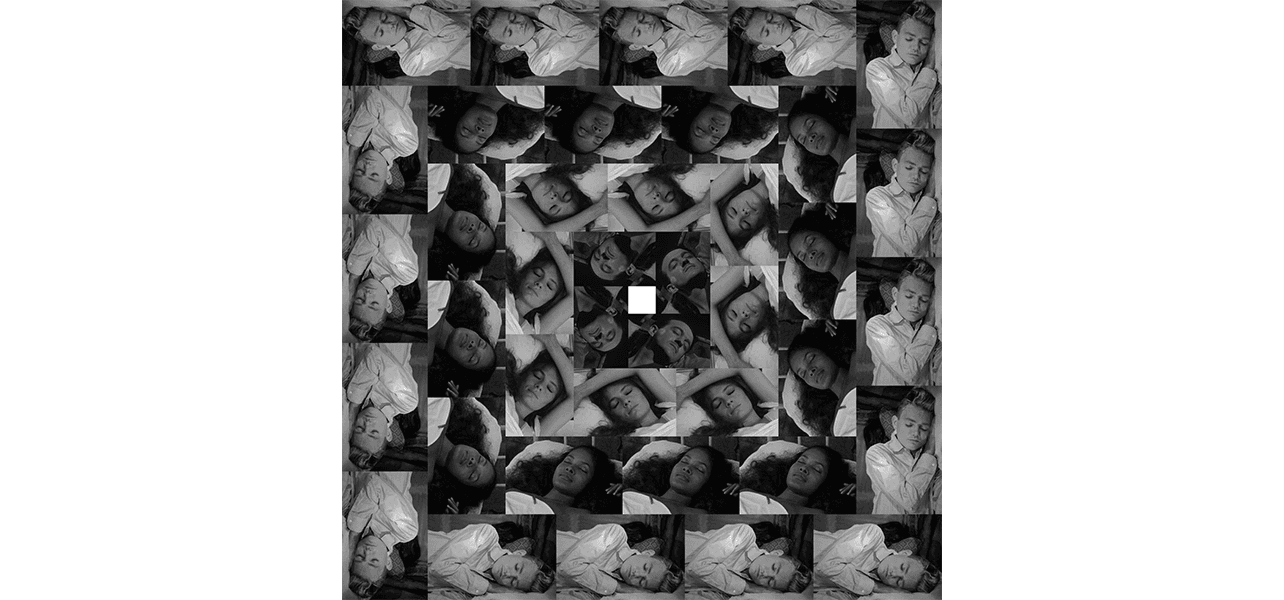
Nordenhake[Please scroll down for German version / Für Deutsch bitte scrollen Sie nach unten] Working primarily with the history of image making in photography and cinema, Iñaki Bonillas, as a fervent believer in the ecology of the visual, uses archival material for his conceptual investigation of the medium. Since the early stages of his career in the late 1990s, Bonillas has analyzed the diverse techniques, leitmotifs and aesthetic parameters surrounding the production of images through the lens. Subsequently, the artist alters these found images, adding layers that reflect on different printing techniques or refer to the history of conceptual art. For the past few years, he has been working with one of the largest image archives ever produced: still frames of films. Horizons of the Possible brings together four distinct series that explore different interpretations of the horizon in film history, from the positions of sleeping bodies to lines and surfaces in domestic spaces and open skylines, by reworking images from Bonillas own archive of still frames. The notion of the horizon serves as a conceptual anchor to explore connections between chance, narrative, and visual memory. One of Bonillas’ interests in still frames is that they reveal aspects of films that might otherwise go unnoticed. When they become a central element of a fixed image, their importance and possible meanings change dramatically. For the series Solaris Bonillas focused on still frames of windowsills, a make-believe architectural element holding props seemingly not to be crucial for the plot of the film but placed there to construct a sense of realism. They operate through what the Russian literary critic Viktor Shklovsky called the estrangement in art: the capacity to make us perceive things differently. Bonillas manages to convey not only a defamiliarization in connection to daily life and to our immediate surroundings, but also in relation to the production of images and their fictions. Solaris consists of etched copper plates prepared as if they were going to be used for producing heliogravure prints, but here they remain in their initial stage. Installed on a shelf, the plates itself are in constant flux as they reflect the light, mirroring the surrounding space. For the artist, the same happens with windows. They frame a portion of our reality that changes slightly and gradually each day—regardless of whether one is looking from the inside or from the outside. By turning still frames into objects, Bonillas makes tangible the means through which otherwise fleeting and ethereal fictions of film and photography are made: the refraction of light. The series Down Memory Lane adapts Marcel Duchamp’s 3 Standard Stoppages. Duchamp dropped and fixed three white one-meter threads on three dark canvases, to preserve the random curves they assumed upon landing. Cut along these curves, Duchamp created a template for a new unit of measure. Bonillas noticed their resemblance to landscapes and used them as a framework to unite two landscape still frames in each panel, all taken from different films. These stills were then superimposed on the lines of Duchamp’s “joke about the meter” as a possible horizon: a diagram that becomes a topography in its own right. With this new signification, the horizon connects and lends a new narrative thread to images that were previously disconnected. Lying down is the human horizontal posture par excellence. Nonetheless, for decades cinema barely showed people sleeping, with a few sporadic, comedic exceptions. The Big Sleep assembles still frames of people performing this activity arranged in the form of a spiral. A figure that has been used in film to represent falling asleep and entering the realm of dreams, or even hypnosis— in other words, swirling down into different experiences of reality. In Bonillas’ work the characters seem to be dreaming about each other, based on the conventions of how sleep has been portrayed historically on screen. The spiral is further developed with all six panels coming together on the wall, composing a pattern reminiscent of quilts, a geometric textile composition that has always been connected to the comfort of sleep. For My Beautiful Launderette, Bonillas selected a single Éric Rohmer film still frame depicting an image of a shirt hanging outside a window, which functions as a metaphor for photography itself. By cropping and rearranging the image into eight fragments and thus removing it from its original, transient context in a film, the individual frame becomes the origin of a new narrative, reiterating the structure of film. The composition furthermore reflects on the aging process of the printed image, which is susceptible to losing its chromatic values when exposed to light. The more you see it, the more you risk losing it; a particular paradox of photography. Bonillas therefore adjusted the different colours of the work in a palette that in the jargon of both darkroom and laundry room is called washed out colours. It was printed on six different photographic papers, since each print ages differently, just as clothes do. The work poetically draws on the quotidian as well as emphasizing the materiality of photography. Iñaki Bonillas was born in Mexico City in 1981, where he currently lives and works. He participated in the Venice Biennial in 2003, the Prague Biennial in 2005, and the São Paulo Biennial in 2012. Significant solo exhibitions include presentations at Museo Amparo, Puebla (2021), Casa Luis Barragán, Mexico City (2016), La Virreina Centre de la Imatge, Barcelona (2012), Museo de Arte Moderno, Mexico City (2009), Matadero, Madrid, (2007), Mies van der Rohe Pavilion, Barcelona (2005) and Museum of Contemporary Art, Antwerp (2003). For his Artist's Web Project Words and Photos, commissioned by the Dia Arts Foundation in 2014, Bonillas digitized the J.R. Plaza Archive and simultaneously created an extensive index of associated words mirroring the image database accessible online. ***** Als Verfechter des Eigenlebens der Bilder, arbeitet Iñaki Bonillas mit Archivmaterial, um die Geschichte der Bilderzeugung in Fotografie und Kino konzeptuell zu untersuchen. Seit den Anfängen seiner Karriere in den späten 1990er Jahren analysiert Bonillas die verschiedenen Techniken, Leitmotive und ästhetischen Parameter, die die Erzeugung von Kamerabildern ausmachen. Er verändert die gefundenen Bilder nachträglich und fügt Ebenen hinzu, die die verschiedenen Drucktechniken reflektieren oder auf die Geschichte der Konzeptkunst verweisen. Seit einigen Jahren arbeitet Bonillas mit einem der größten Archive, das jemals produziert wurde: Filmeinzelbilder. Horizonte des Möglichen vereint vier individuelle Serien, die sich mit unterschiedlichen Interpretationen des Horizonts in der Filmgeschichte auseinandersetzen. Bonillas überarbeitet dafür Film Frames aus seinem eigenen Archiv, die schlafende Körper bis hin zu Linien und Oberflächen in Wohnräumen und Landschaften zeigen. Der Begriff des Horizonts dient als konzeptioneller Anker, um Beziehungen von Zufall, Erzählung und visuellem Gedächtnis zu erkunden. Das filmische Einzelbild offenbart Aspekte von Filmen, die sonst unbemerkt bleiben. Wird es zum zentralen Element eines unbewegten Bildes, ändert sich seine Wichtigkeit und mögliche Bedeutung dramatisch. Für die Serie Solaris konzentriert sich Bonillas auf Einzelbilder von Fensterbänken, ein fiktives architektonisches Element, auf dem Requisiten stehen, die für die Handlung des Films nicht entscheidend zu sein scheinen, sondern dort platziert wurden, um ein Gefühl von Wirklichkeit zu erzeugen. Sie sind durch das wirksam, was der russische Literaturkritiker Viktor Shklovsky die Verfremdung in der Kunst nannte: die Fähigkeit, uns die Dinge anders wahrnehmen zu lassen. Bonillas gelingt nicht nur die Verfremdung des alltäglichen Lebens und der unmittelbaren Umgebung, sondern auch die der Produktion von Bildern und deren Fiktionen. Solaris besteht aus geätzten Kupferplatten, die so präpariert sind, als dienten sie für die Herstellung von Heliogravüren, verbleiben hier aber in diesem Ausgangszustand. Auf einem Wandregal installiert, scheinen die Platten selbst in ständiger Bewegung, da sie das Licht reflektieren und den umgebenden Raum spiegeln. Für den Künstler passiert das Gleiche bei Fenstern. Sie rahmen einen Teil unserer Realität, der sich jeden Tag leicht und allmählich verändert. Durch die Umwandlung von Einzelbildern in Objekte macht Bonillas dasjenige greifbar, aus dem die ansonsten flüchtigen und vergänglichen Fiktionen von Film und Fotografie entstehen: die Brechung des Lichts. Für die Serie Down Memory Lane adaptiert Bonillas Marcel Duchamps 3 Standard Stoppages. Duchamp warf und fixierte drei weiße, einen Meter lange Fäden auf drei dunkle Leinwände, um die zufälligen Kurven, in denen sie landeten, festzuhalten. Mit Schablonen dieser Kurven, schuf er eine Vorlage für eine neue Maßeinheit. Bonillas bemerkte eine Ähnlichkeit zu Landschaften und nutzte sie als Vorlage, um zwei Landschafts-Einzelbilder aus verschiedenen Filmen zusammenzufügen. Die Einzelbilder überlagern die Linien von Duchamps „Witz über den Meter“ als möglichen Horizont: ein Diagramm, das eine eigene Topografie vorschlägt. In dieser neuen Bedeutung paart der Horizont Bilder, die zuvor nicht verbunden waren, und verleiht ihnen einen neuen narrativen Strang. Das Liegen ist die menschliche Horizontalhaltung par excellence. Dennoch zeigt das Kino mit wenigen sporadischen, komödiantischen Ausnahmen kaum schlafende Menschen. The Big Sleep fügt Einzelbilder von augenscheinlich schlafenden Menschen in Form einer Spirale zusammen. Eine Form, die im Film verwendet wurde, um das Einschlafen und das Eindringen in das Reich der Träume oder sogar der Hypnose darzustellen – mit anderen Worten, das Hineinwirbeln in verschiedene Erfahrungen der Realität. Folgt man den Konventionen der Darstellung des Schlafs im Film, scheinen die Figuren in Bonillas' Werk voneinander zu träumen. Auf der Wand bilden die sechs Tafeln ein Muster, das an Quilts erinnert, Textilien mit spezifischen geometrischen Kompositionen, die seit jeher mit der Behaglichkeit des Schlafs in Verbindung gebracht werden. Für My Beautiful Launderette, wählte Bonillas ein Einzelbild aus einem Éric Rohmer Film aus, das ein Hemd außen an einem Fenster zeigt und als Metapher für die Fotografie an sich gelten kann. Das Einzelbild ist beschnitten, in acht Fragmenten neu zusammengefügt und wiederholt so die sequenzielle Struktur von Filmen. Aus seinem ursprünglichen Kontext im Film gelöst, wird das Einzelbild zum Ausgangspunkt einer neuen Erzählung. Weiterhin reflektiert es den Alterungsprozess des gedruckten Bildes, das dem Licht ausgesetzt, seine Farben verliert. Je häufiger man ein Negativ oder einen Abzug betrachtet, desto höher ist das Risiko, dass es sich verändert: ein besonderes Paradox der Fotografie. Bonillas passt daher die verschiedenen Farben seiner Arbeit gemäß der Farbpalette an, die in der Sprache von Dunkelkammer wie Wäscheraum als ausgewaschene Farben bezeichnet wird. Auf sechs verschiedenen Fotopapieren gedruckt, altert jeder Druck unterschiedlich, ebenso wie Kleidungsstücke. Bonillas Arbeit knüpft sowohl poetisch an das Alltägliche als auch an die Materialität der Fotografie an. Iñaki Bonillas wurde 1981 in Mexico City geboren, wo er derzeit lebt und arbeitet. Er nahm 2003 an der Venedig Biennale teil, 2005 an der Prag Biennale und 2012 an der São Paulo Biennale. Wichtige Einzelausstellungen fanden im Museo Amparo, Puebla (2021) statt, Casa Luis Barragán, Mexiko-Stadt (2016), La Virreina Centre de la Imatge, Barcelona (2012), Museo de Arte Moderno, Mexiko-Stadt (2009), Matadero, Madrid, (2007), Mies van der Rohe Pavillion, Barcelona (2005) und im Museum of Contemporary Art, Antwerpen (2003). Für sein digitales Web-Kunstprojekt Words and Photos, 2014 von der Dia Arts Foundation beauftragt, digitalisierte Bonillas sein J.R. Plaza Archive und erstellte gleichzeitig einen umfassenden Index von Wörtern, die die online verfügbaren Bilddatenbank spiegeln.