
Chelsea, New York
Paul Feeley
The Shape of Things
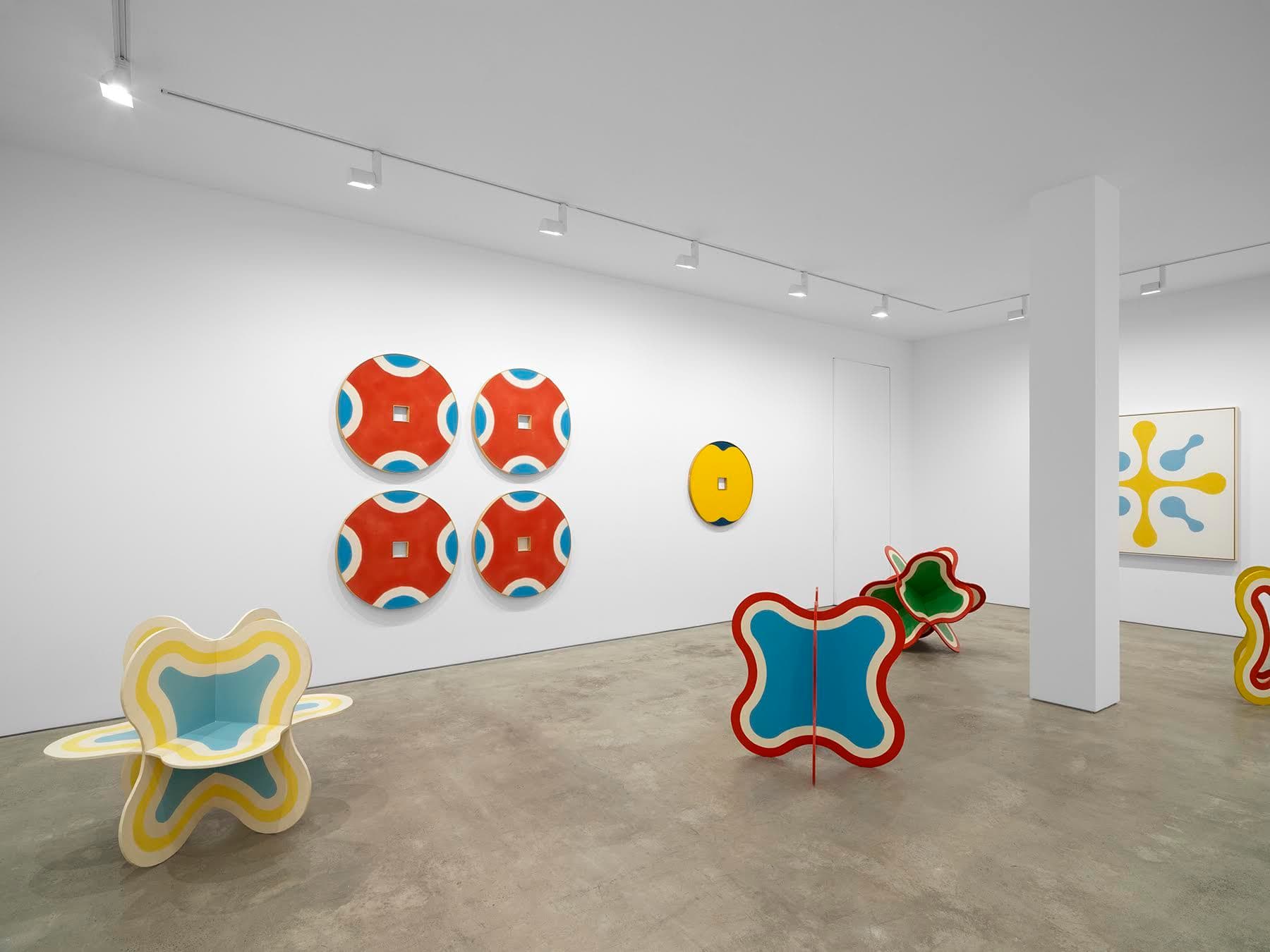
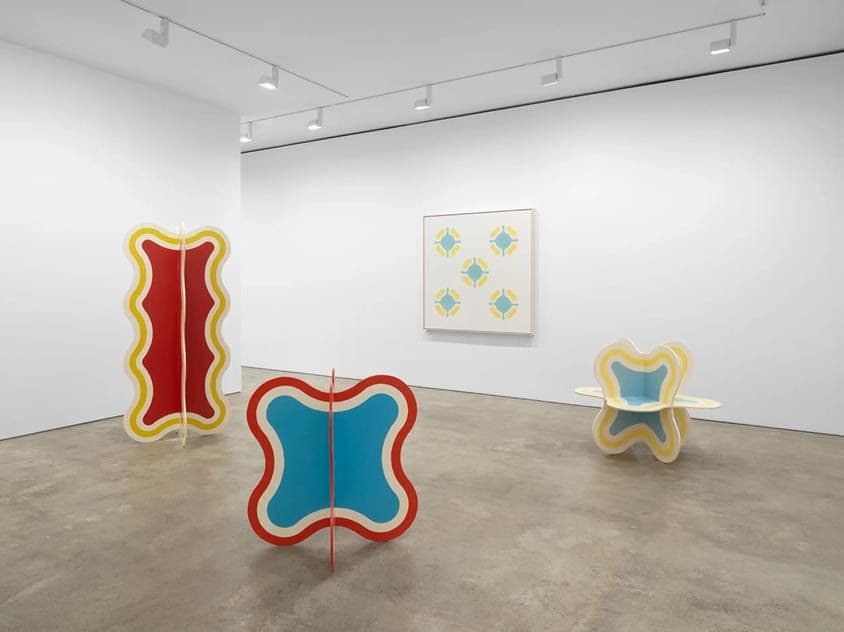
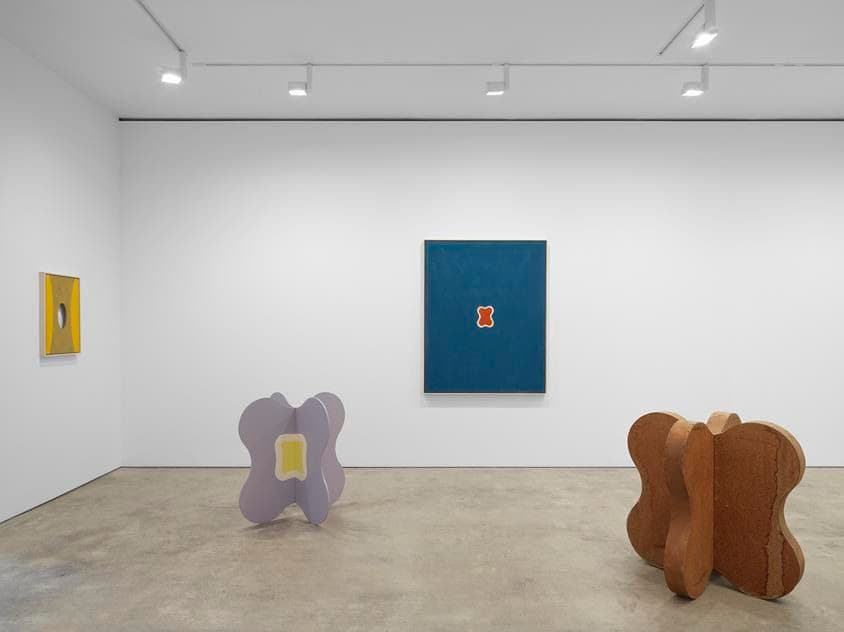
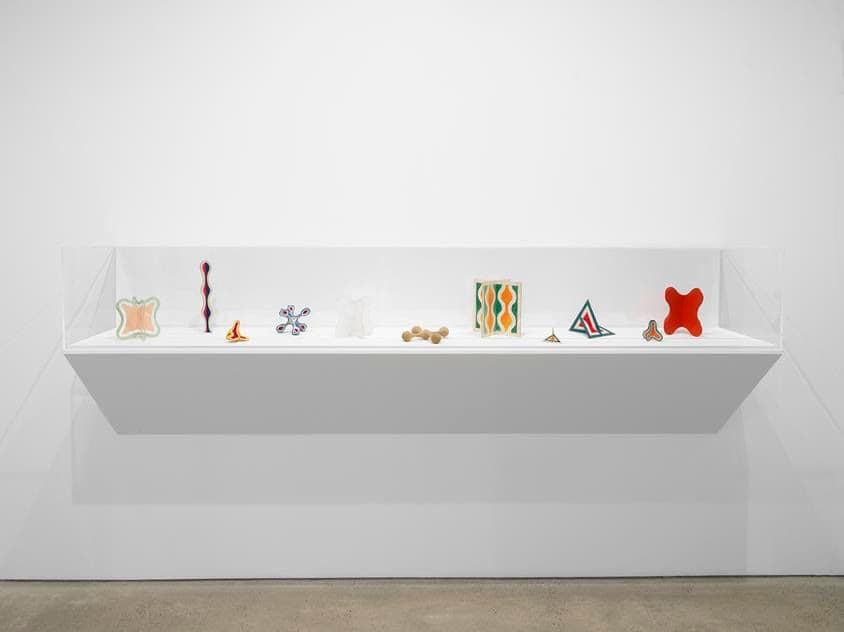
Garth GreenanGarth Greenan Gallery is pleased to present Paul Feeley: The Shape of Things. The exhibition is the fourth presentation of Feeley's work at the gallery, and the first to focus on Feeley's groundbreaking body of sculptural work. Featuring a key group of Feeley's canvases and painted-wood constructions, the show also presents a museum-quality display of rarely seen preparatory materials, including a selection of maquettes, sketches, and drawings publicly on view for the first time. A fully illustrated catalogue, with an essay by Sarah K. Rich, accompanies the show. A central figure in the Color Field movement, Feeley initially gained prominence as a painter, turning to sculpture only in the final years of his life. Nevertheless, a close examination of Feeley's output suggests that sculptural concerns were central to the artist's imagination from the beginning. Starting with his earliest canvases, Feeley's work is informed by an almost classical exploration of how three-dimensional objects can be described via two-dimensional planes, and of how a flat surface can be a vehicle for conveying mass, gravity, and volume. His inquiry into these relationships—motivated by a lifelong fascination with Greek, Moorish, and Cycladic art—is never didactic, but creative, subtle, and intuitive. In Feeley's hands, a sculpture or a painting is often shown to live in a space between one thing or the other, hinting at a multitude of shapes, forms, and possibilities. As Sarah K. Rich writes of Feeley's sculpture El Rescha (1965): "It stands in the room with the beholder, but with its flat planes and austere symmetry it also occupies hieratic space. With colors that transition from an interior red core to a boundary of white and yellow, its boundaries ripple with energy. El Rescha is a radiant presence." Born in Des Moines, Iowa in 1910, Paul Feeley studied at Menlo Junior College, Menlo Park, California for a single term before moving to New York to study at the Art Students League under Thomas Hart Benton, Frank Vincent DuMond, and George Bridgman. With these courses encapsulating his formal artistic training, Feeley began teaching, first at Cooper Union (1932–1939) and later at Bennington College in Vermont. Aside from his four years of service with the U.S. Marine Corps from 1943 through 1946, the artist remained at Bennington for 27 years (1939–1966), spearheading the college’s celebrated art department. Committed to the art of his peers, Feeley exposed his students—among them, Helen Frankenthaler—to many of the most significant artists of his time. While at Bennington, he organized the first retrospective exhibitions of Hans Hoffmann, Jackson Pollock, and David Smith. Feeley’s early work was both intensely formal and technically innovative. Although classically derived, Feeley’s paintings from this period are looser, more gestural, and less emblematic than his better-known work from the mid-1960s. In later paintings, the forms gradually solidify and become more evocative of things in the real world. Simple shapes, which at the same time seem both poised and exuberant, are Feeley’s hallmark. Between 1962 and 1966 he created a series of paintings of jacks, which was uniquely suited to Feeley’s ongoing interest in seriality and repetition, one shared by many Minimal and Pop artists but comparatively few of his color field peers. Throughout the 1950s, 1960s, and 1970s, Feeley had solo exhibitions at many prominent institutions, including: Tibor de Nagy Gallery (1954, 1955, 1958, New Y ork), Betty Parsons Gallery (1960, 1962, 1963, 1964, 1965, 1966, 1970, 1971, 1975, New Y ork), and Kasmin Gallery (1964, London). During this period, his work was also featured in important museum exhibitions, such as Post Painterly Abstraction (1964, Los Angeles County Museum of Art), The Shaped Canvas (1964, Solomon R. Guggenheim Museum), The Responsive Eye (1965, Museum of Modern Art), and Systemic Painting (1966, Solomon R. Guggenheim Museum), among others. In 1968, the Solomon R. Guggenheim Museum mounted a memorial retrospective exhibition of Feeley’s work. Feeley’s work is featured in the collections of major museums around the country, including: the Albright-Knox Art Gallery; Baltimore Museum of Art; Broad Art Museum, Michigan State University; Carnegie Museum of Art; the Columbus Museum of Art; the Detroit Institute of Arts; the Fogg Museum, Harvard University; the High Museum of Art; the Hirshhorn Museum and Sculpture Garden, Smithsonian Institution; Kemper Art Museum, Washington University; the McNay Art Museum; the Metropolitan Museum of Art; the Museo de Arte Contemporáneo; the Museum of Fine Arts, Boston; the Museum of Modern Art; the Neuberger Museum of Art, State University of New Y ork, Purchase; the Phoenix Art Museum; the Solomon R. Guggenheim Museum; the Wadsworth Atheneum; and the Whitney Museum of American Art.