
Mitte, Berlin
Anna Ridler
Time Within Time
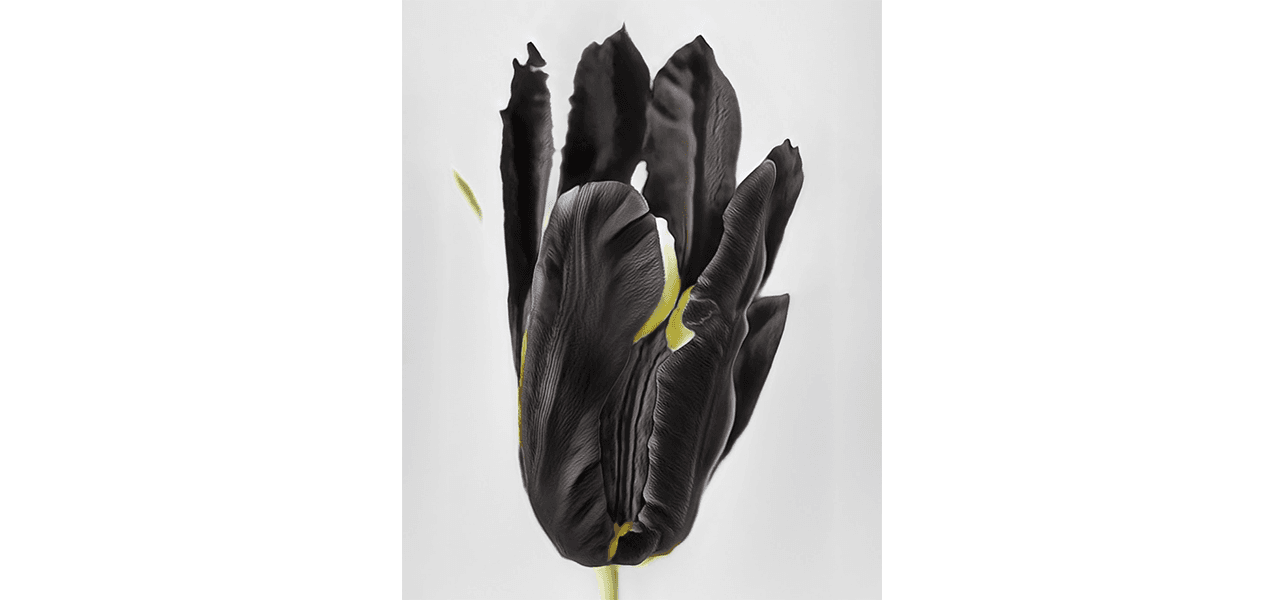
Nagel Draxler Crypto KioskWe are proud to present that Anna Ridler, first solo exhibition at Nagel Draxler. Ridler is renowned for her unique juxtaposition of the speculative nature of cryptocurrencies and historical economic phenomena. A Flowering of Aesthetic Contemplation Anna Ridler’s work often makes me quiet. Given how much there is to say in any of her projects, such a response seems contrary. But this quietude is the aesthetic that delivers the rest. If unable to still the mind and contemplate— that is, to be with time, in time—much will be missed. The flower is Ridler’s entry into temporal dimensions, technological contrivances, market relations, and social systems. And yet her blooms retain a simple poise, accepting but unencumbered by such heady intellectualizing. One sees, or not, a flower. A tulip, perhaps. Black Tulip (2023) expands upon the data set Ridler developed for Bloemenveling (2019) but undermines the speculative potential that she had previously cultivated in tying 17th-century Tulipomania to 21st-century high-frequency trading. This new work mitigates hyperinflation or deflation to create a tempered economic engagement, restraining the exponential growth of technology and finance notoriously articulated in Moore’s Law that has contributed to the obsolescence and e-waste that plagues the planet. Making reference to Dumas’ fateful symbol of passion over greed, Ridler reminds us that Earth matter need not serve enterprise and extravagance but support a more personal and planetary graciousness. The minerals and ores, flora, fauna and human labor upturned by business for technological products is not sustainable. Another model is necessary. The Swedish botanist Carl Linnaeus proposed a floral clock in 1751, a concept that Ridler actualizes. In Circadian Bloom, she offers the chronobiological rhythms of plants, as an alternative to the compression of global digital time. Ridler’s blooms respond to geography, climate, season and sunlight — as do we all. Using complex algorithms tied to a cesium atomic clock, the digital plants respond to their coded latitude and longitude, orchestrating a synchrony between the natural world and our human predilection for temporal control. Circadian Nocturne (2023) extends this effort with an array of night-blooms, each flowering available through the single board computer of a Raspberry Pi that once activated presents the flower, but only from sunset to sunrise. In a 24/7 attention economy, perpetual access dissipates the sensitivity and value derived from circumstantial engagement. But, we are story-telling creatures, and constraints provide the resistance from which to create a meaningful narrative, to witness and seek what we desire. The loss of sequential time mitigates the possibility of duration, and extension collapses into compressed instants, an atomized modality that proliferates, substituting an accelerationist tempo for the multivariant timescales of our experience. Despite the pervasiveness of our blue light technologies, we are stumbling in the dark. Acknowledging this, Ridler’s Circadian Nocturne shows a different way of being, one that idealizes neither digital nor analog but encourages a more relational approach. The flower flutters. We shift in kind. These technologies that seem to know so much…what does a computer see in reading an image of a flower? Synthetic Iris Dataset offers a print with the colors in the 150 flowers generated, alongside a list of all the things that a computer vision API interprets from the image. Adapted from the data set that the eugenicist Ronald Fisher established in the 1930s, Ridler corrects its easy acceptance in the majority of beginning machine learning classes. The organization of content is dependent on technological and cultural codes. Her notes reveal these through the humorous duplicity of language. Iris has two meanings in English: the flower and the colored center of the eye. Violet indicates a pigment and the flower. Things are not as simple as they seem. Through Ridler’s art, audiences are invited to become more discerning of these landscapes and the temporal features each cultivates. Flowers may seem the very opposite of machine learning algorithms, of mechanical clocks, of lasting impressions, though they have an early association with technology and data sets, present distinct temporal rhythms, and appear pressed into memory books. Tempo, temporality, timeframes. Anna Ridler’s aesthetics blossom timescapes with an unerring beauty. —Charlotte Kent, PhD