
Chinatown, New York
Nancy Friedemann Sánchez
Mopa Mopa Imaginaries
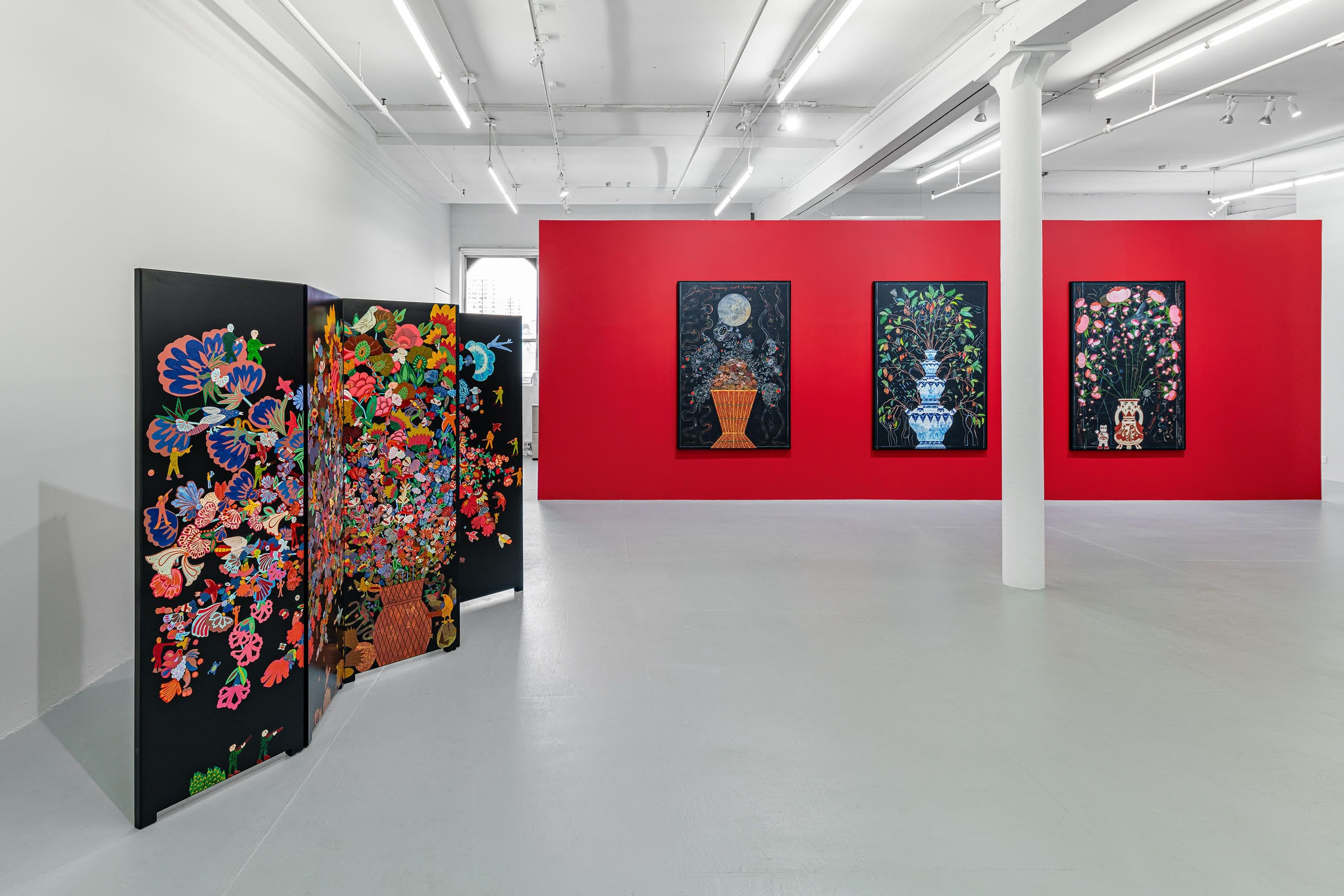
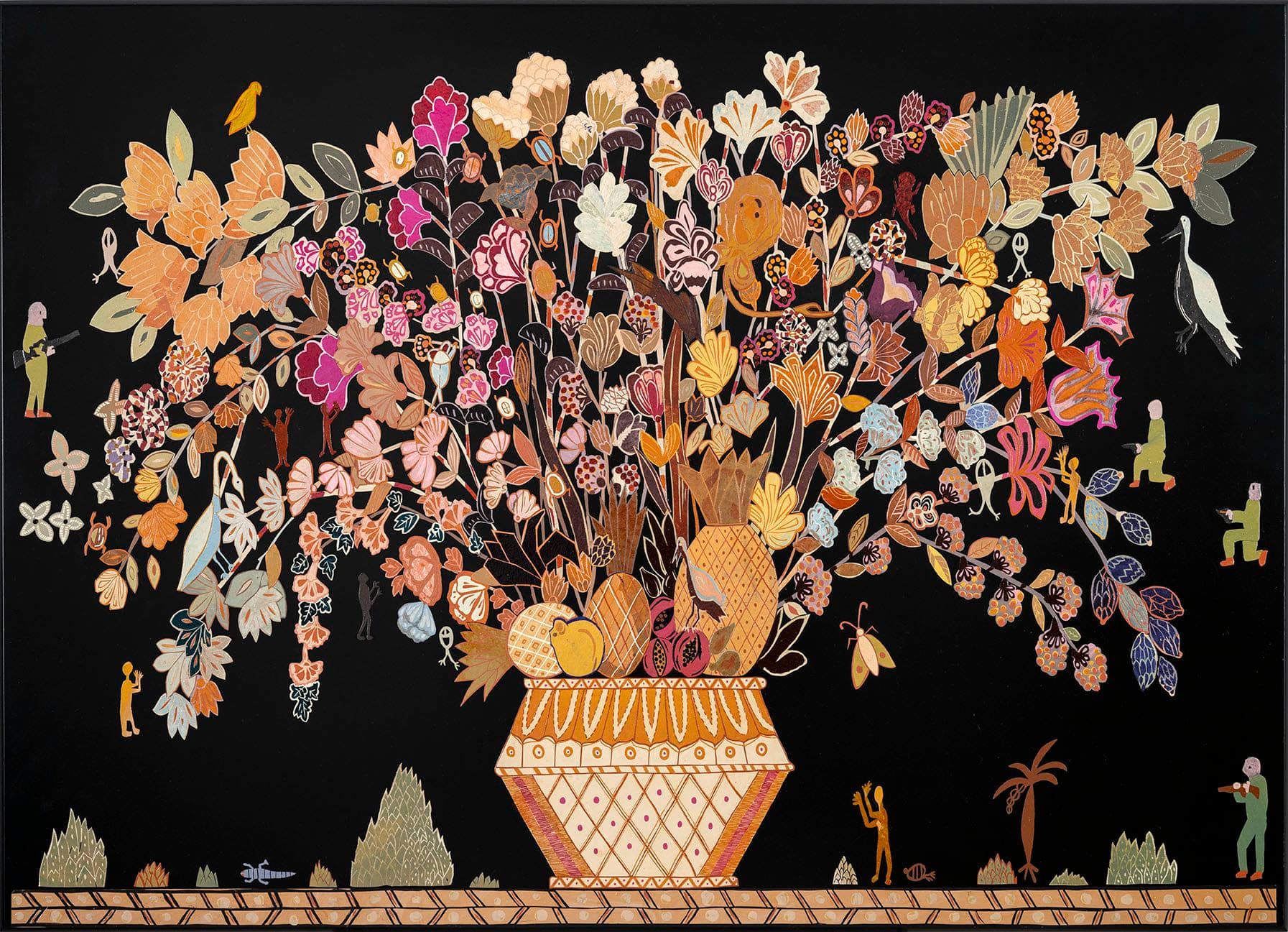
Instituto de VisiónBarniz de Pasto, or mopa mopa, is an exquisitely sophisticated artisanal technique that has been masterfully used for centuries by artists from the Andean highlands (southern Colombia and northern Ecuador). When the Spanish conquistadors arrived in the region, they were astounded by the mopa mopa artifacts, as the technique resembled the highly coveted Chinese lacquerware. At that time, the trade of luxurious Chinese lacquer objects was monopolized by the English, who had turned these pieces into symbols of nobility and status for the wealthiest classes in Europe. The Spanish immediately saw mopa mopa as a less expensive alternative and prohibited Andean artists from using their tradition for anything other than replicating Chinese designs. This exhibition, titled Mopa Mopa Imaginaries, is a tribute to the resilience of Andean communities that, almost in secrecy, preserved their mastery of the technique now known as barniz de Pasto. Nancy Friedemann Sánchez, a Colombian-American artist, through extensive research on appropriation and cultural cannibalism, reveals the complex tensions and historical dynamics since the conquest that have influenced the formation of identities, imaginaries, and the social structures that today define what we know as Latin America. Nancy Friedemann Sánchez (b. 1961, Bogotá, Colombia) is a Colombo-American artist with an interdisciplinary practice. Her work investigates the complex intersections of migration, identity, gender, cultural memory, and the effects of colonization. She is creating an intersectional feminist visual novel that is a multifaceted project comprised of paintings, sculptures, objects, and mixed media that together— and in different voices—weave a synchronicity of narratives about hybridity and cultural ownership.