

Belleville, Paris
Marco Emmanuele & Giulia Marchi
Puntinismo
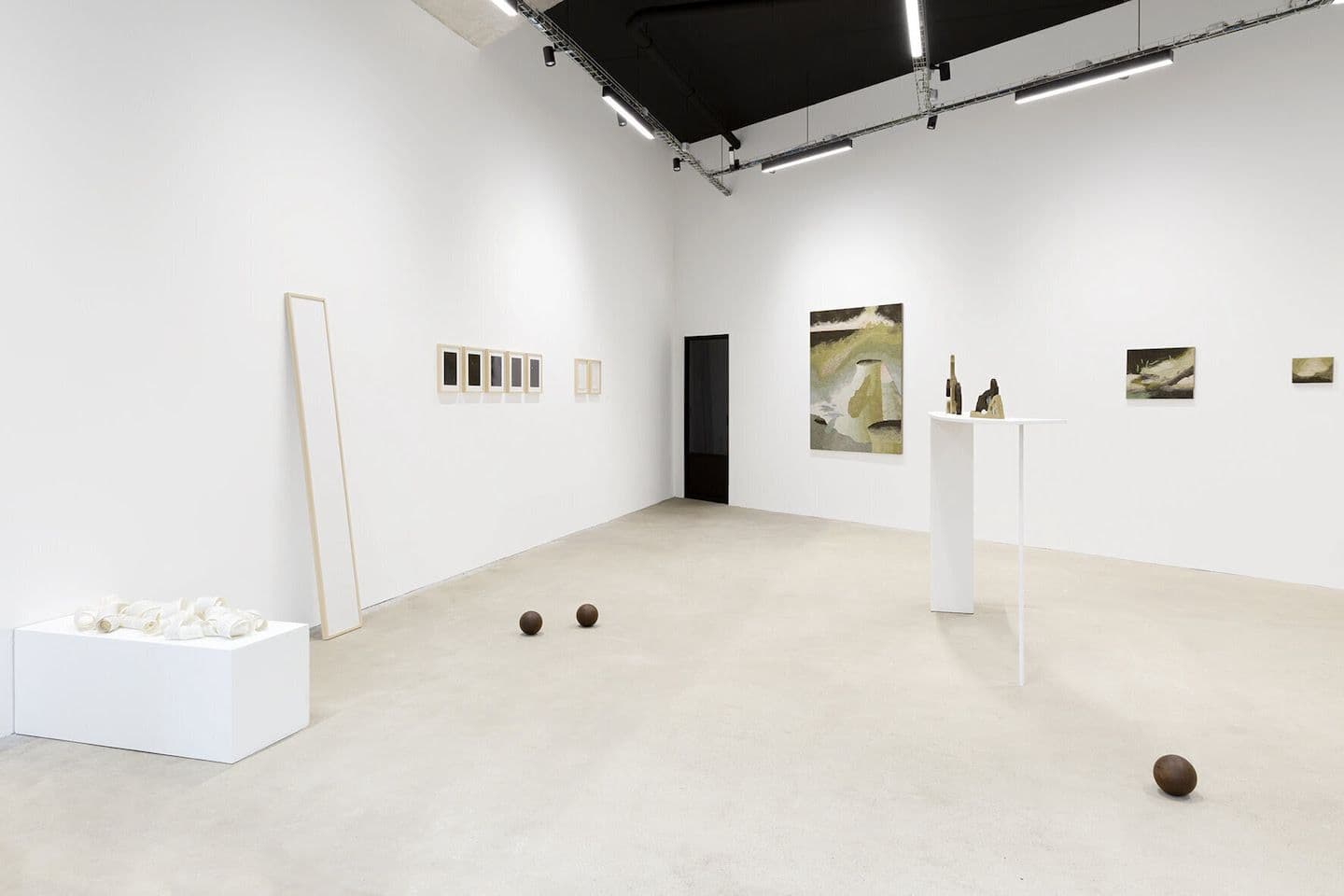
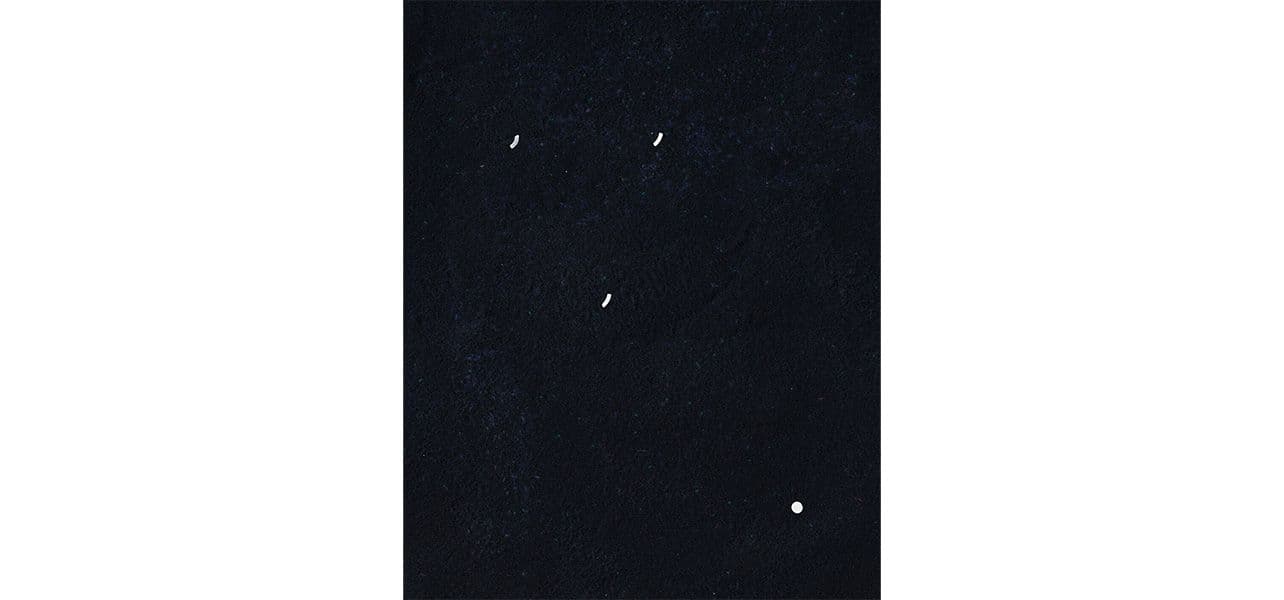
,48 m²[Scroll down for French version / Veuillez trouver ci-dessous la version française] The Puntinismo project is a dialogue between the artistic practices of Marco Emmanuele and Giulia Marchi. For this exhibition, the two artists confronted each other on the themes of language and the tenses that characterise it through punctuation. The word is here understood as an inseparable act of interaction and sharing, as well as a pictorial act. The researches of both artists are contaminated by different practices : for Giulia Marchi photography, visual poetry and installation, as for Marco Emmanuele painting, drawing, sculpture and installation. The selected works, mostly unpublished and created for the project, are thought of as musical 'counterpoints' in which the artists meet and clash, establishing a 'melody' of visions and thoughts. Pointillism, understood as an artistic current, and signs ponctuation mark the territories of the artists themselves, who express their research in diverse manners, supporting the practices that belong to it. This project is the result of the collaboration between Labs Contemporary Art and 22,48 m2, an exchange project between the cities of Paris and Bologna. The initiative stems from Alessandro Luppi and Rosario Caltabiano's desire to foster the vision and research of their artists and to expand their networks by presenting new projects specifically designed for their exhibition spaces. Marco Emmanuele approached the visual arts after studying engineering and architecture. In his research, the relationship with technology and man's ability to profoundly transform the environment in which he lives always remains strong. He deals with materials of industrial origin such as steel, ceramics and glass, transmuting their nature into artistic language and investigating their expressive potential. In his latest research, he has experimented with the painterliness of pigments obtained by mixing glue and glass powder. The latter element is chosen by Emmanuele from debris collected on the beach, sorted by colour and grounded until they are ready to be applied on canvas or board. The artist juxtaposes pastel colours, constructing the images through flat and textured fields, with a result that shows definite visual assonances with fresco and mosaic techniques. Light plays an active role in Emmanuele's works, and the vitreous paste he uses conveys a particular brilliance to the final composition. The artistic training of Giulia Marchi, with a strong literary imprint, has led her to an expressiveness that is often characterised by narration, even when the chosen form (often photography, but not only) does not make the reading so immediate, but refers to subsequent combinations, like codes that, even before being deciphered. Such signs allow themselves to be interpreted by a sort of fascination, both due to the skilful use of materials and the communicativeness of the image, often deceptive at first glance, but equally attributable to the artist's poetics. Contaminating the art scene with different materials is an integral part of the artist's work. Her research implies a reflection requiring knowledge, study and deep understanding. These works are not only visuals but transcend vision, they lead you into tactile spaces in which the image is moulded, implying a well-structured thought that has yet to be decoded. ***** Le projet Puntinismo repose sur un dialogue entre les pratiques artistiques de Giulia Marchi et de Marco Emmanuele. Pour cette exposition, les deux artistes se sont confrontés au thème du langage et des rythmes qui le caractérisent à travers la ponctuation. Le mot est ici compris comme acte d'interaction et de partage, mais aussi comme geste pictural. Les recherches de ces deux artistes sont nourries de pratiques différentes : pour Giulia Marchi, la photographie, la poésie visuelle et l'installation ; pour Marco Emmanuele, la peinture, le dessin, la sculpture et l'installation. Les œuvres sélectionnées, pour la plupart inédites et créées pour le projet, sont considérées comme autant de contrepoints musicaux dans lesquels les artistes se rencontrent et s'affrontent, établissant dès lors une mélodie de visions et de pensées. Le courant artistique du pointillisme (puntinismo en italien) et les signes de ponctuation irriguent les territoires et les recherches de ces deux artistes, valorisant ainsi leurs pratiques respectives. Ce projet est le résultat de la collaboration entre Labs Contemporary Art et 22.48 m2, un projet d'échange entre les villes de Paris et de Bologne. L'initiative est née de la volonté d'Alessandro Luppi et de Rosario Caltabiano d'encourager la vision et la recherche de leurs artistes et d'élargir leurs réseaux en présentant de nouveaux projets spécifiquement conçus pour des espaces d'exposition. Marco Emmanuele a commencé à explorer les arts visuels après avoir étudié l'ingénierie et l'architecture. Son approche implique une relation profonde entre la technologie et la capacité de l'homme à transformer son environnement. Il travaille avec des matériaux d'origine industrielle tels que l'acier, la céramique ou le verre, et transforme leur nature en langage artistique par l'exploration de leur potentiel expressif. Dans ses dernières recherches, Marco Emmanuele expérimente le caractère pictural des pigments obtenus en mélangeant de la colle et de la poudre de verre. Ce dernier élément est choisi par Emmanuele parmi des débris ramassés sur la plage, triés par couleur et broyés jusqu'à ce qu'ils soient prêts à être appliqués sur une toile ou un panneau. L'artiste juxtapose des couleurs pastel, construisant les images au moyen d'aplats et de textures, avec un résultat qui présente des relations visuelles évidentes avec les techniques de la fresque et de la mosaïque. La lumière joue un rôle actif dans les œuvres d'Emmanuele qui, à travers la pâte vitreuse, confère un éclat particulier à la composition finale. La formation artistique de Giulia Marchi, fortement influencée par la littérature, conduit sa pratique à une expressivité souvent caractérisée par la narration - y compris lorsque le medium choisi (souvent la photographie) ne rend pas la lecture immédiate, mais renvoie à des combinaisons ultérieures, comme des codes qui, avant même d'être déchiffrés, se laissent interpréter par une fascination due à la fois à l'utilisation habile des matériaux et à la communicabilité de l'image. Cette approche, souvent trompeuse à première vue, caractérise la poétique de l'artiste. La contamination de la scène artistique par différentes matières et divers matériaux fait partie intégrante du travail de l'artiste. Ses recherches intègrent une réflexion qui réclame connaissance, étude et compréhension profonde. Ainsi, son œuvre n'est pas seulement visuelle, mais transcende la vision, nous conduit vers des espaces tactiles dans lesquels l'image est moulée, impliquant une pensée structurée qui reste à décoder.