
Arsenale, Venice
Group Exhibition
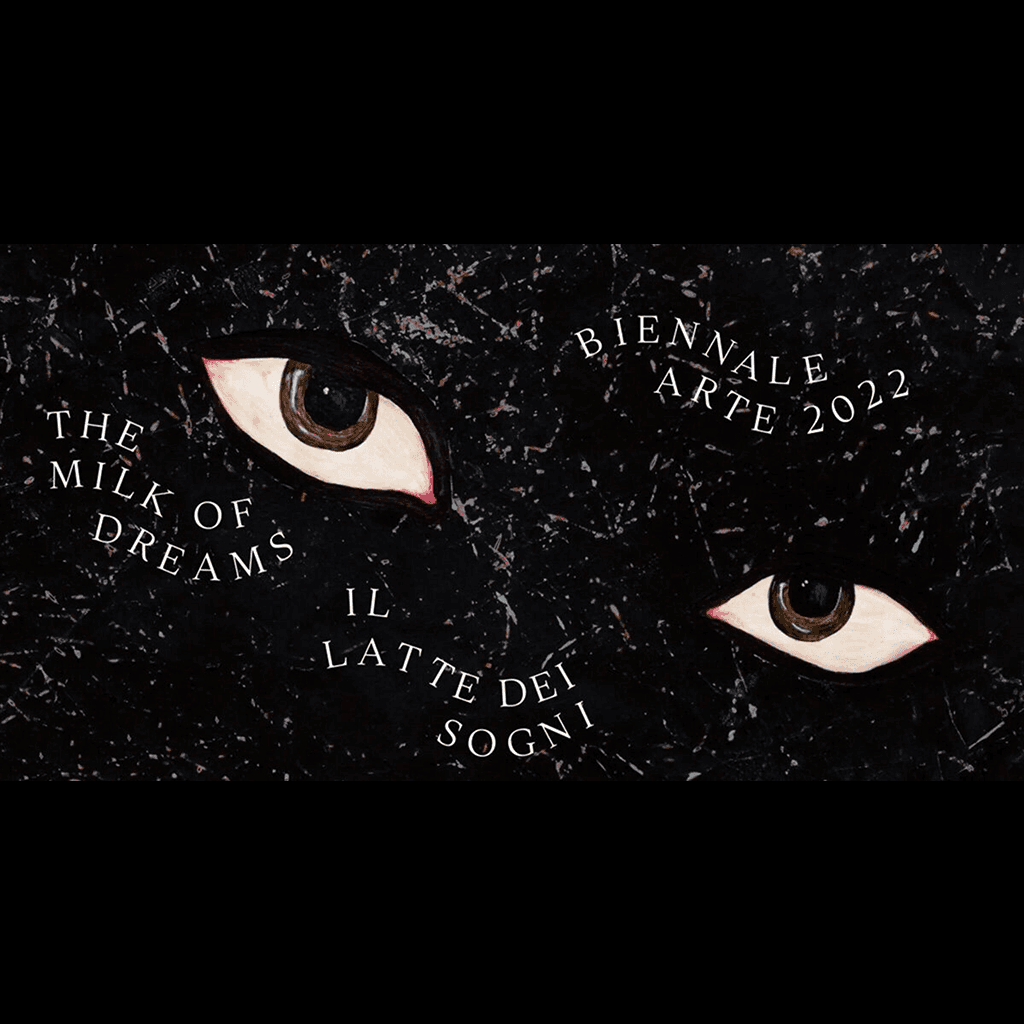
The Milk of Dreams
CorderieTickets available at: bit.ly/37w1A9k To view the detailed floor plan, please visit: bit.ly/3Ens0GF Statement by Cecilia Alemani, Curator of the 59th International Art Exhibition: Title and Themes The Milk of Dreams takes its title from a book by Leonora Carrington (1917–2011) in which the Surrealist artist describes a magical world where life is constantly re-envisioned through the prism of the imagination. It is a world where everyone can change, be transformed, become something or someone else; a world set free, brimming with possibilities. But it is also the allegory of a century that imposed intolerable pressure on the very definition of the self, forcing Carrington into a life of exile: locked up in mental hospitals, an eternal object of fascination and desire, yet also a figure of startling power and mystery, always fleeing the strictures of a fixed, coherent identity. When asked about her birth, Carrington would say she was the product of her mother’s encounter with a machine, suggesting the same bizarre union of human, animal, and mechanical that marks much of her work. The exhibition The Milk of Dreams takes Leonora Carrington’s otherworldly creatures, along with other figures of transformation, as companions on an imaginary journey through the metamorphoses of bodies and definitions of the human. This exhibition is grounded in many conversations with artists held in the last few years. The questions that kept emerging from these dialogues seem to capture this moment in history when the very survival of the species is threatened, but also to sum up many other inquiries that pervade the sciences, arts, and myths of our time. How is the definition of the human changing? What constitutes life, and what differentiates plant and animal, human and non-human? What are our responsibilities towards the planet, other people, and other life forms? And what would life look like without us? These are some of the guiding questions for this edition of the Biennale Arte, which focuses on three thematic areas in particular: the representation of bodies and their metamorphoses; the relationship between individuals and technologies; the connection between bodies and the Earth. Many contemporary artists are imagining a posthuman condition that challenges the modern Western vision of the human being − and especially the presumed universal ideal of the white, male “Man of Reason” − as fixed centre of the universe and measure of all things. In its place, artists propose new alliances between species, and worlds inhabited by porous, hybrid, manifold beings that are not unlike Carrington’s extraordinary creatures. Under the increasingly invasive pressure of technology, the boundaries between bodies and objects have been utterly transformed, bringing about profound mutations that remap subjectivities, hierarchies, and anatomies. Today, the world seems dramatically split between technological optimism − which promises that the human body can be endlessly perfected through science − and the dread of a complete takeover by machines via automation and artificial intelligence. This rift has widened during the Covid-19 pandemic, which has forced us even further apart and caged much of human interaction behind the screens of electronic devices. The pressure of technology, the heightening of social tensions, the outbreak of the pandemic, and the looming threat of environmental disaster remind us every day that as mortal bodies, we are neither invincible nor self-sufficient, but rather part of a symbiotic web of interdependencies that bind us to each other, to other species, and to the planet as a whole. In this climate, many artists envision the end of anthropocentrism, celebrating a new communion with the non-human, with the animal world, and with the Earth; they cultivate a sense of kinship between species and between the organic and inorganic, the animate and inanimate. Others react to the dissolution of supposedly universal systems, rediscovering localised forms of knowledge and new politics of identity. Still others practice what feminist theorist and activist Silvia Federici calls the “re-enchantment of the world”, mingling indigenous traditions with personal mythologies in much the same way as Leonora Carrington. Exhibition Structure and Time Capsules The exhibition unfolds in the Central Pavilion of the Giardini, and in the Corderie, Artiglierie, and the outdoor spaces of the Gaggiandre and Giardino delle Vergini at the Arsenale complex. The Milk of Dreams includes over two hundred artists from 58 countries. More than 180 of these artists have never been in the International Art Exhibition until now. For the first time in its 127-year history, the Biennale will include a majority of women and gender non-conforming artists, a choice that reflects an international art scene full of creative ferment and a deliberate rethinking of man’s centrality in the history of art and contemporary culture. The exhibition features contemporary works and new projects conceived specifically for the Biennale Arte, presented in dialogue with historic works from the 19th century on. As visitors move through the exhibition in the Central Pavilion and the Corderie, they encounter five smaller, historical sections: miniature constellations of artworks, found objects, and documents, clustered together to explore certain key themes. Conceived like time capsules, these shows within the show provide additional tools of investigation and introspection, weaving a web of references and echoes that link artworks of the past – including major museum loans and unconventional selections – to the pieces by contemporary artists in the surrounding space. This wide-ranging, transhistorical approach traces kinships and affinities between artistic methods and practices, even across generations, to create new layers of meaning and bridge present and past. What emerges is a historical narrative that is not built around systems of direct inheritance or conflict, but around forms of symbiosis, solidarity, and sisterhood. With a specific choreography of architectural spaces developed in collaboration with the design duo Formafantasma, these “cabinets” also prompt reflection on how the history of art is constructed around museum and exhibition practices that establish hierarchies of taste and mechanisms of inclusion and exclusion. Many of the stories told in these capsules have not yet been absorbed into the official canon and have been for too long considered minor and obscure. These sections thus participate in the complex process of rewriting and rereading history that has marked the last few years, when it has become clearer than ever that no historical narrative can ever be considered final. The Artists in the Exhibition The fulcrum of The Milk of Dreams is a gallery on the lower level of the Central Pavilion where the first of the five capsules features a collection of artworks by women artists of the historical avant-garde movements, including, among others, Eileen Agar, Leonora Carrington, Claude Cahun, Leonor Fini, Ithell Colquhoun, Loïs Mailou Jones, Carol Rama, Augusta Savage, Dorothea Tanning, and Remedios Varo. The works of these and other women artists of the early 20th century – shown in an ensemble inspired by Surrealist exhibitions – summon up a domain of the marvellous where anatomies and identities can shift and change, following the desire for transformation and emancipation. Many of the same lines of thought return in the work of contemporary artists on view in the other galleries of the Central Pavilion. The mutant bodies convoked by Aneta Grzeszykowska, Julia Phillips, Ovartaci, Christina Quarles, Shuvinai Ashoona, Sara Enrico, Birgit Jürgenssen, and Andra Ursuţa suggest new mergers of the organic and the artificial, whether as a means of self-reinvention or as a disquieting foretaste of an increasingly dehumanised future. The ties between human being and machine are analysed in many of the works on view, as in those by Agnes Denes, Lillian Schwartz, and Ulla Wiggen, for instance, or the screen-like surfaces by Dadamaino, Laura Grisi, and Grazia Varisco, collected in a second historical presentation that explores Programmed Art and kinetic abstraction in the 1960s. The bonds between body and language are at the heart of another capsule inspired by Materializzazione del linguaggio, a showcase of Visual and Concrete Poetry at Biennale Arte 1978 that was one of the first openly feminist exhibitions in the institution’s history. Visual and concrete poems by Mirella Bentivoglio, Tomaso Binga, Ilse Garnier, Giovanna Sandri, and Mary Ellen Solt are juxtaposed here with experiments in automatic writing and mediumistic communication by Eusapia Palladino, Georgiana Houghton, and Josefa Tolrà, and other forms of “feminine writing” that range from Gisèle Prassinos’s tapestries to Unica Zürn’s micrographies. Signs, symbols, and private languages also crop up in the work of contemporary artists such as Bronwyn Katz, Sable Elyse Smith, Amy Sillman, and Charline von Heyl, while Jacqueline Humphries’ typographic paintings are juxtaposed with Carla Accardi’s graphemes and with the machine code that informs the art of Charlotte Johannesson, Vera Molnár, and Rosemarie Trockel. In contrast with these hypertechnological scenarios, the paintings and assemblages by Paula Rego and Cecilia Vicuña envision new forms of symbiosis between animals and human beings, while Merikokeb Berhanu, Mrinalini Mukherjee, Simone Fattal, and Alexandra Pirici craft narratives that interweave environmental concerns with ancient chthonic deities, yielding innovative ecofeminist mythologies. The exhibition at the Arsenale opens with the work of Belkis Ayón, an artist whose work draws on Afro-Cuban traditions to describe an imaginary matriarchal society. The rediscovery of art’s myth-making potential can also be seen in Ficre Ghebreyesus’ large-scale paintings and Portia Zvavahera’s hallucinatory visions, as well as in the allegorical compositions by Frantz Zéphirin and Thao Nguyen Phan that blend histories, dreams, and religions. Drawing on indigenous knowledge and subverting colonialist stereotypes, Argentine artist Gabriel Chaile presents a new series of monumental sculptures, made from unfired clay, which tower like the idols of a fanciful Mesoamerican culture. Many artists in the exhibition imagine complex new relationships with the planet and with nature, suggesting unprecedented ways to coexist with other species and with the environment. Eglė Budvytytė’s video tells the story of a group of young people lost in the forests of Lithuania, while the characters in a new video by Zheng Bo live in total – even sexual – communion with nature. A similar sense of wonder can be found in the snowy scenes embroidered by Sámi artist Britta Marakatt-Labba, and ancient traditions also overlap with new forms of ecological activism in works by Sheroanawe Hakihiiwe and in Jaider Esbell’s dreamlike compositions. The Corderie starts off with another time capsule, in this case inspired by sci-fi author Ursula K. Le Guin and her theory of fiction, which links the birth of civilisation not to the invention of weapons, but to tools used for providing sustenance and care: bags, sacks, and vessels. In this section, ovoid carapaces by Surrealist artist Bridget Tichenor are juxtaposed with Maria Bartuszová’s plaster sculptures, Ruth Asawa’s hanging sculptures, and Tecla Tofano’s hybrid creatures. These works from the past live side-by-side with Magdalene Odundo’s anthropomorphic vases and Pinaree Sanpitak’s concave forms, while video artist Saodat Ismailova surveys underground isolation cells that serve as places of refuge and meditation. Colombian artist Delcy Morelos, whose works are inspired by Andean cosmologies and the cultures of the Amazon, presents a large-scale installation featuring a maze built out of earth. Many other artists in the show combine political and social approaches with an investigation of local traditions, as in Prabhakar Pachpute’s large-scale paintings of the environmental devastation caused by the mining industry in India, or Ali Cherri’s video about the dams of the Nile. Igshaan Adams grounds his abstract textile compositions in themes ranging from apartheid to gender conditions in South Africa, whereas Ibrahim El-Salahi conveys his experience of illness and his relationship with the pharmaceutical world through a meditative practice of meticulous daily drawings. The final section at the Corderie is introduced by the fifth and last time capsule, revolving around the figure of the cyborg. This presentation brings together artists working over the course of the 20th century who imagined new fusions of the human and the artificial, as harbingers of a posthuman, postgender future. This capsule includes artworks, artefacts, and documents from early 20th-century artists such as the Dadaist Elsa von Freytag-Loringhoven, Bauhaus photographers Marianne Brandt and Karla Grosch, and Futurists Alexandra Exter, Giannina Censi, and Regina. Here, Anu Põder’s delicate sculptures portray fragmented bodies that stand in contrast with Louise Nevelson’s monoliths, Liliane Lijn’s totems, Rebecca Horn’s machines, and Kiki Kogelnik’s robots. At the very end of the Corderie, after moving through a vast, diaphanous installation by Kapwani Kiwanga, the exhibition takes on colder, more artificial tones and the human figure becomes increasingly evanescent, replaced by animals and hybrid or robotic creatures. Marguerite Humeau’s biomorphic sculptures resemble cryogenic beings, juxtaposed with Teresa Solar’s monumental exoskeletons. Raphaela Vogel describes a world where animals have won out over humans, while Jes Fan’s sculptures use organic materials like melanin and breast milk to create a new kind of bacterial culture. Apocalyptic scenarios of cells run wild and nuclear nightmares also turn up in drawings by Tatsuo Ikeda and in Mire Lee’s installations, agitated by the twitching of machineries that resemble the digestive system of some animal. A new video by posthumanist pioneer Lynn Hershman Leeson celebrates the birth of artificial organisms, while Korean artist Geumhyung Jeong plays with bodies that have become completely robotic and can be reassembled at whim. Other works hover between obsolete technology and mirage-like visions of the future. Zhenya Machneva’s abandoned factories and decrepit industrial mechanisms seem brought back to life in the installations by Monira Al Qadiri and Dora Budor, which whir and spin like bachelor machines. Capping off this series of devices gone haywire, a large installation by Barbara Kruger conceived specifically for the Corderie combines slogans, poetry, and word-objects in a crescendo of hypercommunication. In contrast, Robert Grosvenor’s silent sculptures reveal a world that seems devoid of all human presence. And beyond this motionless universe grows Precious Okoyomon’s vast entropic garden, swarming with new life. Winding up the exhibition in the outdoor spaces at the Arsenale are major projects by Giulia Cenci, Virginia Overton, Solange Pessoa, Wu Tsang, and Marianne Vitale, which guide viewers to the Giardino delle Vergini along a path that leads through animal beings, organic sculptures, industrial ruins, and disorienting landscapes. The Milk of Dreams was conceived and organised in a period of enormous instability and uncertainty, since its development coincided with the outbreak and spread of the Covid-19 pandemic. La Biennale di Venezia was forced to postpone this edition by one year, an event that had only occurred during the two World Wars since 1895. So the very fact that this exhibition can open is somewhat extraordinary: its inauguration is not exactly the symbol of a return to normal life, but rather the outcome of a collective effort that seems almost miraculous. For the first time, except perhaps in the postwar period, the Artistic Director was not able to view many of the artworks first-hand, or meet in person with most of the participating artists. During these endless months in front of the screen, I have pondered the question of what role the International Art Exhibition should play at this historical juncture, and the simplest, most sincere answer I could find is that the Biennale sums up all the things we have so sorely missed in the last two years: the freedom to meet people from all over the world, the possibility of travel, the joy of spending time together, the practice of difference, translation, incomprehension, and communion. The Milk of Dreams is not an exhibition about the pandemic, but it inevitably registers the upheavals of our era. In times like this, as the history of La Biennale di Venezia clearly shows, art and artists can help us imagine new modes of coexistence and infinite new possibilities of transformation. Artist List 1. Noor Abuarafeh b. 1986, Jerusalem. Lives in Jerusalem and Maastricht, the Netherlands 2. Carla Accardi b. 1924, Trapani, Italy–2014, Rome, Italy 3. Igshaan Adams b. 1982, Cape Town. Lives in Cape Town, South Africa 4. Eileen Agar b. 1899, Buenos Aires, Argentina–1991, London, U.K. 5. Monira Al Qadiri b. 1983, Dakar, Senegal. Lives in Berlin, Germany 6. Sophia Al-Maria b. 1983, Tacoma, U.S. Lives in London, U.K. Pavilion of Applied Arts 7. Ozlem Altın b. 1977, Goch, Germany. Lives in Berlin, Germany 8. Marina Apollonio b. 1940, Trieste, Italy. Lives in Padua, Italy 9. Gertrud Arndt b. 1903, Ratibor (Racibórz), German Empire (present-day Poland)–2000, Darmstadt, Germany 10. Ruth Asawa b. 1926, Norwalk, U.S.–2013, San Francisco, U.S. 11. Shuvinai Ashoona b. 1961, Kinngait. Lives in Kinngait, Nunavut 12. Belkis Ayón b. 1967 to 1999, Havana, Cuba 13. Firelei Báez b. 1981, Santiago de los Caballeros, Dominican Republic. Lives in New York City, U.S. 14. Felipe Baeza b. 1987, Guanajuato, Mexico. Lives in New York City, U.S. 15. Josephine Baker b. 1906, Saint Louis, U.S.–1975, Paris, France 16. Djuna Barnes b. 1892 to 1982, New York City, U.S. 17. Mária Bartuszová b. 1936, Prague, Czechoslovakia (present-day Czech Republic)–1996, Košice, Slovakia 18. Benedetta b. 1897, Rome, Italy–1977, Venice, Italy 19. Mirella Bentivoglio b. 1922, Klagenfurt, Austria–2017, Rome, Italy (In collaboration with Annalisa) Alloatti 1926–2000, Turin, Italy 20. Merikokeb Berhanu b. 1977, Addis Ababa, Ethiopia. Lives in Silver Spring, U.S. 21. Tomaso Binga b. 1931, Salerno, Italy. Lives in Rome, Italy 22. Cosima von Bonin b. 1962, Mombasa, Kenya. Lives in Cologne, Germany 23. Louise Bonnet b. 1970, Geneva, Switzerland. Lives in Los Angeles, U.S. 24. Marianne Brandt b. 1893, Chemnitz, Germany–1983, Kirchberg, Germany 25. Kerstin Brätsch b. 1979, Hamburg, Germany. Lives in New York City, U.S. and Berlin, Germany 26. Dora Budor b. 1984, Zagreb, Croatia. Lives in New York City, U.S. 27. Eglė Budvytytė b. 1981, Kaunas, Lithuania. Lives in Vilnius, Lithuania and Amsterdam, the Netherlands In collaboration with Marija Olšauskaitè and Julija Steponaitytė b. 1989, Vilnius. Lives in Vilnius, Lithuania and New York City, U.S. b. 1992, Vilnius. Lives in Vilnius, Lithuania and Amsterdam, the Netherlands 28. Liv Bugge b. 1974, Oslo. Lives in Oslo, Norway 29. Simnikiwe Buhlungu b. 1995, Johannesburg. Lives in Johannesburg, South Africa and Amsterdam, the Netherlands Biennale College Arte 30. Miriam Cahn b. 1949, Basel, Switzerland. Lives in Stampa, Switzerland 31. Claude Cahun b. 1894, Nantes, France–1954, Saint Helier, Jersey, U.K. 32. Elaine Cameron-Weir b. 1985, Red Deer, Canada. Lives in New York City, U.S. 33. Milly Canavero 1920–2010, Genoa, Italy 34. Leonora Carrington b. 1917, Clayton-le-Woods, U.K.–2011, Mexico City, Mexico 35. Regina Cassolo Bracchi 1894, Mede, Italy–1974, Milan, Italy b. 1981, Kaunas, Lithuania. Lives in Vilnius, Lithuania and Amsterdam, the Netherlands 36. Ambra Castagnetti b. 1993, Genoa, Italy. Lives in Milan, Italy Biennale College Arte 37. Giulia Cenci b. 1988, Cortona. Lives in Cortona, Italy and Amsterdam, the Netherlands 38. Giannina Censi b. 1913, Milan, Italy–1995, Voghera, Italy 39. Gabriel Chaile b. 1985, San Miguel de Tucumán, Argentina. Lives in Buenos Aires, Argentina and Lisbon, Portugal 40. Ali Cherri b. 1976, Beirut, Lebanon. Lives in Paris, France 41. Anna Coleman Ladd b. 1878, Bryn Mawr, U.S.–1939, Santa Barbara, U.S. 42. Ithell Colquhoun b. 1906, Shillong, India–1988, Lamorna, U.K. 43. Myrlande Constant b. 1968, Port-au-Prince. Lives in Port-au-Prince, Haiti 44. June Crespo b. 1982, Pamplona, Spain. Lives in Bilbao, Spain 45. Dadamaino 1930–2004, Milan, Italy 46. Noah Davis b. 1983, Seattle, U.S.–2015, Ojai, U.S. 47. Lenora de Barros b. 1953, São Paulo. Lives in São Paulo, Brazil 48. Valentine de Saint-Point b. 1875, Lyon, France–1953, Cairo, Egypt 49. Lise Deharme b. 1898, Paris, France–1980, Neuilly-sur-Seine, France 50. Sonia Delaunay b. 1885, Odessa, Russian Empire (present-day Ukraine)–1979, Paris, France 51. Agnes Denes b. 1931, Budapest, Hungary. Lives in New York City, U.S. 52. Maya Deren b. 1917, Kyiv, Ukraine–1961, New York City, U.S. 53. Lucia Di Luciano b. 1933, Syracuse, Italy. Lives in Formello, Italy 54. Ibrahim El-Salahi b. 1930, Omdurman, Sudan. Lives in Oxford, U.K. 55. Sara Enrico b. 1979, Biella, Italy. Lives in Turin, Italy 56. Chiara Enzo b. 1989, Venice. Lives in Venice, Italy 57. Andro Eradze b. 1993, Tbilisi. Lives in Tbilisi, Georgia Biennale College Arte 58. Jaider Esbell b. 1979, Normandia, Brazil–2021, São Sebastião, Brazil 59. Jana Euler b. 1982, Friedberg, Germany. Lives in Frankfurt, Germany and Brussels, Belgium 60. Minnie Evans b. 1892, Long Creek, U.S.–1987, Wilmington, U.S. 61. Alexandra Exter b. 1882, Białystok, Russian Empire (present-day Poland)–1949, Fontenay-aux-Roses, France 62. Jadé Fadojutimi b. 1993, London. Lives in London, U.K. 63. Jes Fan b. 1990, Scarborough, Canada. Lives in New York City, U.S. and Hong Kong 64. Safia Farhat b. 1924 to 2004, Radès, Tunisia 65. Simone Fattal b. 1942, Damascus, Syria. Lives in Paris and Erquy, France 66. Célestin Faustin b. 1948, Lafond, Haiti–1981, Pétion-Ville, Haiti 67. Leonor Fini b. 1907, Buenos Aires, Argentina–1996, Paris, France 68. Elsa von Freytag-Loringhoven b. 1874, Swinemünde (Świnoujście), German Empire (present-day Poland)–1927, Paris, France 69. Katharina Fritsch b. 1956, Essen, Germany. Lives in Wuppertal and Düsseldorf, Germany 70. Ilse Garnier b. 1927, Kaiserslautern, Germany–2020, Saisseval, France 71. Aage Gaup b. 1943, Børselv, Sápmi/Northern Norway–2021, Karasjok, Sápmi/Northern Norway 72. Linda Gazzera b. 1890, Rome, Italy–1942, São Paulo, Brazil 73. Ficre Ghebreyesus b. 1962, Asmara, Eritrea–2012, New Haven, U.S. 74. Elisa Giardina Papa b. 1979, Medicina, Italy. Lives in New York City, U.S. and Palermo, Italy 75. Roberto Gil de Montes b. 1950, Guadalajara, Mexico. Lives in La Peñita de Jaltemba, Mexico 76. Nan Goldin b. 1953, Washington, D.C., U.S.. Lives in New York City, U.S. 77. Jane Graverol b. 1905, Ixelles, Belgium–1984, Fontainebleau, France 78. Laura Grisi b. 1939, Rhodes, Greece–2017, Rome, Italy 79. Karla Grosch b. 1904, Weimar, Germany–1933, Tel Aviv, Mandatory Palestine (present-day Israel) 80. Robert Grosvenor b. 1937, New York City, U.S.. Lives in East Patchogue, U.S. 81. Aneta Grzeszykowska b. 1974, Warsaw. Lives in Warsaw, Poland 82. Sheroanawe Hakihiiwe b. 1971, Sheroana, Venezuela. Lives in Mahekototeri and Caracas, Venezuela 83. Florence Henri b. 1893, New York City, U.S.–1982, Compiègne, France 84. Lynn Hershman Leeson b. 1941, Cleveland, U.S. Lives in San Francisco, U.S. 85. Charline von Heyl b. 1960, Mainz, Germany. Lives in New York City and Marfa, U.S. 86. Hannah Höch b. 1889, Gotha, Germany–1978, Berlin, Germany 87. Jessie Homer French b. 1940, New York City, U.S. Lives in Mountain Center, U.S. 88. Rebecca Horn b. 1944, Michelstadt, Germany. Lives in Odenwald, Germany 89. Georgiana Houghton b. 1814, Las Palmas, Canary Islands, Spain–1884, London, U.K. 90. Sheree Hovsepian b. 1974, Isfahan, Iran. Lives in New York City, U.S. 91. Tishan Hsu b. 1951, Boston, U.S. Lives in New York City, U.S. 92. Marguerite Humeau b. 1986, Cholet, France. Lives in London, U.K. 93. Jacqueline Humphries b. 1960, New Orleans, U.S. Lives in New York City, U.S. 94. Kudzanai-Violet Hwami b. 1993, Gutu, Zimbabwe. Lives in London, U.K. Biennale College Arte 95. Tatsuo Ikeda b. 1928, Saga, Japan–2020, Tokyo, Japan 96. Saodat Ismailova b. 1981, Tashkent. Lives in Tashkent, Uzbekistan and Paris, France 97. Aletta Jacobs b. 1854, Sappemeer, the Netherlands–1929, Baarn, the Netherlands 98. Geumhyung Jeong b. 1980, Seoul. Lives in Seoul, South Korea 99. Charlotte Johannesson b. 1943, Malmö, Sweden. Lives in Skanör, Sweden 100. Loïs Mailou Jones b. 1905, Boston, U.S.–1998, Washington, D.C., U.S. 101. Jamian Juliano-Villani b. 1987, Newark, U.S. Lives in New York City, U.S. 102. Birgit Jürgenssen 1949–2003, Vienna, Austria 103. Ida Kar b. 1908, Tambov, Russia–1974, London, U.K. 104. Allison Katz b. 1980, Montreal, Canada. Lives in London, U.K. 105. Bronwyn Katz b. 1993, Kimberley, South Africa. Lives in Johannesburg, South Africa 106. Kapwani Kiwanga b. 1978, Hamilton, Canada. Lives in Paris, France 107. Kiki Kogelnik b. 1935, Graz, Austria–1997, Vienna, Austria 108. Barbara Kruger b. 1945, Newark, U.S. Lives in Los Angeles, U.S. 109. Tetsumi Kudo b. 1935, Osaka, Japan–1990, Tokyo, Japan 110. Gabrielle L’Hirondelle Hill b. 1979, Comox, Canada. Lives on the unceded territories of the Musqueam, Squamish and Tsleil- Waututh peoples 111. Louise Lawler b. 1947, Bronxville, U.S. Lives in New York City, U.S. 112. Carolyn Lazard b. 1987, Upland, U.S. Lives in New York City and Philadelphia, U.S. 113. Mire Lee b. 1988, Seoul, South Korea. Lives in Amsterdam, the Netherlands 114. Simone Leigh b. 1967, Chicago, U.S. Lives in New York City, U.S. 115. Hannah Levy b. 1991, New York City. Lives in New York City, U.S. 116. Tau Lewis b. 1993, Toronto, Canada. Lives in New York City, U.S. 117. Shuang Li b. 1990, Wuyi Mountains, China. Lives in Berlin, Germany and Geneva, Switzerland 118. Liliane Lijn b. 1939, New York City, U.S. Lives in London, U.K. 119. Candice Lin b. 1979, Concord, U.S. Lives in Los Angeles, U.S. 120. Mina Loy b. 1882, London, U.K.–1966, Aspen, U.S. 121. Antoinette Lubaki b. 1895, Bukama, Congo Free State (present-day Democratic Republic of the Congo)–? 122. LuYang b. 1984, Shanghai. Lives in Shanghai, China 123. Zhenya Machneva b. 1988, Leningrad (present-day Saint Petersburg), Russia. Lives in Saint Petersburg, Russia 124. Baya Mahieddine b. 1931, Fort de l’Eau (present-day Bordj El Kiffan), Algeria–1998, Blida, Algeria 125. Maruja Mallo b. 1902, Viveiro, Spain–1995, Madrid, Spain 126. Joyce Mansour b.1928, Bowden, U.K.–1986, Paris, France 127. Britta Marakatt-Labba b. 1951, Idivuoma, Sápmi/Northern Sweden. Lives in Övre Soppero, Sápmi/Northern Sweden 128. Diego Marcon b. 1985, Busto Arsizio, Italy. Lives in Milan, Italy 129. Sidsel Meineche Hansen b. 1981, Ry, Denmark. Lives in London, U.K. 130. Maria Sibylla Merian b. 1647, Frankfurt am Main, Free Imperial City of the Holy Roman Empire (present-day Germany)–1717, Amsterdam, Dutch Republic (present-day the Netherlands) 131. Vera Molnár b. 1924, Budapest, Hungary. Lives in Paris, France 132. Delcy Morelos b. 1967, Tierralta, Colombia. Lives in Bogotá, Colombia 133. Sister Gertrude Morgan b. 1900, LaFayette, U.S.–1980, New Orleans, U.S. 134. Sandra Mujinga b. 1989, Goma, Democratic Republic of the Congo. Lives in Oslo, Norway, and Berlin, Germany. 135. Mrinalini Mukherjee b. 1949, Bombay (present-day Mumbai), India–2015, New Delhi, India. 136. Nadja b. 1902, Saint-André-lez-Lille, France–1941, Bailleul, France 137. Louise Nevelson b. 1899, Pereiaslav, Poltava Governorate of the Russian Empire (present-day Ukraine)–1988, New York City, U.S. 138. Amy Nimr b. 1898, Cairo, Egypt–1974, Paris, France 139. Magdalene Odundo b. 1950, Nairobi, Kenya. Lives in Farnham, U.K. 140. Precious Okoyomon b. 1993, London, U.K. Lives in New York City, U.S. 141. Meret Oppenheim b. 1913, Berlin, Germany–1985, Basel, Switzerland 142. Ovartaci b. 1894, Ebeltoft, Denmark–1985, Risskov, Denmark 143. Virginia Overton b. 1971, Nashville, U.S. Lives in New York City, U.S. 144. Akosua Adoma Owusu b. 1984, Alexandria, U.S. Lives in New York City and Cambridge, U.S. 145. Prabhakar Pachpute b. 1986, Sasti, India. Lives in Pune, India 146. Eusapia Palladino b. 1854, Minervino Murge, Kingdom of the Two Sicilies (present-day Italy)–1918, Naples, Italy 147. Violeta Parra b. 1917, San Fabián de Alico, Chile–1967, Santiago, Chile 148. Rosana Paulino b. 1967, São Paulo. Lives in São Paulo, Brazil 149. Valentine Penrose b. 1898, Mont-de-Marsan, France–1978, Chiddingly, U.K. 150. Elle Pérez b. 1989, New York City. Lives in New York City, U.S. 151. Sondra Perry b. 1986, Perth Amboy, U.S. Lives in Newark, U.S. 152. Solange Pessoa b. 1961, Ferros, Brazil. Lives in Belo Horizonte, Brazil 153. Thao Nguyen Phan b. 1987, Ho Chi Minh City. Lives in Ho Chi Minh City, Vietnam 154. Julia Phillips b. 1985, Hamburg, Germany. Lives in Chicago, U.S. and Berlin, Germany 155. Joanna Piotrowska b. 1985, Warsaw. Lives in Warsaw, Poland and London, U.K. 156. Alexandra Pirici b. 1982, Bucharest. Lives in Bucharest, Romania 157. Anu Põder b. 1947, Kanepi, Estonia–2013, Tallinn, Estonia 158. Gisèle Prassinos b. 1920, Constantinople (present-day Istanbul), Ottoman Empire (present-day Turkey)–2015, Paris, France 159. Christina Quarles b. 1985, Chicago, U.S. Lives in Los Angeles, U.S. 160. Rachilde b. 1860, Cros, France–1953, Paris, France 161. Janis Rafa b. 1984, Athens. Lives in Athens, Greece and Amsterdam, the Netherlands 162. Alice Rahon b. 1904, Chenecey-Buillon, France–1987, Mexico City, Mexico 163. Carol Rama 1918–2015, Turin, Italy 164. Paula Rego b. 1935, Lisbon, Portugal. Lives in London, U.K. 165. Edith Rimmington b. 1902, Leicester, U.K.–1986, Bexhill-on-Sea, U.K. 166. Enif Robert b. 1886, Prato, Italy–1974, Bologna, Italy 167. Luiz Roque b. 1979, Cachoeira do Sul, Brazil. Lives in São Paulo, Brazil 168. Rosa Rosà b. 1884, Vienna, Austria–1978, Rome, Italy 169. Niki de Saint Phalle b. 1930, Neuilly-sur-Seine, France–2002, La Jolla, U.S. 170. Giovanna Sandri 1923–2002, Rome, Italy 171. Pinaree Sanpitak b. 1961, Bangkok. Lives in Bangkok, Thailand 172. Aki Sasamoto b. 1980, Kanagawa, Japan. Lives in New York City, U.S. 173. Augusta Savage b. 1892, Green Cove Springs, U.S.–1962, New York City, U.S. 174. Lavinia Schulz and Walter Holdt b. 1896, Lübben (Spreewald), Germany–1924, Hamburg, Germany 1899–1924, Hamburg, Germany 175. Lillian Schwartz b. 1927, Cincinnati, U.S. Lives in New York City, U.S. 176. Amy Sillman b. 1955, Detroit, U.S. Lives in New York City, U.S. 177. Elias Sime b. 1968, Addis Ababa. Lives in Addis Ababa, Ethiopia 178. Marianna Simnett b. 1986, London, U.K. Lives in Berlin, Germany 179. Hélène Smith b. 1861, Martigny, Switzerland–1929, Geneva, Switzerland 180. Sable Elyse Smith b. 1986, Los Angeles, U.S. Lives in New York City, U.S. 181. Teresa Solar b. 1985, Madrid. Lives in Madrid, Spain 182. Mary Ellen Solt b. 1920, Gilmore City, U.S.–2007, Santa Clarita, U.S. 183. P. Staff b. 1987, Bognor Regis, U.K. Lives in London, U.K. and Los Angeles, U.S. 184. Sophie Taeuber-Arp b. 1889, Davos, Switzerland–1943, Zürich, Switzerland 185. Toshiko Takaezu b. 1922, Pepeekeo, U.S.–2011, Honolulu, U.S. 186. Emma Talbot b. 1969, Stourbridge, U.K. Lives in London, U.K. 187. Dorothea Tanning b. 1910, Galesburg, U.S.–2012, New York City, U.S. 188. Bridget Tichenor b. 1917, Paris, France–1990, Mexico City, Mexico 189. Tecla Tofano b. 1927, Naples, Italy–1995, Caracas, Venezuela 190. Josefa Tolrà b. 1880 to 1959, Cabrils, Spain 191. Tourmaline b. 1983, Boston, U.S. Lives in New York City, U.S. 192. Toyen b. 1902, Prague, Austro-Hungarian Empire (present-day Czech Republic)–1980, Paris, France 193. Rosemarie Trockel b. 1952, Schwerte, Germany. Lives in Berlin, Germany 194. Wu Tsang b. 1982, Worcester, U.S. Lives in Zürich, Switzerland 195. Kaari Upson b. 1970, San Bernardino, U.S.–2021, New York City, U.S. 196. Andra Ursuta b. 1979, Salonta, Romania. Lives in New York City, U.S. 197. Grazia Varisco b. 1937, Milan. Lives in Milan, Italy 198. Remedios Varo b. 1908, Anglès, Spain–1963, Mexico City, Mexico 199. Sandra Vásquez de la Horra b. 1967, Viña del Mar, Chile. Lives in Berlin, Germany 200. Marie Vassilieff b. 1884, Smolensk, Russia–1957, Nogent-sur-Marne, France 201. Cecilia Vicuña b. 1948, Santiago, Chile. Lives in New York City, U.S. 202. Nanda Vigo 1936–2020, Milan, Italy 203. Marianne Vitale b. 1973, East Rockaway, U.S. Lives in New York City, U.S. 204. Raphaela Vogel b. 1988, Nuremberg, Germany. Lives in Berlin, Germany 205. Meta Vaux Warrick Fuller b. 1877, Philadelphia, U.S.–1968, Framingham, U.S. 206. Laura Wheeler Waring b. 1887, Hartford, U.S.–1948, Philadelphia, U.S. 207. Ulla Wiggen b. 1942, Stockholm. Lives in Stockholm, Sweden 208. Mary Wigman b. 1886, Hanover, Germany–1973, Berlin, Germany 209. Müge Yilmaz b. 1985, Istanbul, Turkey. Lives in Amsterdam, the Netherlands 210. Frantz Zéphirin b. 1968, Cap-Haïtien, Haiti. Lives in Port-au-Prince, Haiti 211. Zheng Bo b. 1974, Beijing, China. Lives on Lantau Island, Hong Kong 212. Unica Zürn b. 1916, Berlin, Germany–1970, Paris, France 213. Portia Zvavahera b. 1985, Harare. Lives in Harare, Zimbabwe