
Chelsea, New York
Merrill Wagner
Marking Time
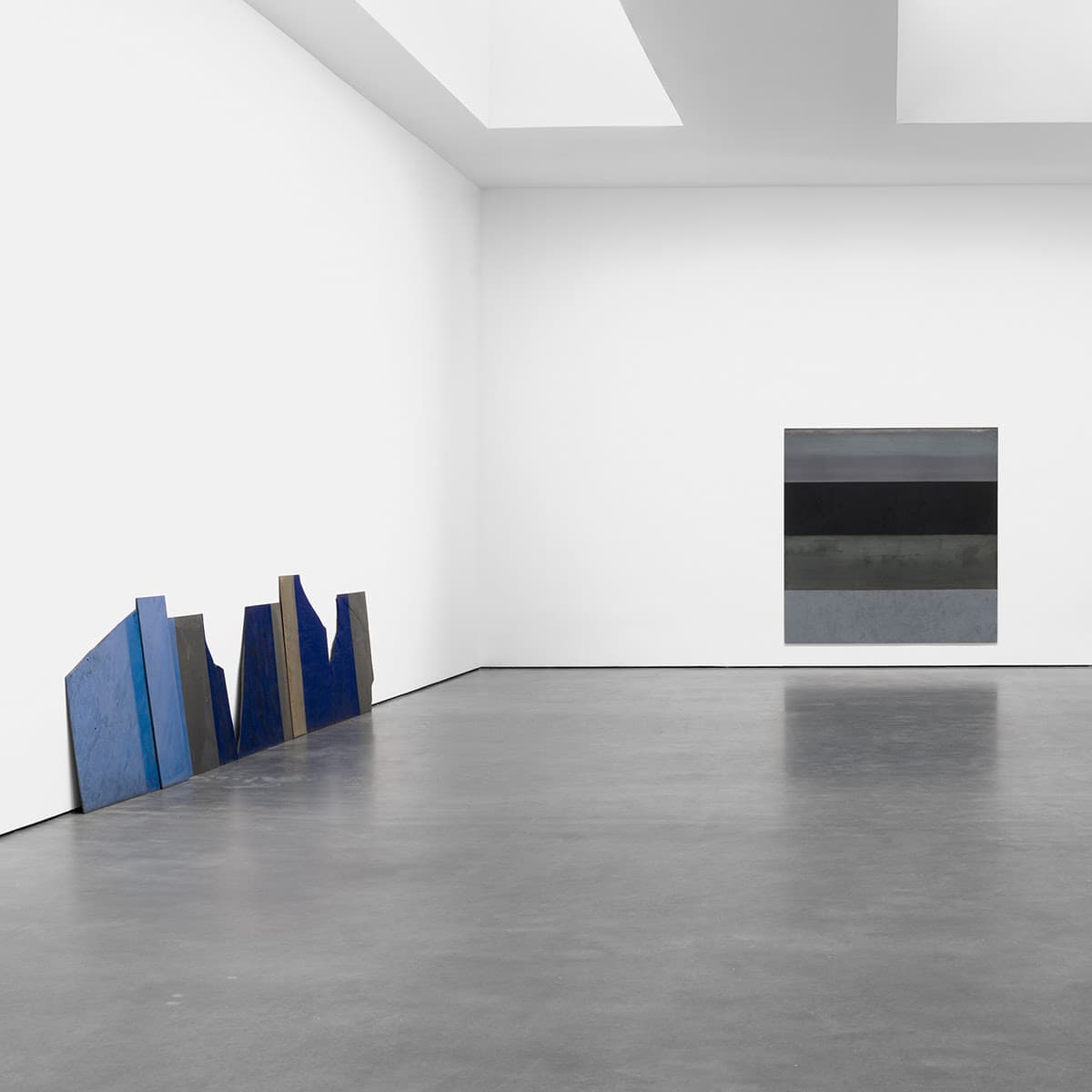
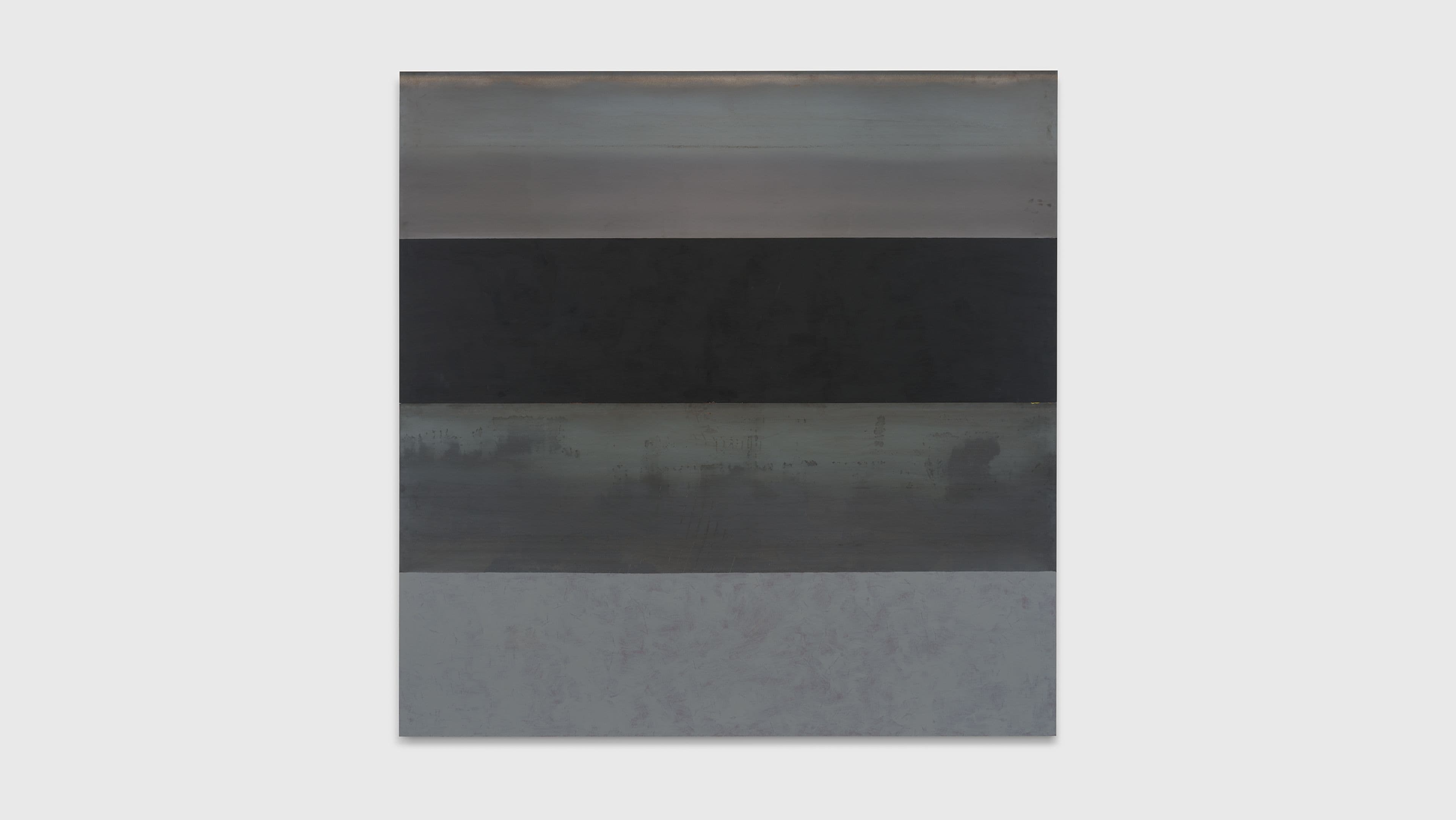
David ZwirnerDavid Zwirner is pleased to present an exhibition of work by American artist Merrill Wagner. Featuring sculptures, paintings, works on paper, and photographs spanning the 1960s to the 2010s, Marking Time sheds new light on Wagner’s pioneering use of industrial and natural materials in her process-based approach, as well as her ongoing interest in the transformational effects of time. In its emphasis on materiality and mutability, Wagner’s inventive work elides traditional categories of painting, relief, sculpture, and installation. Emerging in the 1960s, at a moment when minimalism and post-minimalism became dominant idioms, Wagner both eschewed and embraced their primary concerns, creating rigorous, hard-edged abstract compositions that subtly referenced the genre of landscape. By the mid-1970s, the artist largely moved away from canvas and looked to nontraditional supports as surfaces for color. These alternative substrates interested Wagner not only for their textural appearance but also for their allusions to the natural world and their inherent connection to process and chance. Her Pacific Northwest upbringing is resonant throughout her practice, and she has continued to make work outdoors throughout her career. By integrating the support within the compositional logic of her works, and ordering and joining fragments by adding painted elements, Wagner mediates between the natural and the constructed. As the exhibition’s title suggests, Wagner’s practice is concerned with the recording of time in multiple registers. Moving with ease between a range of supports—including canvas, paper, slate, stone, and steel—she draws and paints directly on the surface of her works, allowing pigments to fade and mutate as they, in turn, mark the cycling of the seasons. While some of Wagner’s chosen materials are naturally occurring and others are human-made, they are united by a common thread: they have all borne witness to time, conjuring associations with geological histories. Centrally featured in Marking Time are photographs that document Wagner’s practice of creating outdoor site-specific interventions on unassuming surfaces, such as on fences and rock outcroppings, that she leaves unprotected from the elements to fade over a long period of time—a conceptual process that she likened to a scientific experiment. In Time Piece # 1 (1982–1983), Wagner details the transformation of painted rectangles on a cedar fence that runs into Gravelly Lake near Tacoma, Washington. For this project, the artist painted six rectangles using various shades of yellow and surface treatments right below the previous year’s high-water mark. Through a series of monthly photographs that were subsequently published as a calendar, Wagner documented their changing appearance through seasonal shifts in weather and water level. As much about the evolution of the surrounding landscape as it is about the artist’s painted intervention, these photographic suites occasion a poetic meditation on the role of chance and entropy in the formation of built environments and the natural world. Painted works on steel and slate from the 1980s and 1990s installed in the front room of the gallery testify to Wagner’s innovative use of materials traditionally reserved for sculpture. Through the artist’s methods of markmaking and juxtaposition, these heavy surfaces are transformed into light and nimble compositions that utilize the language of painting. The largest such work on display, Gorges (1986), measures twenty feet across and is composed of a sequence of irregularly shaped slate fragments that lean against the wall and have been partially painted in shades of blue. In the late 1970s, Wagner received a large quantity of slate chalkboards and fragments that had been removed during the renovation of P .S. 1 Contemporary Art Center in New York; while the artist had previously used slate as a support, this donation made it her primary focus throughout that period. With its craggy silhouette and tranquil palette, Gorges reads at once like a mountain range, a quarry, a horizon line, or the watery ravines for which it is named. Likewise, the paintings on steel—part of a body of work that Wagner began in the late 1980s—seamlessly juxtapose the organic and the industrial; using primarily rust preventative paint on cold-rolled steel, Wagner applies swathes of color to the steel’s glossy surface. These reflective works, with their industrial materiality and their bands of pigment, are reminiscent of minimalist sculpture. Elsewhere, the exhibition foregrounds Wagner’s expansive engagement with the practice of drawing, which provides another avenue for the artist to embed the passage of time in her works. In the major sculpture Cat’s Cradle (1989), white waxed thread is wound around sewing hooks at either side of the work and stretched in a triangular pattern across a large piece of slate, which is itself marked with horizontal lines in white oil pastel. Drawn and threaded lines are woven together, forming a kind of optical illusion that traverses physical dimensions. In a group of works on paper from the mid-1970s, Wagner uses the unorthodox material of masking tape to guide the appearance and outcome of her drawings, using it as a temporary stencil, or at times, incorporating tape in the final composition itself. These works represent an important evolution in the artist’s approach wherein process and form become intrinsically linked and the transient nature of material is revealed. As curator Robert Storr has remarked, “Wagner, materialist, formalist, empiricist, and poet of the given and the accidental as well as of the systematically altered, is, in this every respect, an all-American artist to the core. ”[1] Merrill Wagner (b. 1935) was born in Tacoma, Washington. She completed her BA at Sarah Lawrence College, Bronxville, New York, in 1957 before moving to New York City. Early solo exhibitions of Wagner’s work were held at the artist-run cooperative 55 Mercer, New York (1970, 1971, 1974, 1976, and 1977), followed by presentations at P .S. 1, Institute for Art and Urban Resources, New York (1978); and The Clocktower, Institute for Art and Urban Resources, New York (1979). More recent solo exhibitions include those held at Art Resources Transfer, New York (2002), which featured a catalogue with an interview with the artist by Ann Messner and William S. Bartman and an essay by Lilly Wei; Looking at the Land , which originated at William Paterson University, Wayne, New Jersey (2006), and traveled to the University of Rhode Island, Kingston (2007), and was accompanied by a catalogue featuring texts by Nancy Einreinhofer and Judith Tolnick Champa; Northern Columbia Community and Cultural Center, Benton, Pennsylvania (2011); New York Studio School (2016), which was accompanied by a catalogue featuring essays by Tiffany Bell, Naomi Spector, Robert Storr, Lilly Wei, and John Yau; and Landscapes of Colour/ Landschaften der Farbe, Große Kunstschau Worpswede, Germany (2019). Wagner’s work has also been included in significant group exhibitions worldwide, including most recently 52 Artists: A Feminist Milestone, The Aldrich Contemporary Art Museum, Ridgefield, Connecticut (2022–2023); and Minimal, Bourse de Commerce – Pinault Collection, Paris (2025). Wagner has published a number of artist books documenting her long-term and site-specific projects, including Notes on Paint (1990), which was awarded the Certificate of Excellence by the AIGA Book Show in 1991 and the Northwest Design Award in 1992; Time and Materials (1994); Oil and Water (2002); and Public/Private (2004). The artist has received numerous awards, such as the National Endowment for the Arts Visual Artists Fellowship Grant (1989); Hassam Purchase Award, American Academy of Arts and Letters (2002); Andrew Carnegie Prize, National Academy of Design (2006); and the Academy Award in Art, American Academy of Arts and Letters (2006). Wagner has been represented by David Zwirner since 2021. Her work can be found in prominent museum collections, including Kunstmuseum Den Haag, The Hague, The Netherlands; Kunstpalast, Düsseldorf; The Metropolitan Museum of Art, New York; Rose Art Museum, Brandeis University, Waltham, Massachusetts; Smith College Museum of Art, Northampton, Massachusetts; Tacoma Art Museum, Washington; Weatherspoon Art Museum, University of North Carolina, Greensboro; and the Whitney Museum of American Art, New York. Wagner lives and works in New York. Notes 1 - Robert Storr, “Matters of Fact and of Vision, ” in Merrill Wagner. Exh. cat. (New York: New York Studio School, 2016), p. 20.