
Chinatown, New York
Jason Bailer Losh
If Wishes Were Horses, Beggars Would Ride
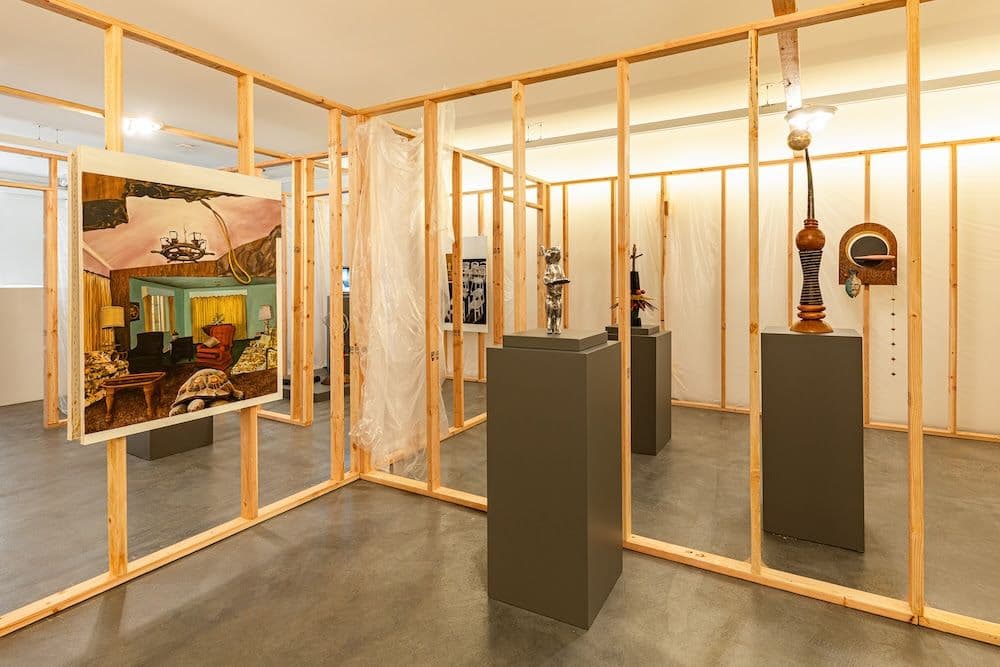
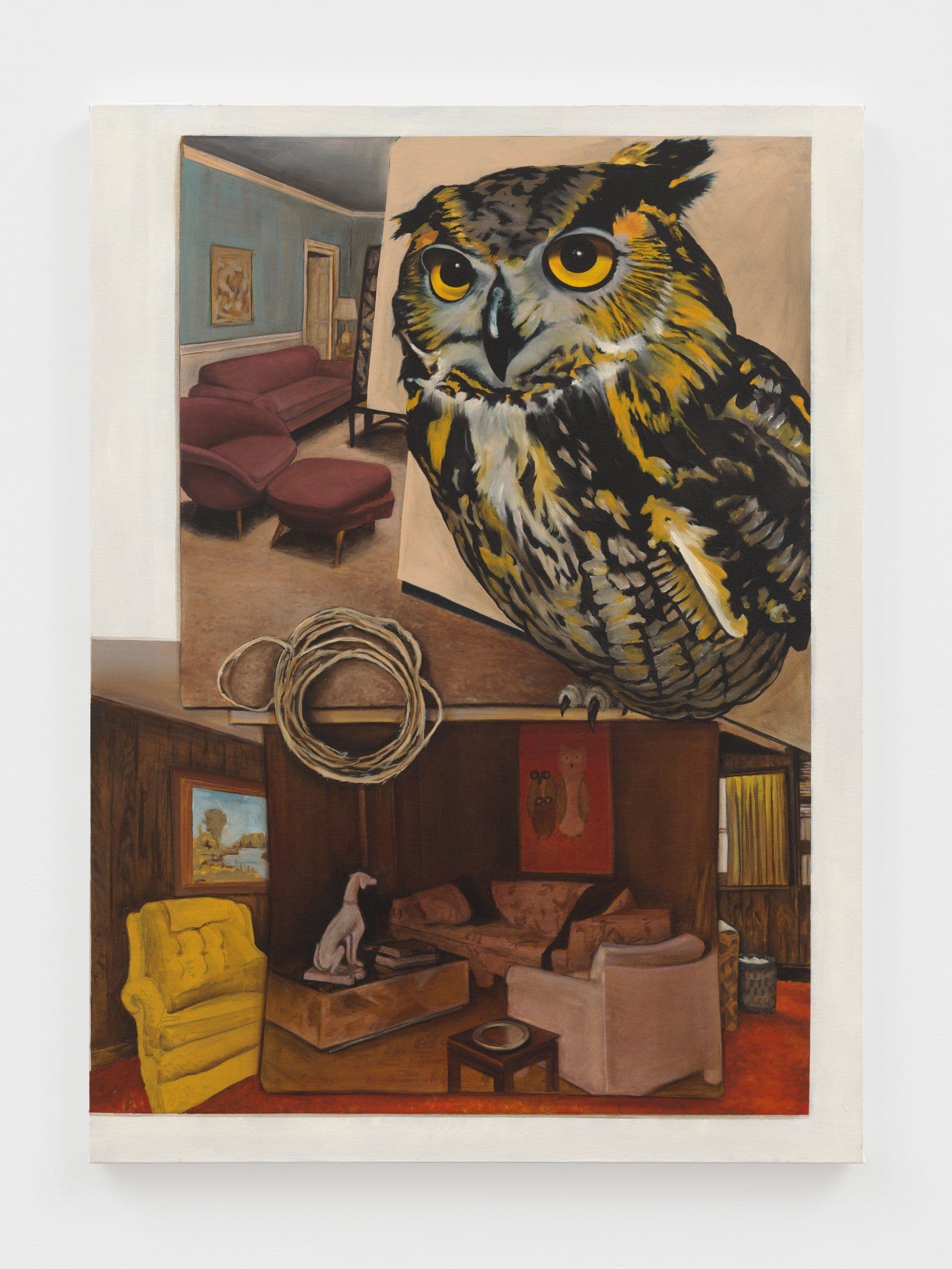
Anat EbgiAnat Ebgi is pleased to present If Wishes Were Horses, Beggars Would Ride, a solo exhibition by Jason Bailer Losh. This is Losh's third solo exhibition with the gallery and brings together new paintings, sculptures, and video work in a site specific installation designed and built by the artist. Jason Bailer Losh interweaves the legacies of high Modernism and folk art to create work imbued with nostalgia, whimsy, and formal rigor. The works seem somehow disjointed from time, appearing one moment as if they were long lost midcentury masterpieces, and the next as if they were born yesterday in his studio. Despite this, each work reveals itself to be deeply personal, rooted in Losh's personal history and the lives of his family. To make his sculptures, Losh mixes fabricated and found objects, many of which were gifted to him by his sculptor father-in-law as a part of their creative familial exchange. The works are playful yet elegant, the spiritual descendants of both funky, folky artists like H.C. Westerman and austere aesthetes like Constantin Brancusi. Like the objects used in his sculptures, this unexpected mixture of high and low is also a part of his life's story. Growing up in a working class Iowa family, his early artistic vocabulary was wholly demotic—he decided to pursue art simply because a teacher noticed that he was skilled at drawing—and was expanded to include the so-called 'fine arts' only much later, when he attended college. As a result, his sculptures share equal kinship with knick-knacks and other varieties of domestic flotsam and the works of Modernist masters like Anthony Caro, who he reveres. Losh's foray into painting, which he initially studied at school, springs similarly from his upbringing. In these works, Losh reproduces mid-century domestic interiors from found photographs, which he fragments, warps, and cobbles together. The living spaces are simple, the kind of middle class homes that were emblematic of the postwar American dream of Losh's parents, the vanishing of which has been the backdrop of his life. Here, the work's fragmentation speaks the unreliable nature of memory, both person and cultural, and the related chimeric quality of nostalgia, which lends a warm patina to the past that it might not deserve. There is an inescapable archetypal and folkloric quality to much of Losh's work. His sculptures, for instance, are often totemic in their construction, and gesture ambiguously towards various ancient religious and memorial structures, which lends the works a gravitas belied by their humble materials. Relatedly, his recent paintings are populated by animal familiars—a deer, an owl, a tortoise—who seem conjured out of fairy tales. These creatures appear to act as a kind of stand-in for Losh himself, indicating a yearning to return to a mythic time that he never really knew. In his recent work, however, he's been more forward-looking. He has begun to train a custom AI to produce warped, strange versions of his paintings for him, which he translates from the screen onto the canvas. In these works, Losh gives a surreal twist to his domestic interiors, suggesting a kind of dark flip side to the wistful tenor of the previous paintings. While nostalgia is poignant precisely because past remains forever unreachable, Losh suggests that as we are forced down the AI rabbit hole, the future becomes more discomfiting precisely because it is unstoppable. Jason Bailer Losh (b. 1977, Denison, Iowa) received his MFA from School of Visual Arts, New York. His work has been exhibited at such institutions as LAXArt, Los Angeles; Socrates Sculpture Park, New York; Flag Art Foundation, New York; and Fairview Museum of Art and History, Fairview, Utah. He has had solo exhibitions at Anat Ebgi, Los Angeles; ZieherSmith, New York; and Control Room, Los Angeles. He has participated in group exhibitions including ‘Rockaway!', organized by Klaus Biesenbach at PS1/Rockaway Surf Club, New York; ‘Soft Target', curated by Phil Chang and Matthew Porter at M+B Gallery, Los Angeles; and ‘Building Materials', curated by Lucas Blalock at Control Room, Los Angeles. Losh lives and works in Connecticut.