
Upper East Side, New York
James Castle
Dimensions
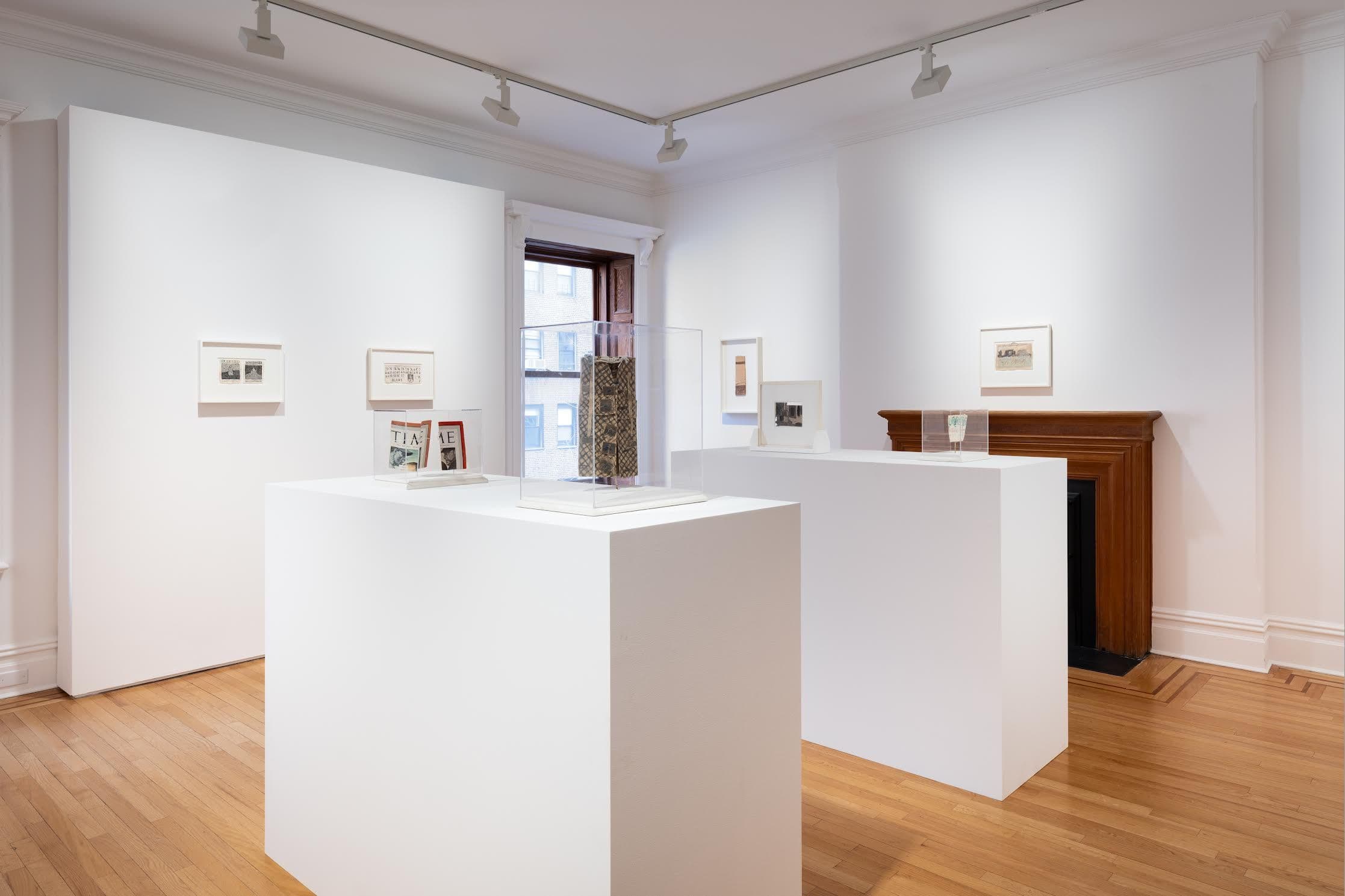
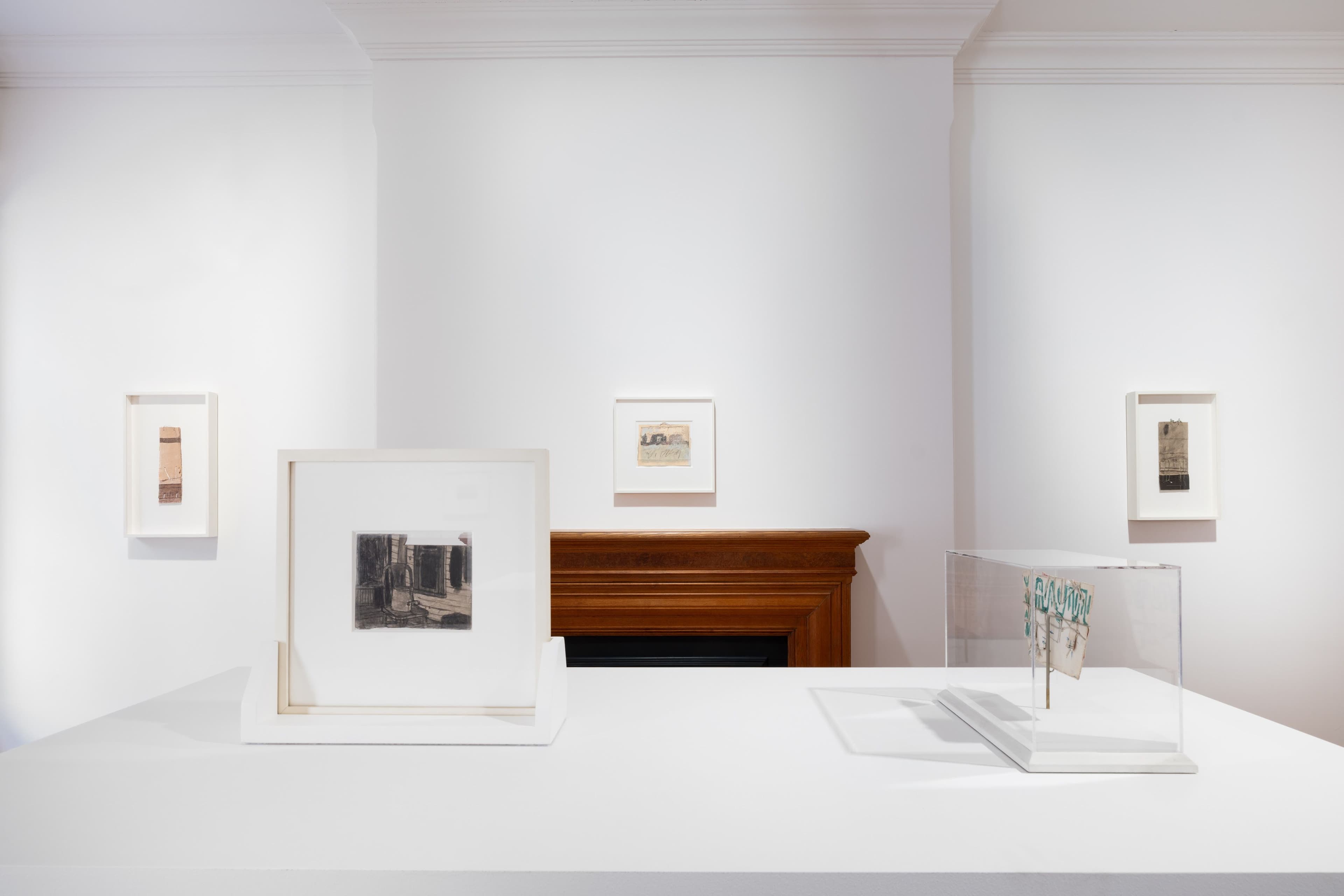
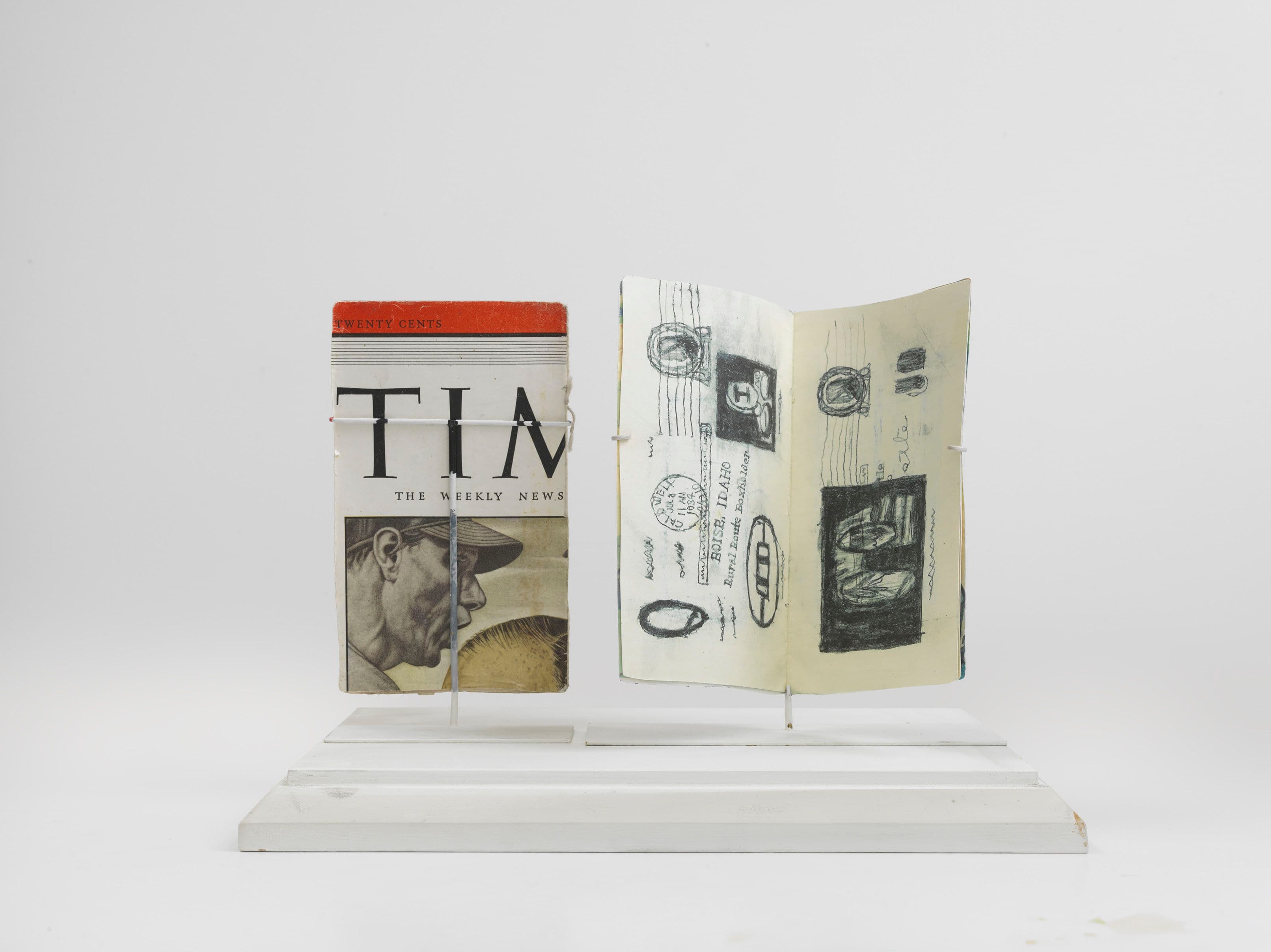
RodderRodder is pleased to present James Castle: Dimensions, an exhibition dedicated to the singular work of self-taught artist James Castle (1899–1977). Presenting fourteen drawings, works on paper and objects from private collections, this exhibition showcases the remarkable range of Castle’s practice. Deaf from birth and working outside the influences of travel, formal training, and the commercial art world, Castle produced a complex, deeply personal, and formally rigorous body of work that transcends conventional categories of medium and material. Castle worked across five primary modes, all of which maintain a central element of physicality, and many of which are represented in the exhibition at Rodder. Both his grayscale drawings and full-color images were created unconventionally, using the materials at his disposal. With soot from his family’s wood-burning stove mixed with his own saliva, Castle made his own ink and drew with bits of stick or sharpened wood on scavenged papers and packaging. His color works likewise relied on nontraditional pigments, including color extracted from dime-store watercolor blocks or leached from crepe paper, tissue paper, and other readily available materials. James Castle: Dimensions additionally features examples of Castle’s assemblages and constructions, as well as some of his iconic text pieces. At times, his constructions reimagine familiar objects like clothing, pottery, and other household items; at other moments, they are pure abstractions. The text pieces similarly teeter between legible representations and invented systems and combinations of letters and symbols. The works in this show give insight into the visual vocabulary at the foundation of Castle’s work. The architectural drawings, cryptic text pieces, idiosyncratic characters, and constructions of the objects around him offer a sense of the artist’s perception of place as well as his construction of space. Rodder’s exhibition underscores the remarkable scope of Castle’s artistic vision, affirming that his limitations did not restrict his practice, but instead laid the foundation for a layered, striking body of work in which Castle ceaselessly reimagined his world and constructed new worlds. The dimensions of his life were not bound by his circumstances, but rather ruptured again and again in his artistic pursuits. James Castle was born in 1899 in the sparsely-populated mountain community of Garden Valley, Idaho. James, the fifth of seven surviving children, was deaf from birth. Castle began drawing as a child and continued to do so his entire life, but the primary body of his surviving work was made between 1931 and his death in 1977. Castle’s art remained largely private until 1951 when his nephew introduced his drawings to faculty at an Oregon college. Interest in his work grew quickly and exhibitions of his work soon opened in Portland and Idaho. In 1963, the Boise Art Museum presented his first major solo exhibition. In the decades since, Castle’s legacy has grown, with significant retrospectives at the Philadelphia Museum of Art (2008) and the Museo Nacional Centro de Arte Reina Sofía in Madrid (2011), and his inclusion in the 2013 Venice Biennale. His works are currently included in To Vincent: A Winter’s Tale, a group exhibition inspired by Vincent Van Gogh’s correspondence at Fondation Vincent Van Gogh Arles (Arles, France). His work is in the collections of major institutions including The Art Institute of Chicago (Chicago, IL); The Museum of Fine Arts, Boston (Boston, MA); The Museum of Modern Art (New York, NY); The National Gallery of Art (Washington D.C.); The Philadelphia Museum of Art (Philadelphia, PA); and The Whitney Museum of American Art (New York, NY).