
West, London
A'driane Nieves
Black Lilith Rising
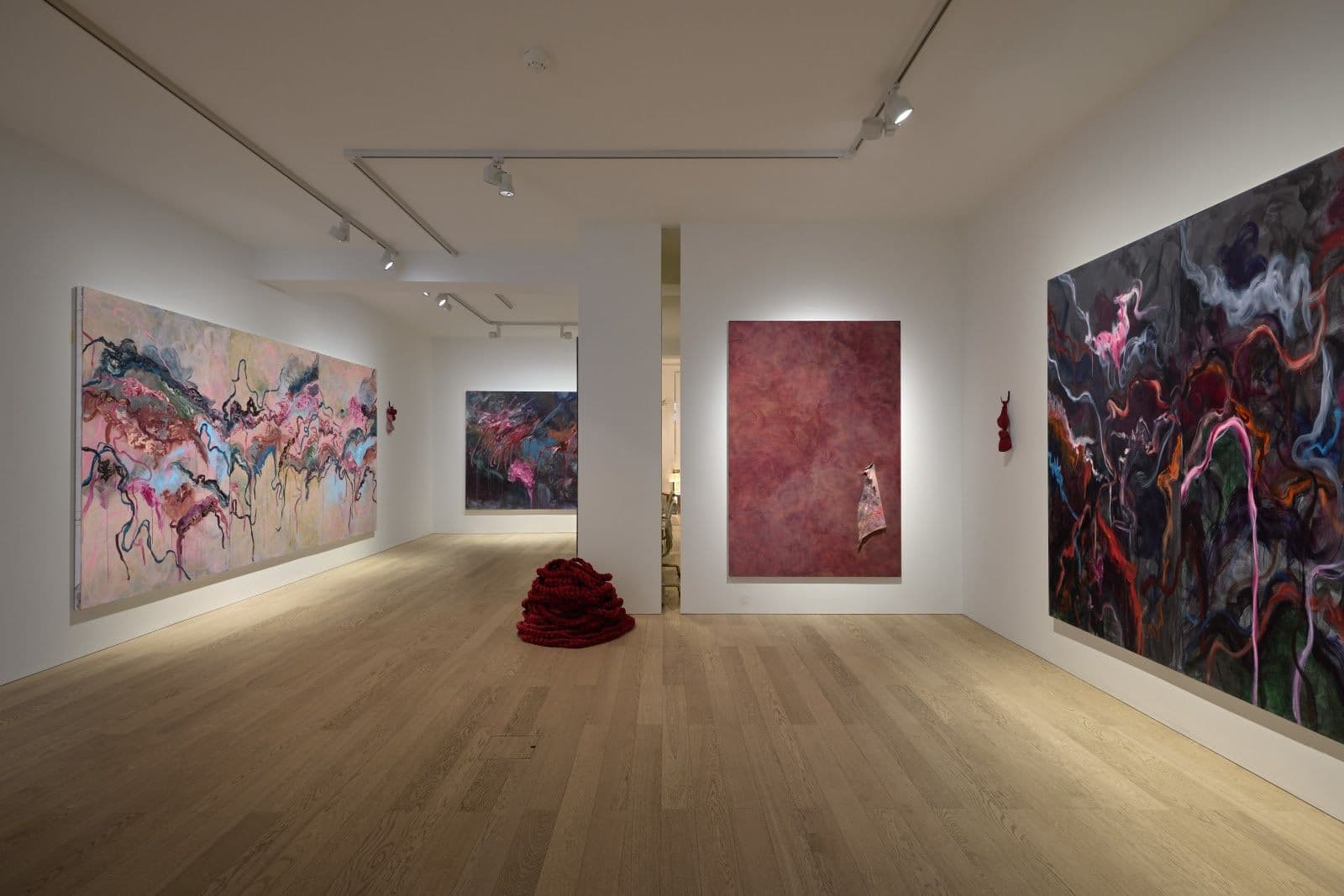
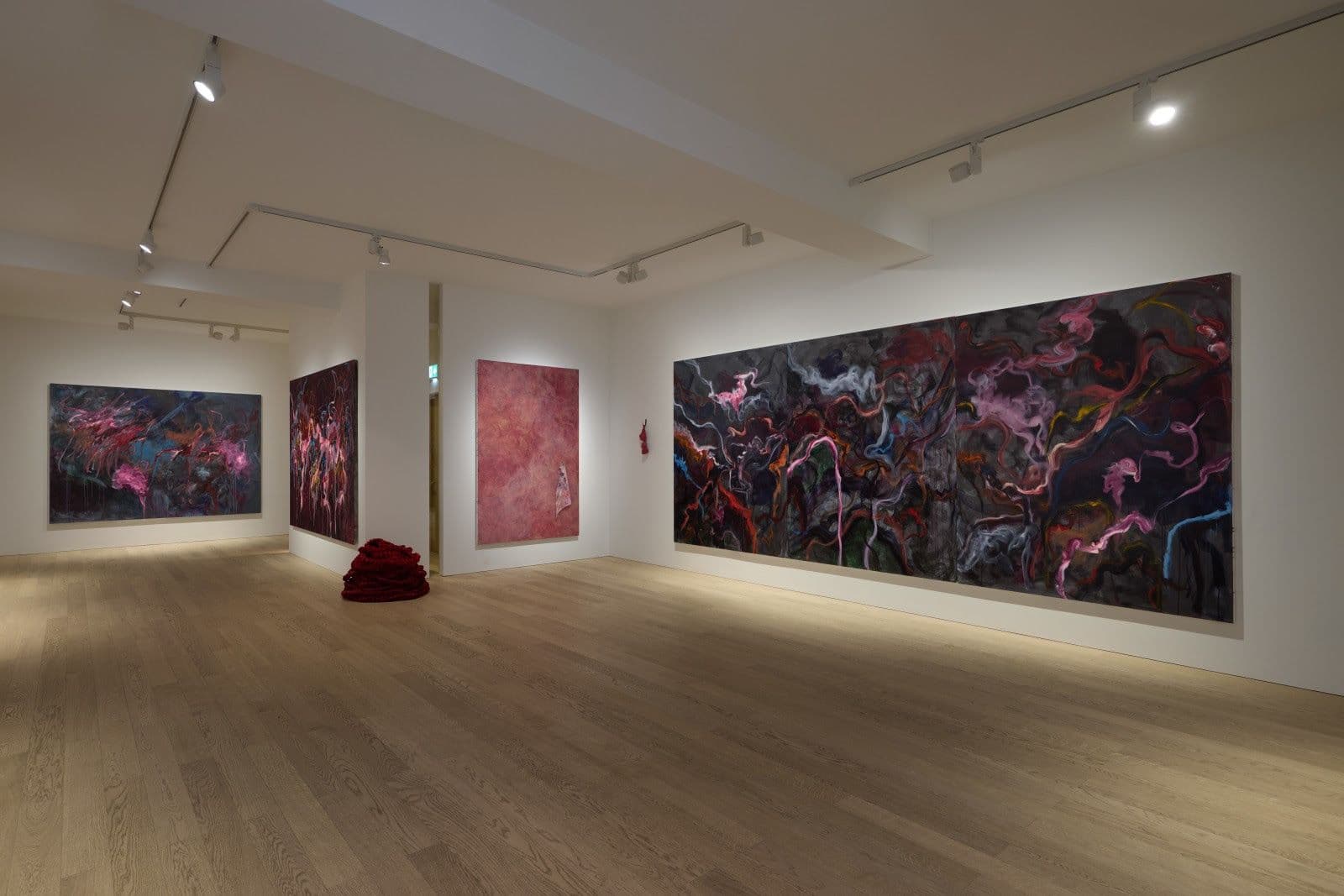
Albion JeuneAlbion Jeune is pleased to present Black Lilith Rising, a solo exhibition of new works by Philadelphia-based artist A'driane Nieves (b. 1982, San Antonio, Texas). Comprising paintings and soft sculpture, Nieves uses expressive mark-making and abstract composition to give visible shape to the biological and emotional processes of trauma, adaptation, and transformation—whether inherited, historical, or deeply personal. Vast expanses of arid desert, deep, narrow canyons, sprawling plateaus, and the towering Rocky Mountains characterise the topography of the South western United States. These landscapes have provided foundational source material for A’driane Nieves, who observed them as a child on long interstate car journeys with her father. Travelling throughout Colorado, New Mexico, Arizona, and Nevada, Nieves recalls being ‘immersed in an expansive sense of freedom in space’, a feeling that has informed the large scale of her paintings. Beyond this evocation of space, the colour palette of Nieves’ work often echoes the terrains of her childhood. ‘I love the colours in the vegetation and the landscape,’ she says, ‘In Sedona, Arizona, where the red rocks are, that palette often shows up in my work.’ The interplay of text and painting is a central facet of Nieves’ practice. Literary references, from the writings of African American giants including Audre Lorde and June Jordan, sit alongside Nieves’ own texts, an element of her practice she has been nurturing since her teenage years. ‘Just like Cy Twombly brought The Iliad into abstraction, I’m trying to bring James Baldwin’s work into the language,’ says Nieves. Writing was a foundational creative outlet for the artist, from the poetry and memoir-based writing of her adolescence to blogging after the birth of her second child. It has been a consistent, cathartic outlet. Her journey with painting, conversely, was more of an ‘accident’, she says, ‘like an intuitive nudge.’ The moment she first put paint to canvas elicited an emotional and physical response. Using her fingers, as opposed to brushes, the embodied act of painting quelled the artist’s feelings of anxiety, the movement of the paint against the surface was ‘grounding.’ Nieves’ recently developed soft sculptures mark an important expansion of her practice into three-dimensional form. Using soft, tactile materials – chunky, velvety yarn, polyfill, old paint rags, and pantyhose – she assembles squeezable forms that evoke the corporeal. These works translate the bodily qualities present in many of her paintings into sculptural space, introducing new elements of tactility, weight, and volume into her practice. Nieves’ work is situated within a lineage of Black women abstract artists whose practices have shaped her thinking about form and scale. While her own visual language may diverge formally from artists like Alma Thomas, she regards her as a foundational foremother, and an early influence whose presence in art history carved space for Nieves’ own practice. Similarly, Mary Lovelace O’Neal’s commitment to abstraction during the Black Arts Movement, despite pressure to create overtly political or representational work, has been an important touchstone for Nieves. Other figures offer inspiration through both their art practices and personal lives. Bernice Bing and Howardena Pindell, for instance, were both engaged in arts advocacy and social work, roles which Nieves herself has assumed. Pindell’s description of “doing my art in the cracks and crevices of my life” resonates with Nieves’ own experience navigating chronic illness, caregiving, and activism alongside her creative practice.