
Institutions, Venice
Robert Rauschenberg
Late Series
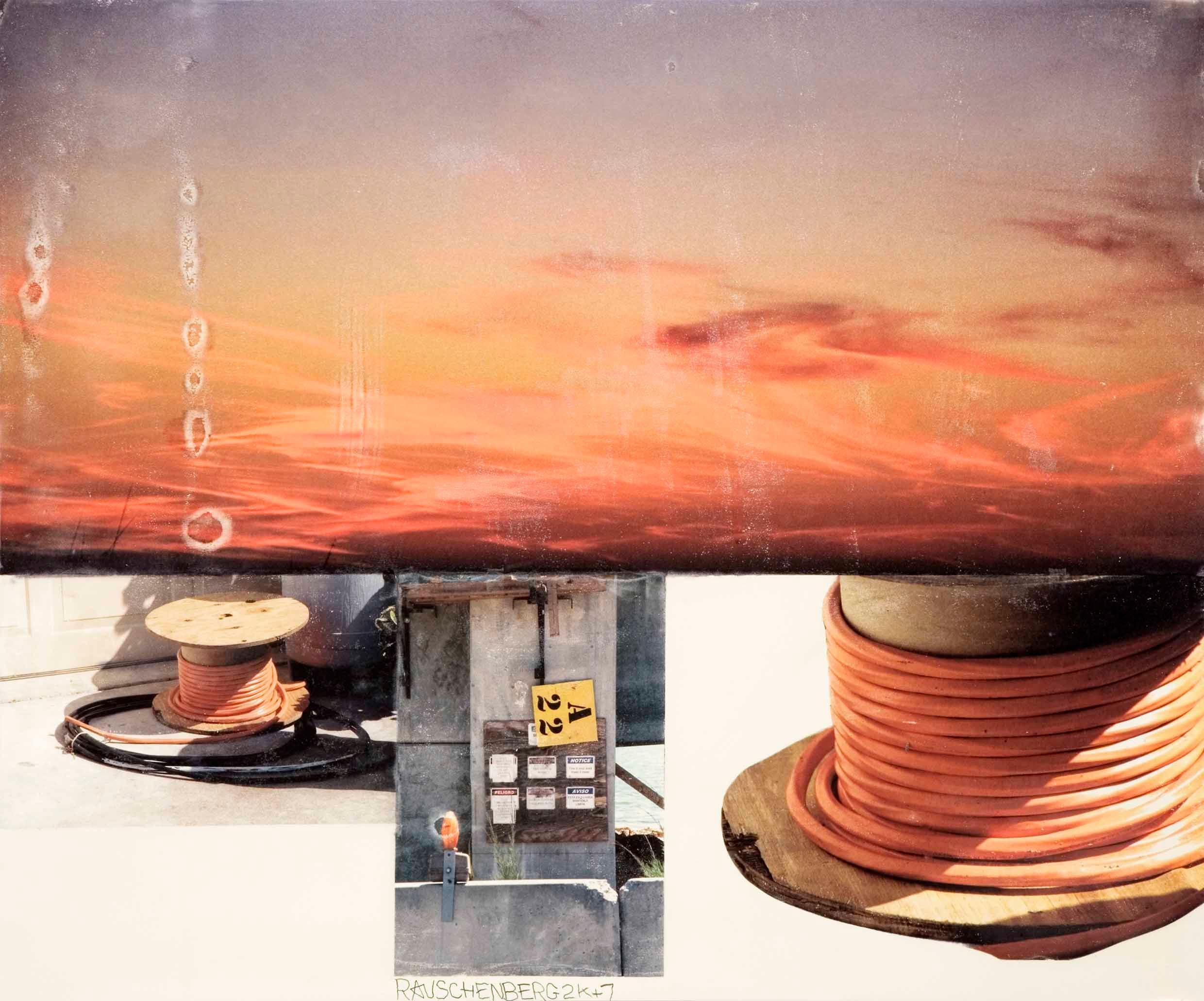
Fondazione Giorgio CiniTo coincide with the 57th Venice Biennale 2017, Faurschou Foundation is pleased to present Late Series at the Fondazione Giorgio Cini. Building on the story of the very first silkscreens in contemporary art, the exhibition, Late Series, presents two artworks from some of the most important later series by Rauschenberg, amongst other Borealis, Urban Bourbon, Scenarios and his last one: Runts. A common thread for all series is the image transfer, which started in 1962 and since got developed and refined in multiple ways. Robert Rauschenberg was one of the most influential artists of his time and still is. His approach to art was eclectic, consisting of multiple images, materials and photographs transferred or sculpted to the canvas with a large variety of different techniques. Rauschenberg wanted to reflect the world around him in his art and creative activities. Many of his latest works have resulted from lifelong exploration of image-transfer methods, as well as his open-minded attitude towards the world around him. Faurschou Foundation houses a collection of contemporary art and runs a dynamic programme at its spaces in Copenhagen North Harbour and Beijing’s art district, 798. Faurschou Foundation constantly develops and expands the collection, to use their programme to answer artistic need, and give their visitors access to works by some of the world’s most acclaimed artists. Since its launch in 2012 Faurschou Foundation has presented solo exhibitions of many of today’s leading practitioners and key historic figures, including Yoko Ono, Peter Doig, Ai Weiwei, Cai Guo-Qiang, Louise Bourgeois, Shirin Neshat, Gabriel Orozco, Danh Vo, and Bill Viola. Robert Rauschenberg was the defining force in contemporary art for nearly sixty years, creating a wealth of art: painting, photography, sculpture, performance, and printmaking – working more varied than other artists of his time. For Rauschenberg, painting entailed not only using a brush, but also silkscreening, collaging, transferring, and imprinting, and he did so on the widest array of materials from canvas, board, and fabric to sheet metal, Plexiglas, plaster, and paper. He has been called a forerunner of virtually every postwar American art movement since Abstract Expressionism. However, Rauschenberg remained fiercely independent from any particular affiliation throughout his protean life.