
West, London
Michelangelo Pistoletto
Michelangelo Pistoletto
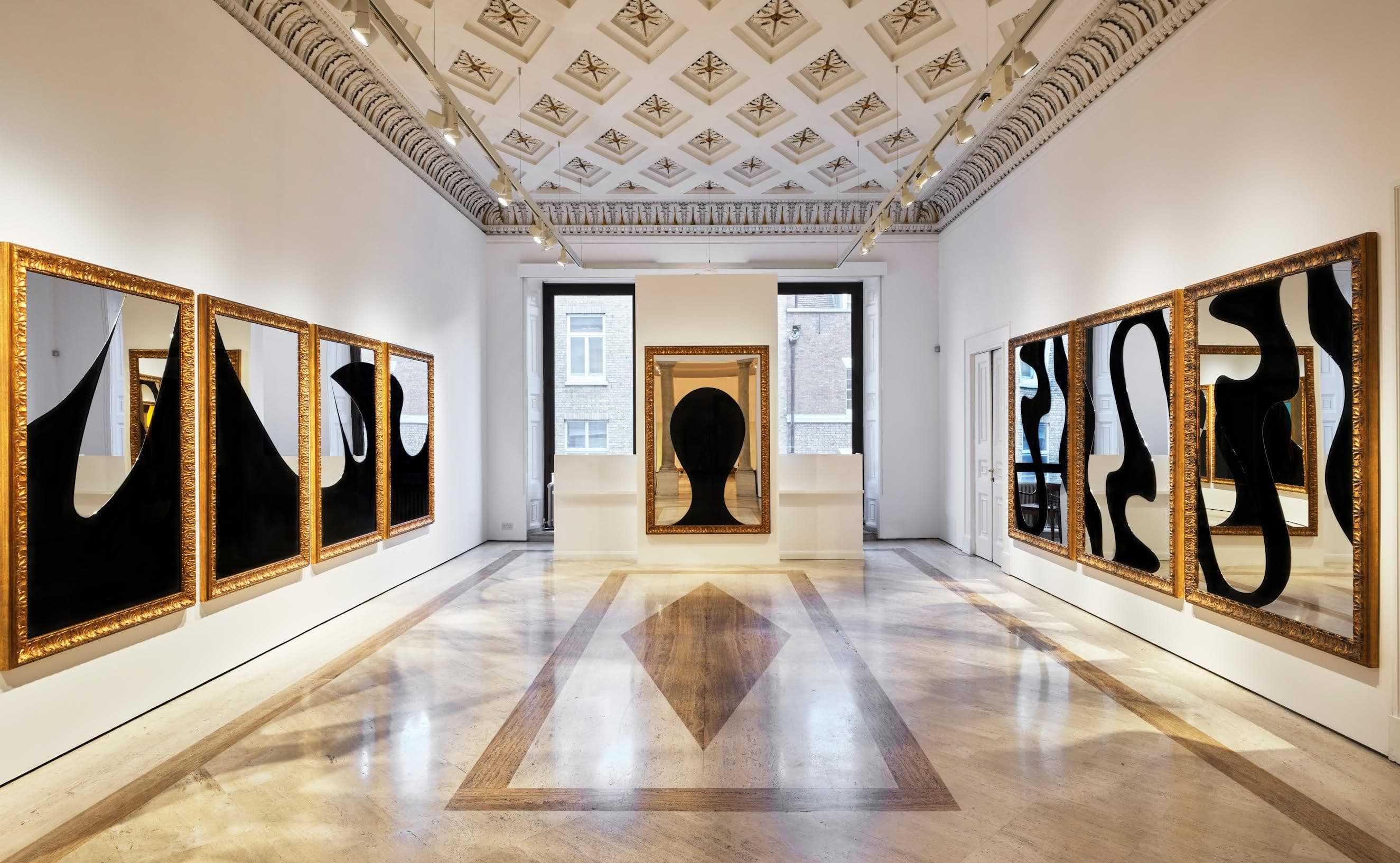
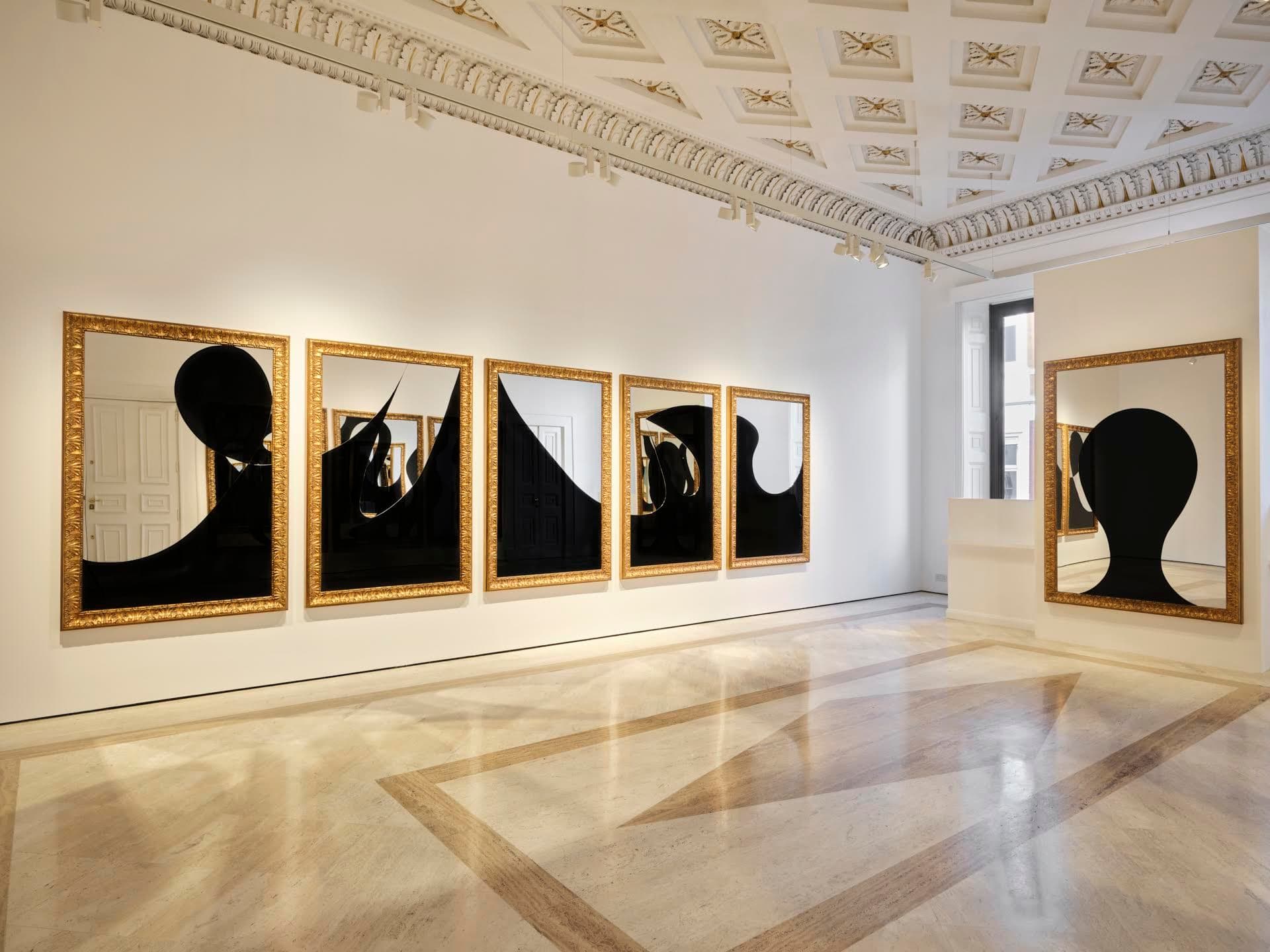
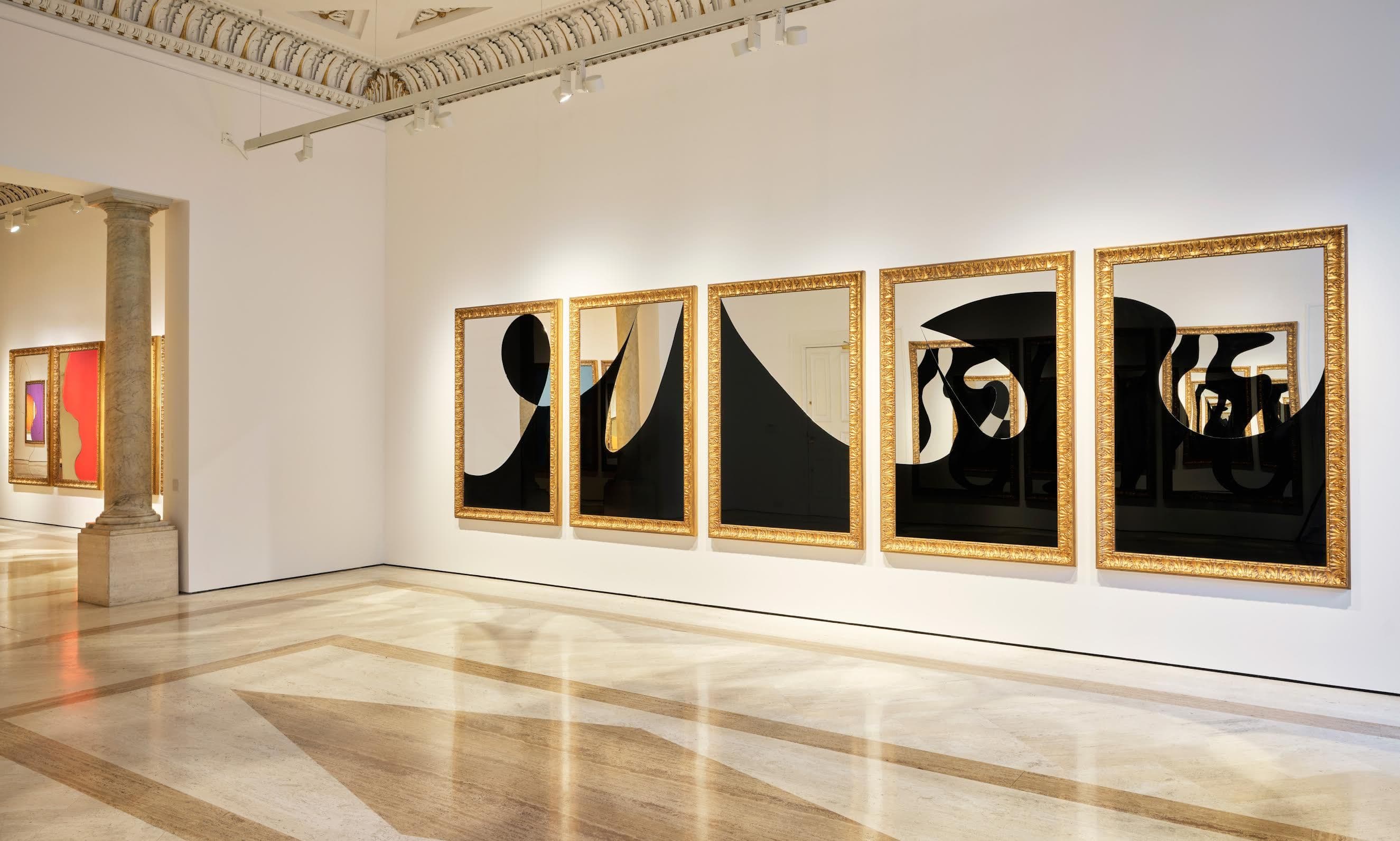
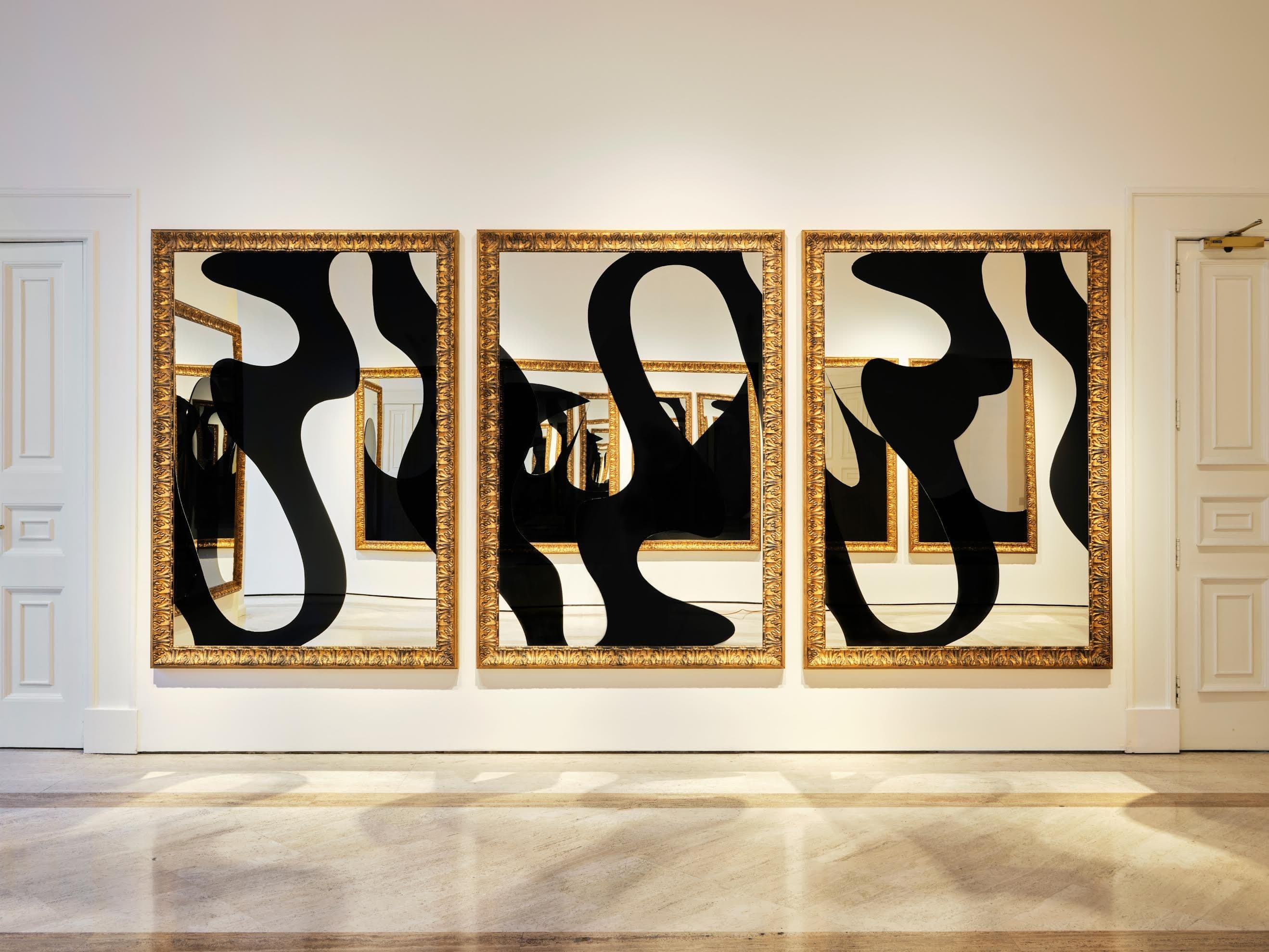
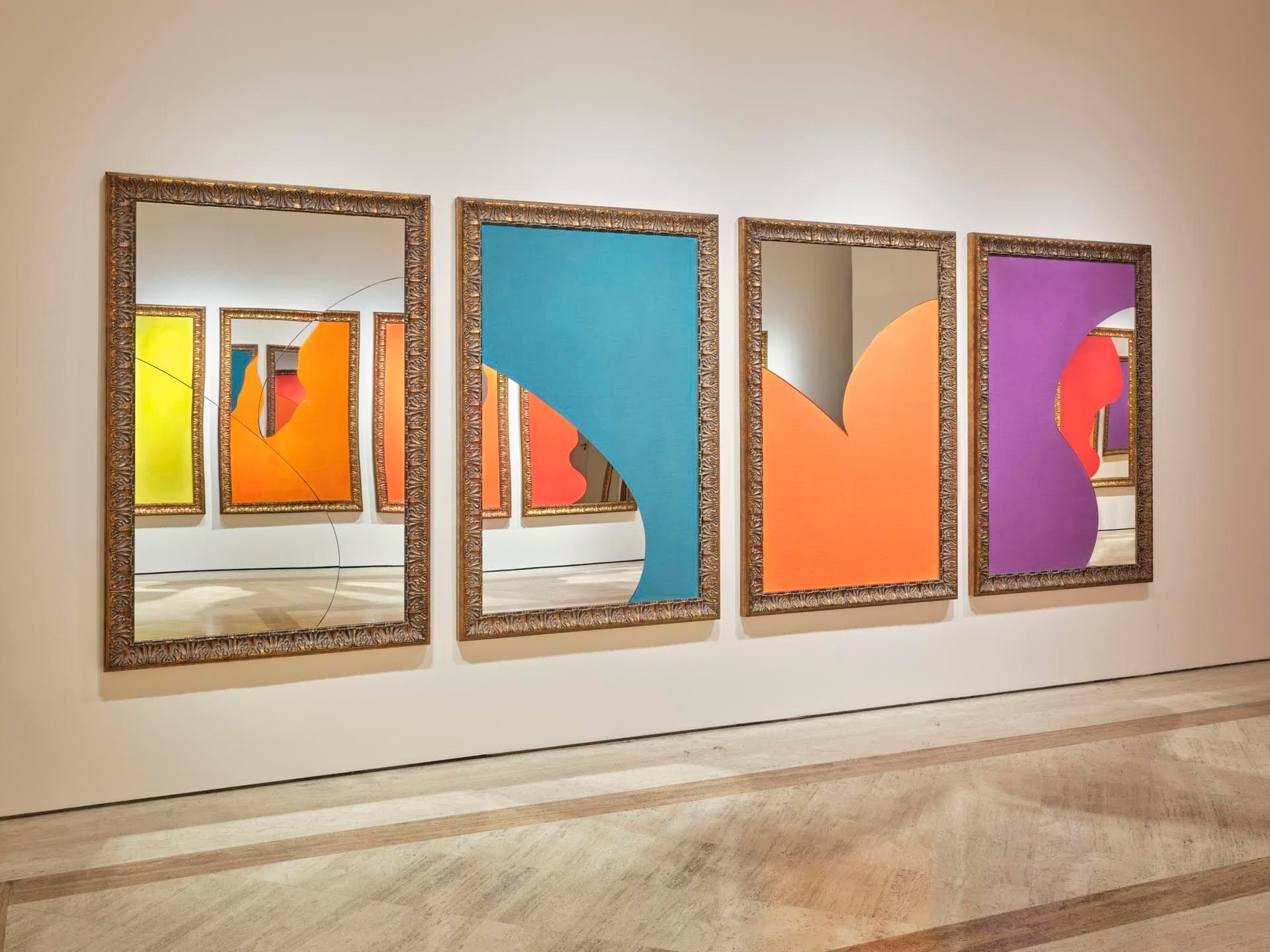
Robilant+VoenaRobilant+Voena is pleased to present an exhibition of new and archetypal works by Michelangelo Pistoletto, in collaboration with Galleria Continua. The exhibition will feature a selection of the artist's signature Mirror Paintings, produced specifically for the occasion, and an example from the Vortex series that was created for the artist's solo exhibition at the Louvre in 2013. Opening during Frieze Week, the exhibition offers a rare opportunity for audiences in London to encounter works produced by the legendary Italian artist, who celebrated his 91st birthday earlier this year. The exhibition is a showcase of the extraordinary vision and philosophy of the artist, who, while continuing to make new works, is the driving force of Cittadellarte in Biella, an artistic centre founded by Pistoletto in 1998, to promote ‘socially responsible change. A leading figure of the Arte Povera movement and one of the most celebrated artists in Europe, Michelangelo Pistoletto (b. 1933, Biella, Italy) created his first Mirror Paintings in 1961–62. These influential works earned him international acclaim, leading to significant exhibitions in Europe and the US. The works have become a hallmark of his oeuvre, with the artist constantly creating, challenging and innovating through his iconic medium of the mirror, throughout the course of his 60-year career. Robilant+Voena's exhibition presents six works from five different series, divided across two rooms: the first room showcasing black and white mirror pieces, and the second offering mirror works in bold colours. There will be works from the series Color and Light, Black and Light, Division and Multiplication of the Mirror, and Vortex. Collectively, these works allow for a perpetually changing experience, creating infinite reflections that provide new perspectives and echoes of reality. Throughout the exhibition, the surrounding space of the gallery and the viewer are integral parts of the works themselves; the multiple reflective surfaces of the artworks create an environment that encapsulates the essential characteristics of the artist’s wider oeuvre. These characteristics include the active dimension of time; the integral inclusion of the observer and the surroundings; the encounter of oppositional concepts such as static/dynamic and absolute/relative; and the complete obliteration of the sense of the picture surface being an illusory window onto the world – the Mirror Paintings instead offer a dual perspective of what lies in front and also behind. Speaking of the boldly-coloured series Color and Light, Pistoletto has said: ‘It is a work of broken mirrors but executed in an orderly manner. The outlines produced by breaking the mirror itself are included in the mirror, and these outlines form a puzzle. The large mirror is broken and each piece takes on its own individuality. The universal figure of the mirror divides and multiplies with the breaking and cutting, becoming an innumerable quantity of single figures. Each fragment of the mirror can be considered as a person who is part of a larger mirror, that is, society. Society is like a big mirror.’ Michelangelo Pistoletto was born in Biella in 1933. He began to exhibit his work in 1955 and in 1960 he had his first solo show at Galleria Galatea in Turin. His early work is characterised by an inquiry into self-portraiture. In the period 1961–62, Pistoletto made the first Mirror Paintings. These works quickly brought Pistoletto international acclaim, leading to one-man shows in important galleries and museums in Europe and the United States. The Mirror Paintings were the foundation of his subsequent artistic output and theoretical thought. In 1965 and 1966 he produced a set of works entitled Minus Objects, considered fundamental to the birth of Arte Povera, an art movement of which Pistoletto was an animating force and a protagonist. In 1967 he began to work outside traditional exhibition spaces, with the first instances of the ‘creative collaboration’ that he developed over the following decades by bringing together artists from different disciplines and diverse sectors of society. In 1975–76 he presented a cycle of twelve consecutive exhibitions, Le Stanze, at the Stein Gallery in Turin. This was the first of a series of complex, year-long works called ‘time continents’. Others are White Year (1989) and Happy Turtle (1992). In 1978, in a show in Turin, Pistoletto defined two main directions his future artwork would take: Division and Multiplication of the Mirror and Art Takes On Religion. In the early 1980s, he made a series of sculptures in rigid polyurethane, translated into marble for his solo show in 1984 at Forte di Belvedere in Florence. From 1985 to 1989 he created the series of ‘dark’ volumes called Art of Squalor. During the ‘90s, with Project Art and with the creation in Biella of Cittadellarte - Fondazione Pistoletto and the University of Ideas, he created an active relationship between art and diverse spheres of society with the aim of inspiring and producing responsible social change. In 2003, Pistoletto won the Venice Biennale’s Golden Lion for Lifelong Achievement. In 2004 the University of Turin awarded him an honorary degree in Political Science. On that occasion the artist announced what has become the most recent phase of his work, Third Paradise. In 2007, in Jerusalem, he received the Wolf Foundation Prize in the Arts, ‘for his constantly inventive career as an artist, educator and activist whose restless intelligence has created prescient forms of art that contribute to fresh understanding of the world.’ In 2010 he wrote the essay The Third Paradise, published in Italian, English, French and German. In 2012 he launched Rebirth-day, the first worldwide day of rebirth, celebrated every year on 21st December with initiatives taking place across the globe. In 2013 the Louvre, Paris, hosted his personal exhibition Michelangelo Pistoletto, année un – le paradis sur terre. In this same year he received the Praemium Imperiale for painting, in Tokyo. In May 2015 he received an honorary degree from the Universidad de las Artes of Havana, Cuba. In the same year he realised a large-scale work, called Rebirth, situated in the park of the Palais des Nations in Geneva, headquarters of the UN. In 2017, the artist published the text Ominitheism and Demopraxy. Manifesto for a regeneration of society. In 2021, the Universario, an exhibition space in which the artist presents his most recent research, was inaugurated at Cittadellarte, and in December 2022 his latest book, La formula della creazione, in which he retraces the fundamental steps and the evolution of his entire artistic career and theoretical reflection, was published.