
Hamptons, New York
Frank Stella
Sculpture
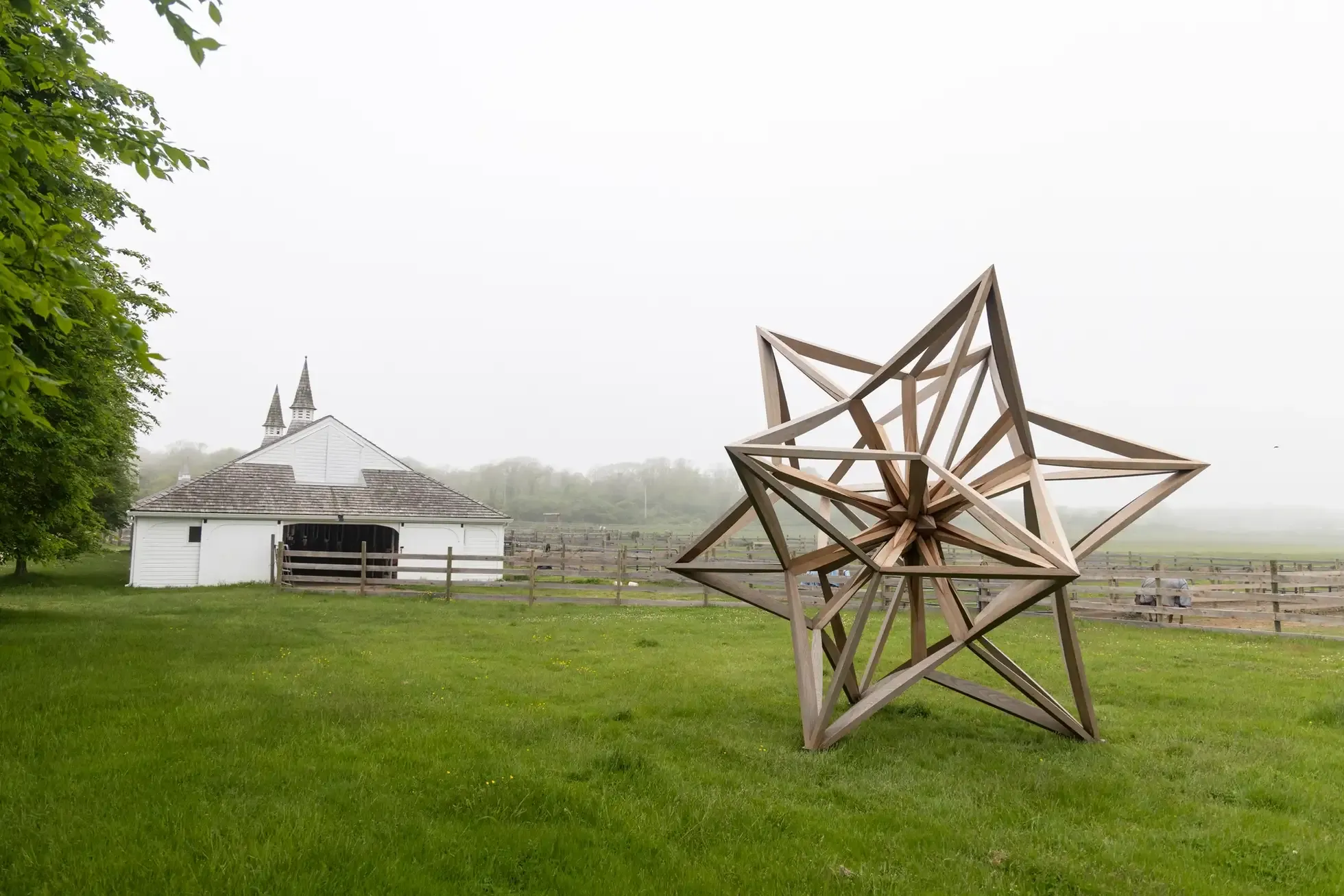
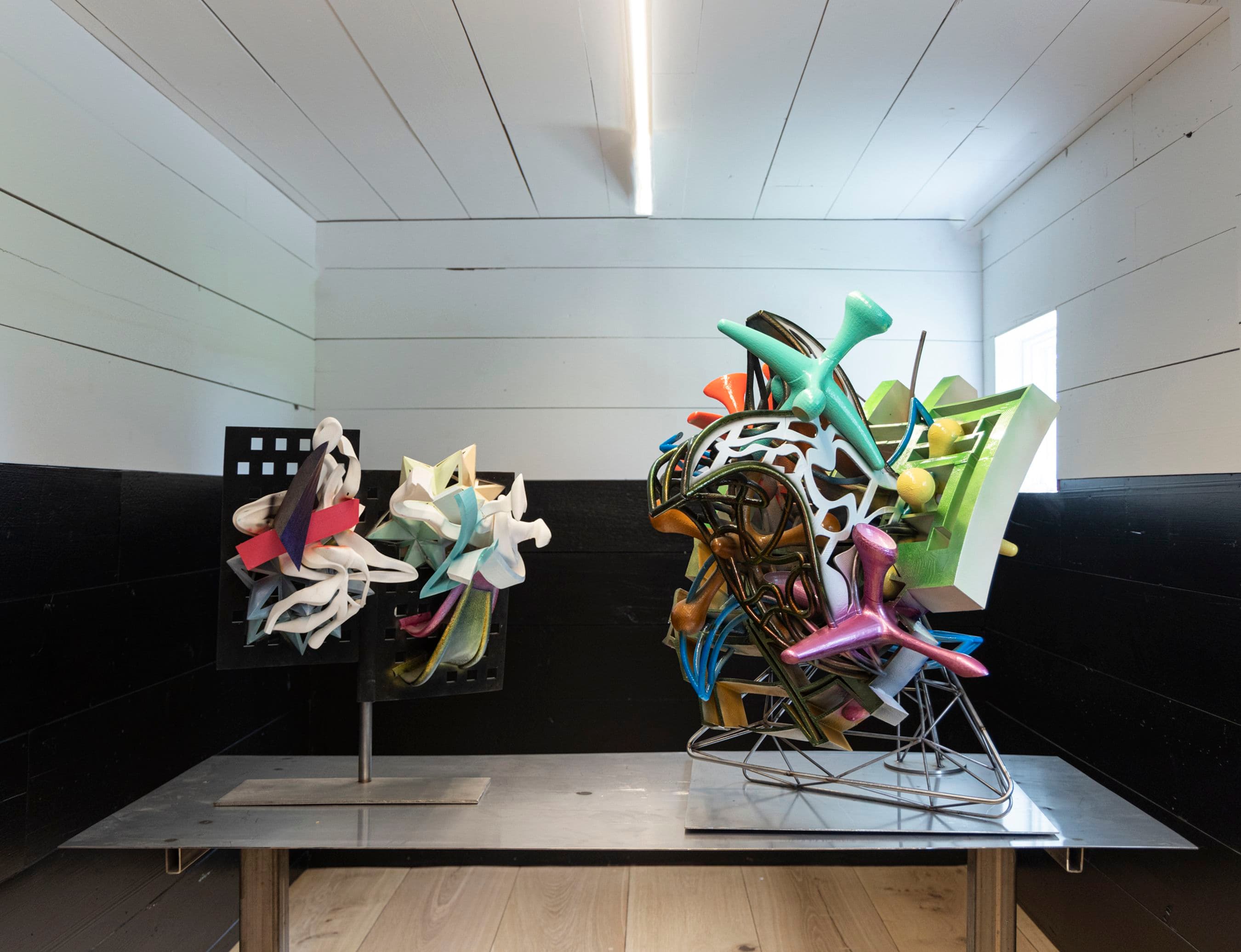
The RanchTo make an appointment, please visit: bit.ly/3v5i15d Conceived in collaboration with the artist, the two-part exhibition features an outdoor presentation of five monumental sculptures activating The Ranch’s grounds through November 1. On view from June 25 to July 31, in the West Barn, is a selection of smaller-scale sculptures and wall-bound constructions across recurring motifs and materials. Typically viewed as transgressive, Stella’s sculptural practice has been described as “crossing the threshold” from his celebrated paintings into unexpected terrain. In contrast with his early works—recognized as totems of formalist painting (concerned with the autonomy and self-reflexivity of the medium) or precursors to minimalism (in terms of reduction and seriality)—Stella’s bombastic and colorful sculptures body forward like a bolt from the blue. Yet, for the artist, these are but a logical continuation of the visual and spatial problems of painting. The implied motion and latent dimensionality of his shaped canvases, for example, find concrete physicality in his sculpture. Now, complex shapes and compositional dynamism take a tiger’s leap into the real. The earliest work in the exhibition marks Stella’s emerging endeavors with computer-modeling, casting, and industrial fabrication at the outset of the 1990s. An apocalyptic figuration of a scene from Melville’s Moby Dick, The Cabin, Ahab & Pip (1993) is comprised of a cut-open steel cube capped by a chorus of aluminum sheets. Of various persuasions—fluid and billowing, curdled and crushed—the floating wreckage assembles poured casts produced at the Polich Tallix art foundry. While maintaining an aesthetic of chance, these actually translate precise, prearranged designs into three-dimensions. This embodies Stella’s process: every sculpture is based on the artist's initial drawings, which are then given physical presence as maquettes and only later realized as sculptures of varying sizes. As if catching chance by the wrist, Stella stabilizes nebulous forms. Most notably, modeled smoke rings are among the debris in the floating industrial wasteland of The Cabin, Ahab & Pip. The artist famously preempted advancements in three-dimensional modeling, when, in the 1990s, he and collaborators sought to materialize smoke rings by synchronously photographing these irregular contours from all sides as he blew into an 8-foot cube. Since then, these hypostatized swirls have entered hundreds of works from prints to public sculpture. In Smoke on Black Perforated Background (2020), for instance, two bundles of smoke rings are mounted to a surface punctured by rectangles, as if emboldening painterly gesture to bounce off the grid. Despite the breadth of materials and techniques found across the works on view, most are united by suggestions of movement. In this way, the star represents the artist’s interest in both complex geometry and celestial traverse. Though Frank’s Wooden Star I (2014) and Fat 12 Point Carbon Fiber Star (2016) emphasize the earthbound metamorphosis of the star (plinths attaching their points to the ground), those in the gallery negotiate alternate methods of diagramming movement through space. This is often achieved by reproducing the icon multiple times in a single work. Appropriating a filmic logic in its seriality, Split wood star and three split stars (2016) traces the path of the star, while the devolution and disintegration of form forecasts its eventual death. Repetition for Stella is not simply an ordering principle for space and temporality; he also amalgamates multiple smoke rings, stars, and other waved shapes into maximalist tangles. In K.159 (2013) a host of three stars interlock and overlap—imaging an exploding cosmic force. Part of the ongoing Scarlatti K series, this work joins others in the exhibition based on the Baroque composer’s sonatas. Fashioning a visual complement for each piece of music, this Sisyphean task imposes loose reference and scope on Stella, much like his ambitious Moby Dick series. His abstractions frequently encode allusions, from the lofty realms of literature and music to the more debased arenas of fast cars, cigars, and even cartoon smurfs. To this end, Smurf Hotel I (2019) and Ninja Hotel (2019) playfully discombobulate the architectural category through imaginative force and material affordances (both utilize Elasto plastic). At 86, Stella continues to haunt the conventions and expectations of sculpture. Completed in 2022, his most recent body of work, Atlantic Salmon Rivers, arrests the hopping motion of both fish and stream observed on fishing trips with his family. In The Grand Cascapedia (2021)—a sermon on the ability of artistic expression to suspend dynamic movement—contoured shapes are trapped in a curved stainless-steel scaffolding. Reminiscent of the rods that ensnare unsuspecting fish, the rectangular armature might also be construed as a reintroduction of the frame. Courting the edge, as did his earliest conceptual paintings, Stella regards the perimeter not as an imposing force, but as a field for accelerated action.