
Marais, Paris
Aneta Kajzer
Too Close to the Sun
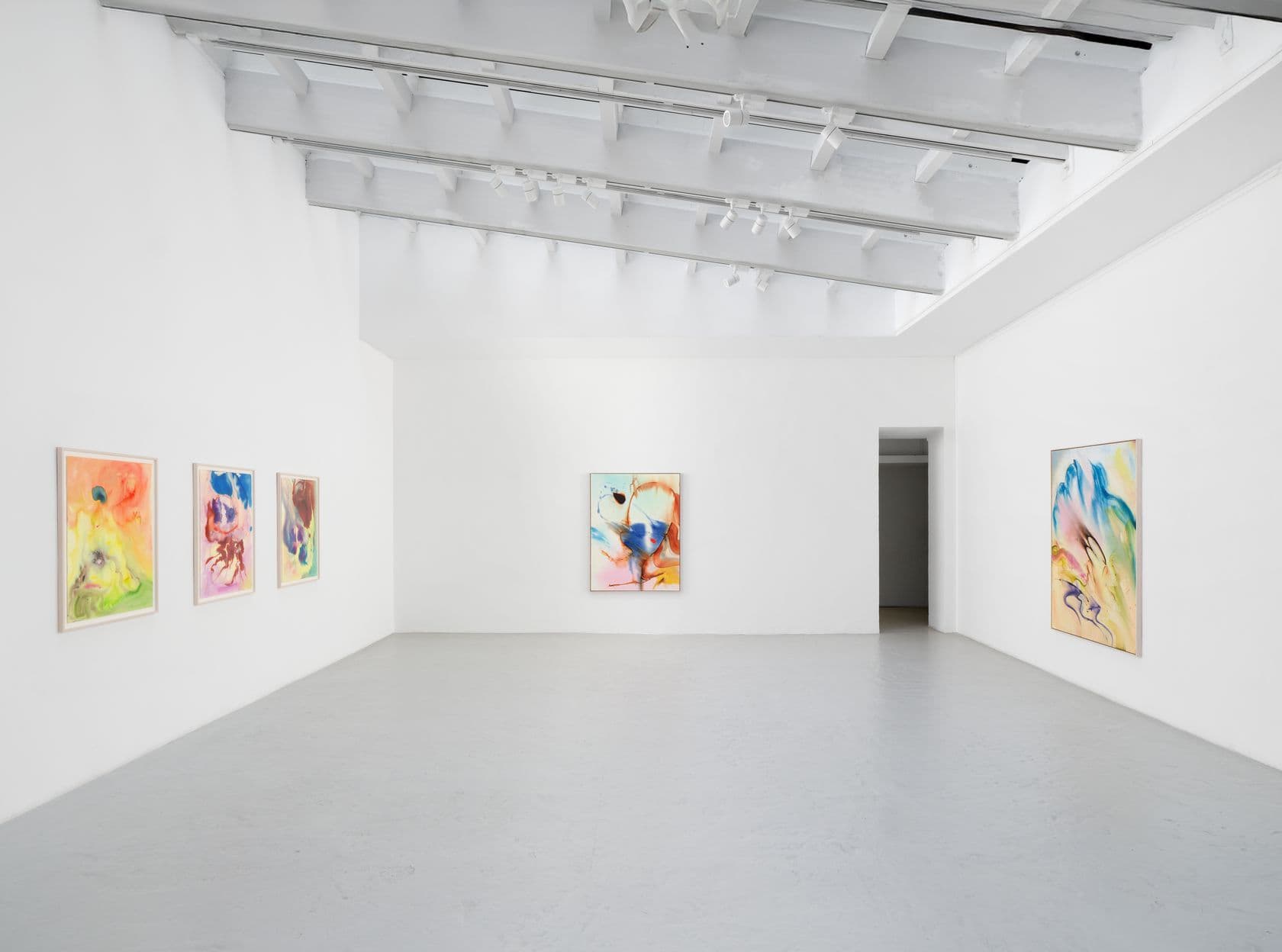
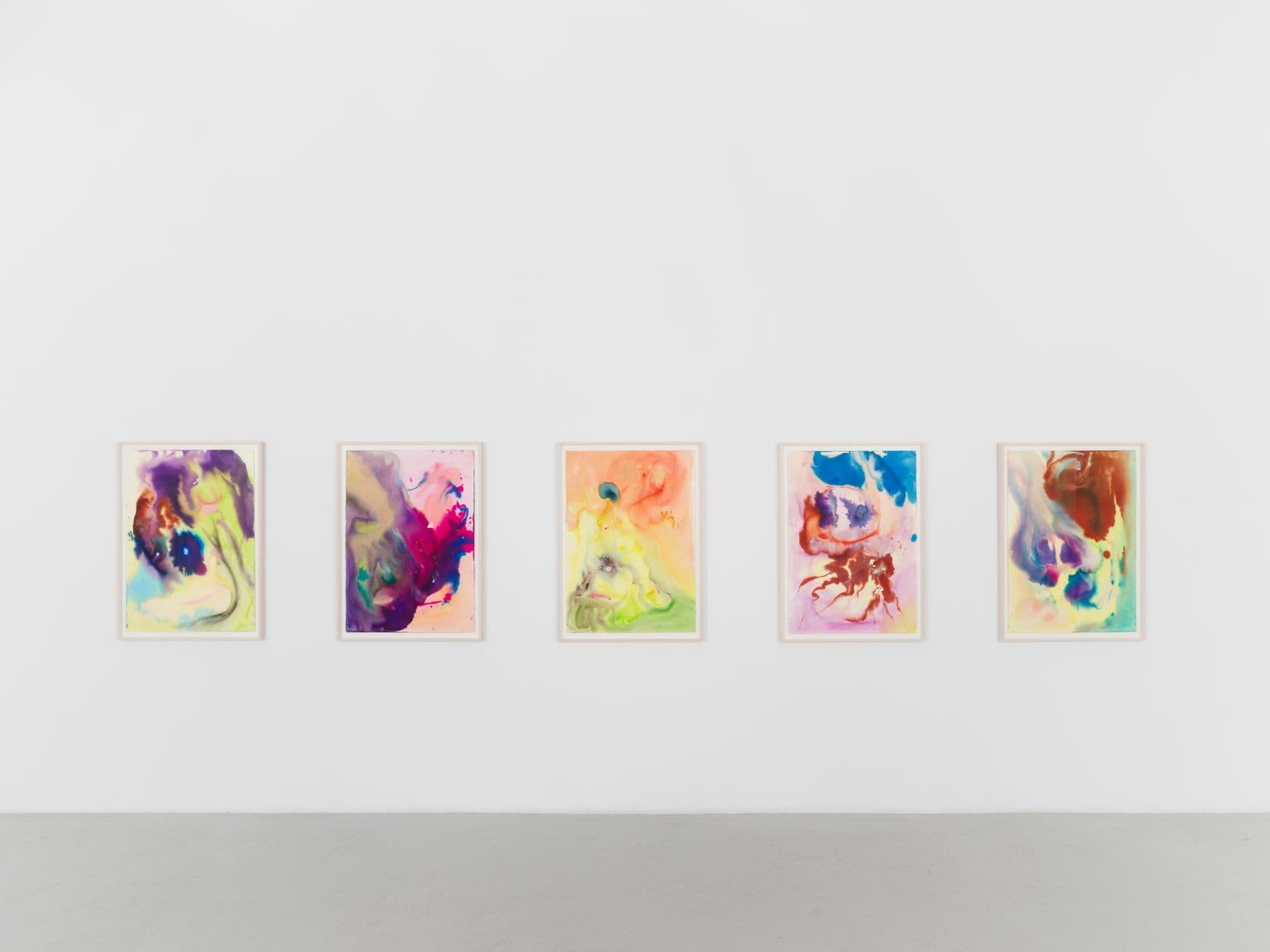
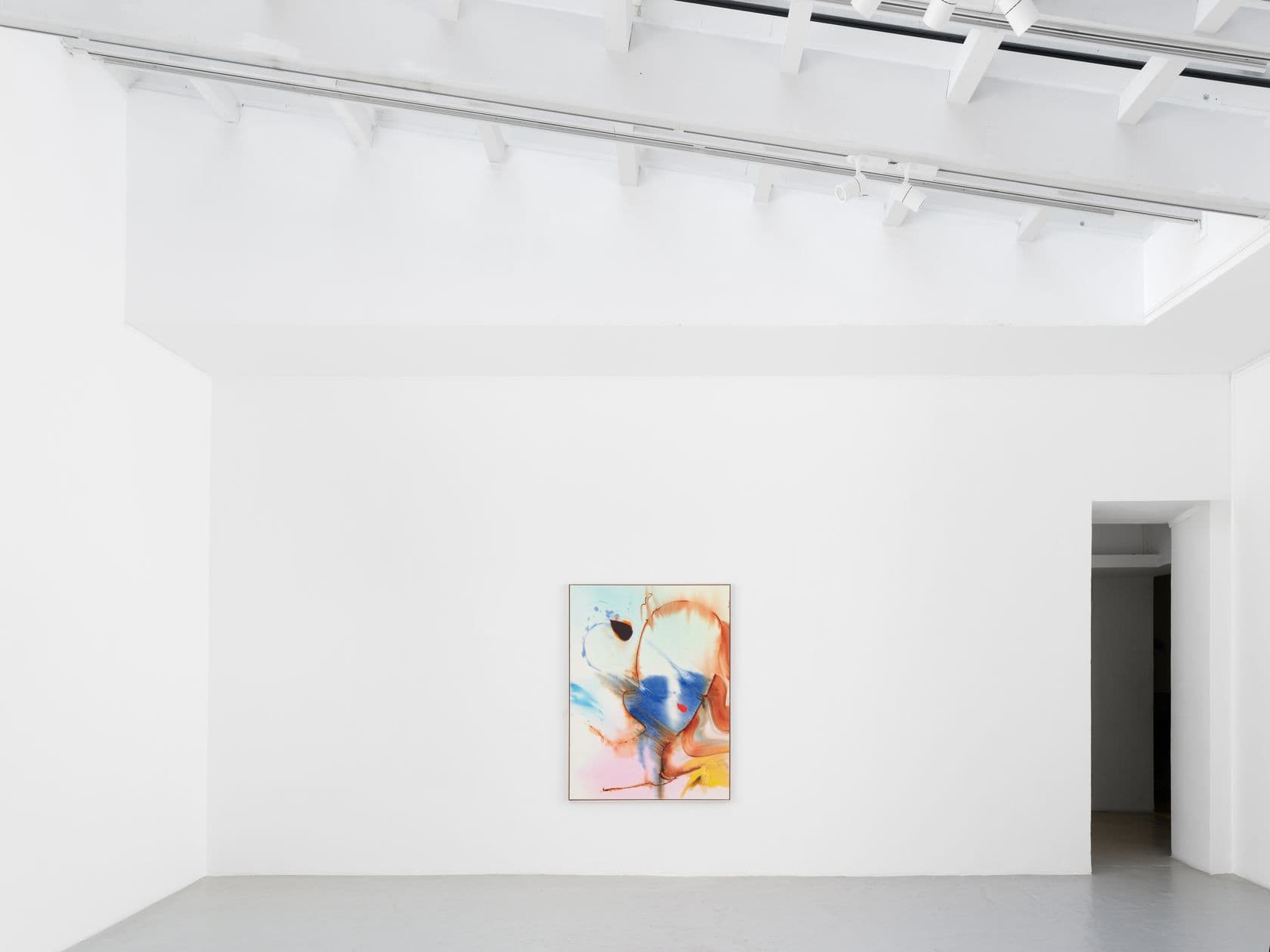
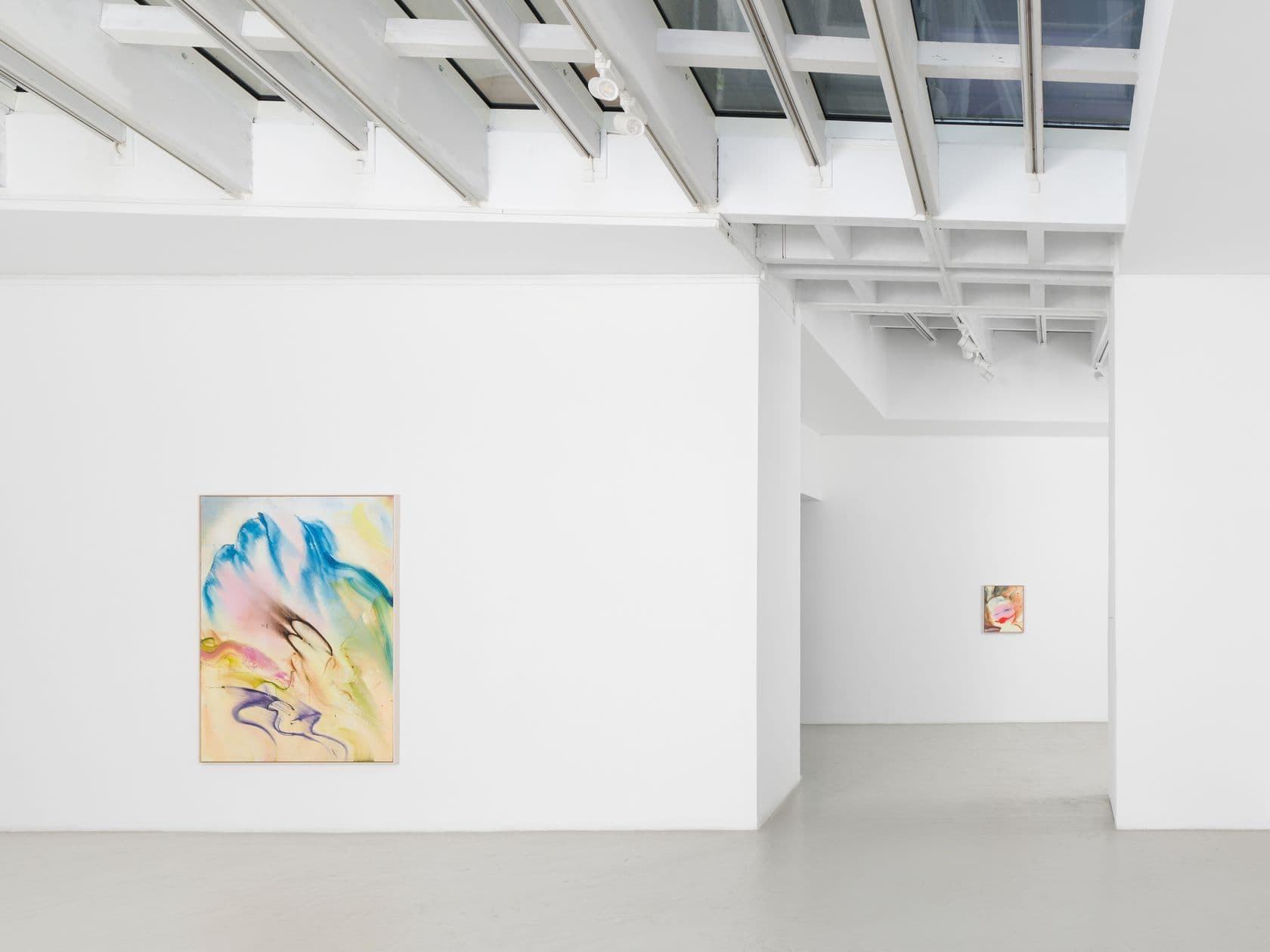
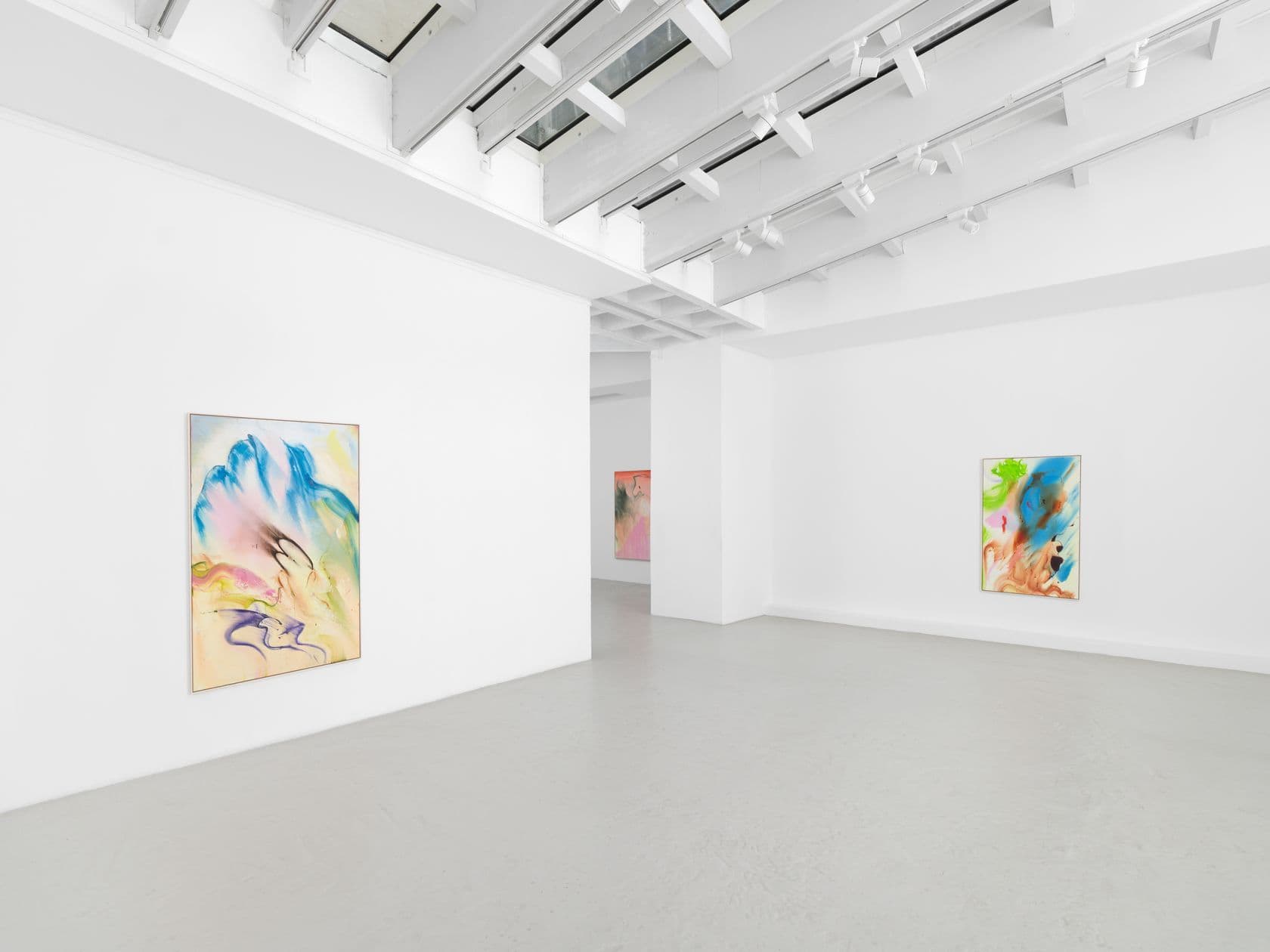
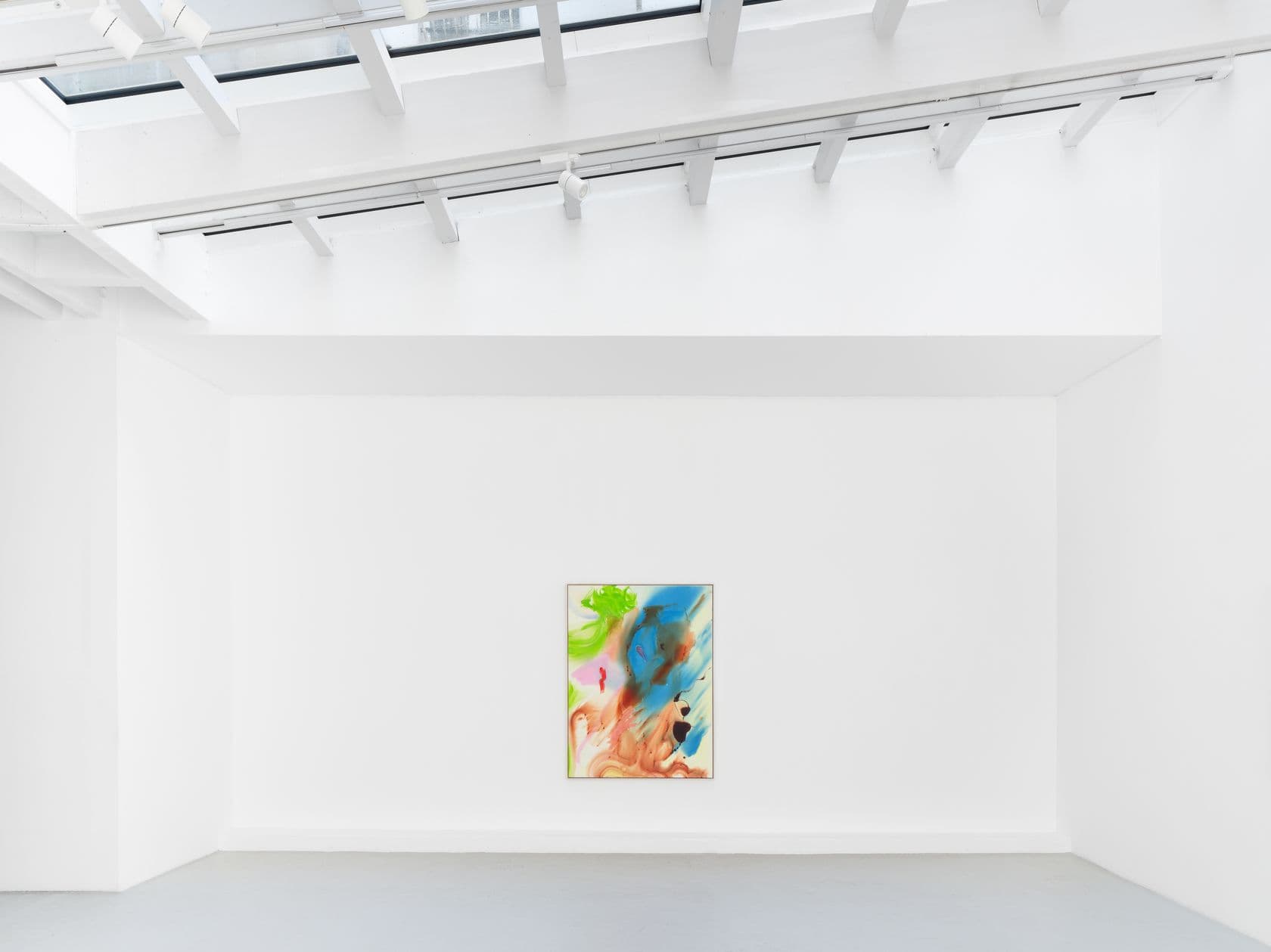
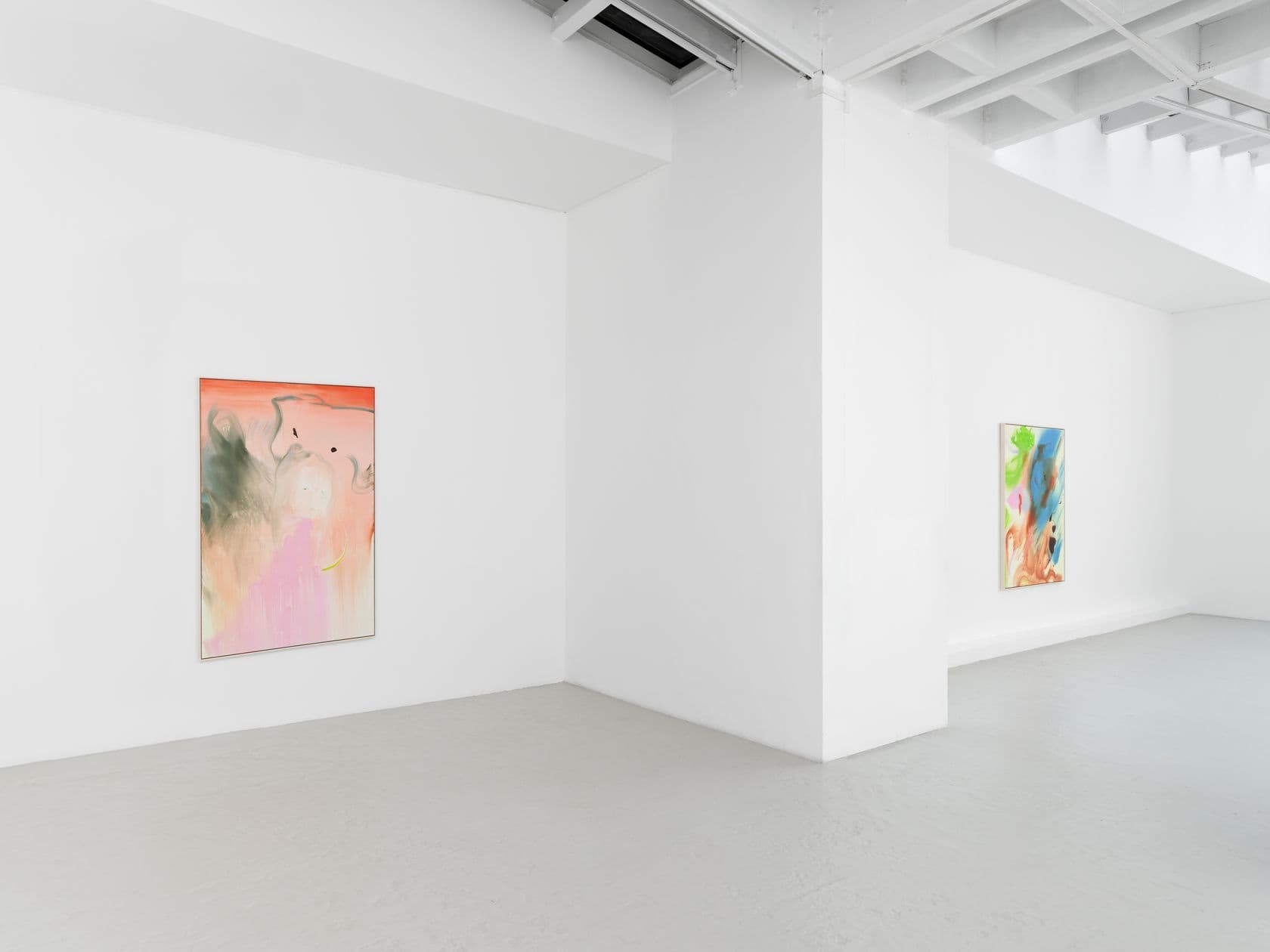
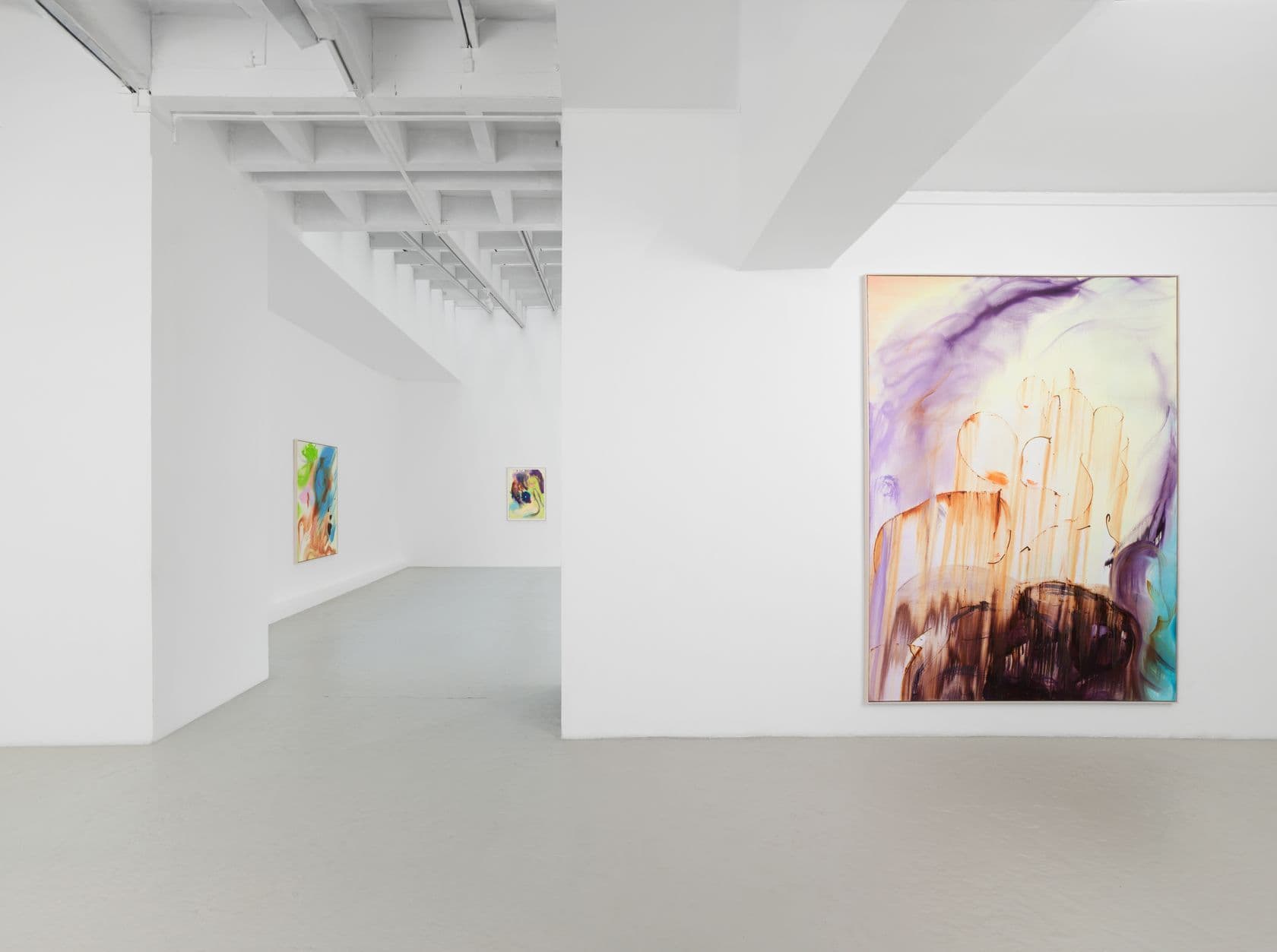
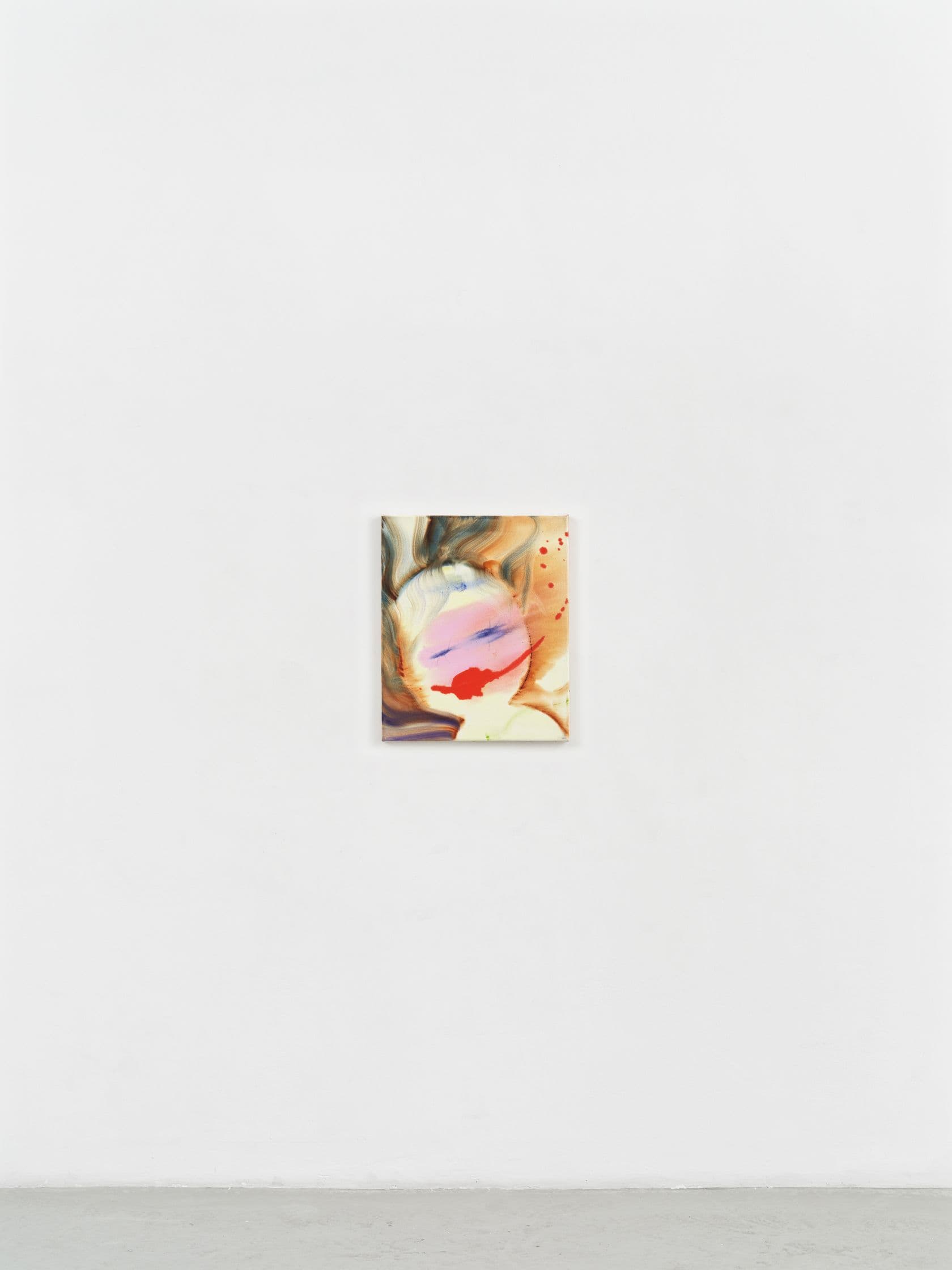
Semiose[Scroll down for French version / Veuillez trouver ci-dessous la version française] With her third solo show at Semiose gallery, Aneta Kajzer maintains a cycle where each exhibition appears to emerge from the previous one as a natural mutation of her universe. Heavy Water, staged in 2021 represented the first installment, with its dense, fluid paintings rippling with currents and internal eddies. Two years later, Head in the Clouds ascended towards lighter skies and featured suspended forms and faces floating amidst the color. In Too Close to the Sun this trajectory is set ablaze, pursuing a radiant apotheosis, appearing as an almost mythical ascent. After water and air, fire takes their place: in the same way as Icarus, the painting ascends to a point of almost dazzling luminosity, fully conscious of the risk of losing its form, yet also aware of the exhilarating freedom that accompanies this proximity to the sun. What was once flowing and evaporating, condenses in radiant heat: the matter reaches its fusion point where light becomes color and color becomes energy. Aneta Kajzer’s sun is not an astral body: It is a flood of paint, a furnace that dilates and dissolves forms, bathing them in burning color as if, when brought close to their flash-point, these colors might gain an extra degree of freedom. In some cases, this chromatic stridency attains an almost electric intensity: the acidic pinks, the lemon yellows and fluorescent greens generating their own light and the energy-saturated surfaces becoming sun screens. These areas of over-exposure provoke dissonance, summoning a collision of contrasts that quiver to the point of irreconcilability and stretch harmony to the brink of rupture. In these almost overly-luminous instances, it is as if Aneta Kajzer were exploring a territory where painting is accomplished at the risk of being scorched in order to achieve more clarity. Too Close to the Sun lays bare that precise instant when painting takes the form of a kind of unstable meteorology, a critical point beyond which wind-swept brushstrokes, downpours of pigments, flashes of red-orange oxidation, misty pastels and cool, shadowy layers are unable to hold their place in the atmosphere and are condemned to an inexorable fall. Nothing is planned in advance: forms emerge in the painterly flow, guided by interactions between materials, by the fragile balance between the painter’s gestures and the withdrawal of her brush. Aneta Kajzer’s painting is comprised of vigilance and attention, a practice that lies in wait for its own revelations. Her figures never appear due to premeditated decisions, but as slowly formed apparitions, born of the climate of each work. They emerge from the colors as if from a nebulous haze, a stroke of controlled luck, a run interrupted at just the right moment, a smear that suddenly acquires meaning in a melancholic flurry, or on the contrary, in a slightly insolent or humorous pirouette. The various figures can be sensed before being fully recognized, like a face glimpsed in a cloud or reflected in water; discovered rather than invented. In the same way as when a cloud-watcher perceives a head, a profile or an animal, the artist hunts down fleeting resemblances and lets pareidolia reveal the scene: a brush-stroke, a swollen drop or a metallic scratch etched with the edge of the paint-tube might all contribute to the sketching out of the outline of a face, then, in the instant that follows, vanish into the abstraction of an evanescent figure. In the painting Doppelgänger, the mass of ultramarine blue transforms into hair, a child’s, smiley-like face is overshadowed by a second, almost menacing figure, composed of a broad purple stroke curving through the space of the canvas and whose eye / dot reveals a divided being: two faces, two approaches (drawing / painting) coexisting like two simultaneous moods. In Harvest, a small, faintly smiling orange landscape-cum-face, covered in spots, is bathed in a midnight-blue breeze; the pastoral green opens up into a liquid hillside. The pareidolia is frank and intentional, nature takes on a form which itself then resolves back into nature, in an analogy with certain nuagiste paintings by Jean Messagier. The sheer pleasure taken in painting is evident through its almost ecstatic intensity and in the interplay of differing textures and viscosities—diluted or velvety oils, more turbulent watercolors—in the streaks that become hair or wind. Each gesture starts out as a tactile or chemical event before taking form as a contour sustained by its lightness and capacity to signify and then withdraw—to create a figure and almost immediately return to pure matter. The painting Slippery Slope is one of the most explicit examples of this shift, with its flowing orchid pinks, its suspended deep blue, the pale yellows that seem to evaporate from the surface and a violet inflection that barely hints at a profile. The painting does not simply advance toward the viewer, it cascades downwards, its adherence shifting through an accumulation of frictions. What might appear can also rapidly retract, catch its breath and move on. This feathery lightness does not exclude storms: in Aus dem Paradies Vertrieben (Expelled from Paradise), the deep purple mixed with rusty brown announces the oncoming turbulence; blood reds and mauves knot together to form tunnels; violets contort into organic passageways; a pink bulb opens out, undecided whether it’s an inner sun or a puffed-out cheek; the representation itself pulses and retracts as if the motif had been expelled from itself by its own inner currents. Aneta Kajzer’s more recent works find their focus in a rusty oxidized palette reminiscent of corroded metal that has been left exposed too long, as well as contrasting bright pastels (acid yellow, milky blue and powder pink): When they get too close to the sun, the colors intensify and become almost caramelized, finally clarifying into a mist of light. Venturing too close, taking the risk of being incinerated, is the natural fate of paintings where accidents are a veritable aspect of the painter’s methodology, where the unexpected is a given, where the works are born at their inception, without preparatory sketching, through reversals, erasures and fresh beginnings. In places the colors detach themselves from any tonal nuance to reach a state of pure intensity that surpasses stridency or any scorched effect to attain an absolute clarity of a tone that asserts itself alone: Pure pink, true blue or yellow verging on the immaterial. These flat tints, with their almost naïve clarity open up clearings in the density of the canvas; they function as optical breathing spaces, areas where the tumult of the painting seems to be suspended, in order for it to view its own existence. The works of Aneta Kajzer are characterized by successive states of saturation / clarification, heaviness / delicacy, appearance / disappearance and moreover combine figuration and abstraction, maintained in a state of tension so that neither one prevails over the other. This co-existence is not a compromise but rather a standpoint, a means of inhabiting painting while it still thinks for itself. For the artist, the distinction between abstraction and figuration is irrelevant, stemming from an outdated notion of division, inherited from an era when it was still considered that painting had to choose between the real world and itself. She situates herself in the aftermath of this period, in an epoch where form and flow, silhouettes and smudges belong in the same continuum. In Aneta Kajzer’s practice, the visible and the sensory intermingle, color gives rise to form in the same manner that sound gives rise to resonance and her painting is thus a realm of a constant flow between what is revealed and what has melted away. Aneta Kajzer’s painting borrows as much from the liberty of Helen Frankenthaler’s washes and fields of color as it does from the figurative work of Maria Lassnig, Miriam Cahn and Nicole Eisenman, who are all true heroines to her. It’s not a question of abstraction succeeding figuration or vice versa: it is their shared vitality that gives birth to the painting. A flowing brushstroke becomes a lock of hair; a brown drip melts into a curtain of rain: two black dots open up into eyes; spilled cadmium takes the form of a mouth; the swipe of a metal paint-tube carves out the line that was missing in a pencil-less drawing. This economy is allied to a luxuriance that barely blossoms before fading away. Aneta Kajzer’s characters all have their moods—solemnity, a faint smile, tenderness—yet they accept that they are only hypothetical, and are beings that exist simply by chance. But isn’t that ultimately a characteristic of our own common destinies? Icarus is never far away, a symbol of fragile flight towards light that always ends up by being consumed. Finally, it’s certainly noteworthy that quite a number of the works’ titles refer to songs, whose melodies and lyrics one cannot help remembering when viewing the paintings: Auf Wanderschaft (Felix Mendelssohn, 1845), Space Oddity (David Bowie, 1969), Stairway to Heaven (Led Zeppelin, 1971), Harvest (Neil Young, 1972), All Over the Place (The Bangles, 1984), Slippery Slope (The Dø, 2011), Beam Me Up (Midnight Magic, 2012), Cringe (Awkward Marina, 2024), as well as They Lost Control which evokes She’s Lost Control by Joy Division (1979). Each of these paintings has its own tempo, from a soaring astral ballad to clashing electric guitar riffs, from deep melancholia to the exuberance of disco. Within this mix, the painting shifts from mellow reverberation (the pastel backgrounds), through distortion (the oxidized reds), into silence (the empty white spaces) to a break (the line made by the edge of the paint-tube). Music is not a secondary theme; it is a way of affirming that painting should be listened to as much as looked at, and that its rhythms—runs, strokes and reprises—in reality constitute decisions concerning the oeuvre’s form. Auf Wanderschaft [On a Journey], perhaps the most melancholic painting in this recent body of work, proceeds in layers of burnt apricot and ash greys. Aneta Kajzer seems to have translated into painting the fleeting moment evoked in the verses set to music by Felix Mendelssohn—that of a departure, of looking back over one’s shoulder, of the hand waving in the distance: “As I wandered forth to far off lands; just one last time I looked back, filled with emotion, and saw how she moved her mouth and waved to me with her hand.” The painting opens into a vast gradient of oranges and pinks, a warm and vibrant space revealing at its center a pale figure, a haunted face fading into the pale light. The vertical swathe of pink acts like a current of emotion, a voice fading away, whereas the fine green curve, painted in a rapid stroke, is flung across the space like a final outburst. Echoing Felix Mendelssohn, Aneta Kajzer transforms separation into a form of emotional resonance: a farewell that continues to reverberate through her use of color, a voice that lingers in the light. In Stairway to Heaven, russet arabesques streaked with amber runs, stream down like rain falling from a pale-yellow sky haloed by purplish, celestial marbling. Almost imperceptible arcs and motifs outline mouths, eyes and brows: faces passing through in meteor-like apparitions. The violet edges form a counterpoint as the painting stages its own gravity, descending towards an earthy, organic base on which the rest of the composition sits or from which it rises. The reddish brown is of sensual nature, dense with dark veins congealed like coagulated blood or burnt resin. The colors oscillate between shadows and glowing embers, in stark contrast with the brightness of the upper section of the painting—lavenders, milky yellows and pinkish flesh tones—all coming together in a counterbalancing earthy density. The tension between the upper and lower parts of the canvas, the luminosity and opacity, echoes the movement in the title, suggesting a stumbling climb. This “Stairway to Heaven” represent an ascent towards the light that implies first breaking free from the viscous, earthy world below. Space Oddity condenses paint into a primordial cosmic broth, revealing its peculiar object from outer space against a vague, colored background. The liquid pigments range from violet and fuchsia to a creamy yellow; tiny halos and filaments proliferate and the paper skin absorbs the color until it becomes almost transparent. As in David Bowie’s song, everything seems suspended between weightlessness and a fear of heights, between floating and disintegration: “And I’m floating in a most peculiar way, and the stars look very different today.” The painting takes the form of a gravitational field where each hue seeks out its own orbit: the deep purple draws the eye towards a dark core while the soft pinks and yellows take flight towards the edges, as if all the light were seeking to escape this materiality. There is no up or down, nor any stable form of orientation, just zones of density and evanescence, forces of dispersion and absorption. The painting is almost akin to a galactic nebula that retains some vestiges of warmth; spots appear in pairs, boundaries dissolve, and in this floating space an almost metaphysical solitude resonates—perhaps that of Major Tom, David Bowie’s astronaut, surrendering to the beauty of the void, or that of Aneta Kajzer constantly pondering the strange beauty of the pictorial space. —Jean-Charles Vergne ***** Pour sa troisième exposition personnelle à la galerie Semiose, la peintre allemande Aneta Kajzer poursuit un cycle où chaque exposition semble naître de la précédente comme une mutation naturelle de son univers. En 2021, Heavy Water inaugurait un premier volet avec une peinture dense, fluide, traversée de courants et de remous intérieurs. Deux ans plus tard, Head in the Clouds s’élevait vers des ciels plus légers, des formes en suspension, des visages flottants dans la couleur. Avec Too Close to the Sun, la trajectoire s’embrase, se poursuit en apothéose lumineuse et prend des allures d’ascension mythique. Après l’eau et l’air vient le feu : à la manière d’Icare, la peinture s’élève jusqu’à frôler l’éblouissement, consciente du risque d’y perdre sa forme, consciente également du vertige de liberté que recèle cette proximité du soleil. Ce qui coulait ou s’évaporait se condense dans une chaleur irradiante : la matière atteint son point de fusion, là où la lumière devient couleur et la couleur, énergie. Le soleil d’Aneta Kajzer n’est pas un astre : c’est un bain de peinture, un foyer qui dilate et dissout les formes, irise et brûle comme si la couleur, portée au voisinage de son point d’ignition, gagnait un degré de liberté supplémentaire. Parfois, la stridence chromatique atteint une intensité presque électrique : les roses acides, les jaunes citron, les verts fluorés émettent leur propre lumière et la surface saturée d’énergie se fait écran solaire. Cette zone de surexposition invite la dissonance, revendique la collision de contrastes qui vibrent jusqu’à l’irréconciliable et tendent les harmonies au bord de la rupture. Dans ces passages presque trop lumineux, Aneta Kajzer s’aventure sur un territoire où peindre revient à risquer la brûlure pour atteindre la clarté. Too Close to the Sun met à nu ce moment précis où la peinture devient une météorologie instable, un point critique au-delà duquel les vents de brosse, les pluies de pigments, les bouffées d’oxydation rouge-orangé, les brumes de pastel et les nappes d’ombre refroidie ne tiendraient plus dans l’atmosphère et se condamneraient à une inexorable chute. Rien n’est planifié : la forme advient dans le flux, se laisse guider par les réactions de la matière, par l’équilibre fragile entre geste et retrait. C’est une peinture de veille et d’attention, une peinture qui guette ses propres révélations. La figure n’apparaît jamais comme une décision préméditée mais comme une apparition lente née du climat du tableau. Elle surgit de la couleur comme d’une nébulosité, à la faveur d’un hasard contrôlé, d’une coulure arrêtée au bon moment, d’un frottis qui soudain prend sens dans un élan mélancolique ou, au contraire, dans une pirouette humoristique un peu effrontée. La figure se devine avant de se reconnaître, comme un visage entrevu dans un nuage ou un reflet d’eau, trouvée plutôt qu’inventée. Pareille à l’observateur de nuages qui distingue une tête, un profil, une bête, l’artiste traque la ressemblance fugace et laisse la paréidolie ouvrir la scène : un trait, une goutte épaisse, une griffure métallique tracée avec le bord du tube esquissent les contours d’un visage et, l’instant d’après, s’évanouissent dans l’abstraction d’une figure ectoplasmique. Sur Doppelgänger (« Double ») une masse bleu outremer vire en cheveux, une effigie en smiley enfantin est surplombée par une seconde figure inquiétante, composée par une arche violette qui courbe l’espace et dont l’œil/point révèle un être dédoublé : deux faces, deux régimes (dessin/peinture) coexistent comme deux humeurs simultanées. Avec Harvest (« Moisson »), un visage-paysage orangé piqué de taches sourit en coin, baigné de souffles bleu nuit ; le vert tendre s’ouvre en colline liquide : la paréidolie est franche et assumée, la nature prend figure et la figure reprend nature, dans une analogie avec certaines peintures nuagistes de Jean Messagier. Le plaisir de peindre est manifeste dans une intensité jouissive, dans la diversité des viscosités – huile diluée ou veloutée, aquarelle turbulente –, dans les traînées qui deviennent des cheveux ou un vent. Chaque geste est un événement tactile et chimique avant d’être un contour, tenu par une légèreté et une capacité à signifier et à se rétracter, à faire signe et aussitôt à redevenir pure matière. Slippery Slope (« Pente glissante ») provoque ainsi un glissement des plus explicites, avec ses rose-orchidée qui s’écoulent, ce bleu profond suspendu, ces jaunes pâles qui évaporent la surface, l’inflexion violette qui, à peine, esquisse un profil : la peinture n’avance pas « vers » le regardeur mais elle dévale, change d’adhérence dans une somme de frictions. Ce qui apparaît peut aussitôt se dédire, reprendre souffle et circuler. Cette légèreté n’exclut pas l’orage : dans Aus dem Paradies vertrieben (« Chassés du Paradis »), le sombre pourpre mêlé de brun rouillé annonce la tourmente ; les rouges vinyle et les mauves se nouent en tunnels ; les violets pivotent comme des couloirs organiques ; un bulbe rose s’ouvre, hésitant entre soleil intérieur et joue gonflée ; la représentation pulse et se rétracte comme si le motif avait été chassé de lui-même, expulsé par la poussée des flux. Les œuvres récentes serrent de plus près une gamme rouille-camaïeu oxydée comme un métal exposé trop longtemps, en friction avec les pastels lumineux (jaunes acides, bleus lactés, roses de lait) : trop près du soleil, les couleurs s’échauffent, se caramélisent puis se clarifient en une bruine de lumière. S’aventurer trop près, prendre le risque d’être consumé, voilà la condition même de tableaux où l’accident est une méthode, l’inattendu une règle, où l’œuvre naît au sol, sans esquisse, par retournements, effacements, recommencements. Par endroits, la couleur se détache de toute modulation pour atteindre un état de pure intensité surpassant la stridence ou la brûlure pour atteindre la netteté souveraine d’un ton qui s’affirme seul – rose pur, bleu franc, jaune à la limite de l’immatériel... Ces aplats, d’une limpidité presque naïve, ouvrent des clairières dans la densité du tableau ; ils agissent comme des respirations optiques, des zones où la peinture semble suspendre son tumulte pour se regarder exister. Les œuvres d’Aneta Kajzer se composent en états successifs de saturation/décantation, de lourdeur/légèreté, d’apparition/disparition mais aussi de figuration/abstraction, en maintenant les deux régimes en tension pour qu’aucun ne l’emporte sur l’autre. Cette oscillation n’est pas un compromis mais une position, une manière d’habiter la peinture là où elle se pense encore. La dichotomie entre abstraction et figuration n’a pour Aneta Kajzer aucune pertinence et relève d’un vieux partage hérité d’un temps où l’on croyait encore que la peinture devait choisir entre le monde et elle-même. Elle peint dans l’après-coup de cette histoire, à un endroit où les formes et les flux, les silhouettes et les taches, appartiennent à un même continuum. Le visible et le sensible s’y confondent, la couleur engendre la figure comme un son engendre sa résonance, la peinture est le lieu d’une circulation incessante entre ce qui se montre et ce qui se dissout. La peinture d’Aneta Kajzer emprunte autant à la liberté des lavis et des champs colorés d’Helen Frankenthaler qu’à la figuration de Maria Lassnig, Miriam Cahn ou Nicole Eisenman qui sont pour elle de véritables héroïnes. Ce n’est pas l’abstraction qui succède à la figuration, ni l’inverse : c’est leur respiration commune qui fait naître le tableau. Un coup de brosse long devient mèche ; une coulure brune se fond en rideau de pluie ou de cheveux ; deux points noirs ouvrent des yeux ; une bouche est un cadmium renversé ; un simple appui du métal du tube creuse la ligne qui manquait dans un dessin sans crayon. Cette économie est l’alliée d’une luxuriance qui, à peine éclose, travaille à s’évanouir. Les personnages ont leurs humeurs – componction, sourire léger, douceur… – et acceptent de n’être que des hypothèses, des êtres de survenue – mais n’est-ce pas là finalement une caractéristique de nos fatalités communes ? Icare n’est pas très loin, symbole de ce fragile élan vers la lumière qui finit toujours par se consumer. Enfin, sans doute n’est-il pas anodin de noter qu’un certain nombre de titres se réfèrent à la musique, une musique que l’on ne peut dès lors s’empêcher d’entendre devant les peintures : Auf Wanderschaft (Felix Mendelssohn, 1845), Space Oddity (David Bowie, 1969), Stairway to Heaven (Led Zeppelin, 1971), Harvest (Neil Young, 1972), All Over the Place (The Bangles, 1984), Slippery Slope (The Dø, 2011), Beam Me Up (Midnight Magic, 2012), Cringe (Awkward Marina, 2024), jusqu’à They Lost Control qui évoque le She’s Lost Control de Joy Division (1979). Chacune de ces peintures impose alors un tempo, de la ballade astrale au riff électrique, de la mélancolie à l’exultation disco. Dans ce mix, la peinture passe d’une réverbération laiteuse (les fonds pastel) à une distorsion (les rouges oxydés), d’un silence (les blancs laissés vides) à un break (la ligne au tube). La musique n’est pas un thème secondaire : c’est une manière de dire que la peinture s’écoute autant qu’elle se regarde, que ses rythmes – coulures, coups, reprises – sont déjà des décisions de forme. Auf Wanderschaft (« En voyage »), la peinture la plus mélancolique de ce corpus récent, avance par nappes d’abricot brûlé et de cendres. Aneta Kajzer semble avoir traduit en peinture le moment suspendu évoqué dans les strophes de la musique de Felix Mendelssohn – celui du départ, du regard jeté en arrière, du geste de la main qui s’efface dans la distance : « Je pars en voyage vers des contrées lointaines ; je me retourne une dernière fois, ému, et je la vois remuer les lèvres, et me faire signe de la main1. » Le tableau s’ouvre sur un vaste dégradé d’orangés et de roses, espace tiède et vibrant dévoilant au centre une forme pâle, visage fantomatique en effacement dans la lumière blême. Le pan vertical de rose agit comme une coulée d’émotion, une voix qui se perd, tandis que la fine courbe verte jetée d’un geste rapide traverse l’espace comme un ultime éclat. À la manière de Felix Mendelssohn, Aneta Kajzer fait de la séparation une modulation du sentiment, un adieu qui continue à vibrer dans la couleur, une voix qui laisse son écho dans la lumière. Dans Stairway to Heaven, les arabesques rousses, striées de coulures, ruissellent comme une pluie d’ambre descendue d’un ciel jaune pâle nimbé d’un marbre céleste empourpré. Des arcs et des motifs presque imperceptibles dessinent des bouches, des yeux, des fronts : des visages passent comme des apparitions météoriques. Le violet, en lisière, souffle son contrechant ; la peinture met en scène sa propre pesanteur jusqu’au cramoisi, base terrestre et organique sur laquelle repose ou s’élève le reste de la composition. Le rouge brun est charnel, matière épaisse de veines sombres, traînées figées comme du sang coagulé ou de la résine brûlée. Les couleurs, oscillant entre l’ombre et la braise, opposent à la clarté du haut du tableau – lavandes, jaunes laiteux, chairs rosées – un contrepoids de densité tellurique. Cette tension entre le haut et le bas, le lumineux et l’opacifié, rejoue le mouvement du titre, indique une ascension contrariée. Ces « marches vers le ciel » sont un passage vers la lumière qui doit se détacher d’un monde visqueux et terrestre. Space Oddity condense la peinture en bouilloncosmique primordial, livre l’étrangeté spatiale du fond diffus de la couleur. Les pigments liquides migrent entre violet, fuchsia et jaune crème ; des filaments et de minuscules halos prolifèrent ; la peau du papier boit la couleur jusqu’à la transparence. Comme dans le titre de David Bowie, tout semble suspendu entre apesanteur et vertige, entre flottaison et dissolution: « And I'm floating in amost peculiarway / And the stars look very different today. » La peinture devient un champ gravitationnel où chaque teinte cherche sa propre orbite : le violet dense attire le regard vers un noyau sombre tandis que les roses et les jaunes diffus s’échappent vers les bords comme si la lumière tentait de quitter la matière. Il n’y a ni haut ni bas, ni orientation stable, seulement des zones de densité et d’évanescence, des forces de dispersion et d’absorption. La peinture agit comme une nébuleuse galactique encore tiède, les taches se dédoublent, les frontières se dissolvent et dans cet espace flottant résonne une solitude presque métaphysique – celle, peut-être, de Major Tom,l’astronaute de David Bowie,livré à la beauté du vide,ou celle d’Aneta Kajzer constatant, encore et toujours, la beauté étrange de l’espace pictural. —Jean-Charles Vergne