
Tribeca, New York
Joy Curtis
Horns, Holes, Skins, and Branches
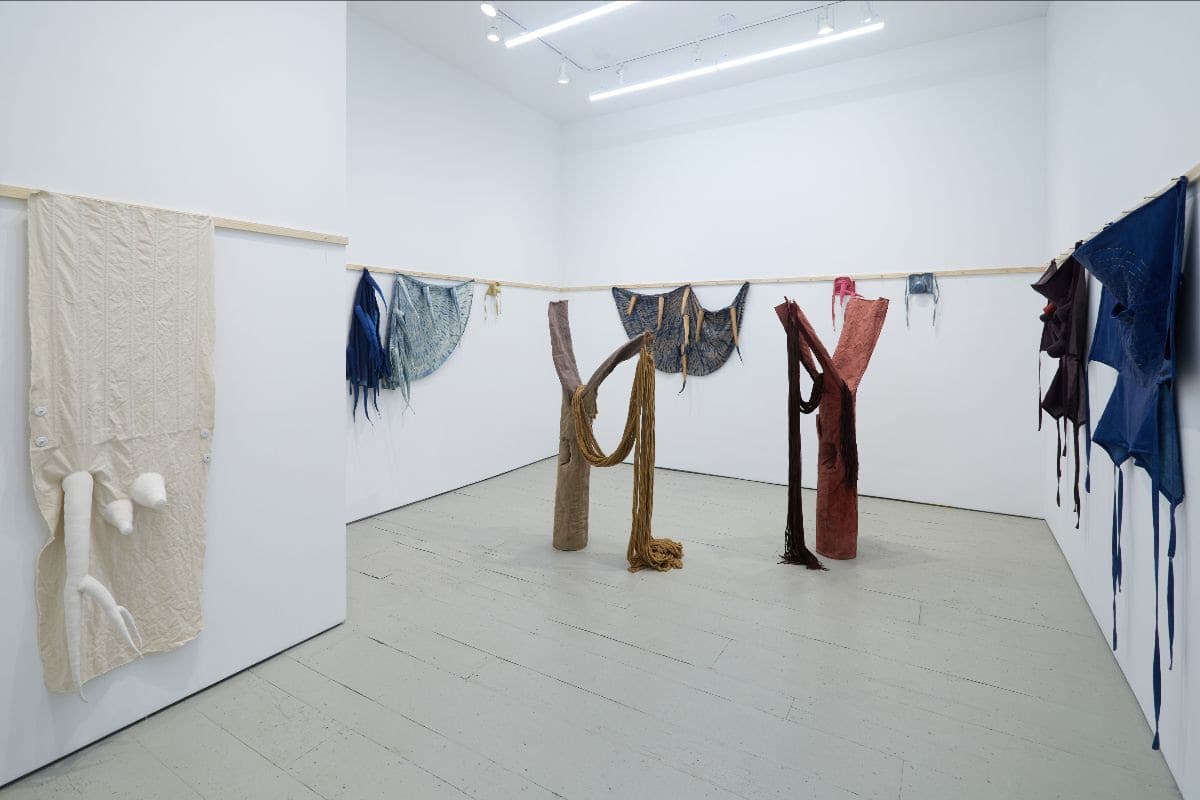
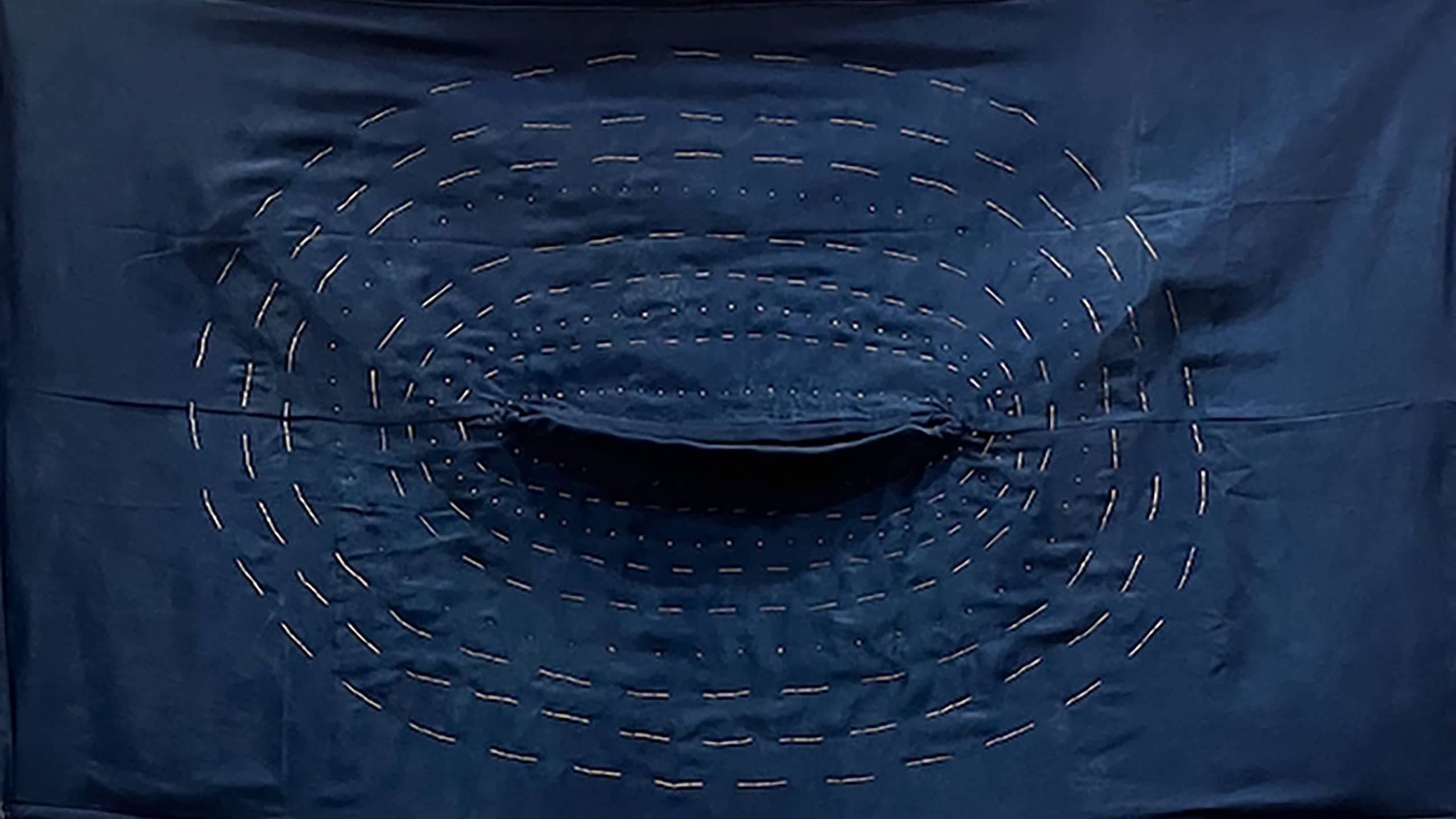
Klaus von NichtssagendKlaus von Nichtssagend Gallery is pleased to present a solo exhibition by Joy Curtis. Curtis's exhibition features sculptures sewn from hand-dyed fabrics, each of which can be displayed and encountered in multiple ways—pinned to or draped from the wall, free-standing, or worn on a person's body. These works include protrusions that evoke horns, nipples, trunks, or branches. Several pieces unfold into half-circle forms and are dyed with pigments made from organic materials using a Shibori resist technique. Whether wall-mounted or embodied as a sculptural garment, the emergent patterns emphasize the fan-like structure of the sewn fabric, while referencing water channels and other structures from ecology and the natural world. A group of tunic-inspired works appear as squares and rectangles when hanging on the wall, These pieces feature stitched details and cylindrical protrusions arranged to suggest a sense of cosmic rotation or cellular life seen under a microscope. Another type of sculpture takes the form of a tree, made of dyed fabrics but standing upright in the gallery. Each tree has a fixed trunk and long branching extensions that end in a beard and mustache that can be worn and activated. Interactivity has long been a sculptural concern of Curtis's, shifting viewers from spectators to participants. This places her practice in a lineage with a range of predecessors from the Brazilian Neo-Concrete movement such as Lygia Clark and Hélio Oiticica, as well as artists like Yoko Ono, Allan Kaprow, and Fluxus performances. In those practices, artists emphasized transformation, viewer participation, and a challenge to the preceding dominance of geometrically driven art. Curtis's sculptures are not meant to remain static; visitors are encouraged to activate them by wearing or repositioning the pieces, allowing the human body to become part of the work's evolving form.