

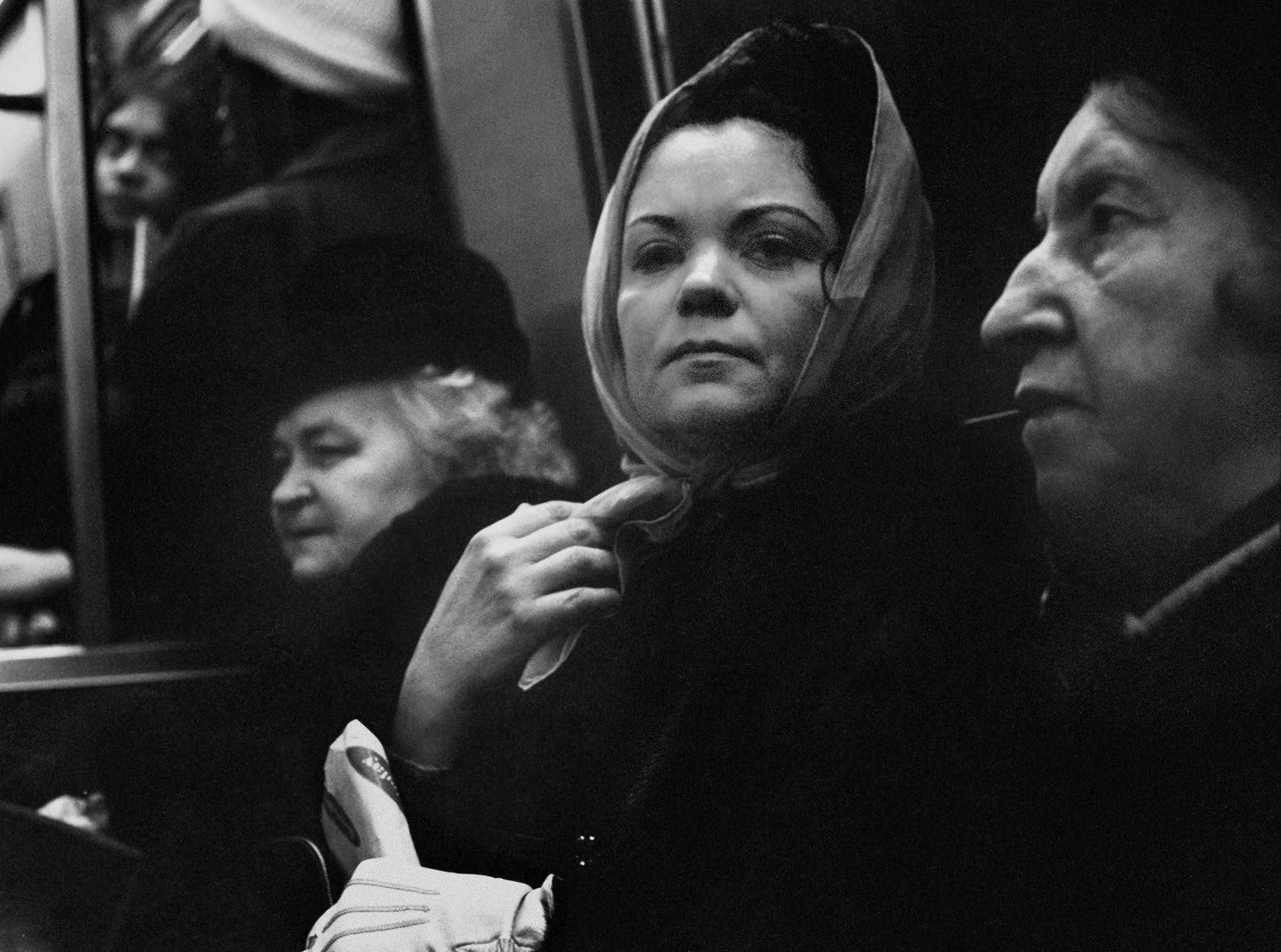
Germain, Paris
Helen Levitt
Manhattan Transit
Zander Galerie[Scroll down for French version / Veuillez trouver ci-dessous la version française] Zander Galerie is delighted to present its next exhibition in Paris showcasing the work of New York artist Helen Levitt. The gallery presents an exceptional selection of photographs from the 1970s, drawn from the iconic Subway series. Helen Levitt (1913-2009) began photographing street scenes in her native city of New York in the late 1930s and became one of the most significant figures in American street photography. She captured her era with a sensitive and poetic eye, focusing on the scenes of everyday life played out on the streets of New York. Beginning in the 1930s, equipped with her 35 mm Leica camera, she roamed the city, documenting children at play, sidewalk conversations, and vibrant street scenes. Strolling through working-class neighborhoods, she casts a tender and joyful gaze on the life unfolding there, while never interfering and maintaining a respectful distance. Helen Levitt captured the soul of the city with a masterful sense of composition and a humanistic approach. Alongside Walker Evans and Henri Cartier-Bresson, both of whom she considered as close companions, Helen Levitt is regarded as one of the most important American photographers of her time. For Levitt, the New York City subway became a creative playground as early as the late 1930s. At the time, photographing subway passengers was prohibited. In 1938, Walker Evans invited Helen Levitt to join him in capturing images of this urban space, believing he would draw less attention with company. This was the beginning of the Subway series. Forty years later, Helen Levitt returned to the subway, where she observed reflections of the profound social changes that had shaped American society. Racial segregation had intensified, graffiti covered the train cars, and passengers' behavior had grown less formal. Within this confined space, where people from all walks of life crossed paths, her lens revealed a microcosm of New York society. According to author David Campany, while most of Helen Levitt's work was created outdoors, the underground corridors of the subway might have represented an extension of the public space, offering opportunities to shoot even during the winter months. Balancing tension, spontaneity, and introspection, the photographs from the Subway series provide an intimate and compelling glimpse into the lives of New Yorkers. Helen Levitt's work is part of the collections of numerous museums and institutions worldwide. She was the recipient of three Guggenheim Foundation fellowships, a National Endowment for the Arts fellowship, the Master of Photography Award from the International Center of Photography in New York, the Spectrum International Photography Award from the Stiftung Niedersachsen, and an Academy Award nomination as co-author of the screenplay for the 1948 film The Quiet One. Her work has been exhibited internationally since the 1940s and has been the subject of retrospective exhibitions at prestigious venues, including the Metropolitan Museum of Art in New York, the San Francisco Museum of Modern Art, the Fondation Henri Cartier-Bresson in Paris, the Fotografiemuseum in Amsterdam, the Sprengel Museum in Hanover, the Albertina in Vienna, the Photographer's Gallery in London, and the Fondation A Stichting in Brussels, Belgium. ***** Zander Galerie est ravie d’annoncer sa prochaine exposition à Paris, consacrée à l’œuvre de l’artiste new-yorkaise Helen Levitt. Du 6 février au 22 mars 2025, la galerie présentera une sélection exceptionnelle de photographies produites dans les années 1970, issues de la célèbre série Subway. Helen Levitt (1913-2009) a commencé à photographier des scènes de rue dans sa ville natale de New York à la fin des années 1930 et est devenue l'une des figures majeures de la photographie de rue américaine. Elle a immortalisé son époque avec un regard sensible et poétique, se concentrant sur les scènes de la vie quotidienne dans les rues de New York. Dès les années 1930, équipée de son appareil photo Leica 35 mm, elle parcourait la ville, documentant les jeux d’enfants, les conversations sur les trottoirs, et les scènes de rue animées. Arpentant les quartiers modestes, elle portait un regard tendre et joyeux sur la vie qui s’y déployait, sans jamais intervenir et en maintenant une distance respectueuse. Elle a ainsi su capturer l’âme de la ville avec un sens magistral de la composition et une approche humaniste qui la placent parmi les grands noms de la photographie, aux côtés de Walker Evans et Henri Cartier-Bresson, dont elle était proche. Pour Helen Levitt, le métro de New York est devenu un terrain de jeu créatif dès la fin des années 1930, alors qu’en photographier les usagers était interdit. En 1938, Walker Evans invita Helen Levitt à se joindre à lui pour capturer des images de cet espace urbain, estimant qu’il attirerait moins l’attention en étant accompagné. Ce fut le début de la série Subway. Quarante ans plus tard, Helen Levitt retourne dans le métro, et y perçoit les reflets des profondes transformations sociales ayant marqué la société américaine. La ségrégation raciale s’était intensifiée, les voitures du métro étaient recouvertes de graffitis, et le comportement des passagers était devenu moins formel. Dans cet espace confiné où se croisent anonymes de toutes classes sociales, se dessine sous son objectif un microcosme de la société new-yorkaise. Selon l’auteur David Campany, bien que la plupart des œuvres d’Helen Levitt aient été réalisées en extérieur, les couloirs souterrains pourraient représenter une extension de l’espace public, lui offrant des opportunités de photographier même en hiver. Entre tension, spontanéité et introspection, les photographies sélectionnées issues de la série Subway offrent un aperçu intime et fascinant de la vie des New-Yorkais. Les œuvres d’Helen Levitt font partie des collections de nombreux musées et institutions à travers le monde. Elle a été lauréate de trois bourses de la Fondation Guggenheim, d'une bourse du National Endowment for the Arts, du prix Master of Photography du International Center of Photography de New York, du Spectrum International Photography Award de la Stiftung Niedersachsen, ainsi que d'une nomination aux Oscars en tant que co-auteure du scénario du film The Quiet One (1948). Ses œuvres ont été exposée internationalement depuis les années 1940 et ont fait l'objet d'expositions rétrospectives au Metropolitan Museum of Art de New York, au San Francisco Museum of Modern Art, à la Fondation Henri Cartier-Bresson à Paris, au Fotografiemuseum d'Amsterdam, au Sprengel Museum de Hanovre, à l'Albertina de Vienne, à la Photographer’s Gallery de Londres et à la Fondation A Stichting à Bruxelles, en Belgique.