
Matignon, Paris
Stefan Bertalan
Major Works: A Proposal by Bernard Blistène
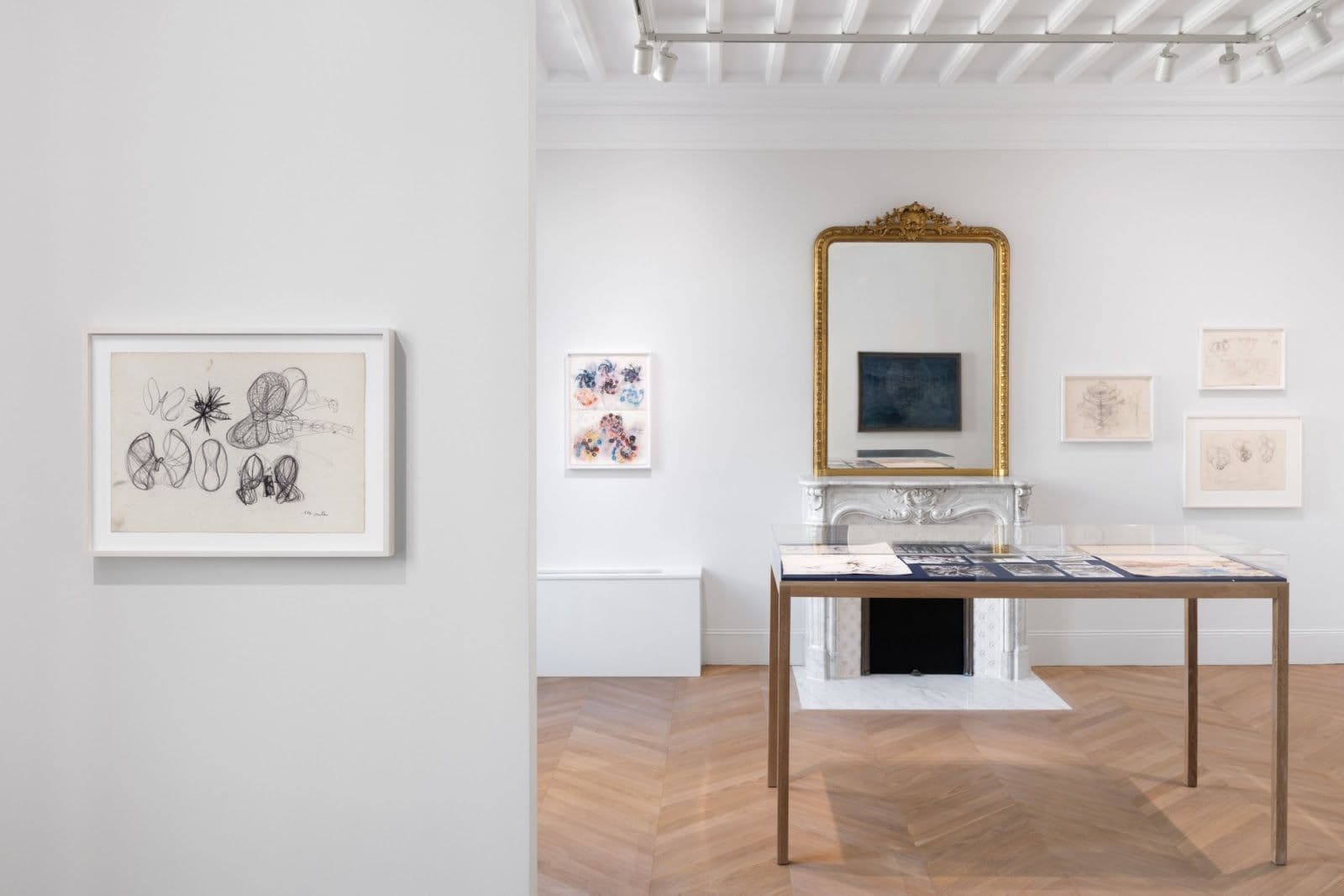
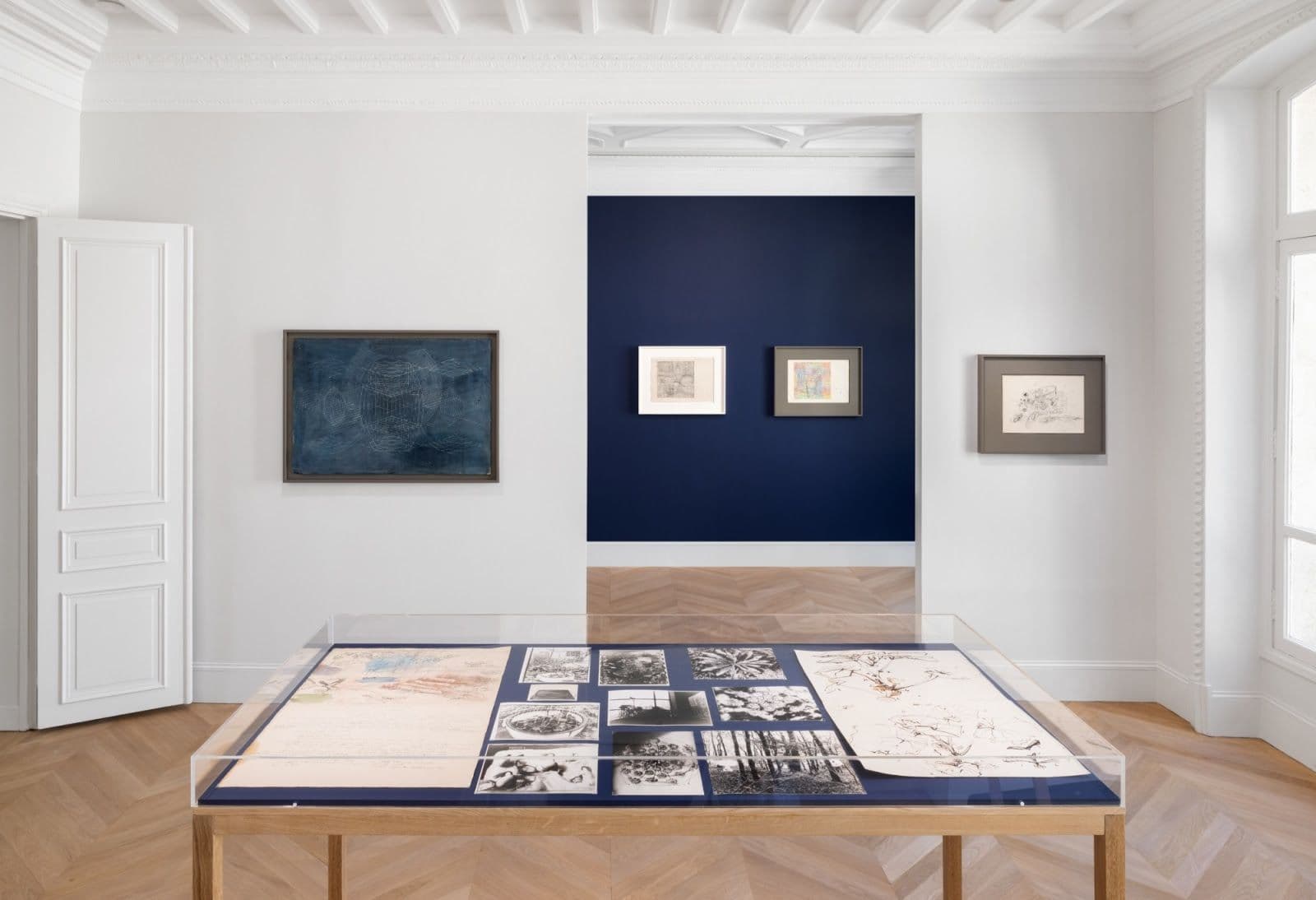
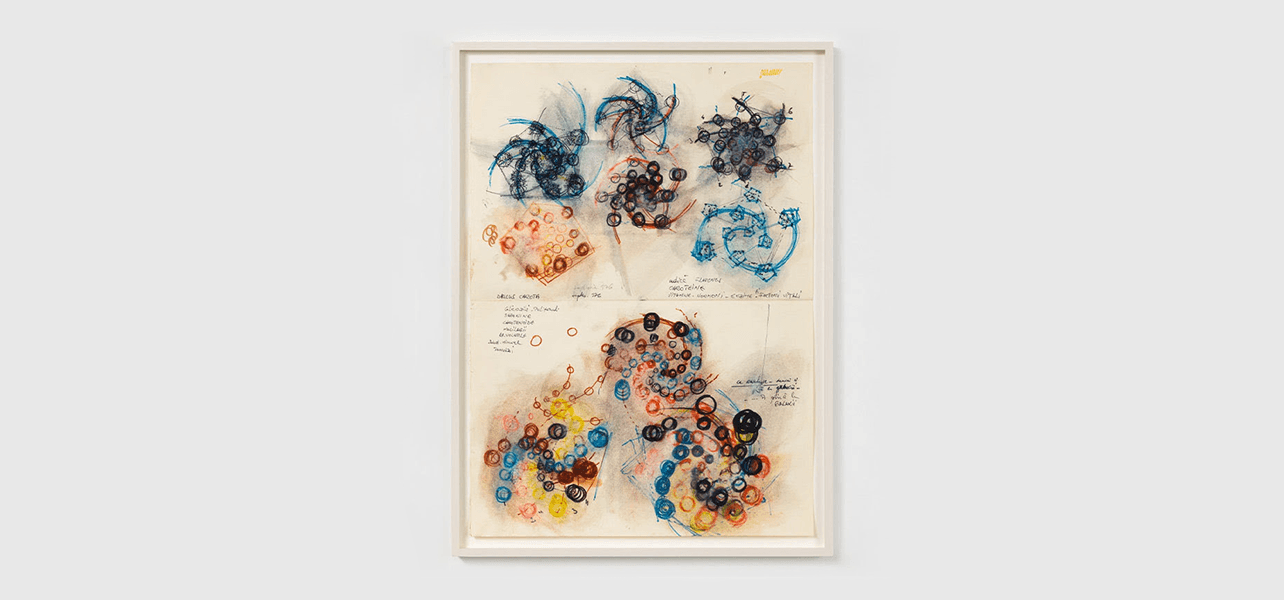
Esther SchipperStefan Bertalan is a pivotal figure in the history of post-war Romanian art. His activities in the 1960s and 1970s as founder of the influential avant-garde groups 111 (1966-1969) and Sigma (1970-1978) gain international recognition. Despite a surge of interest in the years preceding his death in 2014, fueled by a small number of artists and art historians Bertalan allowed entry to his studio, his remarkable later bodies of work remain largely unknown. A driving force of the Romanian neo-constructivist avant-garde, Stefan Bertalan's research into cybernetics and system theory informs his search for overarching patterns and systems in natural forms. Close observation of organic processes and systematic studies of shapes found in organic, vegetal, and mineral forms eventually lead to the artist's development of an interconnected cosmology of all things, constituting Bertalan's search for a "total science" in which knowledge integrates into an ensemble of ethical and spiritual principles. Bertalan's early geometric drawings, realized in thin light lines on black cardboard, are influenced by the artist group 111's research of constructivist and Bauhaus artists, as well as the work and writings of Wassily Kandinsky, Paul Klee, and Victor Vasarely. The contrast creates the impression of three-dimensionality which also suggests the increasing influence of kinetic art. 111 (or 1+1+1) is a kinetic constructivist artist group active in 1966 - 1969 in Timişoara. Its members - Bertalan, Roman Cotoşman, and Constantin Flondor, engage in an intense exchange of ideas but produce work individually as well. Based on their engagement with the art and the writings of artists such as Paul Klee and Wassily Kandinsky whose approach includes formal and somewhat mystical ideas, and influenced by the formation of other neo-avant-garde groups throughout Europe, the group continuously engages in an intense research process. When, after their participation at the Nürnberg Biennial in 1969, Cotoşman remains in Germany, the group dissolves and shortly after Bertalan and Flondor found a new experimental group, called Sigma. Drawing on the example of the German Bauhaus school, Sigma focuses on interdisciplinary research and teamwork, collectively producing large-scale experimental installations. First to exhibit a multi-media installation, Sigma also first introduces the notion of process-based art into the Romanian context. After an innovative teaching experience at the Fine Art High School in Timişoara, where, together with the group called Sigma, Bertalan applies a teaching method somewhat inspired by Bauhaus, in 1971, Bertalan is transferred to the Polytechnical Institute of Timişoara, the location of the School of Architecture, part of the Faculty of Civil Engineering. In this new context, he teaches a course on the "Study and Structure of Form," which also includes designing classes focused on an experimental design. For Bertalan, drawing--which constitutes about ninety percent of his surviving oeuvre--is a research tool, fusing scientific method and artistic imagination. His entire practice develops from studies of geometric structures and detailed observations of plant and animal life, but is deeply informed by post-World War II sciences: information and communication theory, cybernetics, mathematics, semiotics and, later, fractal geometry. While the time of 111 and Sigma coincides with a relative easing of political tension, beginning in the late 1970s Romania undergoes a period of austerity and political repression. In this period, having earlier applied to emigrate to West Germany, Bertalan loses his teaching position and in 1981 relocates to the provincial home of his wife's family in Sibiu, where the artist becomes increasingly isolated. The real and the imagined surveillance by Romania's secret police--the infamous Securitate--precipitates what art historian Erwin Kessler has called the artist's "inner emigration." The loss of his artistic context and the isolation of the new environment intensifies Bertalan's retreat into observation of the natural world and even into an identification with nature. Initiated by a series of intense dreams, to which the artist refers as "apparitions," Bertalan begins a series of emotionally charged drawings that insert the artist's body into those of plants, creating hybrid formations. Combining rigorous observation and fantastic imagination Bertalan's extraordinary drawings create mysterious microcosms. Imbued with the artist's philosophical and spiritual convictions, they offer a concentrated, timeless view into the power of the imagination. Stefan Bertalan (b. 1930, Răcăştie, Romania)